Home About Kevin Auctions Virtual auctioneer Pledges Hosting Entertainment Free software Software examples Case studies Reviews Other services Fees Fundraising games Fundraising consultant Get in touch Blog Podcast

Football card fundraiser: how it works and how to run one legally

Kevin Durham auctioning Arsenal tickets and a signed shirt at a candlelit charity dinner

In short

  • A football card is a lottery: people pay, a prize is allocated, and chance decides who gets it.
  • Sold at a one-off event and drawn there, it is an incidental lottery. No licence, but no online or advance sales.
  • Passed round your own club, it can be a private society lottery. Non-members can only buy at your premises.
  • Sold to the public, door to door or online, it needs a £40 council registration as a small society lottery.
  • A card raises tens of pounds, not thousands. Use it for the warm-up, not the main event.

A football card fundraiser is a simple game: a card lists football teams, people pay to put their name against one, and when every team is taken a hidden panel reveals the winner. It is also a lottery in law, so the rules matter.

My own nights as a charity auctioneer run on auctions and pledges, but a football card is one of the simplest fundraisers a club or school can run. Here is how a card works and the rules for running one properly.

What is a football card fundraiser?

A football card fundraiser is a card of team names, each sold for a fixed price, with the winning team hidden under a seal. The organiser writes the price and the prize on the card before selling, and whoever bought the winning square takes the prize.

Cards come in sizes of 20 to 80 teams. Most have a silver panel you scratch off, which is why the same thing gets sold as a scratch card fundraiser or a scratch off card fundraiser.

How does a football card work?

A football card works by selling every square first and revealing the winner last.

  1. Set the price and prize. Write both on the card before the first sale.
  2. Sell the squares. Each buyer writes their name against a team.
  3. Fill the card. Every card has a different winner, so an empty square could be the one.
  4. Reveal. Scratch the panel in front of people and find the name on that team.
  5. Pay out. The prize goes to the winner, the rest to the cause.

One card seller suggests giving about half the takings as the prize. On a 40-team card at £1 a square, that is £20 to the winner and £20 to your cause.

Is a football card fundraiser legal?

Yes, a football card fundraiser is legal if you run it under the right type of lottery. Under the Gambling Act, anything where people pay, a prize is allocated and the result relies wholly on chance is a lottery. The Gambling Commission puts it plainly: fundraising lotteries are forms of gambling.

The type depends on where and to whom you sell. These are the Commission’s rules as they stood in October 2026.

At an eventInside your clubPublic or online
Lottery typeIncidentalPrivate societySmall society
PaperworkNoneNone£40 council registration
Who can buyAnyone at the eventMembers, plus non-members on your premisesAnyone aged 16 or over
Online salesNoNoYes
Prize limits£500 from takings, donated prizes unlimitedPaid from takings£25,000 maximum

At a one-off event

A card sold at a fete, fair or fundraising dinner is an incidental lottery. It can’t be the main reason for the event, and the money must go to charity, not private gain. Squares must be sold only at the event, while it is happening. Children can buy, £100 can go on costs, and prizes can’t roll over.

Inside your own club

A sports club can run a card as a private society lottery. Members can buy, and non-members only on the club’s physical premises. Everyone pays the same price, sales are physical only and the reveal happens at the club. The Act lets children take part in a private lottery, so junior members can buy a square too.

So a player taking a card to work for colleagues to fill falls outside this route.

To the public

To sell beyond the event or the clubhouse, register a small society lottery with your council: £40, then £20 a year. Buyers must be 16 or over, at least 20% must go to your cause, and you send the council a return within three months of the draw. Tickets must show your society’s name, the price, the organiser’s name and address and the draw date, so ask your council how to handle that on a card.

Do you need a licence to sell football cards online?

You need a registration or a licence to sell football card squares online. The Commission says this covers social media, selling sites and fundraising platforms. Running an illegal lottery is a criminal offence.

Treat a team group chat taking names the same way. Under £20,000 a draw and £250,000 a year, a council registration covers online sales.

What about scratch card and 50/50 raffle fundraisers?

A scratch card fundraiser is the same game under another name, and the same rules apply. A 50/50 raffle is different: half the money taken goes to the winner, so the prize grows with sales.

That growth is the catch at an event. An incidental lottery can only spend £500 of takings on prizes, so a 50/50 pot over £1,000 breaks the rule. Bigger 50/50 draws belong under a small society registration. My guide to running a charity raffle covers the draw itself.

Running a football card at a charity dinner

At a sports dinner, one card per table is a neat icebreaker. The banter about who drew which club does the selling for you.
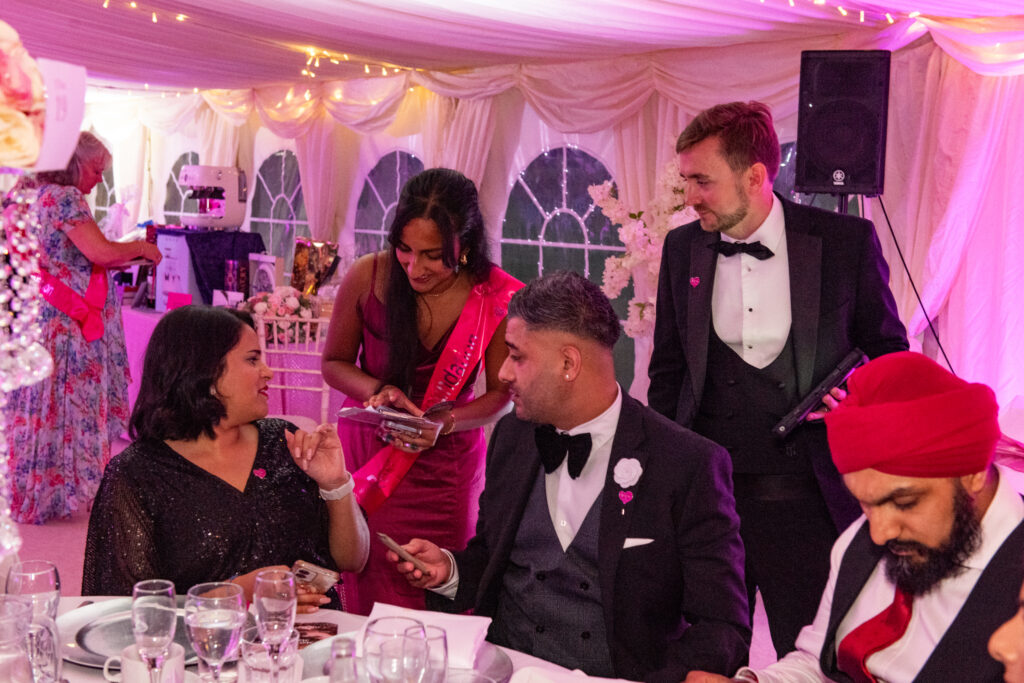
A charity volunteer in a sash selling to seated guests at a fundraising dinner, with Kevin Durham beside the table

Here is how I’d run it:

  • Sell while guests are waiting, before the starter. Never approach someone with food going into their mouth.
  • Give each buyer a cloakroom ticket with their team on it. An event lottery needs physical tickets.
  • Keep the prize modest. Ten tables at £2 a square and a £20 prize per card take £800, give away £200 and keep £600.
  • Reveal every card at once, from the stage.
  • Close the cards before the auction starts.

That last one matters most: nobody listens to a lot while they are still scratching cards.

I open with Heads or Tails to warm the room, and a card can do the same job. At a sports dinner, though, the big numbers come from the live auction and the pledge. At the Jigsaw Trust’s event, the team expected £14,000 from the auction. It made £27,000, and a live pledge they hadn’t planned raised another £30,600.

The credit belongs to the charity’s team. But look at which part raised more: the pledge, not the auction.

Five ways a card fundraiser goes wrong

  1. Selling online without registering. A social post taking names is an online lottery.
  2. Making it the main event. An incidental lottery can’t be the reason people came.
  3. Revealing a half-sold card. The winner may be an empty square.
  4. Rolling a prize over. You can’t, at an event or in a private society lottery.
  5. Claiming Gift Aid. HMRC treats lottery tickets as a payment, not a gift.

Tell buyers where the money goes. The Fundraising Regulator expects donors to know how much reaches the cause. Write it on the card.

Planning your next fundraiser

Keep a football card small and legal and it stays cheap and quick. I’m an auctioneer, not a lawyer, so take anything unusual to your council’s licensing team.

For more ideas, see my charity event games guide and the fundraising games I run at events. If you’re planning a dinner and want the auction and pledge to do the heavy lifting, call me on 07596 851647.

Kevin Durham, charity auctioneer

Kevin Durham

Charity auctioneer & event host

20years£10m+raised60–80events/yr
Check availability07596 851647

Let’s talk

Bring this to your event

Book a free consultation with a charity auctioneer who has raised over £10 million.

What is a tombola? How to run one at a charity event

Guests in black tie laughing as a woman throws a hoop in a ring toss game at a charity fundraising evening

In short

  • A tombola is a lottery where prizes are matched to certain ticket numbers in advance, so players know at once whether they have won.
  • The classic method: tickets ending in 0 or 5 win, which makes roughly one ticket in five a winner.
  • At an event, a tombola is an incidental lottery. No licence is needed, but tickets must be sold at the event, while it is happening.
  • You can spend up to £500 of the takings on prizes and £100 on costs. Donated prizes have no limit.
  • A tombola earns steadily at a daytime fair. At a gala dinner, the big money is in the live auction and the pledge.

A tombola is a fundraising game where you pay for a ticket, pull it from a drum, and find out straight away whether it matches a prize on the table. If you are asking what is a tombola because your committee has just volunteered you to run one, the short answer is that it is a raffle with an instant result.

Most of my nights as a charity auctioneer are gala dinners, but tombolas turn up at almost every fair and fete. Here is what one is, how the tickets work, and the UK rules.

What is a tombola?

A tombola is a game in which you buy tickets drawn from a spinning container and win a prize if your number matches one on the prize table. That is close to the Cambridge definition. Picture a rotating drum on a trestle table, surrounded by chocolates and cuddly toys.

The word is borrowed from Italian, from tombolare, meaning to tumble. Fitting, given the drum. In Italy, tombola is still a numbers game much like bingo, and it is mostly played at Christmas and New Year. The British version kept the name and dropped the number calling.

What is a tombola compared with a raffle?

Compared with a raffle, a tombola is all about timing. In a raffle, everyone waits for a draw at the end. In a tombola, the winning numbers are fixed before anyone plays, so you know the moment you unfold your ticket.

TombolaRaffle
When you find outInstantlyAt the draw
PrizesLots of small onesA few bigger ones
Do players need to stay?NoUsually, for the draw
Best forFairs, fetes, family eventsDinners, galas, longer evenings

Britannica’s British entry simply calls it a raffle, and in law they are the same thing. The Fundraising Regulator lists raffles, tombolas and sweepstakes together as types of lottery, and the Gambling Commission regulates them all.

How does a tombola work?

A tombola works by pairing half of each winning ticket with a prize and putting the other half in the drum, mixed with plenty of losing tickets. Players pay per draw, pull out a folded ticket, and check it against the table.

Traditionally, winning tombola tickets are the ones ending in 5 or 0. Parentkind recommends about one winner for every four losing tickets, and the 0 and 5 rule gives you exactly that: two endings in every ten. Count your prizes and multiply by five. Sixty prizes means about 300 tickets in the drum.

How to run a tombola at a charity event

  1. Collect prizes early. Then you know how many tickets you need.
  2. Buy cloakroom tickets. They come in matching pairs, which is exactly what a tombola needs.
  3. Label the winners. Following the Sobell House method, stick one half of every ticket ending in 0 or 5 to a prize and fold the matching half into the drum.
  4. Add the losers. Fold in plenty of tickets with other endings until you reach your one-in-five mix.
  5. Set a price. A round number, with a bundle. The Gambling Commission allows multi-buy deals at an event lottery, so “5 for £2” is fine.
  6. Sell out on the day. Every ticket should be sold and drawn before the event ends.
  7. Soften the losses. Parentkind suggests a small bag of sweets for players who don’t win. Children love it.

Put your most confident volunteer behind the drum.

Whoever holds the table holds the takings.

What are the UK rules for a tombola?

A tombola run as part of a fair, fete or other event is an incidental lottery, so you don’t need a licence. The Gambling Commission’s rules for event lotteries, as they stood in October 2026, are short:

  • The tombola can’t be the main reason for holding the event.
  • It must raise money for charity, not for private gain.
  • Tickets must be physical and sold only at the event, while it is happening. Nothing online, nothing in advance.
  • You can sell tickets to children.
  • You can take up to £500 from the proceeds for prizes and £100 for expenses. Donated prizes have no limit.
  • Prizes can’t roll over from one lottery to another.

The Commission’s own example is a tombola in the interval of a Christmas panto.

A tombola on its own, sold before or away from an event, is different. That needs a licence or council registration. Most groups would register it as a small society lottery: £40 with your local council, buyers aged 16 and over, and every ticket at the same price.

Two more points. You can’t claim Gift Aid on tombola tickets, because HMRC treats lottery tickets as a payment, not a gift. And I’m an auctioneer, not a lawyer: my guide to running a charity raffle goes further, and your council’s licensing team can settle anything unusual.

What makes good tombola prizes?

Good tombola prizes are plentiful, cheap and cheerful. Variety beats value, because people keep playing when they see others winning.

A few tombola ideas that give the table a theme:

  • Chocolate tombola: every prize is chocolate. Nobody needs it explained.
  • Bottle tombola: anything in a bottle, from sauces and squash to shampoo and bubble bath. Family-friendly, so every child at the fair can play.
  • Toy tombola: good-condition toys donated by families in the run-up.
  • Pamper tombola: Parentkind suggests sealed toiletries, and a pamper theme makes a mixed pile look deliberate rather than leftover.

If a donation is too good for the tombola, it probably belongs in the auction instead. There are more ideas in my school fundraising guide.

Where a tombola fits at a charity gala

At a daytime fair, the tombola is a workhorse. At a seated gala dinner, I would rarely give it a table. Guests don’t wander between stalls, and nobody wants to be approached with food going into their mouth.

If you want one, put it at the reception and staff it well. Sell while people are waiting, then close it before anyone sits down.

Kevin Durham on stage with a microphone and clipboard at the MAG-FEST charity gala, with The Children's Society on the screen behind him

The big money sits elsewhere, and the room has to be yours before any of it moves. I open with Heads or Tails to warm the room, then run the live auction and the live pledge. Of the three, the pledge usually raises the most.

For the full set, see my guide to charity event games that earn their place on the night.

Planning your next fundraiser

A tombola needs donated prizes, a drum, a book of tickets and a cheerful volunteer. Keep it inside the event rules and it takes care of itself.

If you are planning something bigger, your tombola can sit happily alongside the fundraising games I run on the night. Call me on 07596 851647 and I’ll talk you through what works.

Kevin Durham, charity auctioneer

Kevin Durham

Charity auctioneer & event host

20years£10m+raised60–80events/yr
Check availability07596 851647

Tombolas and raffles, on the night

What a draw actually looks like when the room is paying attention.

Our photographer donated himself to the raffle | CRY UK fundraiser
Our photographer donated himself to the raffle
Two women, one winning number | Charity raffle mix-up
Two women, one winning number
Sell Raffle Tickets in Batches, Not One at a Time
Sell raffle tickets in batches, not one at a time

Let’s talk

Bring this to your event

Book a free consultation with a charity auctioneer who has raised over £10 million.