In short
- A charity of the year partnership is a fixed-term link, normally one or two years, between one charity and one organisation.
- Charities usually win one through a staff nomination or application, and the process takes months.
- Write down the money, dates, branding and exit before launch.
- If the company advertises that sales will benefit the charity, Charities Act 1992 sections 58 and 59 and the Fundraising Regulator’s Code apply.
- The gala is the natural flagship, because it puts staff, clients and the charity in one room.
A charity of the year partnership is an arrangement in which a company, school, club or council picks one charity to back for a set period, usually a year. Staff fundraising, matched giving, gifts in kind and events all point at that one cause. Here is how it works, from the planner’s chair and the charity’s.
I come to this as an auctioneer, not a lawyer, so this is general information, not legal or tax advice, and it is current as at November 2026.
What is a charity of the year partnership?
A charity of the year partnership is a fixed-term relationship in which an organisation chooses one charity to support, usually for a year. The organisation directs its staff fundraising, matched giving, gifts in kind and events to that cause. The charity returns stories, speakers and volunteering sessions.
Charity Excellence describes the term as usually one year, sometimes two. A guide by Darnell Consulting with the Chartered Institute of Fundraising, published in June 2024, says these partnerships are mainly about monetary support and come with structured application processes.
One cause gives staff something to rally behind. A scatter of small gifts gives them nothing to remember. My post on corporate fundraising ideas covers the activities that fill the year.
How does a charity win a charity of the year partnership?
A charity wins a charity of the year partnership by fitting the company’s customers, staff and values, then getting through its selection process, which often starts with a staff nomination. The CIOF guide says it is highly unlikely a charity can start a programme and secure income in under 18 months.
The guide’s route has six steps: a proposition built around a story staff will care about, a researched pipeline of companies, diarised deadlines, internal relationships, a proposal that shows how you will inspire the partner’s staff, and a rehearsed presentation. Its nomination tactic is simple: offer a staff talk, and one or two people usually connect and nominate you.
Timing matters too. Charity Excellence notes that companies often set budgets a few months before their financial year starts.
If you run the selection, publish the criteria, the deadline and what you will fund. Charities will write a better pitch.
What does a business get from a charity of the year partnership?
A business gets an engaged workforce, a story to tell and local goodwill. CAF’s Corporate Giving Report 2026 found 68% of private-sector employees want their employer to give to charity, and 68% want to be asked which charities it should support.
Rarity helps too. The same report found only 27% of businesses support charities in any way.
There can be a tax angle. GOV.UK’s guide to sponsoring a charity says a payment is a deductible business expense where the company gets something related to its business back, such as using the charity’s logo. A pure gift is treated differently, and I cover that in corporate donations. Keep the two apart in the agreement.
What to ask for and agree in writing
The Code of Fundraising Practice says an agreement with a fundraising partner should cover activities, timescales, how payment is calculated, copyright in materials, confidentiality, expected behaviour and complaints. That list, in section 6.2.3 of the Code (effective 1 November 2025), is a sound checklist for any partnership.
| Agree | Why it matters |
|---|---|
| Start, end and review dates | A year can drift into 14 months without a date |
| The money | Target, payment dates, and whether anything is restricted |
| Company activity | Staff events, a matched pot with a cap, gifts in kind |
| Charity’s side | Speakers, case studies, volunteering sessions |
| Branding | Who approves logos and wording |
| Public claims | Any “we raised” or “a share of sales” statement |
| Exit | What happens if either side’s reputation is hit |
The cap on a match is the line people forget. Name it, so nobody claims “everything doubled” when it did not.
When does a partnership trigger the commercial participator rules?
A partnership triggers the commercial participator rules when the company promotes its own goods or services by saying contributions will go to the charity. Section 58 of the Charities Act 1992 defines the term that way, for a business that is not a fundraising business.
As I read the definition, staff cake sales and a plain company donation are outside it. A “50p from every product sold” campaign is inside it.
Section 59 then makes it unlawful to make that statement without a written agreement meeting the prescribed requirements. A court can restrain a breach, and a non-compliant agreement cannot be enforced against the charity.
The Code’s section 6, effective 1 November 2025, adds that the donor must be told before buying how much goes to the charity, estimated if necessary. The Fundraising Regulator’s partnerships guidance was updated on 4 November 2025 to match.
Section 58 also sets the pay thresholds for who counts as a professional fundraiser. Under SI 2026/427, they became £15 a day and £1,500 a year on 30 September 2026, up from £10 and £1,000. That matters if the company pays an agency to run the fundraising. Take legal advice before any promotion goes live.
Due diligence: what a charity checks about the company
A charity should check a corporate partner before it signs, in proportion to the risk. The Charity Commission’s CC20, updated 3 February 2026, lists the partner’s record on fundraising law, business practices, methods, reliability and financial health.
It also asks trustees to weigh reputation. One test is how much the charity receives compared with the total raised, because a small share can damage public trust. The agreement must be in writing before fundraising starts, and trustees must monitor it.
That section is written for commercial participators and professional fundraisers. For a donation-only partner, the same questions are cheap to ask, and I would ask them. A charity can say no.
How do you avoid relying on one partner?
You avoid relying on one charity of the year partner by treating the money as fixed-term income with a known end date, and by starting the replacement search in year one. The CIOF guide says these partnerships normally last one or two years.
With an 18-month lead time, a charity that waits for the final quarter has no pipeline for the next year.
My own rule, and it is a judgement, not a regulator’s: agree with your trustees a ceiling for the share of income any one company can supply, and ask the company for a year-two review rather than assuming renewal.
The gala as the flagship
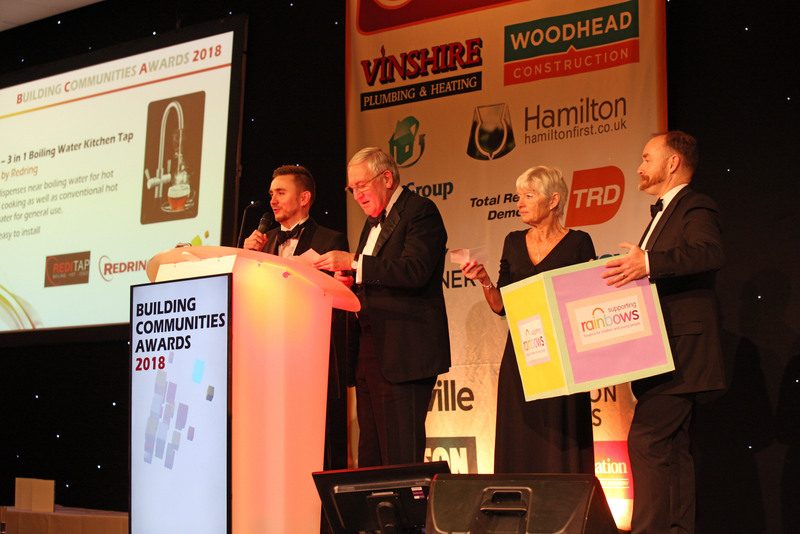
In my experience, corporate clients planning their first charity gala want professionalism and entertainment, not just someone calling bids. The gala is the one night the whole partnership sits in the room: staff, clients, the charity’s people and their cause.

The live pledge is where the money tends to be. One client came in with a fundraising target and finished the night on double it, through the auction and pledge structure we put in place. The charity’s team and a room that cared did that, not me.
Put the partner behind the pledge. Say a company matches pound for pound up to £10,000. If the room pledges £14,000, the match adds £10,000 and the pledge total is £24,000. If the room pledges £6,000, the match adds £6,000 and the cap is never used. Size the cap to a realistic pledge. My guide to match funding covers the mechanics, and sponsorship packages the tiers.
Keep the company’s messaging light. Thank the partner once, by name, and let the cause carry the evening.
“We’ve raised over £75k this evening. I highly recommend Kevin and can’t wait to have him back next year.”
Lisa Thewsey, OCU Group / Teenage Cancer Trust
Kind words, and they belong to the charity’s people: my part is small next to what the money does afterwards. More sit on the reviews page.
When is it worth hiring a charity auctioneer for the partnership gala?
It is worth hiring a charity auctioneer when the gala is the partnership’s flagship and the total matters more than the programme. A corporate room mixes colleagues and clients who are wary of bidding in public, and a professional paces the auction and pledge around that.
If the event is a staff quiz or a bake sale, run it yourselves. You do not need me for that.
For the gala, have ready the date, room size, running order, the match cap and what went wrong last time. When you hire me, I build the auction platform around your event, in your branding with your lots and tickets. It is included for the event and stays live for a month afterwards. See how a corporate charity auctioneer works with a company night.
Call 07596 851647 and let’s talk it through.

Kevin Durham
Charity auctioneer & event host