
Home About Kevin Auctions Virtual auctioneer Pledges Hosting Entertainment Free software Software examples Case studies Reviews Other services Fees Fundraising games Fundraising consultant Get in touch Blog Podcast

Fundraising campaign: how to plan one with a live event as the peak

Charity auctioneer Kevin Durham in a burgundy velvet jacket on the microphone, pointing out into the room at a charity ball

In short

  • A fundraising campaign is time-limited, with one target and one purpose. It is not the same thing as your year-round strategy.
  • Write the case for support first, and word the appeal so you know what happens if you raise too much or too little.
  • Raise a large share privately before you go public. Lead gifts make everyone else more likely to give.
  • Make a live event the peak, ideally with a match-funding pot that the room unlocks on the night.
  • Close properly: collect pledges, thank people, and report the total.

A fundraising campaign is a push with a start date, an end date, one target and one reason to give. The best ones build towards a single moment where the money arrives in a rush, and for most charities that moment should be a live event: a gala, a dinner or a live pledge in a full room.

My part of a campaign, as a professional charity auctioneer, is usually the peak night. But the nights that go best are the ones where the whole campaign was built to arrive there, so here is how I’d plan one, from the first quiet conversation to the last thank-you.

What is a fundraising campaign?

A fundraising campaign is a fixed-period effort to raise a set amount for a stated purpose. It might be a new minibus, a building, a Christmas appeal or an anniversary year. A fundraiser campaign, an appeal and a capital campaign are the same idea at different sizes.

The key difference from a strategy is time. A fundraising strategy is the year-round mix of regular giving, grants, legacies and events. A campaign is one concentrated burst inside that plan, with a deadline everyone can see.

That deadline is the point. People give when there is a reason to give now.

How do you run a fundraising campaign?

You run a fundraising campaign in five phases: write the case and set the target, raise lead gifts quietly, launch in public, build to a peak, then close. Each phase has its own job, and skipping one usually shows up in the final total.

PhaseWhat happensRough timing
Case and targetAgree the purpose, the number and the wordingMonths before launch
Quiet phaseAsk trustees, major donors and a match funderBefore any public mention
LaunchGo public with lead gifts already inA clear date
PeakThe live event, where most supporters give at onceNear the end
CloseCollect, thank, reportWithin weeks of the peak

This is a fundraising plan for one campaign, not for the year. Keep it on one page so everyone on the committee is working to the same dates.

Start with the case for support and the target

The case for support explains why anyone should give. Write it first. A guide from WCAVA says it should set out your vision, the projects seeking funding, why it matters now, and open with a real example of your work.

Then the number. Work it out from the cost of the thing you are funding, not from what feels achievable. My guide to setting a target walks through it.

Now the wording, which most committees skip. The Charity Commission says money raised for a specific purpose is restricted, and recommends you state clearly what happens if you raise too much or too little. Add a secondary purpose, such as “and our other services”. Without one, spending a surplus means a formal trustee resolution, and Commission sign-off above £1,000.

Why does a quiet phase matter?

A quiet phase matters because the people who give first set the level for everyone else. You ask your closest supporters privately, before any public launch, so the campaign goes public with real money already behind it.

How much should be in before launch? ArtsBuild Ontario’s guide says 50 to 60% of the goal for a capital campaign. CCS Fundraising goes further and suggests going public at 60%, 80%, or even 100%. Those are capital campaign figures, but the logic holds for a smaller appeal too.

The evidence is strong. In a field experiment for a university campaign, economists John List and David Lucking-Reiley raised the announced seed money from 10% to 67% of the goal. Contributions rose nearly sixfold.

The quiet phase is also when you secure your match funder for the peak night. More on that below.

The Monaco gala I worked on raised over €1,000,000 in one evening, and most of the work behind it happened well before the night: lot selection, sequencing and a structured pledge drive, all planned in advance.

How do you launch a fundraising campaign?

You launch a fundraising campaign by announcing the target, the purpose, the lead gifts and the date of the peak event together, on a date you choose.

Pick a launch moment people already notice. Giving Tuesday falls on 1 December 2026, and the UK site suggests charities use it to launch or spotlight a campaign.

From the launch onwards, everything points at the peak:

  • Sell tickets for the event from day one.
  • Share progress against the target, using the lead gifts.
  • Tell one story from the case for support each week.
  • Line up auction lots and pledge levels.

My guide to promoting an auction covers the run-up in more detail.

Why should a live event be the campaign’s peak?

A live event should be the peak because it is the only point in a campaign where hundreds of supporters give at the same time, in front of each other. No email can do that. It’s what event fundraising is for.

The strongest segment in that room is the live pledge: one clear ask, at levels everyone can reach, with nothing to win but the cause. My page on how a live pledge works explains the mechanics.

Put a match-funding pot behind it and the effect grows. In a study of over 50,000 donors, Dean Karlan and John List found that announcing a match raised revenue per appeal by 19% and the chance of giving by 22%. A 1:1 match worked as well as 2:1 or 3:1. I’ve written a full piece on match funding at a gala, but the short version is this: agree the pot in the quiet phase, and spend it in the room.
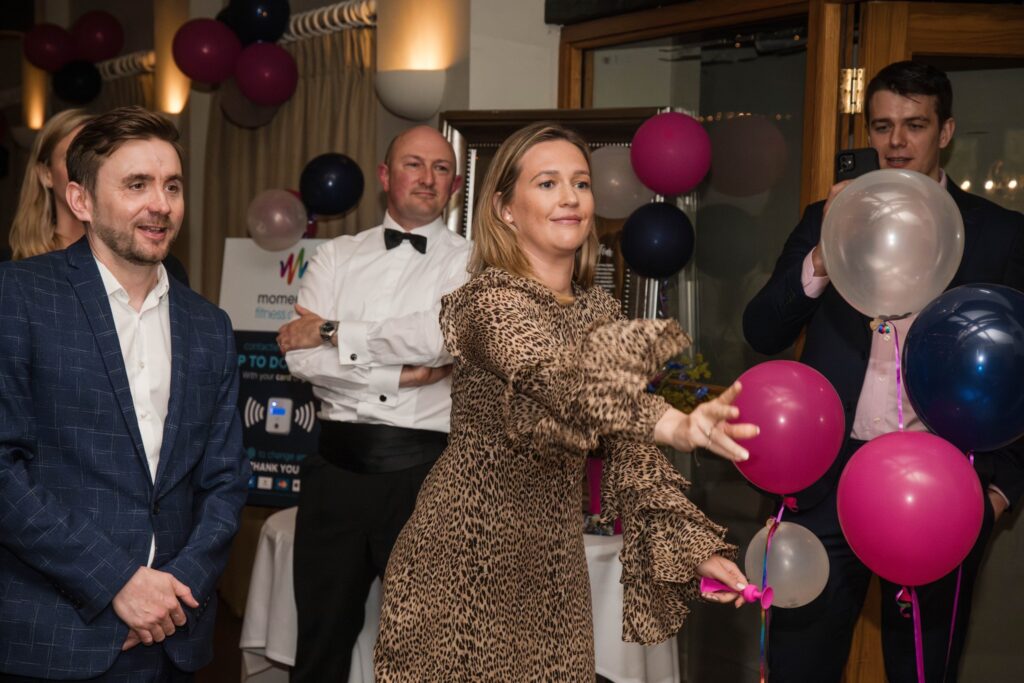
A guest playing a balloon game at the Momentum charity evening, with a tap-to-donate point behind her

That is the feeling you want at the top of a campaign: the whole room joining in at once.

Running the peak night

The peak night has one job: get the total as close to the target as it can go. Everything else on the programme serves that.

First, command the room. I once announced a live auction while people were still talking, and only a fraction of them heard the lots. I’ve never made that mistake again.

Then the things I always plan for:

  1. Say the target and the total out loud. A screen showing progress gives the room a finish line.
  2. Be clear where the money goes. At an MS UK event I told the room at the start exactly where every pound was going, and the live pledge raised £8,300, all of it to the charity. The Fundraising Regulator’s Code says you should be clear how the money will be used, and it requires a risk assessment and the right licences.
  3. Run the pledge after the story, not after the coffee. Give the room a reason first. It’s a serious moment, though the excitement still builds as the money comes in.
  4. Collect Gift Aid declarations on pledges. HMRC treats a ticket as the right to attend, not a gift, and auction wins are purchases. A pledge is a donation, so it can carry Gift Aid with a declaration.

For the full run order, see my guide on how to plan a gala.

How do you close a fundraising campaign?

You close a fundraising campaign by collecting every pledge, thanking every donor, and telling supporters what the money achieved. Do it within weeks, while the night is still fresh.

Kevin Durham with two guests in front of an art deco backdrop at a 1920s-themed fundraising gala

Follow up pledges made in the room the next morning. Then thank people, personally where you can. My guide to thanking donors has a simple sequence.

Finally, report the final total and the progress on the purpose. If you went over the target, your secondary purpose tells you where the surplus goes. One client of mine doubled their target. However it goes, those donors are the quiet phase for your next campaign.

Fundraising campaign ideas that suit a live peak

Most fundraising campaigns work better with a live night at the end. These fit naturally:

  • Capital appeals. A building, a vehicle or a piece of equipment. A clear price makes a clear target.
  • Christmas appeals. Launch on Giving Tuesday and peak at a December gala. Big Give’s Christmas Challenge raised £57.4m in a week in December 2025, so supporters are used to matched giving at that time of year.
  • Anniversary campaigns. A 25th or 50th year, with a celebration dinner as the finale.
  • Fund-a-need campaigns. A year of a service, broken into pledge levels the room can fund on the night.
  • Corporate partner campaigns. A company matches staff fundraising, with the gala as the reveal.

If you’re planning a fundraising campaign with a live event at the peak, call me on 07596 851647. The first consultation is free, and I’d rather talk it through properly than trade messages.

Kevin Durham, charity auctioneer

Kevin Durham

Charity auctioneer & event host

20years£10m+raised60–80events/yr
Check availability07596 851647

Let’s talk

Bring this to your event

Book a free consultation with a charity auctioneer who has raised over £10 million.

Fundraising strategy for charities: where events fit, and where they don't

Kevin Durham in a burgundy velvet jacket on the microphone, reading from his running notes on stage at a charity ball

In short

  • A fundraising strategy is a two to three year plan that sets out how much you need, where it will come from, and who does what.
  • UK charities get just under half their income from the public. Events are one slice of that, alongside regular giving, grants, legacies, trading and major donors.
  • Events are good at raising unrestricted money fast, finding new supporters and lifting a whole campaign. They are bad at steady monthly income.
  • Run fewer, bigger events, and plan what happens to every guest after the night.
  • The Fundraising Regulator’s Code sets event standards, and HMRC rules decide what can carry Gift Aid and VAT relief.

A good fundraising strategy treats events as one income stream among several, not as the plan itself. Events are brilliant at some jobs and poor at others, and it is easy to lean on them too hard or write them off too quickly.

My living is 60 to 80 events a year as a professional charity auctioneer, so you might expect me to tell you to run more of them. I won’t. Here is where an event earns its place in your plan, where it doesn’t, and how to build the year around the one night that matters.

What is a fundraising strategy?

A fundraising strategy is a written plan for how your charity will raise the money its work needs over the next few years. It names your target, the mix of income you will chase, the activities and dates, the budget, and who is responsible.

NCVO suggests matching it to your organisation’s plan, usually two to three years, with SMART objectives and a review built in. The Charity Commission is blunter: trustees should plan the approach, and must identify and manage the risks that come with it.

A strategy is not a calendar of nice ideas. It starts with a number, a real one in pounds. If you have not set one yet, start with setting a target and work backwards.

Where does UK charity income actually come from?

Just under half of UK voluntary sector income comes from the public. NCVO’s Almanac puts it at 48% of £69.1bn in 2021/22, with government at 26%, other charities and foundations at 12% and investments at 9%.

“The public” covers a lot of ground: donations, legacies, membership, charity shops, and events.

So events are a slice of a slice.

The public slice is also under pressure. CAF estimates the British public gave £14bn in 2025, and one in five people say they cannot afford to give. CAF’s own consultant writes that the sector has lost around 600,000 donors a year over the past decade.

That is the honest backdrop, and I’d rather you planned with it than around it. How to fundraise in 2026 comes down to the mix. There is no magic method.

Where do events fit in a fundraising strategy?

Events fit in a fundraising strategy as the place where you raise unrestricted money quickly, meet new supporters face to face, and give a campaign a moment people remember. They work best as a few high points in the year, with steadier income streams doing the daily work.

Here is roughly how the main streams compare:

Income streamGood atWeak at
Regular givingPredictable monthly incomeSlow to build, needs constant recruitment
Trusts and grantsLarge sums for set projectsOften restricted, competitive, slow
Major donorsBig gifts from few peopleTakes years of relationship
LegaciesLarge, transformational giftsUnpredictable timing
EventsFast unrestricted money, new contactsHeavy on time, risk and volunteers

CAF’s March 2026 analysis gives two useful examples. A small Sussex charity found community fundraising events among its most effective tools, both for income and local ties. And Great Ormond Street Hospital Charity grew events, trading, major gifts and individual giving together on the back of one capital campaign. The event was part of the story. It wasn’t the whole story.

Where events don’t fit

An event will not give you reliable monthly income. It happens once, and a wet weekend or a clash with a big match can dent it.

Events also cost more than the venue invoice. Staff time, volunteer hours, ticket sales, lot sourcing and follow-up all come out of the same small team that should be stewarding donors. The Charity Commission notes there is no set amount a charity must spend on fundraising, but every pound and hour has to be in the charity’s best interests.

There are tax limits too. Fundraising events can be exempt from VAT, but HMRC caps it at 15 events of the same kind in the same place each financial year. Hold 16 and all of them become taxable. HMRC also says an event should be out of the ordinary, not business as usual.

Put simply: if your events are plugging a gap that regular giving or a grant should fill, the problem is the strategy, not the event.

How do you write a fundraising plan that includes events?

You write a fundraising plan by auditing what you raise now, choosing your income mix, setting objectives, then putting activities, budgets and owners on a calendar. Events go into that calendar after the steady streams, not before.

  1. Audit last year. What did each stream raise, and what did it cost in money and hours?
  2. Check the mix. NCVO warns that relying on a single source of income puts you at risk.
  3. Set objectives per stream. A number, a date and an owner for each.
  4. Choose your channels. The CIoF guide for small charities lists events, online campaigns, direct mail and face-to-face as options to weigh.
  5. Build the calendar and budget. Place your flagship event where it supports a campaign or a key date.
  6. Review quarterly. Add event risks to your risk register.

If you want a second pair of eyes on where the event sits, that is what my fundraising consultant work is for. Most of the extra money is made before the night, in the planning.

How many fundraising events should a charity run a year?

Most small and medium charities are better off with one flagship event and a handful of light community fundraising activities than with a packed events diary. One big night done properly usually beats six done tiredly.

The flagship might be a gala dinner, a ball or an auction evening. Around it, supporters run their own community fundraising: bake sales, sponsored challenges, quiz nights. Those cost the charity little and keep people involved between the big moments.

Spacing matters. Put the flagship where it does a job, such as launching an appeal or closing a capital campaign, and keep at least a few months between big asks to the same crowd.

Getting more from the one big night

If you are going to run one main event, make it count. This is my patch, so here are the opinions I hold most firmly.

Most charity auctions underperform not because of the lots, but because nobody is managing the room’s energy. Bidding momentum is a skill, not luck.

Kevin Durham in a burgundy velvet jacket on the microphone, pointing out into the room at the Jigsaw charity gala

The live pledge is the most underused tool in the room. One gala I worked in Monaco raised over €1,000,000, and it was built on planning before the event: which lots, in what order, and a structured pledge drive on the night. The credit belongs to the people behind that cause, not me, but the lesson stands: put the live pledge in the plan from the start. It’s a serious moment, yet the excitement still builds as the money comes in.

There is a tax reason too. HMRC treats auction wins and raffle tickets as purchases, not gifts, so they cannot carry Gift Aid. A genuine donation on top of a ticket can, if it is clearly optional. A pledge is a straight donation, so collect Gift Aid declarations on the night.

And source your lots in-house. A commission-based lot supplier who rolls in with 50 to 100 lots is mostly serving itself. Ten great lots and a room driven to compete will keep far more with the charity. For more on the night itself, see how to raise more money at a charity event.

What do the rules say about fundraising events?

The main rules are the Fundraising Regulator’s Code of Fundraising Practice, which has an events section, plus your trustees’ legal duties and HMRC’s tax rules. The new Code came into effect on 1 November 2025.

Section 10 of the Code says you must carry out a risk assessment before an event, have the permissions and licences you need, and be clear in your promotion about how the money raised will be used.

Under CC20, trustees must make sure fundraising complies with the law and protects the charity’s reputation.

Fundraising tips to build the year around

A few fundraising tips that hold up whatever size you are:

  • Start with the number, then pick the streams that can reach it.
  • Give each event one job: new supporters, unrestricted cash, or a campaign launch. Not all three by accident.
  • Plan the follow-up before the night. Every guest is a possible regular donor. CAF’s advice is to cherish the supporters you have, and that starts with how you thank donors.
  • Count the hours, not just the costs.
  • Judge the event against the plan. Last year’s total is the wrong yardstick.

If you’d like to talk through where an event fits in your own fundraising strategy, call me on 07596 851647. The first consultation is free, and I’d rather talk it through properly than trade messages.

Kevin Durham, charity auctioneer

Kevin Durham

Charity auctioneer & event host

20years£10m+raised60–80events/yr
Check availability07596 851647

Let’s talk

Bring this to your event

Book a free consultation with a charity auctioneer who has raised over £10 million.