
Home About Kevin Auctions Virtual auctioneer Pledges Hosting Entertainment Free software Software examples Case studies Reviews Other services Fees Fundraising games Fundraising consultant Get in touch Blog Podcast

What if an auction lot donor pulls out before the event?

Kevin Durham on a gala stage in front of a screen headed Prizes donated by, listing the companies that gave the auction lots

In short

  • When an auction lot donor pulls out, confirm in writing what was promised, then decide the same day whether to replace, substitute or drop the lot.
  • A substitute needs the donor’s agreement, and the agreement of any bidder who has already bid on the original.
  • Until the hammer falls there is no sale, so a lot can generally be withdrawn. The bigger risk is advertising a lot you know has gone, which the Code of Fundraising Practice says must not mislead.
  • Remove the lot from every place it appears, and tell everyone who was told it would be there.

An auction lot donor pulls out when the person or business that promised an item withdraws it, or cannot deliver it, after it has been listed in your catalogue, programme or bidding platform. Most galas meet this sooner or later, and printing something you cannot deliver does more harm than losing the lot. Everything below is general advice as at November 2026, not legal advice.

What should a charity do first when an auction lot donor pulls out?

A charity should act the same day, in this order: confirm in writing what was promised, ask once whether the donor can still help, then remove or replace the lot everywhere it appears and tell anyone who was expecting it. Do the written confirmation first: every later step leans on that record.

  1. Confirm what was promised. Pull the signed lot donation form and check the description, exclusions and expiry. No form? Write down what you were told, by whom and when. Then email the donor to confirm they are withdrawing, so the record is clean.
  2. Ask once whether anything can be saved. A later date, a smaller version, a different gift from the same donor. Then accept the answer, whichever it is.
  3. Decide: replace it, substitute it, or drop it.
  4. Remove it everywhere, using the table below.
  5. Tell the people who were told. Ticket buyers who booked for it, bidders with pre-bids, a table host, a sponsor, a journalist.
  6. Thank the donor anyway. Withdrawing honestly three weeks out beats going quiet, and a gracious reply keeps next year’s door open. My piece on thanking donors covers the wording.

Can you swap in a substitute lot of equal value?

A charity can offer a substitute lot only when the donor agrees to it and, if anyone has already bid on the original, the bidder agrees too. Equal or greater value is the minimum, and the replacement should be described as fully as the original was.

Nobody has bid: you need the donor’s consent and a fresh description. Someone has pre-bid: ask them, and let them walk away. Never quietly move a bid to a different item, because a bid is for the thing described.

Do not buy a replacement and present it as a donation. If the room was told about the original, say the lot has changed.

Where a withdrawn lot has to come out

A withdrawn lot has to come out of every place it appears, because one leftover mention is how it gets announced in error.

Where it appearsWhat to do
Printed catalogue or programmeAdd an insert slip or reprint; if already printed, announce it from the stage
Bidding platform or appUnpublish the lot, then contact every pre-bidder
Run of show and auctioneer’s lot sheetStrike the line, re-time the segment, hand the host the new sheet
Screens and slidesRemove the slide so the numbering does not jump
Ticket page, emails, social postsCorrect the wording; if it was the headline draw, say what changed
Donor credits and sponsor logosTake them off the lot slide

Your run sheet is the document most likely to be forgotten, and the one that decides what the host says.

Can an auction lot be withdrawn before the hammer falls?

In general, yes. Under section 57 of the Sale of Goods Act 1979 (read November 2026), a sale by auction is complete when the auctioneer announces it by the fall of the hammer, and until then any bidder may retract. The Act does not use the word withdraw, so the right to pull a lot comes from case law.

In Harris v Nickerson (1873), as summarised there, a notice that goods would be auctioned was held not to be an offer that they would be put up, so withdrawing them beforehand gave the disappointed buyer no claim.

There is a limit. In Barry v Davies (Court of Appeal, 2000), an auctioneer withdrew no-reserve machines after genuine bids and was held bound to sell, because a lot cannot be pulled simply because the price is low. So withdraw before bidding opens, for a real reason, and never after the first bid because you dislike the number.

Once the hammer has fallen, a contract exists. If a winner has paid or been told they have won, tell them at once, offer a refund or an agreed substitute, and take advice.

What do the fundraising rules say about a lot you cannot deliver?

The Code of Fundraising Practice says fundraising must not mislead donors, including by giving inaccurate or unclear information, so a charity should not keep advertising a lot it knows has gone. The Code does not mention withdrawn lots, so that is my reading of it, not a ruling.

Three nearby standards back it up, all read November 2026:

  • Section 8.1.3 says information about fundraising activities must be accurate.
  • Section 10.2.1 says every communication about an event must be clear and accurate.
  • Section 10.1.3 says you have a plan for all situations reasonably expected. A donor dropping out is one.

The Charity Commission’s CC20, updated 3 February 2026, says trustees must identify, review and manage fundraising risks. It does not mention auction lots either, but an undeliverable lot is a fundraising risk, and a written plan is the answer.

What does the auctioneer say if a withdrawn lot was announced in error?

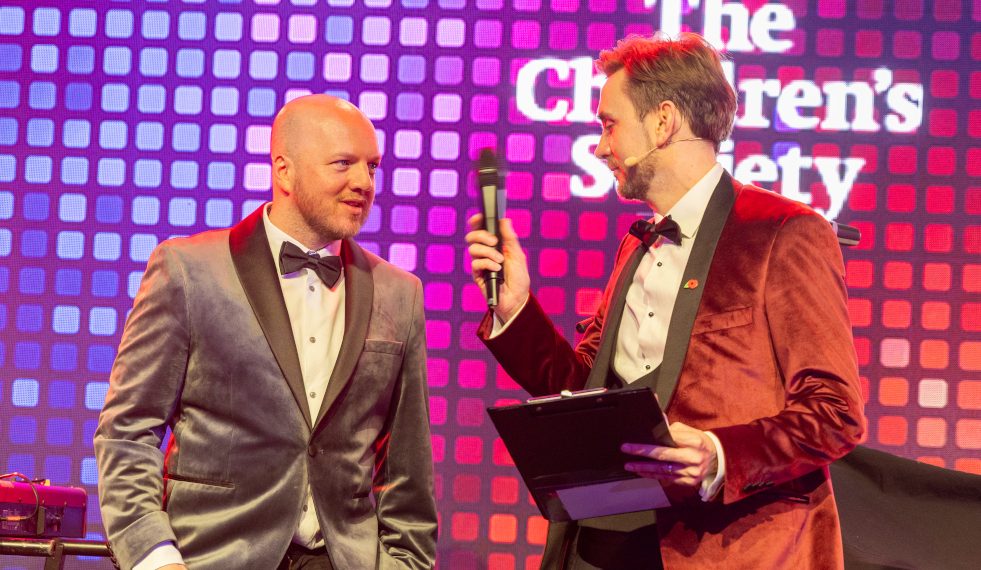
The auctioneer should say it once, in one plain sentence, name nobody and move straight to the next lot: “Lot 7 has been withdrawn, so please cross it out of your catalogue. Lot 8 is…” Use your own words, but keep it that short.
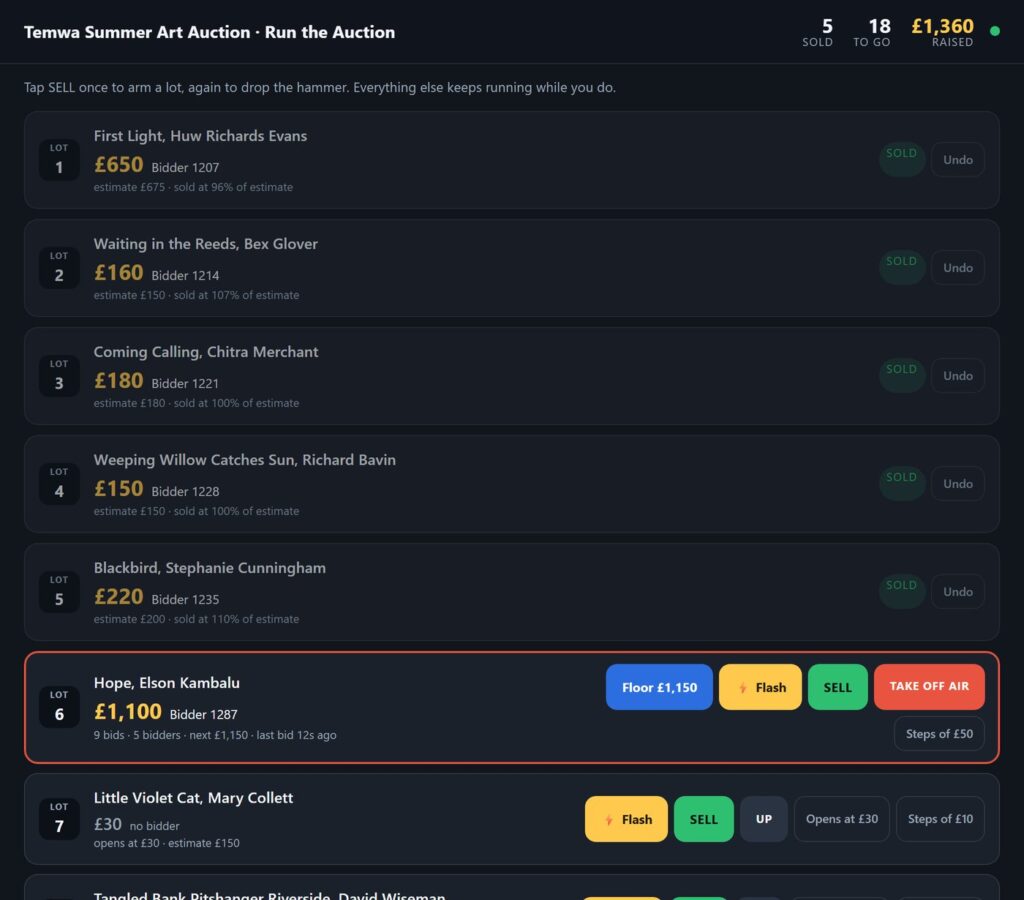
The auctioneer's console during the Temwa art auction: five lots sold with their hammer prices, lot six on air with Floor, Flash, Sell and Take off air buttons, and the running total

Skip the apology speech, the reason and any joke at the donor’s expense. If someone had pre-bid, a team member should speak to them before that lot would have come up.

My view is that you never let a lull sit, and a long explanation is a lull. Say it, move on, and let the next lot rebuild the pace; my post on bidding momentum says why.

Preventing the next time a donor pulls out

When a donor pulls out, three things limit the damage: a lot donation agreement signed when the gift is made, a confirmation date set before anything is printed, and a held backup lot ready to drop in.

  • Agreement. The donation form records what was promised and what happens if the donor cannot honour it.
  • Confirmation date. Pick a date a few days before the print deadline and ask every donor to reconfirm in writing. Nothing unconfirmed goes to print.
  • Held backup. One genuinely donated lot, fully described, kept off the printed list and out of the running order. Use it only if it is a fair match.

I would rather run about ten great lots than fifty or a hundred. With a short catalogue every lot carries weight, so a lost one stings more and each is worth confirming.

When is it worth hiring a charity auctioneer for this?

Doing it yourself is the right call when a lot goes weeks before print: reword the catalogue and nobody notices. A charity auctioneer earns the fee when a withdrawal lands in the final days or on the night, because someone has to reorder the programme and hold the room.

After 20 years on the mic, my rule is to get the room quiet first, then rebalance the order around whatever has gone. A Jigsaw Trust organiser said on my reviews page: “Kevin owned the room as he conducted the live auction, more than doubling our target. It was not just during the event where Kevin showed his skills, but also in guiding our planning.” (Naomi Chaning Pearce, Jigsaw Trust.) That is kind of them. The work that made the night was theirs.

To get a quick answer, have ready: your event date, room size, current lot list, which lot has gone, what is already printed, and when you found out.

If a donor has pulled out and you want a second pair of eyes on the running order, call 07596 851647. If you hire me as your charity auctioneer, I build the auction software around your event, with your branding and lots, included for the event and live for a month afterwards.

Kevin Durham, charity auctioneer

Kevin Durham

Charity auctioneer & event host
20years£10m+raised60–80events/yr
Check availability07596 851647

Let’s talk

Bring this to your event

Book a free consultation with a charity auctioneer who has raised over £10 million.

Auction lot donation form: the fields that matter on the night

Kevin Durham reading lot details from a clipboard on stage

In short

  • An auction lot donation form records what was given, who gave it, what it is worth, and what conditions come with it.
  • The fields that save you on the night: an honest description, a value with evidence, every restriction and expiry date, who holds the item, and consent to publish the donor’s name.
  • Gift Aid does not apply to a gift of goods, and HMRC treats a winning bid as a purchase, although part of a bid can qualify if bidders are told the retail value first.
  • The Code of Fundraising Practice expects you to be clear about who insures each risk, so insurance and collection belong on the form.

The auction lot donation form is the least glamorous document in your event file, and the first one I ask to see. By the time I am in the middle of a room with a wireless mic, every decision about a lot has already been made by whoever filled that form in. If the value is guesswork, I cannot anchor the bidding. If nobody wrote down the expiry date, the winner finds out in March that the weekend away cannot be taken.

What is an auction lot donation form, and what should it do?

An auction lot donation form is a short agreement between the charity and the donor: what the item is, what it is worth, what conditions apply, and who is responsible for it until the winner collects it. It gives me the facts to sell the lot honestly, the winning bidder terms they agreed to before their hand went up, and your finance team something to point at in February.

Keep it to one page. Donors abandon anything longer, and a form nobody fills in is worse than none.

Who is donating, and in what capacity?

Start with the boring block: name, organisation, position, email, mobile, address. Then the field most forms miss, and the one I end up chasing: who is the contact during the event, and on what mobile number?

Ask whether the gift comes from an individual or a business. A business donating a service may want its logo in the auction catalogue and an invoice reference. An individual may just want a thank-you letter.

Your form is also a fundraising document, which carries its own obligation. The Charity Commission’s guidance on trustee duties says that if your charity’s income exceeded £10,000 in its last financial year, fundraising materials must state it is a registered charity, and should include the register number. Footer job, done once.

How should the form describe the lot?

Make the donor write the description, then make them write what is not included. The exclusions are where the arguments live, and I would rather read them out than discover them on the night.

“A weekend at a cottage” is not a lot. “Three nights, Friday to Monday, sleeps six, excluding bank and school holidays, travel not included, dates by arrangement with the owner” is a lot. The first sells for less and causes trouble afterwards.

Not just good practice, either. Under section 11 of the Consumer Rights Act 2015, every contract to supply goods by description includes a term that the goods will match the description, and a winning bidder is a consumer like any other. The Code of Fundraising Practice also requires fundraising communications to be accurate and says fundraising must not mislead donors. An over-egged description breaks both by accident.

For a signed item, add a provenance field: who signed it, when, and what paperwork comes with it.

What value should the donor put on the lot?

Ask for two numbers, not one. The retail or market value, and the evidence for it: a link, a price list, a receipt, or the donor’s own standard rate.

That second field does real work. Under FRS 102 and Charities SORP 2015, donated goods are recognised at fair value when you receive them rather than only when they sell, unless measuring that value is impractical, per ICAEW guidance reviewed in July 2015. Collect the numbers at the point of donation and it takes thirty seconds.

It also sets the floor. A reserve price has to sit on a number you can defend from the stage.

Can a charity claim Gift Aid on a donated lot?

No. Gift Aid applies only to gifts of money, and HMRC’s guidance is explicit that charities cannot claim it on donations of physical items.

The winning bid is a different question, and this is where your valuation field earns its keep. HMRC treats a payment at a charity auction as a purchase, not a gift. Where the item is available commercially elsewhere, the benefit to the bidder is its shop sale price, and if that sits inside the donor benefit limits the whole bid can qualify. Where it exceeds them, the bidder may still buy the benefit and Gift Aid the excess, but only if they knew the retail value at the time. HMRC’s own example: a £10 football sold for £30 gives £20 of eligible Gift Aid if the room was told it costs £10, and nothing if it was not.

So saying the retail value out loud before bidding starts is worth money, and I can only say it if someone wrote it down. For a lot that is not commercially available, including most promises and experiences, the benefit is the full price paid, and none of it qualifies.

One more route. A charity can sell goods as the owner’s agent, ask the owner to donate the proceeds, and claim Gift Aid on the net proceeds. That needs the owner to keep ownership until the sale, and a valid Gift Aid declaration from them covering the gift of the proceeds.

Restrictions and expiry: the small print that decides the sale

Every experience lot needs a redemption window. Record the valid-from date, the expiry, blackout periods, the notice required, and whether it can be transferred.

Twelve months from the event is the sensible default. Anything shorter dampens bidding, because guests do the arithmetic in their heads and decide they cannot use it. Open-ended makes the donor nervous.

Ask the awkward questions while the donor is still keen. Minimum or maximum numbers? Age limits? Who pays travel? And if the donor cannot honour the lot, what then?

Who holds the lot, and who insures it?

Put it on the form: with the donor, with the charity, or in transit. Then name who insures it, and until when.

The events standards in the Code of Fundraising Practice require a pre-event risk assessment that includes being clear about who insures against each risk. A donated watch sitting in a desk drawer for six weeks is exactly that kind of risk, and nobody thinks about it until it is missing.

Add the logistics: delivery method, who collects, by what date, and where it needs to be on the day. If a third party handles lots or fulfilment, the Code expects a written agreement covering the activities and timescales involved.

Consent to publish the donor’s name

Separate the options out: name in the catalogue, logo on screen, a mention from the stage, a photo on social media. Donors say yes to some and no to others, so one blanket box tells me nothing when I am deciding who to thank by name.

You are collecting personal data, so the ICO’s right-to-be-informed guidance requires privacy information at the point of collection: your purposes, your retention period, who the data is shared with. Where you rely on consent for marketing afterwards, the ICO is clear that valid consent means an unambiguous indication by clear affirmative action, and that pre-ticked boxes do not count.

What the form tells me from the stage

My booking contract asks the charity to tell me, at least ten working days before the event, if any lot comes from a third-party supplier on a consignment, reserve or minimum-return basis. That lets me tell the room at the start exactly where every pound is going: which lots give the charity 100%, and which only pay out above a reserve.

I did not criticise anybody. I just turned the lights on. The only reason I could was that somebody on their team had written the terms of each lot down. Nobody claps for that part. It made the night work.

My strong view, and it is a view: lots sourced in house, with an auctioneer guiding the paperwork, keep more money with the charity than lots arriving on commission.

What should an auction lot donation form include?

One page. This is what goes on it.

BlockFields
DonorName, organisation, position, email, mobile, address, event-day contact
The lotTitle, full description, what is excluded, quantity, provenance and paperwork
ValueRetail or market value, evidence for it, whether it can be bought elsewhere
TermsValid from, expiry, blackout dates, notice, transferable or not, age or health limits
LogisticsWho holds it, who insures it, delivery or collection method and date
PermissionsCatalogue, logo, stage mention, social media, privacy notice
Sign-offDonor signature and date, charity staff name, registered charity statement

Build it as a web form where you can: online you can make the fields that matter compulsory.

An auction lot form open on a laptop

Where to start

Write the form before you start asking. It is tempting to chase donation ideas first and sort the admin later, but the questions on a good form are the ones that produce a better lot.

Still deciding what to go after? Start with how to source auction lots and work back to the paperwork. If you want a second pair of eyes on your lot sheet before the invitations go out, that is part of what I do as a charity auctioneer. Call 07596 851647.

Kevin Durham, charity auctioneer

Kevin Durham

Charity auctioneer & event host

20years£10m+raised60–80events/yr
Check availability07596 851647

Let’s talk

Bring this to your event

Book a free consultation with a charity auctioneer who has raised over £10 million.

Collecting payment at a charity auction: on the night or by invoice?

Kevin Durham in a burgundy jacket pointing out a bidder on the floor

In short

  • Take payment on the night wherever you can. Every hour between the hammer and the card is an hour for enthusiasm to cool.
  • A bid becomes a contract at the fall of the hammer, so your terms must say what happens next.
  • In-person UK card rates sit around 1.5% to 1.75% as of October 2026, and overseas cards cost more.
  • Record five things per lot: lot number, winner, hammer price, how they paid, when it was banked.
  • Chase twice, warmly. Court is rarely worth what it costs a charity in goodwill.

The hammer falls, the room applauds, and not a penny of it is in the bank yet. Collecting payment is the least glamorous part of a charity auction and the part that quietly decides what the night actually raised.

Twenty years on the auctioneer’s mic and over £10 million raised have taught me that auction totals shrink in the gap between the stage and the finance team’s spreadsheet, and that the gap is an admin problem, not a bidding one. This is guidance from the floor, not legal or tax advice.

Should you collect payment on the night or invoice afterwards?

Take payment on the night for everything you can, and invoice only by exception.

It is not suspicion, it is momentum. A guest who has just been applauded for winning a lot wants to pay. The same guest on a Tuesday morning has a diary full of other things. The Fundraising Regulator’s code asks for procedures to count, record and bank donations without delay, and the easiest way to keep to that is to have the money before the room empties.

Keep a short list of genuine invoice cases: a company that needs a purchase order, an overseas guest whose card will not clear, a large lot going by bank transfer. Agree the payment date out loud at the desk and write it on the record. An undated invoice is a donation that may or may not arrive.

When is a bid at a charity auction legally binding?

Under the Sale of Goods Act 1979, a sale by auction is complete when the auctioneer announces its completion at the hammer’s fall, and until that announcement any bidder may retract their bid.

Two other parts of the same section matter at a gala. Each lot is treated as a separate contract, so one unpaid lot does not unravel the night. A reserve can also be notified in advance, worth putting in writing.

Having a right and enforcing it are different things, and for a charity the second is rarely worth doing. So the paperwork before the auction matters more than the law after it. Register bidders, capture a name, a mobile and an email, and make sure the room understands how bidding works first.

Setting up the payment desk

Put the desk where people walk out, not next to the stage, and open it before the auction, not after.

Staff it with two people minimum. Charity Commission guidance on internal financial controls asks for at least two to handle and record cash, for money to be banked as soon as possible without expenses taken out, and for card readers to be kept secure and reconciled.

An interactive table plan showing each table and how many of its ten seats are checked in

A few things I insist on:

  • One person holds the master lot sheet and nobody else writes on it.
  • The desk never opens during the live pledge. Guests queuing at the back kills the quietest, most valuable part of the evening.
  • Silent and live auction winners settle at the same desk, or you will double-charge somebody. My guide to running a silent auction covers the closing process that feeds it.
  • I announce the desk from the stage, by name and location, twice.

The code’s events standards ask for a plan covering all situations you could reasonably expect. A reader running out of battery at 10.40pm counts as reasonably expected.

What do card readers cost a charity auction?

Expect to lose roughly 1.5% to 1.75% of every in-person card payment, plus whatever the reader itself costs.

ProviderIn-person rate, October 2026Worth knowing
Zettle1.75% per card transactionSame rate for mobile wallets and Amex; invoices 2.5%
Square1.75% with UK cardsNon-UK cards add 1.5%; keyed-in payments 2.5%
Stripe1.5% plus 20p, standard UK cardsPremium UK cards 2.8% plus 20p, international 3.15% plus 20p

On a £20,000 auction that is roughly £300 to £350 of fees. Budget for it rather than finding it in January. International guests mean a chunk of the room pays non-UK rates.

Do not quietly add the fee to the bidder’s bill. If you want the winner to cover costs, that is a premium and it belongs in your published terms. I have written separately on whether a buyers premium earns its keep.

What should a charity record for each lot?

Record the lot number, the winner’s name and contact details, the hammer price, how it was paid, and the date the money reached the bank.

Charity Commission guidance asks for records of each fundraising event showing how much was collected and what it cost. Build it from the lot sheet up and the total reconciles itself.

A gala big screen showing the lot on the block, its current bid and the running total

Then the tax point that catches people out. HMRC’s guidance is blunt: a payment for an item at a charity auction is not a gift to charity, it is a purchase. Auction income is not Gift Aid income by default, and it should not go in the same bucket as the pledge sheets.

HMRC allows a narrow route where a bidder treats part of the payment as buying the item and Gift Aids the excess, but only where the item can be bought elsewhere and the bidder knew its value when bidding. So the retail value has to be announced before bidding opens and written on the lot record. Print the values in your auction catalogue and have me read them from the stage.

The same goes for pledges. The vast majority are paid on the night, and ideally all of them, because once people leave the room they conveniently forget what they promised. Where I have seen a high drop-out, it came from too few payment terminals and volunteers on the ground.

How do you chase an unpaid lot politely?

Send a thank-you with the amount and a payment link the next working day, one friendly reminder about a week later, then make it a phone call from someone the bidder actually knows.

Tone decides this. The code requires fundraising to be legal, open, honest and respectful, and rules out undue pressure and unreasonably persistent approaches. Two written nudges and a call is not persistent. Six emails and a text at 9pm is.

Give the deadline a reason the bidder can see: the charity has to pay a supplier, or tell the lot’s donor it has been honoured. And let the table captain or the trustee who invited them make the call rather than the finance officer. The person who filled the table has a relationship. The spreadsheet does not.

What if a bidder refuses to pay or disputes the amount?

Check your own record first, then decide whether the money is worth the relationship.

Most disputes are honest. Two paddles went up together and the spotter called the wrong one. The bidder thought the price was per person. Someone bid for their table and three people at it have since gone quiet. If your record is genuinely unclear, offer the figure the bidder believed they were committing to, write the resolution down, and move on.

Flat refusal is a contract question. An unpaid lot is a simple contract debt, and an action on a simple contract cannot be brought more than six years after the cause of action arose, so no panic in week three. A money claim is possible: court fees start at £35 for claims up to £300, £70 for £500.01 to £1,000 and £80 up to £1,500.

A charity rarely comes out ahead by suing a gala guest. The fee is the small part. The cost is trustee time, awkwardness with whoever brought that guest, and the story travelling. Agree a write-off threshold with your board beforehand, so the decision is policy rather than argument.

When a lot should be re-offered

If the bidder retracted before the hammer, nothing was sold, so the lot can go straight back up. After the hammer, do not re-offer to the room.

Go quietly to the under-bidder instead. They know the price, and a call saying the lot is available at their bid beats putting it in the next newsletter at a discount. Never name a non-payer publicly.

Dated lots need a faster decision. Hospitality, match tickets and experiences with an expiry date are worth nothing once they lapse, so set a cut-off: unpaid after two weeks and the lot goes to the under-bidder. Tell the donor what happened. Most offer to donate it again next year.

What I ask a committee before the hammer falls

Three questions, every time. Who is on the payment desk, and have they used the reader before. What do the terms say about when payment is due. Who makes the call if a lot is still unpaid in a fortnight.

In my experience what goes wrong most often after the night is the admin: who won which lot, for how much, and how to reach them. Under-planning and too few volunteers cause most of it, so over-plan and put more people on the desk than you think you need.

If you want to talk through how your auction and payment process is structured, call me on 07596 851647. I would rather talk than trade emails, and the first fundraising consultation is free.

Kevin Durham, charity auctioneer

Kevin Durham

Charity auctioneer & event host

20years£10m+raised60–80events/yr
Check availability07596 851647

Let’s talk

Bring this to your event

Book a free consultation with a charity auctioneer who has raised over £10 million.