Home About Kevin Auctions Virtual auctioneer Pledges Hosting Entertainment Free software Software examples Case studies Reviews Other services Fees Fundraising games Fundraising consultant Get in touch Blog Podcast

How do you manage dietary requirements at a charity dinner?

A full gala dinner room of round tables with guests seated for the meal, the stage screen glowing at the far end

In short

  • The caterer or venue serving the meal is the food business and carries the allergen duty. Your job is to get accurate guest information to them in time.
  • Ask once, on the ticket form, and close it a week before the caterer’s deadline.
  • Send the caterer a named list by table and seat, not a pile of notes.
  • Keep health words off anything guests can see. Dietary data can be special category data under UK GDPR.
  • The host signposts and never reassures: “ask your server” is safe, “that dish is nut free” is not.

Managing dietary requirements at a charity dinner means finding out what each guest cannot eat before the night, giving the caterer one accurate named list, and getting the right plate to the right person without exposing anyone’s health. It is paperwork, done early.

I work 60 to 80 gala and event nights a year from the stage, not the kitchen. I am not a caterer or a lawyer, so this is a checklist from dated official sources. It is general information, not advice.

Who is responsible for allergens at a charity dinner?

The caterer or venue that prepares and serves the meal is the food business, and the allergen duty sits with it. The Food Standards Agency’s allergen guidance, updated 17 July 2026 and read in November 2026, says catering businesses must provide allergen information for non-prepacked food, and lists 14 allergens: celery, gluten cereals, crustaceans, eggs, fish, lupin, milk, molluscs, mustard, peanuts, sesame, soybeans, sulphites and tree nuts.

The guidance addresses food businesses, not ticket sellers. But a caterer can only act on what reaches them, so you pass on what guests tell you, accurately and in time.

That guidance covers England, Wales and Northern Ireland; Food Standards Scotland publishes its own. If volunteers cook, the FSA’s charity events guidance, updated 4 September 2026, says you may count as a food business and need to register with your local authority.

A dietary need can also be a legal one. The Equality Act 2010 defines disability in section 6 as an impairment with a substantial and long-term adverse effect on daily activities, and covers religion or belief in section 10. A ticketed event open to the public is a service under section 29 and section 20 requires reasonable steps to avoid putting a disabled guest at a substantial disadvantage. Whether a given allergy qualifies depends on the person, and GOV.UK says the Act does not apply in Northern Ireland. Take advice if unsure. I treat a halal, kosher or severe allergy request as something to accommodate, not debate.

What should you ask guests when they buy a ticket to a charity dinner?

Ask on the ticket form, the one moment every guest is answering questions. Put the question to each guest, not each buyer, and record the name as printed on the ticket, the need, and whether it is an allergy, an intolerance or a preference.

Use these fields:

  • Tick list: vegetarian, vegan, halal, kosher, gluten-free, dairy-free, plus the FSA’s 14 allergens.
  • Type: allergy, intolerance or preference. Caterers handle them differently.
  • Other: a free-text box. The FSA’s consumer advice notes guests can be allergic to ingredients outside the 14.
  • Privacy line: who sees the answer, and when it is deleted.

Do not ask for diagnoses, medication or doctor details.

Set the cut-off backwards from the caterer. If they need the final list 14 days before the dinner, close your form 21 days out, chase at 17 and 15 days, and phone anyone who books after the cut-off.

How do you pass dietary requirements to the caterer?

Send one named list sorted by table and seat. Six columns are enough: name, table, seat, requirement, allergy or preference, and the date the guest confirmed it. A raw booking export of free-text notes is no use to a kitchen.

Then ask the caterer three things in writing: which dishes they can make without each listed allergen, how each special meal will be identified and delivered, and what they hold in reserve for late requests. The FSA says buffet allergen information must be given per item, not for the buffet as a whole, so ask for canapes and desserts item by item too. My gala planning guide covers catering budget and timing.

Can you mark the table plan without publicising anyone’s health?

Yes. Put names and seat numbers on anything guests can see, and keep dietary detail on a separate list held by the caterer and whoever runs the room. Article 9 of the UK GDPR, on legislation.gov.uk, prohibits processing data concerning health, or revealing religious or philosophical beliefs, unless a condition applies, and explicit consent is the one organisers meet most easily.

Gala table plan screen showing the stage, top table and twelve numbered tables

In practice:

  • No dietary words on place cards, plans or name badges. If staff need a marker, use a code only they hold.
  • Give the caterer the list by seat number.
  • Collect the answer from the guest, with a note on who sees it.
  • Collect only what the caterer needs: data minimisation means adequate, relevant and limited to what is necessary.
  • Delete the list after the dinner.

Table captains and dietary requirements at a charity dinner

A captain should chase completed forms, never collect diagnoses. Send each guest the form link yourself and let the captain nudge. My guide to table captains covers briefing them.

Add two lines to the brief. The need belongs to the person, not the seat, so a last-minute swap means the new guest answers the form before taking the chair. And no guest’s health detail goes into a group chat. If a company emails ten names with notes, ask each guest to confirm their own.

What the host says, and never says, about food

The host says where the allergen information is and who to ask, and nothing about any individual’s food. Before the first course I would say: “Allergen details are with your server. If anything on your plate differs from what you told us, say so before you eat it.”

The host never names a guest, asks people with allergies to raise a hand, jokes about fussy eaters, or calls any dish nut free, gluten free or safe. Only the caterer can stand behind that, and the FSA says a free-from claim is a guarantee that needs strict control of ingredients and handling.

Timing matters too. I never approach a guest with food going into their mouth, so asks and games wait until plates are cleared. That also gives a table with a delayed special meal time to be served. Leave room in the running order.

Cross-contamination at a seated charity dinner

You cannot prevent cross-contamination from the front of house, so you ask the caterer how they do it and remove shared items from the table. The FSA’s allergen guidance lists cleaning utensils between dishes, washing hands and storing ingredients separately, and says a kitchen that cannot remove the risk should tell the customer and make no free-from claim.

The FSA’s consumer advice adds that taking an item off a plate is not enough, because an extremely small amount can cause a reaction, and that vegan food is not automatically safe for milk, egg, fish, crustacean or mollusc allergies. At the table, ask for shared baskets and jugs to be kept away from allergic guests, and for special meals to be plated separately and handed over by someone who knows the guest’s name.

What if a guest has not told you?

Send them to the catering manager, not the host. A business must give allergen information but is not required to offer an alternative meal, so agree in advance what happens with late requests, per the FSA.

Never improvise by picking an item off the plate. Name one person on your team to deal with allergy queries. If anyone shows signs of a severe reaction, call 999: the NHS describes anaphylaxis as life-threatening and fast-moving.

What about food lots in the auction?

Treat a food lot like a menu item: the description says what is in it, who made it and what the winner must tell the provider. The FSA’s charity events guidance, updated 4 September 2026, says a home-made cake should come with a list of its allergens, and recommends keeping the packaging of prepacked foods so guests can check ingredients.

For a hamper, keep the labels with the lot. For an afternoon tea or chef’s table, tell the winner in the lot terms to declare allergies when booking. For home baking, ask your local authority’s food team whether the donor needs to register. Add a “Contains:” line to every food entry in your auction catalogue, and ask for it when sourcing lots.

One-page checklist

WhenWhoAction
Ticket saleOrganiserDietary form per guest, privacy line, no diagnoses
21 days outOrganiserClose the form, chase at 17 and 15 days
14 days outCatererReceives the named list by table and seat
14 days outOrganiserWritten replies on dishes, delivery, reserves
DinnerHostSignpost, never reassure
DinnerCatererSpecial meals plated apart, named handover
AfterOrganiserDelete the list

When is it worth bringing in a professional host?

Doing this yourself is the right call for a small supper with a caterer you know. It stops working when you cannot hold the running order, table plan and kitchen in your head together.

A professional host runs the evening around the courses and keeps asks away from service. Naomi Chaning Pearce of Jigsaw Trust said of working with me: “It was not just during the event where Kevin showed his skills, but also in guiding our planning.” She was generous to say it, and the reviews page has more.

If you are planning a gala, call me on 07596 851647. Have your date, guest numbers, caterer and running order ready. My charity auctioneer hire includes the auction software for your event and for a month afterwards.

Kevin Durham, charity auctioneer

Kevin Durham

Charity auctioneer & event host

20years£10m+raised60–80events/yr
Check availability07596 851647

Let’s talk

Bring this to your event

Book a free consultation with a charity auctioneer who has raised over £10 million.

How to take part in Children in Need properly: a charity-event guide

Kevin Durham on the microphone with a clipboard, hosting a charity evening

In short

  • The Appeal Show is on Friday 13 November 2026, but the charity’s pages set no fundraising deadline, so your event need not fall that night.
  • No street or door-to-door collections without a licence, and no tins supplied. Hold an event instead.
  • Pay in online, through JustGiving, at the Post Office or by cheque. Never post cash.
  • Pudsey and the logo need a formal licence, and a business selling goods or running promotions needs a written agreement.
  • Ticket sales do not qualify for Gift Aid. Sponsorship can.

Taking part in Children in Need properly means raising money for BBC Children in Need in line with the charity’s own fundraiser guidance. You pay the money in safely, stay inside the rules on collections, raffles and Pudsey, and tell supporters honestly where the money goes. Most groups get the fun part right and the admin wrong.

I run charity auctions and host fundraising nights, and I do not speak for the BBC. What I know is how an evening raises money, so this guide treats a quiz, an auction or a dinner as the vehicle and the charity’s rules as the road. Everything about the appeal comes from its own pages, read on 1 November 2026.

When is the Children in Need Appeal night in 2026?

The BBC Children in Need Appeal Show is on Friday 13 November 2026, according to the Appeal Show page, read on 1 November 2026. The show is held in November each year, so check that page for any later year.

The charity also lists a fundraising week, BBC Children in Need Week, as 9 to 13 November, and Run with Pudsey and Joe Wicks starts on 1 November. Challenge Yourself 2026 gives no end date.

Your own event can sit before or after the broadcast. My view, not the charity’s: a quiz or auction held on the night competes with the television, so a week either side often suits guests better.

What can you do for Children in Need properly, and what can’t you?

You can fundraise at any age and in almost any way, but BBC Children in Need’s fundraising FAQs draw firm lines around collections, raffles, business promotions and children. It does not authorise individual fundraisers or supply free prizes or merchandise.

ActivityWhat the charity’s FAQs say
Street or door-to-door collectionNot encouraged. Public collections need a licence, and no tins or buckets are supplied.
Collection boxCollector must be 16 or over.
Collecting at a private venueSuggested instead, with the owner’s permission.
RaffleA lottery under the Gambling Act 2005, so it must follow the law. Under 16s cannot sell tickets for licensed lotteries.
Business sales or promotionsA written agreement with the charity is required.
Splitting with another charityAllowed if supporters are told the split and which charities benefit.
Under 16sWritten consent from a parent or guardian, and no counting the final total.

The Fundraising Regulator adds a risk assessment, which must be in writing by law for organisations with five or more employees, plus checking your insurance covers the event and the venue’s maximum attendance.

Telling the charity what you are doing is optional, but its tell us form may get you featured on BBC TV, radio or social media. It cannot promote individual events itself.

How do you pay the money in?

The charity says the safest route is its online pay-in system. Money can also go through a JustGiving page, at a Post Office as the charity’s official cash partner, or by cheque payable to BBC Children in Need. Its pay-in page is explicit: do not post cash.

Money donated through JustGiving or similar platforms is paid to the charity at regular intervals. The pages I read give no bank transfer details and no pay-in deadline, so bank cash the day you collect it and ask the charity if you need an exact date.

Can you use Pudsey or the logo?

Not without a formal licensing agreement. The FAQs say Pudsey is a trademark copyrighted by the BBC, so anyone using his logo needs a licence. The page I read gives no wording template for “in aid of”, so ask the fundraising team on pudsey@bbc.co.uk before printing anything.

This post carries no logo or Pudsey imagery for that reason. Posters can say what the money is for in plain words.

Choosing the vehicle: quiz, auction of promises or dinner

Pick the format by the size of the room and the lead time, not by what sounds fun.

  • Lunchtime or evening quiz. Right for a workplace or club with a week to plan. Charge per team, find a proper host and keep one clear target. My quiz night guide covers pacing.
  • Auction of promises. Colleagues donate a favour or a skill, never a person. It needs a host with some pace, and my auction of promises post explains the format.
  • A dinner or ball. Only if you have weeks, because a venue, ticketing and lots cannot be built in a few days.

Ticket tiers and table sales on a charity event page in the auction software

Whichever you choose, say plainly where the money goes. The Fundraising Regulator’s events guide says marketing should accurately explain how money raised will be used. Here is the arithmetic. Sixty guests at £25 is £1,500. If catering costs £900, then £600 reaches the charity, and “all proceeds go to Children in Need” would be wrong.

Either get the costs donated and say so, or print the split. The year before MS UK hired me, an external auction company grossed about £13,000 and the charity saw about £1,300. I told the room at the start where every pound was going, and the money followed the transparency.

Where do raffles and Gift Aid catch groups out?

A raffle at a charity evening needs no licence if it is an incidental lottery, but the rules are narrow. The Gambling Commission’s incidental lottery guidance says tickets are sold only at the event while it is happening, never online or beforehand.

The raffle cannot be the main reason for the event. Up to £500 of proceeds can buy prizes and up to £100 can cover running costs, while donated prizes have no value limit. My charity raffle rules post has the detail.

Gift Aid trips up more groups. HMRC says event tickets for a fundraising dinner do not qualify as donations, and an auction purchase does not qualify where the item’s retail value exceeds the benefit limits. As a concession, though, the winner may treat part of the payment as buying the item at its value and claim Gift Aid on the excess, if it can be bought elsewhere and its value was known when they bid.

Sponsorship does qualify. BBC Children in Need must have each sponsor’s first name or initials, surname, full home address and postcode, and says £10 of sponsorship can add £2.50. Twenty sponsors at £10 is £200, which could become £250.

Is a charity auctioneer worth hiring to do Children in Need properly?

For a lunchtime quiz or an auction of promises, usually not: a confident colleague and a clear target will do. A professional earns the fee when you have a room of tables, one night to hit a number and a live auction or pledge that needs momentum.

A professional changes three things. The room is quiet before anyone is asked for money, the pace never drops, and a live pledge is built in. In my experience, most event planners do not realise how much a pledge can raise.

Naomi Chaning Pearce of the Jigsaw Trust put it more kindly than I would on the reviews page: “Kevin owned the room as he conducted the live auction, more than doubling our target. It was not just during the event where Kevin showed his skills, but also in guiding our planning.” The Trust built that room. My job was small next to theirs.

If you hire me for a Children in Need evening, the auction software is included. I build the platform around your event, in your branding, with your lots and tickets. It stays live for a month afterwards. See my charity auctioneer services for how it works.

If your night is in the next ten days

  1. Today. Choose one format and one target, and tell the charity what you are doing.
  2. Tomorrow. Set up a JustGiving page, so nobody holds a tin of cash.
  3. This week. Collect donated prizes, and print the plain-words poster showing what the money does.
  4. On the night. Sell raffle tickets only at the event, and collect sponsor details for Gift Aid.
  5. Next morning. Pay in, then send thanks with the total.

When you get in touch, have the date, number of guests, venue, running order and what went wrong last time to hand. Call me on 07596 851647.

Kevin Durham, charity auctioneer

Kevin Durham

Charity auctioneer & event host

20years£10m+raised60–80events/yr
Check availability07596 851647

Let’s talk

Bring this to your event

Book a free consultation with a charity auctioneer who has raised over £10 million.

Fundraiser challenges: what treks, skydives and runs really net a charity

Kevin Durham on the microphone at the start line of a Macmillan Mighty Hike, with hikers in green wearing race bibs

In short

  • A challenge raises sponsorship, but the charity keeps only what is left after the event’s costs, so ask for the net per person.
  • A minimum pledge turns good intentions into a figure. Christie’s skydive terms, for example, ask for 60% of it four weeks before the jump.
  • Gift Aid works on sponsorship from people not connected to the participant, never on the participant’s own fee.
  • The Fundraising Regulator expects a written risk assessment and, with a third party, a written agreement.
  • The best use of a challenge is a night where finishers are thanked from the stage and next year’s group is recruited.

Fundraiser challenges are physical or endurance events, such as a trek, a skydive or a marathon, where people take part and raise sponsorship from friends and colleagues for a charity. (The phrase also means the everyday problems of a fundraising job. This post is about the events.)

Fundraiser challenges are not my day job. I run charity auctions, and have raised more than £10 million that way. But they are a fundraising mechanism like any other, and the useful question is the one I ask about every auction lot: what does the charity actually keep? This is general information, not advice.

What do fundraiser challenges actually raise for a charity?

Fundraiser challenges raise the participants’ sponsorship minus the cost of the event, and that cost varies enormously. Costs for a skydive and an overseas trek are very different. Always compare the net per participant, not the headline target.

Here are published terms as at November 2026:

ChallengeFeeMinimum raisedWhat the page tells you
Skydive (The Christie)£40£400, excluding Gift Aid60% due four weeks before
London Marathon 2027 (Tommy’s)Free£2,500, excluding Gift AidNo registration fee
Inca Trail (Royal Marsden)£450£4,750 targetRun by Charity Challenge, charity acts as agent
Kilimanjaro (CRY)£499 deposit£4,150Charity receives at least £1,975 per fundraiser

Only the last row tells you the net. That is the number to ask for.

How does the operator model work, and what does the charity keep?

In the operator model, a travel company runs the trip and the participant’s sponsorship pays for it, so the charity keeps only the surplus. CRY says it receives at least £1,975 from a £4,150 minimum, roughly 48p in each £1. Other charities do not publish their share.

The Fundraising Regulator, in guidance updated November 2025, describes two set-ups: a company offers an event and the public join it to fundraise, or a charity contracts a travel company and asks supporters to take part. In the second, it says there should be a written agreement setting out each side’s responsibilities and who is liable if something goes wrong.

Operators also protect themselves. Charity Challenge, in a blog dated June 2026, explains that a participant who has not reached 80% of their target can be moved to paying their own costs, because the charity could face financial detriment otherwise. The risk of a shortfall is the charity’s.

The Chartered Institute of Fundraising’s challenge events guide says to cost the returns first, and warns these events can be labour-intensive and costly.

A small committed group often beats a big casual one

A small group of fundraisers with a minimum pledge often beats a large group with no target, because a minimum makes each person do the asking. A pledge is a commitment. A hope to raise something is not.

Take an illustration, with invented numbers. Ten skydivers at the Christie’s £400 minimum are worth £4,000. Under those terms £2,400 of it should be in hand a month before the jump. Now imagine 150 people at a casual walk with no minimum, where the average comes in at £25. That is £3,750, and a lot more admin.

Your own numbers will differ. The decision rule does not: count the money committed before the day, then divide by the staff time it takes. My guide to a sponsored walk covers the casual end properly.

Should fundraiser challenges mobilise supporters or recruit new ones?

Most fundraiser challenges mobilise people already close to your charity and then reach new donors through those people’s own networks. Choose the format by the goal. A hike for existing supporters is cheap and loyal. A big public event recruits strangers but costs more to manage.

The CIoF lists the possible objectives as new donor relationships, publicity and fundraising, and says to be clear which one you want. In my view, if the goal is income this year, pick the committed group. If it is a donor list, choose a public event and plan the follow-up before anyone signs up.

What duty of care do you owe people doing a challenge?

You owe participants a documented risk assessment, adequate insurance and clear information. The Fundraising Regulator’s events guide, updated July 2025 and written for the 2025 Code of Fundraising Practice, says you must conduct a risk assessment before your event and act on it.

The same guide says:

  • A charity with five or more employees must document it in writing; with fewer, it should anyway.
  • If fitness or training is reasonably needed, only people who meet and agree to the criteria in writing should take part, but you must not refuse unreasonably.
  • For events abroad, be clear who books travel, supplies equipment, insures the risk and meets the package travel rules.

The Code’s section 10 covers events and 7.4 covers permissions, as the Regulator’s challenge-events page notes. Take specialist advice on overseas trips.

Can you claim Gift Aid on fundraiser challenges?

Gift Aid can be claimed on fundraiser challenge sponsorship given by people not connected to the participant. HMRC’s Gift Aid guidance, chapter 3.38 on adventure events (read November 2026), says a participant’s deposit or registration fee cannot be Gift Aid, and sponsorship from a spouse, relative or controlled company usually fails the benefit rules.

The trap is the cost. When the charity pays a third party for the participant’s trip, the participant receives a benefit. HMRC’s worked example has a £200 deposit and £1,000 balance, so a £1,200 advertised cost. If the participant pays the charity the full £1,200 from their own resources, the benefit falls to nil and all sponsorship, family included, can be Gift Aided.

HMRC also says the event literature and sponsorship form must explain the connected-person limit and define the term. My sponsorship form guide has the wording.

One more figure. The Regulator’s events guide says a participant who uses more than £1,000 of the sponsorship to pay their own costs may be considered a professional fundraiser. That guide predates the Order in force from 30 September 2026, which raised the figure in section 58 of the Charities Act 1992 to £1,500. Check the Regulator’s current wording.

Bringing the challenge back into the room

A fundraiser challenge comes back into the room when you invite the people who did it to your next event and recognise them from the stage. It thanks them properly and shows the room what a challenge looks like, which is how next year’s group gets recruited.

Kevin Durham presenting to a crowd of challenge participants at the Colour Obstacle Rush

The finishers are your best advertisement, and a dinner is where a warm room can act on it. Read the names, say what the group raised and, if you can, what it paid for. Add a beneficiary, which lands harder than anything I say. My guide to a live pledge shows why that moment matters, and the post on thanking donors covers the follow-up.

Be honest about the money. Challenge figures deserve plain treatment, with the net stated.

If the finishers are recognised and the room is warm, a live pledge follows naturally. At Jigsaw Trust, a pledge the charity had not even planned brought in £30,600 on top of the auction. That is the room I would want finishers to walk into.

Weighing a challenge against a gala, a quiz or a match? My guide to big-money fundraising compares them. If you want a charity auctioneer to run the night, call me on 07596 851647 for a free fundraising consultation.

Kevin Durham, charity auctioneer

Kevin Durham

Charity auctioneer & event host

20years£10m+raised60–80events/yr
Check availability07596 851647

Let’s talk

Bring this to your event

Book a free consultation with a charity auctioneer who has raised over £10 million.

Charity cricket: the format, the square, and where the money is

Kevin Durham running an auction lot in a sports club room after a daytime charity sports day

In short

  • Pick a short format and play it twice. A side that drives an hour to field for three hours does not come back.
  • The square is hand-prepared and in short supply, and the groundsman picks your strip. Ask in the winter.
  • The ECB’s hard-ball safety rules are mandatory for under-18s. No parental waiver.
  • Rain is a certainty, not a risk. Book a reserve date and keep the money indoors.

A charity cricket day hands you something a football match never will: six hours of other people’s time. Both the opportunity and the problem. Long enough to feed a crowd, sell a programme, run a raffle and still get everyone sat down for dinner. Long enough, too, for the rain to arrive and the whole day to clear £400.

I run charity auctions at 60 to 80 events a year, mic in hand, out on the floor rather than behind a podium. This guide covers what is specific to cricket: the format, the club, the square, the hard ball and the weather. Then the part that decides your total.

What format should a charity cricket day use?

Use the shortest format your players will take seriously, and run it as a tournament rather than one long match. Four teams playing short games keeps four sets of sponsors, players and families on site all day. One eleven-a-side fixture keeps 22 players and a thin crowd.

FormatShape
T2020 overs a side, about three hours
100-ball100 balls an innings, ends change every 10
SixesSix overs a side, one bowler two overs
Celebrity XIOne fixture, names on the card

The ECB’s own Club T20 runs on the generic 20-overs playing conditions, so a club side knows where it stands. If half your crowd has never sat through a full innings, borrow The Hundred’s rules: 20 balls per bowler, a 25-ball powerplay.

The sixes model is the quiet fundraising winner. Sticky Wicket, the events industry’s cricket day, puts teams of up to ten into five-over matches and charges for team sponsorship rather than tickets. In July 2026 it raised £60,086 for the Lord’s Taverners, its best year in 19.

A celebrity XI sells tickets, but get every name in writing with reserves lined up.

How do you get a club and a square for a charity cricket match?

Ring the club over the winter and ask for a date in the shoulder of the season, because mid-July Saturdays belong to the league. Expect to be treated as a hirer, not a guest, because that is what you are.

An ECB registered club carries £15,000,000 of public liability for the year to 31 January 2027, covering the club’s own activities. The same certificate tells clubs that when they hire facilities to a third party, insurers require them to check that party’s public liability, at least £5,000,000. Have your charity’s certificate ready before the first call.

Then the square. A club table holds a handful of strips, cut and rolled by hand for league fixtures, and the groundsman works to a programme: define and cut the pitch, then roll, groom and manage moisture, then the final cut, marking out and the stumps. Get your day into that plan months out, not sprung on him in May.

Ask about the room while you are there. A clubhouse that seats 80 for dinner is worth more than the strip, as at a sports dinner in any other sport.

What do the ECB rules say about hard-ball safety and age groups?

They are mandatory, not advisory, and they bite hardest on anyone under 18. A hard ball weighs 140 to 166 grams and arrives fast, which is why the ECB writes it down in such detail.

From the safety regulations in force since 17 December 2025:

  • Under-18s batting against a hard ball must wear a helmet meeting BS7928:2013, and male players a box. A parental note waiving it is not accepted.
  • Wicketkeepers under 18 standing up to the stumps need a helmet or a face protector.
  • Fielders aged 13 or under stand at least 11 yards from the striker, 14 and 15 year olds 8 yards.
  • Fast bowlers are capped by their actual age, not their age group: four overs a spell and eight a day at 11 and under, up to seven and 18 at 18 or 19.
  • A junior cannot play open age cricket before their 12th birthday, and then only with written parental consent.

Adults get recommendation rather than regulation: a helmet when batting, keeping up to the stumps, or fielding inside 8 yards. If the day is really a family fun event, use a soft ball: none of the protective equipment regulations apply to softball cricket.

Who officiates, scores and provides first aid on the day?

Two umpires, a scorer for each side and at least one first aider, all booked weeks ahead.

In the ECB’s Club T20, umpires are arranged locally by the host club, and from the national stages they are full ECB Association of Cricket Officials members with current DBS clearance. Ask the club to source ACO umpires and pay them properly. Each team also brings its own non-playing scorer, and a side arriving without one loses a player to the job all match.

The ECB also wants a first aider present whenever cricket is on: an adult who has done an in-person course of at least three hours in the last three years.

The Fundraising Regulator expects a written risk assessment covering set-up, the event and the pack-down, insurance including cancellation cover, and a written agreement with every third party who contributes, paid or free.

Rain is the one thing cricket cannot shrug off

Football plays through a shower. Cricket stops. Worse, as the Grounds Management Association points out, play is often held up after the rain has stopped, because a wet pitch dries slowly. That is what covers are for.

So build the weather in rather than hoping:

  • Book the reserve date when you book the first one. The ECB does that in its own competition, pairing 9 August with 16 August and 30 August with 6 September.
  • Shorten instead of scrapping. The ECB tells clubs facing a washout to play even a few overs rather than settle it on a coin.
  • Move the money under a roof. Lose the cricket at three, keep the evening, keep the total.

Where does a charity cricket day make its money?

Not at the gate. The gate pays for the ground, the officials and the balls. The money comes from sponsorship sold weeks earlier, and from the hour after everyone sits down.

Income streamHow it works
Team entryEach side pays or finds a sponsor to enter
Sponsored oversA business buys an over, read out at the change of ends
ProgrammeLocal firms buy space, players buy a copy
AdmissionNot a gift in Gift Aid terms, so no claim on it
RaffleEvent raffle tickets must be physical and sold only at the event
Auction and pledgeAt the dinner, with someone driving it

Sponsored overs are the best thing cricket has that other sports do not: twenty sellable moments with the announcement built into the game, and every pound reaching the cause with nothing deducted.

Keep the lot list open until the auction starts. At an event earlier this year the former footballer Vinnie Jones was among the guests. I asked whether he could put anything into the auction, and he donated a shooting experience that raised £6,000 for the charity. A pavilion full of players is worth the same question.

Running the long day without losing the room

Treat the tea interval as the one moment the whole site sits still. That is when raffle tickets sell and silent auction sheets get signed, so have volunteers moving with a float and a clipboard. Let people breathe while they eat, and never approach someone with a fork on its way to their mouth.

A shape that works: first game at half ten, tea in the middle, final by five, dinner at seven.

Should the auction and pledge come after the dinner?

Yes. Once the room has eaten and sat down, never out on the outfield at five o’clock with half the crowd loading kit bags into cars.

Open with Heads or Tails before anybody speaks. At a fiver a head, a dinner of 150 collects £750, and a room standing up and laughing is worth more later than the money.

Kevin Durham on stage with a microphone and lot sheet, running a live pledge

Command the room first, then about ten strong lots, not fifty: a net session with the club professional, a signed bat from the county, the captaincy of next year’s charity XI, the right to name the trophy. Then the live pledge, the most powerful segment of any fundraising night I work.

The pledge suits a cricket crowd because everyone there watched somebody play for the cause that afternoon. The tone shifts, serious and from the heart. It should still feel hopeful: the energy climbs as the hands go up.

Before you ring a cricket club

Decide the format, get both dates in the diary, send your insurance certificate early, and plan the evening before the toss. The pattern matches a charity football match, but cricket gives you a longer day to sell into and a sky that can take it away.

If you want the auction and pledge run properly at the end of it, that is what I do. The difference shows up in the final total. To check availability, call me on 07596 851647.

Kevin Durham, charity auctioneer

Kevin Durham

Charity auctioneer & event host

20years£10m+raised60–80events/yr
Check availability07596 851647

Let’s talk

Bring this to your event

Book a free consultation with a charity auctioneer who has raised over £10 million.

How to put on a charity rugby match: clubs, RFU rules and the money

Charity auctioneer selling a lot at a daytime charity sports lunch

In short

  • Host at an affiliated club if you can. A scratch team playing a charity match is not covered by the club insurance the RFU arranges.
  • Personal accident cover still reaches non-affiliated teams, but only if the match is properly refereed and run to RFU and World Rugby rules.
  • Front rows derail amateur fixtures. A squad of 23 needs six players who can pack down, or the scrums go uncontested.
  • The gate rarely pays for the day. Sponsorship, a programme, a raffle and a dinner with an auction do.

A charity rugby match is harder to stage than most people assume, and a better event to build a fundraising night around. The paperwork is real. Rugby is a contact sport with its own rules on insurance, registration, age bands and medical cover. Do it early and you get the good part: a clubhouse full of people who have just watched their friends play, with nothing to spend their money on yet.

Here is what the Rugby Football Union expects, and then the part a charity auctioneer like me gets booked for.

What is a charity rugby match?

A charity rugby match is a one-off fixture played to raise money, not league points. The sides are usually club legends against a current XV, one club against a neighbour, or staff against supporters.

The format scales a long way. The 745 Game, an annual union against league fixture named for the shirt numbers of Rob Burrow, Ed Slater and Doddie Weir, raised £110,000 for motor neurone disease causes at Kingsholm in November 2025. Ten thousand people came, hospitality sold out, TNT Sports broadcast it, and a prize raffle ran alongside. Four income streams, one of which is the gate.

A charity football match hangs on county FA sanction. Rugby hangs on who your players are registered with, and whether anyone can safely play prop.

How do you get a club and a pitch for a charity rugby match?

Ask an affiliated club to host, rather than hiring a pitch from a council or school. Affiliation brings the insurance, the referee contacts, the posts and the clubhouse with it. Start with the RFU club directory and approach the club with a reason to say yes: the cause is local, a member is affected, or one of the sides is theirs. Then ask three things.

  • Who provides the first aid cover? Under the pitchside care standards the hosting club arranges it, so this is their answer, not yours.
  • Is the clubhouse free afterwards? If the function room is booked, move your date. The room is where your total is made.
  • What do they want out of it? Clubhouse takings, new members, a banner for a sponsor. A club that gains something puts volunteers on the gate.

Get the arrangement in writing. The Fundraising Regulator expects a written risk assessment before any fundraising event, and charities with five or more employees must document theirs by law.

What insurance does a charity rugby match need?

It depends on whether the teams are affiliated. The RFU spends around £3.5 million a year arranging cover for the community game through its broker, Howden: combined liability for the club, its players, coaches and officials, plus personal accident cover for catastrophic injury.

That is for affiliated clubs. For a scratch side the broker is blunt: if you are a non-affiliated team playing a charity match, standard RFU insurance will not apply. Personal accident cover does still reach you, for permanent serious disability or death including catastrophic brain and spinal injury, but only if the match is properly refereed and run in line with RFU rules and the World Rugby laws. A kickabout with a volunteer whistle is not that.

Public liability is the gap. The RFU does not provide it to a non-affiliated team unless its legal and governance department agrees in writing, or the team is connected to a club or constituent body. So run the fixture through affiliated clubs, or buy event liability cover and read what it excludes.

Which players can play: registration, age bands and the front row

Adult players register at their home club at the start of every season under RFU Regulation 13, which covers clubs, higher education teams and services teams only. Invitational teams are explicitly outside it, which is why a thrown-together side sits differently to a club XV.

Age bands are stricter than people expect. Regulation 15 runs age grade rugby from under-7s tag up to under-18s with its own rules of play for each age group, and a 17-year-old who wants to play adult rugby needs a club approval form and a player approval form signed off first. You cannot put a promising under-16 in a legends match because he is big for his age.

Then the front row, which decides whether your fixture is real rugby or a kickabout with lineouts. World Rugby Law 3 sets the minimum by squad size: 3 front-row players in a squad of 15 or fewer, 5 in a squad of 19 to 22, 6 in a squad of 23. Each team tells the match official before kick-off which front-row positions its players can cover, and it is the team’s job to make sure they are suitably trained and experienced. If either side cannot field one, scrums go uncontested. So recruit from the front row backwards: two props and a hooker per team, plus cover.

What medical cover does a charity rugby match need?

At minimum, one qualified first aider for the match, arranged by the hosting club, with a documented risk assessment behind it. RFU Regulation 9 wants an annual first aid risk assessment completed between 1 July and 30 September each season, telephone access so emergency services can be called immediately, and clear vehicular access for an ambulance.

The pitchside care standards set the numbers. For adult regional, county and lower XV rugby the minimum is one first aider per match, one per team as best practice, and for under-13s to under-18s it is one per match.

Two things organisers miss. Spectator and volunteer cover is assessed separately from player cover, so your crowd is your problem. And any player showing signs of concussion comes off permanently, with no return to play that day.

Where does a charity rugby match make its money?

Not at the turnstile. Ticket income covers the pitch, officials, first aid and kit.

Income streamHow it worksWatch out for
TicketsAdvance sales beat cash on the gateAdmission is not a gift, so no Gift Aid
Matchday programmeAd pages sold to local firms, printed to orderAgree artwork deadlines in writing
Shirt and pitchside sponsorsBusinesses pay for the kit and the boardsThe club may already own board space
RaffleSold at the ground during the eventEvent raffle tickets cannot be sold in advance or online
Dinner, auction and pledgeAfter the final whistle, in the clubhouseNeeds a room, a running order and a host

The programme is the stream people skip, and close to pure margin printed to order. Twenty local businesses at £100 a page is £2,000 before anyone has kicked a ball.

For the raffle, the Gambling Commission allows up to £500 of ticket money on prizes and £100 on running costs, with no limit on donated prizes, and tickets can only be sold at the event while it is happening. My guide to running a charity raffle covers the rest.

Kevin Durham pointing from the stage with a microphone while hosting

The matchday run of show

Kick-off is the middle of your day, not the end of it. Build the programme backwards from the moment everyone is sitting down with nowhere else to be.

Gates and programme sellers an hour before kick-off. Raffle tickets sold on the way in and through the break, with the draw and a sponsor thank-you over the PA at the interval. After the whistle, forty minutes for the players to shower and the crowd to get inside. Then into the room for food, two minutes from the charity on what the money does, the auction, the pledge.

Should you run an auction and a live pledge after the match?

Yes, and the pledge is the one that pays. A rugby crowd has spent eighty minutes being noisy together, exactly the room you want for a live pledge.

Paul Whiteing of AvMA said after one of their nights: “Kevin has been brilliant yet again. He did a live pledge for us this year and helped us raise loads of money. He’s been so helpful to our charity in raising money and awareness.” The lesson carries to a clubhouse: a pledge lets everyone give at a level that suits them, not just the two people bidding on a shirt.

Keep the auction to around ten strong lots. The matchday shirt signed by both sides, sold off the back of whoever scored, is the obvious one, and signed memorabilia from a nearby professional club does the heavy lifting. The same pacing works at a sports dinner, which is what your evening has become.

A winning bid is a purchase, not a gift, but part of it can qualify for Gift Aid if the bidder knew its retail value.

Kevin Durham on stage with a microphone and his lot sheet

A warning from my own worst night, too. I once announced a live auction while a room was still talking, and only a fraction of the guests heard the lots. Get the quiet first, even if that means standing on a chair.

Before you ring a club

Settle the insurance question first: it decides everything else. Then count your front rows, book the first aid cover, and reserve the clubhouse before you confirm a kick-off time.

If your rugby day is built around a dinner, I can run the auction and the live pledge. The difference shows up in the final total. To check availability, call me on 07596 851647.

Kevin Durham, charity auctioneer

Kevin Durham

Charity auctioneer & event host

20years£10m+raised60–80events/yr
Check availability07596 851647

Let’s talk

Bring this to your event

Book a free consultation with a charity auctioneer who has raised over £10 million.

What is a fundraiser? Fundraiser meaning, the main types and which raise most

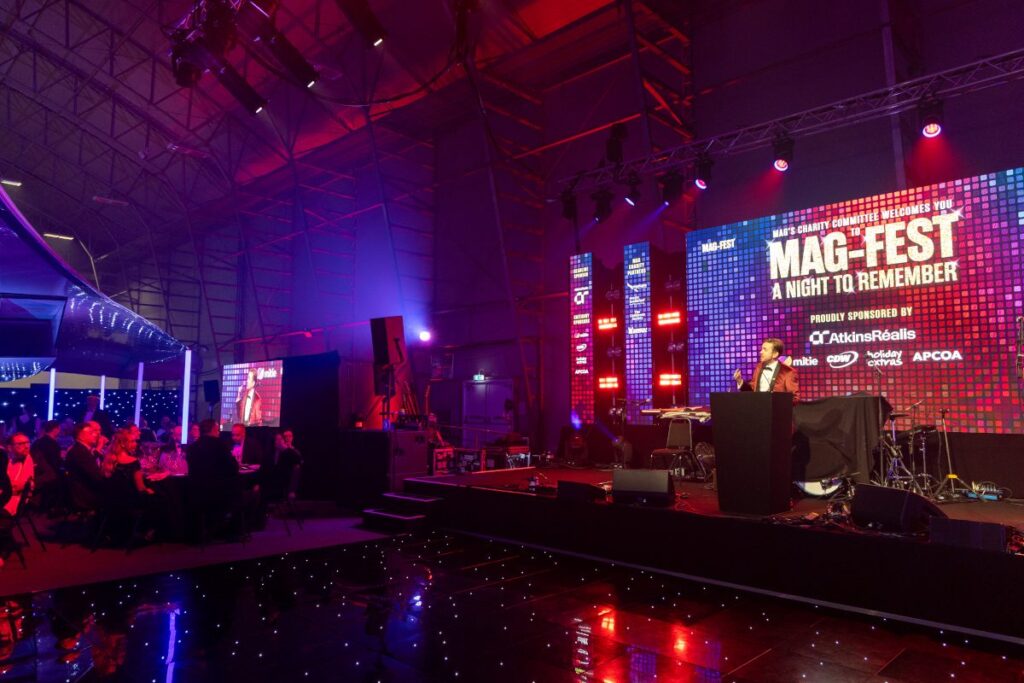
Kevin Durham at the lectern under a screen welcoming him as host of the MAG-FEST charity gala

In short

  • A fundraiser is either an event that raises money for a cause or a person who raises it. All four major dictionaries checked here give both.
  • In England and Wales, the Charities Act 1992 gives “professional fundraiser” a legal meaning: someone paid to ask for money for a charity who isn’t its employee or trustee.
  • The main types of fundraiser range from cake sales and sponsored challenges to raffles, auctions and gala dinners.
  • Formats where everyone is in one room, giving at the same moment, usually raise the most per guest. In my experience the live pledge is the strongest of them.
  • Raffle tickets and event tickets are payments, not gifts, so they do not qualify for Gift Aid.

The fundraiser meaning has two halves. A fundraiser is an event held to raise money for a cause, usually a charity, and it is also the person who does the raising. The sentence tells you which: “we are holding a fundraiser” is the event, “she is a brilliant fundraiser” is the person.

The first kind is my day job: I work 60 to 80 events a year as a charity auctioneer. So here are both meanings, the main types, and where the live auction and the live pledge sit among them.

What is the fundraiser meaning in the dictionary?

The dictionary fundraiser meaning is a person or an event that collects money for a particular purpose, especially a charity. Four dictionaries, four slightly different wordings:

  • Cambridge Dictionary combines both: “a person or event involved in collecting money for a particular purpose, especially a charity”.
  • Oxford Learner’s splits it into a person who collects money for a charity, and a social event or entertainment held to collect it.
  • Collins lists the event first and the person second.
  • Merriam-Webster puts the person first, and dates the word to 1881 in that sense.

In the rooms I work in, “a fundraiser” nearly always means the event.

The second fundraiser meaning: the person doing the asking

The person who raises the money is the older fundraiser meaning on record, and it covers a wide group. A parent shaking a bucket at the school gate is a fundraiser. So is a charity’s head of major gifts, and so is the volunteer selling raffle tickets at a dinner. On a gala night, those volunteers are as much a part of the total as anyone holding a microphone.

The law in England and Wales draws a sharper line. The Charities Act 1992 defines a “professional fund-raiser” as someone who runs a fundraising business, or who is paid to ask for money for a charity. A charity’s own employees, officers and trustees are excluded, and so are people paid below small thresholds set in the Act.

It matters because trustees carry the can. The Charity Commission’s trustee guidance says they must carry out due diligence on professional fundraisers, and they stay accountable for fundraising they delegate.

Fundraiser, fund-raiser or fundraising?

Fundraiser is the noun, fundraising is the activity, and fundraise is the verb. The hyphenated “fund-raiser” still turns up: Merriam-Webster and Collins’s American entry list it as a variant, and the 1992 Act uses it. All four dictionaries above give the single word as the main spelling.

Guests at their tables in an aircraft hangar while Kevin Durham hosts the MAG-FEST charity gala from the stage

What makes an event a fundraiser?

An event becomes a fundraiser when raising money for a cause is its purpose, not a side effect. A quiz night that donates its leftover kitty is a quiz night. One sold, run and timed around the money is a fundraiser event.

Most fundraiser events bring money in through several routes on the same night:

  • Tickets, which usually just cover the costs.
  • A raffle or tombola: small sums from almost everyone.
  • An auction, where a handful of lots go to a few bidders.
  • A live pledge or appeal, straight donations at set levels, and often the biggest number of the night.

HMRC doesn’t treat them the same. Its Gift Aid guidance says payment for admission to an event, and the price of a raffle ticket, are payments rather than gifts, so neither qualifies. An auction bid is a purchase too, though part of it can count as a donation when the bidder knowingly pays over the shop price. A pledge is a gift, so it can qualify.

What are the main types of fundraiser?

The main types of fundraiser fall into events, challenges, draws and direct asks. The Chartered Institute of Fundraising’s library lists types of fundraising from corporate partners and grants to auctions, events and crowdfunding. These are the ones a charity can run itself:

Type of fundraiserHow the money comes inEffortWhat limits the total
Cake sale, coffee morning, quiz nightSmall payments from a local crowdLowHeadcount
Sponsored challengeFriends and family sponsor a participantMediumHow many people take part
Raffle or tombolaTicket sales, prizes donatedLowTicket price times people in the room
Online appeal or crowdfunderDonations from a wide networkMediumReach of the people sharing it
Charity auctionBidders compete for donated lotsMediumThe lots, and who is bidding
Live pledgeGuests give at set levels in one momentLow on paper, high on the nightThe case for the cause, and how it is led
Gala dinner or ballTickets, raffle, auction and pledge in one eveningHighWho is in the room, and how the night runs

The auction and the live pledge rarely stand alone. They are the two big moments inside a charity gala, a charity ball, or even a boxing night.

Which fundraiser activities raise the most?

The fundraiser activities that raise the most per guest are the ones that put generous people in one room and ask them at the same time: the live auction and, above all, the live pledge.

The UK Giving report from the Charities Aid Foundation estimated that in 2024 the public gave £951 million at fundraising events, against £514 million on raffle tickets. Only 21% of people sponsored someone for charity in 2024, down from 32% in 2019.

At a single event, the gap between formats is wider still. When I worked the Jigsaw Trust gala, the charity expected £14,000 from the live auction. The auction made £27,000, and a live pledge they hadn’t even planned raised another £30,600. The credit goes to their team, and it’s why every client of mine hears the same advice: run a pledge. An auction raises money from the few people who win lots. A pledge asks the whole room, so it often raises more than the auction. It’s serious, yet the excitement still builds as the hands go up. No format guarantees a figure, though. The room, the cause and the running order decide it.

The rules every UK fundraiser runs under

Fundraising by UK charities and third-party fundraisers sits under the fundraising code. Its 2025 edition came into effect on 1 November 2025, with standards for events and for volunteers.

Raffles have their own rules in Great Britain. Under Gambling Commission guidance, a raffle at an event needs no licence, but tickets can only be sold at the event while it is running. You can spend up to £500 of ticket money on prizes and £100 on costs, and donated prizes have no limit.

Kevin Durham in a burgundy velvet dinner jacket speaking from the lectern at a charity gala

Where an auctioneer fits in

At a fundraiser event, the host decides how much of the room’s goodwill turns into money. My job is to command the room before the first lot, keep the auction tight, and then lead the pledge while the energy is still high.

Still choosing what kind of fundraiser to run? My list of fundraising event ideas is a good next step, and my page on running a pledge explains the segment that usually raises the most. To talk through your event, call 07596 851647.

Kevin Durham, charity auctioneer

Kevin Durham

Charity auctioneer & event host

20years£10m+raised60–80events/yr
Check availability07596 851647

Let’s talk

Bring this to your event

Book a free consultation with a charity auctioneer who has raised over £10 million.

Masquerade ball ideas for a charity fundraiser that raises real money

Two men in tuxedos on stage at the Children's Respite Trust masquerade charity gala

In short

  • A masquerade ball is a formal ball where guests wear masks. The tradition runs through the Venetian Carnival and 18th-century London.
  • The masks themselves can earn money: sold with tickets or at the door, sponsored by a local business, or auctioned as a one-off lot.
  • Put the masks in the dress code from the very first invitation, and keep spares at the door.
  • Make the unmasking the pivot of the night: the playful part ends, faces come out, and the live pledge begins.
  • Masks change how bids are spotted, so plan bidder numbers, lighting and half masks before the night.

The best masquerade ball ideas for a charity night do two jobs at once. They give guests a reason to dress up and buy a ticket, and they hand you a ready-made moment in the running order: the unmasking. Used well, that moment is the cue for your live pledge, usually the biggest earner of the night.

I am Kevin Durham, and I have spent 20 years as a charity auctioneer and host. Here is how I would turn the masks into income, word the dress code, and build the evening so the money arrives when you want it.

What is a masquerade ball?

A masquerade ball is a formal ball where guests wear masks, and often costume, so that nobody is quite sure who they are dancing next to. The mystery is the point.

Costumed balls were a luxury of European courts, and the ill-fated Bal des Ardents in Paris took place on 28 January 1393. In the 16th century, masked festivities spread to the public in Renaissance Italy and became bound up with the Venetian Carnival. By the 18th century, semi-public masquerades had arrived in London.

Venice gave us the masks most people picture today. The official carnival site describes the bauta as a plain mask that let the wearer attend a party without being recognised. Masks are first documented in Venice in the 13th century, the festival was outlawed in 1797, and it was revived in 1979, according to the history of Venetian masks.

Why does a masquerade suit a charity fundraiser?

A masquerade suits a charity fundraiser because the theme comes with its own products and its own big moment: something to sell, and a reveal to build towards.

The BHF guide to charity balls tells organisers to think of a theme early, and in my view a masquerade is one of the easiest to sell to a guest list. I cover the wider plan in my guide to the charity ball, and how a theme shapes your lots in auction themes.

Masquerade ball ideas that bring in money

These masquerade party ideas turn the theme into income without making guests feel they are paying for every little thing.

  • Sell masks with the ticket. Offer a ticket with a mask included at a slightly higher price, so you know your numbers before the night.
  • Sell masks at the door. A small table at arrivals, staffed by someone cheerful. The Simply Masquerade guide notes that guests often forget their masks, so keep spares anyway.
  • Get the masks sponsored. The BHF suggests pricing up parts of the event and selling them as sponsorship. A local business paying for the masks, with its name on the ribbon card, means every mask sold is pure profit.
  • Run a decorate-your-own table. Plain masks are a common party idea for guests to customise. Charge a small fee for the mask and materials, and it doubles as an icebreaker.
  • Award the best mask. Ask a sponsor to present a donated prize, and announce the winner just before the unmasking.
  • Auction one mask. A hand-made mask from a local artist, or one signed by someone your guests admire, makes a strong opening lot with a story behind it.

One point on paperwork: a guest who buys a mask is paying for goods, so under HMRC’s Gift Aid guidance that payment is not a gift and cannot have Gift Aid added.

How should you word the masquerade ball dress code?

Word the masquerade ball dress code as two parts: the formality, then the mask. “Black tie and masks” is clear, short and fits on a ticket.

Black tie means a dinner suit and black bow tie, or an evening gown, and it is a step below white tie. Then say what you mean by a mask. Some wording that works:

  • “Black tie and masks. Masks available at the door, or bring your own.”
  • “Evening dress and masks. Half masks recommended, so you can dine in comfort.”
  • “Masks stay on until the unmasking. You will know when.”

The Simply Masquerade guide advises explaining the dress code from the first invitation. If the mask only appears in the final reminder email, half the room arrives without one.

Which masquerade ball themes work for a charity night?

The masquerade ball themes that work best are the ones with a colour palette guests can actually shop for.

  • Venetian carnival. Gold, deep reds, ornate masks. The classic.
  • Black and gold. Every high street has something that fits, which matters more than you would think.
  • Your charity’s colours. A masquerade in the charity’s own colours ties the décor back to the cause without a word being said.
  • Winter masquerade. Silver, white and ice blue, ideal for a December date.

Masquerade ball ideas for the running order

A masquerade gives the evening a natural shape: mystery first, reveal second, generosity third.

  1. Arrivals. Mask table, photo backdrop, decorate-your-own station.
  2. Dinner. Let the room breathe. Sell raffle tickets between courses, never while someone is mid-mouthful.
  3. The live auction, masked. Keep it cheeky and playful. This is where the banter lives, and the anonymity is part of the fun.
  4. The best mask award. A quick, light moment to bring the room together.
  5. The unmasking. Everyone removes their mask at once.
  6. A short speech or film about the cause.
  7. The live pledge.

For a full timeline, see my gala running order.

Why make the unmasking the cue for the live pledge?

Make the unmasking the cue for the live pledge because it does the hardest job on the night for you: it gets the whole room looking at the same moment, at the same time.

I learned the cost of skipping that step the hard way. At one big event that was running late, with no speech or film to set up the auction, I started announcing lots while people were still talking. Only a fraction of the room heard them. Since then I command the room first, every time. Stand on a chair if you have to. An unmasking does that for you, because nobody wants to miss it.

It also changes the mood. When the masks come off, guests are themselves again, and that is when I drop the banter and turn to the cause. Serious, but never sombre, and the excitement should build as the money comes in. At the end of a pledge I normally invite everyone who has given to the front for a quick photo, and with the masks off, it is a photo worth sharing. I explain how the pledge works in my guide to the live pledge.

How do masks change bidding for the auctioneer?

Masks make bids harder to spot and harder to hear, so the auction needs a little more planning than usual.

Kevin Durham in a burgundy velvet dinner jacket on the microphone, pointing out to the room at a black-tie charity gala

  • Use bidder numbers or paddles. When faces are hidden, a large printed number is how the team records who won.
  • Bring the lights up for the auction. A candlelit room looks beautiful and hides raised hands.
  • Favour half masks. A full-face volto or bauta covers the mouth. The RNID notes that many people rely on lipreading to some degree, so anyone speaking from the stage should be unmasked.
  • Work the floor. I run auctions with a wireless mic in the middle of the room, which makes it far easier to catch a nod from behind a mask than it is from a lectern.

Masquerade ideas to leave out

Some ideas look good on a mood board and cost you money on the night.

  • Full-face masks for the whole evening. People cannot eat, talk or bid comfortably.
  • Expensive compulsory masks. I would rather guests saved their money for the room than spent it before they arrive.
  • Too many candles. The Fundraising Regulator says to complete a risk assessment before any fundraising event. Feathers, masks and open flames belong on it.
  • Vague promises about the money. The same guidance says your event marketing should be clear about how the money raised will be used. Tell guests where the mask money goes.

Hire me and the auction platform is included: I build it around your event, in your branding, with your tickets, lots and masks loaded and ready to go. To talk through your masquerade, have a look at my auctioneer services or call 07596 851647.

Kevin Durham, charity auctioneer

Kevin Durham

Charity auctioneer & event host

20years£10m+raised60–80events/yr
Check availability07596 851647

Let’s talk

Bring this to your event

Book a free consultation with a charity auctioneer who has raised over £10 million.

How to organise a charity concert that raises more than ticket sales

Kevin Durham on the microphone on a concert stage, with a drum kit and keyboard behind him and sponsor logos on the screens, at the MAG-FEST charity gala

In short

  • Treat ticket sales as the way to cover costs. The real fundraising happens during the interval.
  • An interval auction of a few strong lots, followed by a live pledge, can outraise the box office.
  • Sell sponsorship before the night so the costs are covered before a single ticket goes.
  • In the UK, sort the music licence, any Temporary Event Notice and the raffle rules early.
  • Gift Aid can’t be claimed on tickets or winning bids, only on voluntary donations. One more reason to run a pledge.

A charity concert is one of the easiest fundraising events to sell and one of the hardest to make pay. The tickets go, the band plays, everyone has a lovely night, and then the costs come off and the cause gets a modest cheque.

I work 60 to 80 fundraising events a year as a charity auctioneer and have helped raise over £10 million for charity. This guide shows how to organise a charity concert where the room, not the box office, does the heavy lifting.

What is a charity concert?

A charity concert is a live music event where the proceeds go to a cause. You’ll also hear it called a benefit concert, a fundraising concert or, at the smaller end, a charity gig in a pub or a church hall.

It scales from a school choir to a full band in a theatre. Like any charity fundraiser event, what you raise is what’s left after the venue, the sound, the licences and the performers’ costs. To compare it with other formats first, my list of fundraising events has fifteen more.

Why do ticket sales alone rarely raise enough?

Ticket sales rarely raise enough because most of that money is spent before the doors open. Venue hire, production, staff and the music licence all come out of the box office.

Some costs even grow with the ticket price. Under the PRS tariff for ticketed popular music concerts, effective from 11 June 2025, the charge is 4% of receipts from admissions, with a £20 minimum per event unless you meet the reporting rules. Ticket money also can’t carry Gift Aid, which we’ll come to.

So the ticket price should do one job: cover the night. The fundraising has to come from somewhere else, and at a concert that somewhere is the interval.

How do you organise a charity concert?

You organise a charity concert by setting a fundraising target, then building the venue, line-up, tickets and running order backwards from it:

  1. Set the target and the break-even. Know what the night costs and what it must raise on top.
  2. Choose music the audience wants. Save The Music’s advice is to pick performers your audience will enjoy. An engaged room gives more.
  3. Ask the venue to donate. The same guide suggests asking whether the venue will give its space, or offering it a sponsorship credit for a lower rate.
  4. Book performers early, and pick a date that doesn’t clash with holidays or big local events. You can’t sell tickets properly until the line-up is confirmed.
  5. Plan the interval as a fundraising slot. Decide now what happens in it, who runs it and how long it gets.
  6. Promote the cause, not just the line-up. People come for the band, but they bid and pledge for the cause. My guide on how to promote an auction covers previewing lots before the night.

The interval is where a charity concert makes its money

A concert gives you one natural break with a seated, warmed-up audience. Don’t let it drift away in small talk. Here is a running order that works:

  • Before the doors. Sell raffle tickets as people arrive and find their seats.
  • End of the first half. A short, sincere word about the cause from the stage, ideally from someone the charity helps.
  • Interval auction. Around ten strong lots, sold quickly. Signed setlists, a meet-the-band pass or a private performance suit a music crowd, and my arts gala guide has more lots for a creative audience.
  • Live pledge. Straight after the auction, while the room is still listening. Guests raise a hand to give at set levels, from a big number down to something everyone can manage. Keep it heartfelt without letting it turn heavy, and let the excitement build as the hands go up.
  • Second half, then the total. Announce what the night raised before the encore, not after the house lights come up.

The pledge is the part most organisers leave out, and the one that makes them nervous. Jo from Temwa said on the night: “Tonight has been record-breaking in terms of how much money we made in the auction. I was so nervous about doing this live pledge. What an incredible auctioneer.” My guide to the live pledge shows how it runs.

One catch. At the interval, a concert audience is mid-conversation and halfway out of their seats. I once started a live auction at a big event without getting the room quiet first, and only a fraction of the guests heard the lots. One man bid on an item he couldn’t even hear properly. “Ladies and gentlemen, it’s time for the live auction” only works if the room is listening, so command the room first, even if you have to stand on a chair.

Sponsorship, raffles and the other income streams

Sponsorship lifts what a charity concert raises because every pound a sponsor covers is a pound the box office keeps for the cause. Sell packages for parts of the night: the headline act, the sound and lighting, the programme, the printed tickets. Agree in writing what the sponsor gets.

Kevin Durham interviewing guests on stage in front of screens listing the headline sponsors, category sponsors and charity partners at MAG-FEST

A raffle adds small sums from almost everyone. Run as part of the concert, it can spend a maximum of £500 of raffle money on prizes and £100 on expenses, and tickets can only be sold at the event while it is happening. Donated prizes have no limit.

Then the small things: a bucket at the exit, a text-to-give number on the screen, and an optional donation on the ticket page, kept separate from the ticket price.

What licences does a charity concert need in the UK?

A charity concert in the UK usually needs a music licence, may need a Temporary Event Notice, and needs a risk assessment and insurance. Check them when you book the venue.

  • Music licence. You usually need TheMusicLicence from PPL PRS to play live or recorded music in public. Ask the venue first what it already holds.
  • The charity discount. PPL PRS offers a charity discount if the form arrives at least 14 days before. It doesn’t apply to popular music events with an admission charge or classical events under their own tariff, so a ticketed pop concert won’t qualify.
  • Ticketed pop and rock. The PRS popular music tariff asks for an application at least 30 days before the event and a set list within 30 days after it.
  • Entertainment licence. Under the Live Music Act changes, live or recorded music needs no entertainment licence between 8am and 11pm at an alcohol-licensed venue with an audience of up to 500. Unamplified live music needs none anywhere in those hours.
  • Temporary Event Notice. At an unlicensed venue in England or Wales, a Temporary Event Notice covers live music and the bar. It costs £21, covers fewer than 500 people (staff included) and must go in at least 10 clear working days before.
  • Safety and insurance. The Fundraising Regulator says you must do a risk assessment, have adequate insurance and stay within the venue’s maximum numbers.
  • VAT. Concert tickets can fall under the fundraising events VAT exemption if the event is promoted as fundraising and you keep the evidence. Speak to your accountant.

These are the rules as of October 2026. Check each page again when you plan.

Can you claim Gift Aid on charity concert tickets?

No, you can’t claim Gift Aid on charity concert tickets. HMRC lists payment for admission to events, including concerts, as not a gift, and the same guidance says an auction payment is a purchase rather than a gift.

What you can claim on is voluntary donations. Macmillan notes Gift Aid only applies to personal, voluntary donations, so pledges and online donations can qualify. Each one must come from an individual who makes a declaration, and company donations don’t count.

So have Gift Aid declarations ready for pledgers, and keep donations separate from ticket sales.

Where an auctioneer fits in

A good committee can organise almost all of a charity concert, and the performers and the cause do most of the work. The part that is hardest to do from the inside is the interval: getting a music crowd quiet, selling the lots at pace and turning the room to the pledge before the second half.

That is my small part of it. I can host the fundraising slot or the whole evening, and help choose the lots and the running order beforehand. If you are planning a charity concert, call 07596 851647 and we can talk it through.

Kevin Durham, charity auctioneer

Kevin Durham

Charity auctioneer & event host
20years£10m+raised60–80events/yr
Check availability07596 851647

Let’s talk

Bring this to your event

Book a free consultation with a charity auctioneer who has raised over £10 million.

How to organise a charity football match that raises real money

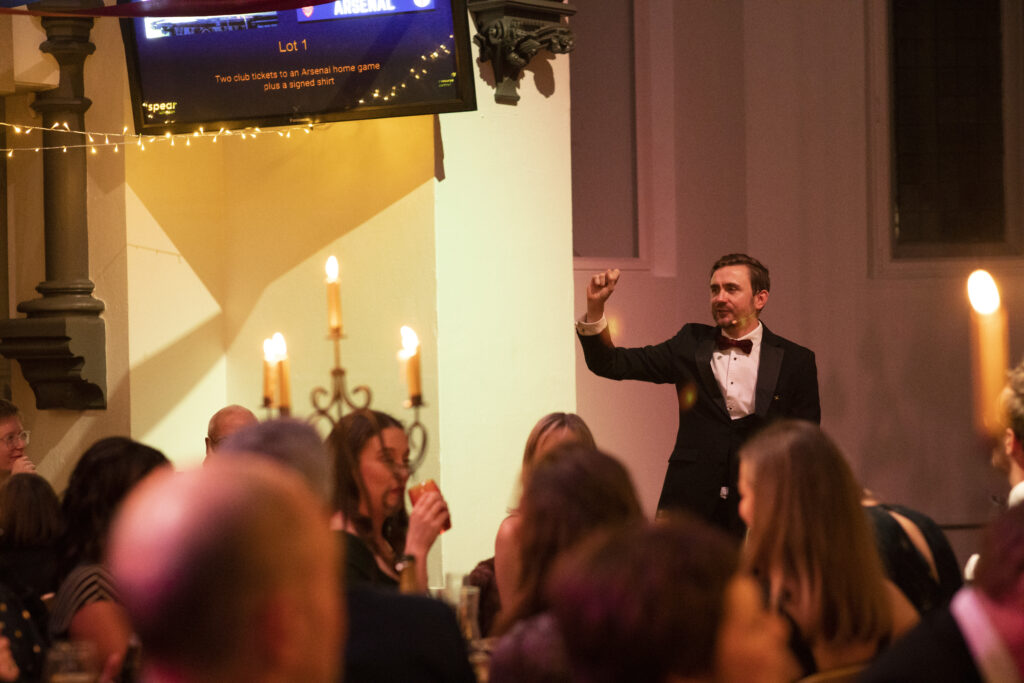
Kevin Durham raising a fist as he sells Lot 1, two club tickets to an Arsenal home game plus a signed shirt, at a candlelit charity dinner

In short

  • In England, a charity match involving affiliated clubs, players or registered referees needs sanction from your county FA. Apply at least six weeks out, even though some counties ask for only two weeks.
  • Unsanctioned football can leave the teams’ public liability and personal accident insurance invalid, and the players open to misconduct charges.
  • Tickets cover your costs. Sponsorship, a raffle and the after-match auction and pledge are where the charity’s money comes from.
  • Admission money cannot be Gift Aided, but each player’s sponsors can Gift Aid their own donations.
  • Book the room for after the final whistle before you book the referee. That is where the night’s total gets decided.

A charity football match is one of the easiest fundraising events to sell. Players bring their own crowd, everyone understands the format, and people will happily pay to watch a colleague try a slide tackle. The catch is that the match itself rarely makes much money. The money is made around it.

I come to sport from the fundraising end, as a professional charity auctioneer. This guide covers the parts organisers tend to get wrong (FA sanction, insurance and referees), then the part I care about most: turning ninety minutes of football into a total worth announcing.

What is a charity football match?

A charity football match is a one-off game played to raise money for a good cause, rather than for points in a league. The teams might be workmates, two pub sides, parents against teachers, or a local club against a team of ex-players.

At the top end you get Soccer Aid, which raised £16,462,353 for Unicef at London Stadium on 31 May 2026. Look at how that money came in: a live TV appeal, celebrity players, and a foundation doubling donations up to £6 million.

Your match will not have ITV behind it. So the question for any football charity match, or any charity sporting event, is the same: what will people give money for beyond the gate?

Does a charity football match need FA sanction?

Yes, in most cases. If any affiliated club, affiliated player or registered referee is involved, a charity football match in England must be sanctioned by the county FA it falls under.

The FA’s competition regulations point charity matches to FA Rule B, and say the county will need to know whether you have affiliated teams or scratch teams. Under the rules themselves, a match taking gate money with a scratch team needs written consent, and the proceeds must go to an approved cause.

Leicestershire FA puts it plainly: affiliation to the county, or to your league, does not cover hosting a charity match. Sanction is how the county checks teams, insurance and safeguarding for coaches and officials.

Each county sets its own process, so check yours:

County FANotice neededNotes
LeicestershireAt least 14 daysOnline form, then documents by email
CumberlandAt least two weeksOnline sanction form
HuntingdonshireOne month for competitionsCharity matches sanctioned free if you supply the day’s accounts

Expect to send accounts afterwards too. For small-sided charity games (up to seven-a-side), FA rules want a statement of accounts within 21 days.

What insurance does a charity football match need?

You need public liability cover for the event, and the players need personal accident cover that actually applies to this match. Sanction is what keeps the clubs’ own policies valid.

Leicestershire FA warns that unsanctioned football means the teams’ public liability and personal accident insurance would be invalid. Cumberland FA says clubs and referees in an unsanctioned event may not be insured and may face disciplinary action.

The Fundraising Regulator expects a written risk assessment before any fundraising event, adequate insurance, and a written agreement with every third party involved, whether you pay them or not. That includes the venue. If you are using scratch teams, ask an insurer about event cover directly rather than assuming a club policy stretches to it.

How do you choose the venue, format and referee for a charity football match?

Choose the format first, because it decides the venue, the number of players and the officials you need. A five-a-side or seven-a-side game on a 3G pitch is easier to staff and weatherproof. An eleven-a-side game at a club ground feels like an occasion and holds a bigger crowd.

When choosing a venue, ask three questions:

  • Is there a room? A clubhouse, function room or marquee for the presentation afterwards matters more than the pitch.
  • What is licensed? If the venue is not licensed for what you plan, a Temporary Event Notice covers fewer than 500 people, staff included. It cost £21 in October 2026 and needs 10 clear working days’ notice.
  • Who does first aid? Some venues provide it. If not, it goes in your risk assessment and your budget.

For the referee, go through the county FA once the match is sanctioned. Huntingdonshire FA notes that registered referees are not permitted to officiate in unaffiliated football, which is one more reason to sort the paperwork early.

A planning timeline that works

Three months out, fix the date, the format and the charity. Then book the venue, including the room for afterwards.

Six weeks out, apply for sanction, agree terms with the venue in writing, and line up sponsors and auction lots. Start selling tickets as soon as the sanction is confirmed.

Two weeks out, confirm the referee, first aid and your volunteer list. Then brief whoever is hosting the presentation on the running order.

On the day, arrive early, walk the pitch, and keep the crowd’s evening in mind. People who stood on a touchline for ninety minutes want to sit down, warm up and be entertained.

Where does a charity football match make its money?

A charity football match makes most of its money from sponsorship and from what happens after the final whistle, not from the gate. Ticket income usually pays for the pitch, the referee and the kit.

Income streamHow it worksWatch out for
TicketsPay at the gate or in advanceAdmission is not a gift, so no Gift Aid
Player sponsorshipEvery player raises a targetSponsors can Gift Aid their own donations with a declaration
Shirt and match-ball sponsorsLocal businesses pay for their nameAgree terms in writing
RaffleSold on the dayEvent raffle tickets can only be sold at the event, while it runs
Live auction and pledgeAfter the matchNeeds a room and a host

Player sponsorship is the quiet winner. Set every player a target, give them a sponsorship page in the charity’s name, and announce the top fundraiser at the presentation.

For the raffle, the Gambling Commission allows up to £500 of ticket money on prizes and £100 on costs, and donated prizes have no limit. My guide to running a charity raffle covers the rest.

After the final whistle: where the real money is

The match is the reason people turn up. The presentation afterwards is where the charity’s total gets made.

Get everyone into one room with food, the players still in their kit, and a short programme: thanks, the score, the top fundraisers. Then the line that always gets a cheer: “Ladies and gentlemen, it’s time for the live auction.” Keep it to six to ten strong lots rather than a long list. A football crowd is already competitive, so let it be.

Charity auctioneer Kevin Durham pointing to a bidder from the floor among guests at a candlelit charity dinner

Strong lots for a charity football event:

  • The player-of-the-match shirt, signed by both teams and sold straight off their back (the striker who missed an open goal is welcome to bid it back)
  • A signed shirt from a professional club, ideally one half the room supports
  • Hospitality at a local professional ground
  • A chance to play in next year’s match, or to be the manager for the day

The same lots and pacing work at a sports dinner, and the principles carry across to a golf day or any other sport charity event.

One warning. A post-match room is loud. I once announced a live auction while a room was still talking, and only a fraction of the guests heard the lots. I’ve never made that mistake again. Whoever holds the room holds the total, so get the quiet first, even if you have to stand on a chair.

Should you run a live pledge after a charity match?

Yes. A live pledge is the most powerful segment I run, and a post-match crowd is primed for it, because everyone in the room knows someone who just played for the cause.

Charles Balchin wrote after his first charity auction: “Kevin was absolutely fantastic at running our event. He added a pledge element we hadn’t considered and it became hugely successful.” That was a powerful team behind a powerful charity, but the lesson travels to a clubhouse: the pledge lets everyone give at a level that suits them.

Charity auctioneer Kevin Durham with a microphone and his lot sheet, running the live auction at Jigsaw Trust's charity gala

Run it straight after the auction. Start with a high tier, work down, and have someone from the charity say in two sentences what the money will do. The tone shifts here, serious and from the heart, but it’s not a funeral: the excitement builds as the hands go up.

Before you book the pitch

Get the sanction application in early, put your risk assessment and insurance in writing, and plan the room before you plan the kick-off.

If you’re building the day around a dinner or presentation, I can run the live auction and pledge for you. The difference shows up in the final total. To check availability, call me on 07596 851647.

Kevin Durham, charity auctioneer

Kevin Durham

Charity auctioneer & event host

20years£10m+raised60–80events/yr
Check availability07596 851647

Football nights and shirt lots

Selling football to a room that does not all support the same club.

Auctioning Signed Shirts at a Footballers' Charity Golf Day
Auctioning signed shirts at a footballers' golf day
Auctioning an Arsenal Shirt to a Room of West Ham Fans
An Arsenal shirt to a room of West Ham fans
Auctioning Framed West Ham Cup Final Photos in Essex
Framed West Ham cup final photos in Essex

Let’s talk

Bring this to your event

Book a free consultation with a charity auctioneer who has raised over £10 million.

Charity ball: how to organise one that raises real money

Charity auctioneer Kevin Durham in black tie taking bids from seated guests at a fundraising dinner

In short

  • A charity ball is a gala with a dance floor. That dance floor changes your running order.
  • Tickets should cover the costs. The money is made in the room, through the auction, the pledge and the raffle.
  • Do all the fundraising before the band starts. Once people are dancing, you won’t get them back in their seats.
  • In the UK, check your licences early: music and dancing, the bar, the raffle and the music licence all have rules.
  • Set a target first and build the plan backwards from it.

A charity ball is a formal evening of dinner and dancing where every ticket, lot and pledge goes towards a cause. Organising one that raises real money comes down to a few decisions most committees make too late: what the night is for, where the money will come from, and what happens before the band starts.

I host balls and run their auctions as a charity auctioneer, 60 to 80 events a year, and have helped raise over £10 million for charity. The ball format has one trap that is easy to miss, so this guide is built around avoiding it.

What is a charity ball?

A charity ball is a formal fundraising event built around dinner followed by dancing. The word comes from the Latin ballare, “to dance”, and a ball has long meant a formal dance, often a banquet followed by a social dance.

That is the only real difference from the alternatives. A charity dinner usually ends at coffee and speeches. A fundraising gala is the broader term for any formal fundraising evening, and plenty of galas include dancing too. If you want the full planning checklist for that wider format, my gala guide covers it. This post is about the ball specifically, and the money.

How do you organise a charity ball?

You organise a charity ball by setting a fundraising target first, then building the budget, venue, tickets and running order backwards from it. Macmillan’s advice is to set a target and work out how many tickets you need to sell for the event to make money at all.

  1. Set the target and the break-even. Know what the night costs and what it must raise. Everything else follows.
  2. Build a small committee. Give each person one job they are good at: tickets, venue, lots, sponsors.
  3. Pick the date carefully. The British Heart Foundation suggests you avoid clashing dates with big sporting or cultural events that could pull your guests elsewhere.
  4. Book the venue, then the band. Tell every supplier it’s for charity. Some will offer a better rate.
  5. Sell tables, not just tickets. Local businesses buying a table fill the room faster than single sales, and a group discount helps.
  6. Sell sponsorship. Price packages for parts of the night (the drinks reception, the band, the programme) and offer advertising in return.
  7. Source a few great lots. Around ten strong lots and a room driven to compete will beat 50 average ones.

Where does the money at a charity ball come from?

The money at a charity ball comes from five places: ticket margin, sponsorship, the live auction, the live pledge and the raffle. The tickets should cover your costs. The rest is where the night is won.

SourceWhat it doesWatch out for
Tickets and tablesCovers the venue, food and bandNot eligible for Gift Aid
SponsorshipPays for parts of the night up frontAgree what the sponsor gets in writing
Live auctionA handful of headline lots, sold hardToo many lots and the room drifts
Live pledgeGuests give at set levels, from the heartNeeds a strong case for the cause
RaffleSmall sums from almost everyoneStrict rules on prizes and sales

On Gift Aid, Macmillan notes you cannot claim it on ticket sales, but you can on voluntary donations on the night. HMRC treats a winning bid as a purchase too: an auction payment is not a gift. That is one more reason the pledge matters.

The pledge is the one most committees leave out. Gabriel Dos Santos of the OCU Foundation summed up their night: “We hosted just over 300 guests and raised more than double what we achieved last year. Kevin’s key suggestion, the live pledge alone, brought in nearly £20,000.” That was a powerful team behind a powerful charity, and a live pledge given room to work. Keep the pledge heartfelt but never sombre: it’s not a funeral, and the excitement should build as the hands go up.

The charity ball running order: fundraise before the band starts

Here is the trap. A ball has a dance floor, and once the band strikes up, your fundraising is over. Nobody leaves the dance floor to bid on a holiday.

So every fundraising moment has to land before the first dance. Here is a running order that works:

  • Arrival and drinks reception. Sell raffle tickets while guests are standing and waiting.
  • Seated, before the starter. A quick icebreaker such as Heads or Tails warms the room and lifts the mood.
  • Dinner. Let the room breathe. A light touch only, and never approach someone with food going into their mouth.
  • The cause. A short talk or film. Anthony Nolan suggests a three-minute presentation on why you are fundraising.
  • Live auction, then live pledge. Straight after the cause, while the room is still listening.
  • Raffle draw and the total. Announce what you raised, then hand over to the band.

Kevin Durham at the lectern on stage at the MAG-FEST charity ball, with the band's drum kit and mic stands set up beside him

Getting the room quiet is the part people underestimate. I once announced a live auction at a big event that was running late, with no speech or video to set it up, and I didn’t stop to get the room quiet first. Only a fraction of the guests heard the lots. One man bid on an item he couldn’t even hear properly. I have never repeated that mistake. “Ladies and gentlemen, it’s time for the live auction” only works if the room is listening, so command the room first, even if you have to stand on a chair. My running order guide has timings for each segment.

What should you wear to a black tie fundraiser?

At a black tie fundraiser, men wear a dinner suit with a black bow tie, and women wear an evening gown or other formal evening wear. Black tie is less formal than white tie but more formal than business dress, and it is the default dress code for most charity balls.

Put the dress code on the ticket and the invitation, so nobody spends the week before guessing.

Guests in black tie and evening dress mingling at a candlelit charity gala reception

Charity ball ideas that keep the money coming

A theme gives guests a reason to buy a ticket and gives your lots a story. Masquerade, winter ball, a decade, a film: pick one that suits your supporters, then let it shape the décor, the lots and the games. There are more theme ideas here.

A few charity ball ideas that raise money as well as atmosphere:

  • Get the band sponsored. A local business pays for the music and gets a mention from the stage.
  • A best-dressed or best-dancer award, which the BHF suggests. Charge a small amount per nomination and let tables put their friends forward.
  • Matched giving: ask guests and helpers whether their employer will match what they give.
  • Save your best lot for last, when the room is at its warmest.

What licences and rules apply to a charity ball in the UK?

A charity ball in the UK may need a temporary event notice, a music licence and a properly run raffle, plus a risk assessment and insurance. Check each one when you book the venue, not the week before.

  • Music, dancing and the bar. At an unlicensed venue in England or Wales, a Temporary Event Notice costs £21, covers fewer than 500 people (staff included) and must go in at least 10 clear working days before.
  • Music licence. Charities can apply for a charity discount on TheMusicLicence, but the form must arrive at least 14 days before the event.
  • The raffle. A raffle run as part of the ball can spend a maximum of £500 of ticket money on prizes and £100 on expenses, and tickets can only be sold at the event, on the night. Donated prizes have no limit.
  • Safety and insurance. The Fundraising Regulator says you must do a risk assessment and have adequate insurance, and going over the venue’s maximum numbers could invalidate it.
  • VAT. For the fundraising events VAT exemption, HMRC says the event must be promoted as fundraising, with documentary evidence to back it up. Speak to your accountant.

All of it sits under the fundraising code, the current version of which came into force on 1 November 2025. Afterwards, count the money in front of a witness and bank it promptly.

Do you need an auctioneer for a charity ball?

A charity ball needs a professional auctioneer if it includes a live auction or pledge. The band, dinner and speeches compete for attention, so the host moves the room to the ask smoothly and keeps bidders engaged. A ball with only a raffle can manage with a committee member.

If your ball is mostly dinner and dancing, doing it yourself is fine. Have ready your date, venue, guest numbers, a running order with the dinner and band times, and the sum you want to raise.

Where an auctioneer fits in

A ball committee can do almost all of this themselves. The part that is hardest to do from the inside is holding the room for the stretch that matters: the cause, the auction and the pledge, before the music takes over.

That is the job I do. I host the whole evening or just the fundraising, and I help with the lots and the running order before the night. If you are planning a charity ball, call 07596 851647 and we can talk it through.

Kevin Durham, charity auctioneer

Kevin Durham

Charity auctioneer & event host

20years£10m+raised60–80events/yr
Check availability07596 851647

Balls I have run

A themed ball, a sixtieth anniversary, and a record-breaking night.

Professor Durham Hosts a Harry Potter Themed Charity Ball
A Harry Potter themed charity ball
"We Had the Best Night": SCCCC's 60th Gala
We had the best night, the SCCCC sixtieth gala
A Bidding War Breaks Out on the Dancefloor
A bidding war breaks out on the dancefloor

Let’s talk

Bring this to your event

Book a free consultation with a charity auctioneer who has raised over £10 million.