Home About Kevin Auctions Virtual auctioneer Pledges Hosting Entertainment Free software Software examples Case studies Reviews Other services Fees Fundraising games Fundraising consultant Get in touch Blog Podcast

How does a charity of the year partnership work?

Kevin Durham at the lectern at the Cris Cancer Foundation's A Night to Dream charity gala

In short

  • A charity of the year partnership is a fixed-term link, normally one or two years, between one charity and one organisation.
  • Charities usually win one through a staff nomination or application, and the process takes months.
  • Write down the money, dates, branding and exit before launch.
  • If the company advertises that sales will benefit the charity, Charities Act 1992 sections 58 and 59 and the Fundraising Regulator’s Code apply.
  • The gala is the natural flagship, because it puts staff, clients and the charity in one room.

A charity of the year partnership is an arrangement in which a company, school, club or council picks one charity to back for a set period, usually a year. Staff fundraising, matched giving, gifts in kind and events all point at that one cause. Here is how it works, from the planner’s chair and the charity’s.

I come to this as an auctioneer, not a lawyer, so this is general information, not legal or tax advice, and it is current as at November 2026.

What is a charity of the year partnership?

A charity of the year partnership is a fixed-term relationship in which an organisation chooses one charity to support, usually for a year. The organisation directs its staff fundraising, matched giving, gifts in kind and events to that cause. The charity returns stories, speakers and volunteering sessions.

Charity Excellence describes the term as usually one year, sometimes two. A guide by Darnell Consulting with the Chartered Institute of Fundraising, published in June 2024, says these partnerships are mainly about monetary support and come with structured application processes.

One cause gives staff something to rally behind. A scatter of small gifts gives them nothing to remember. My post on corporate fundraising ideas covers the activities that fill the year.

How does a charity win a charity of the year partnership?

A charity wins a charity of the year partnership by fitting the company’s customers, staff and values, then getting through its selection process, which often starts with a staff nomination. The CIOF guide says it is highly unlikely a charity can start a programme and secure income in under 18 months.

The guide’s route has six steps: a proposition built around a story staff will care about, a researched pipeline of companies, diarised deadlines, internal relationships, a proposal that shows how you will inspire the partner’s staff, and a rehearsed presentation. Its nomination tactic is simple: offer a staff talk, and one or two people usually connect and nominate you.

Timing matters too. Charity Excellence notes that companies often set budgets a few months before their financial year starts.

If you run the selection, publish the criteria, the deadline and what you will fund. Charities will write a better pitch.

What does a business get from a charity of the year partnership?

A business gets an engaged workforce, a story to tell and local goodwill. CAF’s Corporate Giving Report 2026 found 68% of private-sector employees want their employer to give to charity, and 68% want to be asked which charities it should support.

Rarity helps too. The same report found only 27% of businesses support charities in any way.

There can be a tax angle. GOV.UK’s guide to sponsoring a charity says a payment is a deductible business expense where the company gets something related to its business back, such as using the charity’s logo. A pure gift is treated differently, and I cover that in corporate donations. Keep the two apart in the agreement.

What to ask for and agree in writing

The Code of Fundraising Practice says an agreement with a fundraising partner should cover activities, timescales, how payment is calculated, copyright in materials, confidentiality, expected behaviour and complaints. That list, in section 6.2.3 of the Code (effective 1 November 2025), is a sound checklist for any partnership.

AgreeWhy it matters
Start, end and review datesA year can drift into 14 months without a date
The moneyTarget, payment dates, and whether anything is restricted
Company activityStaff events, a matched pot with a cap, gifts in kind
Charity’s sideSpeakers, case studies, volunteering sessions
BrandingWho approves logos and wording
Public claimsAny “we raised” or “a share of sales” statement
ExitWhat happens if either side’s reputation is hit

The cap on a match is the line people forget. Name it, so nobody claims “everything doubled” when it did not.

When does a partnership trigger the commercial participator rules?

A partnership triggers the commercial participator rules when the company promotes its own goods or services by saying contributions will go to the charity. Section 58 of the Charities Act 1992 defines the term that way, for a business that is not a fundraising business.

As I read the definition, staff cake sales and a plain company donation are outside it. A “50p from every product sold” campaign is inside it.

Section 59 then makes it unlawful to make that statement without a written agreement meeting the prescribed requirements. A court can restrain a breach, and a non-compliant agreement cannot be enforced against the charity.

The Code’s section 6, effective 1 November 2025, adds that the donor must be told before buying how much goes to the charity, estimated if necessary. The Fundraising Regulator’s partnerships guidance was updated on 4 November 2025 to match.

Section 58 also sets the pay thresholds for who counts as a professional fundraiser. Under SI 2026/427, they became £15 a day and £1,500 a year on 30 September 2026, up from £10 and £1,000. That matters if the company pays an agency to run the fundraising. Take legal advice before any promotion goes live.

Due diligence: what a charity checks about the company

A charity should check a corporate partner before it signs, in proportion to the risk. The Charity Commission’s CC20, updated 3 February 2026, lists the partner’s record on fundraising law, business practices, methods, reliability and financial health.

It also asks trustees to weigh reputation. One test is how much the charity receives compared with the total raised, because a small share can damage public trust. The agreement must be in writing before fundraising starts, and trustees must monitor it.

That section is written for commercial participators and professional fundraisers. For a donation-only partner, the same questions are cheap to ask, and I would ask them. A charity can say no.

How do you avoid relying on one partner?

You avoid relying on one charity of the year partner by treating the money as fixed-term income with a known end date, and by starting the replacement search in year one. The CIOF guide says these partnerships normally last one or two years.

With an 18-month lead time, a charity that waits for the final quarter has no pipeline for the next year.

My own rule, and it is a judgement, not a regulator’s: agree with your trustees a ceiling for the share of income any one company can supply, and ask the company for a year-two review rather than assuming renewal.

The gala as the flagship

In my experience, corporate clients planning their first charity gala want professionalism and entertainment, not just someone calling bids. The gala is the one night the whole partnership sits in the room: staff, clients, the charity’s people and their cause.

Kevin Durham on the microphone pointing out a pledge from the stage during a live pledge drive at a charity gala

The live pledge is where the money tends to be. One client came in with a fundraising target and finished the night on double it, through the auction and pledge structure we put in place. The charity’s team and a room that cared did that, not me.

Put the partner behind the pledge. Say a company matches pound for pound up to £10,000. If the room pledges £14,000, the match adds £10,000 and the pledge total is £24,000. If the room pledges £6,000, the match adds £6,000 and the cap is never used. Size the cap to a realistic pledge. My guide to match funding covers the mechanics, and sponsorship packages the tiers.

Keep the company’s messaging light. Thank the partner once, by name, and let the cause carry the evening.

“We’ve raised over £75k this evening. I highly recommend Kevin and can’t wait to have him back next year.”

Lisa Thewsey, OCU Group / Teenage Cancer Trust

Kind words, and they belong to the charity’s people: my part is small next to what the money does afterwards. More sit on the reviews page.

When is it worth hiring a charity auctioneer for the partnership gala?

It is worth hiring a charity auctioneer when the gala is the partnership’s flagship and the total matters more than the programme. A corporate room mixes colleagues and clients who are wary of bidding in public, and a professional paces the auction and pledge around that.

If the event is a staff quiz or a bake sale, run it yourselves. You do not need me for that.

For the gala, have ready the date, room size, running order, the match cap and what went wrong last time. When you hire me, I build the auction platform around your event, in your branding with your lots and tickets. It is included for the event and stays live for a month afterwards. See how a corporate charity auctioneer works with a company night.

Call 07596 851647 and let’s talk it through.

Kevin Durham, charity auctioneer

Kevin Durham

Charity auctioneer & event host
20years£10m+raised60–80events/yr
Check availability07596 851647

Let’s talk

Bring this to your event

Book a free consultation with a charity auctioneer who has raised over £10 million.

Corporate donations: how companies give, and what to ask for

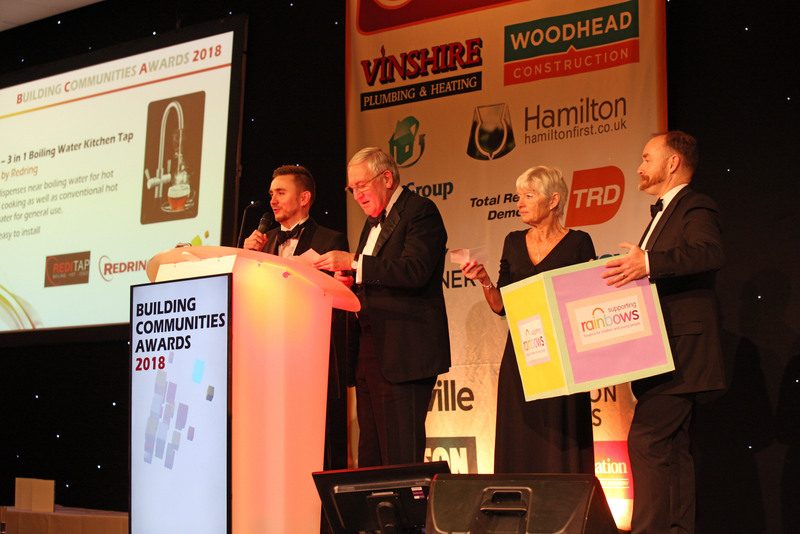
Hosts presenting a charity donation board on stage beside a sponsors' logo wall

In short

  • A donation gets the company nothing related to its business. A sponsorship payment does, and HMRC treats the two differently.
  • Companies cannot use Gift Aid. They deduct qualifying donations from their own profits instead, so never send a company a declaration.
  • Benefits have hard limits: on a gift of £1,001 or more, anything worth over 5% (capped at £2,500) breaks it.
  • Gifts in kind, matched giving and payroll giving each have their own rules.
  • Decide which route you are asking for, then write it down.

Corporate donations are the money a company gives your charity without buying anything in return. That last part decides the rest: the relief the company claims, whether VAT lands on the payment, and what you can promise in the room.

From the auctioneer’s side of the room, corporate money arrives at a gala in four shapes, and the fundraisers who raise the most know which one they are asking for before they call.

This is general guidance, not tax advice. Your finance team or accountant should sign off anything that lands on a return.

What are corporate donations, and how are they different from sponsorship?

Corporate donations are gifts from a company that secure nothing related to its business in return. Sponsorship payments buy something: a logo on your screens, the right to sell at your event.

HMRC puts both in the same guide, because both reduce a company’s Corporation Tax bill. A limited company can give money, equipment or trading stock, land, property or shares, staff on secondment, or sponsorship payments, and deduct the value from its profits before tax.

The route changes the paperwork. Donated money goes in the “Qualifying donations” box of the tax return. Sponsorship and secondment costs are business expenses. Equipment goes through capital allowances.

One limit catches people out: the deduction can only take profits to zero. No trading loss, nothing to carry forward. That is part of why a business having a thin year may offer stock or staff time instead of cash.

Why does the difference matter for tax and VAT?

Because a donation sits outside VAT and sponsorship usually does not. VAT Notice 701/1, updated on 19 October 2026, says a donation is outside the scope of VAT provided it is freely given with nothing supplied in return.

Where your charity is obliged to give a sponsor a significant benefit, that sponsorship becomes a business activity taxable at the standard rate. HMRC’s list of significant benefits runs from naming the event after the sponsor and displaying their logo to free tickets, access to a gala evening and hospitality. A flag, a sticker or a name in a list of supporters is not significant.

For a small charity that is not VAT registered, one large sponsorship deal can be enough taxable income to push you over the registration limit. HMRC flags the risk itself.

If a company wants to do both, keep the parts apart. The donation is only safe where it sits outside the sponsorship agreement, or the agreement says which part is payment for services, and the benefits are not conditional on the gift.

How much can a company accept in return before it stops being a donation?

A company can accept a benefit worth up to 5% of a donation of £1,001 or more, capped at £2,500. Below that the limits tighten. HMRC’s table for donating money sets them out:

DonationMaximum value of benefit
Up to £10025% of the donation
£101 to £1,000£25
£1,001 and over5% of the donation, up to £2,500

The limits also cover benefits given to anyone connected with the company, including close relatives. Two tickets for the managing director’s family count.

Cross the line and the payment is not disallowed, it is reclassified: where the benefit is related to the company, HMRC says it qualifies as a sponsorship payment instead. It is your VAT position that moves.

Three payments never qualify: a loan the charity will repay, a payment conditional on the charity buying property from the company, and a distribution of profits such as a dividend.

Can a company claim Gift Aid on corporate donations?

No. A company cannot claim Gift Aid, and nor can your charity. HMRC’s list of what you cannot claim names donations of money from a company.

“Corporate Gift Aid” is a loose nickname for the relief that replaces it. The company deducts the donation from its own profits before Corporation Tax, so the saving stays with the business rather than reaching you as a 25% top-up. The money you bank is the money they sent.

So never put a declaration in front of a company cheque, and never build a corporate ask on a figure that includes Gift Aid.

What counts as a gift in kind?

A gift in kind is anything a company gives that is not money: used equipment, items it makes or sells, land, shares, staff time. CAF’s Corporate Giving Report 2026 found recorded FTSE 100 charitable donations fell to £1.69 billion in 2025, the lowest since its survey began. Cash is tighter, so ask for goods and time.

  • Used equipment. Furniture, computers, vans, tools. The company claims full capital allowances on the cost, provided it used the equipment itself.
  • Trading stock. Items the company makes or sells. It leaves the gift out of its sales income, so it gets relief on the cost. For VAT it must account for items it gives away, but it can zero rate them where the gift is made specifically so your charity can sell, hire out or export them.
  • Staff. A secondment, or an employee volunteering in work time, is deductible as a normal business expense while the company keeps paying them and running PAYE. Not available to community amateur sports clubs.

Put that VAT point in your ask. “We will sell this at auction” is the phrase that lets a VAT-registered donor zero rate the gift.

Sourcing lots in-house, guided by your auctioneer, keeps far more with the charity than a commission-based supplier does. A gift in kind from a local business is the purest version of that.

Where do matched giving and payroll giving fit?

Both are company money that arrives through employees rather than the finance director. Neither needs a new event.

With match funding, the employer matches what its staff raise or give, often pound for pound up to a cap. Ask your corporate table hosts before the night whether their employer runs a scheme. That answer changes what a pledge is worth.

Payroll Giving runs through PAYE. The donation comes out of pay before tax but after National Insurance, so it costs a higher-rate taxpayer less to give the same amount. The employer sets it up with an agency and can choose to pay the admin fee so the charity receives more.

One rule to remember: you cannot claim Gift Aid on Payroll Giving. The relief has already been given.

When a “donation” is really a commercial promotion

Some offers are neither. A business that promotes its own goods or services on the basis that it will contribute to your charity is a commercial participator, a term defined in section 58 of the Charities Act 1992.

That triggers real obligations. Section 6 of the Code of Fundraising Practice requires appropriate checks before you agree anything, and a written agreement before the promotion starts, stating how much you will get and how it is calculated.

“We’ll give you 50p from every jar sold and put your logo on the label” is a lovely offer and a regulated arrangement. Treat it as a contract, not a cheque.

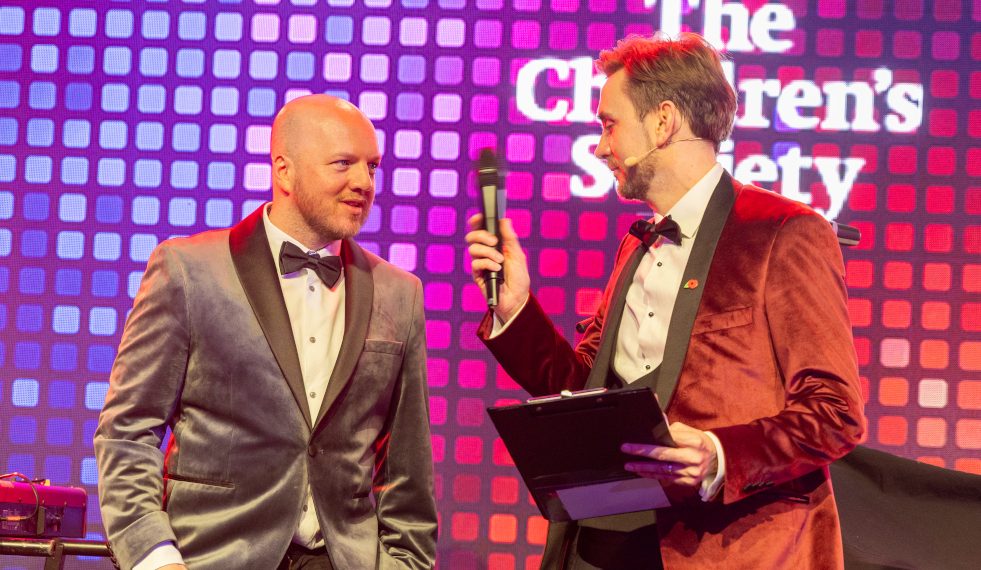
Kevin Durham with a guest on stage at a Children's Society fundraising night

What should you ask a company for?

Ask for one specific thing, in the shape that suits the company. Four asks cover almost every business you will approach:

  1. A cash donation, with nothing promised beyond a thank you and a name in the supporter list.
  2. A gift in kind for the auction or raffle, with “to sell at our event” in writing.
  3. A match, where they back the live pledge up to an agreed cap.
  4. Sponsorship, where they want the exposure and will accept an invoice.

A profitable company with a marketing budget often prefers the fourth. My post on corporate fundraising ideas covers the activity side once the route is agreed.

How to make the ask land

Go to a named person, not an inbox, and lead with the cause. The detail on letters, timing and follow-up sits in my guide to a donation request.

Then put three lines in writing: what they are giving, what they get back (even if that is only a mention), and who to invoice if it is sponsorship. That paragraph keeps both finance teams out of a row in February.

I would rather hear “donation, no benefits, no invoice” than a promised headline slot nobody has priced. The clean yes beats the big maybe.

Corporate donations on the night

Corporate donations do their best work when the room can see them. A matched pot announced before the live pledge changes how people give: every hand counts twice.

Dave Hands of LTS Global Solutions summed up one such night: “It’s gone really well with the pledge, we couldn’t have done it without him. If you need someone to run an event like this, get Kevin to join you. Full credit to him.”

So name the business that donated a lot, say what the charity keeps, and let the room reward them. A structured live pledge outperforms a lot-based auction at most galas, and a corporate match is the cheapest way to make it bigger.

Building the corporate side of a gala starts with a fundraising strategy, not with asks. A corporate charity auctioneer will tell you which of the four routes your room responds to. Call 07596 851647 and we can go through it.

Kevin Durham, charity auctioneer

Kevin Durham

Charity auctioneer & event host
20years£10m+raised60–80events/yr
Check availability07596 851647

Let’s talk

Bring this to your event

Book a free consultation with a charity auctioneer who has raised over £10 million.

Sponsorship packages for a charity event: how to build tiers sponsors will buy

Kevin Durham on stage at the MAG-FEST charity gala, with the headline and category sponsors listed on the big screens behind him

In short

  • Build four or five tiers, from one headline sponsor down to small supporter listings, and sell the top tier first.
  • The most valuable package is often a pledge-match sponsor: a business that matches what the room gives in the live pledge, up to a cap.
  • For VAT, sponsorship with significant benefits is a business supply, unlike a donation. A qualifying fundraising event can make it exempt.
  • Deliver everything you promised and report back with numbers.

Sponsorship packages turn “would you support our gala?” into a decision a business can actually make. Give a sponsor a named part of the night, a price and a short list of what they get, and goodwill becomes a yes or a no. A vague offer is the easiest kind to turn down.

I work the floor at 60 to 80 events a year as a charity auctioneer, and I always make sure the sponsors are thanked from the stage. Here is how to build a ladder that sells, price it, pitch it, and keep HMRC happy.

What should sponsorship packages for a charity event include?

Sponsorship packages for a charity event should include four things: what the money pays for, what the sponsor gets, the price, and a written agreement. Leave one out and the sponsor has to design the deal. Most won’t.

  • A named slot. “Headline sponsor”, “auction sponsor”, “table sponsor”. People buy things with names.
  • A benefits list. Logo on the screens, a mention from the stage, a table of ten, with numbers.
  • A price and payment terms.
  • The link to the cause. One line on what the money makes possible for the charity.

Swim England’s guide to building a sponsorship pack was written for clubs, but works for charities. On pricing, it says to state what each opportunity is, what it costs, how the sponsor can pay, and their return.

Kevin Durham with a guest at a charity gala, standing in front of a sponsor's pull-up banner beside the charity's own stand

How do you build sponsorship tiers?

You build sponsorship tiers by starting with one headline package, then stepping down through cheaper slots so every business has a level it can say yes to. Four or five tiers is plenty.

Here is an example ladder for a 300-guest gala dinner. The prices are illustrations only, to show the steps. They are not market rates: what sponsors pay depends on your audience, region and event.

TierWhat the sponsor getsIllustrative price
Headline sponsorEvent “in association with” them, logo on every screen, a table of ten, thanked from the stage£5,000
Pledge-match sponsorTheir name on the live pledge, plus a matched pot they set in advance£2,500 plus the pot
Auction sponsorLogo on the auction screens, named before the first lot£1,500
Table sponsorTable of ten, listed in the programme£1,000
SupporterName in the list of supporters£250

Three rules make it work:

  1. Only one headline sponsor. Exclusivity is part of what they pay for.
  2. Every tier gets something the tier below doesn’t. Otherwise nobody buys the dearer one.
  3. Sell from the top. Once the headline name is confirmed, the rest get easier.

Map each slot against your charity gala running order.

The pledge-match sponsor: the package worth more than its price

The pledge-match sponsor is the package I would build every ladder around. A business matches what guests give during the live pledge, pound for pound, up to a cap agreed in advance.

In a field experiment with more than 50,000 previous donors, economists Dean Karlan and John List found that simply announcing a match raised revenue per appeal by 19%. Ratios of 2:1 or 3:1 did no better than 1:1. So ask for a bigger pot, not a bigger ratio.

The live pledge is already the strongest segment of most fundraising nights. Structured properly, it outperforms a lot-based auction at most galas. At a Jigsaw Trust event, a live pledge nobody had planned raised £30,600 on top of the auction. Put a match behind a pledge like that and every hand counts twice.

Agree four things in writing: the ratio, the cap (set against your target), the window (usually the pledge segment), and whether the sponsor pays the full cap or only matches what comes in.

Keep the matched pot in a separate clause from the sponsorship fee. The pot is a gift; the logo and the mention are benefits. That split matters for VAT.

How do you price sponsorship packages?

You price sponsorship packages from the top down: set the headline price first, based on who the sponsor will reach and what it costs you to deliver, then step each tier down. Build up from the bottom and the top tier ends up too cheap.

  • Who is in the room? Three hundred local business owners beat three hundred people who will never buy from them.
  • What does it cost you? A table of ten has a real cost. Cover it first.
  • What would they pay elsewhere? A local firm knows what an advert costs.
  • Room to negotiate? Say so. The Swim England pack suggests it, so sponsors feel free to come back with an offer.

How to write a sponsorship proposal on one page

A sponsorship proposal for a charity event should fit on one page, with your rate card attached:

  1. The cause in two sentences. What the charity does and what this event funds.
  2. The event. Date, venue, guest numbers and profile.
  3. Why this sponsor. One line tailored to their business. Swim England’s advice: focus on outcomes for the sponsor, not what’s in it for you.
  4. The packages. Your tiers in a short table, with the one that suits them highlighted.
  5. The next step. A named contact, a phone number and a reply-by date.

Write a fresh one for each sponsor. A proposal that could have gone to anyone reads like it did.

How do you get sponsors for a charity event?

You get sponsors for a charity event by starting with businesses that already know you, then widening out to local firms whose customers will be in the room. Cold lists come last.

  • Your trustees’ and committee’s employers. A warm introduction beats a cold email every time.
  • Last year’s table buyers and lot donors. They have said yes to you before.
  • Suppliers. Venue, printer, AV.
  • Local firms that sell to your guests. Estate agents, solicitors, accountants, builders.
  • Employers with matched giving. Some companies match staff giving, including at fundraising events.

For bigger corporate sponsorship, my corporate fundraising guide covers how companies decide.

Check every sponsor against your charity’s own policy first. The Charity Commission’s trustee guidance (CC20, updated February 2026) suggests a fundraising plan sets out the methods you will use, the ones you won’t, and the values behind them.

Is charity event sponsorship subject to VAT?

Charity event sponsorship can be subject to VAT, because HMRC treats sponsorship with significant benefits as a business supply. A donation given freely, with nothing in return, is outside the scope of VAT.

HMRC’s Notice 701/1 (section 5.9.5, last updated 19 October 2026) says sponsorship is taxable at the standard rate where the charity must give the sponsor a significant benefit. Naming a donor in a list of supporters counts as insignificant. The sponsorship notice (701/41, May 2019) lists typical significant benefits: logos, free tickets, access to gala evenings, hospitality, and naming an event after the sponsor. That is every rung of the ladder above except the supporters’ list.

Two points soften it:

  • The fundraising events exemption. HMRC’s events helpsheet (updated 20 April 2026) lists sponsorship payments directly connected with a qualifying event among the exempt supplies. A dinner organised and promoted to raise money can qualify, within a limit of 15 events of the same kind at one location a year.
  • Separate the donation. Section 5.9.6 says no VAT is due on a donation if the agreement shows which part pays for services and which is a gift, and the benefits don’t depend on the gift.

HMRC also warns that taxable sponsorship could take a small charity over the VAT threshold (£90,000 of taxable turnover in October 2026). Ask your accountant before you sign anything large.

Can a sponsor claim tax relief or Gift Aid?

A business sponsor can usually claim tax relief, but nobody can claim Gift Aid on a sponsorship payment.

GOV.UK’s guide to sponsoring a charity says a company can treat sponsorship as a business expense when it gets something business-related back, such as using the charity’s logo. HMRC’s Business Income Manual (BIM42555, updated 4 August 2026) adds that it must be wholly and exclusively for the business, and entertaining, which can include hospitality in a package, is disallowed.

HMRC’s Gift Aid guidance rules out payments for goods and services and money donated by a company. If an owner funds the pledge match personally, it is a gift from an individual and can qualify on the usual terms.

Delivering the sponsorship packages you sold

Sponsors renew when they can see they got what they paid for.

  • Do everything on the list. Every logo, every mention, every seat.
  • Thank sponsors from the mic, then get back to the cause. That is what people give to.
  • Don’t overclaim the match. The Fundraising Regulator’s code says you must not mislead donors. If the cap is £5,000, don’t tell the room “everything tonight is doubled”.
  • Report back within a fortnight. The total, what the match unlocked, and first refusal on next year.

The same rules apply whether the sponsorship sits inside a charity ball or a company night built on auction ideas for the sponsor’s staff.

Planning a gala and want to talk through sponsors and a matched pledge? Call 07596 851647. I’d rather talk it through than trade emails.

Kevin Durham, charity auctioneer

Kevin Durham

Charity auctioneer & event host

20years£10m+raised60–80events/yr
Check availability07596 851647

Let’s talk

Bring this to your event

Book a free consultation with a charity auctioneer who has raised over £10 million.

Match funding for charities: how to use it to double your gala total

Kevin Durham on the microphone at the MAG-FEST charity gala as the organisers applaud on stage

In short

  • Match funding means a funder agrees to give in proportion to what others give, usually £1 for every £1.
  • Research on more than 50,000 donors found that simply announcing a match lifted revenue per appeal by 19%. A 1:1 match worked as well as 2:1 or 3:1.
  • At a gala, the best use is a matched pledge: a sponsor or trustee commits a capped pot before the night, and you spend it during the live pledge.
  • Company matched giving schemes and Big Give campaigns are the two other routes worth knowing.
  • Gift Aid follows the person who gives. You can claim it on your supporters’ pledges, but not on a company’s match.

Match funding is the simplest way to make one gift do the work of two. A sponsor, trustee or company agrees to match what your supporters give, and every pound that goes in comes out doubled. Used well at a gala, it is the closest thing fundraising has to a shortcut.

On any fundraising night I work as a professional charity auctioneer, the live pledge is the segment I care most about, and a match is the strongest thing you can bolt onto it. Here is what match funding means, why it works, and how to make it land in the room.

What is match funding?

Match funding is money a funder promises to give in proportion to what is raised from other people. In practice that almost always means pound for pound: you raise £10,000, the funder adds another £10,000.

The term covers a few different arrangements:

  • A matched appeal or pledge. A donor or sponsor doubles public gifts up to a cap, for a set window.
  • Employer matched giving. A company matches what its own staff give or raise.
  • Matching grants. A foundation awards a grant on condition that the charity first raises a set sum elsewhere.

The first two are the ones that raise your total on the night.

Why does match funding make people give more?

Match funding makes people give more because it changes the price of doing good. A £50 pledge suddenly does £100 of work. Most people find that hard to turn down.

The best evidence comes from a large field experiment by economists Dean Karlan and John List. They sent appeal letters to over 50,000 previous donors. Announcing a match raised the revenue per letter by 19% and the chance of someone giving by 22%. The surprise was that 3:1 and 2:1 matches did no better than 1:1.

A second study by Daniel Rondeau and John List adds a twist. Announcing a lead gift that was already committed brought in 23% more donors and 18% more money than saying nothing. In that test, the match itself added no extra lift on top.

The lesson for a gala: donors respond to a committed, visible sum that someone has already put on the table. A match gives you that, plus a reason to give now.

How does a matched pledge work at a gala?

A matched pledge works by doubling every pledge made in the room, up to a cap agreed in advance. The funder commits, say, £10,000 before the night, and every pound pledged is matched until the pot runs out.

The live pledge is already the most powerful segment of any fundraising night. Structured properly, a pledge drive beats a lot-based auction at most galas, and a match gives it a headline.

A well-run live pledge can out-earn the auction with no match in sight. Put a match behind it and every hand counts twice.

Big screen at a charity gala showing the total raised so far and the live pledge tiers

Here is how I’d set one up:

  1. Announce the match before the first hand goes up. Name the funder if they are happy to be named, and say the cap out loud.
  2. Tie the levels to the cause. “£500 funds a week of support. With the match, that is two weeks.” My fund-a-need guide covers setting the levels.
  3. Count the match down. Telling the room how much is left creates real urgency. No fake pressure needed.
  4. Thank the funder, then go back to the cause. The match is the reason to give now, not the reason to give. Keep it warm and hopeful rather than heavy.

One client doubled their fundraising target. Their team did the hard work; what I added was structure, a plan for the auction and the pledge agreed well before dinner. A match belongs in that plan from day one.

Securing your match before the night

The match has to be confirmed before the event. A pledge that is “probably matched” is not one you can announce.

Kevin Durham on stage with the MAG-FEST organisers, in front of the sponsor and charity screens

Your best prospects are already close to you:

  • Your headline sponsor. A match gives them something more visible than a logo on a banner.
  • A trustee or major donor. Used as a match, their gift gets seen and multiplied instead of banked quietly.
  • A corporate partner. Some will treat a match as part of their charity partnership, and my corporate fundraising guide covers how to pitch it.

Agree four things in writing: the ratio, the cap, the window (usually the pledge segment), and what happens if the room falls short of the cap. Some funders give the full amount either way; others only match what comes in. Ask, because it changes how you word the announcement.

Set the cap against your overall fundraising target. Too small and it runs out in the first minute. Too large and the room never gets close, which takes the edge off.

How does company match funding work?

Company match funding is when an employer matches what its staff donate or raise for charity. The CAF guide to matched giving (August 2025) lists the usual models: 1:1, doubling, a cap per employee such as up to £50 a month, or matching during a specific campaign or event.

Schemes can cover payroll giving, fundraising events and personal donations. The company also gets tax relief, because it can deduct donations from its profits before tax.

For a gala, this is money sitting at your corporate tables. Ask table hosts before the night whether their employer runs a matched giving scheme. If they do, mention it during the pledge and follow up afterwards with whatever the scheme asks for.

How does Big Give match funding work?

Big Give match funding works by pairing a charity’s appeal with Champions: philanthropists, foundations and companies who give in advance so that public donations are doubled during a campaign week.

Its flagship Christmas Challenge raised a record £57.4m in one week in December 2025, for 1,591 charities, including £25.8m in match funding. It runs in early December, timed to coincide with Giving Tuesday. Applications for the 2026 campaign closed at 5pm on 15 July 2026. Big Give lists the 2027 window as 10 May to 2 July 2027.

Taking part? Then an early December gala is a natural partner. Tell guests from the stage that gifts through your Big Give page that week are doubled while the match lasts.

Big Give also lets charities run their own match campaigns outside the big challenges. You set up a campaign, send your match funders a pledge form, and upload proof of the funds afterwards. These dates are from Big Give’s Christmas Challenge page as at 3 November 2026, so confirm current terms with them.

Can you claim Gift Aid on matched donations?

You can claim Gift Aid on the part each individual gives from their own money, but not on a company’s match. Gift Aid follows the person who actually gives.

Here is how the HMRC rules apply to a matched pledge:

  • Your supporters’ pledges. You can claim 25p on every £1, as long as the donor is a UK taxpayer who has paid enough tax and has made a Gift Aid declaration.
  • A company’s match. HMRC says you cannot claim Gift Aid on company donations of money. The company gets its own tax relief instead.
  • A trustee or donor matching personally. Their gift is a donation from an individual, so it can qualify on the same terms as anyone else’s.
  • Tickets and auction lots. Ticket money does not qualify, and an auction purchase only qualifies on any amount paid above the lot’s value.

That makes the pledge the cleanest segment of the night for Gift Aid.

So put a declaration on every pledge card.

Five ways to waste a match

Matches that disappoint usually fail in one of these ways:

  • Announcing it too late. If the room hears about the match halfway through the pledge, you’ve missed the moment it was built for.
  • Overclaiming. The Fundraising Regulator’s code says your fundraising must not mislead donors. If the cap is £10,000, do not say “everything tonight is doubled”.
  • Chasing a bigger ratio. 1:1 does the job. Ask for a bigger pot, not a 3:1 headline.
  • Talking more about the funder than the cause. Thank them warmly. Then get back to the cause: that is what people give to. The match only multiplies it.
  • No follow-up plan. Pledges and employer matches need chasing afterwards. Decide who does it before the night.

Putting match funding to work at your gala

Match funding works best when it is part of the plan from the start, not a bonus mentioned on the night. Secure the pot, agree the terms in writing, and give the live pledge the room it needs. My comparison of a pledge drive and a live auction explains why the pledge deserves that slot.

Planning a gala and want to talk through a matched pledge? Call 07596 851647. I’d rather talk it through than trade emails.

Kevin Durham, charity auctioneer

Kevin Durham

Charity auctioneer & event host

20years£10m+raised60–80events/yr
Check availability07596 851647

Let’s talk

Bring this to your event

Book a free consultation with a charity auctioneer who has raised over £10 million.

Giving Tuesday: how UK charities can use it, and where a live event fits

Charity auctioneer Kevin Durham speaking from the lectern at CRIS Cancer Foundation's 'A Night to Dream' charity gala

In short

  • Giving Tuesday 2026 is on Tuesday 1 December. It is always the Tuesday after US Thanksgiving.
  • In the UK it has been led by the Chartered Institute of Fundraising since 2022. Anyone can take part and nobody owns it.
  • UK totals have hovered around £20m a year, and the day is noisy. A plain “please donate” email struggles to stand out.
  • The day works hard as a launch: gala tickets, an auction preview or a matched pledge that you then close in the room.
  • Ask for donations, not purchases, if you want Gift Aid on top.

Giving Tuesday is a global day of giving that falls on the Tuesday after American Thanksgiving. In 2026 that is Tuesday 1 December. UK charities use it to ask, to thank and to launch things, and it works best when the day points supporters towards something bigger than a single online donation.

I don’t run Giving Tuesday campaigns. I work as a charity auctioneer and event host, and my job is the room on the night. So this guide covers the basics and the UK numbers, then how to make the day feed into a live event.

What is Giving Tuesday?

Giving Tuesday is a day that encourages people to give money, time or skills to good causes. It was created in 2012 as a simple idea: one day to do good, set after the shopping rush of Black Friday and Cyber Monday.

It started in New York at the 92nd Street Y, with the UN Foundation as co-founder. The UK site says it is now celebrated in over 60 countries.

If you’ve seen it called “giving back Tuesday”, it’s the same day. The global brand writes it as one word, GivingTuesday. The UK site uses two words.

When is Giving Tuesday 2026?

Giving Tuesday 2026 is on Tuesday 1 December 2026, as confirmed on the official UK site. It always lands on the Tuesday after US Thanksgiving, so it moves between 27 November and 3 December each year. In 2025 it fell on 2 December.

In 2026 it also opens Generosity Week, which runs from 1 to 5 December and ends on International Volunteer Day.

How does Giving Tuesday work in the UK?

In the UK, Giving Tuesday is an open campaign that any charity, business or individual can join for free. The UK became a full global partner in 2014 with 800 partners, and it now has thousands.

The Charities Aid Foundation led it for its first seven years. In March 2022 the Chartered Institute of Fundraising took over as UK lead, and it still runs the UK site.

Here are the UK numbers worth knowing, with their dates:

FigureWhat it shows
An estimated £20mn raised in 2022The UK total, as reported by the Chartered Institute of Fundraising in March 2023
35% of 2,000 adultsSaid a recognised day would make them more likely to donate (same report)
About £20m for three years runningEnthuse’s July 2023 verdict that the day had stagnated in the UK
4.2% (2020) down to 3.5% (2022)Giving Tuesday’s share of pre-Christmas giving, from the same Enthuse report
50%People who gave in the past year, the lowest since 2019, per CAF research quoted in December 2025

So, is Giving Tuesday still a thing? Yes. The catch is that every charity in the country emails on the same morning, and Enthuse found the day noisy and hard to cut through.

How can a UK charity use Giving Tuesday?

A UK charity can use Giving Tuesday to ask for donations, thank the people who already give, recruit volunteers or launch a campaign. The UK site’s charity page lists all of these, plus sharing stories from the people you help.

The ones that do the most for a December fundraiser:

  • Thank people first. A short film or a story from a beneficiary, sent before you ask for anything else.
  • Launch something. Tickets, a campaign or a challenge. A launch gives people a reason to open the email.
  • Match it. Line up a business, trustee or major donor to double gifts made in a set window. The Christmas Challenge is run by Big Give, and it is timed to coincide with Giving Tuesday. It raised £57.4m for more than 1,500 charities in 2025.
  • Reassure donors. Show your charity number and, if you have it, the Fundraising Regulator badge. The Charity Commission and the regulator used Giving Tuesday 2025 to tell people to check the register before they give.

There are more fundraising ideas here if you want something for the rest of the year.

Where a live event fits into Giving Tuesday

Giving Tuesday is mostly online. A gala is the opposite: a room full of your supporters, together, for one night. Use the first to fill the second.

Three ways to do it:

  1. Open gala tickets on Giving Tuesday. If your gala or Christmas dinner is in the new year or the spring, the day is a ready-made launch date. You already have a reason to email everyone, so let the email do two jobs.
  2. Preview the auction lots. Show your two or three headline lots online on the day, then sell them in the room. My guide to promoting your auction covers how to tease lots without giving the night away.
  3. Announce a match you’ll close at the gala. Secure a match pot from a sponsor, announce it on Giving Tuesday, and tell supporters the pledge on the night is when it gets spent. Then run that pledge in the room.

Kevin Durham with a wireless microphone and clipboard running the live auction from the floor at Jigsaw Trust's charity gala

That third one is the one I’d push hardest. The live pledge is the most powerful segment of any fundraising night, because every guest can give at a level that suits them. Bolt a match onto that and every hand that goes up counts twice.

If your gala is in the first week of December, you can go further: mention Giving Tuesday from the stage and give the room a moment where they’re part of something global.

Can you claim Gift Aid on Giving Tuesday donations?

Yes, you can claim Gift Aid on Giving Tuesday donations if the donor is eligible and has signed a declaration. Charities can claim an extra 25p for every £1 given, at no cost to the donor.

What Gift Aid doesn’t cover is buying something. HMRC says payments for event admission and raffle tickets are not gifts, so they don’t qualify. That’s one more reason to make your Giving Tuesday ask a pure donation, and to collect Gift Aid declarations at the gala when the pledge happens.

A six-week Giving Tuesday plan for a December gala

You don’t need a big team for this. You need dates in a diary.

  • Six weeks out: Set your fundraising target and decide what Giving Tuesday is for: tickets, a match or a lot preview. Pick one.
  • Four weeks out: Approach your match funder. Write the email and the social posts.
  • Two weeks out: Choose the headline lots you’ll preview. Get a short film or story from the people your charity helps.
  • On the day: Send in the morning, post through the day, and thank everyone who gives within 24 hours.
  • At the gala: Remind the room what happened on Giving Tuesday, then run the auction and the pledge while they’re still listening.

Kevin Durham in a red velvet jacket on stage with guests and organisers at MAG-FEST, the Manchester Airport Group's charity gala

Where I come in

Most of this plan sits with your team. The part I handle is the night itself: the auction, the pledge, and keeping the room with you from the first lot to the final total.

If you’re planning a gala around Giving Tuesday, or any time after it, have a look at my auctioneer services or call 07596 851647 and we can talk it through.

Kevin Durham, charity auctioneer

Kevin Durham

Charity auctioneer & event host

20years£10m+raised60–80events/yr
Check availability07596 851647

Let’s talk

Bring this to your event

Book a free consultation with a charity auctioneer who has raised over £10 million.