
Celebrity auction charity events: what actually raises the bids
In short
- A celebrity name in the room draws attention, but attention on its own does not raise money: someone still has to turn it into competitive bidding.
- Celebrity-linked lots sell for more because of provenance and story, not just the object itself, but only when the auctioneer sequences and paces that moment properly.
- Eric Clapton’s 1999 Christie’s guitar auction for his Crossroads Centre raised over $5 million, proof that a genuine story behind a lot outperforms the item alone.
- My own TV background, sharing a stage with Annie Lennox at my first charity event in 2005 and interviewing names like Will Ferrell and Tom Hardy, changes how I read a room when a well-known guest is in it.
- The practical lesson: brief the room, protect the cause as the focus, and never let a celebrity moment become the whole strategy.
If you are planning a celebrity auction charity event, you already know the appeal. A well-known guest fills seats, gets the local paper interested, and gives your programme a story to lead with. What most organisers get wrong is assuming the celebrity does the fundraising for them. They do not. They open the door. Someone still has to walk the room through it.
What is a celebrity auction charity event?
A celebrity auction charity event is a fundraising auction where a well-known guest attends, donates a lot, or lends their name to the appeal, on top of the standard live auction or pledge drive format.
That can mean several different things in practice: a signed item donated by someone famous, a experience-based lot like meeting a well-known name, or simply a recognisable guest attending and being seen to support the cause. Each version changes the room slightly differently, but none of them replace the actual mechanics of running an auction.
Does a celebrity name actually increase the bids?
Yes, a genuine celebrity connection increases bids, but only when the story behind the item is real and specific, not just a name attached for marketing.
Eric Clapton’s 1999 guitar auction at Christie’s is the clearest example of this at scale. He sold over 100 guitars and other items to fund his own treatment centre, Crossroads, and the sale raised over $5 million. Buyers were not paying guitar-shop prices. They were paying for the specific instrument, played by that specific person, tied to a cause he had founded himself. That is provenance doing the work, not fame alone.
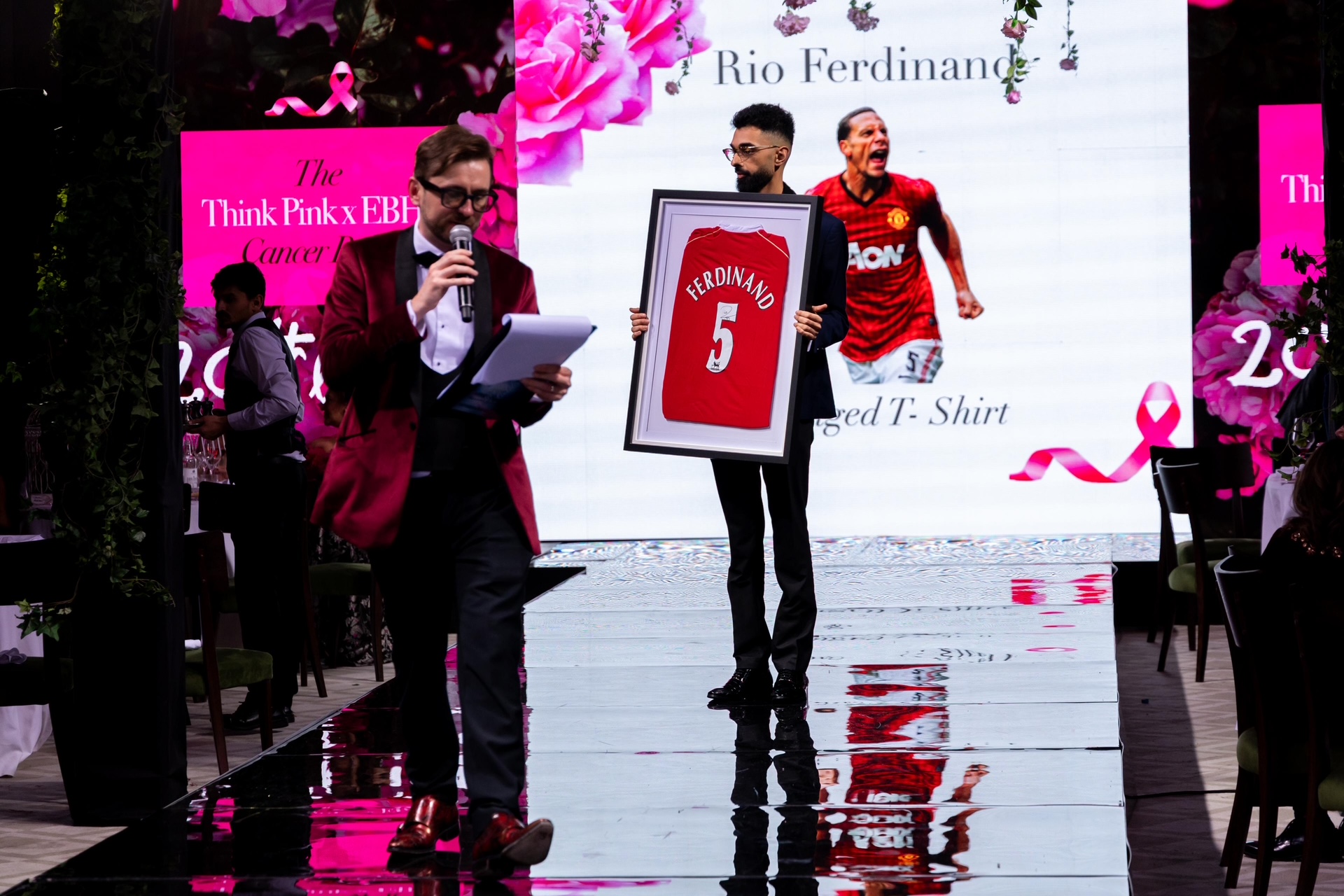
The same principle applies at a much smaller scale in a hotel ballroom. A signed shirt from a player the room actually cares about will always outsell a generic signed item from someone with no connection to the guests. Relevance beats fame every time.
Do celebrities donate their own items for charity auctions?
Yes, celebrities regularly donate signed items, experiences, or their own time to charity auctions, and these lots can perform well when they are sourced and described properly.
This is where I bring in my fundraising strategy consultation before an event. A celebrity-donated lot needs the same groundwork as any other: a realistic reserve, a clear description of what the winner actually gets, and a plan for how it gets sequenced in the running order. A brilliant lot introduced badly, or dropped in at the wrong moment, still underperforms.
Why star power alone will not close a lot
I have stood in rooms with a genuinely famous name at the top table and watched the bidding go quiet anyway, because nobody was managing the moment. A name in the room is an asset. It is not a strategy.
Bidding momentum is a skill, not a lucky side effect of who happens to be attending. I have to read who is bidding, who has gone quiet, and when to name the room out loud to get one more hand up, whether or not there is a celebrity two tables over. The recognisable face gets people through the door and gets the local write-up. What happens after that is still down to pacing, timing, and holding the room’s attention on the cause, not the guest list.
I have also seen the opposite mistake: an event that assumes the celebrity guest is a distraction from the fundraising and tries to keep them out of the auction segment entirely. That is just as costly. The trick is not choosing between the guest and the mechanics of the auction, it is weaving the two together deliberately, so the room’s attention on the guest becomes attention on the cause instead.
What actually happens in the room during a celebrity auction charity gala?
In practice, a celebrity guest raises the energy in the room for a short window, and a good auctioneer uses that window rather than letting it pass.

There is usually a natural spike in attention right when a well-known guest arrives, is introduced, or presents a lot themselves. If the live auction is timed to run through that window, bidding tends to run hotter than it would an hour later once the novelty has settled and the room has moved on to dessert. Miss that window and you are back to selling on the merits of the lot alone.
How my TV background changes the dynamic
Twenty years ago, my first ever charity event put me on stage alongside Annie Lennox. That is not a boast, it set the baseline for how I think a room with a recognisable name in it should feel: professional, warm, and never starstruck to the point that the cause gets forgotten.
Later, presenting for Fox, Warner and Universal put me in rooms with people like Will Ferrell, Tom Hardy, Reese Witherspoon and Robin Williams. What that taught me has nothing to do with name-dropping and everything to do with pacing: how to keep an audience’s attention on the moment that matters, rather than letting it drift toward whoever is famous in the room. That is the actual skill a celebrity-attended charity gala needs on the mic.
Should you rely on celebrity guests instead of a professional auctioneer?
No. A celebrity guest adds attention and a story, but they are not a substitute for someone who knows how to sequence lots, read bidders, and run a pledge drive.
Plenty of well-meaning events lean entirely on a big name to carry the evening, then wonder why the total fell short despite a full room and local press coverage. The name got people there. Nobody converted that goodwill into pounds raised, because there was no plan for it beyond the guest appearance itself.
How to make the most of a celebrity-attended charity auction
- Brief your auctioneer on who is attending and why, so the running order can be built around the room’s natural attention spikes rather than working against them.
- Keep the cause visibly at the centre, not the celebrity. A gala that feels like a fan event rather than a fundraiser tends to undersell on the night.
- Source celebrity lots properly, with a clear description, realistic reserve, and a genuine story, the same charity auction ideas discipline you would apply to any other lot.
- Time the live auction or pledge drive around the celebrity moment, not after it has passed.
- Do not oversell the guest appearance in your marketing. Set expectations honestly and let the actual evening do the rest.
- Agree the celebrity’s role in advance, whether that is presenting a lot, saying a few words, or simply attending, so nobody is improvising in front of a live room.
- Have a backup plan for the auction itself regardless of who is attending. Guests can be delayed, pull out, or run to a tighter schedule than planned, and your fundraising total should never depend entirely on one person turning up.
A well-known name in the room is a genuine advantage. What decides whether that advantage turns into pounds raised is still the same thing it always is: someone on the mic who knows how to use the moment. Find out more about my background if you are weighing up whether a celebrity-attended event needs that extra layer of experience.

Kevin Durham
Charity auctioneer & event host
Let’s talk
Bring this to your event
Book a free consultation with a charity auctioneer who has raised over £10 million.