Heads or tails
The opener. Whole room, one buy-in, one winner, about four minutes. The fastest way I know to turn a polite dinner into a room that is up for the night.

Fundraising games
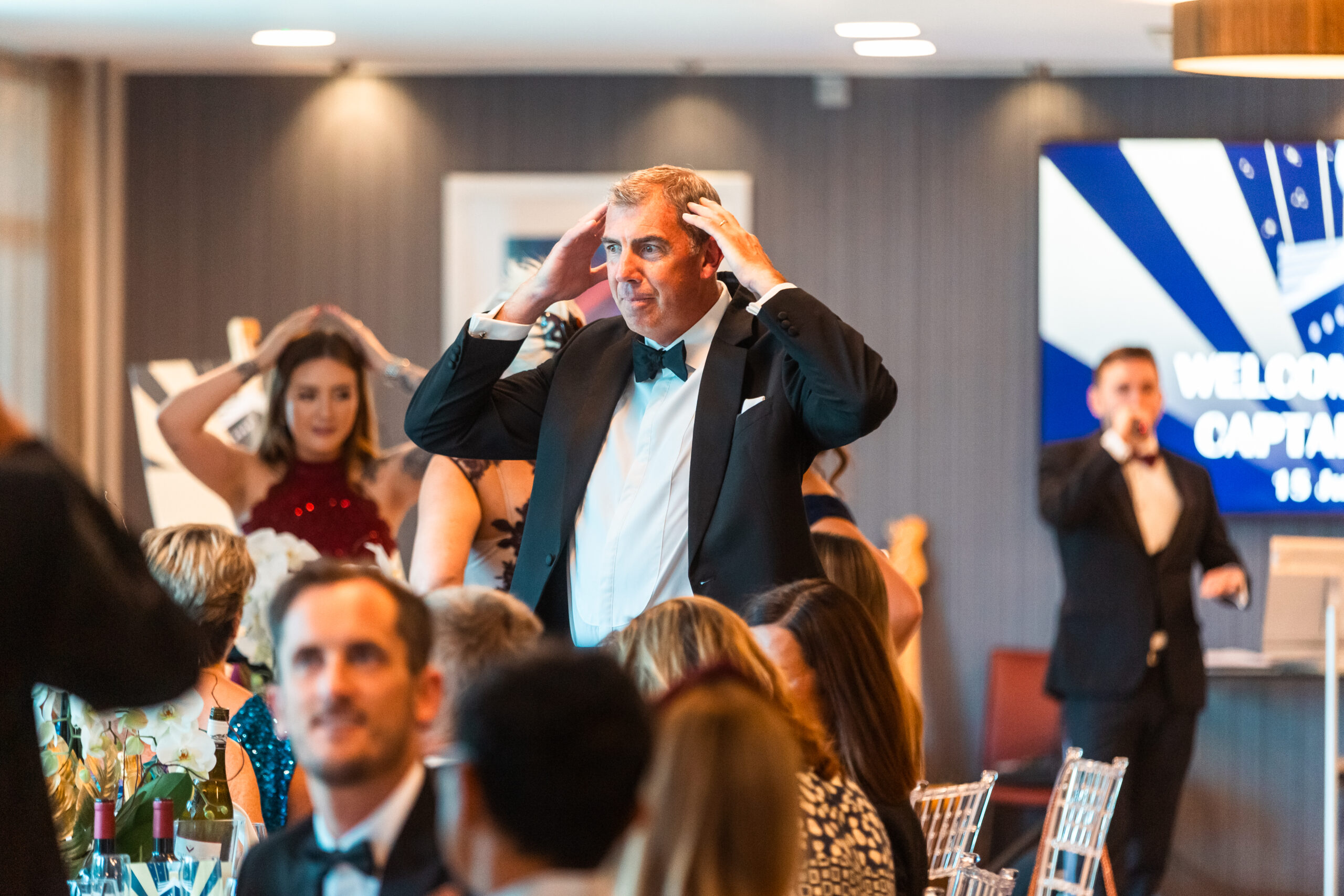
I open almost every gala with heads or tails, because it gets every guest in the room on their feet inside four minutes. That, the envelope game and a handful of others, timed to keep the room smiling and the donations climbing between the bigger moments.
Fundraising games do two jobs at once: they raise money in their own right, and they keep energy high so the auction and pledge land harder. I pick and pace them for your audience, so they feel like fun rather than another ask.
Everyone buys in for a fiver or a tenner. Hands on head or hands on tails, I flip the coin, and half the room sits down. Three or four flips later there is one person standing and the room is roaring at them.

See it working


The line-up
These are short, self-contained money-raisers that sit between the bigger moments. If you want the full show, with TV-style formats running through the evening, that is entertainment packages.
The opener. Whole room, one buy-in, one winner, about four minutes. The fastest way I know to turn a polite dinner into a room that is up for the night.
A wall of sealed envelopes, one big prize, every other envelope worth something small. Guests buy blind. It rewards curiosity and it sells out fast.
A visible prize and a sealed box. Low ticket price, high take-up, and it works just as well at a school hall as it does at a black-tie gala.
Tables competing against each other for a prize or bragging rights. It gets people talking to the strangers they were sat next to, which pays off later in the pledge.
For drinks receptions and daytime events. Guests pay per go, it keeps a slow arrivals hour moving, and it gives people something to do while the room fills up.
Handled so it complies with UK raffle rules and actually sells, rather than a book of tickets nobody remembers to buy. See the software for selling tickets before the night.
Games are not filler. Placed properly they do a specific job at a specific point in the evening, and placed badly they flatten the room right before you need it at its warmest.
Here is roughly how I use them. Heads or tails goes early, usually straight after the welcome or between the starter and the main, because it gets every guest involved before anybody has been asked for real money. The envelope game or a mystery box goes in the gap while plates are cleared, when a room would otherwise drift into private conversation. Table challenges sit just before the live auction, because a room that has just competed together bids harder than a room that has been sitting quietly.
What I never do is run a game immediately after the pledge. The pledge is the emotional peak of the night and it deserves to be the last serious thing anyone is asked to do.
Questions
Heads or tails is a reliable whole-room game with a single winner and works almost anywhere. The envelope game, mystery boxes, table challenges and a properly run raffle also lift donations. I pick the games that suit your crowd and your cause.
They do two jobs: they raise money directly, and they keep energy high so the auction and pledge land harder. Heads or tails alone can raise a meaningful sum in a few minutes with almost no cost.
Each game is quick, usually a few minutes, and I slot them between the bigger moments to keep the room lively without slowing the programme.
Every guest buys in, usually for five or ten pounds. They stand up and either put their hands on their head or on their tail. I flip a coin, and everyone who guessed wrong sits down. A few flips later there is one person left standing and they take the prize. It takes about four minutes.
One decent prize is enough, and it does not need to be expensive. A donated bottle of champagne, a hotel night or a signed shirt all work. The game sells on the fun of playing, not the size of the prize.
Yes. I pitch them to the room. A black-tie corporate table of ten plays a quieter, sharper version than a rugby club dinner, but both play. The games that need the room shouting are the ones I leave out when the audience is not up for it.
Games are short money-raising moments slotted between the bigger parts of the night. Entertainment packages are the full show, including TV-style game show formats built around your organisation and run across the whole evening. Plenty of clients book both.
Let’s talk
A free initial consultation to talk through your goals, your room and your target. Available for events across the UK, Europe and the US.