
In short
- A charity auction company usually supplies lots at a reserve price and is paid from it. The charity receives what is bid above the reserve.
- A charity auctioneer is paid a fee agreed up front, so on donated lots the charity keeps the whole bid, and the fee is a separate line in the budget.
- On a £1,000 bid, my illustrative sums leave the charity £200 under a company’s £800 reserve, £950 on a platform charging 5%, and £1,000 on a donated lot.
- A company suits you if you have no time, no donors and nobody to run a silent auction. Hire an auctioneer if you can get lots and need someone to hold the room.
- Whoever you choose, ask in writing what the charity receives per lot.
A charity auction company supplies the lots, and often the bidding kit, and is paid out of what those lots sell for. A charity auctioneer is paid a fee agreed up front to plan the auction and run the room, so the charity keeps what the room bids on donated lots. Which one you need depends on where the lots will come from and who will hold the room.
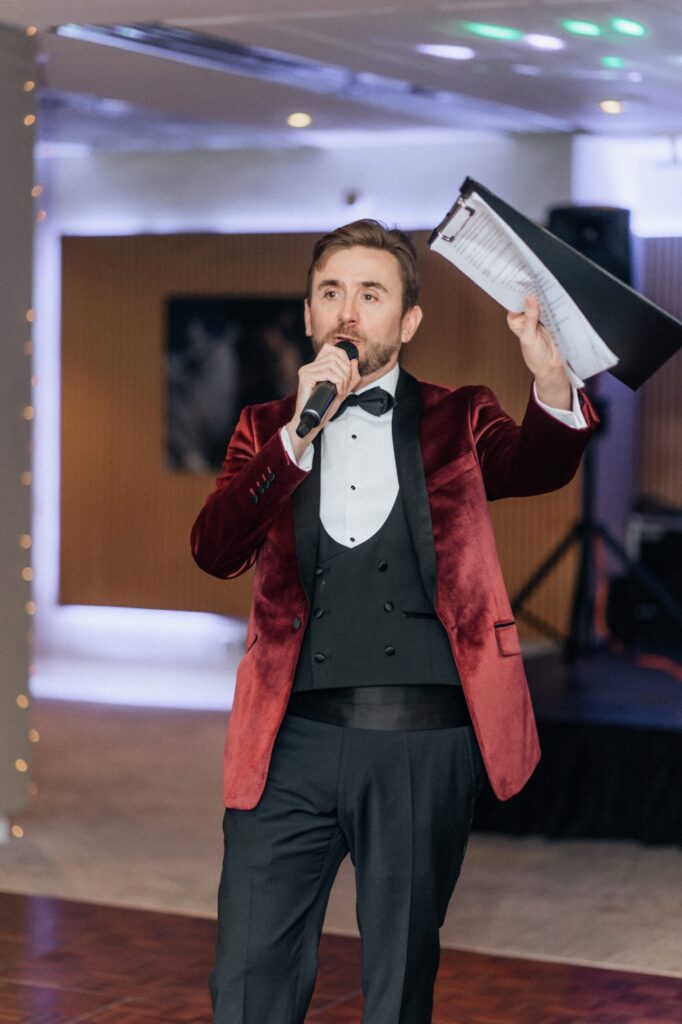
I am Kevin Durham, a professional charity auctioneer and event host. Where I describe other companies below, it is from their own pages, read in November 2026.
What is a charity auction company?
A charity auction company is a business that runs part or all of a fundraising auction for a charity. It usually supplies lots on a reserve, a brochure or bidding software, and staff on the night. It is typically paid from what its own lots sell for, and the charity receives the money bid above each reserve.
What does a charity auction company do?
A charity auction company takes auction work off the charity’s team, and the exact service varies, so read each proposal line by line. Two of the companies named below describe these parts on their own pages, read in November 2026:
- Lots. Experiences and memorabilia supplied at a reserve or minimum bid price. Both say your own donated lots can sit alongside theirs.
- Display and bidding. A branded brochure, a display of the items, or tablet and online bidding.
- Staff on the night. A team to talk to guests about the lots and collect the bids.
- Payment and aftercare. Contacting the winners, taking payment and arranging the prizes, then paying the charity its share.
If you also want live lots called from the stage, ask who does that and how they are paid.
What is the difference between a charity auction company and a charity auctioneer?
A charity auction company is a business that sells a managed auction service, usually with its own lots, brochures or software. A charity auctioneer is a person who plans the auction and calls it live. The company is typically paid from what its lots sell for, the auctioneer by an agreed fee.
The two overlap: some companies supply an auctioneer, and some auctioneers bring software. So the title is not the test. Ask what the supplier is paid from, and how much of each pound bid reaches the charity.
How do charity auction companies charge?
Most charity auction companies charge through the reserve rather than an invoice. Each supplied lot carries a price the company needs to recover, plus its margin, and the charity keeps what is bid above that figure. Your own donated lots, where a company includes them, are usually passed on in full.
Many charity auction companies make their money from the lots they supply: they secure an item, add a margin, and set a reserve at or above that level. The charity usually receives what is bid above it. Here is how three of them describe it.
- A Star Experience’s FAQ says it typically secures items at 20% to 60% off retail and adds a margin to make a “Supply Price”. It builds a further margin into a “Minimum Bid Price” agreed with the charity, and passes on 100% of the surplus above that.
- The Event Bureau’s silent auction page calls its service free of charge because costs are covered in the reserve prices, and says 100% of bids over the reserve go to the charity.
- Impulse Decisions’ homepage describes a free silent auction service. It does not set out the model there.
That is how each says it works, and I am not calling any of them unfair. But free means no invoice, not no cost.
The cost sits inside the reserves, so ask for the reserve on every lot.
The model has real advantages, and it is fair to say so. Several pages describe the service as free to the charity, the lots arrive ready to sell, and a team handles bids and payment. The trade-off is that part of each winning bid on a supplied lot goes to the supplier, and you only see how much if you ask for each reserve.
What does the charity keep from a £1,000 winning bid?
The charity keeps whatever is bid above the supplier’s share. On a £1,000 winning bid, these illustrative figures leave £200 under a company’s £800 reserve, £950 on a platform charging 5%, and £1,000 on a donated lot, before any auctioneer’s fee.
| Model | Who supplies the lot | Supplier paid by | Charity keeps |
|---|---|---|---|
| Auction company | The company, on a reserve | Everything up to the reserve | £200 |
| Platform only | Your own donors | A fee or percentage | £950 |
| Independent auctioneer | Your own donors | A fee agreed up front, paid separately | £1,000 |
The £800 reserve and the 5% are numbers I picked for the arithmetic, not any supplier’s prices, and card fees come off every row. Ten lots like the first row would leave the charity £2,000 of £10,000.
Two caveats. A donated lot only keeps £1,000 if somebody donated it. And my fee has to come from somewhere, so set it against what reserves would take across the whole catalogue. It is agreed up front and is never a percentage of what you raise.
What changed at MS UK when I told the room where the money went
At MS UK, the year before I was hired, an outside auction company grossed around £13,000 and the charity saw about £1,300 of it. The next year I told the room at the start where every pound was going: which lots gave the charity 100%, and which only paid out above the reserve.
The company grossed around £3,500. The live pledge I ran raised £8,300, all of it for the charity. I did not criticise anyone. I turned the lights on, and the money followed the transparency.
It is one charity in one year, so read it as what openness can do, not a promise. A pledge needs no lots, which is why I run a pledge drive alongside the auction.
When is a charity auction company the right call?
An auction company is the right call when you have little time, no donor network to ask for lots, and nobody to run a silent auction on the night. Then a ready-made catalogue and a team on the day are a real service, and the price is the margin in the reserves.
- No time. Good lots come from asking early. If your team cannot spare the weeks, a catalogue fills the gap.
- No donors. If nobody in your circle can offer a lot worth bidding on, supplied lots may be all you have.
- No hands. The Event Bureau page says its team collects bids and takes payment, which volunteers may not manage.
- A small room. If the likely total is modest, a fee takes a bigger share of it.
My page on silent auction companies covers when to run the silent side yourselves.
What does the law say about a company that promises the charity a share?
A company that tells the public that part of its sales will go to a charity is a commercial participator, and the charity must have a written agreement with it before the promotion starts. The Charity Commission’s CC20 guidance, updated 3 February 2026, says so.
Section 58 of the Charities Act 1992 defines the term, section 59 makes the promise unlawful without a written agreement, and section 60 requires a statement naming the charity and the sum that goes to it.
The Fundraising Regulator’s Code of Fundraising Practice, in force since 1 November 2025 and read in November 2026, sets out the same discipline in its fundraising partnerships standard: carry out appropriate checks on a third-party fundraiser before you agree anything (6.1.1), have an appropriate written agreement (6.2.1), and monitor whether they keep to it (6.3.2).
CC20 also tells trustees to compare what the charity receives with the amount generated overall, because a small share can damage public trust. This is general information as at November 2026, not legal advice. Whether a company counts depends on how it describes the deal, so ask, and put the per-lot amount in the agreement.
What an independent charity auctioneer changes
Hiring an independent charity auctioneer changes who plans the night and what the charity pays. You pay a fee agreed up front rather than a share of the bids, and one person plans and runs the auction and the pledge.
I work out the lots, the running order and the pledge with your team before the night. There are no consignment lots and no commission on anything the room gives. My fee is flat and agreed in writing before the night, and my page on charity auctioneer fees explains how it is set. My guide to sourcing lots shows how to ask donors, and my auctioneer services page has the rest.
If you want guests bidding from their phones, I build the auction software around your event, in your branding. It is included when you book me, stays live for a month afterwards, and is not sold on its own. It replaces the company’s bidding kit.
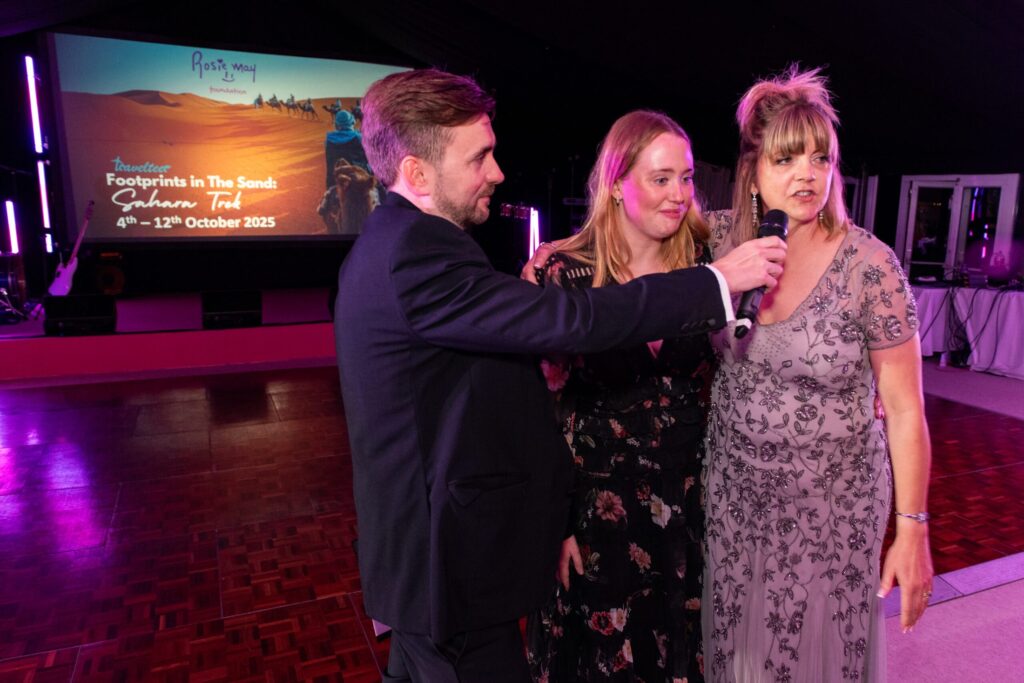
“Kevin owned the room as he conducted the live auction, more than doubling our target. It was not just during the event where Kevin showed his skills, but also in guiding our planning.”
The credit for any total belongs to the charity’s team and a generous room.
When is it worth hiring a charity auctioneer?
Hire a professional auctioneer when you can get donated lots, or a handful of excellent ones, and what you lack is someone to plan the night and hold the room. A company’s catalogue does not do that job.
In my view, around ten great lots and a room driven to compete beat a catalogue of 50 to 100. A company can have a reason to bring volume, because each lot carries a margin. An auctioneer paid a fee has a reason to make ten go further.
DIY can be right too. With a small room, strong lots and a confident trustee on the microphone, you may not need an auctioneer. The test is who commands the room when the first lot stalls.
What should you have ready when you call?
Here is what I ask for first:
- The date, venue, guest numbers, and whether you want a live auction, a silent one, or both.
- Last year’s total, and how much the charity actually received after any supplier took its share.
- Any company proposal: the reserve on each lot, who holds the money, and when the charity is paid.
- The lots you have, and who might give more.
- Your running order, and anything that went wrong last time.
Call 07596 851647 and tell me what the company has put in front of you. The first conversation is free, and I will tell you plainly if a company is the better fit for your room.

Kevin Durham
Charity auctioneer & event host