
In short
- Published guides put a drinks reception at 30 to 90 minutes. For a 7:30 start, I would open the welcome drinks as early as 6:00, and that is fine.
- Work back from the time you want guests seated, not forward from the time doors open.
- Call for dinner 15 to 20 minutes before you want people in their seats.
- In a big room, leave a clear 15 to 20 minutes for everyone to sit down.
- Do not rush the welcome drinks. Guests want to talk and catch up.
The drinks reception before a gala dinner is usually planned at 30 to 90 minutes, and the number to fix first is the time you want guests in their seats, because the reception is whatever is left once you work back from it. A drinks reception is the stretch where guests arrive, collect a drink and talk before dinner is called. I usually host the whole evening, not just the auction, so this is how I would plan that first hour and a half.
How long should the drinks reception be before a gala dinner?
A drinks reception before a gala dinner is usually 30 to 90 minutes. Venue guides sit at the short end, and my own plan for a 7:30 start opens the welcome drinks as early as 6:00, which is 90 minutes. Both can be right, because they are answering different questions.
The published guides are about the reception itself. The HAC, a London venue, advises a 45-minute reception before dinner (page undated, read November 2026). A Cambridge college’s drinks menu (a January 2025 file) suggests 30 to 45 minutes for a standard reception, and another 15 minutes if canapés are served. The Chronicle of Philanthropy’s 2015 US sample schedule has a 60 to 90 minute cocktail hour with a silent auction running.
My number is about the welcome. If the event is due to start at 7:30, I would have welcome drinks start as early as 6:00. The point is not to rush them.
As general planning logic, not a figure from any of those sources, the larger the room, the more you need the longer end. Guests do not all walk in at once, and a big room takes time to fill.
How do you work back from the seated time?
Work back from the minute you want guests in their seats. Take off 15 to 20 minutes for the call to dinner, and the time before that is your reception. Fix the seated time first and the length of the drinks falls out of it, instead of being a number you guess.
Here is the worked example, using my timings for a 7:30 start:
| Time | What happens | Where it comes from |
|---|---|---|
| 6:00 | Welcome drinks begin | As early as I would start for 7:30 |
| 7:10 to 7:15 | Call for dinner | 15 to 20 minutes before seated time |
| 7:30 | Guests seated, host begins | The time you want to work back from |
That is 70 to 75 minutes of drinks before the call, and 90 minutes from the first guest through the door to the seated welcome. Slide the whole column later or earlier to suit your room. The gaps stay the same.
Ask the venue for its own deadline before you fix any of this. The kitchen will have a time by which it needs guests seated, and that time is the one you are working back from.
My running order guide covers what happens once everyone is seated. This post is about the hour before.
How long does it take to seat everyone at a gala dinner?
In a big room, allow a clear 15 to 20 minutes for everyone to take their seats. Guests do not move to their tables on the first call. They want to talk and catch up, and getting a full room to sit down is like herding sheep, so plan for it.
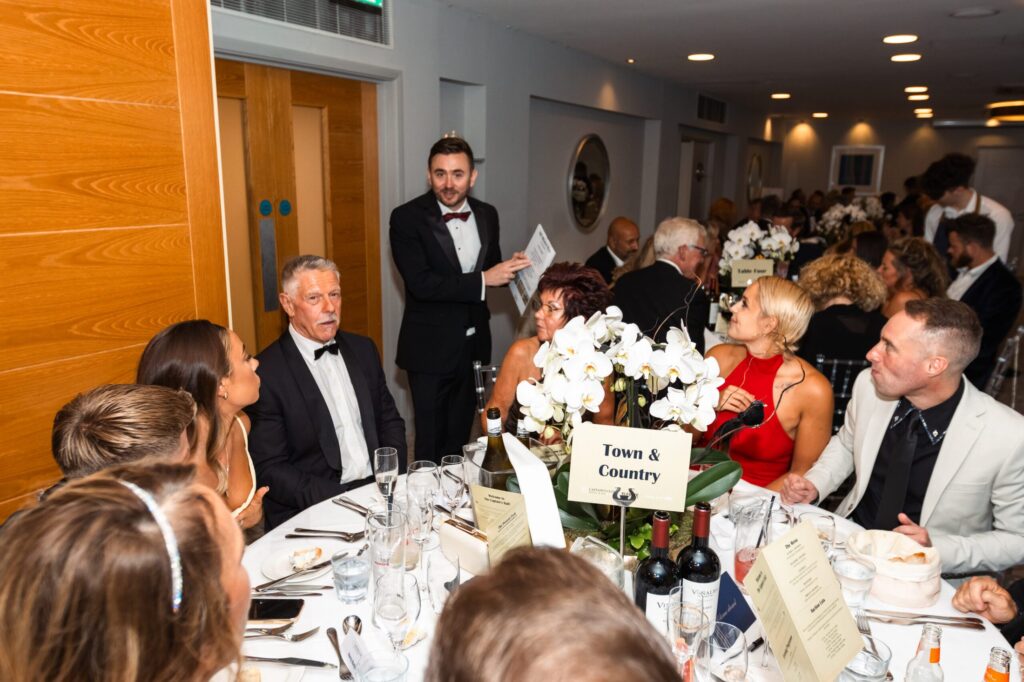
Five things help, and they are general planning advice, not rules of mine:
- Put the table plan where guests will see it before the call, so nobody is searching for their name once it is made.
- Have venue staff at the dining room doors, pointing people to tables.
- Repeat the call, and let a person with a microphone make it, not a single announcement into a noisy room.
- Tell venue staff which guests need step-free access or an early seat, so the call to dinner does not leave them at the back of a crowd. The Equality Act 2010 puts a duty to make reasonable adjustments on service providers, so ask the venue what it already offers.
- Agree where late arrivals are met and who walks them to their table, so the seated welcome is not interrupted.
Do not start the welcome speech until most tables are full. A host talking to a half-empty room loses the guests still walking in.
What should guests do during the drinks reception?
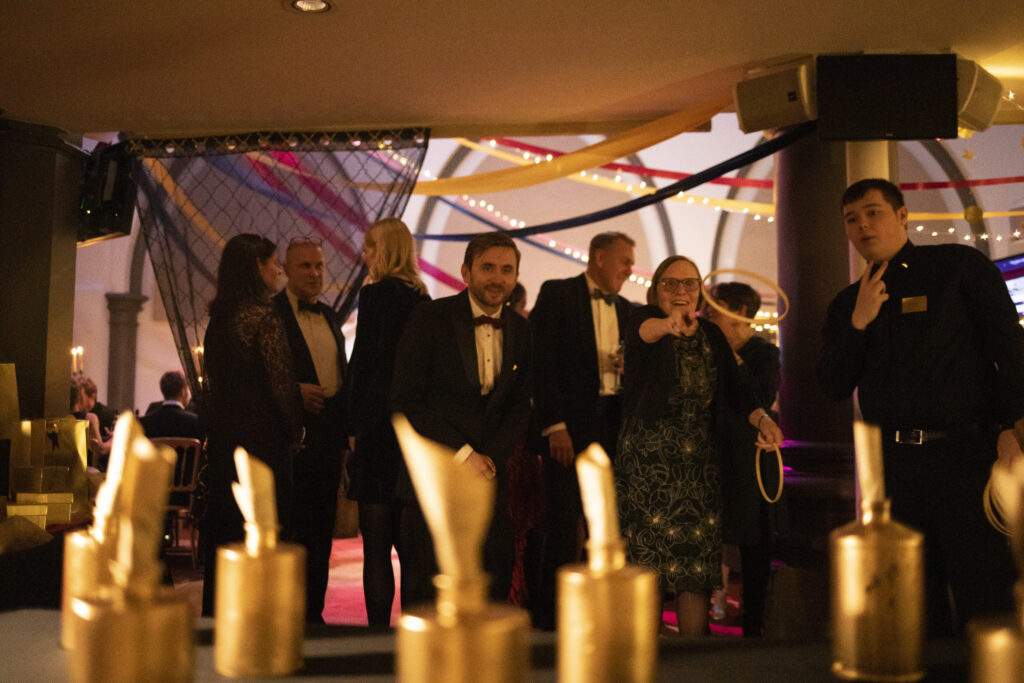
Give guests something light to do while they wait, and keep it easy to leave. The HAC’s guide pairs the reception with canapés so people can arrive unhurried and mix, and the Chronicle’s sample puts a silent auction in the same window.
What matters is that anything you open can be finished or abandoned when the call to dinner comes. A bid sheet or a game that needs ten more minutes will pull guests away from the doors at the moment you want them moving.
Hosting from the start of the night also lets me build trust with the guests, so they feel more comfortable giving later in the evening.
What happens when the drinks reception is too short or too long?
Too short, and guests are still arriving when you want them seated. You call dinner into a room half full of people who have only just got a drink, and you rush the welcome. That is the thing I try not to do.
Too long, and the same room goes from warm to restless. This is general planning logic, not a measured result: guests who have been standing for ninety minutes in formal shoes are ready to sit.
Two common causes of a reception that overruns:
- The doors time and the seated time were set separately, so nobody owns the gap between them.
- The kitchen is waiting for a call that nobody has been told to make.
Name one person who makes the call to dinner, and write the time next to their name on the running order. The Fundraising Regulator’s events standard 10.1.3 asks for a plan covering every situation you could reasonably expect, and a slow move into dinner is one of them.
When is it worth hiring a professional host for this?
Hire a professional host when the room is too big for one person to gather, or when the programme after dinner depends on a settled, seated room. Someone with a microphone and the authority to call the room is doing a real job at 7:10, and my hosting covers arrivals and the move into dinner, not only the auction.
If you are running a small supper where the venue manager can call tables and everybody knows each other, you do not need me for this. A bell and a clear plan will do.
Kristen Kemmet, Group Charity Coordinator, said of working with me, on the reviews page: “Kevin had incredible enthusiasm and was a great source of advice in our planning.” Settling the timetable early is part of that planning. More on the wider evening is in my guide to planning a gala.
What to have ready when you get in touch
Before you call, gather four things:
- the date, the venue and the number of guests
- the time you want guests seated
- when doors open and the kitchen’s deadline
- anything you plan to run during the reception
Hire me as auctioneer and host and I build the auction platform around your event, in your branding. It is included for the event and stays live for one month afterwards. Call 07596 851647 and we will work the timetable back from your seated time.

Kevin Durham
Charity auctioneer & event host