Tag: charity auction

  • Fund-a-need paddle raise: how to structure it for maximum giving

    Fund-a-need paddle raise: how to structure it for maximum giving

    TL;DR

    • A fund-a-need paddle raise asks guests to give directly at set levels, from the top down, with nothing exchanged in return.
    • Use 6 to 10 gift levels tied to real impact, not round numbers plucked from nowhere.
    • Start near the top of what your room can genuinely give, not an arbitrary showpiece figure nobody will hit.
    • Placement matters as much as the ask: run it while energy is still high, not as an afterthought before the coffee comes round.
    • The appeal lives or dies on the story you tell before you ask, and on whoever is running the room knowing exactly when to pause and when to push.

    If you have settled the pledge drive debate in favour of the pledge, or you are running both, the next question is how to actually structure the fund-a-need paddle raise itself. This is the part most event planners get wrong: not the decision to run one, but the mechanics of running it well.

    What is a fund-a-need paddle raise?

    A single pledge that raised £78,000

    A fund-a-need paddle raise is a direct giving appeal where the auctioneer or host names a gift level, guests willing to give at that level raise a numbered paddle, and the room works down through progressively smaller amounts. Nobody wins an item. The money goes straight to the cause.

    It usually runs for 8 to 15 minutes, tucked into the programme after dinner, and it depends entirely on pacing. A flat, rushed appeal raises a fraction of what a well-paced one collects from the same room.

    How many gift levels should you use?

    Most well-run paddle raises use somewhere between six and ten levels. Fewer than that and you miss guests who cannot match your top tier but would still give generously; more than that and the appeal drags. One planning guide recommends 6-10 levels that give everyone in the room a place to land, and tie each one to something concrete a donor can picture, rather than an abstract total.

    That last part matters more than the number itself. A tier described only as “£1,000” asks people to imagine an amount. A tier described as “£1,000 funds a term of after-school places for six children” asks them to imagine an outcome, which is a much easier thing to say yes to.

    Keep the gaps between levels clear too. Three tiers bunched at £800, £900 and £1,000 blur together in a guest’s head. Spread them so each one feels like its own decision.

    Should you start at the top or work up to it?

    Start close to the top of what your room can realistically give, then descend. Committing your highest-capacity donors first sets the tone for everyone who gives after them: when a leadership gift lands early and publicly, it gives quieter guests permission to give more than they had planned. Guidance from fundraising professionals in New York describes this as a top-down structure, where inviting leadership donors to commit first sets the entire room’s energy before the appeal works its way down.

    The nuance is in picking that top figure honestly. One planning guide warns against pitching the very first level too high, suggesting you set your opening ask one level above where you genuinely expect your first donor to land, rather than a showpiece number nobody in the room can actually meet. Calling for £25,000 to a stunned silence kills momentum before it starts. Calling an amount your best-prepared donor has already quietly agreed to gives you a guaranteed opening beat, and everything after it builds from a room that has just watched generosity happen.

    That is why pre-committing four to six of your strongest supporters before the night, so somebody is ready to raise a paddle the moment you open the top tier, is worth doing every time. It is not staged for effect. It removes the single biggest risk in the whole appeal: the silence after the first ask.

    When should you run the paddle raise in the evening?

    Run it while the room still has energy, not as the last thing before people reach for their coats. One fundraising events guide puts a number on this directly: running it earlier can lift total funds raised by 10 to 20 percent, simply because the ask lands while attention is still fresh.

    In practice that means after the meal but before dessert or the closing entertainment, once service has paused and the room is not distracted by plates being cleared. One donor-platform guide describes the same pre-dessert window, when donors are still engaged and the evening has not yet started to wind down.

    If you are running a live auction earlier in the programme too, the paddle raise should come after it, not before. Guests who have just watched their table-mates bid generously are primed to give directly themselves. Asking cold, before that social proof exists, is a harder sell.

    Preparing the room before you even ask

    The appeal does not start when the auctioneer picks up the microphone. It starts weeks earlier, with seating and outreach.

    Seat your most engaged supporters and board members somewhere visible, not tucked at the back. When a leadership donor’s paddle goes up early and everyone can see it, it does far more work than the same gift given quietly. Pre-event outreach matters just as much: a short email or call to your closest supporters before the night, confirming roughly what they are willing to give, means your opening ask has somewhere real to land instead of hoping.

    None of this replaces a strong case for the cause. UK charitable giving has been under real pressure: the public gave £14 billion in 2025, down on the year before, and the sector has been losing regular donors faster than it replaces them. A paddle raise that leans on a vague, general appeal to “support the cause” is asking a tired donor base to work harder than it has to. A paddle raise built around one specific, concrete need does the opposite.

    What does a good paddle raise script actually sound like?

    It is short, specific, and never reads out a spreadsheet. Before the first ask, the room needs one story, about one person or one outcome, told simply enough that nobody has to work to follow it. Then the ask itself is direct: name the level, name what it funds, pause, and let paddles go up before moving on.

    In my experience, the appeal succeeds or fails on the same thing a live auction does: whether whoever is running the room can read it in real time. That means knowing when three seconds of silence is someone deciding, not someone declining, and having the confidence not to fill that silence too soon. It also means having the pre-event groundwork done, so you already know roughly who your first three donors at the top level will be before you open your mouth.

    A sample gift ladder for a UK gala

    There is no universal set of numbers. Your ladder should be reverse-engineered from your target and your room’s actual giving capacity, not copied from another charity’s event. As a working structure to adapt:

    LevelExample impact
    £10,000Funds a full year of a support programme
    £5,000Funds a term of frontline services
    £2,500Funds a month of direct support
    £1,000Funds a term of after-school places
    £500Funds a week of one-to-one support
    £250Funds a starter kit or single session
    Open givingAny amount, no minimum

    Keep the open, no-minimum level at the end. It gives every guest a way to participate, even those who cannot match your named tiers, and it means nobody leaves the appeal having given nothing at all.

    Mistakes that kill a paddle raise’s momentum

    Most failed appeals share the same handful of faults. Starting with a story that is too long or too polished to feel real. Naming levels with no pre-committed donor ready to open the top tier. Clustering gift levels too closely so each one feels interchangeable. Running the appeal too late, when the room has already mentally left. And nobody recording pledges accurately as they happen, which turns a high-energy moment into a chaotic one the second the counting starts.

    Each of these is fixable with planning, not luck. A charity fundraising auction and a paddle raise both reward the same thing: a room that is being actively read and driven, not just hosted.

    If you are structuring an evening around a live auction, a pledge drive, or both, my fundraising services cover planning the gift ladder, the script, and the sequencing of your evening, so the paddle raise is built with the same rigour as the auction itself.

    Let’s talk

    Bring this to your event

    Book a free consultation with a charity auctioneer who has raised over £10 million.

  • Quiz night charity fundraiser: how to run one that raises real money

    Quiz night charity fundraiser: how to run one that raises real money

    Guests in black tie playing a heads or tails fundraising game while the host runs it from the stage

    In short

    • A quiz night charity fundraiser works best as a two-hour, six-to-eight round format with a mid-event break, priced at roughly £5 to £10 per person or £20 to £40 per team.
    • The quiz itself rarely raises the most money. Raffles, sponsored rounds, refreshments, and a short bonus mechanic like a joker card usually add up to more than ticket sales alone.
    • A pub quiz for charity is informal and low-cost to run; a gala-style quiz night can support a heavier fundraising layer, including a mini silent auction or a short paddle raise.
    • Choosing between a quiz night vs a charity auction comes down to your audience and your target: a quiz suits a broad, low-ticket-price crowd, while an auction suits a smaller room willing to spend more per head.
    • Whoever hosts the night needs to manage the handover from quiz energy into the fundraising ask, since that transition is where most events either find their biggest number of the evening or lose it.

    I get asked about quiz nights a lot, and the honest answer surprises people. Running a quiz night charity fundraiser well means treating the quiz as the draw that fills the room, not the only thing raising money. Here is how the format works, what actually adds to the total, and how to decide whether a quiz or a full charity auction fits your event.

    What is a quiz night charity fundraiser?

    A quiz night charity fundraiser is a trivia-style event where teams pay to compete across several rounds of questions, with the entry fee and a handful of extra fundraising mechanics feeding a cause rather than a prize pot.

    Teams typically range from six to ten people, competing over six to eight rounds of ten questions each, with a quizmaster reading questions, a scoreboard tracking progress, and a short break partway through to keep energy up and let teams settle their scores, according to PTA+. The format is cheap to run, familiar to almost every guest, and works equally well in a pub back room or a hired hall, which is why it is one of the most common charity quiz night ideas for schools, workplaces, and community groups.

    How much should you charge for a charity quiz night?

    Entry for a charity quiz night typically runs £5 to £10 per person, or £20 to £40 per team, according to Save the Children, which is low enough to fill a room quickly but rarely enough on its own to hit a serious fundraising target.

    That gap between what a quiz can charge at the door and what an event actually needs to raise is exactly why quiz night fundraising ideas beyond the entry fee matter so much. A ticket price high enough to fund the evening outright would shrink the guest list; a ticket price low enough to fill the room will not cover much more than the room hire and the prizes. The fundraising has to come from what happens between rounds, not just who walks through the door.

    How do you structure the evening for the best result?

    Structure the evening around a small number of clear breaks so fundraising moments have room to land, rather than trying to squeeze extras between fast-moving rounds.

    Macmillan Cancer Support recommends a roughly 30-minute break midway through the quiz, which is the natural point to run a raffle draw, announce standings, or serve refreshments without breaking the flow of the questions themselves. Reading questions slowly, repeating them once, and having teams swap papers to mark each other’s answers keeps the pace fair and gives the quizmaster room to build a bit of banter into the evening rather than just working through a script.

    A short practice run-through with a volunteer beforehand catches unclear questions before they slow the room down on the night, and a strict no-phones rule during rounds keeps the competition fair without needing to police it constantly.

    What quiz mechanics actually raise more money?

    The mechanics that raise the most extra money are the small, optional add-ons that let competitive teams spend a little more without feeling like they are being asked for a donation.

    A joker card that lets a team double their points on one round of their choosing is a simple, low-cost addition that consistently gets used, and interval games such as heads-or-tails knockouts or a numbered grid draw give guests something to do (and pay into) during the break rather than just queuing at the bar, an approach PTA+ points to as one of the more reliable ways to boost profits on the night. Seeking sponsorship for individual rounds from local businesses works well too: a specific round named after its sponsor costs nothing to arrange beyond an ask, and it gives smaller local donors a visible reason to give more than a raffle ticket alone would justify.

    Refreshments add up as well. Options range from simple crisps, biscuits, and hot drinks through to a full bring-your-own-bottle bar or a pre-ordered fish and chip supper, and Save the Children points to donation buckets circulated at the interval as an easy way to capture giving from guests who would rather not fuss with a formal ask.

    Should you add a raffle, silent auction, or pledge moment?

    Yes. A short raffle or a handful of silent auction items alongside the quiz typically raises more than the quiz mechanics alone, because it gives generous guests a way to give more than a joker card or a round sponsorship allows.

    Keep any add-on tight and timed for the interval or the very end, once scores are in and the room is not mid-round. A quiz crowd will happily bid on two or three strong donated items or drop cash in a bucket, but they will not sit through a lengthy formal auction between rounds. If your event has a bigger fundraising target than a standard pub quiz can realistically support, a short paddle raise or a small run of live lots at the close, rather than folded into the middle of the quiz, tends to work best.

    Quiz night vs charity auction: which should you run?

    A quiz night suits a broad, informal crowd at a low ticket price; a full charity auction suits a smaller room where guests are prepared to spend considerably more per head on individual lots.

    The honest comparison comes down to ceiling and effort. A pub quiz for charity is cheap to organise, familiar to almost anyone who walks in, and reliably fills a room, but its fundraising ceiling is capped by ticket price, raffle tickets, and small bonus games. A live auction asks more of your guest list (a smaller number of people willing to spend meaningfully more) but has a far higher ceiling per attendee when the lots and the room are right. Plenty of charities run both: a quiz night as a low-barrier annual event to build a supporter base, and a gala auction as the higher-stakes event for donors who have already shown they will turn up and give.

    Common mistakes that flatten a charity quiz night

    • Pricing tickets too low to matter and too high to fill the room. Get the balance wrong and you lose on both ends.
    • No clear extra income mechanic. A quiz with nothing beyond ticket sales will feel like a fun night out that happens to be for charity, not a fundraiser.
    • Overcomplicating the questions. A quiz that is too hard loses teams’ attention long before the final round.
    • Running long without a break. Energy and attention both drop once a quiz runs past two hours without a pause.
    • Treating the raffle or auction as an afterthought. Bolting on a raffle five minutes before the end rarely captures what a properly timed one would.
    • Under-briefing the quizmaster. A quizmaster who has not rehearsed the questions slows the pace and loses the room’s attention.

    Getting the energy right at your quiz night charity fundraiser

    A quiz night charity fundraiser works best when the quiz itself is treated as the reason people show up, not the entirety of the fundraising plan. The questions, the rounds, and the joker card all create a fun, competitive night, but someone still has to manage the handover from quiz energy into whatever raises the real money, whether that is a raffle draw, a short appeal, or a handful of auction lots.

    That transition, from a room full of teams comparing scores into one focused fundraising moment, is where most quiz nights either land their biggest total of the evening or quietly lose it. Fundraising games and interval mechanics work best when someone is actively reading the room throughout the night rather than just running the final segment on autopilot, and the same hosting skill that keeps a gala auction moving applies just as well to timing the moment a quiz night turns from a fun evening into a fundraising result.

    Kevin Durham, charity auctioneer

    Kevin Durham

    Charity auctioneer & event host

    20years£10m+raised60–80events/yr
    Check availability07596 851647

    Let’s talk

    Bring this to your event

    Book a free consultation with a charity auctioneer who has raised over £10 million.

  • Fundraising auctioneer: what the role actually involves and how to hire one

    Fundraising auctioneer: what the role actually involves and how to hire one

    Fundraising auctioneer: what the role actually involves and how to hire one

    TL;DR – A fundraising auctioneer runs the live bidding and pledge segments of a charity event, and often the pacing of the whole evening. – The term overlaps heavily with “charity auctioneer” and “benefit auctioneer”, which is the more American label for the same role. – The job is not just calling numbers. It is reading the room, sequencing lots, and landing a paddle raise at the right moment. – A background in live entertainment or broadcasting genuinely changes how a fundraising auctioneer holds a room. It is not just a nice credential to have. – When you hire one, ask about live fundraising experience and references before you ask about price.

    If you have searched for a fundraising auctioneer, you are probably already planning a gala, dinner, or fundraising event and want to know exactly what this role involves before you book one. It is a specific skill, not a job title anyone confident on a microphone can pick up, and the difference shows up directly in what your event raises.

    What is a fundraising auctioneer?

    A fundraising auctioneer is a professional who runs the live bidding, pledge drive, and often the wider hosting duties at a charity gala, dinner, or fundraising event, with the specific goal of raising as much money as possible for the cause rather than simply selling items at fair market value.

    That distinction matters. A general auctioneer selling furniture or property is working for a seller who wants the best price for an asset. A fundraising auctioneer is working a room of guests who already support the cause, and the job is to convert that goodwill into competitive bidding and generous giving on the night. The UK’s fundraising code, which sets standards for charitable institutions and third-party fundraisers, has a dedicated standard covering events specifically, because how an event is run affects both the donor’s experience and what actually gets raised.

    What does a fundraising auctioneer do across the evening?

    A fundraising auctioneer driving a bidding war

    A fundraising auctioneer typically handles the live auction lots, the fund-a-need or paddle raise appeal, and, in many bookings, the full MC role from welcome to close. Generic event advice often stops at finding someone charismatic to keep the energy high, as if charisma alone were the job.

    In practice it is more mechanical than that. It means agreeing the lot order in advance so momentum builds rather than dips, knowing when a pause in bidding means the room is finished versus simply thinking, and structuring a paddle raise so it lands while guests are still engaged rather than tacked on at the end when people are reaching for their coats.

    Fundraising auctioneer vs charity auctioneer: is there a difference?

    In UK usage, “fundraising auctioneer” and “charity auctioneer” mean the same thing and are used interchangeably by event organisers and search engines alike. Where the language sometimes splits is scope: “fundraising auctioneer” is occasionally used to describe someone who also advises on the wider evening (lot sourcing, running order, pledge structure), while “charity auctioneer” can be read more narrowly as the person on stage holding the microphone. In practice, most professionals working this space, myself included, do both. You are not choosing between two different services when you see the two phrases; you are choosing between two names for broadly the same one.

    What is a benefit auctioneer?

    Benefit auctioneer is the term more commonly used in the United States for the same role, and it comes with a real professional credential attached. The National Auctioneers Association awards its Benefit Auction Specialist designation to auctioneers who train specifically in fundraising events, client consultation, and revenue-building technique, and only around 3% of auctioneers nationwide hold it. If you are researching this role from a US-influenced source, or comparing quotes from an international events agency, “benefit auctioneer”, “fundraising auctioneer”, and “charity auctioneer” are all describing the same skill set, just branded differently depending on the market.

    Where a broadcasting background actually helps

    My own route into this work did not start in an auction room. I began as a TV presenter and entertainer, and my first-ever charity event, back in 2005, put me on stage alongside Annie Lennox. Since then I have worked with major studios including Fox, Warner, and Universal, interviewing names like Will Ferrell, Tom Hardy, Reese Witherspoon, and Robin Williams, before moving fully into professional charity auctioneering.

    I mention this because it is the actual reason a broadcasting background changes how a fundraising auctioneer performs, not a marketing flourish. Reading an unfamiliar room, adjusting pace on the fly, and keeping two thousand guests as engaged as twenty are skills built on a stage, not learned by calling bids on a handful of items. Across my career that skill set has helped raise over £10 million for charitable causes, including a single Monaco gala that raised more than €1,000,000 in one evening.

    How do you hire a fundraising auctioneer?

    Start with live fundraising experience specifically, not general MC or wedding auctioneer work, and ask for examples of how they have handled a paddle raise or fund-a-need appeal under real pressure, not just a description of their stage presence. A genuine track record should come with reviews or references you can actually check, ideally from events similar in size or format to yours.

    If you are searching for a fundraising auctioneer near me, treat geography as a secondary filter rather than the first one. Auctioneers with a genuine specialism in this work routinely travel: I work across the UK, Europe, and the United States, and most professional peers do the same for the right event. Prioritise a proven fundraising track record over strict local proximity, since a fundraising auctioneer flying in for one evening will usually outperform a local generalist on the number that matters most: what your event actually raises.

    Ask what is included beyond the microphone time, too. My own services cover pre-event strategy on lot sourcing and running order as well as the live auction and pledge drive itself, and a free initial consultation is available to talk through what your event needs before anything is booked. Fees for this kind of work are typically agreed per event rather than published as a flat rate, since the scope varies so much between a small community dinner and a large international gala.

    A short checklist before you book

    A few questions will tell you quickly whether someone genuinely does this work, rather than simply being willing to try it:

    • Can they show a track record specifically in charity or fundraising events, not just general hosting or commercial auctions?
    • Have they run a live paddle raise or fund-a-need appeal, and can they describe how they decide when to bring it in?
    • Can they provide references or reviews from organisers of similarly sized events?
    • Do they offer pre-event strategy input on lots and running order, or only turn up on the night?
    • Is a free consultation available to check fit before you commit?

    If you want to talk through what a fundraising auctioneer would look like for your specific event, get in touch for a free consultation, or read more about how I got into this work on my about page.

    Let’s talk

    Bring this to your event

    Book a free consultation with a charity auctioneer who has raised over £10 million.

  • Gala dinner auctioneer: what to look for when hiring one

    Gala dinner auctioneer: what to look for when hiring one

    TL;DR

    • A gala dinner auctioneer runs the live auction and often the pledge drive too, not just the introductions and thank-yous a general MC handles.
    • The right one reads the room, paces the evening, and builds bidding momentum rather than simply calling out lots in order.
    • Before booking, check their fundraising track record specifically, not just event hosting experience.
    • Gala dinner auction ideas that work best are the ones sequenced around the room’s energy, not just a long list of lots.
    • Fees vary by format and experience level; a good gala dinner auctioneer usually pays for themselves through what they add to the final total.

    A gala dinner auctioneer is a specific hire, not a general entertainment booking. Get this choice right and the live auction and pledge segment often outraise everything else on the night combined. Get it wrong, and a strong guest list and generous lots can still fall flat. Here is what the role actually involves and what to check before you book one.

    What does a gala dinner auctioneer actually do?

    A gala dinner auction case study

    A gala dinner auctioneer runs the live auction, and usually the pledge drive, building bidding momentum through pacing, energy, and reading the room rather than simply reading out lot descriptions in order.

    That means deciding lot order in advance, knowing when to slow down for a big-ticket item and when to move quickly, and calling on the room’s competitive instinct without letting the evening drag. A live auction that feels effortless from the guest’s seat is almost always the result of a great deal of pre-event planning, not improvisation on the night.

    Many gala dinner auctioneers also run the pledge drive, the segment where guests give directly in tiers rather than bidding on a lot. In my experience this segment frequently raises more than the auction itself, provided whoever is running it treats it with the same seriousness as the live lots rather than tacking it on at the end as an afterthought.

    How is a gala dinner auctioneer different from a wedding or corporate MC?

    A gala dinner auctioneer is different from a general wedding or corporate MC because their entire skill set is built around driving competitive bidding and charitable giving, not just keeping a black tie evening running to schedule.

    A good general MC can introduce speakers, manage timings, and keep the room comfortable. What they typically cannot do is read a stalling bidding war and know exactly when to push, or restructure a pledge ask on the fly when the room’s energy is lower than expected. Those are fundraising-specific skills, developed by running auctions and pledge drives repeatedly, not by hosting formal dinners generally.

    This distinction matters most at genuinely black tie events, where guests expect a certain polish throughout the evening but the fundraising moments still need a different kind of energy from the speeches and transitions around them. The Chartered Institute of Fundraising’s fundraising auction guidance notes that anyone running one may find it worth involving an auctioneer affiliated with a recognised professional body, precisely because the skills involved are distinct from general event hosting.

    What should you check before hiring a gala dinner auctioneer?

    Check a gala dinner auctioneer’s fundraising track record specifically, ask for real numbers from past events, and confirm they will help with lot sequencing and pledge structure before the night, not just show up to call bids.

    Specific questions worth asking before you book:

    • What has this person actually raised at comparable events, and can they point to a real figure rather than a vague claim?
    • Will they help plan lot order and pacing in advance, or only turn up on the night?
    • Do they run the pledge drive as well as the live auction, or is that left to someone else?
    • Have they worked with an audience similar in size and formality to yours?
    • What happens if a lot underperforms or a bidding war stalls: do they have a plan for that moment?

    The fundraising standards code sets specific standards for how UK fundraising events should be run, and it is worth confirming that whoever you hire, and your own event team, understands how those standards apply to your evening. Getting this right before the event avoids awkward conversations afterwards.

    Gala dinner auction ideas that keep the room engaged

    The gala dinner auction ideas that perform best are built around pacing the room’s energy across the evening, not simply listing every lot in the order they were donated.

    A handful of approaches that consistently work:

    1. Open with a strong but not your best lot, warming the room’s bidding confidence before the standout item.
    2. Space your two or three highest-value lots apart, rather than clustering them, so each gets full attention.
    3. Use a themed opener during the reception to set the emotional tone before the first bid is even called.
    4. Save the pledge drive for peak energy, usually straight after the live auction closes, while the room is still warm.
    5. Keep the total lot count tight, eight to twelve strong items outperform twenty middling ones almost every time.

    None of this works without someone in the room actively managing pacing rather than just reading a running order. That is the actual job of a gala dinner auctioneer.

    What does a gala dinner auctioneer cost?

    Gala dinner auctioneer fees vary by experience, event size, and whether the auctioneer also runs the pledge drive and pre-event strategy, so there is no single standard rate across the industry.

    Rather than guess at a number, it is worth reading charity auctioneer pricing, including the flat fee versus commission debate and why the cheapest option is not always the one that nets the charity the most. Any auctioneer worth hiring should be able to explain their pricing model clearly and how it lines up with your event’s expected scale, without pushing you towards a structure that only benefits them.

    How should you structure the evening around the auctioneer?

    Structure the evening so the auctioneer’s segments land at the point of maximum energy, rather than treating the auction and pledge drive as a slot to fill between dinner and dessert.

    A dependable running order: reception and any themed opener, dinner, a short game or activity to build energy, the live auction, then the pledge drive while the room is warmest. Adjust the exact order to your audience, but the underlying principle holds regardless of format: the fundraising moments need to land when the room’s attention and generosity are both at their peak, not whenever there happens to be a gap in the schedule.

    Common mistakes when booking a gala dinner auctioneer

    • Hiring on personality alone. Charisma matters, but it needs to be backed by an actual fundraising track record, not just stage presence.
    • Leaving lot sequencing to the night itself. The strongest auctioneers plan running order in advance with the organiser, not on the fly.
    • Treating the pledge drive as an afterthought. It is frequently the highest-earning segment, and deserves the same planning as the auction.
    • Assuming a general MC can cover it. A polished host is not the same hire as someone who has run fundraising auctions repeatedly.
    • Not asking for real numbers. A specific, checkable track record tells you far more than a general claim about experience.

    Getting the hire right

    A gala dinner auctioneer is one of the few bookings on the night that directly affects how much money your event raises, not just how smoothly it runs. Checking a real track record, confirming they will help plan pacing and pledge structure in advance, and understanding roughly how their fees work before you commit puts you in a far stronger position than booking on charisma alone.

    If you are weighing up who to bring in for your next event, my fundraising services cover exactly this, from pre-event lot strategy through to running the live auction and pledge drive on the night. You can also check availability directly if you have a date in mind.

    Let’s talk

    Bring this to your event

    Book a free consultation with a charity auctioneer who has raised over £10 million.

  • How much does a charity auctioneer cost? Flat fee vs commission explained

    How much does a charity auctioneer cost? Flat fee vs commission explained

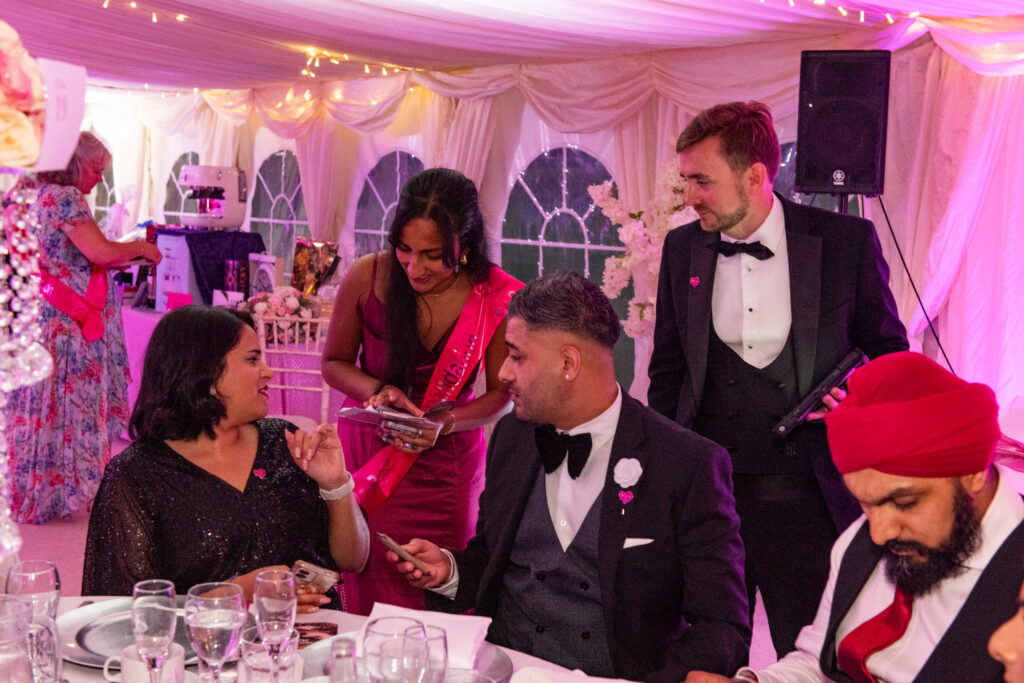
    Charity auctioneer in black tie talking with guests at a marquee fundraising event

    How much does a charity auctioneer cost? Flat fee vs commission explained

    In short

    • UK charity auctioneers are usually paid one of three ways: a flat fee, a percentage commission on what is raised, or a hybrid of both.
    • Since 1992, UK law has required professional fundraisers to disclose how they are paid when they solicit on a charity’s behalf, so ask for this upfront.
    • A free or cut-price volunteer host can end up costing a charity more than a paid professional, through what fundraisers call foregone revenue: bids and pledges that never happened because nobody drove the room.
    • Flat fees give budget certainty; commission ties the auctioneer’s pay to your results but adds a variable cost that scales with a good night.
    • Pricing is rarely one-size-fits-all. It depends on event size, format, and whether a live auction, pledge drive, and hosting are bundled together, so ask for a written quote rather than assuming a fixed rate.

    So how much does a charity auctioneer cost? There is no single number. Fees vary by event size and format, but nearly every UK charity auctioneer cost falls into one of three pricing models, and knowing which one you are being quoted matters more than the headline figure.

    How much does a charity auctioneer cost?

    The fee scales with how much is being asked of the auctioneer, not just the length of the evening. A single live auction segment slotted into someone else’s event costs less than a full evening where the same person also handles hosting duties, runs the pledge drive, and helps with lot strategy beforehand.

    Other factors that move the price:

    • Whether the event includes a live auction, a pledge drive (fund-a-need), or both.
    • Guest numbers and the scale of the fundraising target.
    • Travel, since UK, European, and US events all carry different logistics.
    • Weekday dinners versus large weekend galas.

    Because of this spread, treat any number you see online as a rough guide rather than a quote. The only reliable way to budget is to ask for a written breakdown, which I set out on my auctioneer fees page.

    Flat fee vs commission: which is more common?

    Most professional charity auctioneers in the UK quote either a flat fee or, less often, a commission tied to what the live auction and pledge drive raise on the night. Flat fee is the more common structure, and for good reason.

    A flat fee means the charity knows its cost before the event happens. Every pound raised above that fee goes to the cause, with no sliding scale to calculate afterwards. Commission-based pricing ties the auctioneer’s pay directly to the total raised, which can align incentives well, but it also means your costs rise as the night goes better, and you will not know the final figure until after the event.

    Some auctioneers offer a hybrid: a lower base fee plus a smaller percentage above an agreed target. This spreads the risk between both sides but adds a layer of complexity that a straightforward flat fee avoids.

    Whichever model you are quoted, ask the auctioneer to put it in writing before the event, including what happens if the evening overruns or the format changes.

    What does UK law say about how a fundraiser is paid?

    UK law requires a professional fundraiser to tell you, in writing, how their pay is worked out whenever they solicit funds on a charity’s behalf. Under the Charities Act 1992, a solicitation made by a professional fundraiser must include a statement of the method by which that fundraiser’s remuneration is determined, alongside the amount if it is notifiable.

    In practice, this means a legitimate auctioneer or fundraising consultant should be perfectly comfortable explaining upfront whether they are working on a flat fee or a commission, and what that figure is likely to be. If an auctioneer is cagey about this, treat it as a warning sign rather than a quirk of the industry.

    Is a professional auctioneer worth the cost compared to a volunteer?

    Yes, for most galas and dinners with a live auction or pledge drive, because the difference between a professional auctioneer and a volunteer host shows up in the final total, not just in how smoothly the evening runs.

    A volunteer host, however well-liked, is rarely trained to read a room mid-bid, hold a pause at the right second, or offer an identical item to the two underbidders who just missed out on the top lot. Those are specific, practised skills. Losing them does not make an auction fail outright, it just means money is left on the table that a trained auctioneer would have captured.

    One client came to me with a clear fundraising target for their gala. By the end of the night they had raised double it, driven directly by the live auction sequencing and the pledge drive structure we built together beforehand. That result is documented in more detail in this case study. It is the clearest illustration I can point to of why the fee is rarely the full story: the real comparison is the fee against what a volunteer host would likely have left unraised.

    The exception is a small, low-key event with only a silent auction and no live appeal. If nobody is going to stand up and run a live sale, a confident volunteer can do a perfectly good job.

    What’s included in a charity auctioneer’s fee?

    It depends entirely on what you book, so always ask what is bundled in rather than assuming. My own services cover live charity auctions, pledge drives, full event hosting and MC duties, silent auction guidance, fundraising games, and pre-event strategy consultation, and clients typically combine two or three of these rather than booking a single service in isolation.

    Some auctioneers charge a base rate purely for calling the live auction and add hosting, pledge drives, or pre-event consultation as separate line items. Others quote one figure that bundles the whole evening. Neither approach is wrong, but you need to know which one you are looking at before comparing two quotes, since a lower headline number sometimes just means less is included.

    How to budget for your charity auctioneer cost

    Start with the format, not the fee. Decide whether your evening needs a live auction, a pledge drive, both, or neither, since that single decision affects price more than anything else.

    UK charitable giving is a large and active market. The British public donated £14bn in 2025 according to the UK Giving Report, which is a reminder that donors are willing and events remain one of the more effective ways to convert that willingness into money for a specific cause on a specific night. Budgeting properly for the person running that night is part of protecting the return on the rest of the event spend, not a cost separate from it.

    Practical steps that make quotes easier to compare:

    • Ask for a written quote that states the pricing model (flat fee, commission, or hybrid).
    • Confirm exactly what is included: live auction, pledge drive, hosting, or all three.
    • Ask what happens if the event runs long or the guest count changes.
    • Check whether pre-event consultation on lot selection is part of the fee or billed separately.

    Getting a transparent quote

    Reputable fundraising professionals in the UK operate under standards set out by bodies such as the Fundraising Regulator and membership codes like the Chartered Institute of Fundraising’s code of conduct, both of which lean on honesty and transparency as baseline expectations, not optional extras.

    If you are planning a gala, dinner, or fundraising auction and want a straight answer on cost rather than a guessing game, my fees page explains how I price events, and you can also get in touch directly for a free consultation before committing to anything.

    Kevin Durham, charity auctioneer

    Kevin Durham

    Charity auctioneer & event host

    20years£10m+raised60–80events/yr
    Check availability07596 851647

    Let’s talk

    Bring this to your event

    Book a free consultation with a charity auctioneer who has raised over £10 million.

  • Do I need a charity auctioneer, or can a volunteer run our auction?

    Do I need a charity auctioneer, or can a volunteer run our auction?

    Do I need a charity auctioneer, or can a volunteer run our auction?

    TL;DR – A volunteer host can work well for smaller, low-key events where most bidding happens through a silent auction. – A professional charity auctioneer earns their fee back through techniques a volunteer rarely has: pacing, reading the room, and selling near-misses to underbidders. – The real risk of a volunteer host is not a bad night. It is a quietly underperforming one that nobody notices because there is no comparison. – As a rough guide, if your event is a small community fundraiser with light bidding, a volunteer is often enough. If you are running a live auction or a paddle raise at a gala with real fundraising targets, a professional is worth costing in. – There is a middle ground: a volunteer emcee for the evening, with a professional brought in just for the live auction and appeal.

    If you are asking whether you need a charity auctioneer, you have probably already run one event with a volunteer and felt the total come in lower than it should have. That gap between what a room could have given and what it actually gave is the whole question here.

    Do I need a charity auctioneer, or is a volunteer host enough?

    It depends on the size of the event and what you are asking the room to do. A volunteer host with a warm relationship to your cause can comfortably run registration, welcome guests, and keep a straightforward silent auction moving. Where it gets harder is anything that depends on live persuasion: a live auction with real lots, a fund-a-need appeal, or a room you are trying to move from polite applause to competitive bidding.

    In my experience, the difference between a volunteer and a professional auctioneer shows up in the final total, not in how pleasant the evening felt. Most underperforming auctions are not obviously bad. The room is warm, the food is good, people clap in the right places. The bidding just stalls quietly at the same amounts it stalled at last year, and nobody in the room has anything to compare it to.

    What does a professional charity auctioneer actually do differently?

    What a professional auctioneer does in the room

    A professional charity auctioneer manages the pace and psychology of the room, not just the microphone. That means reading when bidding is genuinely finished versus when it has simply paused, knowing when to name the momentum out loud, and knowing how to bring a paddle raise in at the right point in the evening rather than tacking it on at the end when guests are tired.

    This is a skill built from repetition, not confidence on stage. Over my career I have run live auctions and pledge drives that have raised over £6 million for charitable causes, including a single Monaco gala that raised more than €1,000,000 in one evening. None of that came from energy alone. It came from planning the lot order before the night, structuring the appeal, and reading a room well enough to know exactly when to push and when to let a bid breathe.

    The cost of a volunteer auctioneer: what “foregone revenue” really means

    The biggest risk of a volunteer auctioneer is not that the night goes badly. It is money left on the table that nobody notices because there is no baseline to compare it against. A common example: if two or three bidders are competing hard for one item and the underbidders drop out at a strong number, a volunteer host typically thanks them and moves on. A professional will often be able to offer the same or a similar package to those underbidders at their final price, turning one sale into two or three without extending the auction.

    This matters more than it sounds. The fundraising code, which sets the standards that apply to fundraising conducted by charitable institutions and third-party fundraisers in the UK, has a dedicated standard covering events specifically because the way a fundraising event is run affects both the donor experience and the amount raised. Running a compliant, well-organised event is the baseline. Getting the most out of the room on the night is a separate skill on top of that.

    Charitable giving in the UK is not unlimited, either. UK donors gave £14bn to charity in 2025, and a good share of that comes through events exactly like yours. Every event is competing for a finite pool of generosity, which is precisely why the difference between an average night and a well-run one compounds over the years you keep running it.

    When is a volunteer host the right call?

    A volunteer host is a sensible choice for a smaller event, typically under a hundred guests, where the audience already knows and supports your cause and most of the giving happens through a silent auction or straightforward donations rather than competitive live bidding. If your organisation is comfortable with the amounts you have raised in previous years and the event’s main job is community and awareness rather than hitting an ambitious new target, a confident volunteer with good stage presence can do the job well.

    The honest test is not whether your volunteer is likeable or well organised. Most are. It is whether anyone on your team has genuinely practised reading a room mid-auction, managing a live appeal, and keeping pace when energy dips. If nobody has, that is fine for a modest, low-key evening. It becomes a bigger gap the moment you add a live auction or a paddle raise with a real fundraising target attached.

    When does hiring a professional pay for itself?

    A professional auctioneer is worth costing in when raising as much as possible matters more than keeping the evening informal. That is usually true for larger galas, events with valuable live-auction lots, evenings built around a fund-a-need appeal, or any event where the audience includes first-time donors and corporate guests who need to be brought along rather than assumed to already be invested.

    The fairest way to think about it is return, not cost. A professional’s fee is one line in the budget; what it changes is the whole top line of the evening. Most charities that hire a professional auctioneer for the first time are doing it because a previous event plateaued, not because the previous one failed outright. My own reviews mostly come from exactly that situation: an established event that needed a reset rather than a rescue.

    Charity auctioneers are typically paid a flat fee, a percentage of what is raised on the night, or a hybrid of both. Structures and typical ranges are covered in full on the fees page rather than here, since every event is different and pricing is agreed per booking.

    What’s the middle ground between a volunteer and a full professional auctioneer?

    You do not have to choose one model for the whole evening. Many charities use a volunteer or board member as the general host and MC for arrivals, speeches, and dinner transitions, then bring in a professional specifically for the live auction and the fund-a-need appeal, which is where the fundraising skill has the most leverage. Volunteers still handle registration, table hosting, and spotting bidders, so the event still feels like your event, run by your people, with the highest-stakes ten or fifteen minutes handed to someone who does this for a living.

    This hybrid approach is worth raising early with whoever you are considering hiring. Most professional auctioneers, myself included, are used to slotting into an evening this way rather than taking over the whole programme.

    Questions to ask before you decide

    A few honest questions will tell you which side of this you sit on:

    • How much are we realistically trying to raise this year, and is that more than last year?
    • Will the evening include a live auction, a paddle raise, or purely silent bidding?
    • Has anyone on our team run a live fundraising appeal before, under pressure, in front of a full room?
    • Would the fee for a professional be small relative to the gap between what we raised last year and what we are hoping to raise this year?

    If your answers point to a bigger, more ambitious night than you have run before, it is worth at least getting a quote before you decide, so you can weigh the real numbers rather than a guess. If you are looking to learn more about my background first, my about page covers how I got into this work and the events I have run.

    There is no version of this where a volunteer host is a bad person to have on stage. The only question worth answering honestly is whether your event’s ambitions have outgrown what a volunteer, however capable, has had the chance to practise.

    Let’s talk

    Bring this to your event

    Book a free consultation with a charity auctioneer who has raised over £10 million.

  • School fundraising auction ideas: how to run a PTA auction that works

    School fundraising auction ideas: how to run a PTA auction that works

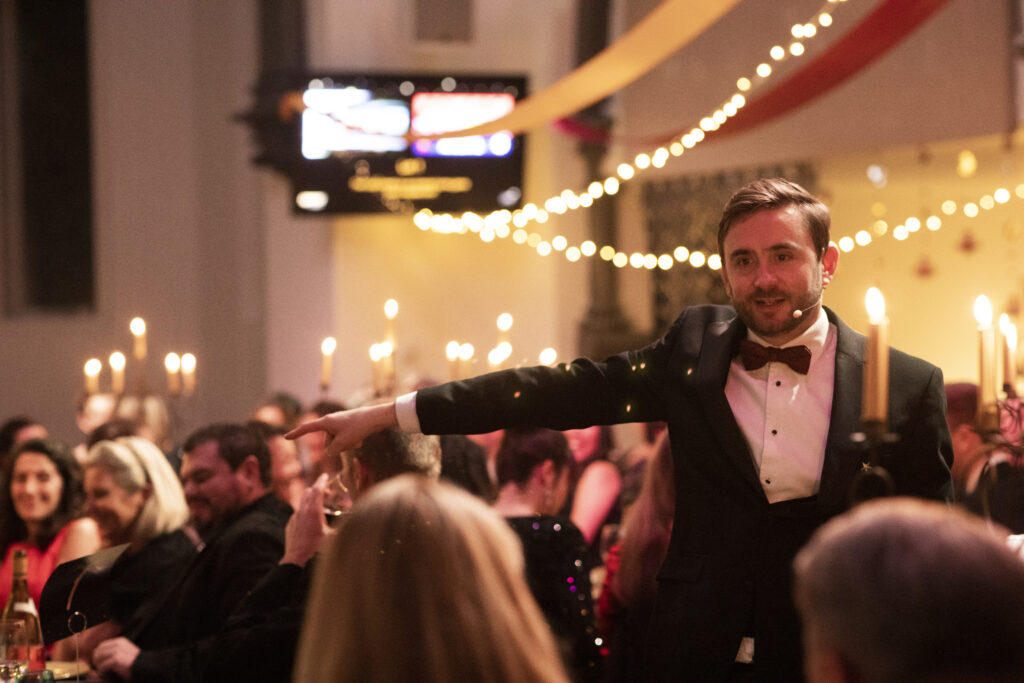
    Charity auctioneer in a black dinner jacket pointing to a bidder at a candlelit gala dinner

    School fundraising auction ideas: how to run a PTA auction that works

    In short

    • The best school fundraising auction ideas mix promises, products and services so there is something at every price point, not just big-ticket items.
    • An auction of promises works well as its own evening event, while a silent auction suits pairing with a fete, quiz night or Christmas fair.
    • Send an “I am giving” form home to parents two weeks out and widen the net to local businesses and ex-pupils rather than relying on a handful of donors.
    • PTAs need their own public liability insurance and a risk assessment approved by the school, since school cover does not automatically extend to PTA events.
    • A confident host who paces the room and keeps energy up matters more than any single lot: bidding follows momentum, not just the item on the table.

    Most school fundraising auctions do not underperform because the prizes are wrong. They underperform because the room goes quiet halfway through and nobody gets it moving again. If you are planning a PTA event this term, the school fundraising auction ideas below cover what actually works: which format to pick, how to source lots without spending PTA funds, what you legally need to have in place, and how to keep parents bidding until the last lot closes.

    What are the best school fundraising auction ideas?

    The best school fundraising auction ideas combine promises, physical items and services, because that variety means every parent in the room has something they can afford to bid on. PTA+ guidance recommends “offering a combination of promises, products and services” specifically so there is something for everyone, rather than a room full of prizes only wealthier parents will chase.

    Strong performers tend to be experiences rather than objects: a behind-the-scenes visit to a local business, a teacher-led activity, VIP tickets to a local sporting fixture, or a skill donated by a parent (a redesigned logo, a garden makeover, a home electrics check). None of these cost the PTA anything to provide, and experiences generally out-bid generic gift baskets because parents are buying a memory, not a thing.

    Auction of promises or silent auction: which suits a school fete?

    An auction of promises works best as its own dedicated social evening, while a silent auction is better suited to running alongside something else, like a summer fete, Christmas fair or quiz night. The promises format needs “2 to 3 hours” as a standalone event with food and a bar break built in, and it benefits from a confident host driving the room from the front.

    A silent auction, by contrast, sits quietly in the background of a bigger event: parents browse a table of five to ten high-value lots, write bids on a sheet, and check back later. A silent auction guide recommends aiming for “between five and ten high-value items” rather than a large number of small ones, since fewer, better lots are easier to display well and easier for parents to take seriously. One school running a 23-lot silent auction this way raised just over £2,000 with no upfront cost, which is a realistic benchmark for a single-event fundraiser rather than an outlier.

    How do you source good lots without spending PTA funds?

    You source good lots by asking parents first, then widening out to local businesses and the wider school community, rather than the PTA buying items itself. Send an “I am giving…” form home roughly two weeks before the event asking parents what they can donate, whether that is a physical item, a service, or an experience, along with an estimated value.

    From there, PTA+ recommends extending the ask to “local businesses, ex-pupils, local celebrities” and anyone with a community connection to the school. Do not be shy about asking for genuinely good items: a Michelin-starred tasting menu, a weekend in someone’s holiday home, or a bespoke piece of art from a parent who paints will always outsell a bottle of wine, and one strong lot can anchor an entire evening. Cross-check your list against our wider best auction items guidance if you want more sourcing ideas that apply beyond schools too.

    Structuring the evening so bidding doesn’t fizzle out

    Bidding fizzles out when the same energy runs the whole night, so structure the evening with peaks: open with lighter, cheaper lots to get the room warmed up and comfortable bidding out loud, then build toward your two or three strongest items. Publish the full lot list roughly a week in advance so parents can decide what they actually want before they arrive, rather than making cold decisions on the night.

    Keep the pace tight. A long gap between lots is where a room goes quiet and stays quiet. Confirm payment terms up front, whether that is settling on the night or within seven days, so nobody is chasing invoices the following week. If you are running games or activities either side of the auction to keep energy high throughout the evening, our fundraising games page has ideas built for exactly this kind of pacing problem.

    What insurance and risk assessment do you actually need?

    You need your own public liability insurance for the event and a written risk assessment, because a school’s own insurance does not automatically cover PTA activities. PTAs operate as separate charitable organisations from the school itself, so this is not a formality you can skip because the event happens on school grounds.

    Health and safety law does not technically require voluntary organisations to carry out a risk assessment, but as PTA+ puts it, doing one anyway is good practice, and “a risk assessment proves to your insurance company that you did your best to prevent” a problem if one arises. Get the final version approved by the school if the event is on their premises, and check separately whether you need a licence if you are serving alcohol.

    Family-friendly touches that lift bidding without alienating anyone

    The best family-friendly touch is pricing generously at the bottom end, so parents on any budget still leave with something and still feel part of the evening. Reserve one or two “lucky dip” style lots at a low fixed price for exactly this reason: they keep the room inclusive without diluting the big-ticket items further up the list.

    Keep child-focused promises age-appropriate and low-stakes: a teacher-led activity, a class privilege, or a small experience the children themselves will talk about afterwards tends to generate genuine excitement from parents rather than just polite bidding. Tie the auction into an existing event people already attend, such as a summer fair or Christmas market, so you start with a warm crowd instead of trying to build one from nothing.

    When does it make sense to bring in a professional auctioneer?

    It makes sense to bring in a professional auctioneer once the auction is the main event of the evening rather than a side table at a fete, because a volunteer host and a trained one get very different results from the same room. Bidding momentum is a skill, not a lucky side effect: a good auctioneer reads the room, knows when to slow down for a genuine bidding war and when to move on, and keeps the whole evening on schedule.

    I bring the same energy and pacing to a school gala evening that I bring to a corporate or charity black-tie event, drawing on my event hosting background rather than simply reading out lot descriptions. For a small fete table this is overkill. For a dedicated PTA fundraising evening trying to hit a specific target, such as new playground equipment or a big trip subsidy, it is often the difference between a pleasant evening and one that actually moves the number.

    Common PTA auction mistakes to avoid

    The most common mistake is too many mediocre lots and not enough standout ones, which spreads attention thin and leaves nothing for parents to get excited about. A shorter list of genuinely good items, priced and presented well, consistently outperforms a long list of small donations nobody remembers by the following week.

    The second most common mistake is treating sourcing as a last-minute job. Lots collected the week before the event are rushed, undervalued, and poorly described. The third is running the auction with no clear host driving the pace, which is exactly where energy drains out of the room and bidding trails off before the final lot.

    More school fundraising auction ideas to carry into next term

    If this term’s auction goes well, the easiest next step is variety rather than repetition: alternate an auction of promises one term with a silent auction the next, so the format itself stays a novelty rather than something parents feel they have seen before. Keep a running note of which lots sold fastest and for how much, since that list becomes your sourcing shortlist for next time.

    Consider pairing the auction with a short appeal for a specific, named cause, such as one piece of playground equipment or one classroom resource, rather than a vague “PTA funds” ask. Parents give more generously when they know exactly what their bid or donation buys. For more general inspiration beyond schools, our broader charity auction ideas guide covers themes and formats that translate well to a PTA setting too.

    Kevin Durham, charity auctioneer

    Kevin Durham

    Charity auctioneer & event host

    20years£10m+raised60–80events/yr
    Check availability07596 851647

    Let’s talk

    Bring this to your event

    Book a free consultation with a charity auctioneer who has raised over £10 million.

  • What does a professional auctioneer do, and why does it matter for your event?

    What does a professional auctioneer do, and why does it matter for your event?

    TL;DR

    • A professional auctioneer runs the whole fundraising moment at a gala or charity dinner: the live auction, the pledge drive, and usually the pacing of the whole evening, not just the calling of lots.
    • There’s no formal qualification required to become an auctioneer in the UK, except for specialists in fine art, chattels, plant, and property. Charity and event auctioneering is judged on experience and results, not certificates.
    • The gap between a professional and a volunteer host tends to show up directly in the total raised. Real events have gone from a modest target to double, or ten times, that figure.
    • Before you book anyone, check for event-specific experience, verifiable results with real numbers, and a pre-event consultation.
    • Ask what happens if the night doesn’t go well. Not every auctioneer offers a guarantee.

    Search for a professional auctioneer and you’ll find two very different types of results mixed together: people who sell antiques, property, or livestock under the gavel, and people who run live fundraising auctions at galas and charity dinners. This post is about the second kind. If you’re planning a charity auction, gala dinner, or fundraising event, here’s what a professional auctioneer actually does, how that differs from a volunteer host, and what, if anything, qualifies someone for the job.

    The distinction matters because the two jobs are judged on completely different things. A commercial auctioneer is judged on the hammer price of the goods in front of them. A charity or event auctioneer is judged on how much a room of donors gives across an entire evening, which depends far more on pacing, energy, and rapport than on knowing the value of the lot.

    What does a professional auctioneer do at a charity event?

    A professional charity auctioneer at work

    A professional auctioneer runs the entire fundraising segment of a gala, dinner, or charity event: introducing lots, driving competitive bidding, reading the energy in the room, and usually leading the pledge drive too.

    That’s worth separating from the other kind of professional auctioneer you’ll find if you search the term. A property valuer works from a completely different skill set, and usually a different qualification path, than someone running a live fundraising auction for a room of donors. If you’re planning a charity event, you want the second kind: someone who has run gala dinners, pledge drives, and fundraising events specifically, not just anyone comfortable holding a gavel.

    At a typical event, that means:

    • Setting the pace across the whole evening, not just during the auction segment
    • Building bidding momentum lot by lot, and recovering it when it stalls
    • Running the pledge drive, sometimes called fund-a-need, which is often the highest-earning part of the night
    • Reading an unfamiliar room in real time and adjusting tone, pace, and energy accordingly

    That’s a different job from an MC who reads out lot descriptions and takes bids as they come. For more on how the whole evening typically runs, see this guide to the charity fundraising auction format.

    This work also travels. A professional auctioneer working in the charity sector may run events across the UK, Europe, and the US in a single season, adjusting for a corporate crowd one week and a multilingual, high-net-worth audience the next. That range is itself part of the job, not a separate skill.

    What’s the difference between a professional auctioneer and a volunteer host?

    The difference shows up directly in the total raised, not just in how smooth the evening feels. A professional reads the room’s energy, names it out loud, and uses it to keep bidding moving. A volunteer host, however well-intentioned, generally cannot replicate that under pressure with a live room of donors.

    The numbers back this up. At a recent Jigsaw Trust gala, the initial target was £14,000. The event raised £57,600, combining live auction and pledge income. At a Teenage Cancer Trust gala run for OCU Group, the target was £40,000 and the final total came in at £84,108.04. At a Manchester Airport Group annual gala with over 400 guests, the event tripled the previous year’s total. One client, Kerry Johnson of The Pallet Network, put it plainly: “We were able to 10x our original fundraising target, and our guests enjoyed the entertainment that came with the auction itself.”

    In each case, the lots and the guest list only account for part of the result. What changed the outcome was someone actively managing the room’s energy across the whole evening rather than simply calling bids as they came in.

    None of that happens by accident. It comes from reading a room, building momentum lot by lot, and structuring the evening so the pledge drive lands at the right moment, not a script anyone could follow after a single weekend course. Read more about Kevin’s background in TV presenting and live entertainment, which is where a lot of that room-reading skill comes from.

    The benefits of hiring a professional auctioneer

    A professional auctioneer offers more than a steady voice on the microphone. Here’s what typically changes when you book one for a gala or fundraising dinner:

    • Full-evening hosting. Rather than showing up just for the auction segment, a professional auctioneer can run introductions, transitions, and the close, keeping pacing consistent across the night.
    • Pledge drive expertise. The live pledge is often the highest-earning segment of a gala when it’s run well, and it depends on building a genuine connection with the room at the right moment, not just asking for money.
    • Pre-event consultation. A professional auctioneer should want to understand your donor audience, your lots, your programme, and your target before the night itself, not walk in cold.
    • Accountability. Ask what happens if you’re not satisfied. The Charity Auctioneer, for example, offers a 40% refund if a client isn’t happy with the event.
    • A strategy conversation up front. A free initial consultation, where lot sourcing, programme structure, and audience psychology get discussed before a contract is signed, tells you a lot about how seriously an auctioneer takes the planning stage.

    Do you need a qualification to be a professional auctioneer?

    No. In the UK, there is no formal qualification required to become an auctioneer generally, and requirements vary from employer to employer. Legal commentary on the profession confirms it’s not compulsory to hold any special qualification to act as an auctioneer, although it’s usual and desirable in practice.

    There’s one exception worth knowing, because it explains why “professional auctioneer” search results are so mixed. Auctioneers working with fine art specialists tend to hold professional qualifications, and land and property valuers typically need a degree or RICS-approved qualification. None of that applies to charity and event auctioneering. What matters for a gala or fundraising dinner is technique developed over hundreds of live events: reading energy, building momentum, and recovering when it stalls, not a certificate.

    That’s why the questions worth asking a prospective charity auctioneer are about experience and results, not credentials. How many galas have they run? What did those events raise against target? Can they show you real numbers rather than vague praise?

    This also means “professional auctioneer training” is a slightly misleading phrase for this side of the industry. There’s no single course that produces a good charity auctioneer. The skill is built event by event: hundreds of rooms, hundreds of different audiences, and the pattern recognition that comes from seeing what makes bidding stall and what gets it moving again.

    What to check before you book one

    A few checks before you commit:

    • Event-specific experience. Ask whether they’ve run gala dinners, pledge drives, and fundraising events specifically, not just general auctions or corporate MC work.
    • Verifiable results. Look for specific numbers from past events, not vague testimonials. “Raised £84,108 against a £40,000 target” tells you more than “fantastic energy.”
    • Pre-event consultation. A professional auctioneer should want to talk through your audience, lots, and programme before the night, not turn up cold.
    • Reach matters more than location. Many professional auctioneers, Kevin included, travel UK-wide and internationally rather than working only in one city, so a “professional auctioneer near me” search is often better answered by checking who’s available for your date than who’s geographically closest.
    • Whether they cover the pledge drive too. A live pledge or fund-a-need moment often outperforms the auction itself, so ask whether that’s part of what they run, not just the lots.
    • What happens if it doesn’t go well. Ask about guarantees. Not every auctioneer offers one.

    If you want to see what this looks like in practice, the charity auctioneer hiring page walks through the process end to end, from first consultation to the night itself.

    Let’s talk

    Bring this to your event

    Book a free consultation with a charity auctioneer who has raised over £10 million.

  • Hospice fundraising ideas: auction and gala formats that raise more

    Hospice fundraising ideas: auction and gala formats that raise more

    TL;DR

    • A live auction paired with a fund-a-need moment tends to raise more at a hospice gala or ball than a raffle or tombola alone.
    • Fund-a-need suits hospice fundraising especially well because donors give directly to the care itself, not just to win a lot.
    • At Noah’s Ark Children’s Hospice, the same auction and pledge approach worked across two separate events, not just one.
    • The best hospice auction lots are experiences and locally sourced items with a genuine connection to the cause, not generic prize items.
    • If you’re running a raffle alongside your auction, UK rules cap what you can take from proceeds for expenses and prizes.

    Search for hospice fundraising ideas and most results are A-Z lists: bake sales, abseils, quiz nights, sponsored walks. Useful for year-round giving, but if you’re planning a gala or ball with a formal dinner and a room full of donors, the question is different. It’s not what else you could add to the evening, it’s how you structure the auction and the ask so the room gives as much as it possibly can.

    Hospices sit in an unusual position among charities. The cause is universally understood, but the subject matter is sensitive, so the format and pacing of the evening need to feel right as well as raise money. Getting the auction and pledge structure right matters more here than it does for a lot of other causes.

    What hospice fundraising ideas raise the most at a gala or ball?

    For a formal hospice gala or ball, a live auction paired with a fund-a-need pledge moment tends to raise more than a raffle or tombola alone. A raffle asks for a fixed ticket price. A live auction and pledge combination lets the room’s energy and generosity set the ceiling instead.

    The choice between formats usually comes down to the size and style of the event:

    • Live auction: best for a formal dinner or ball with a captive room, where a small number of strong lots (experiences, signed items, exclusive access) can be sold competitively from the floor.
    • Silent auction: works well alongside a live auction for a larger number of lower-value lots, letting guests bid throughout the evening without taking up stage time.
    • Online or hybrid: extends reach to supporters who can’t attend in person, though it lacks the momentum and social pressure that drives higher bids in the room.

    Most hospice galas and balls do best combining a live auction for the strongest lots with a fund-a-need moment at the natural high point of the evening. A silent auction can run in the background for lower-value lots, but it shouldn’t be the centrepiece. The room’s attention is the most valuable resource on the night, and it’s best spent on the live auction and the pledge, not spread thin across a long list of silent lots.

    You can read more about how a live auction segment is typically structured across a full event.

    Why does fund-a-need work so well among hospice fundraising ideas?

    Fund-a-need works especially well for hospice fundraising because it lets a donor give directly to the care itself, without needing to want or bid on a physical item first.

    That directness matters more for a hospice cause than almost any other. In the UK, one in four families are unable to access the end of life care they need, and hospice care supports 300,000 people and their families every year. A well-run fund-a-need moment translates that scale into something a room can act on in the space of a few minutes, framed around a specific, tangible outcome (a night of nursing care, a place on a support programme) rather than a vague appeal.

    Structured well, this moment usually lands after the live auction, once the room’s energy is already up, and before guests start to drift toward the end of the evening. A tiered giving structure, where guests are invited to give at a few different levels rather than one fixed amount, tends to outperform a single ask because it gives everyone in the room a level they can say yes to. Our page on pledge drive fundraising covers how to sequence and pitch it.

    How this works for a children’s hospice event

    Children's hospice fundraising in action

    I’ve now worked with Noah’s Ark Children’s Hospice twice, and the same structure carried both events. Cerys Dawson from the charity summed it up afterwards:

    “I have now worked with Kevin twice, at both events he completely elevated the fundraising. Kevin did such a great job ensuring all guests were enjoying themselves and engaged. Kevin’s energy and approach to the auction and pledges definitely paid a part in the success of the events.”

    A children’s hospice audience often responds especially strongly to a fund-a-need moment, since the connection between the ask and the care being funded is immediate and specific. The auction segment still matters for setting the tone and energy of the evening, but it’s the pledge that tends to carry the emotional weight in the room.

    That said, the tone has to be handled with care. A children’s hospice event needs warmth and energy to keep the room engaged, but the pledge moment itself works best when it stays grounded in specifics rather than reaching for the biggest possible emotional reaction. Guests already understand why they’re there. The job is to give them a clear, comfortable way to act on that, not to push harder than the room wants. You can read more client reviews from events across different causes, including hospice galas.

    What auction lots suit a hospice fundraiser?

    The strongest lots for a hospice auction are experiences and locally sourced items with a genuine connection to the cause, rather than generic prize items bought in bulk.

    A few categories that tend to perform well:

    • Local experiences: a chef’s table, a private tour, or a well-known local venue offering an evening most guests couldn’t book themselves.
    • Signed or donated items: sourced directly rather than through a commission-based lot supplier, so more of the value reaches the charity.
    • A signature lot: one standout item or experience that anchors the live auction and gives the room something to build momentum around.

    Sourcing lots this way, in-house and guided by someone who has run these events before, keeps more of what’s raised with the hospice rather than paying a third party for the lots themselves. It also tends to produce better lots, since local businesses and supporters are often more willing to donate directly to a hospice they recognise than to hand a commission to a lot-sourcing agency they’ve never heard of.

    Keep the total number of live lots manageable, usually somewhere between five and ten for a typical gala. A shorter, stronger list holds the room’s attention better than a long one, and leaves more energy for the pledge that follows. For more on choosing and sourcing lots, see this guide to auction ideas for charity events.

    Running a raffle alongside your auction

    Many hospice galas run a small raffle or tombola alongside the auction and pledge drive, and this is generally allowed without a gambling licence as long as it stays within the rules for an incidental lottery.

    The core requirements: the raffle can’t be the main reason for holding the event, tickets must be physical and sold only at the event itself (not online or in advance), and you can take up to £100 of proceeds for expenses and up to £500 for purchased prizes, with no limit on donated prizes. This is worth checking with whoever is organising the raffle side of your event, since it sits under separate rules from the auction itself.

    Donated prizes are usually the better route for a hospice raffle in any case. They cost nothing to source, there’s no cap on their value, and a locally donated prize (a meal for two, a spa day, a family day out) tends to sell more tickets than a generic bought item.

    None of this needs to complicate the evening. Treat the raffle as a smaller, simpler add-on that runs in the background, and let the live auction and fund-a-need moment do the heavy lifting on the total raised.

    Let’s talk

    Bring this to your event

    Book a free consultation with a charity auctioneer who has raised over £10 million.

  • Hire an auctioneer: what to check before you book one for your event

    Hire an auctioneer: what to check before you book one for your event

    Charity auctioneer taking a bid from the floor among guests at a candlelit gala

    In short

    • Before you hire an auctioneer, ask for event-specific experience, not just general auction or MC experience.
    • Look for verifiable results with real numbers, not vague praise.
    • Get a written agreement in place before the event, not just a verbal yes.
    • Direct hire usually costs less than going through a booking agency, since there’s no agency fee to cover.
    • Availability for your date usually matters more than how close the auctioneer is based to your venue.

    If you’re planning to hire an auctioneer for a gala, dinner, or fundraising event, the quality of the person you book affects the total raised as much as the lots themselves do. This is a practical checklist: what to ask, what to check, and whether to go direct or through an agency, before you commit to anyone.

    Most of these questions apply whether you’re booking someone for a small dinner or a 400-guest gala. What changes is how much is riding on getting the answers right.

    What should you check before you hire auctioneer services?

    Before you hire auctioneer services for your event, check for experience with your specific event type, verifiable results from past events, and a written agreement, not just a friendly conversation and a good feeling.

    Gabriel Dos Santos, a trustee of the OCU Foundation, put it plainly after booking me for an event with just over 300 guests that ended up raising more than double what the charity had achieved the previous year: “We hired Kevin after researching online and seeing the outstanding feedback he had received from others, and he absolutely lived up to every word of it.” He added: “As complete novices in organising an event of this scale, my colleague and I relied heavily on his guidance, and we felt completely confident every step of the way.”

    That’s the standard worth holding any auctioneer to. Not just energy on the night, but guidance that gets the format and the lots right before the guests even arrive. If someone can’t point you to real events with real numbers attached, that’s worth noticing before you sign anything, not after.

    Read more client reviews from events across different causes and sizes before you decide. Look for detail, not just enthusiasm. A review that mentions a specific target, a specific total, or a specific moment in the evening tells you far more than one that only says the night went well.

    Should you hire auctioneer talent direct, or go through a booking agency?

    Hiring auctioneer talent direct usually costs less than going through a booking agency, since there’s no agency fee built into the price, and it gives you direct access to the person who will actually run your event rather than a point of contact relaying messages.

    A booking agency can still be useful if you have no idea where to start and want a shortlist of options put together for you. That’s a real advantage if you’re planning your first event and don’t yet know what to look for.

    But once you know roughly what you’re looking for, going direct tends to be more transparent too. You can see what an auctioneer services package actually includes and get a straight answer on pricing and availability before you ever pick up the phone, rather than working through an intermediary who may not be in the room on the night themselves.

    Questions to ask before you book

    A short list worth working through before you commit:

    • Have they run this type of event before? A gala dinner, a pledge drive, and a corporate MC booking all call for slightly different skills. Ask specifically about your format.
    • Can they show verifiable results? Ask for real numbers from past events, not just warm testimonials. Naomi Chaning Pearce of the Jigsaw Trust said the value went beyond the night itself: “It was not just during the event where Kevin showed his skills, but also in guiding our planning for the event and highlighting to us what could be achieved.”
    • Do they offer a consultation before the event? A short conversation about your audience, your lots, and your programme tells you a lot about how seriously someone takes the planning stage.
    • Is there a written agreement? Under the Fundraising Regulator’s code for working with others, charities should have an appropriate written agreement in place with any third-party fundraiser they work with, and remain responsible for checking that the agreement is kept to. Ask for one before the event, not after.
    • What’s actually included? Full-evening hosting is a different booking from someone who only appears for the auction segment.
    • What happens if it doesn’t go well? Not every auctioneer offers a guarantee, so ask.
    • Do they handle the pledge drive as well as the auction? A live pledge or fund-a-need moment is often the highest-earning part of the evening, so it’s worth knowing upfront whether that’s included or treated as a separate add-on.

    None of these questions are awkward to ask. If I have genuinely run events like yours before, I welcome every one of these questions, because the answers are exactly what let me plan a better evening for you. You can read more about Kevin’s background and how these questions apply in practice.

    Does it matter where you hire an auctioneer from?

    Not as much as it seems. Most professional event auctioneers travel to the event rather than working only in one city, so who’s available for your date usually matters more than who’s based closest to your venue.

    I travel across the UK, Europe and the US for events, and several clients have booked me more than once regardless of where they are. Nolan Hough, a Chief Growth Officer who booked me as compere and auctioneer for an annual charity ball, said simply: “we’ve already booked him for the next one.” Cerys Dawson at Noah’s Ark Children’s Hospice has worked with Kevin twice. Neither client chose based on postcode. They chose based on the result the first time.

    If proximity mattered as much as search terms like “auctioneer near me” suggest, repeat bookings like these wouldn’t cross cities, countries, or continents the way they do. A gala in Manchester, a yacht club event in Monaco, and a corporate dinner in London can all be run by the same auctioneer in the same season, provided the dates line up.

    If you searched for a benefit auctioneer instead

    “Benefit auctioneer” is the term used more often in the US for the same role called a charity auctioneer or fundraising auctioneer in the UK. If that’s the phrase you searched, the checklist above still applies in full: event-specific experience, verifiable results, and a written agreement, regardless of which side of the Atlantic the terminology comes from.

    Jordan A, who hired me as master of ceremonies, summed up the broader point well: “If you’re looking for someone to help, whether that’s for a charity auction or to host an event, you won’t be disappointed if you choose Kevin.” The label matters less than the checklist.

    Whichever term brought you here, the underlying job is the same: read the room, keep the bidding moving, and get the pledge or fund-a-need moment right when it matters most. See more on what a charity auctioneer actually does across a full event.

    Kevin Durham, charity auctioneer

    Kevin Durham

    Charity auctioneer & event host

    20years£10m+raised60–80events/yr
    Check availability07596 851647

    Let’s talk

    Bring this to your event

    Book a free consultation with a charity auctioneer who has raised over £10 million.