Home About Kevin Auctions Virtual auctioneer Pledges Hosting Entertainment Free software Software examples Case studies Reviews Videos Other services Fees Fundraising games Fundraising consultant Recommended suppliers Get in touch Blog Podcast

Bid increments at a charity auction: how to set them and when to move them

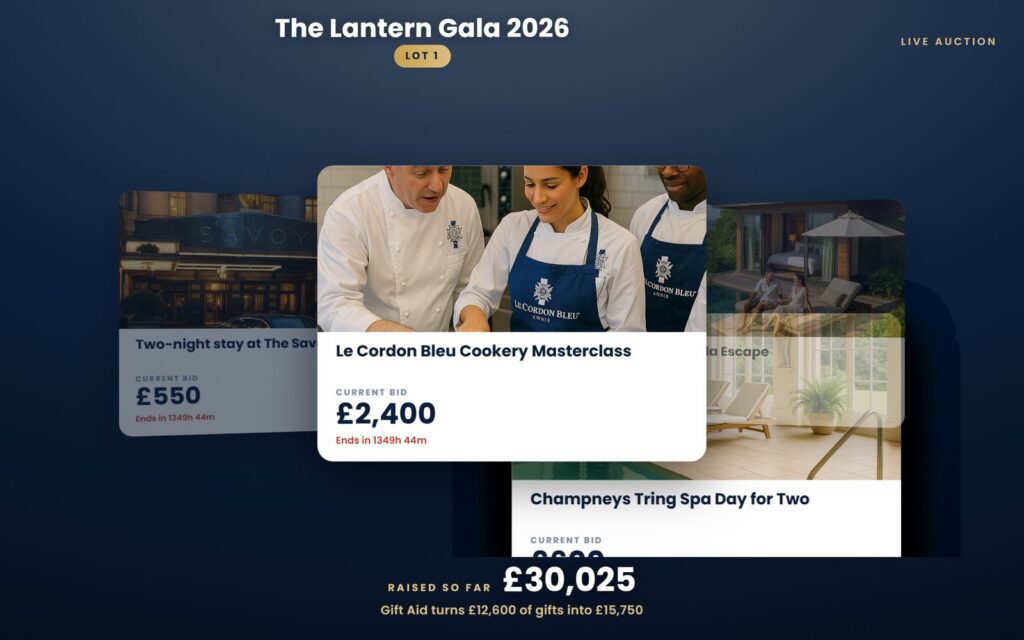
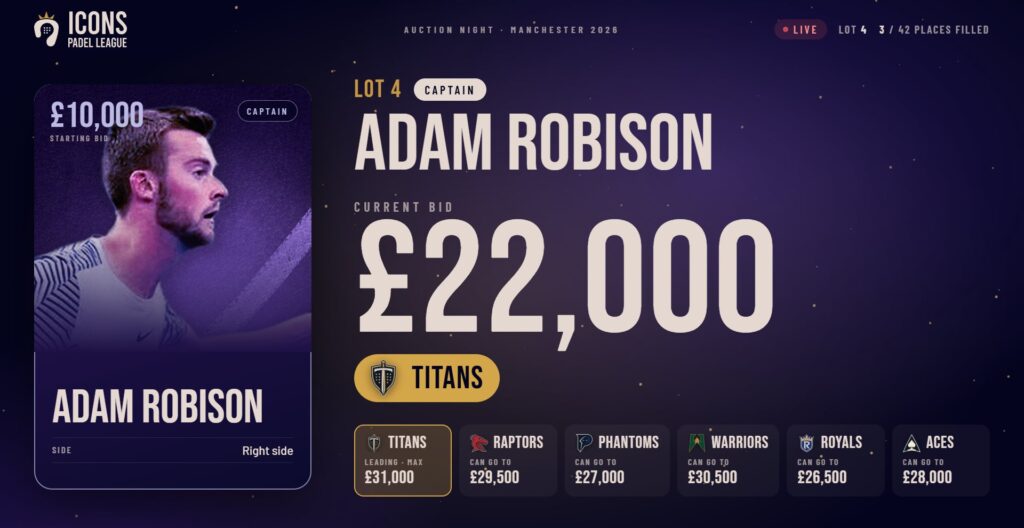
Live auction screen showing lot four at a current bid of £22,000, with each bidding team's maximum budget listed underneath

In short

  • A bid increment is the step between one bid and the next. Most salerooms run at roughly 10% of the current bid, and the auctioneer can change it at will.
  • Open with a bigger step than feels comfortable and close with a smaller one: the money is made in the middle and protected at the top.
  • A lot lands one increment above the second-keenest bidder’s ceiling, so the under-bidder is the person you are really calling to.
  • Jumping too fast knocks out the mid-table bidders you need to carry the lot.
  • Halving the step late (“splitting the bids”) is the cheapest few hundred pounds you will ever add. Halving it early tells the room the lot is struggling.

Nobody books an auctioneer for a lecture on arithmetic. But the numbers you call out at a charity auction, and the gaps between them, decide more of the final total than the lots on the sheet do. Here is how increments are usually set, when to move them, and what it costs when they are wrong.

What are bid increments at a charity auction?

A bid increment is the fixed step by which bidding rises, and at a charity auction the auctioneer sets it live rather than reading it off a table. Commercial salerooms publish theirs in advance: Christie’s glossary describes bidding that opens below the low estimate and advances in increments of 10%, subject to the auctioneer’s discretion. Auction houses treat these as predefined steps that determine the next acceptable bid.

That 10% convention is a useful starting point and a poor finishing point. In an art sale the room is full of trade buyers who know the ladder before they sit down. In a charity gala it is full of people who came for dinner, have never raised a paddle, and are taking their cue from the voice on the microphone. The ladder is whatever the auctioneer says it is, and the room will believe it.

A sensible rule is never to let the step go unsaid. Name the number you want next on every call, because a guest who has to work out their own bid hesitates, and hesitation at the wrong second ends a lot early.

Where should the opening bid and the first increment sit?

Open below what you expect the lot to make, and make the first two or three steps large. The opening bid is bait, not a valuation, and the first increment is where you set the room’s sense of scale.

Take a lot expected to make £2,000: open near £500 and move in £250s. Five or six paddles go up at £500 because it feels like nothing. By £1,250 most of them will have dropped out, which is fine: the opening round is a casting call, not the auction. What matters is arriving at £1,250 in four calls rather than fifteen, with the energy still intact.

Two things govern the opening. One is the reserve price, if the donor set one, because opening far below it means a long climb in public. The other is pace. A commercial saleroom whips through 60 to 80 lots an hour. A gala is different: around ten lots is about the optimum, and there is limited time between the main course and the pledge. Climbing from £500 to £4,000 in £50 steps takes seventy calls. The room will not survive it and neither will the programme.

The arithmetic of where a lot actually lands

This is the bit nobody expects. In an ascending auction the winner does not pay what the item is worth to them. They pay one step above the point where the second highest bidder stopped. The under-bidder sets the price.

Work it through. Say the two keenest bidders would privately go to £2,400 and £2,300, and the bidding stands at £2,000. Call £500 and the next number is £2,500, above both ceilings, so the lot sells at £2,000. Call £100 and the bidding walks up through £2,100, £2,200, £2,300 and £2,400 before it dies. Same lot, same two people, £400 more.

That £400 is not a rounding error. Across ten lots it is the difference between a respectable auction and one the charity still talks about next year. It is also why the step should narrow as the number climbs, the opposite of what published ladders do. Online platforms widen the increment as the price rises, as eBay’s increment table shows, because software optimises for speed. A live auctioneer is optimising for the last £400.

When should an auctioneer halve the increment?

Halve the step when you are down to two bidders and one has just hesitated. The trade calls this splitting the bids, and auction houses do it for a simple reason: a smaller step encourages a bid the larger one had priced out.

A bidder who has gone quiet is not saying no. They are saying not at that number. Dropping from £250 to £100 hands them a cheaper way to stay in without losing face in front of their table, and a common approach is to offer it directly, in a line such as “I will take a hundred. One hundred pounds and you are back in.”

Two rules of thumb. Split once, not repeatedly, because a ladder that keeps shrinking tells the room the lot has run out of road. And do not split while three paddles are still moving: if there is still competition the room will pay the full step, and splitting early gives away money that was already on the table.

What jumping too fast does to a room

Jumping too fast does two kinds of damage, and only one is visible on the night.

The visible damage is depth. Open at £500, then call £1,500, and you have skipped every guest whose ceiling sat between those numbers. They do not come back. Since the lot lands one step above the under-bidder, thinning the middle of the room removes the people who carry the price. Research on internet auctions found that early jump bidding deters entry later on, and a gala room behaves the same way: a lot that looks settled attracts nobody new.

The invisible damage is shading. The bigger the step, the further below their true limit people bid: a field experiment that varied the minimum increment on a live auction site found bid shading rose as the increment rose. People do not refuse the number. They quietly stop short of it, and nobody in the room can tell.

When a guest jumps of their own accord, take it gratefully. Research on charity silent auctions found that jumping and sniping pull in opposite directions: jump bids tend to lift revenue, late sniping tends to lower it. If a bidder puts £5,000 on a £1,500 lot, a sensible response is to repeat the bid, acknowledge the bidder, and rebuild the ladder above them. What not to do is carry on in £250s as if nothing happened.

How do increments work on phone, absentee and silent bids?

An absentee or telephone bid runs on the same ladder as the room, executed at the lowest hammer price the reserve and the other bidders allow. A limit is a ceiling, not an offer: if the room stops at £1,200 and the limit is £2,000, they win at the next step up.
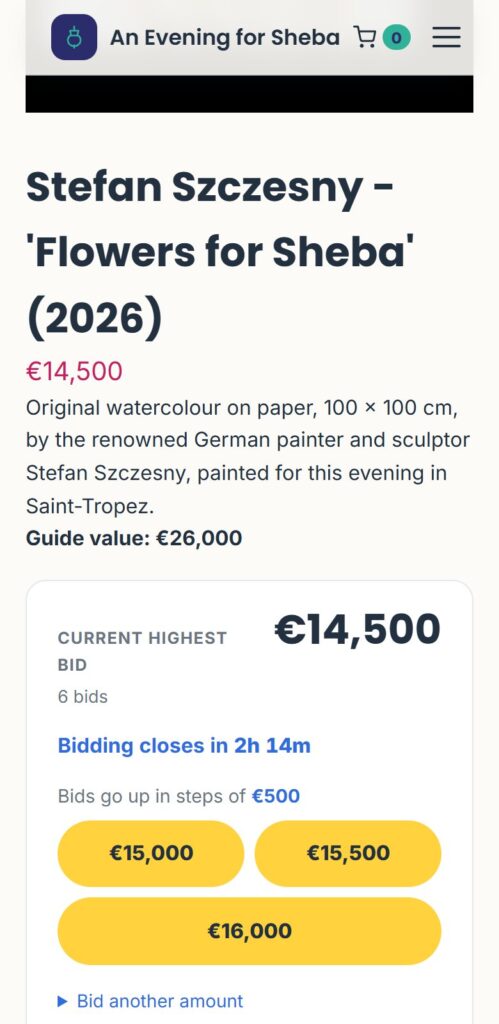
A charity auction lot on a phone showing the current highest bid, a countdown, and bid buttons rising in steps of 500 euros

That changes how you call the lot. The step has to be clean enough for the person relaying it to keep up, so many auctioneers give the phone a full beat and announce it as a bid from outside the room. The floor competes harder against a stranger than against the table next door.

A silent auction is a different animal. Nobody is pacing it, so the increment does all the work alone: too large and sheets stay blank, too small and a popular lot collects thirty tiny bids and still closes below value. A sensible rule is to set silent increments as a modest fraction of the lot’s realistic value and print them on the sheet. A live step is the engine of bidding momentum. A silent sheet has none.

Where the increment meets Gift Aid

Increments are also where a charity auction quietly becomes a donation. Under HMRC’s Gift Aid rules at section 3.40, where an auction item is commercially available and the bidder knows its value when they bid, the amount paid above that value can qualify as a Gift Aid donation. The guidance’s own example is a £30 bid on a £10 item: £20 can be gift aided, because the room was told at the start what the item cost.

So every increment above market value on that kind of lot is worth more than the number called, provided the announcement was made properly and the paperwork follows. Put the detail past your own finance team, but take it as a reason to tell the room the real price rather than keeping it quiet.

What does this look like on the mic at a real charity auction?

It looks like an auctioneer haggling over £100 while a room full of guests eats dessert.

The lesson I learned the hard way came from an event where I announced the live auction into a room that was still talking, never got it quiet, and called numbers only part of the room could hear. Increments only work if people can hear them. Command the room first, state every step, then worry about the ladder.

The full mechanics of what happens when a paddle goes up are a separate read. If you have a gala coming up and want to talk through where your steps should sit, call 07596 851647, or see what a professional charity auctioneer does on the night.

Kevin Durham, charity auctioneer

Kevin Durham

Charity auctioneer & event host
20years£10m+raised60–80events/yr
Check availability07596 851647

Let’s talk

Bring this to your event

Book a free consultation with a charity auctioneer who has raised over £10 million.

Famous auctioneers: what the best ones do on the rostrum

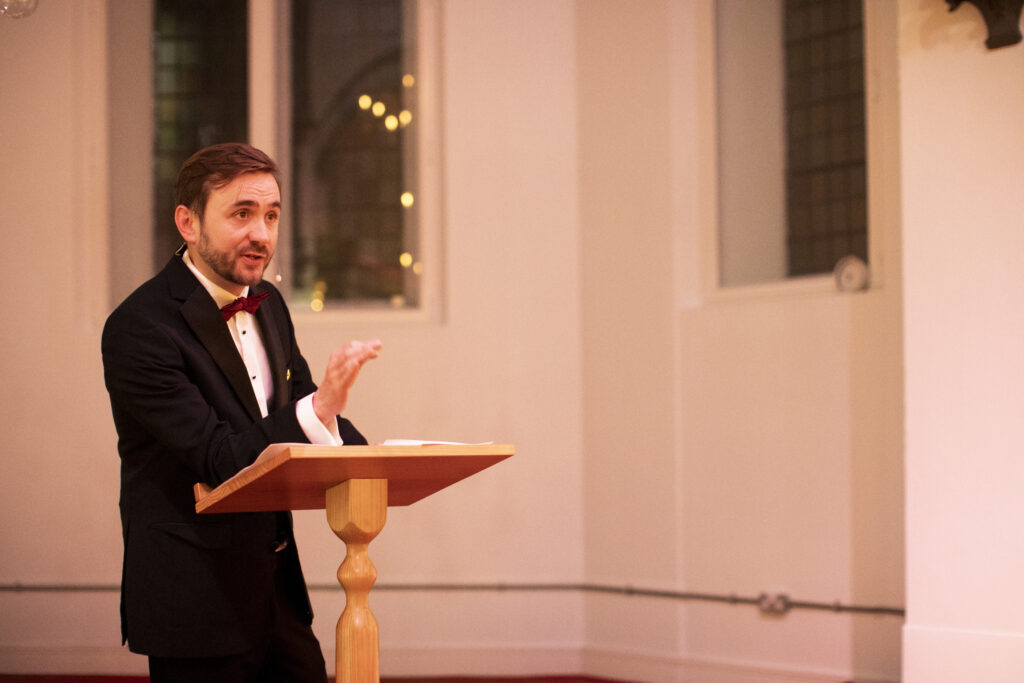
Charity auctioneer in black tie speaking from a wooden lectern at a fundraising dinner

In short

  • Famous auctioneers come from four separate worlds: the art rostrum, the cattle ring, television and charity fundraising. The skills do not transfer evenly between them.
  • Jussi Pylkkänen let the bidding on Salvator Mundi run for 19 minutes. Patience, not speed, is what you are watching.
  • Christie’s auctioneer training starts with the bid increments, learned by heart, because increments are pacing rather than arithmetic.
  • Benefit auctioneering is its own discipline. You build the wanting before you sell anything.
  • Hiring a famous name is not the same as hiring the right auctioneer for a room of 300 people who came for dinner.

Ask who the famous auctioneers are and you get a strange mix of answers. A Finn who sold the most expensive painting in history. An antiques dealer who became the youngest expert on Bargain Hunt at 25. A cattle auctioneer from Montana whose rhythm has been scored by judges in a competition ring. They share a job title and almost nothing else.

I’m Kevin Durham, the charity auctioneer who works the floor rather than the podium, 20 years in and over £10 million raised. Below are the practitioners worth studying, what each is genuinely known for, and the craft points a fundraiser can lift from them. Every fact here comes from a source you can open yourself.

The famous auctioneers worth studying

Start with the man whose name is still above the door. James Christie was born in Perth in 1730 and held his first sale on 5 December 1766, in Pall Mall rooms that had belonged to a print seller. The Royal Academy held its exhibitions on those same premises until 1779, which tells you something about the company auctions kept from the beginning.

The other historical name worth knowing is Peter Cecil Wilson, who chaired Sotheby’s until 1980, was made a CBE in 1970 and became the firm’s honorary life president when he stepped down.

Everyone after that is living, so I am sticking to what their own sources say. These are the ones whose footage I would actually sit and watch.

Jussi Pylkkänen and the 19-minute lot

Pylkkänen is the one most people have seen without knowing his name. Helsinki-born, at Christie’s since the 1980s, head of the Impressionist and modern art department from 1995, then global president from 2014.

On 15 November 2017 he sold Leonardo’s Salvator Mundi in New York for $450.3 million with fees, the highest price ever paid for a painting at public auction. The detail worth noticing is not the number. It is that the bidding ran for 19 minutes. He also took the rostrum in 2022 when Warhol’s Shot Sage Blue Marilyn made $195 million.

Nineteen minutes on one lot means refusing to fill silence. Most inexperienced hosts talk over a pause because the pause frightens them. The pause is where the next bid comes from.

Oliver Barker and the hammer he was terrified to drop

On 5 October 2018 Sotheby’s London sold Banksy’s Girl with Balloon for £1,042,000, and within seconds of the gavel the canvas began shredding itself through the bottom of its frame. The half-destroyed work was renamed Love Is in the Bin.

Three years later Oliver Barker brought it back to the same room. After a ten-minute contest involving nine bidders in the saleroom, online and on the phone, it sold for £18,582,000 with premium, three times the high estimate. Barker joked from the rostrum that he was terrified to bring the hammer down, with staff half-expecting another stunt.

Saying the nerve out loud, lightly, is a technique. It puts the room on your side. Pretending nothing odd is happening never does, because everyone can see it anyway.

Who teaches an auctioneer the increments?

At Christie’s, that job belonged to Hugh Edmeades, described as the auction house’s head of auctioneering. One of his trainees, Marlous Jens, was one of 44 internal applicants cut down over about 18 months to two.

The first thing candidates are handed is the sheet of bid increments, and they learn it by heart. Monocle called it the bedrock of the trade. Edmeades put it better: “I can’t teach them the numbers. I can only teach them what to do with the numbers.”

That is the single most transferable idea on this page. Increments are not arithmetic, they are pacing. Jump too far and you lose the second bidder. Crawl in fifties and a room that was ready to compete starts checking its phone. Coaching also covered looking up at the camera and across to the phone banks, because an auctioneer who only plays to the front three tables is leaving money in the room.

What does a benefit auctioneer do differently?

A benefit auctioneer sells feeling before anything else, and Lydia Fenet is the clearest example. She spent two decades at Christie’s, launched its strategic partnerships division in 2011 and became Global Managing Director of it. The auctioneering ran alongside that job, not instead of it.

Her fundraising total is reported two ways, so treat it carefully: the career section of her Wikipedia entry says over half a billion dollars for nonprofits, while the headline figure of a billion carries a citation-needed tag. She wrote The Most Powerful Woman in the Room Is You in 2019 and Claim Your Confidence in 2022, and she founded what one host describes as the first auctioneering talent agency, which reported over $210 million raised for charitable organisations in its first two years.

The point for a fundraiser is the career shape. A commercial rostrum sells objects to people who already want them. A benefit auctioneer has to build the wanting first, which is why the live pledge sits where it does in my running order.

What can a fundraiser learn from a livestock champion?

Rhythm, and the discipline of being judged on it. Jace Thompson of Billings, Montana was named the 2026 world champion of livestock auctioneering at the Livestock Marketing Association’s convention in Deadwood, South Dakota, after the contest ran at St. Onge Livestock. His father Ty is a past champion, which makes the Thompsons a rare father-and-son pair on that list.

The chant is real craft and I respect it. I also almost never use it. A cattle ring is full of buyers who read bid calling fluently; a gala is full of guests who have never bid on anything. Clarity beats speed when half the room needs to be told what the next number is.

What does carry over is the metronome underneath it. Momentum is a tempo you set, not a mood that happens to you.

Which famous auctioneers came through television?

In the UK, mostly the antiques trade. Charles Hanson joined Bargain Hunt in 2002 as its youngest expert at 25, then Antiques Road Trip and Flog It. He had started at Christie’s in London, and founded his own saleroom, Hansons, in 2005.

His charity work is on the record too: over £133,000 for Nottinghamshire Hospice auctioning robin sculptures, and more than £1 million for Manchester’s Bee in the City.

He calls an auction a place of theatre and entertainment. I would not argue.

Harry Dalmeny took a different route. He joined Sotheby’s in 1990 in the country house sale department, became a director in 2000, deputy chairman of the UK business in 2007 and chairman in 2017, conducting country house sales across Europe along the way.

Kevin Durham at a lectern with a microphone, gesturing towards someone in the audience while hosting an awards evening

What do famous auctioneers have in common?

Four things, and none of them is volume.

  • They know the increments cold, so their attention is free for the room rather than the maths.
  • They tolerate silence. The 19-minute lot is the proof.
  • They narrate the contest instead of the object. Nine bidders needed naming, not the frame.
  • They stop. A lot sold at the right moment protects the next one, and an auctioneer who grinds for one more bid teaches the room that bidding is painful.

Knowing when to stop is the least glamorous skill on that list and the one I would hire for first. It also applies to the whole programme, not just a lot. At the Jigsaw Trust the auction was expected to bring in £14,000. It made £27,000, and the live pledge they had not planned for raised a further £30,600. That only works if the auction finishes while the room still has appetite.

Do you need a famous auctioneer at your gala?

No, you need the right one, and the two are not the same thing. Fame in this trade is usually built on the art market or on television, and neither is a test of whether someone can lift a room of 300 people who came for dinner.

What to ask instead: what did the last three events raise against target, how do they structure a pledge, and will they work the floor. If you want the longer version, I have written about what auctioneers do and what separates a professional auctioneer from a willing volunteer, and my auctioneer services page sets out how an event comes together from first call to final total. There is also a plain guide to working together if you have never booked one before.

Twenty years in, over £10 million raised, and a Monaco gala that passed €1,000,000 in a single evening. None of that was my doing alone: each charity’s own team did the heavy work, and my job was to hold the room while they did theirs.

Call 07596 851647 and tell me about your event.

Kevin Durham, charity auctioneer

Kevin Durham

Charity auctioneer & event host

20years£10m+raised60–80events/yr
Check availability07596 851647

Let’s talk

Bring this to your event

Book a free consultation with a charity auctioneer who has raised over £10 million.

Auction paddles: do you need bidding paddles at a charity auction?

Kevin Durham at the lectern on stage at MAG-FEST, the Manchester Airport Group's charity gala, with the event sponsors on the screen behind him

In short

  • A paddle is just a visible bidder number. The number matters more than the paddle.
  • Small room, seating plan, a handful of lots: hands and table numbers are enough.
  • Big room, guests who don’t know each other, a long lot list: use numbered paddles tied to registration.
  • Whatever you use, one volunteer writes down the winning number and price for every lot.
  • A bid can be withdrawn until the hammer falls. After that, it is a sale.

Auction paddles are the numbered cards guests raise to bid. At a charity auction they are useful, but they are not the thing you actually need. What you need is a number for every bidder, so the auctioneer can see who bid and the charity can bill the right person at the end of the night.

I’m Kevin Durham, and I’ve been a charity auctioneer and event host for 20 years. Here is how paddles work, when a hand or a table number does the job just as well, and what I watch for on the floor.

What are auction paddles?

Auction paddles are cards showing a number given to each bidder when they register. Sotheby’s defines a paddle in exactly those terms, and Christie’s calls it a numbered card assigned to each registered bidder.

For centuries nobody used them. According to Christie’s own paddle history, bidders raised a hand and the auctioneer knew most of them by name. Paddles most likely came in after the firm returned to King Street in 1954, when more buyers were private individuals the auctioneer didn’t know.

That is the whole point of a paddle. It tells the person on the mic who you are.

How do bidding paddles work?

Bidding paddles work by linking a number to a name before the auction starts. A guest registers, gets a number, raises it to bid, and the winning number is written against each lot.

At Christie’s you bring photo ID and proof of address to collect a paddle. A charity dinner needs far less: name, table, phone or email, and how they will pay. The data rules say to collect what is necessary and nothing “just in case”.

On the night, the auctioneer calls the number of the winning paddle and a recorder writes it down with the hammer price. The Code of Fundraising Practice expects clear procedures for recording donations, including who does what. For the guest’s side, see how charity bidding works.

Do you need auction paddles at a charity auction?

You need auction paddles when the auctioneer can’t tell who is bidding without them. If they can, save the money.

Paddles earn their place when:

  • the room is big, or guests sit at long tables you can’t see across
  • half the guests are strangers to the committee
  • the lot list is long enough that record-keeping gets messy

You can manage without them when the room is small, you have a seating plan, and the auction is short and strong. I’d rather run 10 great lots than 50, so in most of my rooms the admin stays light either way.

There is one more thing a paddle does: it gets seen. The Behavioural Insights Team found people give more when giving looks normal, and suggests making it more visible to peers. A paddle in the air is hard to miss.

Alternatives to bidding paddles

Raised hands

Hands are fine in a room I can see from end to end. The recorder needs the seating plan, so “the gentleman at table 6” becomes a name on the bill.

Numbered table cards

Give each seat a number on the place card or menu: table 12, seat C becomes 12C. Billing then works from the seating plan you already have.

Phone bidding

For a supporter who can’t attend. A volunteer phones them from the room and bids for them, the way auction houses use telephone bids. Agree a maximum beforehand and, like Christie’s, take a backup absentee bid in case the call drops. Test the venue’s signal first.

Should you make or print auction paddles?

Make them if the event is a one-off. Print them if you run the same auction every year. Either way, the number is what matters: black on white, as big as the card allows, on both sides so the recorder sees it too.

Printed paddles can carry a sponsor’s logo on the back. Christie’s moved to a design with the logo on one side and the number on the other in 2014.

What is good auction etiquette for bidders?

Good auction etiquette is simple: bid clearly, hold your paddle up until the auctioneer acknowledges you, and pay on the night.

  • Don’t worry about scratching your nose. One auctioneer jokes that the worst case is being teased a little.
  • You can change your mind, briefly. Under the Sale of Goods Act, a sale is complete when the hammer falls. Until then, a bid can be retracted.
  • Nobody bids to push a price up. The same section makes it unlawful for a seller, or someone acting for them, to bid unless that right was announced. That includes a keen committee member.

Auction terminology at a glance

TermWhat it means
PaddleYour bidder number, held up to bid
Hammer priceThe winning bid when the gavel falls
IncrementThe amount each new bid goes up by
ReserveThe seller’s confidential minimum
Bought inUnsold: no bids, or short of the reserve
Absentee bidA maximum left in advance
Buyer’s premiumA fee added on top of the hammer price

I explain why most charity auctions are better off without a buyers premium. One tax point: HMRC says a winning bid is a purchase, not a gift, so keep auction money and donations on separate sheets.

How I read paddles from the floor

I work the floor, not the podium, with a wireless mic in my hand. Paddles help, but only in a room that is listening.

I learned that one the hard way. At one big event that was running late, I started the auction while people were still talking. Only part of the room heard the lots, and one man bid on an item he couldn’t hear clearly. Now I command the room first, even if that means standing on a chair.

Kevin Durham on stage at the MAG-FEST charity gala, pointing out into the room in front of a screen listing the donated prizes

Once it’s quiet, paddles become signals. I read momentum, name it out loud, and use it: “He’s in your eyeline. Can you see him?” Pacing and social proof do the rest, and the guide to bidding momentum goes deeper. The banter never tips into pressure, though: the fundraising code rules out undue pressure, and a no is a no.

What is a paddle raise?

A paddle raise is a direct appeal where guests lift paddles to give at named amounts, with nothing to win. It is where paddles earn their keep. My guide to the fund-a-need paddle raise covers how to structure one. For collecting those gifts, see my guide to pledge cards.

If you are planning the lots themselves, start with how I run a live auction. To talk through your evening, call me on 07596 851647.

Kevin Durham, charity auctioneer

Kevin Durham

Charity auctioneer & event host

20years£10m+raised60–80events/yr
Check availability07596 851647

Let’s talk

Bring this to your event

Book a free consultation with a charity auctioneer who has raised over £10 million.

Auctioneer chant: why a charity auctioneer talks to the room instead

Charity auctioneer Kevin Durham hosting MAG-FEST, the Manchester Airport Group's charity gala, running the live auction and live pledge in aid of Medcare, Magic Breakfast, The Children's Society and Blessings in a Backpack.

In short

  • The auctioneer chant (also called bid calling or the cattle rattle) repeats the current bid and the next one, joined by filler words.
  • It is built for speed and for buyers who know the trade: a tobacco sale could move 500 to 600 lots an hour.
  • A charity auction is different. Every guest needs to hear every amount, or the bidding never builds.
  • So a charity auctioneer talks to the room: clear numbers, names and banter.

The auctioneer chant is the rolling, rhythmic call you hear at a livestock sale: two numbers stitched together with filler words, fast enough to sound like music. It is a real craft, judged at championship level. It is also something I almost never use at a charity gala, and the reason has nothing to do with skill.

I’m Kevin Durham, the charity auctioneer who works the floor, not the podium, wireless mic in hand. Here is where the chant comes from, and why a fundraising room needs something different.

What is the auctioneer chant?

The auctioneer chant is a rhythmic repetition of numbers and filler words used to take bids. It also goes by bid calling, the auction cry or the cattle rattle.

Every chant carries two numbers: the bid already on, and the bid needed next. Grafe Auction calls it a statement and question: “I have 10 dollars. Would you bid 15?” Everything else is filler, words such as “dollar bid”, “now” and “will ya give me” that keep the rhythm moving.

A National Auctioneers Association guide says filler words carry the numbers, repeat the last bid so buyers remember it, and give bidders a moment to decide.

Where does the auctioneer chant come from?

Nobody knows for certain where the auctioneer chant comes from. The same NAA guide says only that it probably grew out of the need to sell faster.

Babbel calls it distinctly North American, with one popular theory tracing it to tobacco auctioneers in mid-19th-century Virginia. Art salerooms tend to keep a quieter, slower European style.

Tobacco is where the chant became famous. The loose-leaf tobacco auction premiered in Danville, Virginia, in 1858 and became the main way bright leaf was sold in North Carolina.

Its best-known voice was Lee Aubrey “Speed” Riggs, who reportedly became the world’s youngest tobacco auctioneer at 18 and, from 1937, was the radio voice of Lucky Strike, ending every chant with “Sold American”. He is said to have reached 469 words a minute. My favourite detail on that Hall of Fame page: he raised nearly $220 million for charities.

Why do auctioneers talk fast?

Auctioneers talk fast because the chant was built to sell a great many lots, quickly, to buyers who already know what they are looking at. The NAA guide puts it at roughly 60 items an hour at an estate sale, 125 to 175 cars an hour at a wholesale car auction, and 500 to 600 lots an hour at a tobacco sale.

Fast does not mean careless, though. One auction school’s guide to the chant says clarity is essential, and the speed depends largely on what is being sold.

Who has the best auctioneer chant?

The best auctioneer chants are decided in competition, and the best known is the World Livestock Auctioneer Championship. The Livestock Marketing Association held the first one in June 1963 in Denver, where 23 auctioneers from the US and Canada sold the same 20 head of cattle over and over. It still runs every June.

Werner Herzog filmed the 1976 contest for a documentary and called auctioneering “the last poetry possible”.

Judges are not scoring speed alone. When the National Auctioneers Association named its junior champion in July 2026, contestants were assessed on bid calling, professionalism, communication and industry knowledge. That is a proper craft, and I respect it.

Why does a charity auctioneer talk to the room instead?

A charity auctioneer talks to the room because at a gala every guest needs to hear every amount, and many have never bid at a live auction before. A sale ring is full of professionals who know the price of what is in front of them. A charity dinner is full of guests who came for the cause, mid-conversation.

My job there is to get people competing and enjoying it, not to sell quickly. Bidding momentum only builds when the whole room can hear the numbers climb.

Under UK law a sale by auction is complete on the fall of the hammer, and until then any bidder can retract. Everyone should know what they are agreeing to before that moment.

The night I lost the room

I learned how much hearing matters the hard way, and I was not even talking fast. It was a big event, running late, with no inspiring speech or video to tee up the auction. I walked into the middle of the room and announced the live auction while people were still talking, and I did not stop to get them quiet.

Only a fraction of the room heard the lots. One man bid on an item he could not even hear clearly.

The lesson I have never repeated since: command the room first. Stand on a chair if you have to. The shush is a powerful tool.

What does a charity auctioneer say instead?

A charity auctioneer says the amount clearly, says who bid it, and gives the room a reason to beat it. The auctioneer phrases that work at a gala are conversational, not rhythmic. I open with “Ladies and gentlemen, it’s time for the live auction”, and it always gets a round of applause.

Kevin Durham on stage at the MAG-FEST charity gala, arms spread wide as he opens the evening in front of the big screen

After that, banter does the job filler words do in a chant: it holds the number in the air while someone decides.

  • “Sir, you could be the hero. They’d sing songs about you around the campfire. Is that not worth another hundred pounds?”
  • “Look at him. He’s in your eyeline. Can you see him?”

If your guests are new to auctions, send them my note on how bidding works before the night.

When should you hire a charity auctioneer?

Hire a charity auctioneer when your event includes a live auction and you want bidders engaged rather than hurried. A charity auctioneer talks to the room, uses humour and builds competition between bidders instead of chanting at speed, which suits a gala audience.

If your event has only a silent auction and no live bidding, you do not need one. Have ready your date, room size, lot list, the kind of audience you expect and whether the room has heard an auctioneer before.

How to talk like an auctioneer at a charity gala

You don’t need a chant to sound like an auctioneer. You need the room’s attention. These are the habits I rely on:

  • Get quiet before the first lot. Never sell to a room that is still talking.
  • Borrow the chant’s best idea. Give the current bid and the next one together, so nobody has to guess.
  • Say the number twice. Once for the bidder, once for the back of the room.
  • Name the bidder. A table number or a first name turns a figure into a contest.
  • Pause after a big bid. Let the room react.

That is most of what an auctioneer does at a gala. The full running order is in my guide to the live auction, and if you are picking up the mic yourself, start with becoming a great charity auctioneer.

The chant is the right voice for a sale ring. A charity room needs every guest to hear every bid. If you want an auction like that, call 07596 851647.

Kevin Durham, charity auctioneer

Kevin Durham

Charity auctioneer & event host

20years£10m+raised60–80events/yr
Check availability07596 851647

Talking to the room

What a charity auctioneer does instead of a traditional chant.

Using Movie Quotes to Keep Bids Coming
Using movie quotes to keep bids coming
Singing 'That's Amore' to Push Up the Bids
Singing That's Amore to push up the bids
Why Charity Auctioneers Should Never Take Themselves Too Seriously
Why auctioneers should never take themselves too seriously

Let’s talk

Bring this to your event

Book a free consultation with a charity auctioneer who has raised over £10 million.

Cancer fundraiser ideas: events that raise serious money for cancer charities

Charity auctioneer Kevin Durham shading his eyes and pointing out a bid from the lectern at CRIS Cancer Foundation's A Night to Dream gala

In short

  • Choose the charity first and contact its fundraising team before you book anything. Most big cancer charities offer free packs.
  • For serious money, run a gala or ball with a short live auction and a live pledge.
  • Sports dinners, golf days, fashion shows and quiz nights suit different crowds. Pick what your supporters already enjoy.
  • Awareness dates help: World Cancer Day is every 4 February, and Breast Cancer Now runs Wear It Pink each October.
  • Keep the evening cause first and leave medical information to the charity.

A good cancer fundraiser starts with the cause and works back to the event. Pick the charity, talk to its fundraising team, then choose a format your supporters will actually turn up to and spend money at.

I have hosted cancer charity galas as a charity auctioneer, and the nights that raise the most are rarely the most elaborate. The room knows where the money is going and has a clear, comfortable way to give. Here are the formats, how to run them, and the UK rules.

What makes a good cancer fundraiser?

A good cancer fundraiser is one your supporters already want to attend, run in partnership with the charity, with one clear moment where guests are asked to give. The format matters less than those three things.

Cancer reaches a lot of families. Cancer Research UK’s statistics page lists 403,601 new cases of cancer in the UK (its figure covering 2019 and 2021 to 2022, as shown in October 2026). That reach means most rooms will include guests with a personal connection to the cause. It also means the tone needs care.

So decide on the charity first. A national charity, a local support centre and a children’s cancer charity tell different stories, and the event should fit the story.

Which cancer fundraising ideas raise the most money?

The cancer fundraising ideas that raise the most money are usually ticketed evenings with a live auction and a pledge, because they let a room of generous people set the ceiling. Smaller formats still matter: they bring in new supporters and keep the cause visible through the year.

FormatBest forWhere the money comes from
Gala or ballCharity supporters, corporate tablesTickets, live auction, live pledge
Sports dinnerClubs, business networksTickets, signed lots, auction
Golf dayClubs, corporate teamsTeam entry, sponsorship, evening auction
Fashion showLocal shops, community groupsTickets, raffle, donated lots
Quiz nightWorkplaces, schools, villagesEntry fee, raffle, games
Coffee morning or bake saleAnyone, at any sizeDonations, sales

The big charities publish their own lists. Macmillan’s fundraising ideas range from balls and dinner parties to quizzes and golf, and Cancer Research UK’s A to Z includes auctions, raffles and quiz nights. For more formats across every kind of cause, see my guide to fundraising events.

Running a gala or ball for a cancer charity

If you want one evening to carry most of the year’s total, plan a gala or ball. The ticket price covers the night. The auction and the pledge raise the money.

I have hosted for CRIS Cancer Foundation, including its A Night to Dream gala, and one of its reviews describes a “charity dinner for 440 very demanding people”. A room that size gives generously when the programme is tight and the ask is clear. The credit for nights like that belongs to the charity’s team and the supporters they bring with them, not to the person holding the microphone.

Kevin Durham in a burgundy velvet jacket pointing to the room from the stage while running the live auction at the MAG-FEST charity gala

A few things I would build in:

  • A short live auction. About ten strong lots, sourced in-house where you can, so more of the money stays with the charity.
  • A live pledge after the auction. Guests give directly to the work, at a few set levels, with no lot to win. I push for one every time: it is the most powerful segment of the night.
  • A speaker the charity chooses and briefs. It might be a nurse, a researcher or a family member.
  • A room that is listening. Get the room quiet before the auction starts, run it before guests tire, and go straight into the pledge.

At most galas I work, the pledge raises more than the auction. At a Jigsaw Trust event (an autism charity, not a cancer one), the charity expected £14,000 from the auction; the auction made £27,000 and a live pledge they had not planned added £30,600. I explain the structure in my piece on the live pledge, and the wider planning in my charity ball guide.

How do you plan a breast cancer fundraiser?

You plan a breast cancer fundraiser the same way as any other: choose your charity, request its pack, then pick a format. Breast Cancer Now’s own list of fundraising ideas runs from coffee mornings and walks to “gala balls”, golf days and raffles, and it invites supporters to wear pink each October.

October gives breast cancer fundraising a natural focus, so a ball, a fashion show or a workplace pink day that month has an easy hook. A fashion show works well with local boutiques: they lend the clothes, guests buy tickets, and a donated outfit can go into the auction. A golf day with an evening dinner gives you two fundraising moments for one booking.

Awareness dates worth building around

An awareness date gives your event a reason to happen now, and lines it up with the charity’s own publicity.

  • World Cancer Day is every 4 February, led by the Union for International Cancer Control.
  • October is the month for breast cancer, when Breast Cancer Now asks supporters to wear pink.
  • November belongs to men’s health: Prostate Cancer UK is the main beneficiary of Movember, which has its own playbook and its own guide on this site.

Check the charity’s own calendar before you fix a date, so you do not clash with its flagship events.

What do Macmillan and other cancer charities give fundraisers?

Macmillan and other cancer charities give fundraisers a free pack, promotional materials and a team to talk to. If you want Macmillan fundraising ideas, start with that pack.

Macmillan asks supporters to get a fundraising pack and register their event, and offers bunting, collection boxes and t-shirts to order. Its fundraising FAQs point to free poster templates and advise supporters not to buy their own card readers. Its fundraising team is on 0300 1000 200 or fundraising@macmillan.org.uk.

Cancer Research UK’s fundraising support offers a pack of “ideas, tools, tips and inspiration”, branded resources and advice on fundraising safely. Whichever charity you choose, use its materials and follow its branding rules rather than making your own logo.

What rules apply to a cancer fundraiser in the UK?

A cancer fundraiser in the UK follows the same rules as any charity event: insurance, licences, honest fundraising, and the rules for raffles and Gift Aid. None of it is complicated, but check it early.

The Fundraising Regulator’s events guidance, updated in November 2025, says organisers are responsible for health and safety and insurance. You need permission to use the venue and any licences for trading or selling food and drink. It also separates fundraising “in aid of” a charity from fundraising “on behalf of” one, which changes what the charity is responsible for.

  • Raffles. A raffle run at your event can spend up to £500 of ticket money on prizes and £100 on costs, with tickets sold only on the night, under the event raffle rules.
  • Gift Aid. Event tickets and raffle tickets are not gifts, and HMRC’s Gift Aid guidance treats an auction payment as a purchase. A straight donation from a UK taxpayer, such as a pledge, can usually qualify if the donor makes a Gift Aid declaration.

I am an auctioneer, not a lawyer, so check anything unusual with the charity and your local council.

How should you talk about cancer on the night?

Talk about cancer on the night in the charity’s words, not your own. Let the charity supply the facts, figures and stories. The host’s job is to thank people and ask for the money.

That means no medical claims from the stage, no statistics the charity has not supplied, and no promises about what a donation will cure. Say what the money funds, in the charity’s terms.

Kevin Durham speaking into a microphone from the lectern at CRIS Cancer Foundation's A Night to Dream gala

The room will include people who have lost someone and people in treatment. The tone can still be warm, even fun in the auction, then humble and sincere for the pledge. My hospice fundraising guide covers that balance for another sensitive cause.

Getting the money to the charity

The fundraising is not finished until the money reaches the charity. Agree in advance how and when you will pay it in, who collects the pledges, and how auction winners pay.

Then thank everyone quickly, by name where you can: guests, lot donors, the venue and the charity’s team. Send the final total to the charity so it can share it.

If you are planning a cancer charity gala or dinner and want to talk through the auction and the pledge, call me on 07596 851647. I would rather talk it through than trade emails.

Kevin Durham, charity auctioneer

Kevin Durham

Charity auctioneer & event host

20years£10m+raised60–80events/yr
Check availability07596 851647

Let’s talk

Bring this to your event

Book a free consultation with a charity auctioneer who has raised over £10 million.

Code of Fundraising Practice: what it means for your charity auction and gala

Kevin Durham in a burgundy velvet dinner jacket reading from a card on the microphone at the MAG-FEST charity gala

In short

  • The current Code came into effect on 1 November 2025 and covers charities and the third parties who fundraise for them.
  • At an auction, the big rules are simple: do not mislead bidders about where the money goes, and be able to back up any claim you make from the stage.
  • A live pledge must never put undue pressure on anyone, and you should not accept a donation from someone who cannot make an informed decision.
  • Any third-party fundraiser you work with, volunteers aside, needs a written agreement, and the charity stays responsible for checking they keep to the Code.
  • Whether a paid auctioneer counts as a “professional fundraiser” in law is not answered directly by the official sources. Ask your own adviser.

The Code of Fundraising Practice is the Fundraising Regulator’s rulebook for how charities, and the people they work with, ask the public for money in the UK. A charity auction and a gala dinner are fundraising, so the Code applies on the night just as it does to a street collection or a direct mail appeal.

The live auction and the live pledge are where I spend my working evenings as a charity auctioneer. Here is my plain-English reading of what the Code means for the people organising the night. I’m an auctioneer, not a lawyer, so treat this as general information, not legal advice.

What is the Code of Fundraising Practice?

The Code of Fundraising Practice is the set of standards published by the Fundraising Regulator, which oversees charity fundraising in the UK. The new Code came into effect on 1 November 2025, replacing the 2019 version, and the Regulator says it applies to fundraising by all charitable institutions and third-party fundraisers.

It is organised into three groups of standards, numbered 1 to 14:

GroupSectionsWhat it covers
All fundraising1 to 3Behaviour, trustees’ responsibilities, processing donations
Working with others4 to 6Volunteers, children and vulnerable people, partnerships
Specific methods7 to 14Including public fundraising, online platforms, events and legacies

You’ll also see it called the fundraising code of practice, the fundraiser code or the Fundraising Regulator code. Same document. For a gala, the standards that matter most sit in sections 1, 2, 3, 5, 6 and 10.

Does the Code of Fundraising Practice cover a charity auction?

Yes. An auction, a raffle and a live pledge are all ways of asking people for money for a cause, so the Code covers every one of them. Section 10 on events then adds a few duties of its own.

The events standards ask you to carry out a risk assessment before the event, including the responsibilities and risks that come with working with a third party. They also say you should be clear about how the money raised by the event will be used.

That last point is the one I care about most. In my experience, it is where auctions go wrong.

What does the Code say about telling guests where the money goes?

The Code says your fundraising must not mislead donors, whether by leaving information out, giving unclear information or exaggerating. That is standard 1.2.1, and it covers every lot description in the brochure and every line I say into the microphone.

Standard 1.2.3 goes further. You need appropriate evidence before you make any claim likely to be taken literally, and that includes claims about the costs of your fundraising. “Every penny goes to the charity” is a claim. Only say it if it is true for that lot.

I’ve seen what honesty does to a total. At MS UK, the year before they hired me, an external auction company grossed around £13,000 and the charity saw only about £1,300. When I came in, I told the room at the start exactly where every pound was going: which lots gave the charity 100%, and which only paid out above the reserve. The company grossed a fraction of the year before, around £3,500. The live pledge raised £8,300, all of it to the charity. I didn’t trash anyone. I just turned the lights on, and the money followed.

How do you run a live pledge without undue pressure?

You run a live pledge within the Code by asking from the heart and then accepting every answer, including no. Standard 1.1.2 rules out putting undue pressure on a person to donate and using unreasonably persistent approaches, and it requires you to accept a request to end an interaction.

Kevin Durham on stage at the MAG-FEST charity gala, pointing out into the room

That doesn’t mean the pledge has to be quiet. It can be lively, and the excitement as the money comes in is part of what makes it work. The line sits between inviting a whole room to give and leaning on one person who has already said no. The ask should be about the cause, never about the guest who has kept their hand down.

Section 5 adds a duty that matters at any evening event. You should not accept a donation if you know, or have reason to believe, that the person cannot make an informed decision, and you should return it if you discover this later (standard 5.2.3). Nobody expects you to assess every guest, but the people taking pledges should be alert to the signs and know who to tell.

Handling the money and Gift Aid on the night

Section 3 of the Code covers the less glamorous part, once the hammer has fallen. Standard 3.1.1 asks for procedures for counting, recording and banking donations without delay. Where possible, cash should be counted by two unrelated people, kept somewhere secure, and banked as soon as possible.

The same page says you should only claim Gift Aid if all the conditions are met, so check before you add a Gift Aid box to a pledge card. Generosity Works has a clear guide to Gift Aid, so I won’t repeat it here.

If you run a raffle alongside the auction, that has its own rules under gambling law. My guide to running a charity raffle covers them.

Is a paid auctioneer a professional fundraiser?

Honestly, the official sources don’t say, one way or the other. None of the legislation or guidance I checked mentions auctioneers by name. So here is what the law does say, and why the question belongs with your own adviser.

Under section 58 of the Charities Act 1992, which applies in England and Wales, a professional fundraiser includes anyone who carries on a fundraising business, and any other person who, for reward, solicits money or property for a charitable institution. Employees, officers and trustees acting as such are excluded, along with a few other groups. From 30 September 2026, people who receive no more than £15 a day or £1,500 a year for the soliciting (or no more than £1,500 for a single fundraising venture) also fall outside that second part of the definition.

Two more details in that section matter. “Solicit” covers asking in any manner, including speaking directly to people in the room. And it applies whether or not anything is given in return for the money, so the fact that a bidder receives a lot does not by itself take an auction outside it.

The Regulator’s own guidance says that anyone paid by a charity to fundraise on its behalf above the thresholds may be a professional fundraiser. As at 19 October 2026, that page still showed the older £10 a day and £1,000 a year figures.

If someone is a professional fundraiser, section 60 requires their appeal to come with a statement naming the charity, how their pay is worked out, and the actual or estimated amount. The rules are different in Scotland, and the Regulator notes there is currently no equivalent legislation in Northern Ireland.

I’m not going to tell you whether any particular auctioneer, me included, falls inside that definition. It depends on the facts of the booking and on how the law is read, and that is a job for your adviser, not a blog post.

Working with an auctioneer under the Code of Fundraising Practice

Whatever the legal label turns out to be, the Code is clear about what the charity does when it brings in outside help. The partnership standards say you must check a third-party fundraiser before agreeing to work with them (6.1.1), have an appropriate written agreement unless they are a volunteer (6.2.1), and make all reasonable efforts to see that they keep to the Code (6.3.1).

The Charity Commission’s trustee guidance says the same about professional fundraisers: check they are suitable, put the written agreement in place before the fundraising begins, and monitor it.

Trustees also have to consider how they pay fundraisers and whether it fits the charity’s values (standard 2.4.1). That’s a good moment to ask whether your auctioneer takes a percentage of the total. I set out the different models in my piece on auctioneer commission.

Charity fundraising rules: a checklist for your gala

For a gala, the fundraising rules in the UK come down to a handful of habits. Before the night, check you can say yes to each of these:

  • Lot descriptions are accurate, including what is not included and any lot where only part of the price reaches the charity.
  • Anything you say from the stage can be backed up. “100% goes to the cause” most of all.
  • The pledge is an invitation, not a chase.
  • Whoever takes pledges knows the signs that someone may not be able to make an informed decision, and who to tell.
  • Cash and card payments have a procedure: who counts, who checks, when it is banked.
  • Every third party fundraising for you, other than volunteers, has a written agreement, and someone at the charity owns checking it.
  • You have decided what you will say about Gift Aid before the pledge cards go out.

Kevin Durham at the lectern on the MAG-FEST stage, with the screen behind him listing the businesses that donated prizes

And when it’s all over, say thank you properly. My guide on how to thank donors covers the follow-up.

Where can you get help with the fundraising rules?

The Fundraising Regulator runs a code advice service that anyone can use, including volunteers and professional fundraisers. It answers questions about how the Code applies, but it says plainly that it cannot give legal advice, and that where the Code and the law differ, you must follow the law.

For anything about legal status, contracts or solicitation statements, speak to a solicitor who works with charities. If you want to talk through an honest, lively auction and pledge for your own event, call me on 07596 851647. I’d rather talk it through than trade emails.

Kevin Durham, charity auctioneer

Kevin Durham

Charity auctioneer & event host

20years£10m+raised60–80events/yr
Check availability07596 851647

Let’s talk

Bring this to your event

Book a free consultation with a charity auctioneer who has raised over £10 million.

What is a commission bid? Absentee bidding at a charity auction explained

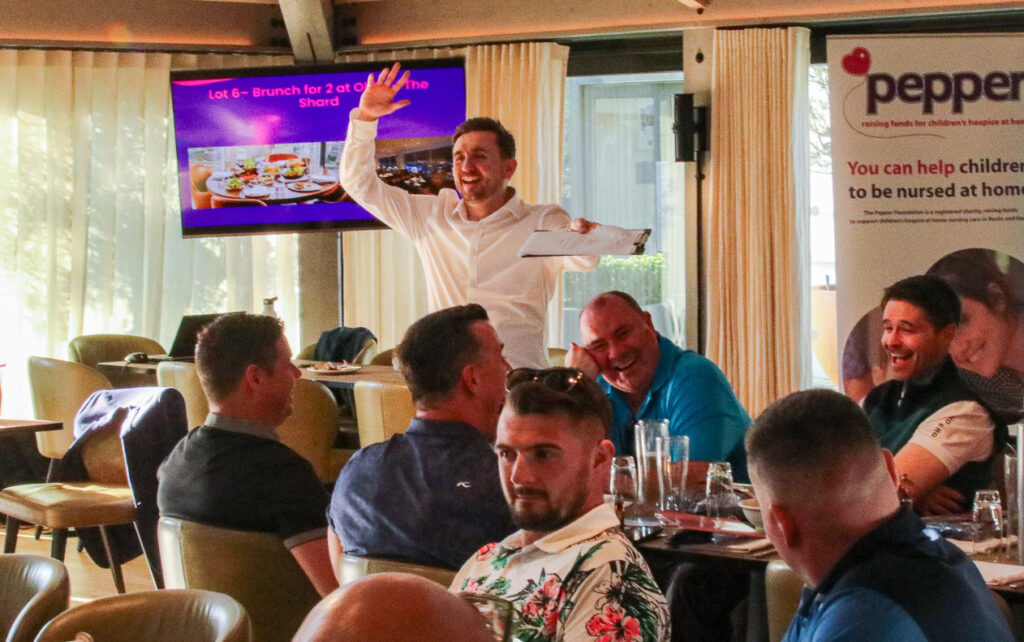
Kevin Durham selling a brunch lot at a charity lunch, bid sheet in hand, as guests laugh

In short

  • A commission bid (also called an absentee, written or order bid) is a top limit left with the auctioneer before the lot is sold.
  • It is executed in increments against the room, so the bidder pays as little as possible up to their limit.
  • It is not the same thing as auctioneer commission, which is a fee.
  • Identical commission bids usually go to the one received first.
  • The room should hear every amount, including the ones coming from the book.

A commission bid is a maximum bid left with the auctioneer by someone who can’t be in the room. The auctioneer bids for them one step at a time against the room, and stops at their limit. It has nothing to do with the commission an auctioneer charges.

Supporters who can’t make the night often still want a shot at the lots. Speaking as a professional charity auctioneer, here is how commission, absentee, proxy and phone bids work, and how a charity can take them fairly.

What is a commission bid?

A commission bid is an instruction to the auctioneer to bid on your behalf, up to a maximum you set in advance, because you won’t be in the room. Wiktionary defines it as a bid placed by the auctioneer for a bidder not present, up to a pre-agreed maximum.

The big salerooms have several names for it. Christie’s auction glossary says absentee bids are also called written, commission or order bids, and the Sotheby’s glossary uses the same three. “Commission” here means a task you hand to someone, not a fee.

Is a commission bid the same as auctioneer commission?

No. A commission bid is a bid. Auctioneer commission is what an auctioneer or auction house charges, usually to the seller as a percentage of the hammer price.

I cover fees in my guide to auctioneer commission. The charge some houses add to the winner’s bill is different again: that is a buyer’s premium.

How does absentee bidding work?

Absentee bidding works by the auctioneer holding your maximum and only using as much of it as the room forces them to. Christie’s says the auctioneer bids at the lowest possible price for you, taking the reserve into account, up to your maximum.

Say an absent supporter leaves £800 on a week in a holiday cottage, and the bidding goes up in £50 steps:

  1. The lot does not open at £800. One UK saleroom puts it plainly: the bidding will not open at your bid.
  2. A guest bids £300. The book goes to £350.
  3. The room pushes on to £500. The book goes to £550.
  4. The room drops out. The absent bidder wins at £550, not £800.

If a guest bids £850, the commission bid is spent and the guest wins. The person who isn’t there gets the same chance as the people who are, and no more.

A reserve price can change the starting point, because the book may open at the reserve. Nesbits Auctioneers makes no additional charge for leaving a proxy bid, though its normal buyer’s premium still applies.

Who wins if two commission bids are the same?

In most salerooms the earlier bid wins. Phillips’s London bid form says that with identical bids, the first received takes precedence.

The same form refuses “buy” or unlimited bids, and that rule is worth copying. Every commission bid at a charity auction needs a number on it. “Whatever it takes” is not a maximum.

What is proxy bidding?

Proxy bidding is bidding through someone, or something, that acts for you up to a limit. Online it is automatic: on eBay you enter a maximum and the site bids in small increments to keep you in the lead, only up to your limit.

At a live charity auction a proxy is usually a friend at the absent supporter’s table, holding their limit and raising a paddle for them. The table gets to cheer the bid, which is lovely. It still needs a written limit, and a proxy who isn’t also bidding for themselves on the same lot.

How does phone bidding work at a charity auction?

Phone bidding means a helper calls the absent bidder just before their lot and relays their bids live. Sotheby’s describes the same set-up: you register beforehand, are called as your lot approaches, and a representative relays your bids.

A phone bidder decides in real time, so they can go higher than they planned. The practical side is less glamorous:

  • Test the mobile signal in the venue before guests arrive.
  • Give each phone bidder one named helper and a charged phone.
  • Agree the lot numbers, so nobody is rung an hour early.
  • Take a fallback limit too. If the line drops mid-lot, the helper bids to that number and no further.

Phillips records its telephone lines for dispute resolution. A helper writing down each relayed amount does a similar job.

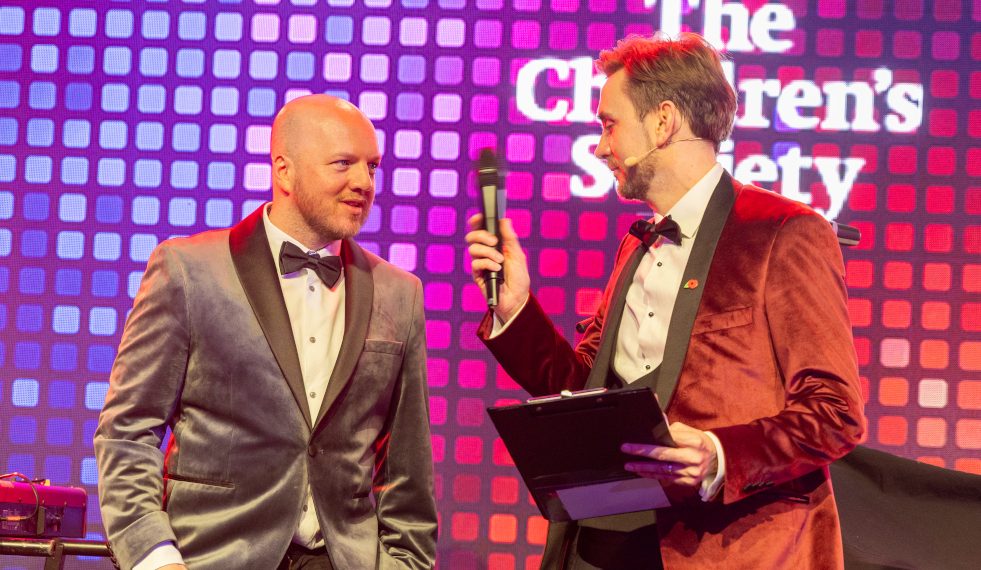
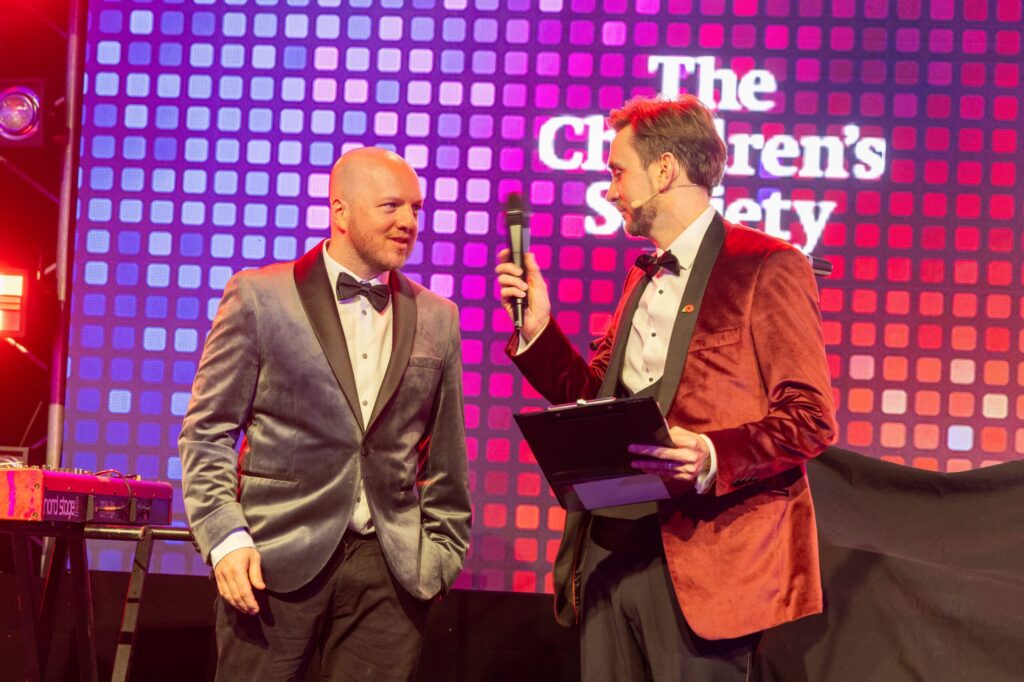
Kevin Durham on stage with a microphone and clipboard, talking to an event organiser at The Children's Society event

Taking commission bids at a charity auction

None of this needs software. It needs a simple form, a deadline and one person in charge of the book. Good practice looks like this:

  1. Use a written form. Name, phone, lot number, maximum in pounds, and a signature agreeing to pay if they win. Nesbits asks for proxy bids by 5pm the evening before its sales.
  2. Put one person in charge. The book goes to the auctioneer before the auction starts, not mid-lot.
  3. Keep the maximums private. If the tables know a limit, the room will bid to it and stop.
  4. Bid against the room. The book only moves when a real bidder moves.
  5. Confirm that night. Tell absent winners what they won, what they paid and how to pay.

My guide to live auctions covers the rest of the night.

Kevin Durham in a burgundy velvet jacket on stage at the MAG-FEST charity gala, folder in hand, pointing out a bidder in the room

Why the room has to hear every bid

A commission bid only works if the room trusts it. When the book bids, the auctioneer should say so and name the amount: “With me on the book at £550. Do I hear £600?” Guests can’t see an absent bidder, so the words are all they have.

The law backs this up. Under section 57 of the Sale of Goods Act 1979, unless a right to bid has been reserved, the seller can’t bid or employ anyone to bid, and a buyer may treat a sale that breaks that rule as fraudulent. A commission bid has to be real money from a real person. The Fundraising Regulator’s code adds that fundraising must not mislead donors.

I learned what a room that can’t hear costs the hard way. At one big event, running late, I announced the live auction while people were still talking and didn’t stop to get them quiet. Only a fraction of the room heard the lots, and one man bid on an item he couldn’t even hear clearly. The lesson I’ve never repeated since: command the room first. Stand on a chair if you have to. A quiet room matters even more when some bidders aren’t in it.

Openness pays. At MS UK I told the room at the start exactly where every pound was going, and the live pledge raised £8,300, all of it to the charity. I just turned the lights on, and the money followed the transparency.

Auction terminology in plain English

TermWhat it means
Commission bidA maximum left with the auctioneer by someone not in the room
Proxy bidA bid placed for you by a person or a website, up to your limit
Phone bidA live bid relayed by a helper on the phone
IncrementThe step the bidding goes up by
ReserveThe lowest price the seller will accept
Hammer priceThe winning bid when the hammer falls
Auctioneer commissionA fee, usually paid by the seller

For how bids build to the hammer, see how bidding works.

Do you need an auctioneer to handle commission bids?

A charity auction that takes commission bids from people who cannot attend needs someone who can fold them into the live sale fairly. A professional auctioneer announces absent bids openly, treats them like any other bidder and keeps the room engaged, while you get on with hosting the rest of the evening.

If you only have a few absentee bids and a quiet room, a clear volunteer can handle them. Have ready the list of absent bidders with their limits, the lot order and your auction date.

Planning for supporters who can’t be there

Keep every commission bid in writing, run it against the room, and say every amount out loud.

If you want to plan for absent bidders at your auction, call me on 07596 851647. I’d rather talk it through than trade emails, and the first fundraising consultation is free.

Kevin Durham, charity auctioneer

Kevin Durham

Charity auctioneer & event host

20years£10m+raised60–80events/yr
Check availability07596 851647

Let’s talk

Bring this to your event

Book a free consultation with a charity auctioneer who has raised over £10 million.

Movember ideas: fundraising events that raise more than a moustache

Kevin Durham in a red velvet jacket on the microphone on stage at MAG-FEST, the Manchester Airport Group's charity gala, with guests beside him

In short

  • Movember runs every November, from the 1st to the 30th, and raises money for men’s mental health and suicide prevention, prostate cancer and testicular cancer.
  • You can Grow, Move, Host or Mo Your Own Way. You don’t need a moustache to take part.
  • Money goes through Movember’s own routes: your Mo Space online, or its “Submit cash donations” section for cash you collect.
  • Build to a finale: shave down on 1 November, then hold a party or dinner in the last week.
  • At that finale, auction one moustache-themed lot, then run a short live pledge.

Most Movember ideas start and stop at the moustache. Grow one, post a photo, ask for a fiver. That works, but the teams that raise the most every November turn the month into a run of small events that build to one big night at the end.

That big night is where I come in as a charity auctioneer, so this guide is built around it: how Movember fundraising works, the rules to follow, the ideas that suit workplaces and sports clubs, and a Mo party with an auction lot and a short live pledge in it.

What is Movember, and when does it run?

Movember is a men’s health charity campaign that runs every November. It started in 2003 as a bit of fun between friends in Melbourne, according to Movember’s fundraising guide, and it now funds work on mental health and suicide prevention, prostate cancer and testicular cancer.

In September 2026, Movember said its moustaches had funded more than AUD $1.8 billion of prevention-focused work. Its 2026 campaign asks supporters to make a Growmitment, a commitment to change men’s health, and to bring their crew along.

There are four ways to take part:

  • Grow: start clean-shaven at the beginning of the month and grow a moustache.
  • Move: walk or run 60km over the month, one kilometre for each of the 60 men Movember says are lost to suicide every hour worldwide.
  • Host: put on an event, or a Mo-ment as Movember calls it, from an office lunch to a black-tie party.
  • Mo Your Own Way: set your own challenge.

What is a Mo Bro, and can women take part?

A Mo Bro is a man who takes part in Movember, and a Mo Sista is a woman who takes part. Prostate Cancer UK, whose research Movember supporters have helped fund, calls them Mo Bros and Mo Sistas.

Movember’s guide says you don’t need to grow to save a bro. Moving, hosting and setting your own challenge are open to everyone.

How does Movember fundraising work?

Movember fundraising works through your Mo Space, the personal page you get when you sign up on Movember’s site or app. Set a target, say why you’re doing it, and share the link or QR code.

A few rules from Movember’s UK guide are worth knowing before you plan anything:

  • Money goes to Movember. Online donations land in your Mo Space. Send cash, cheques and transfers on through its “Submit cash donations” section. After an event, that is your job.
  • Name it properly. Call it something like “Community Ball supporting Movember”. Don’t call it an “Official” Movember event.
  • Don’t sell branded goods without a written agreement with Movember.
  • No street collections and no door-to-door.
  • Insurance and permits are yours. Movember’s insurance only covers events it organises itself, and the Fundraising Regulator says you must do a risk assessment before any fundraising event.

Movember ideas for the workplace

A workplace already has a team, a calendar and a bit of rivalry between departments. Movember lets you set up a workplace team from your Mo Space, and suggests asking your employer about gift matching and payroll giving, which comes out of pay before tax.

  • Shave-down on 1 November. A barber on hand, before-and-after photos, and a donation to watch the boss go first.
  • Mo-gress Mondays. A weekly photo wall of the growers. The worse the moustache, the better the conversation.
  • Lunchtime Move. A group walk each lunch break soon adds up to 60km.
  • Mo trivia. Movember offers a free quiz pack. Ask for a donation to enter.
  • Department league. Departments compete on totals, with the leaderboard on the kitchen wall.

There are more office ideas in my corporate fundraising and easy fundraising guides.

Which Movember ideas work for sports clubs?

The Movember ideas that work best for sports clubs are team challenges: a squad Move, a moustache league and a paid-entry tournament.

  • Squad Move. Everyone in the club takes on 60km. Movember’s guide suggests asking people to pledge per kilometre: five people giving £1 per km comes to £300.
  • Charity tournament. Five-a-side, tag rugby or netball. Paid entry makes sure teams turn up.
  • Mo of the season. Players vote for the best and worst moustache at the end of the month, and the worst pays a forfeit to the Mo Space.
  • Shave-down at training on the first session of November.

Movember event ideas for the end of the month

The best Movember event ideas give the month a finish line. Movember’s own guide suggests a “Stache Bash”: an end-of-Movember party where guests make a donation as a cover charge and you thank everyone who backed you.

Make it a dinner or party in the last week of November. Book the date before 1 November, sell tickets through the month, and put the leaderboard up on the night.

Don’t let the night drift. I like to open with a quick game such as Heads and Tails: everyone stands, it takes about four minutes, and the room is warm before the main course. There are more in my fundraising games guide.

Then save the moustache lot and the pledge for when the room is listening. Never ask anyone for money with food going into their mouth.

How do you run a Movember auction lot?

The simplest Movember auction lot is the moustache itself. Movember’s guide suggests auctioning off the style of your Mo to the highest bidder, and asking for donations to shave it off if you threaten to keep it.

Kevin Durham with a microphone and clipboard sharing a joke on stage with a bearded guest at a black-tie charity gala

At a finale, that becomes a live auction moment. The winning bidder decides what happens to the club captain’s moustache: shaved off on stage, dyed, or kept until Christmas. This is where the banter comes in. Is the finance team really going to let sales outbid them on their own manager’s top lip?

One or two of these lots is plenty. I would rather see ten great lots than fifty average ones, and a moustache lot should be the fun one, not the whole auction.

Take payment on the night and send it on through the Mo Space.

Why end a Movember fundraiser with a live pledge?

A live pledge is where guests give a set amount, in tiers, with no lot in return. It is often the highest-earning part of a charity event.

Most organisers leave the pledge out entirely. A Movember night doesn’t need to be big for one to work. Here is how a live pledge works.

For Movember, keep it to five minutes. Someone with a personal reason says a few words, you put the Mo Space QR code on the screen, and you ask for £100, then £50, then £20. The tone shifts here, from banter to the cause, but it doesn’t have to go quiet. Let the excitement build as the total climbs.

What men’s health facts should you share at a Movember event?

Share a few facts from Movember or the NHS, and point people to the NHS for advice.

  • Prostate cancer is the most diagnosed cancer in men worldwide, with more than 1.4 million men diagnosed each year.
  • The NHS says it often has no symptoms at first, and you can ask a GP about a PSA blood test even without symptoms.
  • Testicular cancer is the most common cancer in young men, with a survival rate of more than 95%.
  • The NHS advises men to check regularly so they know what is normal for them.

Is a Movember event worth a professional host?

A Movember event is worth a professional host when the month ends with a gala, auction or live pledge. The host keeps the humour and the cause in balance, runs the auction and leads a pledge once the room is warm. Smaller office Movember ideas can be run by the team.

A simple office challenge needs no host. Have ready the date, venue, guest numbers, the men’s health charity you support, any lots you have and what you would like the evening to raise.

Where I come in

Most of a Movember month belongs to your team. The part I can help with is the finale: hosting the night, running the moustache lot, and the live pledge. If you’re planning one, call 07596 851647. I’d rather talk it through than swap emails.

Kevin Durham, charity auctioneer

Kevin Durham

Charity auctioneer & event host

20years£10m+raised60–80events/yr
Check availability07596 851647

Let’s talk

Bring this to your event

Book a free consultation with a charity auctioneer who has raised over £10 million.

Fundraising thermometer: how to use a live totaliser at your event

Kevin Durham in a burgundy velvet jacket on the microphone on stage at the MAG-FEST charity gala, with LED screens behind him

In short

  • A fundraising thermometer works because people give more as a target gets close. Researchers have measured it.
  • Never reveal it at zero. Open with money already committed, so the first thing the room sees is progress.
  • Update it after the big moments, then let it climb live during the pledge.
  • Have the next target ready before you pass the first one, because giving drops once a goal is reached.
  • Say what the number is. Pledged tonight, paid, and “including Gift Aid” are three different totals.

A fundraising thermometer is the simplest piece of kit at a charity event, and one of the easiest to get wrong. Put it on screen at the right moment and it pulls the room towards your target. Put it up too early, showing a low number to a full room, and it tells everyone the night is struggling.

I have spent twenty years as a charity auctioneer and helped raise over £10 million. Here is when to reveal a live totaliser, how to run it through the auction and pledge, and what the number should include.

What is a fundraising thermometer?

A fundraising thermometer is a graphic that fills up towards a target as money comes in, usually drawn as a thermometer or a progress bar. In the UK it is also called a totaliser or a fundraising totaliser.

You will find them in three forms:

  • Paper or board. A drawn thermometer on an easel, coloured in by hand. Fine for a school fair or a sponsored walk.
  • Online. A progress bar on a giving page, often called a fundraiser thermometer.
  • Live on screen. A totaliser on the projector at a gala, updated as bids and pledges land. This is the one that changes how a room behaves.

A thermometer fundraiser, any campaign built around one visible target, works the same way. The live version squeezes it into one evening.

Why does a fundraising thermometer make people give more?

People give more readily when a target is close, because their gift feels like it makes the difference. Researchers call this the goal-gradient effect.

A well-known coffee-card study found café customers bought coffee more often the closer they got to a free one. A later paper on helping behaviour found the same pattern in charity: people are more likely to give as a campaign nears its goal, and they feel their late gift has more impact.

Seeing what others have given helps too. In a radio fundraising experiment, telling callers about a previous high gift raised contributions by 12% in the best-performing condition. A totaliser is that social information, shown to the whole room at once. It is bidding momentum made visible.

When should you reveal the totaliser?

Reveal the totaliser once it already shows real progress, never at zero. The first number the room sees sets their sense of whether the night is going well.

There is good evidence for starting high. In a university campaign, raising the announced seed money from 10% to 67% of the goal produced a nearly sixfold increase in contributions. The coffee study found the same thing in miniature: a 12-stamp card with two stamps already filled was completed faster than a plain 10-stamp card.

So before the doors open, count what is already in: ticket income, sponsorship, gifts pledged in advance, and silent auction bids so far. Reveal it with that number on, ideally just after the first strong moment of the night.

After that, update it in steps. Children in Need announced its 2013 total five times through the night, from £6.9m at 20:50 to £31.1m at 2am. Five announcements, each one bigger than the last.

How to run it through the auction and the pledge

The totaliser earns its keep in the two big money segments of the night. Here is the shape I use.

  1. During the live auction, keep the screen on the lot. Bring the totaliser up after each headline lot sells, so the jump is the story.
  2. Before the pledge, show the total and the gap to the target. A gap the room can close is a reason to give.
  3. During the pledge, let the thermometer climb live as hands go up, so the room watches its own generosity fill the tube. The pledge comes from the heart, and it can still be joyful: the excitement builds with every hand, and the screen shows it. A live pledge is usually the highest-earning part of the night.
  4. Name the number out loud. A screen on its own is wallpaper. “We are £4,000 away” from the stage is an ask, and only a voice can make it.

When you book me, this is built in. The auction software that comes with me has a live gala screen for the projector, showing the lots, animated bid alerts, the running total and how far the pledge has climbed. Guests pledge from their phones, and the total climbs for the whole room to see.

The live gala screen showing the lot on the block, its current bid, the total raised so far and the Gift Aid uplift

What happens when you pass the target?

Giving tends to drop once a target is reached, so have the next one ready before you get there. A large study of Kickstarter found support rises as a project nears its goal and drops significantly once it gets there.

That is why I plan a public target and a private stretch goal, as my guide to setting targets explains. Celebrate the moment you pass the first number, then put the new one straight up while the room is still cheering. One charity I worked with came in with a target and, with a strong team behind it, finished the night on double. That only happens if the room is given somewhere to go next.

Should the total include Gift Aid and unpaid pledges?

It can include both, as long as the screen says so. The Fundraising Regulator code says fundraising must not mislead donors, including by giving unclear information or exaggerating details.

Gift Aid lets a charity claim 25p for every £1 an individual taxpayer donates. It does not apply to goods or services, so most winning bids will not qualify while pledges from UK taxpayers may. If you add it, label it “including Gift Aid on eligible gifts”.

Be clear about pledged versus paid as well. The 2012 Children in Need appeal raised £26m on the night and £46m in the months that followed. The 2025 appeal raised £45.5m on the night in November 2025. On-the-night and final totals are different numbers, so say which one your screen shows.

Fundraising thermometer templates for paper and screen

If you just need a printable fundraising thermometer template, some charities publish free ones. Dementia UK’s printable thermometer marks a quarter, half and three quarters of the way, which is the right idea: give people milestones to celebrate.

For a gala screen, keep it bold and simple:

  • One big number, readable from the back table.
  • The target shown alongside, so the gap is obvious.
  • Your charity’s colours, not a clip-art thermometer.
  • Round numbers on screen. Exact figures belong in the thank-you email.

The live pledge screen showing £11,300 pledged, a progress bar at 57% of a £20,000 target and the number of pledges at each level

Your totaliser checklist

  • Count the committed money before the doors open.
  • Agree two numbers: the public target and the private stretch goal.
  • Label what the total includes.
  • Plan the reveals: after the first big moment, after the headline lots, then live through the pledge.
  • Someone on stage reads it out. Every time.

A thermometer will not raise money on its own. The person holding the microphone has to turn the number into a reason to give. That part is my job. My guide to running a pledge shows where it fits in the night. To talk your night through, call me on 07596 851647.

Kevin Durham, charity auctioneer

Kevin Durham

Charity auctioneer & event host

20years£10m+raised60–80events/yr
Check availability07596 851647

Let’s talk

Bring this to your event

Book a free consultation with a charity auctioneer who has raised over £10 million.

Buyers premium explained: should a charity auction charge one?

Kevin Durham in black tie taking a bid from the floor during a live charity auction, with a full room of guests behind him

In short

  • A buyer’s premium is a percentage added to the hammer price. At Sotheby’s in London it starts at 28%.
  • Charity auctions rarely need one. Guests believe they are giving, and a charge on top of the bid undercuts that.
  • A winning bid is a purchase, not a donation, so Gift Aid is rarely available on auction lots.
  • For VAT, donated lots sold by a charity are zero-rated. Bought-in lots at a qualifying fundraising event are exempt.
  • If you do add a premium, print it in your terms and say it from the stage before the first lot.

A buyer’s premium (you will often see it written buyers premium) is a fee added on top of the winning bid, paid by whoever wins the lot. Commercial auction houses rely on it. At a charity auction it is a choice, and usually the wrong one.

I am Kevin Durham, a professional charity auctioneer, and my advice to most charities is to skip a buyer’s premium. Here is what a premium does to a charity room, and how Gift Aid and VAT treat what your bidders pay.

What is a buyers premium?

A buyers premium is a fee the winning bidder pays on top of the hammer price, usually as a percentage of it. It goes to the auction house, not the seller, and it is separate from the commission the seller pays.

At the top of the market it is steep. Sotheby’s publishes its premium rates by location: in London, 28% of the hammer price up to £1,500,000, then 22% up to £6,000,000, then 15%. A £10,000 hammer price there becomes a £12,800 bill before tax.

The modern premium dates from September 1975, when the big London salerooms introduced it at 10%. In the UK it is a charge for the auctioneer’s service and carries VAT: HMRC’s guidance on the auctioneers’ scheme works through a 15% premium plus VAT.

What is the hammer price?

The hammer price is the winning bid at the moment the hammer comes down. At most charity auctions it is exactly what the winner pays.

I explain how bids build to that moment in how bidding works, and why most donated lots are better without a minimum in my guide to reserve prices.

Should a charity auction charge a buyers premium?

In most cases, no. A charity auction should not charge a buyers premium, because it brakes the bidding at the exact moment you want hands going up, and it muddies the message that the money is going to the cause. Bidding momentum is a skill, not luck, and I don’t want anything working against it.

The case for one is real enough. A premium can cover card fees, platform charges or delivery, so they don’t come out of the hammer price.

From the guest’s side, someone who bids £2,000 on a villa week believes they have given the charity £2,000. With a 20% premium, the invoice says £2,400. Either they knew and quietly bid less, or they didn’t and feel caught out. Neither helps your total.

A better line from the stage: every penny of the hammer price goes to the charity. Only say it if it is true. The fundraising code says fundraising must not mislead donors, and claims about costs need evidence. When it is true, it moves people.

Cheaper ways to cover your costs:

  • Build them into the ticket price.
  • Ask a sponsor to pick up the card fees, the venue or the auctioneer.
  • Source lots in-house, so nothing goes back to a supplier.

Where the money really leaks

The real deductions at a charity auction hide inside the lots. Commission-based suppliers bring consigned items with a reserve and a split, so a bid that sounds like a donation partly goes back to the supplier.

The year before MS UK hired me, an external auction company grossed around £13,000 at their event and the charity saw about £1,300. When I came in, I told the room at the start where every pound was going: which lots gave the charity 100%, and which only paid out above the reserve.

The company grossed around £3,500 that year. The live pledge raised £8,300, all of it to the charity. I didn’t name or shame anyone, and the room did the giving. I just turned the lights on, and the money followed the transparency.

Under the Charity Commission’s trustee guidance, trustees remain accountable for their charity’s fundraising, including the parts someone else runs. I compare fee models in auctioneer commission.

Can you claim Gift Aid on auction items?

Usually not. Section 3.40 of HMRC’s Gift Aid guidance is blunt: a payment for an item at a charity auction is a purchase, not a gift.

There is a narrow exception for bidders who deliberately pay more than an item is worth, but only within the benefit rules. HMRC’s example is a football sold in a shop for £10:

  • A £40 bid. The £10 benefit is 25% of the payment, inside the limit, so all £40 qualifies.
  • A £30 bid. The benefit is a third, too high. If the charity told bidders at the start that the ball cost £10 locally, the £20 excess qualifies. If nobody said so, none of it does.
  • The same ball, signed by the team. It is no longer the shop item, so the whole bid counts as the benefit. Nothing qualifies.

That last case is most of a gala auction. Signed items, experiences and auctions of promises have no shop price, so the whole bid is the benefit. The guidance doesn’t mention a buyer’s premium at all, so take advice before claiming Gift Aid on any part of one.

Where Gift Aid does work is the live pledge. A pledge is a gift of money with nothing given back, so it can qualify when the donor pays UK tax and makes a Gift Aid declaration. The pledge is where the real money lives, which is why I push for one at every event.

Kevin Durham on the microphone pointing out a pledge from the stage during a live pledge drive at a charity gala

How does VAT work on a charity auction?

VAT on charity auction lots mostly depends on whether the lot was donated or bought in. It only matters if your charity is VAT-registered, which turns on its taxable sales passing the threshold in VAT Notice 701/1.

  • Donated lots sold by a charity are zero-rated if the sale is open to the public. HMRC’s charities manual applies this to auctions.
  • Bought-in lots are normally standard-rated, but exempt when sold at a qualifying fundraising event such as a gala dinner. Conditions apply, including a limit of 15 events of the same kind at one location in a financial year.

None of this guidance covers a premium charged by a charity itself, so ask your accountant first.

Kevin Durham in a burgundy velvet jacket pointing to a bidder across the room during the live auction at Jigsaw Trust charity gala

What should your charity auction terms and conditions say?

Your charity auction terms and conditions should tell bidders, in plain English, what they will pay and what they will get. Print them in your auction catalogue and on the bid sheets. Cover:

  • Whether there is a buyer’s premium. The best version: there isn’t one, the hammer price is the price.
  • How and when payment is taken.
  • Which lots were donated, which came from a supplier, and what share of each reaches the charity.
  • Expiry dates and exclusions on experiences.
  • Collection and delivery.
  • A line saying auction purchases generally don’t qualify for Gift Aid.
  • Who settles a disputed bid on the night.

One legal point: when second-hand goods are sold at a public auction people can attend in person, the buyer is not treated as a consumer under the goods rules of the Consumer Rights Act 2015. Describe every lot accurately anyway. I’m an auctioneer, not a lawyer, so have unusual terms checked.

If you still want a buyers premium

If your committee decides a premium is right, do it in the open:

  • Keep it small, and say what it pays for.
  • Print it everywhere a price appears.
  • Have the auctioneer announce it before the first lot, not after the last. Nobody should meet it for the first time on their invoice.
  • Never apply it to the live pledge.
  • Agree the Gift Aid and VAT treatment with your accountant before the night.

Getting the money to the cause

The real question is usually how to cover costs without putting off donors. Sponsorship, ticket pricing, lots sourced in-house and a pledge people can Gift Aid all answer it better than a premium.

If you want to talk through how your auction is structured, call me on 07596 851647. I’d rather talk it through than trade emails, and the first fundraising consultation is free.

Kevin Durham, charity auctioneer

Kevin Durham

Charity auctioneer & event host

20years£10m+raised60–80events/yr
Check availability07596 851647

Let’s talk

Bring this to your event

Book a free consultation with a charity auctioneer who has raised over £10 million.