
How to run a live auction at a charity event

In short
- A live auction is a short, sharp segment: five to eight strong lots, sold hard, not a long catalogue read out.
- Pick lots for desire, not volume. A few genuinely wanted lots beat a shelf of tombola prizes.
- Build momentum deliberately. The room gives more when the energy peaks at the ask, not when it drains away.
- Pair the auction with a live pledge. The pledge alone often out-earns everything else in the room.
- If the total on the night matters, a professional almost always raises more than the fee costs.
Knowing how to run a live auction is the difference between a warm room that gives a little and a warm room that gives a lot. I am Kevin Durham, a charity auctioneer of twenty years with over £10 million raised, and this is the version I would give a first-time organiser: practical, in order, and honest about what actually moves the total.
What is a live auction at a charity event?
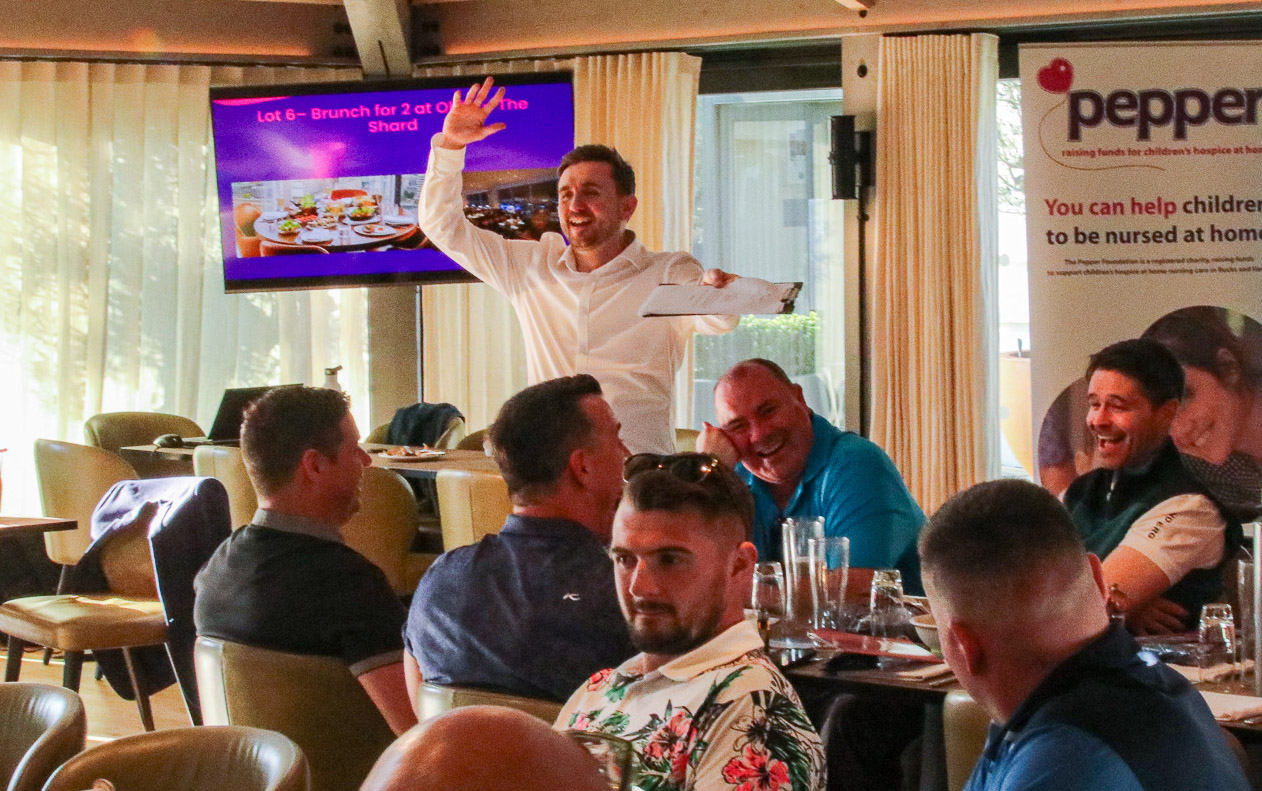
A live auction is the segment where a host sells a small set of lots to the room in real time, taking competitive bids until each one sells. It is theatre with a purpose: the point is the money raised, not the objects.
That makes it a different animal from a silent auction, where guests write bids on a sheet or a phone over the evening. A live auction happens once, from the front, with everyone watching. Done well it is the emotional high point of the night. You can see how I approach it on my live auction page.
How do you run a live auction, step by step?
Run it in a clear sequence, and do most of the work before the night. On the night itself the order looks like this:
- Command the room. Do not start until you have everyone. Whoever holds the room holds the total.
- Set the frame. A quick line on the cause and where the money goes, so bidding feels like giving.
- Open each lot with energy, name a sensible starting bid, and take it up in clean increments.
- Duel the top two bidders, let it breathe, and close on a high rather than grinding.
- Roll straight into the pledge while the room is at its warmest.
The preparation underneath that, choosing and ordering the lots, is where the night is really won.

How many lots should a live auction have?
Five to eight, in most rooms. It is tempting to fill the night with prizes, but a long catalogue drains energy and splits the bidding. A short, strong set concentrates the money.
Choose for desire. One unique experience nobody can buy elsewhere will out-raise a dozen ordinary items. Sequence them so you open strong, keep a big lot in reserve for the middle, and finish on something with real pull.
How do you build bidding momentum?
Momentum is built, not wished for. You name it out loud (“we have two fighting for this one”), you use the room’s own energy, and you never let a lull sit. A good auctioneer reads who has one more raise in them and gives them a reason to use it.
The trap is starting flat. I lost a room once by opening the auction while people were still talking, and half of them never heard the lots. Command first, then sell. That one lesson is worth more than any script.
Where the live auction fits in the evening
The live auction belongs after dinner, once the room is warm and full, and immediately before or beside the live pledge. Those two segments are the financial heart of the night, and they should run back to back while the energy is highest.
The pledge is often the bigger earner. Across galas the paddle raise averages around 28% of total revenue and frequently out-earns the auction outright. Gift Aid then adds 25p to every eligible £1, so a well-run ask quietly grows by a quarter.
How do you set the opening bid and the increments?
This is the part most volunteer hosts get wrong, and it costs more than any other single decision. Open too high and the room freezes, because nobody wants to be the first person to look extravagant. Open too low and you spend the whole lot climbing in small steps while the energy drains out of it.
I open most lots at around 40 to 50 per cent of what I think the item will finally fetch. That is low enough that the first hand goes up quickly, and the first hand is what matters: once two people are in, the lot sells itself. Keep the opening bid separate in your head from the reserve. The reserve protects the charity, the opening bid starts the race, and they are rarely the same number. There is more on that in my guide to reserve prices.
Increments should be roughly ten per cent of the current bid, and they should shrink as the lot slows. Going up in £100 steps is right at £800 and wrong at £4,000. When two bidders are locked together near the top, I will drop to half-increments rather than lose the lot: taking £250 more is better than holding out for £500 and hearing silence.
What do you do when the bidding stalls?
Every auction stalls somewhere. The trick is knowing whether the room has stopped bidding because it is finished, or because it stopped listening.
I learned that difference the hard way. At one event, years ago, the evening was running late and there had been no speech or film to set up the auction. I walked into the middle of the room and announced the live auction while people were still talking, and I did not stop to get them quiet. Only a fraction of the room actually heard the lots. One man bid on an item he could not properly hear. That is the worst night I have had on a microphone, and the lesson has never left me: command the room before you sell anything. Stand on a chair if you have to. A well-timed shush is a powerful tool.
When a lot genuinely stalls mid-bidding, there are four things worth trying before you bring the hammer down. Go back to the underbidder by name and ask directly, because people who have already bid once are the likeliest to bid again. Drop the increment. Re-tell the story of what the money does, in one sentence, not three. And if two people clearly both want it, offer to sell two at the same price, which turns a duel into two sales and often raises more than the duel would have.
Can people bid online during a live auction?
Yes, and done properly it widens the room without slowing it down. The thing to insist on is that a bid from the floor and a bid from a phone compete in the same lot at the same price, in real time. If the online bidders are running on a separate track, or on a delay, you will end up selling a lot twice or telling somebody their money was not wanted.
A standing online maximum solves the pace problem: somebody bidding from home sets their ceiling in advance and the system answers the room automatically, so nobody in the building wins a lot simply because they happened to be in the building. That is how the auction software I use behaves, and it is included when you book me. If the whole evening is being streamed rather than just supported online, that is a different shape again, and I have written it up on my virtual auctioneer page.
What are the most common live-auction mistakes?
The usual ones are avoidable, and they cost real money:
- Too many lots. Energy thins and the strong lots suffer.
- Starting into noise. If the room is not with you, the first lots are wasted.
- Weak framing. Guests give more when they know exactly where the money goes.
- No pledge. Skipping the fund-a-need leaves the single biggest earner on the table.
UK charity events also run under the fundraising code, so keep your reserves and any consignment lots transparent to the room.
Should you run it yourself or hire an auctioneer?
Run it in-house when the auction is a small bit of fun. Hire a professional when the total genuinely matters, when the room is large or mixed, or when your in-house host has plateaued at the same figure every year.
The gap shows up in the number. At one gala the organisers expected around £14,000 from the auction; the auction brought in £27,000, and a live pledge they had not planned for added a further £30,600. For a fuller walk-through, see my guide to a successful charity auction.
Common questions about running a live auction
How long should a live auction last?
Fifteen to twenty-five minutes for the auction itself, plus the pledge. Long enough to build and sell each lot properly, short enough to keep the room with you.
What starting bid should I use?
Open at roughly a third of a lot’s value: low enough to spark the first bid, high enough to protect the lot. Then move up in clean, sensible increments.
Can I see how it works before booking?
Yes. My client reviews show the results across a lot of different rooms, and you can hire an auctioneer for a free consultation to talk through your own event.

Kevin Durham
Charity auctioneer & event host
Let’s talk
Bring this to your event
Book a free consultation with a charity auctioneer who has raised over £10 million.