Home About Kevin Auctions Virtual auctioneer Pledges Hosting Entertainment Free software Software examples Case studies Reviews Other services Fees Fundraising games Fundraising consultant Get in touch Blog Podcast

Toastmaster or charity auctioneer: who should run your charity ball?

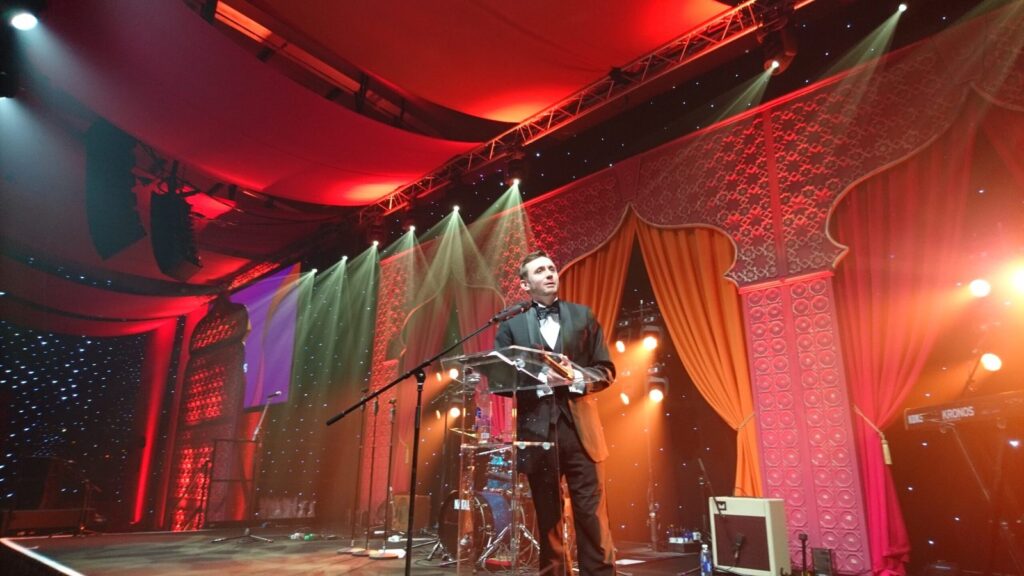
Kevin Durham in black tie hosting a charity gala from a clear lectern on a stage lit in red and orange

In short

  • A toastmaster runs the formalities of a charity ball: announcing guests, grace, speeches and timing.
  • A charity auctioneer plans and runs the live auction and the pledge, the two segments that turn goodwill into money.
  • One person can do both, but only if they have run fundraising rooms, not just announced them.
  • If a toastmaster’s quote includes the auction, ask who orders the lots, who runs the pledge and how the fee is worked out.
  • A toastmaster alone is the right call when there is no live fundraising. Hire an auctioneer when your target depends on it.

A toastmaster is the formal master of ceremonies at a dinner: the person who announces guests, calls for silence, introduces the speeches and keeps the evening to time. A charity auctioneer plans and runs the live auction and the pledge. Both stand in front of your guests with a microphone, which is why a quote that “includes the auction” can sound like one booking when it is really two jobs.

I am Kevin Durham, a professional charity auctioneer and event host. If your committee is organising a charity ball and weighing a toastmaster against an auctioneer, this is what each job covers, when one person can do both, and what to ask before you sign.

What does a toastmaster do at a charity ball?

A toastmaster acts as stage manager and timekeeper for a formal dinner. They announce arriving guests, call the room to be seated, announce grace, introduce the speeches and toasts, and liaise with banqueting staff and the photographer. That is the list The London Toastmaster publishes on his duties page, read November 2026.

It is old, respectable work. Wikipedia says the first professional toastmaster in London was possibly James Toole in the 1840s, and that the red coat now associated with London toastmasters was first worn by a man who wanted to look different from the waiting staff. The same London toastmaster’s explainer page describes a toastmaster as trained and examined by his peers, able to advise on protocol and etiquette.

If your ball has a receiving line, a top table and formal toasts, that specialism is worth paying for.

What does a charity auctioneer do that a toastmaster does not?

A charity auctioneer plans and runs the two segments that turn goodwill into money: the live auction, where lots go to the highest bidder, and the pledge, where guests give at levels set in advance. The work starts before the night, with the lot order, the pledge levels and a plan for a lot that stalls.

Some toastmasters do this too, so the right-hand column below is a checklist for any candidate, not a rule about any one person.

Job on the nightToastmasterCharity auctioneer
Announces guests, grace, speeches, toastsCore jobOnly if also hosting
Gets a noisy room quietCore jobNeeded before every lot
Chooses the lot orderVaries, askCore job
Sets the pledge levelsVaries, askCore job
Rescues a lot that stallsVaries, askCore job
Explains the Gift Aid rule on bidsVaries, askShould know it

Even that last row shows the gap. HMRC’s charity guidance, chapter 3.40, read November 2026, says a payment for an item at a charity auction is a purchase, not a gift. Part of a winning bid can still qualify for Gift Aid, and in some cases that depends on the bidder knowing the item’s retail value when they bid. That is general information, not tax advice, and it is a fair question for whoever will call your lots.

Can one person be both toastmaster and charity auctioneer?

Yes, provided they have run fundraising rooms and not only announced them. Some toastmasters say they do. The London Toastmaster’s duties list includes acting as an auctioneer, fundraiser or prize-caller, and a 2014 post on The Complete Toastmaster’s site lists professional charity auctioneer among the roles he offers (both read November 2026).

Splitting the job is common as well. The London Toastmaster’s 2019 write-up of a children’s charity dinner credits a separate charity auctioneer on the programme. Both set-ups work when the two people have spoken before the night. The weak point is the handover, which I cover in host or auctioneer.

Attention is the first job of both, and I learned that the hard way. At one big event that was running late, I announced a live auction while people were still talking, and I did not stop to get them quiet. Only a fraction of the room heard the lots, and one man bid on an item he could barely make out. I have never repeated it. Command the room first: stand on a chair if you have to, because the shush is a powerful tool. A toastmaster is paid to do exactly that, and it was the skill I was missing that night.

If the formal protocol is the heart of your evening, book the toastmaster. If the money segments matter as much, book someone who has run them, and brief the two together. My own event hosting covers the whole programme, from arrivals and speeches to the auction, the pledge and the close.

Five questions to ask when the quote includes the auction

  1. Who chooses the lots and puts them in order, and how many will there be?
  2. Who runs the pledge, and how are the giving levels set?
  3. What do you do when a lot stalls?
  4. How is your fee worked out: one fee agreed up front, or a share of what is raised?
  5. Which charity can I call about the last auction you ran?

Someone who has run these rooms will answer all five without a pause. Question four matters most. If the fee is tied to the money raised, ask whether that makes the person a professional fundraiser in law. The Charity Commission’s CC20 guidance, last updated 3 February 2026, says that when a charity works with a professional fundraiser or commercial participator, trustees must have a written agreement before the fundraising begins, and the fee must be in the charity’s best interests. Whether a given arrangement counts is a legal point, so ask for the terms in writing and take advice if unsure. My post on commission explained sets out the usual models.

When is it worth hiring a charity auctioneer instead of a toastmaster alone?

It is worth hiring a charity auctioneer whenever your target depends on a live auction or a pledge, because those segments need planning and judgement that formalities do not. A toastmaster alone is the right call for a formal dinner with no live fundraising, or one where a raffle and a silent auction run themselves. If the live auction and pledge sit on your running order as two lines with no plan behind them, that is the moment to bring someone in.

The pledge is often the line nobody planned. Charles Balchin wrote after his first charity auction: “Kevin was absolutely fantastic at running our event. He added a pledge element we hadn’t considered and it became hugely successful.” The success was his team’s; my part was the structure. In my experience a pledge built properly out-earns the lots.

Kevin Durham in a red velvet dinner jacket on stage, microphone in one hand and a clipboard held out in the other

A host who takes control matters too. Nicola Briscoe’s words, from my client reviews:

“He's really professional, engaged the room and took control where we needed it. Highly recommend him if you need him to host any event.”
Nicola Briscoe, IBA / Electrical Industries Charity (EIC)

I am grateful for that, though the evening belonged to the charity’s team.

What to have ready before you ask for a quote

Have the date, the size of the room, your draft running order, your target and what happened to the auction last time. With those, a short call is enough to say whether you need an auctioneer, a host or both.

Call 07596 851647. I would rather talk your running order through than trade emails, because a conversation is where it starts to make sense. If you book me as your auctioneer and host, I build the auction platform around your event, in your branding and loaded with your lots and tickets. It is included for the event and stays live for a month afterwards.

Kevin Durham, charity auctioneer

Kevin Durham

Charity auctioneer & event host

20years£10m+raised60–80events/yr
Check availability07596 851647

Let’s talk

Bring this to your event

Book a free consultation with a charity auctioneer who has raised over £10 million.

Masquerade ball ideas for a charity fundraiser that raises real money

Two men in tuxedos on stage at the Children's Respite Trust masquerade charity gala

In short

  • A masquerade ball is a formal ball where guests wear masks. The tradition runs through the Venetian Carnival and 18th-century London.
  • The masks themselves can earn money: sold with tickets or at the door, sponsored by a local business, or auctioned as a one-off lot.
  • Put the masks in the dress code from the very first invitation, and keep spares at the door.
  • Make the unmasking the pivot of the night: the playful part ends, faces come out, and the live pledge begins.
  • Masks change how bids are spotted, so plan bidder numbers, lighting and half masks before the night.

The best masquerade ball ideas for a charity night do two jobs at once. They give guests a reason to dress up and buy a ticket, and they hand you a ready-made moment in the running order: the unmasking. Used well, that moment is the cue for your live pledge, usually the biggest earner of the night.

I am Kevin Durham, and I have spent 20 years as a charity auctioneer and host. Here is how I would turn the masks into income, word the dress code, and build the evening so the money arrives when you want it.

What is a masquerade ball?

A masquerade ball is a formal ball where guests wear masks, and often costume, so that nobody is quite sure who they are dancing next to. The mystery is the point.

Costumed balls were a luxury of European courts, and the ill-fated Bal des Ardents in Paris took place on 28 January 1393. In the 16th century, masked festivities spread to the public in Renaissance Italy and became bound up with the Venetian Carnival. By the 18th century, semi-public masquerades had arrived in London.

Venice gave us the masks most people picture today. The official carnival site describes the bauta as a plain mask that let the wearer attend a party without being recognised. Masks are first documented in Venice in the 13th century, the festival was outlawed in 1797, and it was revived in 1979, according to the history of Venetian masks.

Why does a masquerade suit a charity fundraiser?

A masquerade suits a charity fundraiser because the theme comes with its own products and its own big moment: something to sell, and a reveal to build towards.

The BHF guide to charity balls tells organisers to think of a theme early, and in my view a masquerade is one of the easiest to sell to a guest list. I cover the wider plan in my guide to the charity ball, and how a theme shapes your lots in auction themes.

Masquerade ball ideas that bring in money

These masquerade party ideas turn the theme into income without making guests feel they are paying for every little thing.

  • Sell masks with the ticket. Offer a ticket with a mask included at a slightly higher price, so you know your numbers before the night.
  • Sell masks at the door. A small table at arrivals, staffed by someone cheerful. The Simply Masquerade guide notes that guests often forget their masks, so keep spares anyway.
  • Get the masks sponsored. The BHF suggests pricing up parts of the event and selling them as sponsorship. A local business paying for the masks, with its name on the ribbon card, means every mask sold is pure profit.
  • Run a decorate-your-own table. Plain masks are a common party idea for guests to customise. Charge a small fee for the mask and materials, and it doubles as an icebreaker.
  • Award the best mask. Ask a sponsor to present a donated prize, and announce the winner just before the unmasking.
  • Auction one mask. A hand-made mask from a local artist, or one signed by someone your guests admire, makes a strong opening lot with a story behind it.

One point on paperwork: a guest who buys a mask is paying for goods, so under HMRC’s Gift Aid guidance that payment is not a gift and cannot have Gift Aid added.

How should you word the masquerade ball dress code?

Word the masquerade ball dress code as two parts: the formality, then the mask. “Black tie and masks” is clear, short and fits on a ticket.

Black tie means a dinner suit and black bow tie, or an evening gown, and it is a step below white tie. Then say what you mean by a mask. Some wording that works:

  • “Black tie and masks. Masks available at the door, or bring your own.”
  • “Evening dress and masks. Half masks recommended, so you can dine in comfort.”
  • “Masks stay on until the unmasking. You will know when.”

The Simply Masquerade guide advises explaining the dress code from the first invitation. If the mask only appears in the final reminder email, half the room arrives without one.

Which masquerade ball themes work for a charity night?

The masquerade ball themes that work best are the ones with a colour palette guests can actually shop for.

  • Venetian carnival. Gold, deep reds, ornate masks. The classic.
  • Black and gold. Every high street has something that fits, which matters more than you would think.
  • Your charity’s colours. A masquerade in the charity’s own colours ties the décor back to the cause without a word being said.
  • Winter masquerade. Silver, white and ice blue, ideal for a December date.

Masquerade ball ideas for the running order

A masquerade gives the evening a natural shape: mystery first, reveal second, generosity third.

  1. Arrivals. Mask table, photo backdrop, decorate-your-own station.
  2. Dinner. Let the room breathe. Sell raffle tickets between courses, never while someone is mid-mouthful.
  3. The live auction, masked. Keep it cheeky and playful. This is where the banter lives, and the anonymity is part of the fun.
  4. The best mask award. A quick, light moment to bring the room together.
  5. The unmasking. Everyone removes their mask at once.
  6. A short speech or film about the cause.
  7. The live pledge.

For a full timeline, see my gala running order.

Why make the unmasking the cue for the live pledge?

Make the unmasking the cue for the live pledge because it does the hardest job on the night for you: it gets the whole room looking at the same moment, at the same time.

I learned the cost of skipping that step the hard way. At one big event that was running late, with no speech or film to set up the auction, I started announcing lots while people were still talking. Only a fraction of the room heard them. Since then I command the room first, every time. Stand on a chair if you have to. An unmasking does that for you, because nobody wants to miss it.

It also changes the mood. When the masks come off, guests are themselves again, and that is when I drop the banter and turn to the cause. Serious, but never sombre, and the excitement should build as the money comes in. At the end of a pledge I normally invite everyone who has given to the front for a quick photo, and with the masks off, it is a photo worth sharing. I explain how the pledge works in my guide to the live pledge.

How do masks change bidding for the auctioneer?

Masks make bids harder to spot and harder to hear, so the auction needs a little more planning than usual.

Kevin Durham in a burgundy velvet dinner jacket on the microphone, pointing out to the room at a black-tie charity gala

  • Use bidder numbers or paddles. When faces are hidden, a large printed number is how the team records who won.
  • Bring the lights up for the auction. A candlelit room looks beautiful and hides raised hands.
  • Favour half masks. A full-face volto or bauta covers the mouth. The RNID notes that many people rely on lipreading to some degree, so anyone speaking from the stage should be unmasked.
  • Work the floor. I run auctions with a wireless mic in the middle of the room, which makes it far easier to catch a nod from behind a mask than it is from a lectern.

Masquerade ideas to leave out

Some ideas look good on a mood board and cost you money on the night.

  • Full-face masks for the whole evening. People cannot eat, talk or bid comfortably.
  • Expensive compulsory masks. I would rather guests saved their money for the room than spent it before they arrive.
  • Too many candles. The Fundraising Regulator says to complete a risk assessment before any fundraising event. Feathers, masks and open flames belong on it.
  • Vague promises about the money. The same guidance says your event marketing should be clear about how the money raised will be used. Tell guests where the mask money goes.

Hire me and the auction platform is included: I build it around your event, in your branding, with your tickets, lots and masks loaded and ready to go. To talk through your masquerade, have a look at my auctioneer services or call 07596 851647.

Kevin Durham, charity auctioneer

Kevin Durham

Charity auctioneer & event host

20years£10m+raised60–80events/yr
Check availability07596 851647

Let’s talk

Bring this to your event

Book a free consultation with a charity auctioneer who has raised over £10 million.

Charity ball: how to organise one that raises real money

Charity auctioneer Kevin Durham in black tie taking bids from seated guests at a fundraising dinner

In short

  • A charity ball is a gala with a dance floor. That dance floor changes your running order.
  • Tickets should cover the costs. The money is made in the room, through the auction, the pledge and the raffle.
  • Do all the fundraising before the band starts. Once people are dancing, you won’t get them back in their seats.
  • In the UK, check your licences early: music and dancing, the bar, the raffle and the music licence all have rules.
  • Set a target first and build the plan backwards from it.

A charity ball is a formal evening of dinner and dancing where every ticket, lot and pledge goes towards a cause. Organising one that raises real money comes down to a few decisions most committees make too late: what the night is for, where the money will come from, and what happens before the band starts.

I host balls and run their auctions as a charity auctioneer, 60 to 80 events a year, and have helped raise over £10 million for charity. The ball format has one trap that is easy to miss, so this guide is built around avoiding it.

What is a charity ball?

A charity ball is a formal fundraising event built around dinner followed by dancing. The word comes from the Latin ballare, “to dance”, and a ball has long meant a formal dance, often a banquet followed by a social dance.

That is the only real difference from the alternatives. A charity dinner usually ends at coffee and speeches. A fundraising gala is the broader term for any formal fundraising evening, and plenty of galas include dancing too. If you want the full planning checklist for that wider format, my gala guide covers it. This post is about the ball specifically, and the money.

How do you organise a charity ball?

You organise a charity ball by setting a fundraising target first, then building the budget, venue, tickets and running order backwards from it. Macmillan’s advice is to set a target and work out how many tickets you need to sell for the event to make money at all.

  1. Set the target and the break-even. Know what the night costs and what it must raise. Everything else follows.
  2. Build a small committee. Give each person one job they are good at: tickets, venue, lots, sponsors.
  3. Pick the date carefully. The British Heart Foundation suggests you avoid clashing dates with big sporting or cultural events that could pull your guests elsewhere.
  4. Book the venue, then the band. Tell every supplier it’s for charity. Some will offer a better rate.
  5. Sell tables, not just tickets. Local businesses buying a table fill the room faster than single sales, and a group discount helps.
  6. Sell sponsorship. Price packages for parts of the night (the drinks reception, the band, the programme) and offer advertising in return.
  7. Source a few great lots. Around ten strong lots and a room driven to compete will beat 50 average ones.

Where does the money at a charity ball come from?

The money at a charity ball comes from five places: ticket margin, sponsorship, the live auction, the live pledge and the raffle. The tickets should cover your costs. The rest is where the night is won.

SourceWhat it doesWatch out for
Tickets and tablesCovers the venue, food and bandNot eligible for Gift Aid
SponsorshipPays for parts of the night up frontAgree what the sponsor gets in writing
Live auctionA handful of headline lots, sold hardToo many lots and the room drifts
Live pledgeGuests give at set levels, from the heartNeeds a strong case for the cause
RaffleSmall sums from almost everyoneStrict rules on prizes and sales

On Gift Aid, Macmillan notes you cannot claim it on ticket sales, but you can on voluntary donations on the night. HMRC treats a winning bid as a purchase too: an auction payment is not a gift. That is one more reason the pledge matters.

The pledge is the one most committees leave out. Gabriel Dos Santos of the OCU Foundation summed up their night: “We hosted just over 300 guests and raised more than double what we achieved last year. Kevin’s key suggestion, the live pledge alone, brought in nearly £20,000.” That was a powerful team behind a powerful charity, and a live pledge given room to work. Keep the pledge heartfelt but never sombre: it’s not a funeral, and the excitement should build as the hands go up.

The charity ball running order: fundraise before the band starts

Here is the trap. A ball has a dance floor, and once the band strikes up, your fundraising is over. Nobody leaves the dance floor to bid on a holiday.

So every fundraising moment has to land before the first dance. Here is a running order that works:

  • Arrival and drinks reception. Sell raffle tickets while guests are standing and waiting.
  • Seated, before the starter. A quick icebreaker such as Heads or Tails warms the room and lifts the mood.
  • Dinner. Let the room breathe. A light touch only, and never approach someone with food going into their mouth.
  • The cause. A short talk or film. Anthony Nolan suggests a three-minute presentation on why you are fundraising.
  • Live auction, then live pledge. Straight after the cause, while the room is still listening.
  • Raffle draw and the total. Announce what you raised, then hand over to the band.

Kevin Durham at the lectern on stage at the MAG-FEST charity ball, with the band's drum kit and mic stands set up beside him

Getting the room quiet is the part people underestimate. I once announced a live auction at a big event that was running late, with no speech or video to set it up, and I didn’t stop to get the room quiet first. Only a fraction of the guests heard the lots. One man bid on an item he couldn’t even hear properly. I have never repeated that mistake. “Ladies and gentlemen, it’s time for the live auction” only works if the room is listening, so command the room first, even if you have to stand on a chair. My running order guide has timings for each segment.

What should you wear to a black tie fundraiser?

At a black tie fundraiser, men wear a dinner suit with a black bow tie, and women wear an evening gown or other formal evening wear. Black tie is less formal than white tie but more formal than business dress, and it is the default dress code for most charity balls.

Put the dress code on the ticket and the invitation, so nobody spends the week before guessing.

Guests in black tie and evening dress mingling at a candlelit charity gala reception

Charity ball ideas that keep the money coming

A theme gives guests a reason to buy a ticket and gives your lots a story. Masquerade, winter ball, a decade, a film: pick one that suits your supporters, then let it shape the décor, the lots and the games. There are more theme ideas here.

A few charity ball ideas that raise money as well as atmosphere:

  • Get the band sponsored. A local business pays for the music and gets a mention from the stage.
  • A best-dressed or best-dancer award, which the BHF suggests. Charge a small amount per nomination and let tables put their friends forward.
  • Matched giving: ask guests and helpers whether their employer will match what they give.
  • Save your best lot for last, when the room is at its warmest.

What licences and rules apply to a charity ball in the UK?

A charity ball in the UK may need a temporary event notice, a music licence and a properly run raffle, plus a risk assessment and insurance. Check each one when you book the venue, not the week before.

  • Music, dancing and the bar. At an unlicensed venue in England or Wales, a Temporary Event Notice costs £21, covers fewer than 500 people (staff included) and must go in at least 10 clear working days before.
  • Music licence. Charities can apply for a charity discount on TheMusicLicence, but the form must arrive at least 14 days before the event.
  • The raffle. A raffle run as part of the ball can spend a maximum of £500 of ticket money on prizes and £100 on expenses, and tickets can only be sold at the event, on the night. Donated prizes have no limit.
  • Safety and insurance. The Fundraising Regulator says you must do a risk assessment and have adequate insurance, and going over the venue’s maximum numbers could invalidate it.
  • VAT. For the fundraising events VAT exemption, HMRC says the event must be promoted as fundraising, with documentary evidence to back it up. Speak to your accountant.

All of it sits under the fundraising code, the current version of which came into force on 1 November 2025. Afterwards, count the money in front of a witness and bank it promptly.

Do you need an auctioneer for a charity ball?

A charity ball needs a professional auctioneer if it includes a live auction or pledge. The band, dinner and speeches compete for attention, so the host moves the room to the ask smoothly and keeps bidders engaged. A ball with only a raffle can manage with a committee member.

If your ball is mostly dinner and dancing, doing it yourself is fine. Have ready your date, venue, guest numbers, a running order with the dinner and band times, and the sum you want to raise.

Where an auctioneer fits in

A ball committee can do almost all of this themselves. The part that is hardest to do from the inside is holding the room for the stretch that matters: the cause, the auction and the pledge, before the music takes over.

That is the job I do. I host the whole evening or just the fundraising, and I help with the lots and the running order before the night. If you are planning a charity ball, call 07596 851647 and we can talk it through.

Kevin Durham, charity auctioneer

Kevin Durham

Charity auctioneer & event host

20years£10m+raised60–80events/yr
Check availability07596 851647

Balls I have run

A themed ball, a sixtieth anniversary, and a record-breaking night.

Professor Durham Hosts a Harry Potter Themed Charity Ball
A Harry Potter themed charity ball
"We Had the Best Night": SCCCC's 60th Gala
We had the best night, the SCCCC sixtieth gala
A Bidding War Breaks Out on the Dancefloor
A bidding war breaks out on the dancefloor

Let’s talk

Bring this to your event

Book a free consultation with a charity auctioneer who has raised over £10 million.