

In short
- A fundraising thermometer works because people give more as a target gets close. Researchers have measured it.
- Never reveal it at zero. Open with money already committed, so the first thing the room sees is progress.
- Update it after the big moments, then let it climb live during the pledge.
- Have the next target ready before you pass the first one, because giving drops once a goal is reached.
- Say what the number is. Pledged tonight, paid, and “including Gift Aid” are three different totals.
A fundraising thermometer is the simplest piece of kit at a charity event, and one of the easiest to get wrong. Put it on screen at the right moment and it pulls the room towards your target. Put it up too early, showing a low number to a full room, and it tells everyone the night is struggling.
I have spent twenty years as a charity auctioneer and helped raise over £10 million. Here is when to reveal a live totaliser, how to run it through the auction and pledge, and what the number should include.
What is a fundraising thermometer?
A fundraising thermometer is a graphic that fills up towards a target as money comes in, usually drawn as a thermometer or a progress bar. In the UK it is also called a totaliser or a fundraising totaliser.
You will find them in three forms:
- Paper or board. A drawn thermometer on an easel, coloured in by hand. Fine for a school fair or a sponsored walk.
- Online. A progress bar on a giving page, often called a fundraiser thermometer.
- Live on screen. A totaliser on the projector at a gala, updated as bids and pledges land. This is the one that changes how a room behaves.
A thermometer fundraiser, any campaign built around one visible target, works the same way. The live version squeezes it into one evening.
Why does a fundraising thermometer make people give more?
People give more readily when a target is close, because their gift feels like it makes the difference. Researchers call this the goal-gradient effect.
A well-known coffee-card study found café customers bought coffee more often the closer they got to a free one. A later paper on helping behaviour found the same pattern in charity: people are more likely to give as a campaign nears its goal, and they feel their late gift has more impact.
Seeing what others have given helps too. In a radio fundraising experiment, telling callers about a previous high gift raised contributions by 12% in the best-performing condition. A totaliser is that social information, shown to the whole room at once. It is bidding momentum made visible.
When should you reveal the totaliser?
Reveal the totaliser once it already shows real progress, never at zero. The first number the room sees sets their sense of whether the night is going well.
There is good evidence for starting high. In a university campaign, raising the announced seed money from 10% to 67% of the goal produced a nearly sixfold increase in contributions. The coffee study found the same thing in miniature: a 12-stamp card with two stamps already filled was completed faster than a plain 10-stamp card.
So before the doors open, count what is already in: ticket income, sponsorship, gifts pledged in advance, and silent auction bids so far. Reveal it with that number on, ideally just after the first strong moment of the night.
After that, update it in steps. Children in Need announced its 2013 total five times through the night, from £6.9m at 20:50 to £31.1m at 2am. Five announcements, each one bigger than the last.
How to run it through the auction and the pledge
The totaliser earns its keep in the two big money segments of the night. Here is the shape I use.
- During the live auction, keep the screen on the lot. Bring the totaliser up after each headline lot sells, so the jump is the story.
- Before the pledge, show the total and the gap to the target. A gap the room can close is a reason to give.
- During the pledge, let the thermometer climb live as hands go up, so the room watches its own generosity fill the tube. The pledge comes from the heart, and it can still be joyful: the excitement builds with every hand, and the screen shows it. A live pledge is usually the highest-earning part of the night.
- Name the number out loud. A screen on its own is wallpaper. “We are £4,000 away” from the stage is an ask, and only a voice can make it.
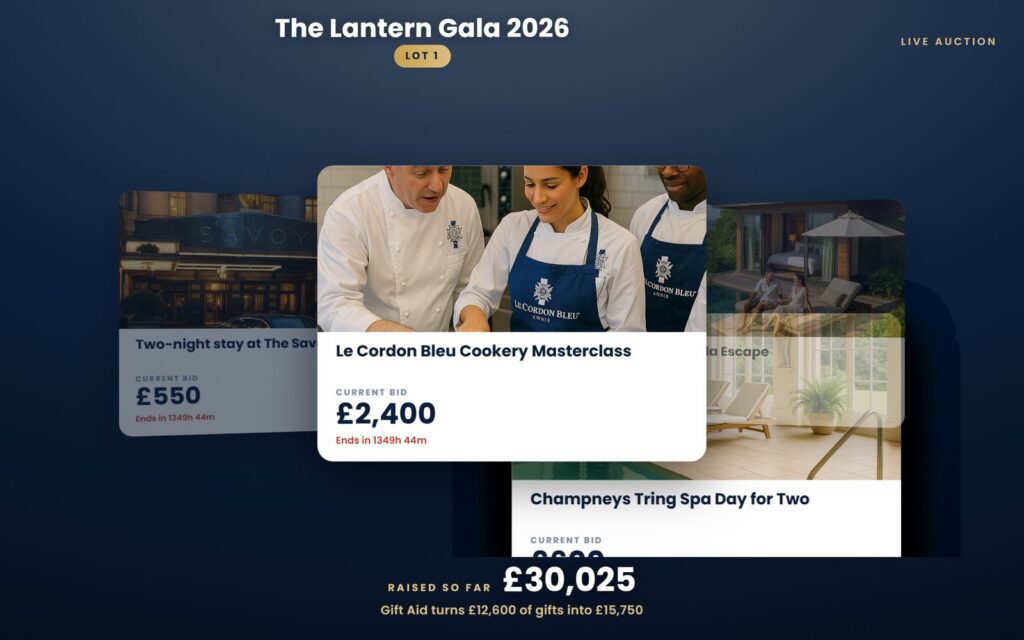
When you book me, this is built in. The auction software that comes with me has a live gala screen for the projector, showing the lots, animated bid alerts, the running total and how far the pledge has climbed. Guests pledge from their phones, and the total climbs for the whole room to see.
What happens when you pass the target?
Giving tends to drop once a target is reached, so have the next one ready before you get there. A large study of Kickstarter found support rises as a project nears its goal and drops significantly once it gets there.
That is why I plan a public target and a private stretch goal, as my guide to setting targets explains. Celebrate the moment you pass the first number, then put the new one straight up while the room is still cheering. One charity I worked with came in with a target and, with a strong team behind it, finished the night on double. That only happens if the room is given somewhere to go next.
Should the total include Gift Aid and unpaid pledges?
It can include both, as long as the screen says so. The Fundraising Regulator code says fundraising must not mislead donors, including by giving unclear information or exaggerating details.
Gift Aid lets a charity claim 25p for every £1 an individual taxpayer donates. It does not apply to goods or services, so most winning bids will not qualify while pledges from UK taxpayers may. If you add it, label it “including Gift Aid on eligible gifts”.
Be clear about pledged versus paid as well. The 2012 Children in Need appeal raised £26m on the night and £46m in the months that followed. The 2025 appeal raised £45.5m on the night in November 2025. On-the-night and final totals are different numbers, so say which one your screen shows.
Fundraising thermometer templates for paper and screen
If you just need a printable fundraising thermometer template, some charities publish free ones. Dementia UK’s printable thermometer marks a quarter, half and three quarters of the way, which is the right idea: give people milestones to celebrate.
For a gala screen, keep it bold and simple:
- One big number, readable from the back table.
- The target shown alongside, so the gap is obvious.
- Your charity’s colours, not a clip-art thermometer.
- Round numbers on screen. Exact figures belong in the thank-you email.

Your totaliser checklist
- Count the committed money before the doors open.
- Agree two numbers: the public target and the private stretch goal.
- Label what the total includes.
- Plan the reveals: after the first big moment, after the headline lots, then live through the pledge.
- Someone on stage reads it out. Every time.
A thermometer will not raise money on its own. The person holding the microphone has to turn the number into a reason to give. That part is my job. My guide to running a pledge shows where it fits in the night. To talk your night through, call me on 07596 851647.

Kevin Durham
Charity auctioneer & event host