
In short
- Book a professional when the evening carries a large share of your voluntary income, when guests do not know your charity, or when your own team would struggle to ask for money while telling a child’s story.
- Children change three things: what you may show of a child, who may speak for them, and how much humour the room can take.
- Keep the humour for the build-up and the auction. Go humble for the pledge, but never sombre.
- Tie each pledge level to a cost your finance team has signed off, and never imply the money goes to the child in the story.
- Give your auctioneer a written brief before the night.
An auctioneer for a children’s charity gala is a professional who runs the live auction and the live pledge at an evening raising money for children, and who judges when the room can laugh and when it needs to go quiet. This page is for the events lead or trustee deciding whether to book one.
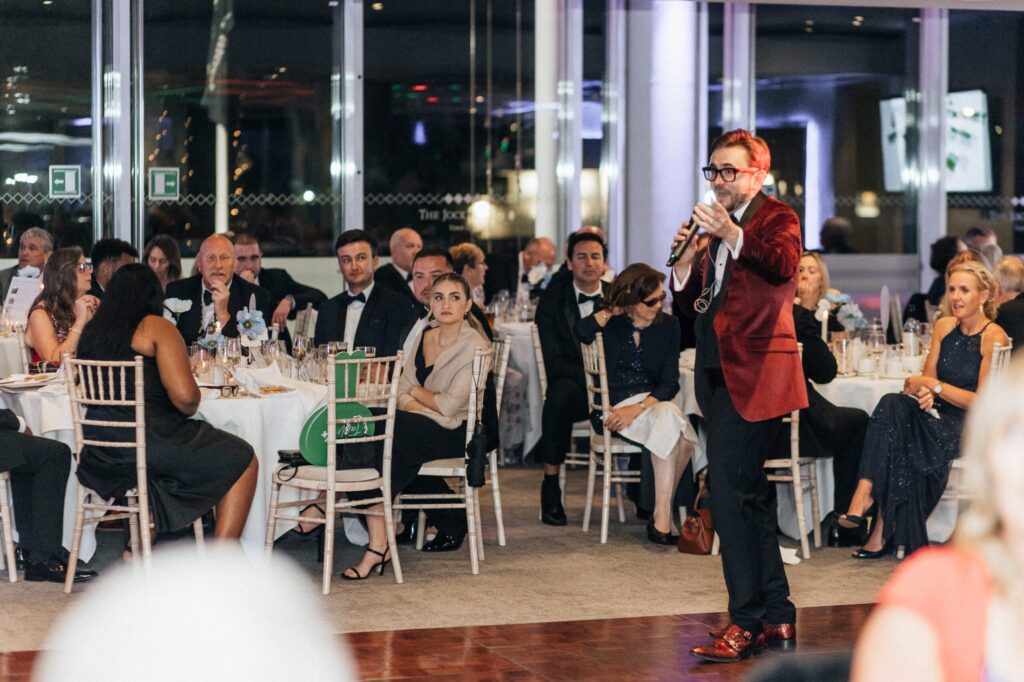
I’m Kevin Durham, a charity auctioneer and event host, and I have spent 20 years working the floor with a wireless microphone. The mechanics of a good auction do not change when the cause is children. The care does.
When is it worth hiring an auctioneer for a children’s charity gala?
It is worth hiring an auctioneer for a children’s charity gala when the evening carries a big share of your income and the people on the microphone are too close to the cause to ask for money steadily. If the room is small and friendly and the ask is modest, a well-briefed trustee can do the job.
The stakes explain the first half. Noah’s Ark Children’s Hospice says on its own funding page, read in November 2026, that only 19% of its funding comes from the government and that it must raise £4.8 million through voluntary donations this year. For a charity in that position, the gala is not a nice extra.
| Who holds the money moment | Works best when | Risk at a children’s gala |
|---|---|---|
| Chief executive or trustee | A small room of existing supporters | Too close to the story to ask firmly |
| Volunteer or patron | A warm room and a modest ask | No control if the room is noisy or bidding stalls |
| Professional auctioneer | A mixed room, a live auction plus a pledge, a big total needed | Needs a proper brief on stories and language |
My guide on whether you need a charity auctioneer covers the wider decision. For a children’s cause, the test is simple. Could the person on the microphone move from thanking the room to asking it for money, ten minutes after a family has spoken? If the honest answer is no, hire someone whose job that is. Asking is the part I do for a living, so your team can stay with the story.
What changes when the cause is children?
Three things change when the cause is children: what you may show of a child, who may speak for them, and how much humour the room can carry. The auction and pledge mechanics stay the same.
The tone is the part people worry about. I am cheeky and playful in the build-up and the live auction, because that is where I command the room. I turn humble and serious for the live pledge and the cause, but never sombre, and the excitement builds as the money comes in.
I aim the humour at the room, never at a child, a condition or a family. A bidder who hesitates is fair game. A diagnosis is not.
Vivek Govil, of CRY UK (Child Rights and You), put that balance better than I can on the reviews page: “He made sure the mood stayed upbeat and that everyone stayed engaged through the entire evening. What more could you ask for?” I am grateful for it, but the credit belongs to the charity’s team, who made the room want to give.
Can you show a child’s photo or story at the gala?
You can show a child’s photo or story at a gala only with the right permission and a clear purpose. The Fundraising Regulator’s Code, effective from 1 November 2025, says you must get appropriate permission before taking or publishing photographs of children, and for under 13s that means a parent, guardian or responsible adult (standard 5.1.3).
The NSPCC’s photography guidance, updated in July 2026, goes further. It says to get consent from the child and, for under 16s, from a parent, to record it in writing, to explain how it can be withdrawn, and not to supply names alongside images. It also notes that some families will not want photographs at all, for example where a child is in care.
Two more points sit underneath. The Charity Commission, updating its guidance in October 2026, says safeguarding duties apply to any charity that comes into contact with anyone under 18, which includes young people who attend your gala. And the ICO says health data can include specific details of a medical condition, which is special category data. A child’s diagnosis on a slide is never casual.
This is general information, not legal advice. In practice the charity clears who appears and what is said, and the auctioneer works from that list. My piece on speech examples covers how to word the story itself.
How should the live pledge be pitched at a children’s charity gala?
Pitch the live pledge around what a specific amount pays for, in the charity’s own words, and keep the story of one child separate from the money. The Fundraising Regulator’s behaviour standards say you must not claim a donation will help a particular child if it may be used for another purpose (standard 1.2.1), and must say what happens if you raise more or less than a target (1.2.2).
So the line is “people like Sam”, not “this goes to Sam”. Each level should match a real cost your finance team has checked.
The pledge is where the money lives. At Jigsaw Trust, an autism charity whose services include a school, the charity expected £14,000 from the live auction. The auction made £27,000, and a live pledge they had not even planned added £30,600. That is £57,600 in all, with the pledge supplying 53% of it. The credit belongs to the charity’s team.

My guide to the live pledge and my pledge page set out how it is structured. For the hospice version, see hospice fundraising.
Briefing the auctioneer for a children’s charity gala
Brief your auctioneer in writing on who will be in the room, who is speaking, what has been cleared for the screen, the words you use for your children, and what each pledge level pays for. Write these six down:
- Who is in the room. Long-standing supporters, corporate tables, families, bereaved parents. Say so plainly.
- Who is speaking, and when. Names, running order, and whether they may stop.
- What is cleared to show. Names, photos and film, with the permission status.
- Your language. How you describe the children and young people you support, and any words you avoid.
- What is off limits for humour. Anything about a child, a condition or a family.
- What each pledge level pays for, worded exactly as on the pledge card.
Add the date, the room size and what went wrong last year. My guide on working with an auctioneer shows how a good brief is used.
What charities say about it
Sarah Summers of Over The Wall Camp, which describes itself as a UK children’s charity, said: “We hired Kevin to do a live auction and a live pledge at our 2025 gala and he was absolutely fantastic. He brought real life to the room and raised a ton of money.” That is a generous review. My job is small next to what her charity does with the money.
I have also worked twice with Noah’s Ark Children’s Hospice, and more quotes are on the reviews page.
If you are planning a children’s charity gala and want to talk through the auction and the pledge, call me on 07596 851647. I would rather talk it through than trade emails. When you hire me, the auction software is included: I build the platform around your event, in your branding, with your lots and tickets, and it stays live for one month afterwards. See my auction services for the rest.

Kevin Durham
Charity auctioneer & event host