

In short
- A fundraising campaign is time-limited, with one target and one purpose. It is not the same thing as your year-round strategy.
- Write the case for support first, and word the appeal so you know what happens if you raise too much or too little.
- Raise a large share privately before you go public. Lead gifts make everyone else more likely to give.
- Make a live event the peak, ideally with a match-funding pot that the room unlocks on the night.
- Close properly: collect pledges, thank people, and report the total.
A fundraising campaign is a push with a start date, an end date, one target and one reason to give. The best ones build towards a single moment where the money arrives in a rush, and for most charities that moment should be a live event: a gala, a dinner or a live pledge in a full room.
I’m Kevin Durham, a professional charity auctioneer and event host. My part of a campaign is usually the peak night. But the nights that go best are the ones where the whole campaign was built to arrive there, so here is how I’d plan one, from the first quiet conversation to the last thank-you.
What is a fundraising campaign?
A fundraising campaign is a fixed-period effort to raise a set amount for a stated purpose. It might be a new minibus, a building, a Christmas appeal or an anniversary year. A fundraiser campaign, an appeal and a capital campaign are the same idea at different sizes.
The key difference from a strategy is time. A fundraising strategy is the year-round mix of regular giving, grants, legacies and events, and I’ve written about that separately. A campaign is one concentrated burst inside that plan, with a deadline everyone can see.
That deadline is the point. People give when there is a reason to give now.
How do you run a fundraising campaign?
You run a fundraising campaign in five phases: write the case and set the target, raise lead gifts quietly, launch in public, build to a peak, then close. Each phase has its own job, and skipping one usually shows up in the final total.
| Phase | What happens | Rough timing |
|---|---|---|
| Case and target | Agree the purpose, the number and the wording | Months before launch |
| Quiet phase | Ask trustees, major donors and a match funder | Before any public mention |
| Launch | Go public with lead gifts already in | A clear date |
| Peak | The live event, where most supporters give at once | Near the end |
| Close | Collect, thank, report | Within weeks of the peak |
This is a fundraising plan for one campaign, not for the year. Keep it on one page so everyone on the committee is working to the same dates.
Start with the case for support and the target
The case for support explains why anyone should give. Write it first. A guide from WCAVA says it should set out your vision, the projects seeking funding, why it matters now, and open with a real example of your work.
Then the number. Work it out from the cost of the thing you are funding, not from what feels achievable. My guide to setting a target walks through it.
Now the wording, which most committees skip. The Charity Commission says money raised for a specific purpose is restricted, and recommends you state clearly what happens if you raise too much or too little. Add a secondary purpose, such as “and our other services”. Without one, spending a surplus means a formal trustee resolution, and Commission sign-off above £1,000.
Why does a quiet phase matter?
A quiet phase matters because the people who give first set the level for everyone else. You ask your closest supporters privately, before any public launch, so the campaign goes public with real money already behind it.
How much should be in before launch? ArtsBuild Ontario’s guide says 50 to 60% of the goal for a capital campaign. CCS Fundraising goes further and suggests going public at 60%, 80%, or even 100%. Those are capital campaign figures, but the logic holds for a smaller appeal too.
The evidence is strong. In a field experiment for a university campaign, economists John List and David Lucking-Reiley raised the announced seed money from 10% to 67% of the goal. Contributions rose nearly sixfold.
The quiet phase is also when you secure your match funder for the peak night. More on that below.
The Monaco gala I worked on raised over €1,000,000 in one evening, and most of the work behind it happened well before the night: lot selection, sequencing and a structured pledge drive, all planned in advance.
How do you launch a fundraising campaign?
You launch a fundraising campaign by announcing the target, the purpose, the lead gifts and the date of the peak event together, on a date you choose.
Pick a launch moment people already notice. Giving Tuesday falls on 1 December 2026, and the UK site suggests charities use it to launch or spotlight a campaign.
From the launch onwards, everything points at the peak:
- Sell tickets for the event from day one.
- Share progress against the target, using the lead gifts.
- Tell one story from the case for support each week.
- Line up auction lots and pledge levels.
My guide to promoting an auction covers the run-up in more detail.
Why should a live event be the campaign’s peak?
A live event should be the peak because it is the only point in a campaign where hundreds of supporters give at the same time, in front of each other. No email can do that. It’s what event fundraising is for.
The strongest segment in that room is the live pledge. At a Jigsaw Trust event, the charity expected £14,000 from the live auction. The auction made £27,000, and a live pledge they hadn’t even planned added another £30,600. That was a powerful team behind a powerful charity, not me, but it shows where the real money lives. My page on how a live pledge works explains the mechanics.
Put a match-funding pot behind it and the effect grows. In a study of over 50,000 donors, Dean Karlan and John List found that announcing a match raised revenue per appeal by 19% and the chance of giving by 22%. A 1:1 match worked as well as 2:1 or 3:1. I’ve written a full piece on match funding at a gala, but the short version is this: agree the pot in the quiet phase, and spend it in the room.
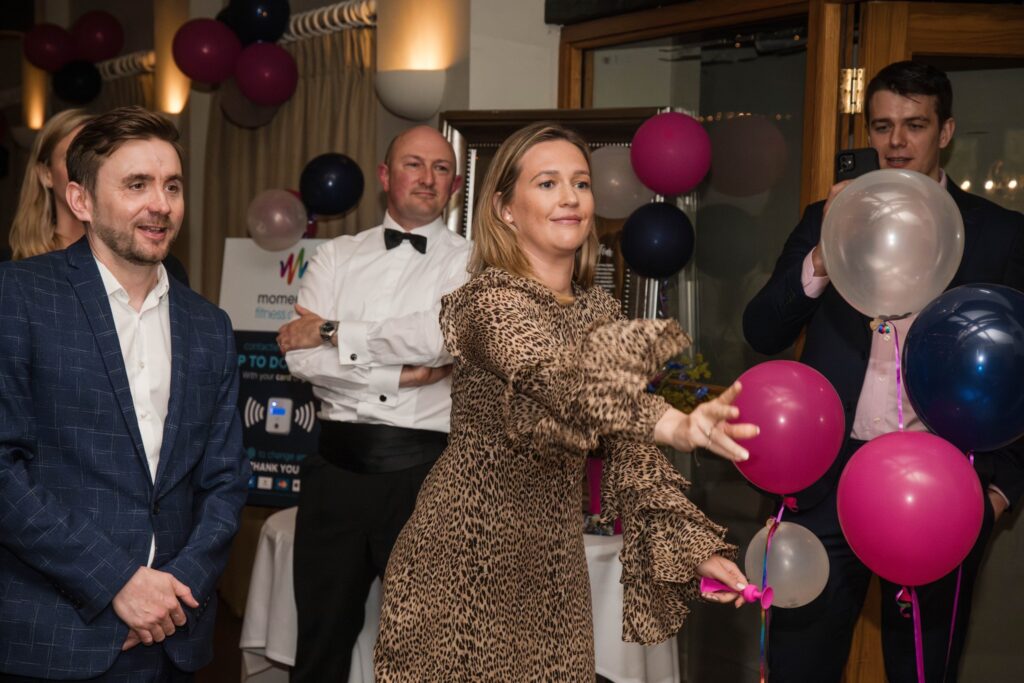
That is the feeling you want at the top of a campaign: the whole room joining in at once.
Running the peak night
The peak night has one job: get the total as close to the target as it can go. Everything else on the programme serves that.
First, command the room. I once announced a live auction while people were still talking, and only a fraction of them heard the lots. I’ve never made that mistake again. Whoever holds the room holds the total.
Then the things I always plan for:
- Say the target and the total out loud. A screen showing progress gives the room a finish line.
- Be clear where the money goes. At an MS UK event I told the room at the start exactly where every pound was going, and the live pledge raised £8,300, all of it to the charity. The Fundraising Regulator’s Code says you should be clear how the money will be used, and it requires a risk assessment and the right licences.
- Run the pledge after the story, not after the coffee. Give the room a reason first. It’s a serious moment, but it’s not a funeral: the excitement builds as the money comes in.
- Collect Gift Aid declarations on pledges. HMRC treats a ticket as the right to attend, not a gift, and auction wins are purchases. A pledge is a donation, so it can carry Gift Aid with a declaration.
For the full run order, see my guide on how to plan a gala.
How do you close a fundraising campaign?
You close a fundraising campaign by collecting every pledge, thanking every donor, and telling supporters what the money achieved. Do it within weeks, while the night is still fresh.

Follow up pledges made in the room the next morning. Then thank people, personally where you can. My guide to thanking donors has a simple sequence.
Finally, report the final total and the progress on the purpose. If you went over the target, your secondary purpose tells you where the surplus goes. One client of mine doubled their target. However it goes, those donors are the quiet phase for your next campaign.
Fundraising campaign ideas that suit a live peak
Most fundraising campaigns work better with a live night at the end. These fit naturally:
- Capital appeals. A building, a vehicle or a piece of equipment. A clear price makes a clear target.
- Christmas appeals. Launch on Giving Tuesday and peak at a December gala. Big Give’s Christmas Challenge raised £57.4m in a week in December 2025, so supporters are used to matched giving at that time of year.
- Anniversary campaigns. A 25th or 50th year, with a celebration dinner as the finale.
- Fund-a-need campaigns. A year of a service, broken into pledge levels the room can fund on the night.
- Corporate partner campaigns. A company matches staff fundraising, with the gala as the reveal.
If you’re planning a fundraising campaign with a live event at the peak, call me on 07596 851647. The first consultation is free, and I’d rather talk it through properly than trade messages.

Kevin Durham
Charity auctioneer & event host