
Sports dinner charity auction: how to structure the evening for maximum bids

In short
- A sports dinner charity auction pairs a formal dinner with a live auction built around memorabilia, sporting experiences, and access most guests cannot buy elsewhere.
- Sports crowds bid more competitively than a general gala audience, especially once two or three tables start chasing the same lot.
- Verify sports memorabilia before it goes anywhere near the auction. Forged signatures are a genuine, well-documented risk.
- A golf day pairs naturally with a sports dinner and can add a second, distinct income stream through entry fees, sponsorship, and its own mini-auction.
- Structure and pacing matter more than the lots themselves. A sports crowd rewards a tightly run evening and punishes one that drags.
A sports dinner charity auction works because it plays to exactly what a sporting audience already loves: competition. Get the structure right and that same competitive instinct that drives fans to follow a match closely will drive them to chase a lot at auction. Here is how to build an evening that turns that instinct into real money for your cause.
What is a sports dinner charity auction?
A sports dinner charity auction is a formal dinner event, usually built around a sporting theme, club, or personality, that includes a live auction of memorabilia, sporting experiences, and access lots alongside the meal and any speeches or guest appearances.
These events range from a local club’s annual dinner to large-scale galas built around a national team or major sporting personality. What sets them apart from a standard charity gala is the audience: guests are there because of a shared sporting interest, and that shapes what sells and how people bid.
Corporate tables are common at this kind of event too, particularly when a club or sponsor is involved. That mix of dedicated supporters and corporate guests gives the room a different texture from a typical fundraising dinner, and it rewards an auctioneer who can speak to both groups without losing either.
Why do sports crowds bid differently?
Sports crowds bid more competitively than a general audience because the instinct that makes them fans in the first place, wanting to win, wanting to be seen backing their team, carries straight into the auction.
Tables at a sports dinner often know each other, sit near colleagues or rivals from the same club or company, and are genuinely comfortable competing in public. That dynamic is a gift for an auctioneer who knows how to use it. Naming which table is currently leading a bid, or pointing out when a rival table has gone quiet, taps directly into the same energy that makes live sport compelling to watch.
This works especially well when two tables have a natural rivalry already, whether that is two local businesses, two sides of the same club, or simply two groups of friends who enjoy needling each other. An experienced auctioneer will spot that rivalry early in the evening and hold it in reserve for exactly the right lot.
What auction lots work best at a sports dinner?
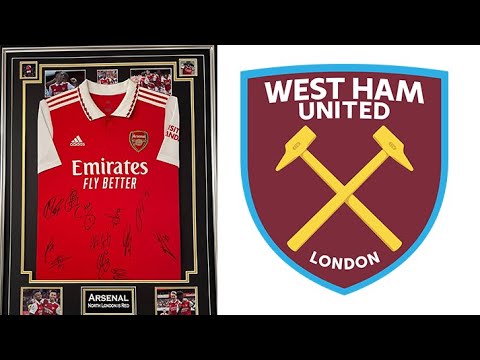
The strongest lots at a sports dinner charity auction combine genuine sporting access with something a guest cannot simply buy: a meet and greet with a player, a matchday experience, signed memorabilia tied to a specific game or season, or a place in a related event like a golf day or five-a-side match.
Physical memorabilia still has a place, particularly shirts, boots, or equipment connected to a specific, well-documented moment. But experience lots, a training session, a seat in the director’s box, dinner with a former player, consistently pull in strong bids because they cannot be replicated outside the room.
A lot that ties directly into the evening itself tends to outperform a generic sporting prize. A signed shirt from the current season, or a training session with a player guests have actually watched play that year, creates a story the room already understands, which makes the bidding feel personal rather than transactional.
How do you verify sports memorabilia is genuine before the auction?
Verify sports memorabilia by checking documented provenance, being wary of items priced suspiciously low, and using recognised third-party authentication rather than relying on a certificate alone.
This matters more than most organisers realise. Genuine authentication practice involves a trusted witness present at the actual signing, not just a printed certificate that anyone could produce. A certificate of authenticity helps, but organisers still need to check the credibility of whoever issued it. Photos of an informal signing, in a car park or through a car window, do not guarantee authenticity on their own. Getting this wrong does not just cost the charity money on the night, it risks the charity’s reputation with a bidder who paid a serious sum in good faith.
Should you add a golf day to your sports fundraiser?
Yes, if your audience and cause suit it. A golf day pairs naturally with a sports dinner and creates a second, distinct income stream through team entry fees, sponsorship, and its own small auction or raffle, often held the same weekend as the dinner itself.
The numbers involved are realistic for most charities, not just major names. One long-running golf day fundraiser raised close to £29,000 over ten years, growing from thirteen teams to twenty-seven as word spread, with a raffle on the day alone regularly bringing in several hundred pounds on top of entry fees. Keeping team pricing reasonable and including breakfast, the round, and a simple meal afterward helped participation grow year on year.
Structuring a sports dinner charity auction for maximum bids
Sequence the evening so the auction lands at its strongest possible moment, once the room is warm but before energy starts to fade:
- Open with dinner and any guest speaker or player appearance. This is what gets the room talking and builds anticipation.
- Run the live auction once the main course is cleared, while attention is still sharp and guests have had time to look through the catalogue.
- Save your two or three strongest lots for last. Ending on your best items, not your weakest, keeps the room’s energy building rather than tailing off.
- Close with a short appeal or raffle draw, giving guests who did not win a lot a final way to contribute before the evening winds down.
Common mistakes at sports dinner auctions
- Overloading the catalogue with minor memorabilia. A handful of strong, well-verified lots outperforms a long list of forgettable ones.
- Skipping authentication to save time. The reputational risk if something turns out to be fake far outweighs the time saved.
- Letting the guest speaker run long. By the time the auction starts, a tired room bids less generously.
- Using a generalist host instead of an auctioneer who understands the sport. A host unfamiliar with the sporting context misses the references and rivalries that drive competitive bidding.
- Not confirming the guest of honour’s availability for photos. Guests who win a memorabilia lot often want a photo with the player or personality involved. Sort this in advance, not on the night.
- Underpricing the opening bid. Starting too low on a strong lot can anchor the room’s expectations lower than they should be for the rest of the auction.
Getting the pacing right for a competitive crowd
A sports dinner rewards an auctioneer who understands the audience’s competitive instincts and knows how to use them without letting the evening drag. Calling out a leading table, building a sense of rivalry between bidders, and knowing exactly when to push for one more bid versus when to close a lot is a different skill from running a standard gala auction.
Planning that pacing before the night, alongside a properly structured programme and a professional auctioneer who reads the room rather than working from a fixed script, is what separates a sports dinner that hits its target from one that quietly underperforms despite a room full of engaged, competitive guests.

Kevin Durham
Charity auctioneer & event host
Let’s talk
Bring this to your event
Book a free consultation with a charity auctioneer who has raised over £10 million.