Home About Kevin Auctions Virtual auctioneer Pledges Hosting Entertainment Free software Software examples Case studies Reviews Other services Fees Fundraising games Fundraising consultant Get in touch Blog Podcast

What does a charity auctioneer do before the guests arrive?

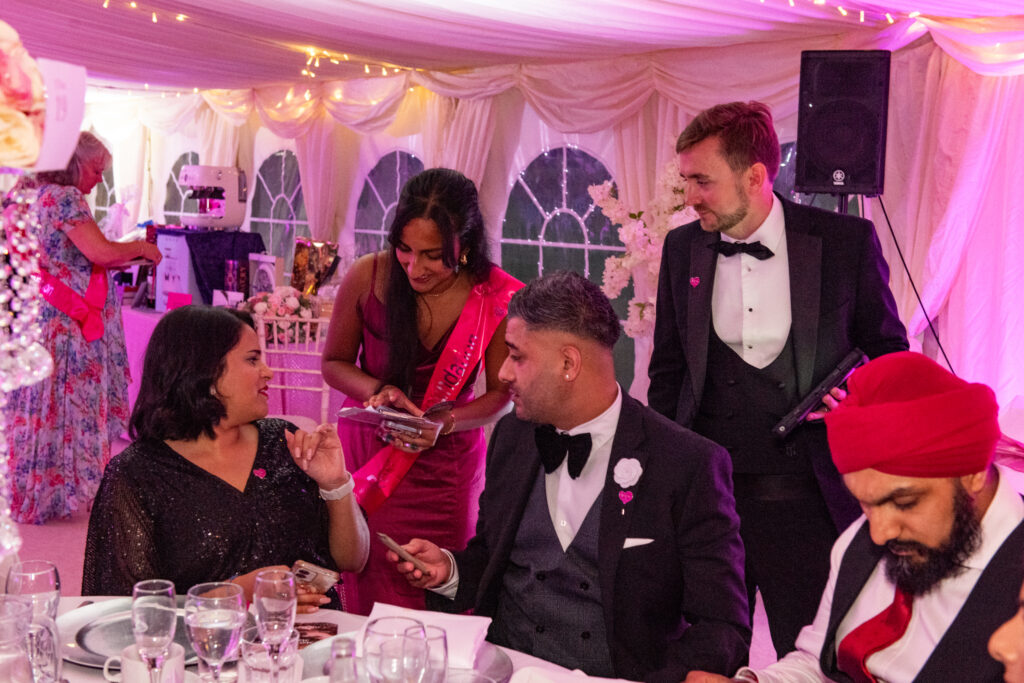
Kevin Durham in black tie reading through his notes on a pad at a charity reception

In short

  • A professional charity auctioneer is usually at the venue hours before the guests arrive, often before the organisers.
  • I arrive four or five hours early, because trains and roads are the one part of the night nobody can rehearse.
  • Once I am dressed and in the room, I take my notes onto the empty stage and rehearse until the scripts are well trodden.
  • Your part is simple: agree access times with the venue, name one contact, and have the stage and running order in place.
  • When you book anyone, ask what time they will be in the building and what they do once they get there.

What does a charity auctioneer do before the guests arrive? For a professional, those hours are preparation time: travelling with a wide margin, settling in, and rehearsing on the empty stage so the words are second nature by the time the doors open. I am Kevin Durham, a professional charity auctioneer and event host. I have spent 20 years on stage at fundraising events, at 60 to 80 events a year, and this is the part of the job guests never see.

What does a charity auctioneer do before the guests arrive?

A charity auctioneer uses the hours before the guests arrive to take the risk out of the night. Most of that comes down to two things: getting to the venue long before anyone needs you, and rehearsing the scripts in the room where they will be spoken. Here is my own routine, in the order it happens.

  1. I leave home in the morning. For most events that is the plan, even when the doors open in the evening. From the moment I leave my door until the event ends, my head is in the event.
  2. I get there very early. I would much rather be at the venue four or five hours early than leave anything to chance.
  3. I check in and get dressed. Then I go to the venue.
  4. I am usually one of the first people there. Most of the time I am well ahead of the organisers.
  5. I take my notes and get up on stage. I rehearse there, refining my scripts until they are well trodden before the event goes live.

That is the whole list. It is not glamorous, and nobody in the room will ever know it happened. That is rather the point.

Why does a charity auctioneer arrive hours early?

A charity auctioneer arrives hours early because travel is the one risk that cannot be fixed once it goes wrong. If the train is cancelled at 5pm, no amount of skill on the microphone gets the auction started at 9pm. A wide margin turns a late train into a shorter coffee break.

My own reason is plain: I worry about public transport and roads. The figures suggest I am right to.

  • Trains. In the Office of Rail and Road’s rail performance release for April to June 2026, published September 2026, 85.0% of station stops in Great Britain were reached within three minutes and 4.1% of services were cancelled. That quarter had 17 severely disrupted days, nearly one day in five.
  • Planned works. Network Rail says its engineering work is frequently scheduled overnight, at weekends and on bank holidays. Plenty of galas fall on a Saturday.
  • Roads. The Department for Transport’s travel time figures for the year to June 2026 put average delay on local A roads at 43.4 seconds per vehicle per mile, compared with free-flowing traffic.

Run the arithmetic on that last figure. Forty miles of local A roads at 43.4 seconds a mile is 1,736 seconds, about 29 minutes of delay, and that is an average across the whole day, not a worst case. A four or five hour margin absorbs all of it.

What does rehearsing on an empty stage change?

Rehearsing on an empty stage means the auctioneer’s scripts have already been spoken out loud, in that room, before a single guest hears them. When the doors open, it is the second time through. It is the same logic as a theatre’s dress rehearsal, a full run shortly before the first performance.

I take my notes, get up on stage and rehearse, refining the scripts as I go until they are well trodden. The notes themselves are put together in the week before, so on the day the work is in the delivery, not the drafting.

There is a reason this helps. Psychologists call practising past the point of first mastery overlearning, and the research summary notes its benefit is strongest when the material is only needed for a short time, which describes an evening’s scripts exactly. There is also work on context-dependent memory: in Godden and Baddeley’s 1975 study, divers recalled words best in the same setting where they had learned them. I would not stretch that study too far, but a stage rehearsed on is a stage that feels familiar at 9pm.
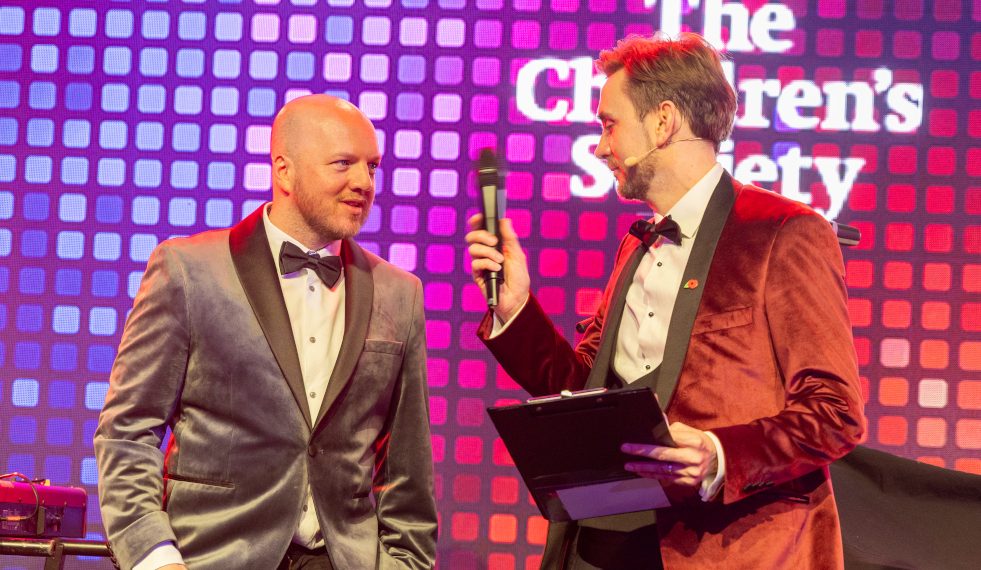
Kevin Durham on stage at a charity gala, microphone in one hand and his notes on a clipboard in the other

A whole day in the event, not an evening

Leaving home in the morning for an evening event sounds excessive until you look at what it protects. It means the whole day goes on your event and nothing else.

Your committee, meanwhile, is usually having the busiest day of its year. An auctioneer who is already in the building, dressed and rehearsed, is one name on the list nobody has to chase.

What should the organiser have ready before the guests arrive?

The organiser should have three things ready for the auctioneer before the guests arrive: access to the stage, one named person to find, and the final paperwork in print. The table is general good practice for any professional you book, not my personal routine.

Have readyWhy it helps
Access time agreed with the venueThe auctioneer can rehearse on the real stage, not in a corridor
One named contact and mobile numberQuestions get answered once, by the right person
Stage or speaking position setRehearsal happens where the auction will happen
A microphone to tryA sound check is usually done before audience entry
Final running order and lot list, printedLate changes are caught before doors, not during them
Where the spotters will standThe auctioneer knows which corners are covered

Two notes on that table. First, Ofcom says some licence-exempt bands for wireless microphones are shared with other low-power equipment and can suffer interference, so ask the venue or AV supplier to test the actual microphone in the actual room. Second, the named contact works best when it is your night lead.

For the paperwork itself, my posts on the run sheet and auction spotters cover it. The weeks-out auctioneer briefing is a separate job.

How can you tell if an auctioneer will prepare like this?

Ask before you book. A professional charity auctioneer should be able to tell you, without hesitating, what time they will be in the building and what they do once they get there. A vague answer usually means nobody has planned those hours.

Useful questions:

  • What time will you be at the venue, and how are you getting there?
  • If your train or road fails, what is the fallback?
  • Will you want time on the stage before guests arrive?
  • Who do you need to see when you get there?

A committee member running the auction as a favour usually cannot give these answers, and that is no criticism. They have a day job, a table to host and a dozen other tasks on the day.

One organiser, Luke Holmes of Noah’s Ark, wrote that “He came early to do a run through and meet guests.” Kind words, and my part is small next to the team behind the charity. More are on my client reviews page.

When is it worth hiring a professional charity auctioneer and host?

Hire a professional when the auction and pledge carry a real share of the night’s target, and when nobody on your committee can spend the afternoon at the venue preparing for them. If the auction is a few lots at a small supper and a confident volunteer can be there early, doing it yourselves is a reasonable call.

What a professional changes is that the person on the microphone arrives with the travel risk already absorbed and the scripts already rehearsed in your room. Because I usually host the whole night as well as the auction, that preparation covers the welcome, the speeches and the close, not just twenty minutes of bidding.

If that sounds like your event, call me on 07596 851647. Have ready your date, the venue, its access times, your draft running order and what went wrong last time. The auction software is included when you hire me: I build it around your event, in your branding with your lots and tickets, and it stays live for one month afterwards. My auctioneer services page sets out the rest.

Kevin Durham, charity auctioneer

Kevin Durham

Charity auctioneer & event host
20years£10m+raised60–80events/yr
Check availability07596 851647

Let’s talk

Bring this to your event

Book a free consultation with a charity auctioneer who has raised over £10 million.

Toastmaster or charity auctioneer: who should run your charity ball?

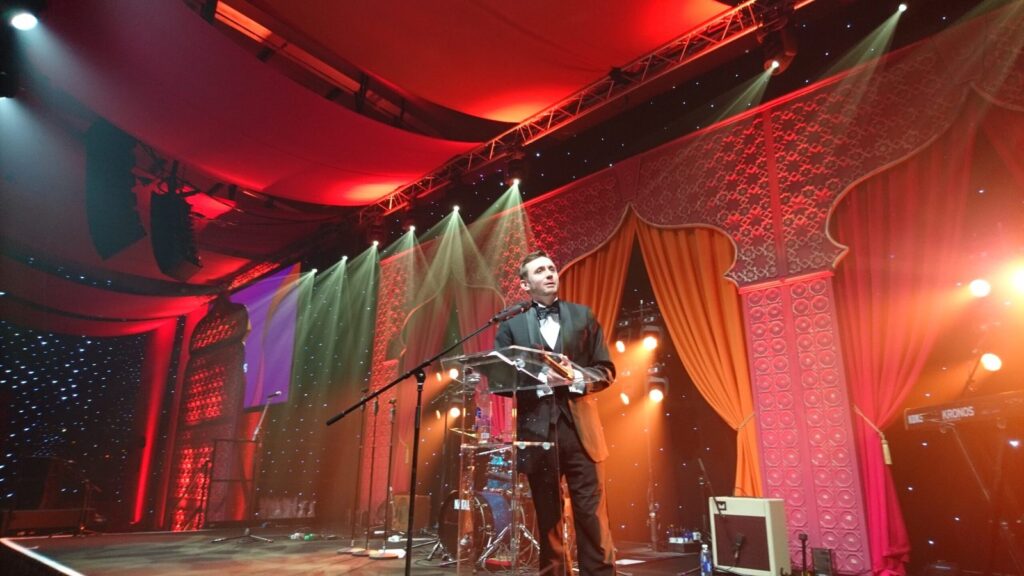
Kevin Durham in black tie hosting a charity gala from a clear lectern on a stage lit in red and orange

In short

  • A toastmaster runs the formalities of a charity ball: announcing guests, grace, speeches and timing.
  • A charity auctioneer plans and runs the live auction and the pledge, the two segments that turn goodwill into money.
  • One person can do both, but only if they have run fundraising rooms, not just announced them.
  • If a toastmaster’s quote includes the auction, ask who orders the lots, who runs the pledge and how the fee is worked out.
  • A toastmaster alone is the right call when there is no live fundraising. Hire an auctioneer when your target depends on it.

A toastmaster is the formal master of ceremonies at a dinner: the person who announces guests, calls for silence, introduces the speeches and keeps the evening to time. A charity auctioneer plans and runs the live auction and the pledge. Both stand in front of your guests with a microphone, which is why a quote that “includes the auction” can sound like one booking when it is really two jobs.

I am Kevin Durham, a professional charity auctioneer and event host. If your committee is organising a charity ball and weighing a toastmaster against an auctioneer, this is what each job covers, when one person can do both, and what to ask before you sign.

What does a toastmaster do at a charity ball?

A toastmaster acts as stage manager and timekeeper for a formal dinner. They announce arriving guests, call the room to be seated, announce grace, introduce the speeches and toasts, and liaise with banqueting staff and the photographer. That is the list The London Toastmaster publishes on his duties page, read November 2026.

It is old, respectable work. Wikipedia says the first professional toastmaster in London was possibly James Toole in the 1840s, and that the red coat now associated with London toastmasters was first worn by a man who wanted to look different from the waiting staff. The same London toastmaster’s explainer page describes a toastmaster as trained and examined by his peers, able to advise on protocol and etiquette.

If your ball has a receiving line, a top table and formal toasts, that specialism is worth paying for.

What does a charity auctioneer do that a toastmaster does not?

A charity auctioneer plans and runs the two segments that turn goodwill into money: the live auction, where lots go to the highest bidder, and the pledge, where guests give at levels set in advance. The work starts before the night, with the lot order, the pledge levels and a plan for a lot that stalls.

Some toastmasters do this too, so the right-hand column below is a checklist for any candidate, not a rule about any one person.

Job on the nightToastmasterCharity auctioneer
Announces guests, grace, speeches, toastsCore jobOnly if also hosting
Gets a noisy room quietCore jobNeeded before every lot
Chooses the lot orderVaries, askCore job
Sets the pledge levelsVaries, askCore job
Rescues a lot that stallsVaries, askCore job
Explains the Gift Aid rule on bidsVaries, askShould know it

Even that last row shows the gap. HMRC’s charity guidance, chapter 3.40, read November 2026, says a payment for an item at a charity auction is a purchase, not a gift. Part of a winning bid can still qualify for Gift Aid, and in some cases that depends on the bidder knowing the item’s retail value when they bid. That is general information, not tax advice, and it is a fair question for whoever will call your lots.

Can one person be both toastmaster and charity auctioneer?

Yes, provided they have run fundraising rooms and not only announced them. Some toastmasters say they do. The London Toastmaster’s duties list includes acting as an auctioneer, fundraiser or prize-caller, and a 2014 post on The Complete Toastmaster’s site lists professional charity auctioneer among the roles he offers (both read November 2026).

Splitting the job is common as well. The London Toastmaster’s 2019 write-up of a children’s charity dinner credits a separate charity auctioneer on the programme. Both set-ups work when the two people have spoken before the night. The weak point is the handover, which I cover in host or auctioneer.

Attention is the first job of both, and I learned that the hard way. At one big event that was running late, I announced a live auction while people were still talking, and I did not stop to get them quiet. Only a fraction of the room heard the lots, and one man bid on an item he could barely make out. I have never repeated it. Command the room first: stand on a chair if you have to, because the shush is a powerful tool. A toastmaster is paid to do exactly that, and it was the skill I was missing that night.

If the formal protocol is the heart of your evening, book the toastmaster. If the money segments matter as much, book someone who has run them, and brief the two together. My own event hosting covers the whole programme, from arrivals and speeches to the auction, the pledge and the close.

Five questions to ask when the quote includes the auction

  1. Who chooses the lots and puts them in order, and how many will there be?
  2. Who runs the pledge, and how are the giving levels set?
  3. What do you do when a lot stalls?
  4. How is your fee worked out: one fee agreed up front, or a share of what is raised?
  5. Which charity can I call about the last auction you ran?

Someone who has run these rooms will answer all five without a pause. Question four matters most. If the fee is tied to the money raised, ask whether that makes the person a professional fundraiser in law. The Charity Commission’s CC20 guidance, last updated 3 February 2026, says that when a charity works with a professional fundraiser or commercial participator, trustees must have a written agreement before the fundraising begins, and the fee must be in the charity’s best interests. Whether a given arrangement counts is a legal point, so ask for the terms in writing and take advice if unsure. My post on commission explained sets out the usual models.

When is it worth hiring a charity auctioneer instead of a toastmaster alone?

It is worth hiring a charity auctioneer whenever your target depends on a live auction or a pledge, because those segments need planning and judgement that formalities do not. A toastmaster alone is the right call for a formal dinner with no live fundraising, or one where a raffle and a silent auction run themselves. If the live auction and pledge sit on your running order as two lines with no plan behind them, that is the moment to bring someone in.

The pledge is often the line nobody planned. Charles Balchin wrote after his first charity auction: “Kevin was absolutely fantastic at running our event. He added a pledge element we hadn’t considered and it became hugely successful.” The success was his team’s; my part was the structure. In my experience a pledge built properly out-earns the lots.

Kevin Durham in a red velvet dinner jacket on stage, microphone in one hand and a clipboard held out in the other

A host who takes control matters too. Nicola Briscoe’s words, from my client reviews:

“He's really professional, engaged the room and took control where we needed it. Highly recommend him if you need him to host any event.”
Nicola Briscoe, IBA / Electrical Industries Charity (EIC)

I am grateful for that, though the evening belonged to the charity’s team.

What to have ready before you ask for a quote

Have the date, the size of the room, your draft running order, your target and what happened to the auction last time. With those, a short call is enough to say whether you need an auctioneer, a host or both.

Call 07596 851647. I would rather talk your running order through than trade emails, because a conversation is where it starts to make sense. If you book me as your auctioneer and host, I build the auction platform around your event, in your branding and loaded with your lots and tickets. It is included for the event and stays live for a month afterwards.

Kevin Durham, charity auctioneer

Kevin Durham

Charity auctioneer & event host

20years£10m+raised60–80events/yr
Check availability07596 851647

Let’s talk

Bring this to your event

Book a free consultation with a charity auctioneer who has raised over £10 million.

Auction house auctioneer for a charity gala: what to check first

Kevin Durham in a burgundy velvet dinner jacket working a gala room on the microphone

In short

  • A saleroom auctioneer can run a gala auction well. Calling bids, describing items and handling paperwork are their daily work.
  • “Free” needs checking. Ask whether a buyer’s premium, commission or expenses apply, and who keeps them.
  • Ask who plans the lots and the live pledge with you before the night. That planning is the part a charity auctioneer is hired for.
  • A saleroom and a charity auctioneer can share an evening, as long as someone decides who does what.

An auction house auctioneer for a charity gala is a saleroom professional, usually a valuer by trade, who agrees to call your lots on the night, often for little or nothing. If a local firm has offered, that is a generous offer and worth taking seriously.

I am Kevin Durham, a professional charity auctioneer and event host. This is how I would weigh the offer if I sat on your committee: what a saleroom does well, the checks that decide whether “free” is free, and the part of the job that is easy to miss.

What does an auction house auctioneer do well at a charity gala?

An auction house auctioneer is good at the mechanics of selling: calling bids clearly, describing and valuing items accurately, keeping a bidder’s trust and handling the paperwork afterwards. Those skills carry straight into a gala, and some salerooms run charity evenings regularly.

Hansons Auctioneers in Derbyshire is one example (pages read November 2026). Its owner, Charles Hanson, hosted a charity ball at the Derby Roundhouse for the British Heart Foundation as MC and ran the auction, with signed football boots, hotel stays and diamond jewellery among the lots. He was also guest speaker and auctioneer at a charity golf day dinner for the Tiny Tim Trust on 3 September 2021.

That is real experience of a fundraising room, and it is exactly the record to ask any candidate for. A valuer also brings reassurance on lots such as jewellery, art or antiques, where bidders want to trust the description.

I have no quarrel with salerooms. The question is where the work sits, and my guide to the auctioneer’s job covers the wider split.

Is a free auction house slot really free for a charity gala?

An auction house slot is only free if the charity pays no fee, no commission and no expenses, and keeps the whole winning bid. Three questions settle it. Ask them in writing: is a buyer’s premium charged, is any commission taken, and who pays for travel and printing?

It can be done. The Royal West of England Academy’s 2024 fundraising auction said Bonhams was waiving all fees for the sale, including buyers’ commission (read November 2026). Never assume another house does the same.

A buyer’s premium is a fee added to the winning bid and paid by the buyer. I explain it in buyers premium. As an illustration, not any firm’s rate: at 25%, a £1,500 winning bid costs the bidder £1,875, and the extra £375 goes to the house, not your cause.

If the house keeps a premium or commission while telling guests the sale supports your charity, the law may treat it as a commercial participator. Section 58 of the Charities Act 1992 defines one as a business that runs a promotion saying charitable contributions will go to a charity. The Charity Commission’s CC20 guidance, read November 2026, says trustees must have a written agreement before the fundraising begins and should check how much the charity receives compared with the amount generated. That is general information, not legal advice.

It also affects what you say from the stage. The fundraising code says fundraising must not mislead donors (rule 1.2.1), so “every penny goes to the charity” must be true.

Will an auction house auctioneer plan the lots and pledge for your charity gala?

An auction house auctioneer will plan your lots and pledge only if you ask, and ask early. A saleroom sale starts with consignments. A gala starts with a room of guests, a story and a target, which is a different brief, and nobody should find that out on the night.

In my experience the live pledge, where guests give at set levels with no prize, usually out-earns the auction of lots when it is built well, and most committees are never told. So the questions below matter more than the hammer.

An online catalogue of original artworks for a charity auction, each with a lot number, artist and starting bid

AskA good answerLook again if
Who chooses the number and order of lots?A named person agrees a short list with you, well ahead“We will see what turns up”
Is there a live pledge, and who builds it?Yes, the levels and the story are agreed with youIt is not mentioned
Who will you meet before the night?The auctioneer who will be on stageA coordinator only
What happens if a lot stalls?There is a plan for it“We withdraw it”
Who explains Gift Aid to the room?Someone who knows the rulesNobody

The last row is not a trick. HMRC’s Gift Aid guidance, paragraph 3.40.1, read November 2026, says a payment for an item at a charity auction is a purchase, not a gift. A pledge can be treated differently, which is one more reason to plan it. Your running order should show where each segment sits, and my page on running a pledge shows how I build one.

Timing, and who is on stage

Confirm who will be on stage and what happens if they are not available. Ask when the saleroom’s own sales fall around your date, who covers if the named auctioneer is booked elsewhere, and when you will have a first call about lots. Get the answers in writing, with the premium terms.

If your first conversation about lots happens in the week of the gala, the plan was made without you.

When is it worth hiring a charity auctioneer instead?

It is worth hiring a charity auctioneer when your target depends on the live auction and pledge and nobody on the committee has run them before. The value is the planning as much as the calling: a short set of lots, a pledge built around your cause, and someone who commands the room.

The saleroom route is the right call too, in the right set-up. If you have a handful of valuable lots, a small room, the premium waived in writing and a committee member who will build the pledge, a local auctioneer may be all you need. Some evenings split the work: a valuer calls the big items and someone else plans the programme and the pledge. Just decide who does what before the night.

Here is how Naomi Chaning Pearce of Jigsaw Trust described the planning side, in my client reviews:

“Kevin owned the room as he conducted the live auction, more than doubling our target. It was not just during the event where Kevin showed his skills, but also in guiding our planning.”
Naomi Chaning Pearce, Jigsaw Trust

What to have ready before you call

Have the date, the size of the room, your target, your draft running order and the saleroom’s offer in writing, premium terms included. Add what happened to the auction last time. With those, a short call is enough to say whether you need me, your local auctioneer or both.

Call 07596 851647. I would rather talk it through on the phone. If you book me as your auctioneer and host, I build the auction platform around your event, in your branding and loaded with your lots and tickets. It is included for the event and stays live for a month afterwards.

Kevin Durham, charity auctioneer

Kevin Durham

Charity auctioneer & event host

20years£10m+raised60–80events/yr
Check availability07596 851647

Let’s talk

Bring this to your event

Book a free consultation with a charity auctioneer who has raised over £10 million.

What should a charity auctioneer booking agreement include?

Kevin Durham in a burgundy velvet jacket speaking into a microphone and pointing out into the room at a charity gala

In short

  • Put it in writing. The fundraising code expects a written agreement with any paid third-party fundraiser, and for some the law requires one first.
  • Fix the date, the times, and whether you are booking the auction alone or the hosting and pledge too.
  • Say how the fee is worked out and what it leaves out: travel, accommodation, expenses.
  • Agree payment dates, cancellation for both sides, and what happens if the auctioneer is ill.
  • List what your committee supplies, then add short clauses on insurance, data and recordings.

A charity auctioneer booking agreement is the written record of what an auctioneer will do at your event, when, for what fee, and what happens if either side cannot go ahead. This guide answers one practical question: what should a charity auctioneer booking agreement include? It is for the committee chair or gala coordinator about to say yes, and it applies to any auctioneer you book.

I’m Kevin Durham, a professional charity auctioneer and event host, and I work 60 to 80 events a year. I am not a solicitor, so this is general information, not legal advice, as at November 2026. Most of it describes what to look for in any auctioneer’s agreement. One section sets out my own booking terms, as an example.

The clauses at a glance

ClauseWhat to pin down
Date and timesDate, venue, arrival, auction slot, hard finish
ScopeAuction only, or hosting and pledge too
Fee and exclusionsHow it is worked out; travel, accommodation, meals
PaymentsThe date each falls due; what is non-refundable
Cancellation and postponementEach side, dated against the event
IllnessAgreed replacement, or refund
Committee dutiesRunning order, lot list, microphone, AV, a named contact
InsuranceCover held by each side
DataWho holds guest and bidder details, and for how long
RecordingsWho may film, who owns it, what it is for

Does a charity auctioneer booking need a written agreement?

Yes. The Fundraising Regulator’s fundraising code, read in November 2026, says at 6.2.1 that you must have an appropriate written agreement with any third-party fundraiser, unless they are a volunteer. For a professional fundraiser in the legal sense, the law requires one before they start.

Whether a paid auctioneer falls inside that definition depends on the facts. Section 58 of the Charities Act 1992 turns on being paid to solicit money for the charity and excludes several kinds of person. Ask your adviser, and write the agreement as though it applied.

The stakes sit in section 59, which covers England and Wales. An agreement that misses the prescribed requirements is not enforceable against the charity without a court order, and the fundraiser cannot claim fee or expenses under it. The 1994 Regulations set the form: in writing, signed by both sides, with names, date signed, period, terms for early ending and variation, main objectives and methods, and how fee and expenses are determined.

Section 59(7) adds three more items, covered in my piece on trustee fundraising duties. The Charity Commission’s CC20, read in November 2026, says to get advice if you are unsure what to include.

What should the agreement include about dates, times and scope?

The agreement should name the date and venue, the auctioneer’s arrival time, the slot for the auction and any pledge, and a finish time, then say plainly whether you are booking the auction only or the hosting and pledge too. Times and scope are easy to leave to a phone call. They are hard to prove afterwards.

Write the auction slot in, not just the doors time. I once announced a live auction in a room that was running late, with no speech or film to tee up the lots and people still talking. Only a fraction heard them. I have not made that mistake since: command the room first, or the lots are wasted. So the agreement and the running order should agree on when the money is asked for.

Scope is a plain list: live auction, live pledge, hosting from welcome to thank-you, games, and any planning calls beforehand. One client described the planning side in their own words: “Kevin had incredible enthusiasm and was a great source of advice in our planning.” That is Kristen Kemmet, Group Charity Coordinator, on the reviews page. If advice is part of what you are paying for, put it in writing.

What should a booking agreement include on fees and expenses?

A fee clause should say how the fee is worked out, whether it is fixed or moves with the total raised, and what it leaves out: travel, accommodation, parking and meals. Ask for a total you can budget against, with expenses either included or capped.

A percentage of the total and a fixed fee behave very differently, and my guide to commission explained sets out the models. This post covers what the agreement says. The fees page covers the money.

Where lots are sold on someone else’s behalf, ask who keeps what. A supplier selling on consignment or above a reserve may pass the charity only part of each sale. Write down which sales pay the charity in full.

What should the agreement include on deposits and cancellation?

Give the date each payment falls due, say what is non-refundable, and set out cancellation for each side as a scale dated against the event. The penalty rule is the reason to keep it proportionate: in Cavendish v Makdessi the Supreme Court tested whether a payment on breach is out of all proportion to the innocent party’s legitimate interest.

A scale that rises as the date nears is easier to justify than one flat sum, because an auctioneer can rebook a date six months out and cannot six days out. Whether a particular clause is caught is a solicitor’s call.

Cover both directions. If you cancel, what is due and when. If the auctioneer cancels, you get back what you paid, and ideally help finding someone. Postponement is a separate clause: who agrees the new date, and whether payments carry over.

What are my own booking terms?

Everything above applies to any auctioneer. For one real example to compare against, this is how my own standard fundraising contract handles the same points.

  • Deposit: 50%, due within seven days of the contract being issued. It is non-refundable, and I do not hold the date until it has cleared.
  • Balance: the other 50%, due no later than 14 days before the event.
  • Cancellation: in writing. Twenty working days or more before the event, I keep the deposit. Within twenty working days, the full fee is payable.
  • Illness: if I am ill, I use reasonable endeavours to find a suitable replacement. If none can be found, you get a full refund of the fees you have paid.
  • What you provide: the briefing materials (running order, lots, pledge structure and scripts) at least seven days before, plus a working PA, a wireless microphone and sound check access before guests arrive.

I also offer a performance-based guarantee, and other terms apply. If the total raised falls below 90% of a realistic, specific target we agreed in writing before the event, and my performance was the primary cause, I refund 40% of my performance fee. It needs at least four viable auction lots with genuine market appeal, and it applies only where both a live auction and a live pledge are delivered. It is void if any lot is supplied by a third party on consignment, reserve or minimum-return terms. Read the full conditions in the contract before you sign.

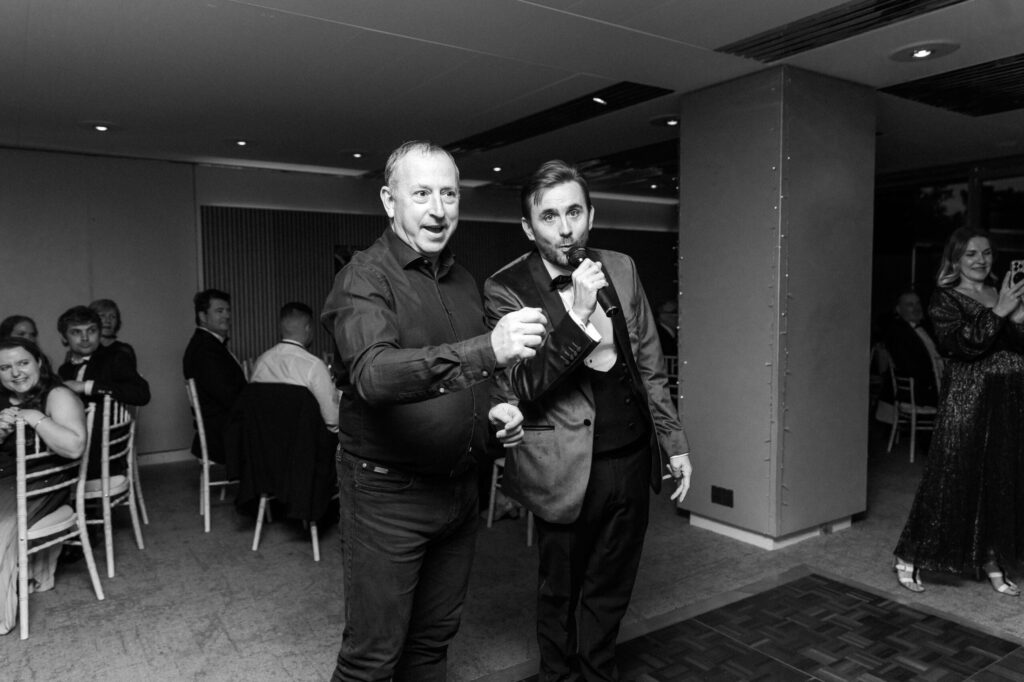
Kevin Durham sharing the microphone with a guest during the live auction at a charity gala, in black and white

What happens if the auctioneer is ill?

The agreement should say whether the auctioneer will arrange an agreed replacement or refund what you have paid. With no clause, the Law Reform (Frustrated Contracts) Act 1943 may apply if illness makes the job impossible: money paid is recoverable, though a court can let the other side keep expenses already incurred.

That is a fallback, not a plan. So ask who chooses the replacement, whether you can refuse them, and how soon you will be told. A phone call on the day is too late to recruit anyone, and nobody wants to meet the replacement plan for the first time in the car park. Code 6.2.3 also expects the agreement to say whether the fundraiser may subcontract, so a replacement is a subcontracting question as much as a diary one.

What the committee supplies

List what you must provide, because that is the part you control: the running order, the final lot list, a named contact on the day, the room, a tested microphone and the screens. If the auctioneer brings equipment, say so, and say who is responsible if it fails.

My guide to briefing an auctioneer covers the briefing. For the agreement, what matters is the deadlines: when the running order and lot list reach the auctioneer, and what happens when they change late.

Insurance, data and recordings

Insurance. Ask what cover the auctioneer holds. The Charity Commission’s CC49, read in November 2026, says public liability insurance is normally recommended for major events and advisable for smaller ones, and that some venues require it. It adds that charities running galas often buy cover against cancellation, for example because of bad weather.

Data. If the auctioneer handles guest or bidder details on your behalf, Article 28(3) of the UK GDPR requires a contract that sets out the processing, makes them act only on your documented instructions, and has them delete or return the data at the end. One clause covers it.

Recordings. Under section 9 of the Copyright, Designs and Patents Act 1988 the author of a film is its producer and principal director, so unless the agreement says otherwise, ownership may not sit with the charity. Section 182 separately needs a performer’s consent to record a qualifying live performance. Whether auction patter qualifies is for your solicitor. The practical fix is a clause saying who may record, what the footage is for, and for how long.

When is a written agreement worth the effort?

When someone is being paid, a lot rides on one evening, or any clause above is unclear. For a small local night with a volunteer auctioneer, a confirming email covering date, times, expenses and what each side supplies is often enough, and the code lets you decide against a formal agreement with a volunteer.

A professional booking is different, because the agreement becomes the plan for the night. If you are still choosing, my guides to vetting an auctioneer and hiring one come first. When you get in touch with anyone, have ready the date and venue, room size, running order, target and what went wrong last time.

If you would like to talk it through, call me on 07596 851647. Free auction software comes with hiring me: I build the platform around your event, with your branding, lots and tickets, and it stays live for a month afterwards. More on what I do is on my services page.

Kevin Durham, charity auctioneer

Kevin Durham

Charity auctioneer & event host

20years£10m+raised60–80events/yr
Check availability07596 851647

Let’s talk

Bring this to your event

Book a free consultation with a charity auctioneer who has raised over £10 million.

School fundraising auction ideas: how to run a PTA auction that works

Charity auctioneer Kevin Durham running a live auction at a fundraising event

In short

  • The best school fundraising auction ideas mix promises, products and services so there is something at every price point, not just big-ticket items.
  • An auction of promises works well as its own evening event, while a silent auction suits pairing with a fete, quiz night or Christmas fair.
  • Send an “I am giving” form home to parents two weeks out and widen the net to local businesses and ex-pupils rather than relying on a handful of donors.
  • PTAs need their own public liability insurance and a risk assessment approved by the school, since school cover does not automatically extend to PTA events.
  • A confident host who paces the room and keeps energy up matters more than any single lot: bidding follows momentum, not just the item on the table.

Most school fundraising auctions do not underperform because the prizes are wrong. They underperform because the room goes quiet halfway through and nobody gets it moving again. If you are planning a PTA event this term, the school fundraising auction ideas below cover what actually works: which format to pick, how to source lots without spending PTA funds, what you legally need to have in place, and how to keep parents bidding until the last lot closes.

What are the best school fundraising auction ideas?

The best school fundraising auction ideas combine promises, physical items and services, because that variety means every parent in the room has something they can afford to bid on. PTA+ guidance recommends “offering a combination of promises, products and services” specifically so there is something for everyone, rather than a room full of prizes only wealthier parents will chase.

Strong performers tend to be experiences rather than objects: a behind-the-scenes visit to a local business, a teacher-led activity, VIP tickets to a local sporting fixture, or a skill donated by a parent (a redesigned logo, a garden makeover, a home electrics check). None of these cost the PTA anything to provide, and experiences generally out-bid generic gift baskets because parents are buying a memory, not a thing.

Auction of promises or silent auction: which suits a school fete?

An auction of promises works best as its own dedicated social evening, while a silent auction is better suited to running alongside something else, like a summer fete, Christmas fair or quiz night. The promises format needs “2 to 3 hours” as a standalone event with food and a bar break built in, and it benefits from a confident host driving the room from the front.

A silent auction, by contrast, sits quietly in the background of a bigger event: parents browse a table of five to ten high-value lots, write bids on a sheet, and check back later. A silent auction guide recommends aiming for “between five and ten high-value items” rather than a large number of small ones, since fewer, better lots are easier to display well and easier for parents to take seriously. One school running a 23-lot silent auction this way raised just over £2,000 with no upfront cost, which is a realistic benchmark for a single-event fundraiser rather than an outlier.

How do you source good lots without spending PTA funds?

You source good lots by asking parents first, then widening out to local businesses and the wider school community, rather than the PTA buying items itself. Send an “I am giving…” form home roughly two weeks before the event asking parents what they can donate, whether that is a physical item, a service, or an experience, along with an estimated value.

From there, PTA+ recommends extending the ask to “local businesses, ex-pupils, local celebrities” and anyone with a community connection to the school. Do not be shy about asking for genuinely good items: a Michelin-starred tasting menu, a weekend in someone’s holiday home, or a bespoke piece of art from a parent who paints will always outsell a bottle of wine, and one strong lot can anchor an entire evening. Cross-check your list against our wider best auction items guidance if you want more sourcing ideas that apply beyond schools too.

Structuring the evening so bidding doesn’t fizzle out

Bidding fizzles out when the same energy runs the whole night, so structure the evening with peaks: open with lighter, cheaper lots to get the room warmed up and comfortable bidding out loud, then build toward your two or three strongest items. Publish the full lot list roughly a week in advance so parents can decide what they actually want before they arrive, rather than making cold decisions on the night.

Keep the pace tight. A long gap between lots is where a room goes quiet and stays quiet. Confirm payment terms up front, whether that is settling on the night or within seven days, so nobody is chasing invoices the following week. If you are running games or activities either side of the auction to keep energy high throughout the evening, our fundraising games page has ideas built for exactly this kind of pacing problem.

What insurance and risk assessment do you actually need?

You need your own public liability insurance for the event and a written risk assessment, because a school’s own insurance does not automatically cover PTA activities. PTAs operate as separate charitable organisations from the school itself, so this is not a formality you can skip because the event happens on school grounds.

Health and safety law does not technically require voluntary organisations to carry out a risk assessment, but as PTA+ puts it, doing one anyway is good practice, and “a risk assessment proves to your insurance company that you did your best to prevent” a problem if one arises. Get the final version approved by the school if the event is on their premises, and check separately whether you need a licence if you are serving alcohol.

Family-friendly touches that lift bidding without alienating anyone

The best family-friendly touch is pricing generously at the bottom end, so parents on any budget still leave with something and still feel part of the evening. Reserve one or two “lucky dip” style lots at a low fixed price for exactly this reason: they keep the room inclusive without diluting the big-ticket items further up the list.

Keep child-focused promises age-appropriate and low-stakes: a teacher-led activity, a class privilege, or a small experience the children themselves will talk about afterwards tends to generate genuine excitement from parents rather than just polite bidding. Tie the auction into an existing event people already attend, such as a summer fair or Christmas market, so you start with a warm crowd instead of trying to build one from nothing.

When does it make sense to bring in a professional auctioneer?

It makes sense to bring in a professional auctioneer once the auction is the main event of the evening rather than a side table at a fete, because a volunteer host and a trained one get very different results from the same room. Bidding momentum is a skill, not a lucky side effect: a good auctioneer reads the room, knows when to slow down for a genuine bidding war and when to move on, and keeps the whole evening on schedule.

Kevin Durham brings the same energy and pacing to a school gala evening that he brings to a corporate or charity black-tie event, drawing on his event hosting background rather than simply reading out lot descriptions. For a small fete table this is overkill. For a dedicated PTA fundraising evening trying to hit a specific target, such as new playground equipment or a big trip subsidy, it is often the difference between a pleasant evening and one that actually moves the number.

Common PTA auction mistakes to avoid

The most common mistake is too many mediocre lots and not enough standout ones, which spreads attention thin and leaves nothing for parents to get excited about. A shorter list of genuinely good items, priced and presented well, consistently outperforms a long list of small donations nobody remembers by the following week.

The second most common mistake is treating sourcing as a last-minute job. Lots collected the week before the event are rushed, undervalued, and poorly described. The third is running the auction with no clear host driving the pace, which is exactly where energy drains out of the room and bidding trails off before the final lot.

“It's gone really well with the pledge, we couldn't have done it without him. If you need someone to run an event like this, get Kevin to join you. Full credit to him.”
Dave Hands, LTS Global Solutions
Get Kevin to join you

More school fundraising auction ideas to carry into next term

If this term’s auction goes well, the easiest next step is variety rather than repetition: alternate an auction of promises one term with a silent auction the next, so the format itself stays a novelty rather than something parents feel they have seen before. Keep a running note of which lots sold fastest and for how much, since that list becomes your sourcing shortlist for next time.

Consider pairing the auction with a short appeal for a specific, named cause, such as one piece of playground equipment or one classroom resource, rather than a vague “PTA funds” ask. Parents give more generously when they know exactly what their bid or donation buys. For more general inspiration beyond schools, our broader charity auction ideas guide covers themes and formats that translate well to a PTA setting too.

Kevin Durham, charity auctioneer

Kevin Durham

Charity auctioneer & event host

20years£10m+raised60–80events/yr
Check availability07596 851647

Let’s talk

Bring this to your event

Book a free consultation with a charity auctioneer who has raised over £10 million.

Do I need a charity auctioneer, or can a volunteer run our auction?

Charity auctioneer Kevin Durham pointing towards a bidder while holding a microphone on stage

In short

  • A volunteer host can work well for smaller, low-key events where most bidding happens through a silent auction.
  • A professional charity auctioneer earns their fee back through techniques a volunteer rarely has: pacing, reading the room, and selling near-misses to underbidders.
  • The real risk of a volunteer host is not a bad night. It is a quietly underperforming one that nobody notices because there is no comparison.
  • As a rough guide, if your event is a small community fundraiser with light bidding, a volunteer is often enough. If you are running a live auction or a paddle raise at a gala with real fundraising targets, a professional is worth costing in.
  • There is a middle ground: a volunteer emcee for the evening, with a professional brought in just for the live auction and appeal.

If you are asking whether you need a charity auctioneer, you have probably already run one event with a volunteer and felt the total come in lower than it should have. That gap between what a room could have given and what it actually gave is the whole question here.

Do I need a charity auctioneer, or is a volunteer host enough?

It depends on the size of the event and what you are asking the room to do. A volunteer host with a warm relationship to your cause can comfortably run registration, welcome guests, and keep a straightforward silent auction moving. Where it gets harder is anything that depends on live persuasion: a live auction with real lots, a fund-a-need appeal, or a room you are trying to move from polite applause to competitive bidding.

In my experience, the difference between a volunteer and a professional auctioneer shows up in the final total, not in how pleasant the evening felt. Most underperforming auctions are not obviously bad. The room is warm, the food is good, people clap in the right places. The bidding just stalls quietly at the same amounts it stalled at last year, and nobody in the room has anything to compare it to.

What does a professional charity auctioneer actually do differently?

What a professional auctioneer does in the room

A professional charity auctioneer manages the pace and psychology of the room, not just the microphone. That means reading when bidding is genuinely finished versus when it has simply paused, knowing when to name the momentum out loud, and knowing how to bring a paddle raise in at the right point in the evening rather than tacking it on at the end when guests are tired.

This is a skill built from repetition, not confidence on stage. Over my career I have run live auctions and pledge drives that have raised over £6 million for charitable causes, including a single Monaco gala that raised more than €1,000,000 in one evening. None of that came from energy alone. It came from planning the lot order before the night, structuring the appeal, and reading a room well enough to know exactly when to push and when to let a bid breathe.

The cost of a volunteer auctioneer: what “foregone revenue” really means

The biggest risk of a volunteer auctioneer is not that the night goes badly. It is money left on the table that nobody notices because there is no baseline to compare it against. A common example: if two or three bidders are competing hard for one item and the underbidders drop out at a strong number, a volunteer host typically thanks them and moves on. A professional will often be able to offer the same or a similar package to those underbidders at their final price, turning one sale into two or three without extending the auction.

This matters more than it sounds. The fundraising code, which sets the standards that apply to fundraising conducted by charitable institutions and third-party fundraisers in the UK, has a dedicated standard covering events specifically because the way a fundraising event is run affects both the donor experience and the amount raised. Running a compliant, well-organised event is the baseline. Getting the most out of the room on the night is a separate skill on top of that.

Charitable giving in the UK is not unlimited, either. UK donors gave £14bn to charity in 2025, and a good share of that comes through events exactly like yours. Every event is competing for a finite pool of generosity, which is precisely why the difference between an average night and a well-run one compounds over the years you keep running it.

When is a volunteer host the right call?

A volunteer host is a sensible choice for a smaller event, typically under a hundred guests, where the audience already knows and supports your cause and most of the giving happens through a silent auction or straightforward donations rather than competitive live bidding. If your organisation is comfortable with the amounts you have raised in previous years and the event’s main job is community and awareness rather than hitting an ambitious new target, a confident volunteer with good stage presence can do the job well.

The honest test is not whether your volunteer is likeable or well organised. Most are. It is whether anyone on your team has genuinely practised reading a room mid-auction, managing a live appeal, and keeping pace when energy dips. If nobody has, that is fine for a modest, low-key evening. It becomes a bigger gap the moment you add a live auction or a paddle raise with a real fundraising target attached.

When does hiring a professional pay for itself?

A professional auctioneer is worth costing in when raising as much as possible matters more than keeping the evening informal. That is usually true for larger galas, events with valuable live-auction lots, evenings built around a fund-a-need appeal, or any event where the audience includes first-time donors and corporate guests who need to be brought along rather than assumed to already be invested.

The fairest way to think about it is return, not cost. A professional’s fee is one line in the budget; what it changes is the whole top line of the evening. Most charities that hire a professional auctioneer for the first time are doing it because a previous event plateaued, not because the previous one failed outright. My own reviews mostly come from exactly that situation: an established event that needed a reset rather than a rescue.

Charity auctioneers are typically paid a flat fee, a percentage of what is raised on the night, or a hybrid of both. Structures and typical ranges are covered in full on the fees page rather than here, since every event is different and pricing is agreed per booking.

Is a charity auctioneer worth the fee? The break-even sum

A charity auctioneer is worth the fee when the extra money the room gives because of them is larger than the fee. That is the whole break-even sum. You do not need a promise of a particular result, only a realistic view of whether your room could add more than the fee.

Work it through in three steps. First, take the fee you are quoted, which is agreed per booking and not printed here. Second, take last year’s total and what the room could plausibly add. Third, compare the two. If the extra comfortably exceeds the fee, the booking pays for itself. If it does not, it does not.

Three documented events, from the case study page, show the scale of the gap. All three totals were the work of the charities’ own teams, their guests and their lots. My part was the plan and the room.

  • Jigsaw Trust: briefed to aim for £14,000 from the live auction, the evening reached £57,600. The total also includes a live pledge, a raffle, a silent auction and a paintings sale, so not all of it comes from the auction.
  • OCU Group, for the Teenage Cancer Trust: a target of £40,000 and a result of £84,108.
  • Manchester Airport Group: a total triple the amount raised the year before. If last year’s figure was X, the extra was 2X.

For the OCU event, Lisa, the event chair, said: “Without your input and amazing hosting we definitely wouldn’t have achieved the total. We absolutely smashed our £40k target.” That is the charity’s team being generous. The sum still has to be done honestly for your room.

When is it not worth it? When the event is small, most giving comes through a silent auction, and last year’s total was already near what that room can give. There the extra a professional could add may not cover the fee, and a capable volunteer is the right call, as the section above on volunteers says. I will tell you so on the first call. The fees page explains how the fee is set.

What’s the middle ground between a volunteer and a full professional auctioneer?

You do not have to choose one model for the whole evening. Many charities use a volunteer or board member as the general host and MC for arrivals, speeches, and dinner transitions, then bring in a professional specifically for the live auction and the fund-a-need appeal, which is where the fundraising skill has the most leverage. Volunteers still handle registration, table hosting, and spotting bidders, so the event still feels like your event, run by your people, with the highest-stakes ten or fifteen minutes handed to someone who does this for a living.

This hybrid approach is worth raising early with whoever you are considering hiring. Most professional auctioneers, myself included, are used to slotting into an evening this way rather than taking over the whole programme.

“I hired Kevin as our auctioneer and I wasn't expecting a lot of money, but we made huge amounts of money for the charity. Go Kevin.”
Linda, Blue Skies Hub
Blue Skies Hub on a surprise result

Questions to ask before you decide

A few honest questions will tell you which side of this you sit on:

  • How much are we realistically trying to raise this year, and is that more than last year?
  • Will the evening include a live auction, a paddle raise, or purely silent bidding?
  • Has anyone on our team run a live fundraising appeal before, under pressure, in front of a full room?
  • Would the fee for a professional be small relative to the gap between what we raised last year and what we are hoping to raise this year?

If your answers point to a bigger, more ambitious night than you have run before, it is worth at least getting a quote before you decide, so you can weigh the real numbers rather than a guess. If you are looking to learn more about my background first, my about page covers how I got into this work and the events I have run.

There is no version of this where a volunteer host is a bad person to have on stage. The only question worth answering honestly is whether your event’s ambitions have outgrown what a volunteer, however capable, has had the chance to practise.

Kevin Durham, charity auctioneer

Kevin Durham

Charity auctioneer & event host
20years£10m+raised60–80events/yr
Check availability07596 851647

Let’s talk

Bring this to your event

Book a free consultation with a charity auctioneer who has raised over £10 million.

How much does a charity auctioneer cost? Flat fee vs commission explained

Charity auctioneer Kevin Durham running a live auction at a fundraising event

In short

  • UK charity auctioneers are usually paid one of three ways: a flat fee, a percentage commission on what is raised, or a hybrid of both.
  • Since 1992, UK law has required professional fundraisers to disclose how they are paid when they solicit on a charity’s behalf, so ask for this upfront.
  • A free or cut-price volunteer host can end up costing a charity more than a paid professional, through what fundraisers call foregone revenue: bids and pledges that never happened because nobody drove the room.
  • Flat fees give budget certainty; commission ties the auctioneer’s pay to your results but adds a variable cost that scales with a good night.
  • Pricing is rarely one-size-fits-all. It depends on event size, format, and whether a live auction, pledge drive, and hosting are bundled together, so ask for a written quote rather than assuming a fixed rate.

So how much does a charity auctioneer cost? There is no single number. Fees vary by event size and format, but nearly every UK charity auctioneer cost falls into one of three pricing models, and knowing which one you are being quoted matters more than the headline figure.

How much does a charity auctioneer cost?

The fee scales with how much is being asked of the auctioneer, not just the length of the evening. A single live auction segment slotted into someone else’s event costs less than a full evening where the same person also handles hosting duties, runs the pledge drive, and helps with lot strategy beforehand.

Other factors that move the price:

  • Whether the event includes a live auction, a pledge drive (fund-a-need), or both.
  • Guest numbers and the scale of the fundraising target.
  • Travel, since UK, European, and US events all carry different logistics.
  • Weekday dinners versus large weekend galas.

Because of this spread, treat any number you see online as a rough guide rather than a quote. The only reliable way to budget is to ask for a written breakdown, which I set out on my auctioneer fees page.

Flat fee vs commission: which is more common?

Most professional charity auctioneers in the UK quote either a flat fee or, less often, a commission tied to what the live auction and pledge drive raise on the night. Flat fee is the more common structure, and for good reason.

A flat fee means the charity knows its cost before the event happens. Every pound raised above that fee goes to the cause, with no sliding scale to calculate afterwards. Commission-based pricing ties the auctioneer’s pay directly to the total raised, which can align incentives well, but it also means your costs rise as the night goes better, and you will not know the final figure until after the event.

Some auctioneers offer a hybrid: a lower base fee plus a smaller percentage above an agreed target. This spreads the risk between both sides but adds a layer of complexity that a straightforward flat fee avoids.

Whichever model you are quoted, ask the auctioneer to put it in writing before the event, including what happens if the evening overruns or the format changes.

What does UK law say about how a fundraiser is paid?

UK law requires a professional fundraiser to tell you, in writing, how their pay is worked out whenever they solicit funds on a charity’s behalf. Under the Charities Act 1992, a solicitation made by a professional fundraiser must include a statement of the method by which that fundraiser’s remuneration is determined, alongside the amount if it is notifiable.

In practice, this means a legitimate auctioneer or fundraising consultant should be perfectly comfortable explaining upfront whether they are working on a flat fee or a commission, and what that figure is likely to be. If an auctioneer is cagey about this, treat it as a warning sign rather than a quirk of the industry.

Is a professional auctioneer worth the cost compared to a volunteer?

Yes, for most galas and dinners with a live auction or pledge drive, because the difference between a professional auctioneer and a volunteer host shows up in the final total, not just in how smoothly the evening runs.

A volunteer host, however well-liked, is rarely trained to read a room mid-bid, hold a pause at the right second, or offer an identical item to the two underbidders who just missed out on the top lot. Those are specific, practised skills. Losing them does not make an auction fail outright, it just means money is left on the table that a trained auctioneer would have captured.

One client came to me with a clear fundraising target for their gala. By the end of the night they had raised double it, driven directly by the live auction sequencing and the pledge drive structure we built together beforehand. That result is documented in more detail in this case study. It is the clearest illustration I can point to of why the fee is rarely the full story: the real comparison is the fee against what a volunteer host would likely have left unraised.

The exception is a small, low-key event with only a silent auction and no live appeal. If nobody is going to stand up and run a live sale, a confident volunteer can do a perfectly good job.

What’s included in a charity auctioneer’s fee?

It depends entirely on what you book, so always ask what is bundled in rather than assuming. My own services cover live charity auctions, pledge drives, full event hosting and MC duties, silent auction guidance, fundraising games, and pre-event strategy consultation, and clients typically combine two or three of these rather than booking a single service in isolation.

Some auctioneers charge a base rate purely for calling the live auction and add hosting, pledge drives, or pre-event consultation as separate line items. Others quote one figure that bundles the whole evening. Neither approach is wrong, but you need to know which one you are looking at before comparing two quotes, since a lower headline number sometimes just means less is included.

How to budget for your charity auctioneer cost

Start with the format, not the fee. Decide whether your evening needs a live auction, a pledge drive, both, or neither, since that single decision affects price more than anything else.

UK charitable giving is a large and active market. The British public donated £14bn in 2025 according to the UK Giving Report, which is a reminder that donors are willing and events remain one of the more effective ways to convert that willingness into money for a specific cause on a specific night. Budgeting properly for the person running that night is part of protecting the return on the rest of the event spend, not a cost separate from it.

Practical steps that make quotes easier to compare:

  • Ask for a written quote that states the pricing model (flat fee, commission, or hybrid).
  • Confirm exactly what is included: live auction, pledge drive, hosting, or all three.
  • Ask what happens if the event runs long or the guest count changes.
  • Check whether pre-event consultation on lot selection is part of the fee or billed separately.
“We had a really amazing night. We raised an amazing £45,000, almost double what we expected, all down to Kevin's energy, wit and enthusiasm.”
Children's hospice £45k auction

Getting a transparent quote

Reputable fundraising professionals in the UK operate under standards set out by bodies such as the Fundraising Regulator and membership codes like the Chartered Institute of Fundraising’s code of conduct, both of which lean on honesty and transparency as baseline expectations, not optional extras.

If you are planning a gala, dinner, or fundraising auction and want a straight answer on cost rather than a guessing game, my fees page explains how I price events, and you can also get in touch directly for a free consultation before committing to anything.

Kevin Durham, charity auctioneer

Kevin Durham

Charity auctioneer & event host

20years£10m+raised60–80events/yr
Check availability07596 851647

Let’s talk

Bring this to your event

Book a free consultation with a charity auctioneer who has raised over £10 million.

Gala dinner auctioneer: what to look for when hiring one

Charity auctioneer Kevin Durham hosting MAG-FEST, the Manchester Airport Group's charity gala, running the live auction and live pledge in aid of Medcare, Magic Breakfast, The Children's Society and Blessings in a Backpack.

In short

  • A gala dinner auctioneer runs the live auction and often the pledge drive too, not just the introductions and thank-yous a general MC handles.
  • The right one reads the room, paces the evening, and builds bidding momentum rather than simply calling out lots in order.
  • Before booking, check their fundraising track record specifically, not just event hosting experience.
  • Gala dinner auction ideas that work best are the ones sequenced around the room’s energy, not just a long list of lots.
  • Fees vary by format and experience level; a good gala dinner auctioneer usually pays for themselves through what they add to the final total.

A gala dinner auctioneer is a specific hire, not a general entertainment booking. Get this choice right and the live auction and pledge segment often outraise everything else on the night combined. Get it wrong, and a strong guest list and generous lots can still fall flat. Here is what the role actually involves and what to check before you book one.

What does a gala dinner auctioneer actually do?

A gala dinner auction case study

A gala dinner auctioneer runs the live auction, and usually the pledge drive, building bidding momentum through pacing, energy, and reading the room rather than simply reading out lot descriptions in order.

That means deciding lot order in advance, knowing when to slow down for a big-ticket item and when to move quickly, and calling on the room’s competitive instinct without letting the evening drag. A live auction that feels effortless from the guest’s seat is almost always the result of a great deal of pre-event planning, not improvisation on the night.

Many gala dinner auctioneers also run the pledge drive, the segment where guests give directly in tiers rather than bidding on a lot. In my experience this segment frequently raises more than the auction itself, provided whoever is running it treats it with the same seriousness as the live lots rather than tacking it on at the end as an afterthought.

How is a gala dinner auctioneer different from a wedding or corporate MC?

A gala dinner auctioneer is different from a general wedding or corporate MC because their entire skill set is built around driving competitive bidding and charitable giving, not just keeping a black tie evening running to schedule.

A good general MC can introduce speakers, manage timings, and keep the room comfortable. What they typically cannot do is read a stalling bidding war and know exactly when to push, or restructure a pledge ask on the fly when the room’s energy is lower than expected. Those are fundraising-specific skills, developed by running auctions and pledge drives repeatedly, not by hosting formal dinners generally.

This distinction matters most at genuinely black tie events, where guests expect a certain polish throughout the evening but the fundraising moments still need a different kind of energy from the speeches and transitions around them. The Chartered Institute of Fundraising’s fundraising auction guidance notes that anyone running one may find it worth involving an auctioneer affiliated with a recognised professional body, precisely because the skills involved are distinct from general event hosting.

What should you check before hiring a gala dinner auctioneer?

Check a gala dinner auctioneer’s fundraising track record specifically, ask for real numbers from past events, and confirm they will help with lot sequencing and pledge structure before the night, not just show up to call bids.

Specific questions worth asking before you book:

  • What has this person actually raised at comparable events, and can they point to a real figure rather than a vague claim?
  • Will they help plan lot order and pacing in advance, or only turn up on the night?
  • Do they run the pledge drive as well as the live auction, or is that left to someone else?
  • Have they worked with an audience similar in size and formality to yours?
  • What happens if a lot underperforms or a bidding war stalls: do they have a plan for that moment?

The fundraising standards code sets specific standards for how UK fundraising events should be run, and it is worth confirming that whoever you hire, and your own event team, understands how those standards apply to your evening. Getting this right before the event avoids awkward conversations afterwards.

Gala dinner auction ideas that keep the room engaged

The gala dinner auction ideas that perform best are built around pacing the room’s energy across the evening, not simply listing every lot in the order they were donated.

A handful of approaches that consistently work:

  1. Open with a strong but not your best lot, warming the room’s bidding confidence before the standout item.
  2. Space your two or three highest-value lots apart, rather than clustering them, so each gets full attention.
  3. Use a themed opener during the reception to set the emotional tone before the first bid is even called.
  4. Save the pledge drive for peak energy, usually straight after the live auction closes, while the room is still warm.
  5. Keep the total lot count tight, eight to twelve strong items outperform twenty middling ones almost every time.

None of this works without someone in the room actively managing pacing rather than just reading a running order. That is the actual job of a gala dinner auctioneer.

What does a gala dinner auctioneer cost?

Gala dinner auctioneer fees vary by experience, event size, and whether the auctioneer also runs the pledge drive and pre-event strategy, so there is no single standard rate across the industry.

Rather than guess at a number, it is worth reading charity auctioneer pricing, including the flat fee versus commission debate and why the cheapest option is not always the one that nets the charity the most. Any auctioneer worth hiring should be able to explain their pricing model clearly and how it lines up with your event’s expected scale, without pushing you towards a structure that only benefits them.

How should you structure the evening around the auctioneer?

Structure the evening so the auctioneer’s segments land at the point of maximum energy, rather than treating the auction and pledge drive as a slot to fill between dinner and dessert.

A dependable running order: reception and any themed opener, dinner, a short game or activity to build energy, the live auction, then the pledge drive while the room is warmest. Adjust the exact order to your audience, but the underlying principle holds regardless of format: the fundraising moments need to land when the room’s attention and generosity are both at their peak, not whenever there happens to be a gap in the schedule.

Common mistakes when booking a gala dinner auctioneer

  • Hiring on personality alone. Charisma matters, but it needs to be backed by an actual fundraising track record, not just stage presence.
  • Leaving lot sequencing to the night itself. The strongest auctioneers plan running order in advance with the organiser, not on the fly.
  • Treating the pledge drive as an afterthought. It is frequently the highest-earning segment, and deserves the same planning as the auction.
  • Assuming a general MC can cover it. A polished host is not the same hire as someone who has run fundraising auctions repeatedly.
  • Not asking for real numbers. A specific, checkable track record tells you far more than a general claim about experience.
“Kevin did a spectacular job as MC, hosting our charity dinner for 440 very demanding people, and he reached more than our expectations.”
Cris Cancer Foundation
Cris Cancer Foundation review

Getting the hire right

A gala dinner auctioneer is one of the few bookings on the night that directly affects how much money your event raises, not just how smoothly it runs. Checking a real track record, confirming they will help plan pacing and pledge structure in advance, and understanding roughly how their fees work before you commit puts you in a far stronger position than booking on charisma alone.

If you are weighing up who to bring in for your next event, my fundraising services cover exactly this, from pre-event lot strategy through to running the live auction and pledge drive on the night. You can also check availability directly if you have a date in mind.

Kevin Durham, charity auctioneer

Kevin Durham

Charity auctioneer & event host

20years£10m+raised60–80events/yr
Check availability07596 851647

Let’s talk

Bring this to your event

Book a free consultation with a charity auctioneer who has raised over £10 million.

Fundraising auctioneer: what the role actually involves and how to hire one

Kevin Durham in a tuxedo holding a microphone and reaching toward a bidder's raised paddle during a live charity auction

In short

  • A fundraising auctioneer runs the live bidding and pledge segments of a charity event, and often the pacing of the whole evening.
  • The term overlaps heavily with “charity auctioneer” and “benefit auctioneer”, which is the more American label for the same role.
  • The job is not just calling numbers. It is reading the room, sequencing lots, and landing a paddle raise at the right moment.
  • A background in live entertainment or broadcasting genuinely changes how a fundraising auctioneer holds a room. It is not just a nice credential to have.
  • When you hire one, ask about live fundraising experience and references before you ask about price.

If you have searched for a fundraising auctioneer, you are probably already planning a gala, dinner, or fundraising event and want to know exactly what this role involves before you book one. It is a specific skill, not a job title anyone confident on a microphone can pick up, and the difference shows up directly in what your event raises.

What is a fundraising auctioneer?

A fundraising auctioneer is a professional who runs the live bidding, pledge drive, and often the wider hosting duties at a charity gala, dinner, or fundraising event, with the specific goal of raising as much money as possible for the cause rather than simply selling items at fair market value.

That distinction matters. A general auctioneer selling furniture or property is working for a seller who wants the best price for an asset. A fundraising auctioneer is working a room of guests who already support the cause, and the job is to convert that goodwill into competitive bidding and generous giving on the night. The UK’s fundraising code, which sets standards for charitable institutions and third-party fundraisers, has a dedicated standard covering events specifically, because how an event is run affects both the donor’s experience and what actually gets raised.

What does a fundraising auctioneer do across the evening?

A fundraising auctioneer driving a bidding war

A fundraising auctioneer typically handles the live auction lots, the fund-a-need or paddle raise appeal, and, in many bookings, the full MC role from welcome to close. Generic event advice often stops at finding someone charismatic to keep the energy high, as if charisma alone were the job.

In practice it is more mechanical than that. It means agreeing the lot order in advance so momentum builds rather than dips, knowing when a pause in bidding means the room is finished versus simply thinking, and structuring a paddle raise so it lands while guests are still engaged rather than tacked on at the end when people are reaching for their coats.

Fundraising auctioneer vs charity auctioneer: is there a difference?

In UK usage, “fundraising auctioneer” and “charity auctioneer” mean the same thing and are used interchangeably by event organisers and search engines alike. Where the language sometimes splits is scope: “fundraising auctioneer” is occasionally used to describe someone who also advises on the wider evening (lot sourcing, running order, pledge structure), while “charity auctioneer” can be read more narrowly as the person on stage holding the microphone. In practice, most professionals working this space, myself included, do both. You are not choosing between two different services when you see the two phrases; you are choosing between two names for broadly the same one.

What is a benefit auctioneer?

Benefit auctioneer is the term more commonly used in the United States for the same role, and it comes with a real professional credential attached. The National Auctioneers Association awards its Benefit Auction Specialist designation to auctioneers who train specifically in fundraising events, client consultation, and revenue-building technique, and only around 3% of auctioneers nationwide hold it. If you are researching this role from a US-influenced source, or comparing quotes from an international events agency, “benefit auctioneer”, “fundraising auctioneer”, and “charity auctioneer” are all describing the same skill set, just branded differently depending on the market.

Where a broadcasting background actually helps

My own route into this work did not start in an auction room. I began as a TV presenter and entertainer, and my first-ever charity event, back in 2005, put me on stage alongside Annie Lennox. Since then I have worked with major studios including Fox, Warner, and Universal, interviewing names like Will Ferrell, Tom Hardy, Reese Witherspoon, and Robin Williams, before moving fully into professional charity auctioneering.

I mention this because it is the actual reason a broadcasting background changes how a fundraising auctioneer performs, not a marketing flourish. Reading an unfamiliar room, adjusting pace on the fly, and keeping two thousand guests as engaged as twenty are skills built on a stage, not learned by calling bids on a handful of items. Across my career that skill set has helped raise over £10 million for charitable causes, including a single Monaco gala that raised more than €1,000,000 in one evening.

How do you hire a fundraising auctioneer?

Start with live fundraising experience specifically, not general MC or wedding auctioneer work, and ask for examples of how they have handled a paddle raise or fund-a-need appeal under real pressure, not just a description of their stage presence. A genuine track record should come with reviews or references you can actually check, ideally from events similar in size or format to yours.

If you are searching for a fundraising auctioneer near me, treat geography as a secondary filter rather than the first one. Auctioneers with a genuine specialism in this work routinely travel: I work across the UK, Europe, and the United States, and most professional peers do the same for the right event. Prioritise a proven fundraising track record over strict local proximity, since a fundraising auctioneer flying in for one evening will usually outperform a local generalist on the number that matters most: what your event actually raises.

Ask what is included beyond the microphone time, too. My own services cover pre-event strategy on lot sourcing and running order as well as the live auction and pledge drive itself, and a free initial consultation is available to talk through what your event needs before anything is booked. Fees for this kind of work are typically agreed per event rather than published as a flat rate, since the scope varies so much between a small community dinner and a large international gala.

A short checklist before you book

A few questions will tell you quickly whether someone genuinely does this work, rather than simply being willing to try it:

  • Can they show a track record specifically in charity or fundraising events, not just general hosting or commercial auctions?
  • Have they run a live paddle raise or fund-a-need appeal, and can they describe how they decide when to bring it in?
  • Can they provide references or reviews from organisers of similarly sized events?
  • Do they offer pre-event strategy input on lots and running order, or only turn up on the night?
  • Is a free consultation available to check fit before you commit?

If you want to talk through what a fundraising auctioneer would look like for your specific event, get in touch for a free consultation, or read more about how I got into this work on my about page.

Kevin Durham, charity auctioneer

Kevin Durham

Charity auctioneer & event host

20years£10m+raised60–80events/yr
Check availability07596 851647

Let’s talk

Bring this to your event

Book a free consultation with a charity auctioneer who has raised over £10 million.

Quiz night charity fundraiser: how to run one that raises real money

Kevin Durham holding a microphone for two guests on stage at a charity gala, with a projected screen behind them

In short

  • A quiz night charity fundraiser works best as a two-hour, six-to-eight round format with a mid-event break, priced at roughly £5 to £10 per person or £20 to £40 per team.
  • The quiz itself rarely raises the most money. Raffles, sponsored rounds, refreshments, and a short bonus mechanic like a joker card usually add up to more than ticket sales alone.
  • A pub quiz for charity is informal and low-cost to run; a gala-style quiz night can support a heavier fundraising layer, including a mini silent auction or a short paddle raise.
  • Choosing between a quiz night vs a charity auction comes down to your audience and your target: a quiz suits a broad, low-ticket-price crowd, while an auction suits a smaller room willing to spend more per head.
  • Whoever hosts the night needs to manage the handover from quiz energy into the fundraising ask, since that transition is where most events either find their biggest number of the evening or lose it.

Running a quiz night charity fundraiser well means treating the quiz as the draw that fills the room, not the only thing raising money. Here is how the format works, what actually adds to the total, and how to decide whether a quiz or a full charity auction fits your event.

What is a quiz night charity fundraiser?

A quiz night charity fundraiser is a trivia-style event where teams pay to compete across several rounds of questions, with the entry fee and a handful of extra fundraising mechanics feeding a cause rather than a prize pot.

Teams typically range from six to ten people, competing over six to eight rounds of ten questions each, with a quizmaster reading questions, a scoreboard tracking progress, and a short break partway through to keep energy up and let teams settle their scores, according to PTA+. The format is cheap to run, familiar to almost every guest, and works equally well in a pub back room or a hired hall, which is why it is one of the most common charity quiz night ideas for schools, workplaces, and community groups.

How much should you charge for a charity quiz night?

Entry for a charity quiz night typically runs £5 to £10 per person, or £20 to £40 per team, according to Save the Children, which is low enough to fill a room quickly but rarely enough on its own to hit a serious fundraising target.

That gap between what a quiz can charge at the door and what an event actually needs to raise is exactly why quiz night fundraising ideas beyond the entry fee matter so much. A ticket price high enough to fund the evening outright would shrink the guest list; a ticket price low enough to fill the room will not cover much more than the room hire and the prizes. The fundraising has to come from what happens between rounds, not just who walks through the door.

How do you structure the evening for the best result?

Structure the evening around a small number of clear breaks so fundraising moments have room to land, rather than trying to squeeze extras between fast-moving rounds.

Macmillan Cancer Support recommends a roughly 30-minute break midway through the quiz, which is the natural point to run a raffle draw, announce standings, or serve refreshments without breaking the flow of the questions themselves. Reading questions slowly, repeating them once, and having teams swap papers to mark each other’s answers keeps the pace fair and gives the quizmaster room to build a bit of banter into the evening rather than just working through a script.

A short practice run-through with a volunteer beforehand catches unclear questions before they slow the room down on the night, and a strict no-phones rule during rounds keeps the competition fair without needing to police it constantly.

What quiz mechanics actually raise more money?

The mechanics that raise the most extra money are the small, optional add-ons that let competitive teams spend a little more without feeling like they are being asked for a donation.

A joker card that lets a team double their points on one round of their choosing is a simple, low-cost addition that consistently gets used, and interval games such as heads-or-tails knockouts or a numbered grid draw give guests something to do (and pay into) during the break rather than just queuing at the bar, an approach PTA+ points to as one of the more reliable ways to boost profits on the night. Heads or tails is the one I reach for most. It takes five to ten minutes, and in a room of 200 people I typically see 90 to 95% of guests play, which gives the committee an early, visible sign that the fundraising is working before the quiz has even finished. Seeking sponsorship for individual rounds from local businesses works well too: a specific round named after its sponsor costs nothing to arrange beyond an ask, and it gives smaller local donors a visible reason to give more than a raffle ticket alone would justify.

Refreshments add up as well. Options range from simple crisps, biscuits, and hot drinks through to a full bring-your-own-bottle bar or a pre-ordered fish and chip supper, and Save the Children points to donation buckets circulated at the interval as an easy way to capture giving from guests who would rather not fuss with a formal ask.

Should you add a raffle, silent auction, or pledge moment?

Yes. A short raffle or a handful of silent auction items alongside the quiz typically raises more than the quiz mechanics alone, because it gives generous guests a way to give more than a joker card or a round sponsorship allows.

Keep any add-on tight and timed for the interval or the very end, once scores are in and the room is not mid-round. A quiz crowd will happily bid on two or three strong donated items or drop cash in a bucket, but they will not sit through a lengthy formal auction between rounds. If your event has a bigger fundraising target than a standard pub quiz can realistically support, a short paddle raise or a small run of live lots at the close, rather than folded into the middle of the quiz, tends to work best.

Quiz night vs charity auction: which should you run?

A quiz night suits a broad, informal crowd at a low ticket price; a full charity auction suits a smaller room where guests are prepared to spend considerably more per head on individual lots.

The honest comparison comes down to ceiling and effort. A pub quiz for charity is cheap to organise, familiar to almost anyone who walks in, and reliably fills a room, but its fundraising ceiling is capped by ticket price, raffle tickets, and small bonus games. A live auction asks more of your guest list (a smaller number of people willing to spend meaningfully more) but has a far higher ceiling per attendee when the lots and the room are right. Plenty of charities run both: a quiz night as a low-barrier annual event to build a supporter base, and a gala auction as the higher-stakes event for donors who have already shown they will turn up and give.

Common mistakes that flatten a charity quiz night

  • Pricing tickets too low to matter and too high to fill the room. Get the balance wrong and you lose on both ends.
  • No clear extra income mechanic. A quiz with nothing beyond ticket sales will feel like a fun night out that happens to be for charity, not a fundraiser.
  • Overcomplicating the questions. A quiz that is too hard loses teams’ attention long before the final round.
  • Running long without a break. Energy and attention both drop once a quiz runs past two hours without a pause.
  • Treating the raffle or auction as an afterthought. Bolting on a raffle five minutes before the end rarely captures what a properly timed one would.
  • Under-briefing the quizmaster. A quizmaster who has not rehearsed the questions slows the pace and loses the room’s attention.
“Brilliant, you've done a very good job. You got the crowd going and raised a lot of money. You engaged the crowd and got everyone involved.”
Tom Donovan, Parkinson's UK
Parkinson's UK on getting the crowd going

Should you hire a host to run your charity quiz night?

A charity quiz night is worth hiring a host for when you expect a full room and want the money raising moments to land. A professional quizmaster keeps the pace, settles disputes and fits a raffle, auction or pledge in at the right time. A small quiz among regulars needs no one extra.

If it is a relaxed quiz for a friendly crowd, run it yourself. Have ready your date, venue, expected number of teams, how long you want the quiz to run and what you plan to ask for on the night.

Getting the energy right at your quiz night charity fundraiser

A quiz night charity fundraiser works best when the quiz itself is treated as the reason people show up, not the entirety of the fundraising plan. The questions, the rounds, and the joker card all create a fun, competitive night, but someone still has to manage the handover from quiz energy into whatever raises the real money, whether that is a raffle draw, a short appeal, or a handful of auction lots.

That transition, from a room full of teams comparing scores into one focused fundraising moment, is where most quiz nights either land their biggest total of the evening or quietly lose it. Fundraising games and interval mechanics work best when someone is actively reading the room throughout the night rather than just running the final segment on autopilot, and the same hosting skill that keeps a gala auction moving applies just as well to timing the moment a quiz night turns from a fun evening into a fundraising result.

Kevin Durham, charity auctioneer

Kevin Durham

Charity auctioneer & event host

20years£10m+raised60–80events/yr
Check availability07596 851647

Let’s talk

Bring this to your event

Book a free consultation with a charity auctioneer who has raised over £10 million.