Tag: charity auctioneer

  • The best auction items for charity events (and how to source them)

    The best auction items for charity events (and how to source them)

    The best auction items for charity events (and how to source them)

    Spanish villa with a swimming pool and palm tree, offered as a holiday prize lot

    In short

    • Experiential lots outperform physical items consistently. A weekend at a supporter’s property raises more than a hamper.
    • Live auction lots need fewer but higher-value items. Silent auction lots can be wider and more varied.
    • Source lots by asking directly. Most businesses and individuals say yes when given context about your cause and your audience.
    • Never bring in a consignment company to supply lots. They keep a significant share of every bid, reducing what goes to your charity.
    • A lot list of eight to twelve items is almost always better than a list of twenty.

    The best auction items for charity events (and how to source them)

    The auction items you choose have more bearing on the final total than almost anything else about your event. A strong lot list can rescue a slow room. A weak one will drag even the most enthusiastic crowd to a flat finish.

    This is a guide to what actually performs well in the room, how to source it, and what to avoid.


    Why lot selection matters as much as the room

    The lots you put in front of a room tell the audience how seriously to take the auction. A lot list that looks like it was assembled last week, with generic items from the internet and a few bottles of wine, signals exactly that level of effort. The room reads it, and the bids reflect it.

    Conversely, a list built around genuinely desirable, hard-to-access experiences gets a room excited before the first bid is called. People plan their strategy during dinner. They talk to the person next to them. That kind of engagement translates directly into competitive bidding, which translates into a higher final total.

    The other reason lot selection matters: it determines whether your whole event budget goes to your cause, or whether a portion disappears to a third party. More on that below.


    The difference between live auction items and silent auction items

    Live and silent auctions require different types of lots.

    Live auction items are the headline pieces. They go under the hammer with a professional auctioneer driving the room, and they need to be able to withstand three to five minutes of sustained attention. This means they need high perceived value, broad appeal, and ideally some scarcity: the feeling that this cannot be bought at a shop or booked online.

    The best live auction items tend to be: – Unique experiences tied to your network (dinner with a well-known figure, a hosted trip, access to an exclusive event) – Hospitality packages: sporting events, theatre, culinary experiences with genuine names behind them – Luxury stays: a supporter’s holiday property, a country house weekend, a vineyard break

    Silent auction items work best when they appeal to a wider range of budgets and interests. They run during the drinks reception or dinner, giving guests time to browse and place bids on paper or through an app. Volume matters more here: fifteen to twenty items across different categories will serve a mixed room better than eight premium pieces.

    Silent auction lots that work well: – Restaurant vouchers and local dining experiences – Spa and wellness packages – Activity days: golf, flying lessons, cookery classes – Family-friendly items: tickets to attractions, children’s workshops – Art and craft pieces from local or well-known artists

    The key distinction is effort versus reward. A live lot needs to justify a public bidding war. A silent lot needs to be appealing enough that someone walking past stops, picks up the pen, and puts their name down. Different criteria, different sourcing strategy.

    For guidance on how the live segment runs and how to structure the bidding, see the live auction page.


    Experience-based lots outperform physical items

    Live auction lot example: opera tickets

    This is the most consistent finding across the charity auction events I have run over the past twenty years.

    Physical items, however nice, carry a market reference price. A guest can check on their phone whether they are getting a good deal. The moment bidding approaches or exceeds retail value, many bidders drop out. There is a ceiling, and it is a visible one.

    Experiences do not have that ceiling. There is no comparison to be made online. The value is inherent to the experience itself: where it happens, who it is with, what it means to be in that room or on that trip. When an experience is tied to your network, the ceiling is whatever the room is willing to pay, because there is simply no other way to get it.

    A case in point: a donated weekend at a supporter’s lakehouse in the Scottish Highlands will regularly outperform a luxury hamper that retails at twice the guide value. The hamper has a price. The weekend does not.

    This does not mean physical items have no place. They work well in the silent auction, as mid-tier lots, or when they are genuinely rare: signed memorabilia from a supporter with real name recognition, for example. But if you have to choose between an experience and an item for your live auction, choose the experience.


    How to source charity auction items without paying for them

    The goal is a lot list where every item cost your charity nothing, so that every pound bid belongs to your cause.

    The good news is that this is achievable. Most lots can be sourced through direct asks: supporters, local businesses, national brands with community programmes, and individuals within your network who have something of genuine value to offer.

    How to ask for lots effectively

    Be specific. Vague requests produce generic responses. A direct brief works better: tell the donor who will be in the room, what the approximate bidding range might be, and what happens to the money. A business that knows they are donating to a room of 150 guests with significant disposable income will approach the ask very differently from one given no context at all.

    Make it low friction. If a restaurant wants to donate a dinner for two, they should not need to fill in a three-page form. A simple email confirmation is enough. You can formalise the acknowledgement afterwards.

    Categories worth approaching directly

    • Hotels and short-stay accommodation (many have community budgets for exactly this)
    • Restaurants, particularly independent or well-regarded local ones
    • Sports clubs and hospitality providers
    • Artists, photographers, and makers within your network
    • Experiences you or your board can personally provide

    One of the most effective lots I have seen donated was a private cookery lesson at a supporter’s home. It cost the donor two evenings of their time. It raised £2,400. The perceived value was entirely personal.


    The consignment trap: why you should not use auction companies to supply your lots

    Some auction companies offer to supply your lots under a consignment arrangement. They bring auction prizes for charity events, and your charity keeps the money bid above a pre-set reserve price. The company keeps everything up to the reserve.

    This sounds convenient. In practice, it is one of the most expensive decisions a charity can make.

    The reserves on consignment items are set to benefit the supplier, not your charity. They are inflated, opaque, and non-negotiable. A lot that bids to £1,200 might carry a reserve of £900. Your charity receives £300. The supplier receives £900. The room spent the same energy, the same attention, the same emotion, and sent most of the result to a for-profit business.

    Multiply that across fifteen consignment lots in a single evening, and the real financial cost becomes clear.

    The alternative, sourcing lots yourself, requires more effort in the planning stages. But it is not that much more effort, and the return is dramatically better. Every pound bid by the room stays with your cause. That is the model worth building towards.


    A note on lot count and lot order

    Eight to twelve lots is the right number for most live auctions. Beyond twelve, room energy tends to drop before you reach the strongest items on the list.

    Starting with your best lot is counterintuitive, but it sets the tone. A room that opens with a genuine bidding war carries that energy through the rest of the list. Saving your strongest piece for last only works if the room is still engaged by the time you get there, which is not guaranteed.

    Reverse logic applies to the silent auction: more lots tend to work in your favour, up to a point. Around fifteen to twenty is a reasonable range. Beyond twenty-five, bidding thins out at the lower end of the list.

    If you are running both formats at the same event, consider how the two complement each other: the silent auction handles the wider lot list during dinner, freeing the live auction to focus on the highest-value pieces at the end of the evening.


    Getting the lot list right before the evening

    The lot list is one of the few things you can control completely before the event begins. The room, the weather, the AV setup: those carry risk. The lots do not.

    Start sourcing at least eight weeks out. Give yourself time to follow up, and to add or remove items as commitments come in. Keep a running document with confirmed donations, any agreed minimum values, and a one-sentence description for each item that an auctioneer can use on the night. If you are still shaping the wider evening around these lots, my charity auction ideas guide covers themes and running order, and my guide to what a charity fundraising auction actually is is a good starting point if you are new to the format.

    If you are thinking about working with a professional auctioneer who can also advise on lot selection before the event, get in touch.

    Kevin Durham, charity auctioneer

    Kevin Durham

    Charity auctioneer & event host

    20years£10m+raised60–80events/yr
    Check availability07596 851647

    Let’s talk

    Bring this to your event

    Book a free consultation with a charity auctioneer who has raised over £10 million.

  • Charity auctions: how to run one that actually raises serious money

    Charity auctions: how to run one that actually raises serious money

    Charity auctions: how to run one that actually raises serious money

    Kevin Durham in a tuxedo holding a microphone and reaching toward a bidder's raised paddle during a live charity auction

    In short

    • The most effective charity auction structure runs in four parts: fundraising game, raffle, live auction, then live pledge to close.
    • The live pledge almost always outperforms the auction itself. It regularly doubles or triples the fundraising target.
    • Running lots in-house keeps 100% of proceeds with your charity. External auction companies keep a significant cut through inflated reserves.
    • You do not need an auctioneer’s licence in the UK, but a professional auctioneer makes a measurable difference to the final total.
    • Donated experiential lots outperform purchased physical items almost every time.

    Charity auctions: how to run one that actually raises serious money

    Charity auctions are one of the most effective fundraising formats available to any organisation with a live event on the calendar. Done well, a single evening can exceed your annual fundraising target. Done poorly, the same room can raise a fraction of what it was capable of giving, with part of that going to a third party rather than your cause.

    This guide covers the structure, the decisions, and the mistakes that determine which outcome you get.


    What are charity auctions?

    Charity auctions are live fundraising events where attendees bid competitively on donated lots, with the proceeds going directly to a charitable cause. They are typically held as part of a gala dinner or awards evening, though they can run as standalone events.

    The term covers several formats: live auctions, silent auctions, online auctions, and pledge drives. This guide focuses on the live format, which consistently produces the highest returns when run with the right structure. A live charity auctioneer manages the room, drives competitive bidding, and maintains the emotional connection to your cause throughout the evening.


    The four-part structure that raises the most money

    Most underperforming charity auctions follow the same format: dinner, then auction, then the evening ends. That structure leaves a significant amount of money in people’s pockets.

    The structure that consistently raises more runs in four parts.

    1. Start with a fundraising game

    Begin before or during the reception, before anyone sits down for dinner. A simple game like Heads or Tails works because almost everyone in the room will join in. At £10 a head with 200 guests, that is roughly £2,000 raised in under ten minutes. It also sets the tone immediately: this is an evening where everyone gives, not just the high bidders.

    2. Run a raffle through dinner

    A raffle that runs across the dinner courses uses the time well. Guests have spare cash and something to do between courses. Keep the prizes visible, keep the ticket sellers moving through the room. This is not your biggest earner of the evening, but it builds cumulative momentum and keeps every table engaged.

    3. Live auction after dinner

    Once the plates are cleared, the room is settled and the energy is right for competitive bidding. Keep your lot count tight: eight to twelve strong lots outperform twenty mediocre ones every time. A room that loses momentum halfway through a long lot list rarely recovers it.

    4. Close with a live pledge

    The pledge goes last, and it is the most important segment of the evening. More on this below.


    Why does the live pledge outperform the rest of your charity auction?

    The live pledge, sometimes called a paddle raise, consistently raises more money than the live auction. In my experience running events across the UK and Europe, it regularly doubles or triples the fundraising target set for the entire evening.

    The reason is psychological. During the auction, donors get attached to the lot. They want the experience, the item, the weekend away. When they are outbid, many disengage. The cause becomes secondary to the competition.

    The pledge is different. There are no lots. The room’s attention goes entirely to the charity: its mission, its impact, the specific outcome that tonight’s money will fund. When a donor raises their paddle, they are not buying something. They are choosing to give. That distinction changes everything about how the room responds.

    A well-structured pledge starts at a high opening level and works down through tiers, drawing in donors at each price point. Almost everyone in the room ends up participating. It is the segment where unexpected results happen, where a room that has already given generously finds another gear.

    If your event does not include a pledge, you are leaving the majority of your potential income on the table.


    Should you run your charity auction in-house?

    Yes. Running your auction in-house, with lots donated directly by supporters and local businesses, keeps 100% of what the room bids with your charity.

    The CIOF guidance on charity fundraising auctions describes them as “a powerful and low-cost way” to raise money, particularly when lots are donated rather than purchased. That cost advantage disappears the moment a third party enters the picture.

    Sourcing lots yourself takes more effort up front. But most businesses and experience providers will donate when approached with a clear brief on your cause and the audience who will be bidding. The effort pays off: a donated lot costs your charity nothing and returns everything the room bids.


    The problem with external auction companies

    This is the most important thing to understand before signing any agreement with a third-party auction supplier.

    External auction companies typically offer to bring their own lots to your event. On the surface this sounds like a service: they handle the lots, you focus on the evening. In practice, the arrangement works against your charity.

    Every lot they bring carries a reserve price, set by the company and not by you. Your charity only receives the money bid above that reserve. The company keeps everything up to it. Those reserve prices are heavily inflated. The company has no real incentive for bids to go far over the reserve. Their goal is simply to hit it. So they bring dozens of items, crowd the auction with volume, and collect their margin on each one.

    The room spends two hours on what looks like a charity auction. The financial reality is that a significant portion of the money raised that evening has gone to a for-profit business, not to your cause. The fix is simple: source your own lots, keep your auction focused, and ensure every pound bid belongs to your charity.


    What makes the best lots for charity auctions?

    Donated experiential lots outperform purchased physical items. A weekend at a supporter’s property, a sporting hospitality package, a dinner with a well-known figure from your network. These have high perceived value, cost your charity nothing, and generate genuine competitive bidding because they cannot be bought anywhere else.

    Physical items are harder to price and easier to overlook. A varied lot selection that covers different interests and budgets will serve the room better than a list of similar items at similar price points.

    Keep the live auction count manageable. Eight to twelve lots is the right range for most rooms. Beyond that, energy drops and bidders disengage before you reach your best lots. If you want to offer more, run a silent auction alongside the dinner for the additional items.

    When approaching donors, be specific about your audience. A business that knows they are donating to a room of 200 corporate guests with significant disposable income will respond very differently from one given no context at all.


    Do you need a professional auctioneer for a charity auction?

    Watch a charity auctioneer at work

    For the live auction segment, yes. A professional auctioneer does not simply read lot descriptions and call bids. They read the room, manage momentum, identify when bidding is about to stall, and use technique to push through it.

    A volunteer host, however enthusiastic, will tend to move through lots quickly when the room feels quiet. That is exactly the wrong instinct. A quiet room is not a disengaged room. It often just needs a different approach: a direct appeal to a specific section of the audience, a bid increment adjustment, a moment of genuine humour that breaks the tension and resets the energy.

    The difference shows up in the final total. I have raised over £6 million for charitable causes across my career, including a single gala in Monaco that raised over €1 million in one evening. The common factor in the highest-performing events is a clear four-part structure, tight lot curation, and a live pledge run by someone who knows how to bring a room with them.

    If you are thinking about hiring a professional for your next event, the right starting point is a conversation about your goals, your room, and your cause.


    What rules apply to charity auctions in the UK?

    No auctioneer’s licence is required to run charity auctions in the UK. However, events should comply with consumer legislation including unfair commercial practices rules and the Trade Descriptions Act. The CIOF auction guide covers these requirements in detail and is worth reading before your first event.

    If you are running any online bidding element alongside a live event, Distance Selling Regulations also apply.

    On Gift Aid: auction proceeds are generally not eligible because a bid is a purchase, not a donation. There are limited exceptions. Check HMRC’s guidance and speak to your accountant before building any Gift Aid assumptions into your projections.

    The Fundraising Code covers charitable events under Standard 10 and third-party fundraising partnerships under Standard 6. If you are working with any external supplier on your event, those standards are worth reading before you sign anything.


    “Our Kangaroos 25th anniversary auction went really, really well and raised what we didn't expect. Brilliant job, thanks a lot.”
    — Kangaroos
    Kangaroos charity auction review

    A few practical notes before the event

    Read the auctioneer tips guide for more on running the evening itself. A few things that make a consistent difference regardless of event size:

    • Brief your auctioneer thoroughly before the evening. Share the room profile, the cause story, and the specific outcome tonight’s money will fund. The more context they have, the more effectively they can connect the room to your cause.
    • Have a volunteer at each table during the pledge. A visible, friendly presence at table level removes the friction of raising a paddle in a large room.
    • Follow up with every bidder within 48 hours, whether they won their lot or not. The guests who bid and lost are your warmest prospects for next year.

    The structure matters. The lots matter. But the moment that determines how much you raise is the pledge. Get that right and the rest of the evening will take care of itself.

    Kevin Durham, charity auctioneer

    Kevin Durham

    Charity auctioneer & event host

    20years£10m+raised60–80events/yr
    Check availability07596 851647

    Let’s talk

    Bring this to your event

    Book a free consultation with a charity auctioneer who has raised over £10 million.

  • What is a charity auctioneer? And what do they actually do?

    What is a charity auctioneer?

    Charity auctioneer Kevin Durham pointing towards a bidder while holding a microphone on stage

    In short

    • A charity auctioneer is a professional who runs the live fundraising at an event.
    • The role is far more than calling numbers: it is the auction, the pledge and the room.
    • A good one is the difference between meeting your target and beating it.

    A charity auctioneer is a professional hired to run the live fundraising at an event: the auction, the pledge moment and, often, the energy of the whole evening. It sounds simple. In practice it is one of the biggest single factors in how much a night raises. I have been doing it for twenty years, so let me explain what the job really is.

    More than calling numbers

    The stereotype is a fast voice rattling through bids. The reality is closer to a host, a storyteller and a fundraiser rolled into one. I read the room, pace the evening, tell the story of each lot and the cause, and ask for money in a way that feels warm rather than pushy.

    What I actually run

    A typical night has several moving parts, and I usually hold them together:

    • The live auction: a handful of strong lots, run for maximum momentum.
    • The pledge or fund-a-need moment: a direct ask that often out-earns the lots.
    • Interactive games that keep the whole room involved, not just the big spenders.

    Why not just use a volunteer?

    Plenty of events hand the microphone to a confident trustee, and it can work. But a professional almost always raises more than they cost, through experience, the neutrality to be bold with the ask, and the judgement to steer a room in real time. It is usually the highest-return decision a committee makes.

    How is this different from a traditional auctioneer?

    A saleroom or property auctioneer is judged on hammer price against a valuation: did this painting sell for what it was worth. A charity auctioneer is judged on something much bigger, how much a whole room gives across an entire evening, not just what a handful of lots fetch. That changes almost everything about the job: the pacing, the storytelling, and how much of the night has nothing to do with an actual auction at all.

    What happens without one

    I learned this the hard way, early on. I walked into the middle of a room that was running late, with no speech or video to set up the auction, and announced the live auction while people were still talking. I did not stop to get them quiet. Only a fraction of the room actually heard the lots, and one man bid on an item he could not even hear clearly.

    I have never repeated that since. Command the room first, even if it means standing on a chair and asking for quiet before a single lot is called. Whoever holds the room holds the total, and that single lesson is the difference between an evening that drifts and one that delivers.

    What a good one is worth

    The right charity auctioneer is the difference between meeting your target and beating it. At one gala I was briefed to raise £14,000 and the night finished at £57,600. I lift the room, protect the energy and make the ask land, and a strong night typically brings in far more than the fee.

    If you are planning a fundraising event and wondering whether a professional is worth it, tell me about your night and I will give you an honest answer.

    Kevin Durham, charity auctioneer

    Kevin Durham

    Charity auctioneer & event host

    20years£10m+raised60–80events/yr
    Check availability07596 851647
  • Mastering charity auctioneering: the skills that raise more

    Mastering charity auctioneering: the skills that raise more

    Mastering charity auctioneering: the skills that raise more

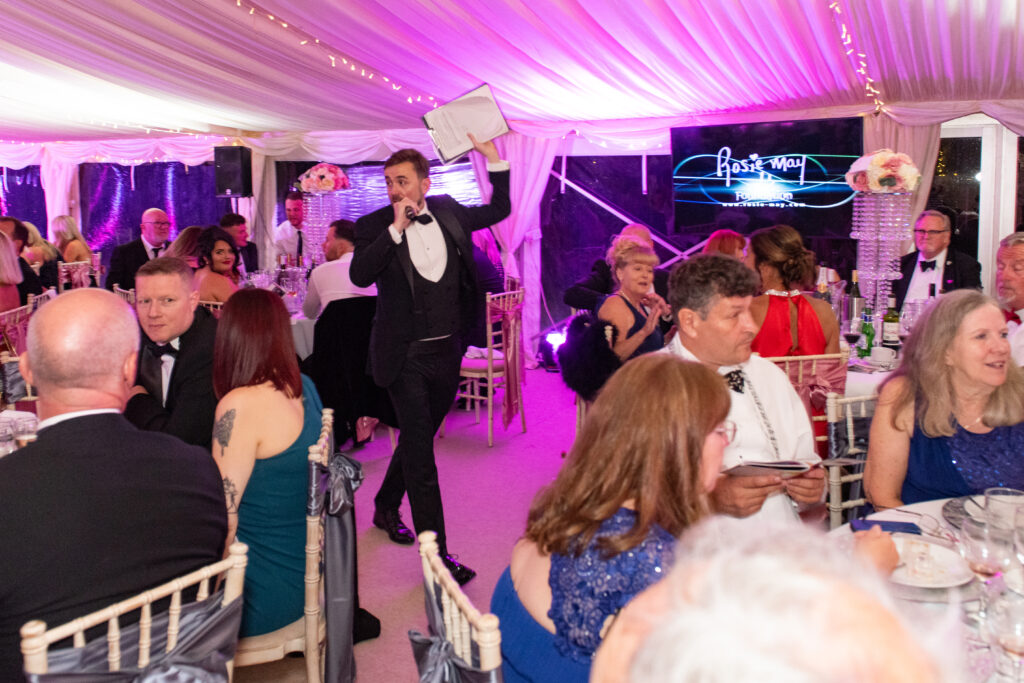
    Charity auctioneer on the microphone holding up the lot sheet at a pink-lit marquee gala

    In short

    • Great charity auctioneering is judgement, not volume.
    • Reading the room, pacing the evening and telling a lot’s story matter more than a fast chant.
    • I make the cause the star of the night, never myself.

    Charity auctioneering looks like performance, and it is. But the performance is the easy part. What separates a good night from a record one is judgement: hundreds of small decisions made in real time, in front of a room that can feel every one of them.

    Reading the room

    My first job is to understand the room I actually have, not the one on the seating plan. Warm or reserved? Competitive or cautious? A table of old friends behaves differently from a room of strangers. I spend the first minute listening before I ask for a penny.

    Pacing the evening

    Momentum is everything. Push too hard and the room closes up. Go too gently and it drifts. I build pressure and release it, use a laugh to reset the mood, and always leave people wanting the next lot rather than dreading it.

    Telling the story

    A lot is worth what the room believes it is worth, and belief comes from story. A week in a villa is a booking. The same week, told well, becomes the summer a family will never forget. The cause deserves the same care: I make the impact real and specific.

    Keeping the cause centre stage

    The quickest way to spot an amateur is that the evening becomes about them. I am generous with the spotlight. Your guests should leave talking about the charity and the total, not the person holding the microphone.

    I have run a night where a for-profit auction company had worked with the charity the year before, grossing around £13,000 for them but leaving the charity with only about £1,300 of it. When I came in, I told the room at the start exactly where every pound was going. I did not name or criticise anyone. The company itself grossed a fraction of the year before, and the live pledge alone raised £8,300, all of it to the charity. A big result like that is a powerful team behind a powerful charity. I never take the glory for it.

    Exceeding the brief

    Clients remember the host who made their life easier: turned up early, knew the run of show, handled the awkward moment gracefully and left the committee looking good. That reliability is a skill in itself, and it is why events book the same people year after year.

    If you want a host who treats your target as seriously as you do, get in touch.

    Kevin Durham, charity auctioneer

    Kevin Durham

    Charity auctioneer & event host

    20years£10m+raised60–80events/yr
    Check availability07596 851647
  • Why it pays to hire a charity auctioneer who cares

    Why it pays to hire an auctioneer who cares about the cause

    Charity auctioneer taking a bid from the floor among guests at a candlelit gala

    In short

    • Guests can tell the difference between a hired voice and a genuine advocate.
    • Caring about the cause changes how I tell the story, and how much the room gives.
    • My best results come when I treat your target as my own.

    You can hire someone to call numbers. What you actually want is someone who makes the room care as much as you do. Those are not the same thing, and on the night the difference is worth real money.

    Guests can feel it

    A room is very good at spotting a going-through-the-motions performance. When I clearly believe in the cause, that sincerity gives people permission to be generous. Warmth is not a soft skill here, it is a fundraising tool.

    It changes the story

    Because I take the time to understand your charity, I can tell better stories, because they are true and specific. I know which detail will land, which family the money helps, which sentence will make a table reach for the paddle. Generic praise raises generic amounts.

    It shapes the ask

    Caring makes the pledge moment feel like an invitation rather than a squeeze. I know when to push and, just as importantly, when to ease off so the room stays with me. That judgement comes from wanting the same outcome you do.

    It lasts beyond the night

    Committees remember the host who treated their cause with respect, and they book them again. Temwa asked me straight back after our first event together. A genuine advocate becomes part of your fundraising story, not a supplier you replace each year.

    I only take on events I can get behind, because that is when I do my best work. If that sounds like the right fit, tell me about your cause.

    Kevin Durham, charity auctioneer

    Kevin Durham

    Charity auctioneer & event host

    20years£10m+raised60–80events/yr
    Check availability07596 851647
  • Self-expression: the quiet skill behind a great auctioneer

    Self-expression: the quiet skill behind a great auctioneer

    Self-expression: the quiet skill behind a great auctioneer

    Charity auctioneer reading the next lot from his notes on stage at a charity ball

    In short

    • How something is said moves a room as much as what is said.
    • Voice, pace, stillness and eye contact are my real instruments.
    • Authentic presence beats a polished act every time.

    Two auctioneers can read the exact same lot description and get wildly different results. The words are identical. The expression is not. How you carry a room is a craft, and it is one of the most underrated parts of my job.

    The voice does the heavy lifting

    Volume is the least interesting thing a voice can do. Pace, pause and tone are what hold a room. A well-placed silence before a number can be worth more than any amount of shouting. I try to play my voice like an instrument, not a megaphone.

    Stillness and movement

    Where I stand, when I move and when I stop all send signals. Walking towards a hesitant bidder can gently draw the bid out. Standing still and letting the moment breathe can do the same. Nervous, constant motion just makes a room anxious.

    Eye contact and connection

    People give to a person, not a podium. Meeting eyes across the room, catching the almost-bidder, sharing a look with the table that just went big: these tiny connections are where the energy of a live auction actually lives.

    Be yourself, turned up

    My goal is not to become a character. It is to be a slightly larger, warmer version of myself, consistently, for a couple of hours. Audiences trust authenticity and quietly resist an act, which is why I lean on real presence and timing rather than a rehearsed persona.

    Expression is not decoration. It is how attention becomes belief, and belief becomes bids. If that is the presence you want in your room, let’s talk.

    Kevin Durham, charity auctioneer

    Kevin Durham

    Charity auctioneer & event host

    20years£10m+raised60–80events/yr
    Check availability07596 851647
  • Creative ways to raise money at a corporate fundraising event

    Creative ways to raise money at a corporate fundraising event

    Creative ways to raise more at a corporate fundraising event

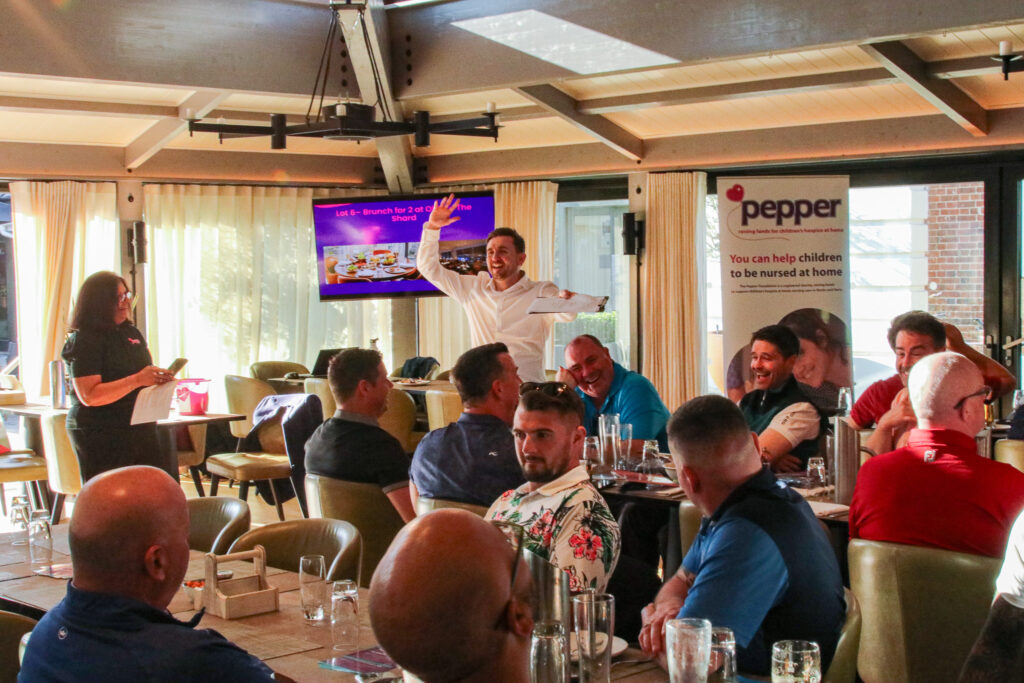
    Charity auctioneer in a white shirt hosting a lot at a daytime charity sports lunch

    In short

    • A corporate crowd responds to competition, clarity and a bit of fun.
    • Mix a tight live auction with a pledge moment and one or two interactive games.
    • The best ideas are simple, well-run and matched to the room, never gimmicky.

    Corporate rooms are a specific animal: competitive, time-conscious and quick to disengage if the evening drags. The good news is that the same instincts that make them hard also make them generous, if you give them the right formats. Here are the ones I reach for.

    A tight, high-quality live auction

    Business audiences respond to a small number of genuinely desirable lots, run at pace. Three or four strong lots beat a long list every time. I keep it sharp and let the natural competitiveness of the room do the work.

    A clear pledge or fund-a-need moment

    Nothing raises corporate money like a specific, tangible ask. I tell the room exactly what each level funds and let the tables lead each other. A well-run pledge moment often quietly out-earns the auction itself.

    Interactive games

    Heads or tails, a wine wall, a key raffle, a table-versus-table challenge: games get everyone involved, not just the big spenders, and they raise the temperature before the serious asks. They also give quieter guests a low-pressure way to give.

    Team competition

    Frame elements of the night as table-versus-table and a corporate room lights up. A live leaderboard, a matched-giving round, a challenge from the top table: turn giving into a friendly contest and the totals climb.

    Make it effortless to give

    Whatever formats you choose, remove the friction. Simple bidding, quick payment, clear instructions. The silent auction software I set my clients up with lets people bid from their phone and keeps momentum going all night without a queue at the end.

    Want help choosing the right mix for your audience? Tell me about your event and we will build a running order around your number.

    Kevin Durham, charity auctioneer

    Kevin Durham

    Charity auctioneer & event host

    20years£10m+raised60–80events/yr
    Check availability07596 851647
  • Why comedy experience makes a better charity auctioneer

    Why comedy experience makes a better charity auctioneer

    Why comedy experience makes a better charity auctioneer

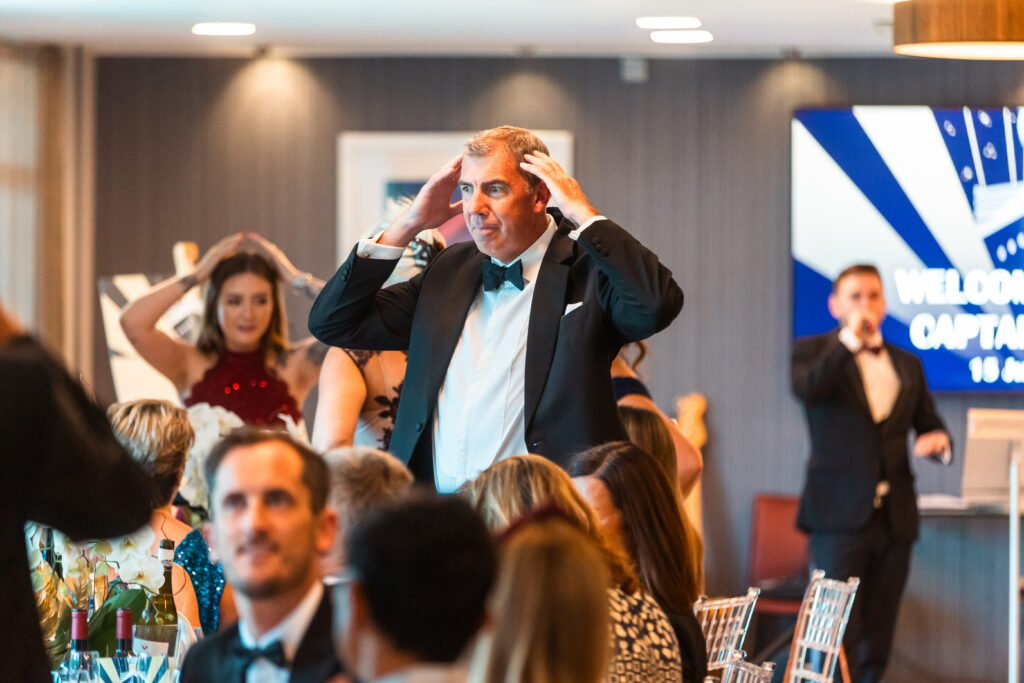
    Guests in black tie playing a heads or tails fundraising game while the host runs it from the stage

    In short

    • Comedy and auctioneering are the same skill: controlling a room in real time.
    • Timing, warmth and the ability to recover from anything keep an evening alive.
    • Laughter relaxes a room, and a relaxed room gives more.

    On paper, comedy and charity auctioneering look unrelated. In practice they are almost the same job: stand in front of a room, hold its attention, control its mood and never let it drift. My years writing and performing comedy turned out to be superb training for raising money.

    Timing is everything

    Comedy lives and dies on timing, and so does an auction. Knowing when to pause, when to push and when to let a moment land is the difference between a bid and an awkward silence. I built that instinct on stage, not in a manual.

    Reading a room in real time

    A comedian learns to feel a room shift within seconds and adjust before it goes cold. That is exactly what a live auction demands: sensing hesitation, spotting the table that is about to go, changing tack the instant the energy dips.

    Recovering from anything

    Technology fails, a lot stalls, a line misses, a bidder drops out. Because I have handled hecklers and silent rooms, I do not panic. I turn the wobble into a moment and keep the evening moving. Composure under pressure is worth a great deal to a nervous committee.

    Laughter opens wallets

    Warmth and humour relax a room, and a relaxed room is a generous one. This is not about telling jokes for the sake of it, it is about creating an atmosphere where people enjoy themselves and want to give. That blend of genuine entertainment and serious fundraising is exactly what I bring.

    If you want a host who can hold the room and lift the total, let’s talk.

    Kevin Durham, charity auctioneer

    Kevin Durham

    Charity auctioneer & event host

    20years£10m+raised60–80events/yr
    Check availability07596 851647
  • The art of connection: work the room before the auction

    The art of connection: work the room before the auction

    Why the best auctioneers get to know the room before the auction

    Charity auctioneer in a white shirt hosting a lot at a daytime charity sports lunch

    In short

    • The auction is warmer when I am not a stranger at the microphone.
    • A few minutes among the tables tells me who will bid and how the room feels.
    • Trust built early is trust I can spend when I make the ask.

    By the time I pick up the microphone, the most important work is often already done. The connection I make with a room during the drinks and the dinner is what makes the auction feel like a shared moment rather than a sales pitch. It is quietly one of the most valuable things I do all night.

    A stranger has to win the room twice

    If the first time your guests notice me is when I ask for money, I am starting cold. Spend a little time among the tables beforehand and I arrive on stage as a familiar face. People give more readily to someone they feel they already know.

    I learn who is in the room

    Working the room before the auction tells me things no brief can: who is here to compete, who is shy but keen, which table is celebrating, where the energy sits. That intelligence shapes every decision I make once the bidding starts.

    Small moments, big returns

    A shared joke at a table, remembering someone’s name, a quiet word with the committee: these tiny moments build trust. When it is time for the pledge, that trust is what lets me ask boldly without the room tightening up. At Spear Islington, mingling first and then telling the right stories at the right moments lifted them to their biggest total to date.

    It is respect, not tactics

    None of this works if it is a performance. Guests can tell the difference between genuine interest and a politician working a rope line. I do it because I enjoy it, and because a room can always feel the difference.

    Connection is not a nice extra. It is the groundwork that makes everything after it possible. If that is the kind of evening you want, let’s talk.

    Kevin Durham, charity auctioneer

    Kevin Durham

    Charity auctioneer & event host

    20years£10m+raised60–80events/yr
    Check availability07596 851647
  • Why a charity auctioneer always has a back-up plan

    Why a charity auctioneer always has a back-up plan

    Why a charity auctioneer always has a back-up plan (or three)

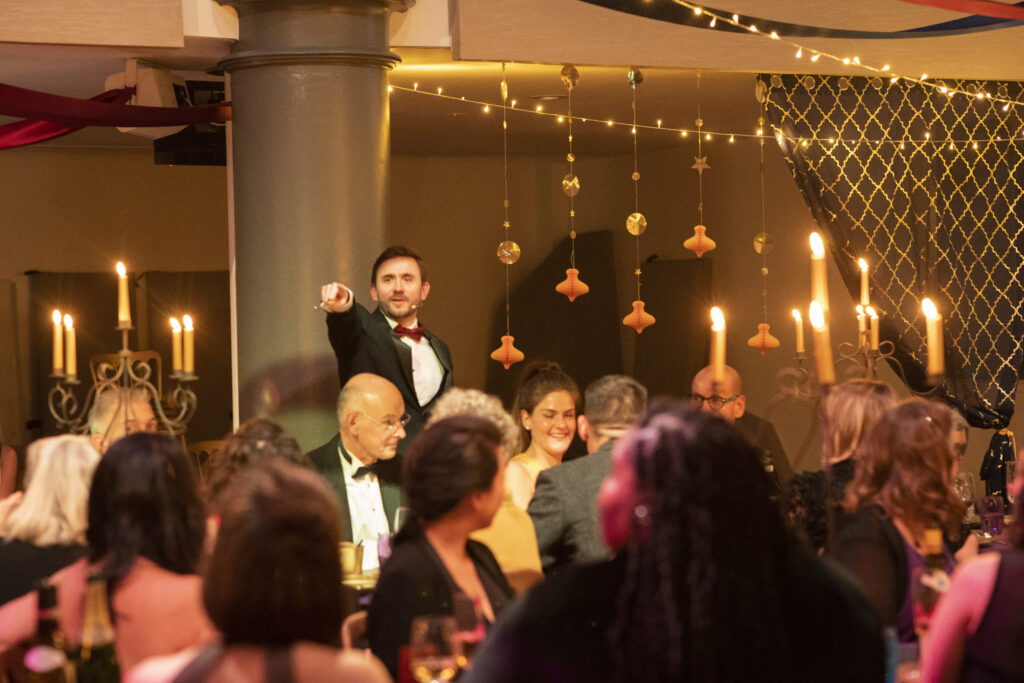
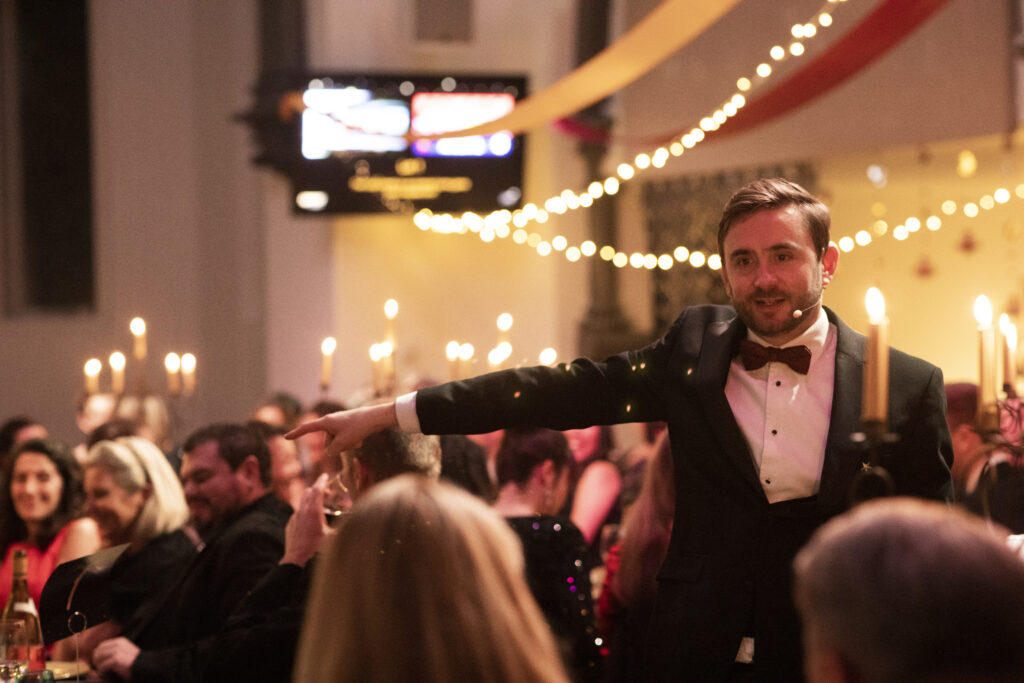
    Charity auctioneer in a black dinner jacket pointing to a bidder at a candlelit gala dinner

    In short

    • Something always changes on the night. The skill is in never letting the room see it.
    • I plan for dead microphones, stalled lots and last-minute reshuffles.
    • Calm under pressure protects both the total and the committee’s nerves.

    Every event runs perfectly right up until it does not. A microphone dies, a headline bidder leaves early, a lot falls flat, the running order changes ten minutes before we start. The mark of an experienced host is not that these things never happen, it is that the room never notices when they do.

    I assume the technology will misbehave

    I always know what I will do if the microphone cuts out, the screen freezes or the bidding system hiccups. Usually that means being ready to project, ad-lib and keep the energy up while it is fixed, so a technical wobble becomes a shrug rather than a silence.

    I have a plan for the flat lot

    Not every lot flies. When one stalls, panic is the worst response. My back-up plan might be splitting it, bundling it, opening it to the room differently, or landing it gracefully and protecting the momentum for the next one.

    I expect the running order to change

    Speeches overrun, guests of honour arrive late, dinner runs long. I build the night so I can compress it, stretch it or reorder it on the spot without losing the thread. My flexibility is planned, not improvised.

    Calm is contagious

    When I stay relaxed, the committee relaxes and the room stays warm. Half of my job is being the steadiest person in the building, so that whatever happens behind the scenes, the evening out front feels effortless.

    If you want a host who has already thought about what could go wrong, get in touch.

    Kevin Durham, charity auctioneer

    Kevin Durham

    Charity auctioneer & event host

    20years£10m+raised60–80events/yr
    Check availability07596 851647