Tag: auctioneer

  • Professional auctioneer vs. a staff member: which raises more?

    Professional auctioneer vs. a staff member: which raises more?

    Professional auctioneer vs. an internal volunteer: what’s the difference?
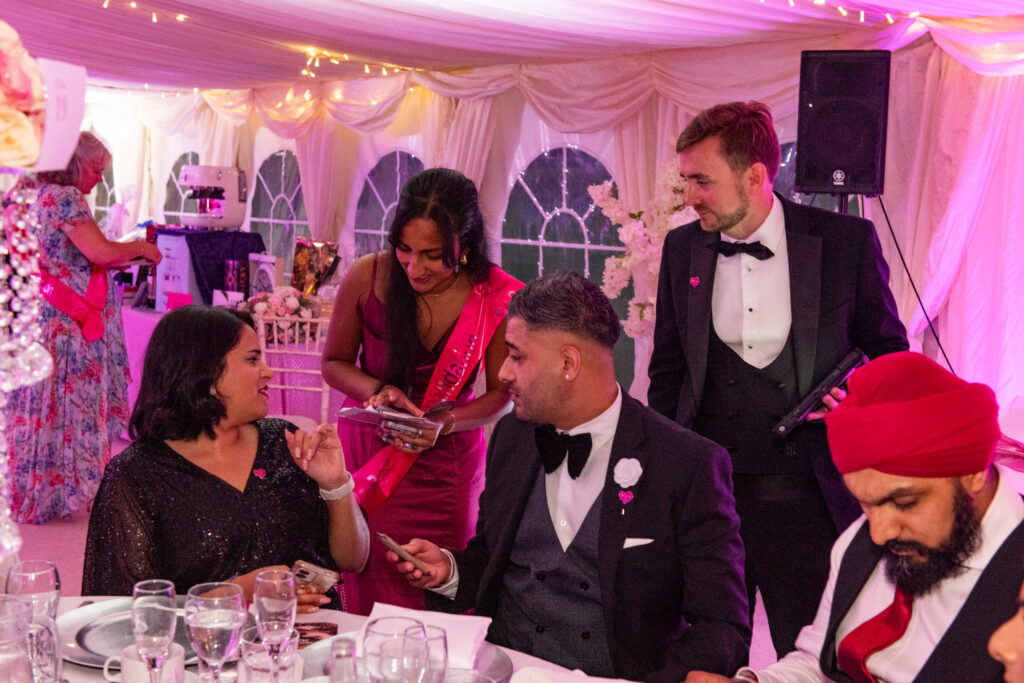
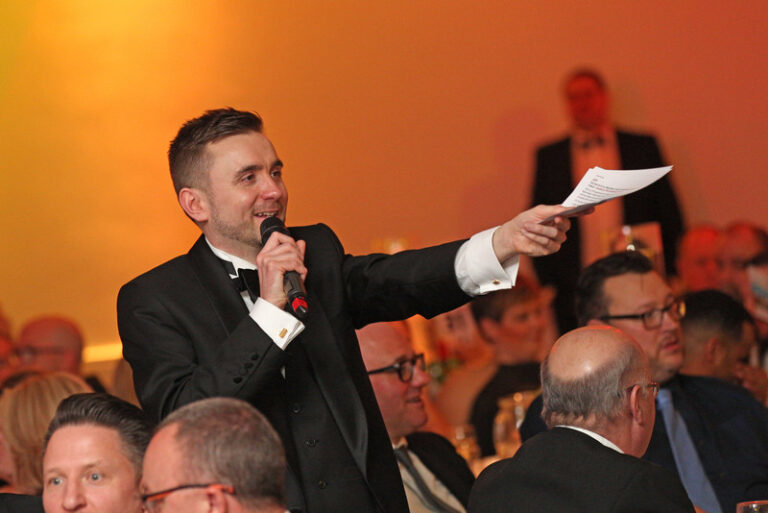
    Charity auctioneer in black tie talking with guests at a marquee fundraising event

    In short

    • A trustee with a microphone is warm. A professional is warm and raises more.
    • Experience, neutrality and real comfort with the ask are what move the total.
    • My fee is usually a fraction of the extra I bring in.

    Plenty of charities hand the microphone to a friendly trustee or a confident staff member, and it can go perfectly well. But if the goal is to raise as much as possible, a professional almost always brings in more than they cost. Here is the honest comparison, from someone who is admittedly not neutral.

    Experience the room can feel

    I have read a few thousand rooms and I know what a hesitation means, when to push and when to wait. A brilliant internal volunteer is usually doing this once a year. That difference in reps shows up directly in the total.

    The freedom of neutrality

    Your staff member has to work with these guests again on Monday. I do not, which means I can be bolder with the ask, cheekier with a reluctant bidder and firmer on increments, without worrying about the office politics. That freedom is worth real money.

    Comfort with the ask

    The hardest moment of the night is looking a room in the eye and asking for serious money. Most people find it deeply uncomfortable. Doing it well, repeatedly and warmly, is a professional skill, and it is exactly where amateur nights leave money on the table. At MS UK, a pledge I ran raised £8,300 with every pound going to the charity, in a room that had struggled to convert the year before.

    Your team gets to enjoy the night

    Hand the room to me and your staff and trustees can host, thank sponsors and actually be present, instead of sweating over the running order. That alone is often worth it.

    The maths usually works

    I typically lift an auction by far more than my fee, and my fees are built around the size and opportunity of your event. If you would like me to sense-check the numbers for your night, get in touch.

    Kevin Durham, charity auctioneer

    Kevin Durham

    Charity auctioneer & event host

    20years£10m+raised60–80events/yr
    Check availability07596 851647
  • How to start a bidding war (the right way) at a charity auction

    How to start a bidding war (the right way) at a charity auction

    How a bidding war really starts at a charity auction

    Auctioneer in black tie taking bids among seated guests at a gala dinner

    In short

    • A bidding war is set up long before it happens. I engineer the conditions for it.
    • The right opening bid, smart increments and a good story do most of the work.
    • The real skill is spotting the two people who both want it, and letting them.

    A great bidding war looks like luck. It is not. When two people push a lot far beyond its value, I have usually engineered the conditions for it well before the hammer. Here is what is actually going on.

    It starts with the right lot

    Wars happen over things people genuinely, emotionally want: access, experiences, one-of-a-kind moments. Part of my craft is knowing before the night which lots have that pull, and giving them the space and the story to matter. This is why I would rather help you source five to eight brilliant lots than run a list of thirty forgettable ones.

    Open at the right number

    Open too high and I kill it before it starts. Too low and I waste time crawling up. The right opening invites a lot of hands, then lets the room thin naturally to the two who really want it. Getting that first number right is half the battle.

    Increments set the tempo

    How I move the numbers controls the pace: bigger jumps early to build momentum, smaller ones near the top to keep both bidders in without scaring them off. Clumsy increments stall a war. Well-judged ones keep it alive.

    Read the two who want it

    Once it is down to two, the whole room is watching them. My job is to keep it warm and good-humoured, a smile, a nod, a bit of theatre, so it feels like fun rather than a duel. People will go a long way for a cause when they are enjoying themselves.

    Remember it is for charity

    The best part of a charity bidding war is that everyone wins: the charity, the winner, and the room that got the show. Keeping that spirit front and centre is what separates a great moment from an awkward one.

    Want lots that create these moments? It usually starts with how the night is built. Let’s talk.

    Kevin Durham, charity auctioneer

    Kevin Durham

    Charity auctioneer & event host
    20years£10m+raised60–80events/yr
    Check availability07596 851647
  • Managing a bidding war: keeping it fast, fun and fair

    Managing a bidding war: keeping it fast, fun and fair

    How to manage a bidding war without losing the room

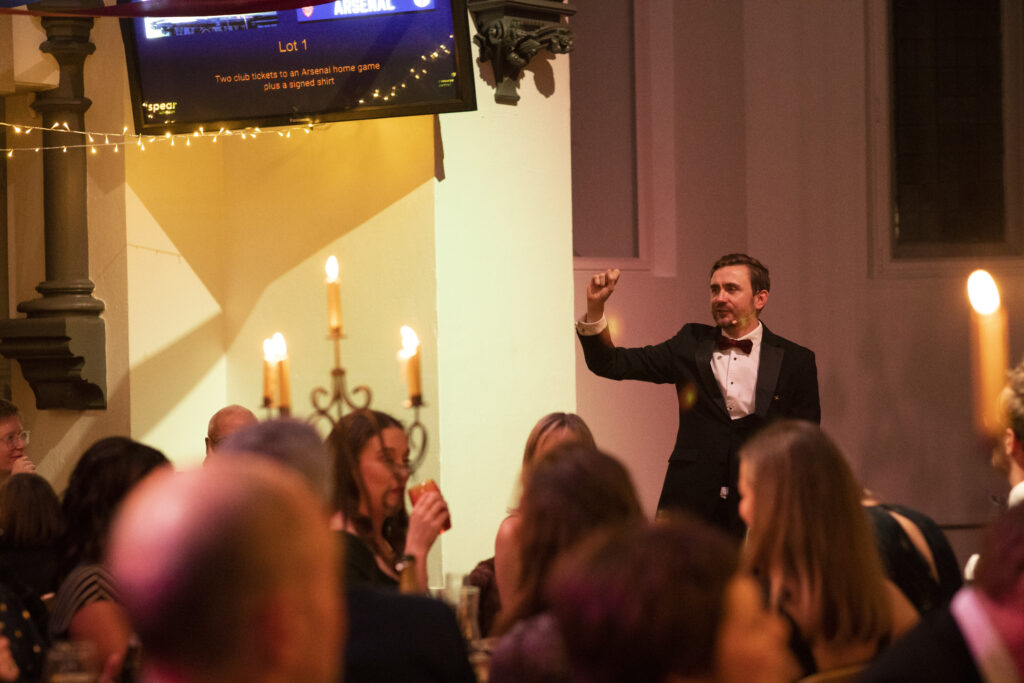
    Auctioneer taking a bid as a signed Arsenal shirt and match tickets lot shows on the screen behind him

    In short

    • Starting a bidding war is one skill. Steering it is another, and it happens live.
    • Control the increments, keep it good-natured, and never embarrass a bidder.
    • Close at the peak. One beat too long and the magic leaks away.

    Getting two people to compete for a lot is exciting. Managing it well is what turns that excitement into a big number without anyone feeling cornered. This is the part of the job that happens entirely in real time, and it is my favourite.

    Control the pace

    A war has a natural rhythm, and it is my job to keep it moving without rushing it. I speed up to build heat, slow down to let a bidder decide, and use a pause to heighten the moment. The room should feel carried, not hurried.

    Protect both bidders

    The two people bidding are being generous in public, and they should always feel good about it. I keep it warm and playful, never sarcastic. The one who bows out should leave feeling like a hero for driving the price up, not like they were beaten. This is where the campfire lines come out, and they always land.

    Manage the increments

    Near the top, the increments matter enormously. Jump too hard and I scare someone out. Nudge too gently and it drags. Reading how much each bidder has left, and adjusting the steps to match, is where the experience earns its fee.

    Close at the peak

    The hardest judgement is when to bring the hammer down. Hold on too long chasing one more bid and the energy leaks away. Close at the peak and the whole room feels the win. I would always rather end on a high than squeeze the last drop and flatten it.

    Bring the room with them

    A well-run war is a spectator sport. Applause for the winner, a laugh for the runner-up, and the whole room is warmed up for the next lot. That shared joy is worth as much to the night as the money itself.

    If you want that energy at your event, tell me about your night.

    Kevin Durham, charity auctioneer

    Kevin Durham

    Charity auctioneer & event host

    20years£10m+raised60–80events/yr
    Check availability07596 851647
  • What to do when the bidding at a charity auction goes quiet

    What to do when the bidding at a charity auction goes quiet

    How to keep a room engaged when the bidding goes quiet

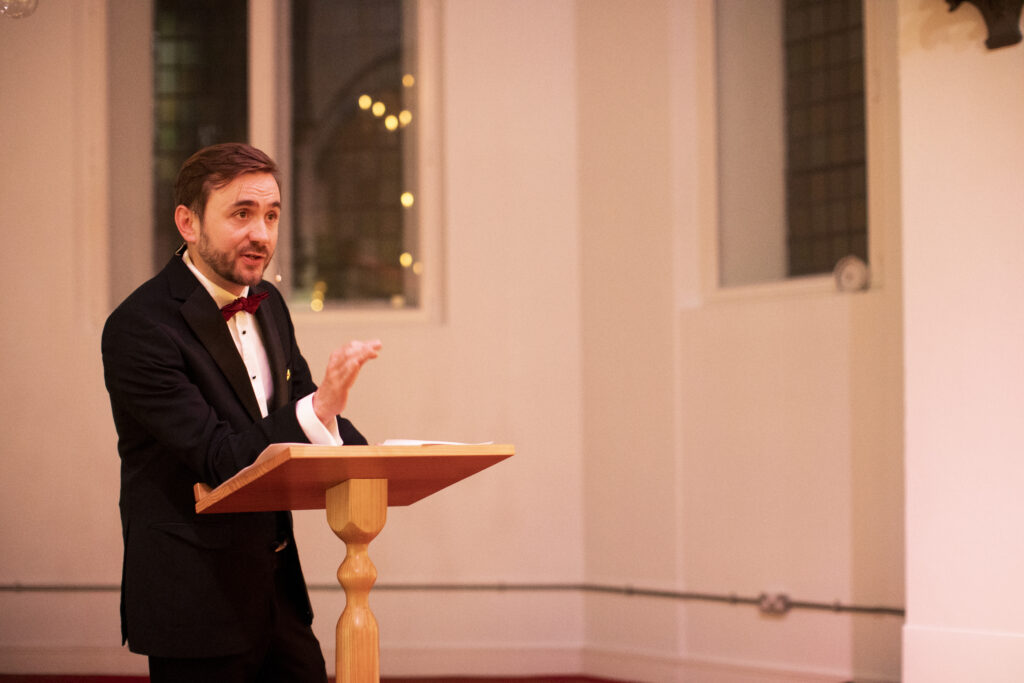
    Charity auctioneer in black tie speaking from a wooden lectern at a fundraising dinner

    In short

    • Quiet bidding is nearly always about the room, not the lot.
    • Reset the mood with story, warmth or humour before you chase the number.
    • Protect the momentum of the next lot rather than forcing this one.

    I have stood in front of a lot that should have flown and watched the room sit on its hands. The instinct is to push harder. Usually that is exactly the wrong move. Here is what I actually do to re-engage a quiet room.

    Diagnose before you push

    A flat lot is a symptom. Maybe the room is tired, maybe a speech ran long, maybe dinner is late, maybe I opened the bidding too high. Reading why the energy dropped tells me how to lift it. Pushing blindly just makes the silence louder.

    Change the temperature

    Often the fix is emotional, not financial. A well-told story about where the money goes, a genuine laugh, a warm word to a table: anything that reminds the room why they are here and lets them relax. People bid when they feel good, not when they feel pressured.

    Reset the ask

    Sometimes I simply opened too high. Dropping to a friendlier starting point, bundling, or splitting a lot gets hands moving again. Momentum matters more than pride. A lot that sells with energy is worth more to the night than one I forced.

    Protect what comes next

    The real danger of a quiet lot is that it drags down the ones after it. Knowing when to land it gracefully and move on, rather than squeezing a dead room, is what keeps the whole evening alive. One flat lot is fine. Three in a row is a pattern I break fast.

    Bring the room back to the cause

    When all else stalls, I come back to why we are here. A clear, specific reminder of what the night funds re-centres the room and often reopens the giving. The pledge moment exists for exactly this reason, and it is usually where the night is rescued.

    If you want a host who can steady a room and turn it around, let’s talk.

    Kevin Durham, charity auctioneer

    Kevin Durham

    Charity auctioneer & event host
    20years£10m+raised60–80events/yr
    Check availability07596 851647
  • Quick wit: a charity auctioneer’s secret weapon

    Quick wit: a charity auctioneer’s secret weapon

    Why quick wit is a charity auctioneer’s secret weapon

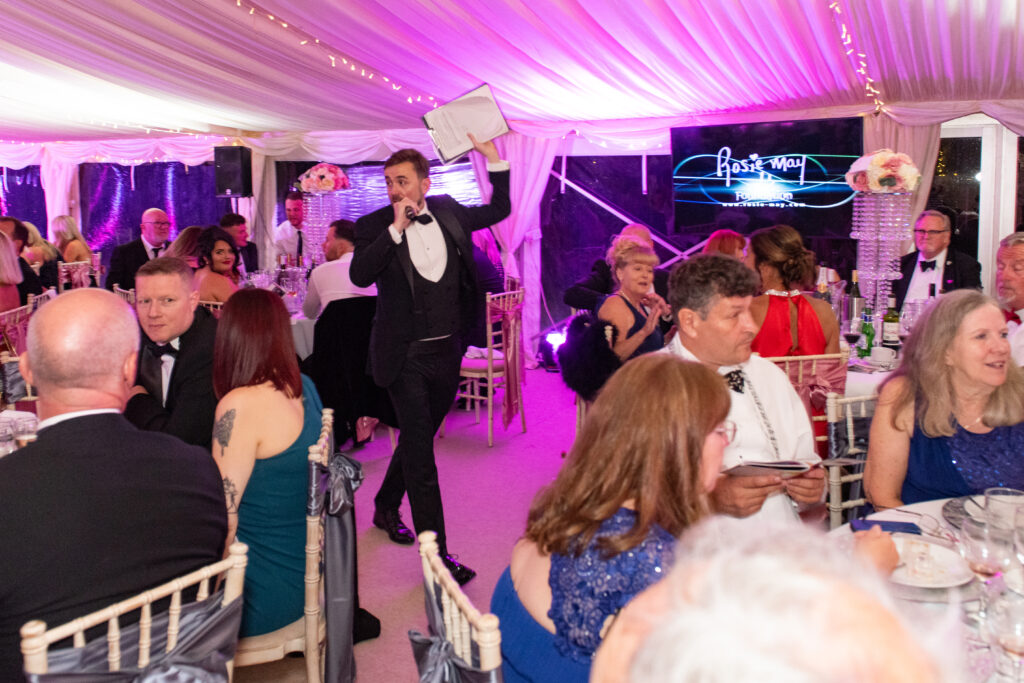
    Charity auctioneer on the microphone holding up the lot sheet at a pink-lit marquee gala

    In short

    • The unscripted moments are where a room is really won.
    • Quick wit turns a mistake or a heckle into the highlight of the night.
    • It keeps the energy up and tells the room it is in safe hands.

    I can prepare everything about an auction except the moments that matter most. The best bits are almost always unplanned: the reply to a heckle, the joke about the lot nobody wanted, the save when the technology fails. Quick wit is what makes those moments land, and it is one of the hardest things to fake.

    The room remembers the unscripted

    Guests forget my polished lines and remember the moment I said exactly the right thing off the cuff. Those moments become the story people tell afterwards, and they are worth more to a night than any rehearsed patter.

    Turning a stumble into a highlight

    Something goes wrong at every event. A quick, warm response turns a flat lot or a dead microphone into a shared laugh, and the room relaxes because it can see nothing rattles me. That composure is contagious, and it is worth real money in the bidding that follows.

    Keeping the energy up

    Auctions have natural lulls. A well-timed aside, a bit of gentle mischief with a bidder, a spontaneous line about the room, all of it keeps the temperature up between the big moments. It is the difference between a night that flows and one that stalls.

    It is built, not born

    Quick wit looks like luck but it comes from experience: hundreds of rooms, thousands of moments, and a background presenting and performing live where thinking on your feet is the whole job. My years on stage and in front of a camera are exactly where that instinct was forged.

    If you want a host who is at their best when the script runs out, get in touch.

    Kevin Durham, charity auctioneer

    Kevin Durham

    Charity auctioneer & event host

    20years£10m+raised60–80events/yr
    Check availability07596 851647
  • How to become a great charity auctioneer: the honest guide

    How to become a great charity auctioneer: the honest guide

    How to become a great charity auctioneer

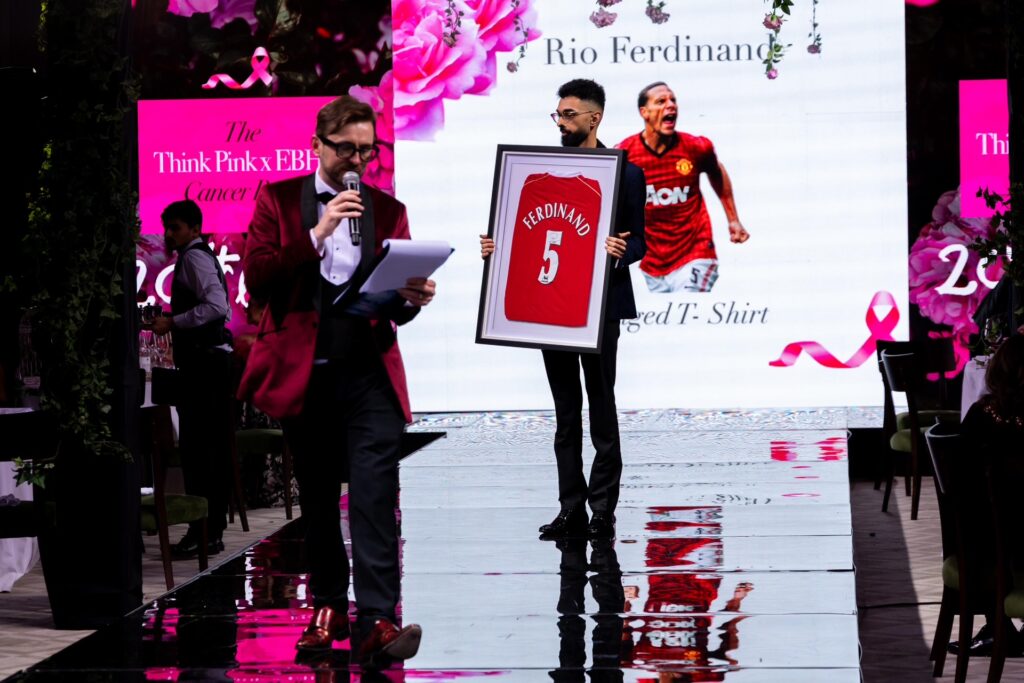
    Auctioneer selling a framed signed Rio Ferdinand Manchester United shirt at a charity fundraising gala

    In short

    • Charity auctioneering is a craft you build, not a gift you are born with. I built mine.
    • Master three things: reading a room, making the ask, and telling the story.
    • Reps and genuine care for the cause are what turn competent into great.

    People assume charity auctioneering is a natural gift. Some of it is temperament, but most of it is craft: learnable, improvable, and built over hundreds of rooms. This is where I found the work actually was.

    Learn to read a room

    Everything starts here. Before you can raise money you have to feel what a room is: warm or cautious, competitive or reserved, tired or buzzing. The only way to build that instinct is to stand in front of a lot of rooms and pay ruthless attention to how each one responds. I learned one of my sharpest lessons the hard way, by walking into a noisy room and starting before I had it quiet. I lost half the auction to chatter, and I have commanded the room first ever since.

    Get comfortable with the ask

    The hardest skill is looking a room in the eye and asking for real money without flinching. It feels unnatural at first. I make it feel like an invitation, warm and unembarrassed, so the room gives happily. Practise the pledge moment until it stops scaring you, because that moment is where the biggest numbers live.

    Tell the story

    A lot is worth what the room believes, and belief comes from story. I learned to make an experience feel like a memory and a cause feel specific and real. Facts inform. Stories move money.

    Control your energy and pace

    I try to play a room like an instrument: build pressure, release it with a laugh, use silence, never rush. That control only comes with reps. Watch yourself back, notice where you lost the room, and fix one thing at a time.

    Care about the cause

    The final, unteachable ingredient is that you have to genuinely care. A room can feel the difference between a hired voice and a real advocate, and it gives accordingly.

    No guide replaces reps. If you would like to see what all of this looks like in practice, take a look at how a few recent nights went.

    Kevin Durham, charity auctioneer

    Kevin Durham

    Charity auctioneer & event host
    20years£10m+raised60–80events/yr
    Check availability07596 851647
  • Why energy is a charity auctioneer’s most underrated tool

    Why energy is a charity auctioneer’s most underrated tool

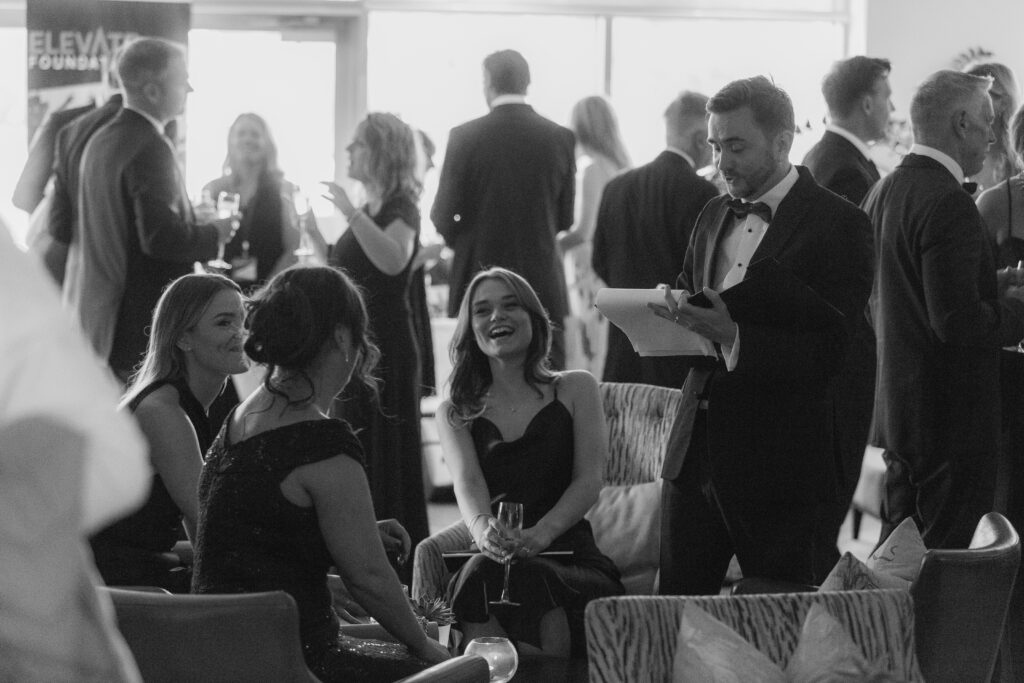
    Black and white photo of guests mingling at a charity gala while the auctioneer works the room

    In short

    • The host sets the temperature of the whole room. I take that seriously.
    • Genuine energy is contagious and pulls a hesitant room along.
    • It has to be controlled energy, not noise. Shouting just tires a room out.

    Walk into any event and you can feel the host’s energy within seconds. It sets the ceiling for the whole night. A flat host makes a flat room. A warm, high-energy one lifts everyone. It is one of the most underrated tools in the job, and one of the most misunderstood.

    Energy is contagious

    A room takes its cue from the person with the microphone. When I bring genuine warmth and momentum, hesitant guests are carried along by it. If I were low, no amount of clever lot descriptions would rescue the night. The host is the thermostat, not the thermometer.

    It carries the quiet moments

    Every auction has lulls: between lots, during a reset, when a bid stalls. My energy bridges those gaps so the room never goes cold, and buys me the space to tell a story or fix a problem without the evening sagging.

    Energy is not noise

    This is where people get it wrong. High energy does not mean shouting or relentless hype, which just exhausts a room and makes it defensive. Real energy rises and falls, uses stillness and pace, and knows when to lift a moment and when to let it breathe.

    It has to be real

    Forced enthusiasm is obvious and off-putting. The energy that works comes from genuinely enjoying the room and believing in the night. Twenty years on stage, and a run of 60 to 80 events a year, taught me how to bring that consistently for a couple of hours without ever tipping into noise.

    If you want a host who lifts the room without wearing it out, tell me about your event.

    Kevin Durham, charity auctioneer

    Kevin Durham

    Charity auctioneer & event host

    20years£10m+raised60–80events/yr
    Check availability07596 851647
  • The gavel’s giggle: the role of humour in auctioneering

    The gavel’s giggle: the role of humour in auctioneering

    Why humour raises more at a charity auction

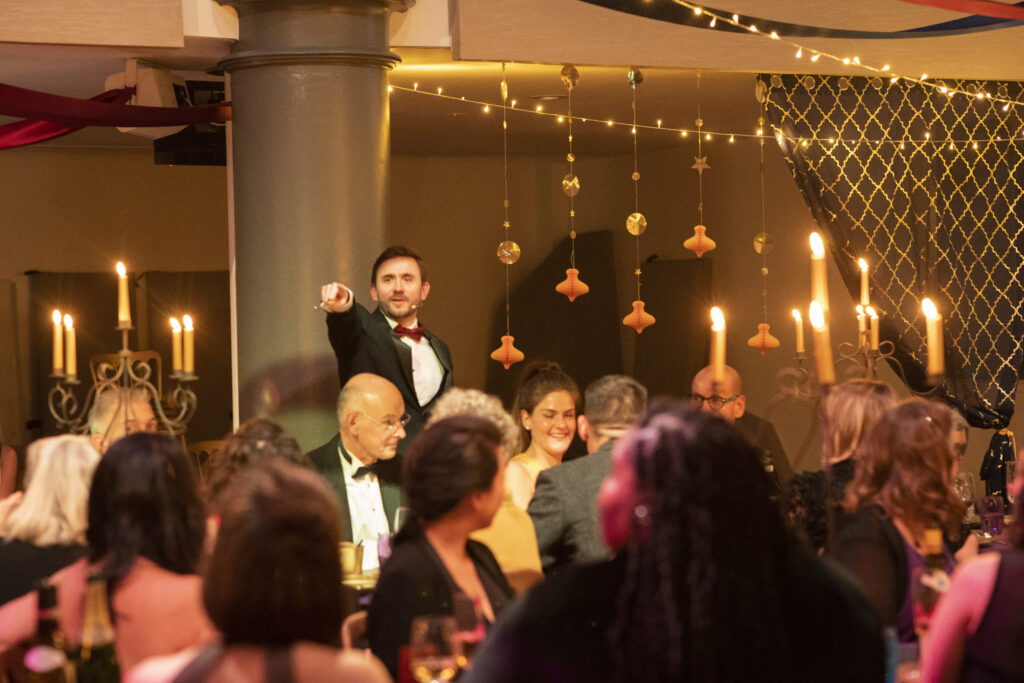
    Charity auctioneer taking a bid from the floor among guests at a candlelit gala

    In short

    • A room that laughs together relaxes, and a relaxed room gives more.
    • Humour is a tool, not a comedy set. Warmth matters far more than jokes.
    • Used well, it takes the tension out of the ask and keeps the energy high.

    There is a myth that a charity auction has to be earnest to be effective, as if laughter cheapens the cause. In my experience the opposite is true. A room that laughs together gives more, and humour is one of the most reliable tools I have. It should be, given I spent years in comedy before I ever picked up a gavel.

    Laughter relaxes a room

    Asking people for money creates tension. A well-placed laugh releases it. When guests are relaxed and enjoying themselves, generosity comes easily. When they feel awkward or pushed, wallets close. Humour is how I keep a room open.

    It is warmth, not a stand-up set

    This is the crucial distinction. I am not there to be a comedian, I am there to be warm, human and light on my feet. Gentle mischief with a bidder, a knowing line about the lot nobody wanted, a shared joke with a table. Jokes for their own sake pull focus from the cause, so I leave them at home.

    It takes the sting out of the ask

    The pledge moment is where humour earns its keep. A touch of lightness around a big ask makes it feel like an invitation rather than a squeeze, and lets people give generously without feeling cornered. Then, when it matters most, I put the jokes down and let the cause speak.

    Never at anyone’s expense

    The line matters. Humour should include the room, never mock it. I poke fun at myself, at the situation, at the lot, never at a guest. Warmth is the whole point, and a room can feel the difference instantly.

    Blending genuine entertainment with serious fundraising is exactly what I do. If that sounds right for your night, here is how I approach it.

    Kevin Durham, charity auctioneer

    Kevin Durham

    Charity auctioneer & event host
    20years£10m+raised60–80events/yr
    Check availability07596 851647
  • How charisma quietly maximises bids at a charity auction

    How charisma quietly maximises bids at a charity auction

    How charisma quietly maximises bids at a charity auction

    Charity auctioneer reading the next lot from his notes on stage at a charity ball

    In short

    • On stage, charisma is just attention plus trust. Nothing more mysterious than that.
    • It makes guests want to be part of the moment, not sit and watch it.
    • Quiet confidence raises more than showmanship. I have never shouted a total up.

    Charisma is one of those words that sounds like showing off. At a charity auction it means something far more useful: the ability to hold a room’s attention and earn its trust, so people want to be part of what is happening. That is what lifts bids, and it is quieter than you might think.

    Attention comes first

    You cannot raise money from a distracted room. So I command attention without demanding it, through presence, pace and genuine warmth rather than volume. Once the room is with me, everything else becomes possible.

    Trust is what turns attention into bids

    People give when they trust the person asking. I want to feel honest, in control and on the room’s side, so the ask lands as an invitation, not a pitch. That trust is built in my first few minutes on the mic and spent in the big moments later.

    I make people want in

    The best auctions feel like something you want to join, not watch from the side. I make bidding feel like belonging to a shared, generous, slightly competitive moment. Guests raise their paddles because they want to be part of it, and that is a very different thing from being sold to.

    Confidence beats fireworks

    Real charisma is quiet confidence. Steady, warm, unhurried, completely at ease. A room relaxes around someone who clearly knows exactly what they are doing, and a relaxed room is a generous one.

    That quiet confidence is not just a nicer way to run a room, it shows up in the total. One client came to me with a fundraising target for the night. By the time the room closed, they had raised double it. Nothing about the lots changed between briefing and event night. What changed was the room being led with quiet, steady confidence instead of noise.

    If you want that presence at the front of your room, let’s talk about your event.

    Kevin Durham, charity auctioneer

    Kevin Durham

    Charity auctioneer & event host

    20years£10m+raised60–80events/yr
    Check availability07596 851647
  • The things a charity auctioneer should never do

    The things a charity auctioneer should never do

    The things a charity auctioneer should never do

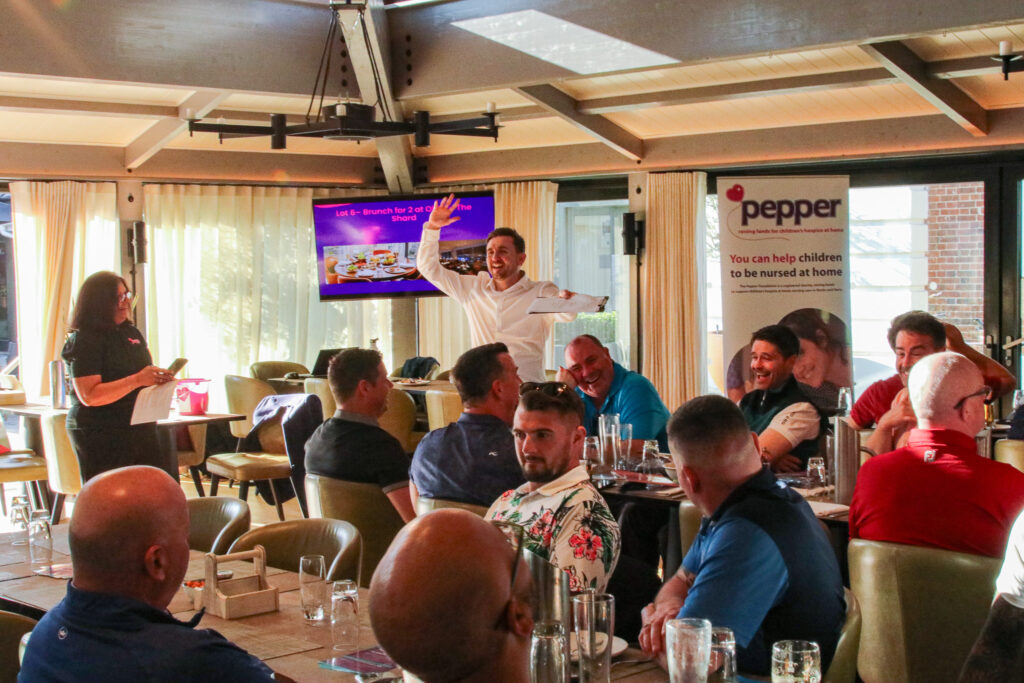
    Charity auctioneer in a white shirt hosting a lot at a daytime charity sports lunch

    In short

    • The fastest way to lose a room is to make the night about yourself. I never do.
    • I never pressure or embarrass a bidder: giving should always feel good.
    • I never wing the cause, overrun the room, or forget whose evening it is.

    Knowing what to do on stage matters. Knowing what never to do matters just as much, because a single misstep can cool a room for the rest of the night. Here are the ones I guard against most carefully.

    I never make it about me

    The quickest tell of an amateur is that the evening becomes their show. Your guests should leave talking about the cause and the total, not the person with the microphone. I am the frame, never the picture.

    I never bully a bidder

    Pushing someone past where they want to go, or embarrassing a guest who drops out, poisons a room. So I do the opposite. A bidder who bows out should feel like a hero for driving the price up, never like they lost. Generosity has to feel good, or it does not come back next year.

    I never wing the cause

    Vague, generic praise for a charity tells a room the host did not do their homework. People give to specifics: what the money changes, and who it helps. So I learn your cause properly before I ever pick up the mic.

    I never overrun

    A long auction is the enemy of a good total. Dragging lots out, chasing one more bid past the peak, letting the night sprawl: all of it drains the energy. I would rather run five to eight lots tightly than twenty that outstay their welcome.

    I never lose my composure

    Technology fails, lots stall, plans change. The moment a host looks rattled, the room tenses. Staying calm and warm whatever happens is not optional, it is half of what a committee is hiring.

    I never forget whose night it is

    It is the charity’s evening and the guests’ evening. I serve both, quietly and generously, and I let the cause take the credit. If that is the standard you want, let’s talk.

    Kevin Durham, charity auctioneer

    Kevin Durham

    Charity auctioneer & event host
    20years£10m+raised60–80events/yr
    Check availability07596 851647