

In short
- A charity awards host runs an evening for volunteers, fundraisers or supporters: people the charity wants to keep, not a corporate crowd.
- The job is three things: every name right, 20-plus presentations kept moving, and volunteers and organisers thanked as their own moment.
- An ask for money can share the night if it is short, comes once and is never aimed at the people being honoured.
- A staff member or patron can host a short, friendly evening. Book a professional for many awards, sponsors or an ask.
- Have your category list, name spellings and running order ready when you get in touch.
A charity awards host is the person who runs a charity’s own recognition evening from the stage: introducing each award, saying every name correctly, thanking the people who keep the charity going and, often, making one short ask before the night ends. This is for the supporter-care, volunteering or communications lead who has been handed the annual volunteer or supporter awards and must decide who holds the microphone. I host award ceremonies as well as charity galas, so I see where the two jobs meet.
What does a charity awards host do?
A charity awards host introduces each award, pronounces each name correctly, keeps the programme to time and makes the people being honoured feel seen. At a charity’s own evening the room is the people it most wants to keep, so the job is partly retention.
NCVO’s Time Well Spent report, published in 2023, found that 77% of recent volunteers expected to keep volunteering over the next 12 months. Among 18 to 24 year olds the figure was 59%, against 86% of those aged 55 or over. An awards evening cannot fix that alone, but it is the one night a year you can say thank you in front of everyone.
The wider job, the welcome, the transitions and the tone, is on my event hosting page. At an awards evening I add the nominee briefing, and Voice of God announcing is included at no extra fee when I host.
Getting every name right
You get every name right by checking each one before the night, not on it. I go through the script with the client on a call before the event, and again the day before. I break every name down phonetically, and if the client is unsure of one, I find the person and check how it is said.
Volunteers are often people who have never been on a stage. A University of Alberta study of 173 international students found 75% said their names were mispronounced at least some of the time, and that they still appreciated those who tried. It surveyed students, not volunteers, but the point carries: effort is noticed.
Put the phonetic spelling on the host’s card and on the card of anyone presenting. If a nominee’s family is in the room, a slip is what they remember.
How do you keep 20 or more presentations moving?
You keep 20 or more presentations moving by giving every award a time and the same handover each time. Do the sum before you plan the evening. These are my planning assumptions, not a record of a night.
| Awards | At 2 minutes each | At 3 minutes each | At 4 minutes each |
|---|---|---|---|
| 24 | 48 minutes | 72 minutes | 96 minutes |
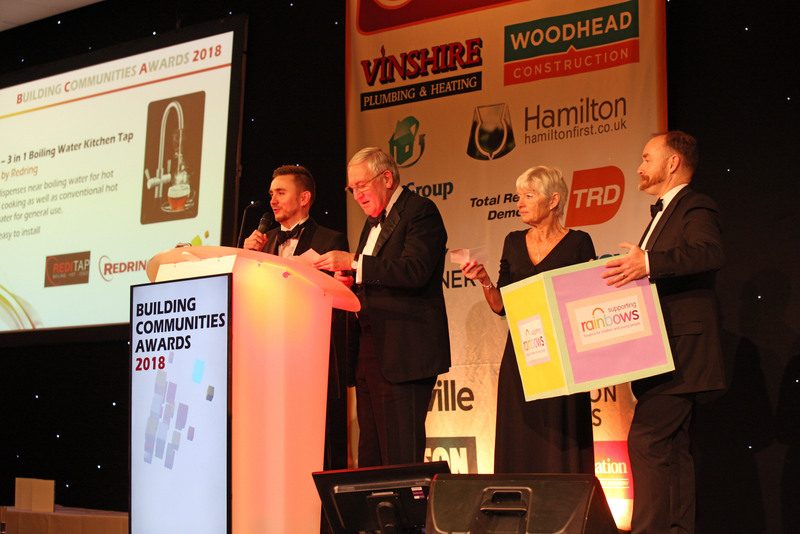
Between awards I use a fixed 60 seconds. I thank the person leaving, show them how to get off the stage, introduce the next one and leave the stage myself. When I come on I shake the previous speaker’s hand, introduce the next and go.
Someone on AV makes this easier. I recommend walk-on tracks for people coming up: they add energy and make it more of a stage show. Hiring a DJ for the day to cover it is not a bad idea, and would probably cost a lot less than a full AV company. And when I talk to a winner I hold the microphone, because handing it over invites a long reply and a polite wrestle to get it back. For the speeches that sit between awards, my fundraiser speech examples cover the shapes.
Who should the host thank, and when?
The host should thank the volunteers, the organisers and the sponsors, and the volunteers should get their own moment rather than a line in a list. At events I host I thank people for coming and always acknowledge the sponsors, and if a client has not asked, I suggest it. I also make sure volunteers and organisers are fully acknowledged: they are not forgotten exactly, but they rarely get the appreciation they deserve.
NCVO’s guidance on thanking volunteers says some people find a public thank you at an event more meaningful, while others prefer a quiet email or call. It also warns against creating “winners and losers”, and says it is often better to thank the whole team. So build the evening around that:
- Name every nominee, not only the winner, and give each a certificate.
- Include team and long-service awards, so nobody is singled out against others.
- Offer a private thank you to anyone who dislikes the stage.
- Keep prizes modest: NCVO suggests inexpensive items such as certificates, and warns that cash or vouchers may affect benefit claims or tax.
Charities already run these nights. Community Hospice held its annual volunteer awards on 3 June 2026, during Volunteers’ Week, with a mayor presenting categories including a volunteer team of the year. Another hospice’s celebration on 8 June 2026 gave 26 long-service awards for five to 25 years. Volunteers’ Week has run since 1984 and in 2027 falls on 7 to 13 June.
Donors need thanking too. My thank your donors guide covers what to say after the night.
Can a charity awards evening also ask for donations?
A charity awards evening can ask for donations if the ask is short, comes once and is not aimed at the people being honoured. The evening exists to recognise people, so a heavy appeal turns thanks into a sales pitch and the volunteers into targets.
My view on asks is balance. Ask too little and you leave money on the table. Ask again every 15 minutes and guests feel fleeced and will not come next year. My test is to sit in a guest’s chair and ask how you would feel being asked this many times. The Fundraising Regulator’s Code, standard 1.1.2, says you must not put undue pressure on a person to donate. It has applied since 1 November 2025.
What I would plan, as a suggestion rather than a rule: one block, a short film of three to four minutes at most and a short word from the charity, then the pledge, placed before the final award so the room stays seated. Keep the final award last either way. If there is a lot of recognition before it, a watered-down pledge is fine: one tier and a smaller target. The version with lots is in my awards dinner post.
Check the money rules. HMRC’s Gift Aid guidance says payment for admission to events is not eligible, so a ticket is not a gift. A pledge made on the night is a separate matter. This is general information, not tax advice.
Should a staff member, a patron or a professional be your charity awards host?
A staff member or patron can be your charity awards host for a short, friendly evening. Book a professional when there are many awards, several sponsors, a few hundred guests, or an ask on the programme, or when the person who would host should be enjoying the night as an organiser.
Patrons can be good. I am a patron of The Special Lioness, a charity in County Durham, myself, and patrons usually have a higher profile than an ordinary supporter and want the charity to do well. The trade-off is that they are not stage professionals, so give them a card and a time. A room of fewer than about 30 people feels more like a big round-table meeting, so a host is not what it needs.
What a professional changes is the work around the microphone: the briefing, the name checks, the clock and the tone when a first-time winner freezes. If you are deciding between roles, my guides to host or auctioneer, running the night and how to MC set out the trade-offs.
“He came early to do a run through and meet guests.”
That is an extract from a longer review on my client reviews page, about a charity event rather than an awards evening. The care taken before the night is what matters here.
Before you get in touch
Have ready the date and venue, your guest numbers, the category list with who presents each, the nominee names with spellings, the sponsors and any ask you plan. Tell me what went wrong last year, too.
I am Kevin Durham, a charity auctioneer and event host based in Kent, working across the UK. If you want the awards side on its own, my sister site covers award host bookings. If the evening includes a pledge, the auction software is included when you hire me: I build it around your event, in your branding, and it stays live for one month afterwards. Call me on 07596 851647 or email hello@thecharityauctioneer.uk.

Kevin Durham
Charity auctioneer & event host