
In short
- An auction lot introduction says what the lot is, what is included, what is not, and where the bidding starts.
- Shorter is better. A listening room can hold only a handful of facts at once, so the catalogue carries the detail.
- The terms belong inside the introduction, not in small print, so nobody wins something they cannot use.
- No introduction rescues a lot that is wrong for the room. That problem starts with the lot list, not the microphone.
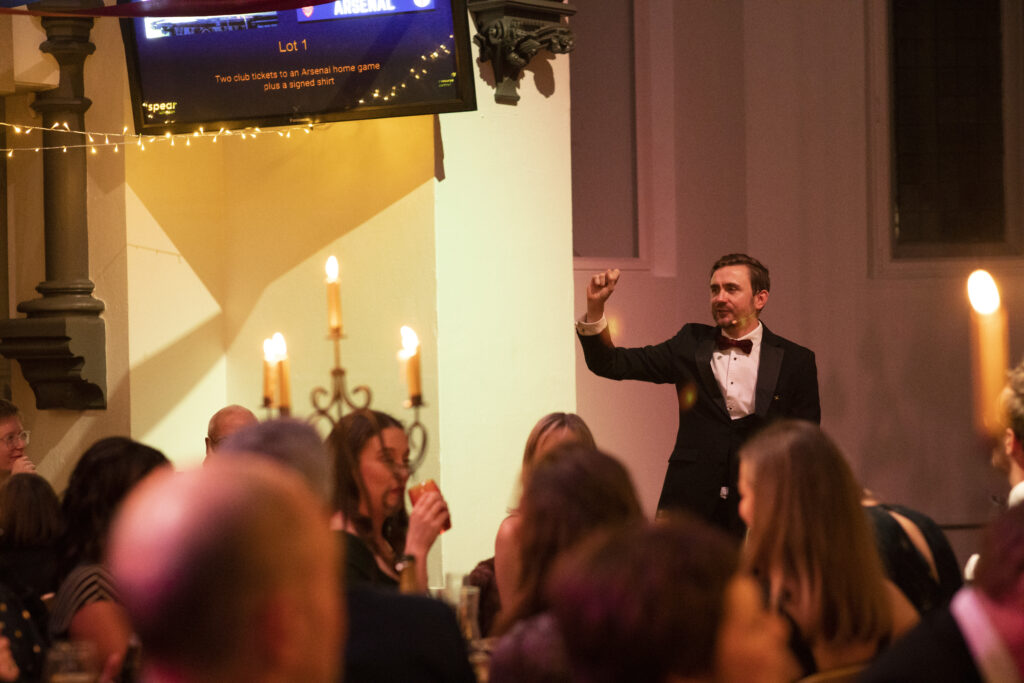
Introducing an auction lot is the short spoken pitch an auctioneer gives before taking the first bid: what the lot is, what the winner actually gets, and the terms that come with it. Done well, the room knows exactly what it is bidding on before a single hand goes up.
I introduce lots for a living, and my own rules are simple. I keep every introduction as short as I can, and I weave the terms and conditions into every lot. This is for the gala coordinator or committee chair writing the lot sheet, or briefing whoever holds the microphone. It is general guidance, not legal advice, as at November 2026.
What should an auction lot introduction include?
An auction lot introduction should cover five things: what the lot is, what the winner receives, what is excluded or restricted, the value where there is an honest one, and the opening bid. Anything beyond that is colour. Colour is optional.
| Part | What it answers | Say it as |
|---|---|---|
| The lot | What is it? | One plain sentence |
| What you get | How many people, where, what is included | The specifics, not adjectives |
| The terms | What is excluded, when it expires, any limits | Part of the same breath |
| The value | What it would cost elsewhere | Only if you can stand behind it |
| The start | Where does the bidding open? | A clear first number |
The value line can be worth real money. HMRC’s Gift Aid guidance, section 3.40 as read in November 2026, says part of a winning bid can qualify only where the item is sold commercially and “the donor must know the monetary value of the item” when they make their bid. Saying the shop price out loud does that job. For the written version of all this, see my piece on the auction catalogue.
How short should an auction lot introduction be?
An auction lot introduction should be as short as you can make it while still saying what the lot is and what its terms are. That is my rule for every lot I sell. A room listening over dinner is not reading a brochure.
There is a reason beyond taste. Reviewing the research in 2010, the psychologist Nelson Cowan put the central limit of working memory at around three to five meaningful items in young adults. A table of guests mid-conversation will not beat a lab. Give them six facts and some will fall out, and you do not get to choose which.
So say the facts that change a bid. The donor’s history and the full itinerary can live in the catalogue or on the screen.
Why say the terms out loud on every lot?
Saying the terms out loud on every lot means the room knows what it is getting, and what it is not, before anyone bids. That is why I weave them into every introduction. A winner who learns afterwards that the weekend away excludes school holidays is a complaint, not a donor.
Professional salerooms work the same way. The Lots Road terms of sale, clause 8d as read in November 2026, say an announcement by the auctioneer before the hammer falls takes precedence over the catalogue. What is said from the front counts.
The law leans that way too. Under section 50 of the Consumer Rights Act 2015, anything said to a consumer about a service by or on behalf of a trader can become a contract term, subject to anything said on the same occasion that qualified it. Whether a charity at its own gala counts as a trader depends on the facts. Either way, the restriction belongs in the same breath as the promise.
The Code of Fundraising Practice, standard 1.2.1, says fundraising must not mislead, and that includes leaving information out. And under the Sale of Goods Act 1979, the sale is complete at the hammer’s fall. The terms have to come first.
You can only say terms that somebody wrote down, which is why the donation form for each lot matters more than anything I say on the night.
An example introduction, with the terms woven in
Here is an example for a made-up lot, written to show the shape. It is not a script of mine, and the restaurant is invented.
“Lot four. A private pizza-making class for six at a restaurant in town, with lunch afterwards. It runs on a weekday, any month except December, booked within twelve months of tonight. Drinks are not included, and it cannot be swapped for a voucher. The restaurant sells it for £300. Who will start me at £100?”
That is fifty-five words, and every sentence does a job:
- What it is, in one line.
- The terms, said as plainly as the good news.
- What is not included. Nobody wants a surprise bill.
- The value, a reference point that also helps any Gift Aid claim.
- The opening number, something for the first hand to answer, set low enough that someone will.
There is no “fabulous” and no “once in a lifetime”. If the lot is good, the facts sell it.

Can a good introduction save the wrong auction lot?
No. A good introduction cannot save an auction lot that does not suit the people in the room, because no wording changes who is sitting at the tables. The fix happens weeks earlier, when the lot list is drawn up.
I have two flops that taught me this. At a charity golf day, a client wanted a blow-up doll in the auction for a laugh. I felt it was a step too far for that room. A joke lot only works if the whole room is in on the joke.
The other was a bouncy castle hire, offered at an event full of middle-aged guests. It was simply too niche. To want it, a buyer needs a child with a party coming up and enough space to put one up. The HSE’s bouncy castle advice, updated June 2026, also expects at least six anchor points outdoors, no use in winds above 24mph and constant supervision. That is a lot to take on for a room with no young children in it.
Neither lot had a wording problem. Both had a room problem. My guide to the best auction items covers which lots tend to work, and how to source lots covers where to find them.
Checking each lot suits the room before the night
Test each lot against the guest list, not your own taste. Four questions catch most mismatches:
- Could several people in this room actually use it? If the honest answer is one or two, it will not get a contest.
- What does a buyer need to already have? A child, a garden, a free weekend in August. Every condition shrinks the pool.
- Is the joke on someone? Half a room laughing is worse than none.
- Can the terms be said in one sentence? If not, it may suit the silent auction better.
Allsop’s charity auction advice, from May 2018, suggests keeping the live auction to roughly ten to fifteen lots. A short list makes these checks quick.
When is it worth hiring a charity auctioneer for this?
Writing your own lot introductions is fine when the list is short, the lots are simple and the room is friendly. Bring in a professional when the lots carry awkward terms, the guest mix is wide, or last year’s lots stalled and nobody knew why.
My strategy work before the night covers lot sourcing and the shape of the programme, and that is where a lot that will not suit the room gets caught, long before I pick up the wireless mic. Naomi Chaning Pearce of Jigsaw Trust put it this way on my reviews page: “It was not just during the event where Kevin showed his skills, but also in guiding our planning.” Kind words, and the planning was very much her team’s work.
When you get in touch, have ready the date, the room size, a rough picture of who is coming, the lot list with each lot’s terms, and the running order. Hire me and the auction software is included: I build it around your event, with your branding and lots, and it stays live for one month afterwards. It is part of my auctioneer services.
Call 07596 851647 and we can go through your lot list together.

Kevin Durham
Charity auctioneer & event host