
In short
- Yes, a charity auction can sell one lot to two bidders, as long as the donor can genuinely supply a second one and has agreed to it before the night.
- My version is the twist: take the lot as high as it will go, start to close, then drop the price a little and sell it to the top two bidders.
- On football VIP tickets bid to £2,500, two sales at £2,300 raise £4,600 for the charity instead of £2,500.
- It has to happen before the hammer falls. After that the sale to the top bidder is complete.
- One-off lots, such as a signed item or a money can’t buy experience, cannot be doubled.
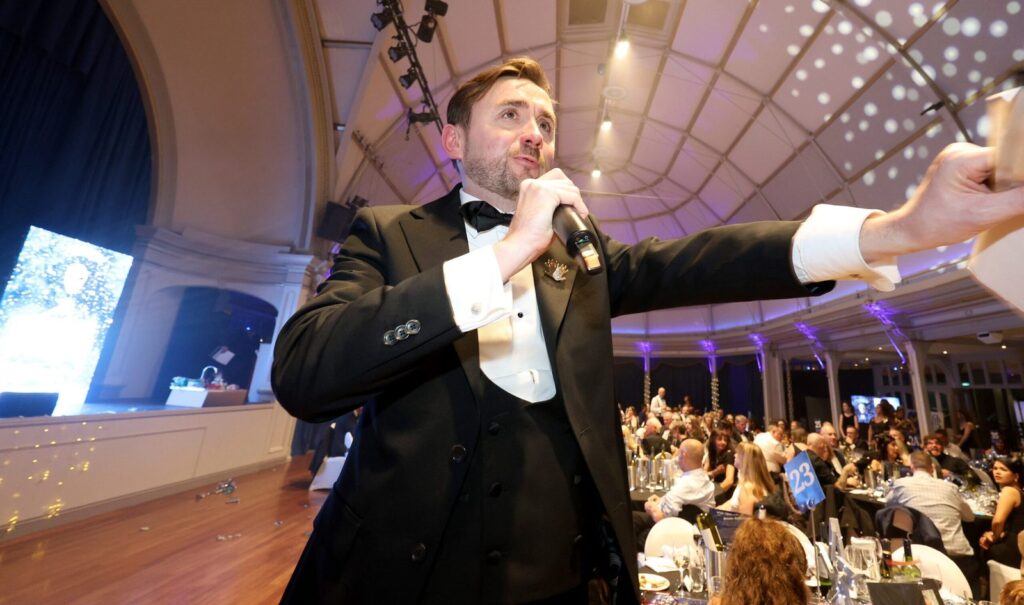
Selling the same auction lot to more than one bidder means taking a lot the donor can supply twice and closing it with two buyers instead of one. Done at the right second, it is one of the quickest ways I know to add money to a live auction. Here is how I do it.
Can you sell the same auction lot to more than one bidder?
You can sell the same auction lot to more than one bidder when the donor can provide two identical prizes and has agreed to it in advance. The auctioneer runs the lot as a single sale, then, before the hammer falls, offers the same lot to the top two bidders at one price.
The timing is not a detail. Under section 57 of the Sale of Goods Act 1979, each lot is treated as a separate contract, and a sale by auction is complete when the auctioneer announces it by the fall of the hammer. Until then, any bidder may retract. That window is where the twist lives. Once the hammer is down at £2,500, the top bidder has bought the lot at £2,500, and changing the deal afterwards is a different conversation.
So the order matters: bidding, “going, going”, the twist, then the hammer on the new deal.
How does selling one lot to two bidders work on the night?
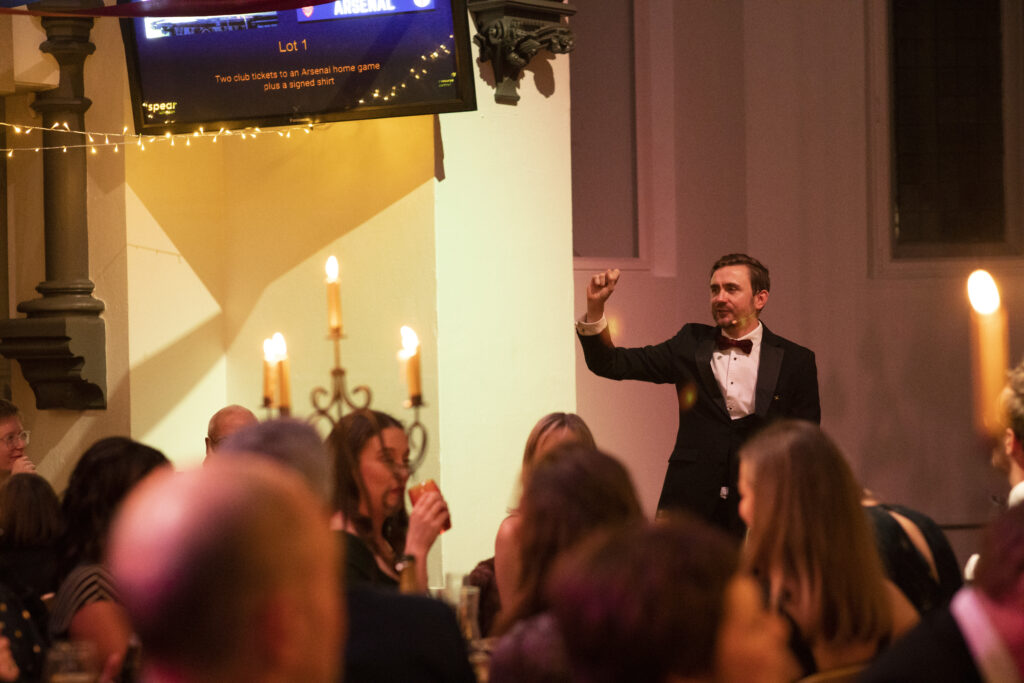
Selling one lot to two bidders works by running the lot as normal, then offering a deal at the very end. I usually present the lot as if there is only one, take the bidding as high as it will go, start to close, then tell the room there is a twist.
Here is the sequence, using an example I like: a pair of exclusive VIP tickets to a football match.
- Present it as one lot. No hint that a second pair exists. The room bids on what it sees.
- Take it as high as it goes. Two bidders fight it up to £2,500 and the second one stops.
- Start to close. “Going, going…”
- The twist. I stop and tell the room I have a deal for them.
- Drop the price a little. I might take it to £2,300.
- Sell it to both. The top bidder and the second bidder each get a pair at £2,300.
The drop is small on purpose. It rewards the two people who carried the lot. It is not a clearance sale.
Why are both bidders happy with the deal?
Both bidders are happy because each gets something they did not have a moment earlier. The top bidder gets a discount on a lot they had already agreed to pay more for. The second bidder, who had just lost, is suddenly back in the game and goes home with the prize.
That second bidder matters more than people think. In an ascending auction the winner pays roughly what the second highest bidder was willing to pay, so the under-bidder is the person who set the price. My guide to bid increments goes into that. Someone still bidding just below £2,500 has already shown you that £2,300 is within reach.
They have also spent the last few minutes picturing themselves at that match. Heyman, Orhun and Ariely’s 2004 experiments found that the way an auction unfolds changes what people think an item is worth, through the pull of a rival and a sense of ownership that builds while you are winning, which they called quasi-endowment. Losing at the last step stings. The twist removes the sting.
And at a charity auction both buyers know where the money goes. Economists Engers and McManus, in the International Economic Review in 2007, model charity auctions on the basis that bidders care about the money raised, not only the prize.
The arithmetic for the charity
The sums are simple. Two sales at £2,300 are £4,600, against £2,500 for one. The charity gains £2,100 from a lot that was about to close, and the donor’s second pair of tickets did the work.
| Outcome | Sales | Price each | Charity receives |
|---|---|---|---|
| Hammer at the top bid | 1 | £2,500 | £2,500 |
| The twist, a small drop | 2 | £2,300 | £4,600 |
| Illustration only: a deeper drop | 2 | £2,000 | £4,000 |
The third row is an illustration, not my practice. A deeper cut still beats a single sale, but it hands back £600 the room was ready to pay. A small drop is enough. Economists call identical units sold at one price a uniform-price auction. In the room it just feels like a good deal for two people.
Which lots can you sell to more than one bidder?
You can sell a lot to more than one bidder only when the donor can supply a genuine second one: a second pair of hospitality seats, a second stay at the same holiday home, a restaurant happy to host the same dinner twice. Check with the donor first and agree it before the night, not on the night.
Put the second one on the donation form so it is in writing: how many the donor can provide, whether the dates differ, and whether the two sets of seats are together. Then tell the auctioneer. A twist the donor has not agreed is a promise the charity cannot keep.
Football tickets need one more check. For a designated football match in England and Wales, section 166 of the Criminal Justice and Public Order Act 1994 makes it an offence for anyone not authorised in writing by the organisers to sell or pass on a ticket. The easy route is for the club to donate the hospitality, or confirm in writing that the charity may auction it. That is general information, not legal advice.
What cannot be doubled is anything that is unique by design: a signed item, a money can’t buy experience lot, a one-off naming opportunity. Selling a second of those would be selling something that does not exist.
The other method: offering further places to the room
The best-known alternative is to sell the lot at the hammer, then offer further places at the same price to anyone else in the room. It suits a lot with plenty of capacity, such as extra seats at a dinner, and it is a known technique rather than the one I use.
Online, eBay’s Second Chance Offer lets a seller with more of the same item offer it to a bidder who did not win, at that bidder’s last bid.
The trade-off is that the room learns there is more than one. Once guests expect a second chance, some stop bidding early and wait for it. The twist keeps the lot feeling single until the last second, which protects the price.
Either way, stay honest. The Fundraising Regulator’s Code, in effect from 1 November 2025, says fundraising must not mislead donors. You do not have to announce the second pair. You must not describe a lot as the only one in existence when it is not.

When is it worth bringing in a professional auctioneer for this?
Bringing in a professional auctioneer is worth it when your best lots can be doubled and you want someone to judge the moment. The twist depends on reading two bidders in real time: whether the second one stopped close to the top, and whether the room is warm enough to cheer a deal.
A volunteer host can run the simpler version well. If you have ten dinner places at a set price, read them out and sell them. You do not need me for that. What is harder is turning a lot that is about to close into two sales without the top bidder feeling short-changed, and that comes from doing it in front of real rooms.
Naomi Chaning Pearce of Jigsaw Trust put it this way on my reviews page: “Kevin owned the room as he conducted the live auction, more than doubling our target.” Kind words. The credit belongs to their team, who built a room that wanted to give.
If you are planning a gala, have your lot list ready, mark which donors could supply a second one, and tell me your date and room size. When you hire me I also build your auction platform around the event, with your branding, lots and tickets, included for the night and live for one month afterwards. See what a charity auctioneer does on the night, or call 07596 851647.

Kevin Durham
Charity auctioneer & event host