Category: testimonials

  • How to run a charity raffle in the UK: rules, prizes and pitfalls
    How to run a charity raffle in the UK: rules, prizes and pitfalls

    How to run a charity raffle in the UK: rules, prizes and pitfalls

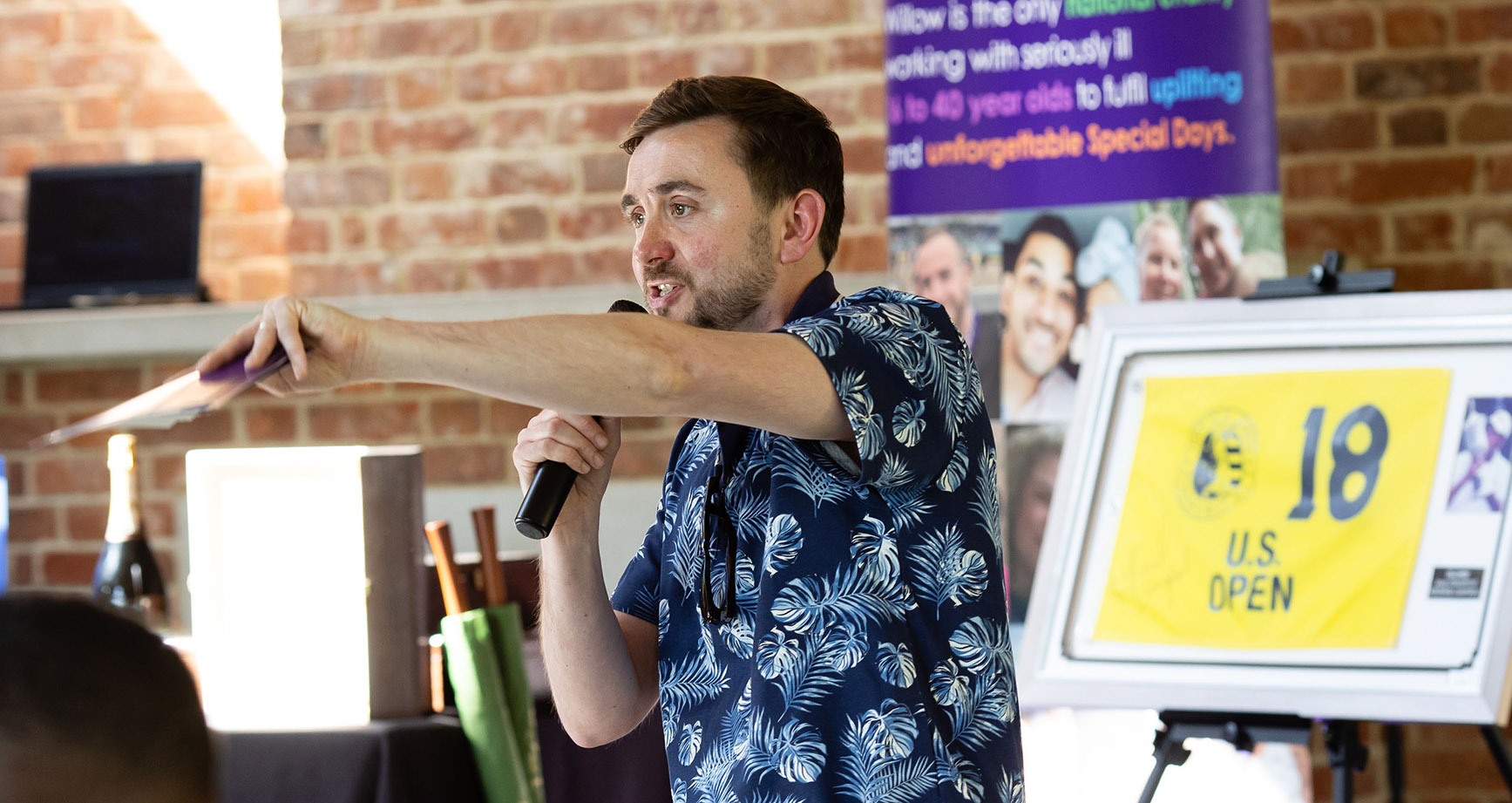
    Kevin Durham hosting the raffle draw in his trademark Hawaiian shirt at a live charity fundraising event

    In short

    • A raffle is a lottery in law, so before you sell a single ticket you need to know which type you are running and whether it must be registered.
    • Two formats let most groups raise money without a Gambling Commission licence: an incidental lottery drawn at an event, and a small society lottery you register with your local council.
    • A small society lottery is registered with your council for a fee of around £40. At least 20% of the money must go to the good cause, and no single prize may exceed £25,000.
    • Great prizes are donated, not bought. The right ask, aimed at the right local businesses, keeps far more of the ticket money with your cause.
    • The biggest pitfalls are legal, not logistical: selling in the street, letting under-16s buy, or assuming Gift Aid applies to ticket sales. It does not.

    A charity raffle is one of the most reliable fundraisers there is, which is exactly why people run them badly. The tickets are cheap, the format is familiar, and it all feels too simple to get wrong. Then someone sells a book of tickets in the high street, or promises a car as the top prize, and the evening that should have raised a few thousand pounds turns into a compliance headache instead.

    I am Kevin Durham, a professional charity auctioneer and event host, and I have spent twenty years running the money side of fundraising events across the UK, from village dinners to a Monaco gala that raised over €1,000,000 in an evening. A raffle almost always sits somewhere in that night. Here is how to run a charity raffle properly: the rules that actually apply, how to land prizes people want, and the mistakes that quietly cost you.

    What counts as a raffle or lottery in law?

    In law, a raffle is a lottery: people pay to enter, prizes are awarded by chance, and at least one stage of the process relies on luck. The moment money changes hands for a chance to win, gambling law applies, and that is true whether you call it a raffle, a tombola, a prize draw or a sweepstake.

    That sounds heavier than it is. The Gambling Commission publishes plain guidance on raffles and lotteries for fundraisers, and most small events fall neatly into one of a few permitted categories. The point is simply to know which category you are in before you start selling, not to be caught out afterwards.

    The good news for most groups is that you almost certainly do not need a full operating licence. You need to match your raffle to one of the low-admin formats below and then follow that format’s rules. Get that right and everything else is common sense.

    The two charity raffles you can run without a licence

    For most fundraisers, there are two practical formats that need no Gambling Commission operating licence at all. The Commission sets these out in its guidance on permitted lottery formats, and between them they cover the vast majority of charity raffles.

    The incidental lottery. This is the classic raffle drawn at an event: a gala dinner, a fete, a quiz night, a sports club presentation. It is called incidental because the raffle is a side attraction, not the reason people came. You can sell tickets and draw the raffle during the event, with no registration required. There are conditions: the tickets are sold and the draw normally takes place at the event itself, and there are limits on how much you can deduct for costs and prizes. It is the simplest route if everything happens on one night in one room.

    The small society lottery. This is the format to use when you want to sell tickets in advance, over weeks, away from a single event. It is run by a non-commercial society (a charity, sports club, or community group) to raise funds for that society’s purpose. It does need registering, but with your local council rather than the Gambling Commission, and the process is straightforward. More on that next.

    If your raffle is bigger than either of these allows, or you plan to sell across many areas or online at scale, you may need a licence instead. When in doubt, read the official guidance or ask your local licensing team before you print tickets.

    Kevin raising funds at a live charity event

    How do you register a small society lottery?

    You register a small society lottery with the licensing authority for the area where your group’s main office is based, which in practice means your local council. It is an administrative registration, not a difficult application, and you can usually do it online or by post.

    The essentials, drawn from the Commission’s guidance on running a small society lottery, are worth knowing before you commit:

    • The fee. Registration typically costs around £40, with an annual renewal of about £20. Your council confirms the exact figures.
    • The 20% rule. At least 20% of everything you take must go to the good cause. Spend too much on prizes and printing and you can breach this without noticing.
    • Prize and sales limits. No single prize may exceed £25,000. You cannot sell more than £20,000 of tickets in a single draw, or more than £250,000 of tickets across a year. Larger than that and you move into large society lottery territory, which needs a Commission licence.
    • Returns. After each draw you send the council a short return showing tickets sold, proceeds, prizes and the amount that went to the cause. Keep clean records from day one and this is painless.

    Register in good time. Councils can take a few weeks to process the paperwork, so do not leave it until the fortnight before your event.

    What prizes work best, and how do you get them donated?

    The best charity raffle prizes are things people genuinely want but would not normally buy for themselves, and the best way to get them is to have them donated rather than bought. Every pound you spend on prizes is a pound off the total, so a donated prize is worth far more than its ticket price to your cause.

    In my experience the prizes that sell tickets fastest are experiences and treats, not gadgets: a meal for two at a good local restaurant, a hamper from a farm shop, a spa afternoon, a case of wine, tickets to a match or a show. Local businesses will often give these gladly, because a raffle prize puts their name in front of a warm, local audience for the price of one voucher.

    To land good donations, make the ask specific and easy:

    • Approach the right businesses. Local, independent, and already community-minded beats a national chain that routes everything through head office.
    • Tell them what they get. Their logo on the ticket, a mention from the stage, a photo with the winner. Recognition is the currency here.
    • Make saying yes simple. A one-paragraph email, a clear deadline, and an offer to collect the prize yourself.

    If you are also running an auction on the night, the same donor relationships feed both. My guide to donation ideas covers how to source lots that raise real money, and the strongest raffle prizes often come from exactly the same conversations. Sourcing in-house, rather than buying prizes in, is one of the simplest ways to keep more of the money with the charity.

    How should you price and sell your tickets?

    Price your tickets so they are an easy impulse buy, and make the maths of buying more feel like a bargain. The familiar structure works because it works: £1 a ticket, or a strip of five for £5 framed so that buying a strip feels like the sensible choice.

    A few rules are not optional. Every ticket must be the same price, so you cannot charge one buyer more than another for the same chance. Tickets must be paid for before the draw, so no IOUs and no “I’ll settle up later”. You can sell to anyone aged 16 or over, but not to under-16s. And you cannot sell tickets in the street, which catches more well-meaning volunteers than any other rule.

    To sell more without breaking any of that, keep the effort where the people are:

    • Sell in advance and on the night. A small society lottery lets you run for weeks beforehand, which almost always beats relying on the room alone.
    • Give sellers a target. People raise more when they know the number they are aiming at.
    • Bundle the raffle with the evening’s energy. A raffle draw lands hardest when the room is already warm. Slot it alongside your other fundraising games rather than dropping it flat into a quiet moment.

    The single biggest lever is confidence. A seller who believes in the prizes and asks everyone will out-raise a table of tickets left hopefully by the door.

    How do you draw a charity raffle fairly?

    You draw a charity raffle fairly by making the process visibly random and impossible to rig, then doing it in front of the people who bought tickets. Fairness that nobody sees is worth very little, because trust is part of what makes people buy next year.

    Keep it simple and transparent. Fold or tear tickets so numbers cannot be read, mix them properly in a drum or a bowl, and have someone independent draw the winning tickets in full view. If your draw is not at a live event, publish the winning numbers promptly and tell buyers how to claim, ideally with a witness present when you draw.

    A short script from the stage helps more than people expect. Name the prizes, thank the donors by name, build a little tension before each number, and celebrate the winners warmly. Momentum is a skill, not luck, and a well-run draw sends people home feeling good about giving, which is the real return on the night.

    What are the most common charity raffle pitfalls?

    The most common charity raffle pitfalls are legal rather than logistical, and nearly all of them come from treating a raffle as too casual to have rules. These are the ones I see catch good, well-meaning fundraisers:

    • Selling tickets in the street. It feels harmless and it is not allowed. Sell at your event, through members, or in premises with permission instead.
    • Selling to under-16s. Tickets are for over-16s only. Brief your volunteers so nobody sells to a keen teenager.
    • Assuming you do not need to register. If you are selling in advance, away from a single event, that is a small society lottery and it must be registered with the council first.
    • Breaching the 20% rule. Overspending on prizes and printing can push the share going to the cause below the legal minimum. Budget for it from the start.
    • Promising a prize you have not secured. Never advertise a top prize until it is confirmed in writing. A withdrawn star prize damages trust fast.
    • Mishandling the money. Count takings with two people, bank promptly, and keep the records your return will need.

    None of these are hard to avoid. They only bite the events that assumed a raffle was too small to bother getting right.

    Can you claim Gift Aid on raffle tickets?

    No. You cannot claim Gift Aid on raffle or lottery ticket sales, because the buyer receives something of value in return: the chance to win a prize. Gift Aid only applies to genuine, freely given donations, as the government’s Gift Aid guidance sets out.

    This trips people up because Gift Aid is so central to other fundraising. The workaround is to keep the two things separate. Run your raffle as a raffle, and offer a straightforward donation route alongside it, a collection, a pledge, or a fund-a-need, where eligible UK taxpayers can add Gift Aid to a true gift. That way the raffle does its job and the donations do theirs, and you claim the tax relief only where it genuinely applies.

    A quick compliance checklist before you sell

    Before any tickets go out, run through the basics one more time. It takes five minutes and saves the kind of problem that is hard to fix afterwards.

    • Which format are you running: incidental lottery at an event, or a small society lottery sold in advance?
    • If it is a small society lottery, is it registered with your council, with the fee paid?
    • Are all tickets the same price, and will every one be paid for before the draw?
    • Are your sellers briefed on over-16s only, and no selling in the street?
    • Have you budgeted so at least 20% of proceeds reaches the cause?
    • Is every advertised prize confirmed in writing?

    If you can tick all six, you are on solid ground. If you are unsure on any of them, the official guidance linked above answers it faster than guessing.

    Where to start

    Decide your format first, because everything else follows from it. If the raffle lives entirely inside one event, an incidental lottery keeps the admin to almost nothing. If you want to sell for weeks beforehand, register a small society lottery with your council and give yourself time. Then line up donated prizes people actually want, brief your sellers, and plan a draw that feels fair and fun.

    A raffle rarely carries a fundraising night on its own, but run well it lifts the whole room and warms people up for the bigger asks. If you would like a hand shaping an event where the raffle, the games and a live auction all pull together, I offer a free initial consultation through my auctioneer services. And if you are still gathering options, my wider list of fundraising ideas is a good place to start.

    Kevin Durham, charity auctioneer

    Kevin Durham

    Charity auctioneer & event host

    20years£10m+raised60–80events/yr
    Check availability07596 851647

    Let’s talk

    Bring this to your event

    Book a free consultation with a charity auctioneer who has raised over £10 million.

  • Charity vacation auctions: sourcing and selling travel and holiday lots

    Charity vacation auctions: sourcing and selling travel and holiday lots

    Spanish villa with a swimming pool and palm tree, offered as a holiday prize lot

    In short

    • Travel lots consistently perform well at charity vacation auctions, but only when they are sourced without a commission-hungry broker sitting between you and the donor.
    • In-house sourcing keeps significantly more of the lot’s value with your charity than going through a third-party travel supplier.
    • The way you describe a holiday lot matters more than the destination itself. Bidders buy the experience, not the retail brochure price.
    • A donated villa or hotel stay needs the same catalogue discipline as any other lot: dates, inclusions, and how it is redeemed.
    • Sequence travel lots deliberately. They tend to work best when a bidder can picture themselves using it immediately, not buried mid-catalogue.

    Travel and holiday lots are some of the strongest performers at charity vacation auctions, because they sell an experience rather than an object. Getting the sourcing and the framing right is what decides whether that potential actually converts into bids.

    Where should you source lots for charity vacation auctions?

    Source travel lots directly from hotels, villa owners, tour operators, and generous individual donors, rather than through a commission-based lot-supply broker, so more of the lot’s value ends up with your cause rather than an intermediary.

    I have consistently found that sourcing in-house, guided by someone who knows what a room will actually bid on, keeps significantly more funds with the charity than routing everything through a third-party lot supplier. A broker takes a cut somewhere in that chain. A direct relationship with a hotel or venue does not.

    How do you ask a hotel or venue to donate a stay?

    Ask directly, with a clear, specific proposal: dates or a date range, what exposure the venue receives in your catalogue and on the night, and confirmation of exactly what is included.

    Most hospitality venues are used to these requests and will donate for genuine, verifiable exposure rather than a middleman’s introduction fee. A short, specific email, naming your cause, your event date, and what you will offer in return, gets further than a vague ask for “any support you can offer.”

    Why sourcing without a broker matters so much for travel lots

    Because travel lots tend to carry a higher retail value than most other auction items, so any commission taken by a third-party supplier removes a larger absolute amount from what reaches your cause compared with a smaller donated item.

    This is where the maths genuinely adds up against using a broker. A commission on a £2,000 holiday lot costs your charity far more in real terms than the same percentage on a £200 hamper. Sourcing this category in-house is where the discipline pays off most.

    How should you describe a travel lot to make it sell?

    Travel lot example: a French cruise

    Describe the specific experience, not just the destination: what the guest actually does, sees, and feels, alongside the practical details of dates, inclusions, and any restrictions, rather than a generic “luxury holiday” description.

    “A week in Portugal” is forgettable. “Seven nights at a beachfront villa with a private pool, sleeping six, available across next spring” gives a bidder something concrete to want. I have watched the same underlying donation sell for noticeably more once the description gave people a specific moment to picture themselves in, rather than a vague geography.

    Woman comparing a silent auction lot's reserve price to a cheaper equivalent holiday listing on a tablet

    Should a travel lot have a reserve price?

    Where a travel lot carries genuine retail value, a modest reserve can protect the donor’s generosity from being undersold, but it should be set conservatively and disclosed, since an over-cautious reserve on a big lot can suppress bidding rather than protect it.

    I would rather set a fair, honest reserve and let the room’s competitive energy carry the price past it, than set one so high that it dampens the bidding before it starts. The goal is protecting the donor’s gift, not maximising the reserve itself.

    Practical details every travel lot needs in the catalogue

    A travel lot needs exact validity dates or a booking window, what is included and excluded (flights, meals, transfers), any blackout periods, and clear instructions for how the winner redeems it.

    Vague redemption terms are one of the most common complaints after an auction closes. Sorting this out before the night, not after a winning bidder calls asking how to actually book their prize, protects both your charity’s reputation and the donor’s goodwill for next year.

    Where should travel lots sit in your running order?

    Travel lots tend to perform best positioned where the room’s energy is already building, rather than buried early or left until attention has faded, since they benefit from bidders feeling ready to commit to something aspirational.

    I generally treat a strong holiday lot as one of the evening’s anchor moments, sequenced with the same care as any signature item, timed for when the room is warmed up but not yet fatigued. My live auction sequencing accounts for this specifically when I know a travel lot is in the catalogue.

    Getting charity vacation auctions right

    • Go directly to the source, not through a commission-based supplier, so more of the value stays with your cause.
    • Ask specifically, naming your cause, your date, and the exposure the donor receives.
    • Describe the experience, not just the destination.
    • Set reserves conservatively, and disclose them.
    • Nail down redemption details before the auction, not after.

    If you want a fuller framework for sourcing any category of lot, not just travel, my guide on sourcing auction lots covers the same in-house principles, or see the best auction items for charity events for how travel lots compare against other strong performers.

    Kevin Durham, charity auctioneer

    Kevin Durham

    Charity auctioneer & event host

    20years£10m+raised60–80events/yr
    Check availability07596 851647

    Let’s talk

    Bring this to your event

    Book a free consultation with a charity auctioneer who has raised over £10 million.

  • Easy fundraising ideas that still raise real money

    Easy fundraising ideas that still raise real money

    Easy fundraising ideas that still raise real money

    Guests raising their glasses and celebrating together at a charity fundraising evening

    In short

    • Easy fundraising ideas are the ones with minimal setup, little or no budget, and no licence to chase. Most of the ideas below can be organised in a week.
    • The easiest way to raise more is not a cleverer idea. It is a well-run “ask” bolted onto something people already turn up to.
    • Gift Aid adds 25% to every eligible donation for free, so add it to whatever you run.
    • Simple does not mean small. A quiz with a raffle and a live game on the side can clear four figures on a quiet Tuesday.
    • Pick two or three of these, run them properly, and you will beat a scattergun of ten half-organised activities every time.

    Most people asking for easy fundraising ideas do not want another epic project. They want something they can set up quickly, run on a small budget, and finish without burning out their volunteers. Fair enough. Not every cause has the appetite for a black-tie gala, and not every month needs one.

    I have spent twenty years hosting fundraising events, from village hall quiz nights to a Monaco gala that raised over €1,000,000 in an evening. The through-line is always the same: the idea matters far less than whether anyone actually asks for the money on the day. So this is my honest list of genuinely easy fundraising ideas, grouped so you can find one that fits your week, with the practitioner note most listicles leave out, how to make each one raise a little more.

    What makes a fundraising idea genuinely easy?

    A fundraising idea is genuinely easy when it needs minimal setup, little or no budget, no special licence, and can be run by ordinary volunteers rather than specialists. If an idea fails any of those tests, it belongs on your “big project” list, not this one.

    I judge easy ideas against four questions:

    • Can one person organise it in a week? If it needs a committee and three months, it is not easy.
    • Does it cost almost nothing up front? The best easy ideas turn other people’s time, food or generosity into money.
    • Does it need a licence or legal sign-off? Most do not, but some raffles and lotteries do, so know the line before you sell a ticket.
    • Can a volunteer run it without training? If the answer is no, simplify it until the answer is yes.

    Everything below clears that bar. For a fuller menu that includes the bigger event formats, see my main guide to charity fundraising ideas. This piece stays deliberately on the easy end.

    What are the easiest quick wins at home and work?

    The easiest quick wins are the ones that ask people to give a small amount for something they were doing anyway, at home or in the office. There is no venue to book and no ticket to sell, so you can start one tomorrow.

    • Dress-down or wear-what-you-like day. A small donation to swap the dress code. It works in almost any workplace and needs nothing but an email.
    • Bring-and-buy or desk sale. Colleagues bring in unwanted books, plants or homeware and buy each other’s. Cash box on the table, done by lunchtime.
    • Bake sale or cake Friday. Modest money, but reliable, and it recruits the volunteers you will need for bigger things later.
    • Swear jar or forfeit jar. A team agrees a small fine for a shared bad habit for a month. Silly, cheap, and oddly effective.
    • Sponsored silence or no-spend day. One person gives something up and collects sponsorship. Zero cost, and it works for shy fundraisers who dread standing on a stage.
    • Coffee morning at home. Invite neighbours round, put a bowl out, and let good coffee do the asking.
    • Round-up or matched lunch. Ask a team to round their lunch spend up to the nearest pound into the pot, then ask a manager to match the week’s total.

    To make these raise more, always name a specific target. “Help us reach £300 for the minibus” beats “give what you can” because people give to a finishing line, not to a bucket.

    What are easy community fundraising ideas?

    Easy community fundraising ideas are low-cost, sociable and repeatable, so a small group can run them in a hall or a pub without a big budget. They will not out-earn a gala, but they keep your supporters warm and cost you next to nothing.

    • Quiz night. The workhorse of easy fundraising. Charge per team, write your own rounds, and bolt a raffle onto the interval.
    • Race night. Bet on pre-recorded races projected on a screen. Clubs love it, and the “sponsor a horse” boards bring in money before the first race runs.
    • Bingo evening. Cheap to set up, works for all ages, and the interval is a natural moment to sell extra books.
    • Auction of promises. Neighbours pledge services, a day’s gardening, a lift to the airport, a home-cooked dinner. Almost no cost, and it doubles as gentle auction practice for your team.
    • Coffee morning or afternoon tea. A community classic. Add a cake competition with a small entry fee to lift the total.
    • Beetle drive or games night. Old-fashioned, cheap, and genuinely fun once the room warms up.
    • Community car wash or bag pack. Willing volunteers, a supermarket’s permission, and a bucket. Effort, but no budget.

    The practitioner note here is simple: never run a community event as a flat evening. Put one clear fundraising moment in the middle, a raffle draw, a short auction of promises, a live game, and let the rest be sociable. One well-placed ask lifts the whole night.

    What are the easiest online fundraising ideas?

    The easiest online fundraising ideas remove every barrier between a supporter and the “donate” button, then make it effortless to share. Reach, not novelty, is what makes them work, and most cost nothing to set up.

    • A simple online giving page. One page, one target, one deadline, one honest story. Share it and keep sharing it. Early gifts pull later ones.
    • Facebook or Instagram birthday fundraiser. Supporters ask friends to donate instead of buying presents. It is close to free money and takes two minutes to set up.
    • Peer-to-peer pages. Ask a handful of supporters to each run their own page for a small challenge. This multiplies your reach far beyond your own contacts.
    • Online auction of donated items. Collect a few donated experiences or items, list them, and let people bid from the sofa. It captures anyone who cannot attend in person.
    • Livestream or gaming marathon. Popular with younger supporters, who stream for hours and collect donations as they go.
    • A “buy us a coffee” micro-donation link. A small, low-commitment ask in your email footer and social bios. Little sums add up quietly.

    To make online ideas raise more, tie them to a date rather than leaving them open forever. An online auction that closes on Friday at 8pm creates the same urgency a live room does. Momentum online behaves exactly like momentum in a room: it needs a deadline to build against.

    What are the best last-minute fundraising ideas?

    The best last-minute fundraising ideas are ones you can set up in a day or two with things you already have: a bucket, a spreadsheet, a phone and a few willing people. When time is short, choose speed over spectacle.

    • Raffle with donated prizes. Ask three local businesses for a prize each, print cloakroom tickets, and sell. Quick, but note that a raffle is a lottery in law. Some small draws run at an event on the same day are without a licence, so check the rules before you sell a single ticket.
    • Heads or tails. Everyone pays a pound, stands up, and picks heads or tails against a coin toss until one person is left. It takes five minutes and works in any room.
    • Bucket collection. With permission, a well-briefed team and a busy spot can raise a surprising amount in an afternoon.
    • Last-minute quiz. You can pull a quiz together in a day from questions you already know. Charge on the door.
    • A one-day online appeal. Pick a number, tell a real story, and ask your list to help you hit it before midnight. Deadlines do the heavy lifting.
    • Sweepstake on a big match or race. Sell squares or names for a fixed price with a share of the pot as the prize. Simple, sociable and fast.

    When you are up against the clock, do not spread yourself thin. Pick one of these, put your whole team behind it, and ask clearly. A single well-run ask beats three rushed ones.

    What are easy fundraising ideas for kids and schools?

    Easy fundraising ideas for kids and schools are the low-prep, low-cost ones a busy parent group or teacher can run inside the school day. The winners are cheerful, inclusive, and need little more than a letter home.

    • Non-uniform day. A small donation to wear own clothes. The reliable backbone of school fundraising for good reason.
    • Sponsored read, spell or walk. Children collect sponsorship for a simple challenge. Cheap, wholesome, and easy to add Gift Aid to on the sponsor form.
    • Bring a bottle or chocolate tombola. Each child brings one item, and you sell them back on the day. Almost no cost, lots of fun.
    • Cake or bun sale after school. A classic for a reason. Parents bake, children sell, the money lands the same afternoon.
    • Guess the name, weight or number. Guess the teddy’s name, the weight of the cake, the sweets in the jar. Pennies per guess, and it runs itself over a week.
    • Talent show or class disco. Small entry fee, big turnout, and the children do the entertaining.
    • Penny wars or coin trail. Classes compete to collect the most coins. Turns loose change into a genuine total.

    To make school ideas raise more, give the children a visible goal they can watch fill up, a thermometer on the wall, a wall of stars. Young fundraisers respond to progress they can see even more than adults do.

    Which easy add-ons boost any event?

    The easy add-ons that boost any event are the small, bolt-on asks that turn a sociable evening into a fundraising one without extra planning. You are not building a new event, you are adding one clear moment to an existing one.

    • A raffle. The simplest add-on there is. Donated prizes, tickets on every table, one clear draw.
    • A short live game. Fundraising games like heads or tails or a balloon raffle cost almost nothing and lift the energy right before your main ask.
    • A silent auction table. A few donated lots on a table with bid sheets. It runs quietly all night and captures people who would never raise a hand in a live auction.
    • A short pledge moment. One honest story, then an invitation to give at set levels. It is the most powerful two minutes at any event, and it works whether the room is ten people or a thousand.
    • A “wine wall” or golden envelope. Guests pay a fixed price for a sealed prize worth at least that much. Fast, fun, and a gentle warm-up for a bigger ask later.

    The order matters more than most organisers expect. Light games early to warm the room, the raffle or silent auction through the evening, and the pledge as the emotional high point near the end.

    How Kevin raised £10,000 before the event even began

    The easiest way to raise more is a well-run ask

    Here is the thing twenty years on stage has taught me, and it is the whole point of this list. The easiest way to raise more is almost never a cleverer idea. It is a clear, confident ask bolted onto something people already attend.

    I have watched warm, generous rooms give a fraction of what they could, simply because the raffle was mumbled, the pledge was skipped, or nobody quite got round to explaining what the money was for. The idea was fine. The cause was worthy. The ask was missing.

    So before you go hunting for a more original activity, look at what your supporters already turn up to: the quiz, the coffee morning, the school fair. Add one clear fundraising moment to it. Tell people exactly what their money does, then ask, out loud, at the right time. That single habit will out-raise a shelf full of new ideas.

    One client came to me with a target they thought was a stretch and finished the night on double it. Nothing about the room changed. The structure and the asking did.

    A quick word on raffles, licences and Gift Aid

    Two small pieces of admin quietly decide how much your easy ideas actually keep. Get them right once and they pay you back every time.

    Raffles and lotteries have rules. Most incidental draws held at an event on the same day can run without a licence, but a raffle where tickets are sold in advance is usually a small society lottery, which you register with council. It is a light-touch process, not a barrier, but do it before you print tickets, not after.

    Gift Aid is close to free money. Your charity can reclaim an extra 25p for every £1 an eligible UK taxpayer donates, at no cost to anyone. Put a Gift Aid box on every sponsor form and giving page, and prompt each donor to tick it. On a busy sponsored walk, that alone can add hundreds of pounds for no extra effort. Few easy ideas add a quarter to their total by themselves. This one does.

    Where to start

    Do not try to run this whole list. Pick two or three: one quick win to get money moving this week, one community or online idea to widen your reach, and one event, however small, with a proper fundraising moment built into it. Put Gift Aid on all of them.

    Then decide, early, who is going to make the ask on the day. That single decision matters more than which idea you chose.

    If your event has any kind of live moment in it, a raffle draw, an auction of promises, a pledge, that is where your total is won or lost. If you would like to talk through which easy format fits your audience and your target, I offer a free initial consultation through my auctioneer services. Bring your number, and we will work out the simplest way to beat it.

    Kevin Durham, charity auctioneer

    Kevin Durham

    Charity auctioneer & event host

    20years£10m+raised60–80events/yr
    Check availability07596 851647

    Let’s talk

    Bring this to your event

    Book a free consultation with a charity auctioneer who has raised over £10 million.

  • What’s actually in a charity auction catalogue or brochure

    What's actually in a charity auction catalogue or brochure

    The charity auction platform running on a laptop, showing lot cards with bid buttons

    In short

    • A charity auction catalogue needs five things per lot: description, value, reserve (if used), sponsor credit, and redemption details.
    • The printed or digital catalogue and what the auctioneer says from the stage are two different documents, doing two different jobs.
    • Sponsor credit in the catalogue is not just goodwill. It is what gets you the same donation again next year.
    • A weak description undersells a good lot far more often than a weak lot undersells a good description.
    • Get the catalogue right before the night, and the auctioneer’s job on stage gets considerably easier.

    A charity auction catalogue is the document your guests read before, and sometimes during, the bidding, whether that is a printed brochure on the table or a page inside your silent auction software. Get it right and it does real selling work before anyone picks up a paddle. Get it wrong and even a strong lot underperforms.

    What does a charity auction catalogue need to include?

    A charity auction catalogue needs, at minimum, a clear description of each lot, its estimated value, any reserve price if one applies, sponsor or donor credit, and how the winner actually redeems the item.

    Miss any one of these and you create friction at exactly the point you want bidding to feel effortless. A guest who cannot quickly work out what they are bidding on, what it is roughly worth, or how they collect it if they win, hesitates. Hesitation is the enemy of a good auction.

    How should you write a lot description that actually sells?

    A good lot description leads with the specific, tangible outcome for the bidder, not a generic summary of the item, and answers the obvious practical questions before anyone has to ask them.

    “A weekend away” undersells the lot. “Two nights in a countryside spa hotel, including breakfast and one treatment, valid for twelve months” gives a guest something concrete to picture and act on. I have watched a room respond noticeably differently to the same lot depending purely on how specifically it was written up. Specificity is not decoration. It is what converts interest into a bid. My guide to sourcing auction lots covers how to find items worth describing this well in the first place.

    Should every lot have a stated value?

    Yes. Every lot should carry an honest estimated value, because it gives bidders a reference point for what a fair bid looks like and removes the guesswork that otherwise slows the room down.

    Some organisers worry that stating a value caps the bidding. In my experience the opposite is usually true: bidders who do not know roughly what something is worth bid cautiously, if at all, because nobody wants to overpay in front of a room of people they know. A clear value gives them permission to bid confidently, and a strong lot with genuine competition will comfortably clear its stated value anyway.

    Do you need a reserve price in the catalogue?

    Not every lot needs a reserve, but where one exists, it should be disclosed rather than hidden, since bidders who suspect an undisclosed reserve tend to bid more cautiously across the whole evening, not just on that one lot.

    Reserves make the most sense for higher-value or consignment-style items where the donor has a genuine minimum in mind. For most donated lots, I would rather skip the reserve entirely and let the room’s energy set the price. A catalogue full of hidden reserves creates a subtle wariness that works against you all night.

    Why does sponsor credit in the catalogue actually matter?

    Sponsor and donor credit in the catalogue matters because it is a large part of why a business donates a lot again the following year, and getting it wrong quietly costs you next year’s donations.

    This is a detail organisers underrate constantly. A local business that donates a lot wants to see its name printed clearly, not buried in small print at the bottom of the page. Treat the catalogue as part of your relationship with that sponsor, not just a bidding aid for guests, and you protect a pipeline of future donations that costs nothing beyond getting the credit right.

    Man reading an auction catalogue at a gala dinner, daydreaming about relaxing on a beach holiday

    The printed auction catalogue vs what happens on stage

    No. The printed or digital catalogue and what I say from the stage are two different documents doing two different jobs: the catalogue informs, and what happens on stage sells.

    The catalogue gives guests the facts in advance so nobody is confused about what a lot is or what it is worth. What I do on stage is different: building the story around the lot in the moment, reading the room, and pushing the pace so bidding actually competes rather than trickles. A catalogue cannot do that work for you, no matter how well it is written. It sets the stage. The room still needs someone running it.

    Silent auction catalogue format

    For a silent auction, the catalogue doubles as the bidding interface itself, whether on paper bid sheets or inside software, so it needs the same five essentials as the live auction catalogue, presented clearly enough that a guest can bid without asking a volunteer for help.

    I offer guidance on structuring this in-house, since a badly laid out silent auction sheet or screen creates exactly the same hesitation as a vague live auction description, just multiplied across every lot running at once with nobody standing next to it to sell it verbally.

    “We hired Kevin to run our live auction and we raised a staggering amount of money. It was hilarious, stimulated the audience, and I highly recommend it.”
    — Michael, The Pallet Network (TPN)
    We raised a staggering amount

    Catalogue checklist

    • A specific, concrete description for every lot, not a generic summary.
    • An honest estimated value, stated plainly rather than left for guests to guess.
    • A disclosed reserve, only where one genuinely applies.
    • Clear sponsor or donor credit, printed prominently enough that it protects next year’s donation.
    • Redemption details, so the winner knows exactly how and when to claim the item.

    Once the catalogue is right, most of the friction that slows a room down on the night has already been removed before the auctioneer even picks up the microphone. If you want help sourcing lots worth cataloguing well in the first place, my piece on the best auction items for charity events is the natural next read.

    Kevin Durham, charity auctioneer

    Kevin Durham

    Charity auctioneer & event host

    20years£10m+raised60–80events/yr
    Check availability07596 851647

    Let’s talk

    Bring this to your event

    Book a free consultation with a charity auctioneer who has raised over £10 million.
  • How to run a silent auction: rules, setup and what actually raises more

    How to run a silent auction: rules, setup and what actually raises more

    How to run a silent auction: rules, setup and what actually raises more

    Kevin Durham taking a bid at a fundraiser while a signed Arsenal shirt and match tickets lot is shown on the screen behind him

    In short

    • A silent auction is a bidding format where guests write or tap in offers on displayed lots over a set period, and the highest bid at the close wins. It runs quietly in the background while the evening carries on.
    • Its job is to support the live auction and the pledge, not to compete with them. Put your mid-value lots here and save the showstoppers for the microphone.
    • Starting bids and clear bid increments do more for your total than the lots themselves. Set both deliberately.
    • Mobile bidding usually beats paper, but watch the small print: many platforms quietly take a commission on everything you raise.
    • The money is won or lost at the close. Have a firm cutoff, a fast payment process, and Gift Aid captured on every eligible bid.

    Ask most organisers how to run a silent auction and they will describe a row of tables with bid sheets and a pen. That is the format, but it is not the plan. In my experience the silent auction is the most under-managed part of the night, which means it is also the part with the most money left sitting on the table.

    I have spent twenty years on stage at fundraising events, from village hall dinners to a Monaco gala that raised over €1,000,000 in a single evening. This is my practical guide to running a silent auction that pulls its weight: what it is, how it works, how to choose and price lots, whether to go paper or mobile, and how to close it without losing bids or funds at the last hurdle.

    What is a silent auction and how does it work?

    A silent auction is a bidding format where a set of lots is displayed, and guests submit competing bids over a fixed window rather than calling them out to an auctioneer. When the auction closes, the highest bid on each lot wins, and those guests pay and collect. There is no live calling, which is exactly why it can run alongside dinner, drinks and the rest of the programme without stealing attention.

    The mechanics are simple. Each lot has a description, a starting bid, and a way to record offers, either a paper sheet or a mobile system. Guests browse, place a bid above the current highest, and can keep coming back to raise their offer if someone outbids them. That back-and-forth over an evening is where the total quietly climbs.

    The silent auction rules that matter are the ones you set and communicate clearly: when bidding opens, when it closes, the minimum increment between bids, and how winners pay. Write them on every sheet or screen. Ambiguity at the close is where disputes and lost bids happen, and both cost you money.

    Think of it as the steady earner of the night. It rarely produces the biggest single moment, but run well, it captures value from every guest, including the ones who would never lift a paddle in the live auction.

    Which lots should you put in a silent auction?

    Put your mid-value lots in the silent auction and hold your best two or three back for the live auction. The silent format suits items in the roughly £50 to £500 range that many guests would happily bid on, but that would slow a live auction down if you tried to sell them from the stage.

    Good silent auction ideas share three traits: broad appeal, a value people can picture, and enough variety that everyone finds something to bid on. A spread of ten to thirty lots usually works, depending on the size of your room.

    • Experiences over objects. A restaurant tasting menu, a spa day, a round of golf for four. Experiences are harder to price online, so bidding runs higher.
    • Local and personal. A signed shirt from the local club, a case of wine from a supporter’s vineyard, a portrait sitting. These carry a story, and stories lift bids.
    • Family and everyday treats. Afternoon tea, cinema bundles, a hamper. Accessible price points keep the quieter givers involved.
    • Bundled small items. Group modest donations into one themed lot. A “movie night” basket beats five lonely items nobody bids on.

    Source these in-house wherever you can. Every lot secured through a supporter or a local business, rather than a commission-based supplier, keeps more of the final bid with your cause.

    How do you set starting bids and bid increments?

    Set each starting bid at around 30 to 40 percent of the lot’s retail value, and set a minimum increment that keeps bids moving without scaring people off. These two numbers shape your total more than the lots do, and most organisers pick them almost at random.

    Too high a starting bid kills a lot dead: nobody wants to be first to commit near full price. Too low, and a popular item sells for a fraction of its worth because nobody pushed past the opening figure. The 30 to 40 percent band gives people a tempting entry point while leaving room to climb.

    Bid increments do the quiet work. On a lot opening at £40, a £5 increment keeps momentum; on a £300 lot, jumps of £5 are pointless, so step them at £25 or more. A simple rule I use:

    • Lots under £100: increments of £5.
    • Lots from £100 to £300: increments of £10 to £25.
    • Lots above £300: increments of £25 to £50.

    Print the minimum next bid on the sheet or let the mobile system enforce it. When guests can see exactly what the next valid bid is, they place it. When they have to work it out themselves, half of them do not bother, and your total drops.

    Paper bid sheets or mobile bidding: which is better?

    Mobile bidding usually raises more than paper, because it removes the two things that suppress bids: having to walk back to the table, and not knowing whether you have been outbid. With a phone, guests can raise their offer from their seat and get a nudge the moment someone tops them, so the bidding keeps ticking over all evening.

    Paper still has its place. It costs nothing, needs no signal, and suits smaller or older crowds who would rather not fiddle with a phone. For a village hall event with twenty lots, a well-designed sheet with the increments printed on it works perfectly well.

    • Choose paper when the room is small, the budget is tight, or the audience is not comfortable with apps. Keep sheets clear, one lot per sheet, with rules and increments at the top.
    • Choose mobile when you have fifty or more guests, want outbid alerts, and want payment handled the moment the auction closes.

    Here is the catch with mobile, and it is why I raise it on every planning call. Many bidding platforms charge a commission on everything you raise, sometimes five or six percent, on top of card fees. On a £15,000 silent auction that is up to £900 gone before you pay for anything else. That is why I point charities toward a silent auction software option that does not skim your result, and I have set out how that differs from a commission model in auction software explained. The convenience of mobile is real, but it should not cost you a slice of your own fundraising.

    How should you display and present the lots?

    Display each lot so a guest can understand it, want it, and bid on it in under ten seconds. Presentation is not decoration; it is the difference between a lot that attracts a dozen bids and one that sits untouched all night.

    Give every lot the same clear treatment:

    • A short, vivid title and description. Say what it is, what makes it special, and its value. “Two-night stay for two at a Lake District inn, worth £320” beats “hotel voucher”.
    • A photo or the item itself. Something to look at lifts bids. A printed image on the card, or the physical object on the table, both work.
    • Good lighting and space. Cramped, dim tables get skipped. Give the display room to breathe and light it properly.
    • The rules in plain sight. Closing time, next-bid increment, and how winners pay, on every card. Repeat them; people forget.

    Position the tables where guests naturally gather: near the bar, along the route to the seating, wherever there is a queue. A silent auction hidden in a side room raises a fraction of what the same lots would raise in the flow of the evening.

    How do you run a silent auction alongside the live auction?

    Run the silent auction as the warm-up and the backdrop, then close it before the live auction takes centre stage. The two formats should never compete for the room’s attention or its wallet at the same moment. Opened on arrival and closing just before the live event, the silent auction primes people to bid and keeps money moving while the main show is still building.

    The sequence I use at most galas looks like this. The silent auction opens as guests arrive and browse over drinks. It stays open through dinner. Then, before the live auction and the pledge, I close it, so all the energy and remaining budget in the room flows toward the big moments rather than being split.

    Kevin selling a live auction lot at a fundraiser

    This ordering matters because a guest has a rough sense of what they will give on the night. If the silent auction is still running during the pledge, you are asking them to spread that budget thin. Close the silent lots first, bank that money, and let the live auction and pledge do the heavy lifting when the room is fully focused. For the full picture of the main event, I have written up how to run a live auction that a professional actually drives from the front.

    Closing the auction and collecting payment

    The close is where silent auctions win or lose money, so treat it as a proper event, not an afterthought. Announce a firm cutoff, count it down out loud, and mean it. A soft, drifting close invites confusion over who won, and every unresolved lot is a bid you may never collect.

    Give the room warnings: ten minutes, five minutes, and a final call. On mobile this is easy to automate; on paper, walk the tables and say it clearly. When the auction closes, the highest valid bid on each sheet or screen wins.

    Then make paying effortless, because friction at the payment stage is where winning bids quietly evaporate:

    • Have card payment ready at a staffed desk or built into the mobile system, so winners pay on the spot rather than “sorting it later”.
    • Capture Gift Aid. Where the rules allow, add Gift Aid to eligible winning bids. It reclaims an extra 25p for every £1 from eligible UK taxpayers, at no cost to the winner.
    • Match items to winners cleanly. Label items and keep a record of who paid, to avoid the awkward scramble at the end of the night.

    The faster and clearer the close, the more of what was bid actually reaches your bank account. I have seen tidy events lose hundreds because a queue formed and tired guests drifted off before paying.

    What mistakes leave money on the table?

    The most expensive silent auction mistakes are quiet ones: bad pricing, a hidden display, a vague close, and paying commission you did not need to. None of them look dramatic on the night, which is exactly why they get repeated year after year.

    Here are the ones I see most often, and the fix for each:

    • Starting bids set too high. Lots stall because nobody wants to open near full price. Drop openings to 30 to 40 percent of value.
    • No stated increments. Guests underbid or give up. Print the next valid bid on every lot.
    • The best lots wasted here. Your showstoppers belong in the live auction, where an auctioneer can build a bidding war. Keep the silent auction for mid-value lots.
    • A drifting close. Announce a hard cutoff and count it down. Ambiguity loses bids.
    • Slow or awkward payment. Have card payment ready and capture Gift Aid before anyone leaves.
    • Handing a commission platform a slice of the result. Check what your bidding software actually charges. A percentage of your total is a percentage that never reaches the cause.

    Fix those six and the same room, with the same lots, raises noticeably more. The lots rarely change the total as much as the way you run the auction around them.

    Where to start

    If you are planning your first silent auction, start with three decisions: which mid-value lots you will gather in-house, how you will price and increment them, and how the auction closes before the live event begins. Get those right and the format looks after itself.

    The silent auction is a supporting act, and a good one earns its place every time. But the live auction and the pledge are where your evening’s total is really decided, and those reward proper planning most of all. If you would like to talk through how the whole programme fits together for your audience and your target, I offer a free initial consultation through my auctioneer services. Bring your number, and we will work out how to beat it.

    Kevin Durham, charity auctioneer

    Kevin Durham

    Charity auctioneer & event host

    20years£10m+raised60–80events/yr
    Check availability07596 851647

    Let’s talk

    Bring this to your event

    Book a free consultation with a charity auctioneer who has raised over £10 million.

  • Hiring a charity auctioneer for events across the UK and Ireland

    Hiring a charity auctioneer for events across the UK and Ireland

    Charity auctioneer Kevin Durham hosting a black-tie charity fundraising gala, working the room during the live auction

    In short

    • I work across the whole of the UK and Ireland, not one region, alongside events in Europe and the US.
    • Cross-border logistics are rarely the blocker organisers assume they will be. Dates and lead time matter far more than the venue’s country.
    • A gala in Dublin or Belfast is planned the same way as one in London: strategy first, then travel and schedule around it.
    • Booking further ahead matters more for cross-border events, purely so travel and any local requirements can be confirmed early.
    • My experience running a €1,000,000-plus gala in Monaco is the clearest proof that distance is not the obstacle people expect it to be.

    A UK charity auction and an Irish charity auction are run the same way underneath: the same live auction technique, the same pledge drive structure, the same attention to pacing a room. What changes when an event crosses a border is logistics, not the fundraising approach itself.

    Do you need a local auctioneer for a UK charity auction?

    No. A professional charity auctioneer’s value comes from experience running live galas and pledge drives, not from being based in the same city or country as your venue, so there is no real advantage to hiring someone purely because they are local.

    I travel across the UK, Europe, and the United States as standard, and Ireland fits naturally into that same international coverage. What actually changes your event’s outcome is whether the auctioneer has run rooms like yours before and can structure the evening properly, not their home postcode.

    What actually changes for a cross-border charity gala

    What changes for a cross-border event is logistics: travel arrangements, confirming the schedule further in advance, and making sure any local considerations for the venue are ironed out early, not the fundraising strategy itself.

    The live auction and pledge drive are structured the same way whether the room is in Manchester, Dublin, or Belfast. The strategy conversation still comes first: lot sourcing, sequencing, and how the pledge drive gets framed for that specific audience. Travel is simply a logistics line item planned around that, not a reason to compromise on who runs the event.

    Booking lead time for a UK charity auction outside your local area

    Book earlier than you would for a purely local event, mainly so travel and any date-sensitive planning can be confirmed without last-minute pressure, rather than because the auction itself needs extra preparation time.

    For a straightforward local gala, a shorter lead time can still work. Once travel is involved, whether that is a flight across the Irish Sea or further afield, getting dates locked in early removes the single biggest risk to a cross-border booking: a schedule clash that nobody notices until it is too late to fix.

    Does the audience change how the event should be run?

    The core mechanics stay the same everywhere, but I do adjust tone and pacing slightly for the specific room, the same way I would for any audience, whether that is a corporate crowd in London or a more intimate gathering elsewhere in the UK or Ireland.

    This is less about nationality and more about reading whatever room is actually in front of me on the night. A fundraising strategy consultation before the event is where that gets worked out properly, covering your specific guest list and lots rather than assuming one approach fits every audience.

    What does this look like at the international end of the scale?

    A record-breaking UK charity gala

    I was engaged to run a single-evening fundraising gala in Monaco that raised over €1,000,000, working across a high-net-worth, multilingual audience, and the result came entirely from pre-event strategic planning, not from being based anywhere near the venue.

    That event is the clearest evidence I can point to that distance is not the obstacle organisers assume it will be. If an evening in Monaco, with a genuinely international guest list, can be planned and run successfully from outside the region, the logistics of a UK or Irish event are considerably more straightforward by comparison. You can read more about how that kind of event across Europe gets planned.

    What should you check before booking for a UK or Irish event?

    • Confirm the date early, especially if any travel is involved, so nothing gets locked in around a schedule clash.
    • Ask what changes for your specific audience, not just whether the auctioneer has “done international events” in general.
    • Check that pre-event strategy is included, not just the night itself, regardless of where the venue is.
    • Do not default to a local auctioneer purely for convenience. Ask the same experience and reference questions you would ask anyone else.
    • Confirm travel and any logistics are handled as a planning line item, not an afterthought that gets sorted the week before.

    Whether your event is in London, Dublin, Belfast, or somewhere else across the UK and Ireland, get in touch to talk through your date and venue, or read more about my background working across the UK, Europe, and further afield. The country on the invitation changes the travel arrangements. It does not change what makes a charity auction actually raise money.

    Kevin Durham, charity auctioneer

    Kevin Durham

    Charity auctioneer & event host

    20years£10m+raised60–80events/yr
    Check availability07596 851647

    Let’s talk

    Bring this to your event

    Book a free consultation with a charity auctioneer who has raised over £10 million.

  • How to find and vet a charity auctioneer near you

    How to find and vet a charity auctioneer near you

    Man in a black tuxedo with hands raised among guests taking part in a fundraising pledge at a black-tie charity gala

    In short

    • Finding the best charity auctioneer for your event is about vetting, not just searching. Anyone can call themselves an auctioneer. Fewer can run a live room and a pledge drive.
    • Ask specifically about live gala experience, not general auction or corporate hosting experience.
    • Commission transparency matters more than most organisers realise going in.
    • Always ask for verifiable references from real events, not just testimonials on a website.
    • Whether they run the pledge drive as a core segment, not an afterthought, is one of the clearest signals of experience.

    Searching for a charity auctioneer near you usually turns up a mix of general auction houses, volunteer-friendly platforms, and a handful of people who actually specialise in live charity events. Telling those apart before you book matters, because the difference shows up in your final total, not just on the night.

    What should you actually vet before booking a charity auctioneer?

    Vet a charity auctioneer on four things specifically: experience running live galas rather than general auctions, transparency about fees and commission, verifiable references from real events, and whether they treat the pledge drive as a core part of the evening rather than an extra.

    Most organisers vet on the wrong criteria by default: personality on a discovery call, or how polished the website looks. Those things matter less than they seem, because a genuinely experienced auctioneer will demonstrate all of the above without you having to dig for it.

    Does general auction experience count for a charity gala?

    No, not really. Running a live charity gala requires a different skill set from a general auction, valuation, or volunteer hosting background: reading a room of donors, building bidding momentum across a full evening, and running a pledge drive, not appraising items or calling a straightforward sale.

    I have seen charities book someone with genuine auction experience, just the wrong kind, and be disappointed by the result. A commercial auctioneer is judged on hammer price against a valuation. A charity gala auctioneer is judged on how much an entire room gives across an evening, which is a completely different job even though both involve a gavel and bidders. Ask specifically: how many charity galas, dinners, or fundraising events have you run, not just auctions in general.

    Why does commission transparency matter so much?

    Commission transparency matters because over-complicated pricing or hidden fees are one of the most common frustrations charities report after booking the wrong auctioneer, and it directly affects how much of what you raise actually reaches your cause.

    Ask upfront what the fee structure is and whether it changes based on how much the event raises. I work on flat, upfront terms rather than a cut of what the room gives, specifically because charities should not be second-guessing whether their auctioneer’s incentives are aligned with the cause or with their own commission. If you cannot get a straight answer to “how do you charge, and does that change if we have a big night,” treat that as a warning sign.

    How do you check references properly?

    A named client review

    Ask for specific, verifiable references from real past events, ideally with the organisation’s name and a contactable person, rather than relying on quotes and testimonials alone.

    Testimonials on a website are a starting point, not proof. A genuine track record should hold up to a phone call: a fundraising coordinator who can tell you honestly whether the room stayed engaged, whether the pledge drive landed, and whether the evening ran to time. I can point prospective clients to a full auctioneer case study with real, checkable detail, not just a pull-quote. If an auctioneer cannot offer anything beyond generic praise, that tells you something too.

    Does the auctioneer treat the pledge drive as a core segment?

    Whether an auctioneer runs the pledge drive as a genuinely planned segment, rather than an afterthought tacked onto the live auction, is one of the clearest signals of real experience.

    In my experience, the pledge drive often outperforms the live auction when it is structured properly, and most volunteer hosts or general auctioneers have never run one at all. Ask directly: how do you structure a pledge drive, and can you describe how you handle a room that starts quiet. If the answer is vague, that segment of your evening is at risk, and it is often the highest-earning part of the night.

    Questions worth asking before you book a charity auctioneer

    • How many charity galas or fundraising dinners have you run, specifically, not general auctions or corporate events?
    • What is your fee structure, and does it change depending on how much the event raises?
    • Can you give me a reference I can actually call, not just a written testimonial?
    • How do you structure and run the pledge drive, and what happens if the room starts quiet?
    • What is included in the evening, from arrivals through to the final thank-you, not just the auction segment?
    • Do you offer a pre-event strategy conversation, or do you arrive on the night with no input into lot sequencing or programme structure?

    What does this look like when it goes right?

    I ran a single-evening gala in Monaco that raised over €1,000,000, and the result came from vetting decisions the organisers made well before the night: pre-event strategic planning on lot selection and sequencing, a structured pledge drive, and confirming beforehand that I could hold a high-net-worth, multilingual audience across a full evening.

    None of that came together by accident on the night itself. It came from the client asking the right questions during the booking process, the same ones above, and getting straight answers before they committed.

    Red flags worth walking away from

    • Vague or shifting answers about fees and commission.
    • No willingness to provide a contactable reference, only quotes.
    • No mention of the pledge drive, or treating it as an afterthought.
    • No interest in a pre-event conversation about your specific audience and lots.
    • Implying they are “the best” without anything to back it up.

    If you want a fuller answer to whether your event needs a professional at all versus a volunteer host, I cover that directly. And when you are ready to talk specifics, my page on how to hire an auctioneer walks through what happens next, or you can read verified reviews from past clients before you decide.

    Vetting properly takes an extra half hour of questions before you book. It is consistently worth it. The difference between the right auctioneer and the wrong one for your event shows up in the total raised at the end of the night, not in how the initial conversation felt.

    Kevin Durham, charity auctioneer

    Kevin Durham

    Charity auctioneer & event host

    20years£10m+raised60–80events/yr
    Check availability07596 851647

    Let’s talk

    Bring this to your event

    Book a free consultation with a charity auctioneer who has raised over £10 million.

  • How to plan a charity gala dinner that raises more than last year

    How to plan a charity gala dinner that raises more than last year

    How to plan a charity gala dinner that raises more than last year

    Charity auctioneer Kevin Durham on stage at MAG-FEST, the Manchester Airport Group's charity gala, running the live auction and live pledge in front of a full room

    In short

    • A charity gala only beats last year when the fundraising is designed into the evening, not bolted on after dinner.
    • Set the target first, then build the budget, guest list and programme backwards from the number you need.
    • The money comes from the spine: a tight live auction, a well-built live pledge, and one lively game to warm the room.
    • Timing is everything. Feed people, land one emotional moment, then make the ask while the energy is at its peak.
    • Most galas underperform for one reason: nobody is driving the giving on the night. Fix that and the same room gives far more.

    If you want to know how to plan a charity gala that raises more than last year, start by accepting an uncomfortable truth: the dinner is not the fundraiser. A charity gala is a room full of generous people, and the total depends almost entirely on how you sequence the evening and who drives the giving when it matters. The venue, the menu and the table plan all support that. They do not replace it.

    I have spent twenty years on stage at fundraising events, from village hall dinners to a Monaco gala that raised over €1,000,000 in a single evening. This is my practical, sequenced guide to planning a charity gala dinner, in the order I would actually build one. For every stage I have added the thing most planning checklists leave out: how to make it raise more.

    What is a gala dinner, and what makes it a charity gala?

    A gala dinner is a formal evening event built around a shared meal, usually with a dress code, a host, a programme of entertainment and a reason to gather. A charity gala is that same evening with a fundraising purpose stitched through it, so guests do not just attend and eat, they give.

    The distinction matters more than it sounds. A dinner with a collection bucket by the door is not a charity gala event, it is a dinner. A real charity gala is designed so that giving is part of the night’s story: a live auction, a pledge moment, a game, all sequenced to build on each other.

    Get that framing right at the start and every later decision becomes easier. You are not planning a party that happens to raise money. You are planning a fundraiser that happens to be a wonderful night out. Those are different briefs, and they lead to different rooms, running orders and budgets.

    How do you set the target and budget for a charity gala?

    Set the fundraising target first, as a single specific number, then build the budget backwards from it. Everything else, ticket price, table count, how many lots you need, follows from knowing exactly what you have to raise and what the evening is allowed to cost.

    Start with three figures written down before you book anything:

    • The net target. The amount you actually need in the bank after costs. Not the gross on the night, the net. This is the number the whole evening is built to clear.
    • The cost ceiling. What you can responsibly spend to run the gala. As a rule I like costs kept well below a third of what the night is expected to raise, and lower if you can.
    • The break-even point. How much you need before the doors open, from tickets and table sponsorship, to cover the venue and catering. Sell that in first and every pound on the night is genuinely additional.

    To make the budget raise more, chase sponsorship for the fixed costs before you sell a single ticket. If a local business sponsors the room, the wine or the whole evening, then ticket income and auction income both flow to the cause instead of the caterer. A gala that breaks even before guests arrive is a gala that can be generous with its total.

    One client came to me with a target they thought was ambitious. By the end of the night they had raised double it. The room had not changed. The structure, the sequencing and the selling did.

    What venue and timing should a charity gala have?

    Choose a venue that seats your target number comfortably at round tables, has a stage or clear focal point, and lets everyone see and hear the host. For timing, a weekday evening in autumn or early spring tends to work best, avoiding school holidays, the deep summer lull and the crush of December parties.

    A few things I always check before signing a venue contract:

    • Sightlines to the stage. If half the room cannot see the auctioneer, half the room stops bidding. Round tables and a raised stage beat a long flat banqueting hall every time.
    • Sound. A good microphone and a room that carries are worth more to your total than an extra course. If guests cannot hear the ask, they cannot answer it.
    • A natural focal point. The evening needs a stage the room can turn towards for the auction and the pledge. Giving is social, and people give more when they can see others doing it.

    On timing, give yourself enough runway. A full charity gala needs months, not weeks: venues book out, sponsors need lead time, and good auction lots take a while to gather. Rush the calendar and you end up paying retail for everything and settling for a weaker room.

    To make timing raise more, protect the running order inside the night itself. The single biggest timing mistake I see is leaving the auction and pledge until people are tired, half of them are at the bar, and the momentum has drained out of the room. Guard the fundraising slot like it is the main act, because it is.

    The guest list and table plan that spread generosity

    Fill the room with people who care about the cause and can act on it, then seat them so that generosity spreads. The guest list matters more than the guest count. Fifty engaged supporters who believe in the mission will out-raise two hundred strangers who came for the canapes.

    Think in tables, not just tickets:

    • Sell tables, not only seats. A host who buys a table of ten and fills it with friends does your marketing and your warm-up for you. Table sponsorship also locks in income before the night.
    • Seat your champions deliberately. Put your most generous and most enthusiastic supporters where the room can see them. When a respected guest raises a paddle early, others follow.
    • Brief your table hosts. Ask each host to encourage their table to take part in the auction, the pledge and the games. A warm table gives far more than a cold one, and hosts set that temperature.

    To make the guest list raise more, invite for capacity and connection, not just to fill chairs. It is better to have empty seats than a room of people with no link to the cause. Every table host you recruit is someone driving generosity on your behalf, and that is exactly what a gala needs.

    What does a good charity gala run of show look like?

    A good run of show feeds people first, builds to one emotional high point, then makes the big financial asks while the energy is at its peak, and closes warmly before anyone drifts. The programme is not decoration, it is the machine that turns a nice dinner into a serious fundraiser.

    Here is the shape I use again and again:

    1. Arrival and reception. Drinks, a welcome, perhaps a game or a silent auction opening. Get people talking and paddles into hands early.
    2. Starter and welcome from the host. Set the tone, land the cause quickly, and tell the room what the evening is for.
    3. Main course. People relax and settle. Do not fundraise into a full plate of food.
    4. A warm-up game. Something fast and fun like heads or tails to lift the room and get everyone used to giving.
    5. The emotional moment. A short, honest story or film about the cause. This is the beat the pledge is built on.
    6. The live pledge or fund-a-need. Straight after the emotional moment, while it still lands.
    7. The live auction. Five to eight strong lots, sold with pace and energy at the peak of the night.
    8. Dessert, thanks and a soft close. Announce the total if you can, thank the room, and let the night end on a high.

    To make the run of show raise more, keep the fundraising tight and central, never scattered. A common charity gala idea is to dot small money-raisers through the whole night. In my experience that dilutes the energy. Concentrate the asks into one strong stretch, host it properly, and the total climbs. If you want a host who can carry that arc, that is exactly what my hosting and entertainment work is built around.

    Inside a charity gala Kevin hosted for Spear Islington

    What is the fundraising spine of a charity gala?

    The fundraising spine is the three-part core that does the real earning: a live auction, a live pledge, and one well-run game. Everything else on the night exists to set these up. Get the spine right and the gala works. Get it wrong and no menu or table dressing will save the total.

    • The live auction. Five to eight strong lots, experiences rather than objects wherever possible, sold with real pace. A week in a villa or a money-can’t-buy experience cannot be priced online, so bidding runs higher. The skill is in the selling, not just the lots.
    • The live pledge. This is the most powerful tool I use, and the one most organisers underrate. You make one clear emotional case, then invite the room to give at set levels. Done well, a live pledge often out-earns the auction itself.
    • One game. A single lively game such as heads or tails costs almost nothing and reliably adds a few thousand pounds while warming the whole room before the bigger asks.

    Resist the urge to add more. Three cake-slice raffles, a silent auction, a wine pull and a bucket collection layered on top of each other do not stack up, they compete for the same wallets and the same attention. A tight spine, hosted well, beats a cluttered one every time.

    Do not forget Gift Aid on the giving. Your charity can reclaim an extra 25p for every £1 an eligible UK taxpayer gives, at no cost to donor or charity. On the pledge and eligible donations, capturing declarations properly can add a quarter to that part of the total for nothing more than collecting the right details.

    How do catering and the emotional moment affect the total?

    Catering and the emotional moment shape the total by controlling the room’s mood at the exact point you ask for money. Feed people well and they are relaxed and warm. Move them with an honest story at the right moment and they are ready to give. Mishandle either and the asks land flat.

    On catering, aim for good and on time, not extravagant. Guests remember how the evening felt, not the third canape. What actually costs you money is timing: courses that run late push the fundraising into the tired end of the night. Keep service tight so the auction and pledge land while people are still bright.

    The emotional moment is the hinge of the whole gala. A short, true story or a two-minute film about who the money helps, placed just before the pledge, is worth more than any amount of decor. It answers the only question that really matters to a donor: what does my money actually do?

    To make this raise more, put the emotional moment immediately before the pledge and let the host carry the room straight from feeling into action. That handover, from story to ask, is where a charity gala is won or lost. It is also why I gather lots and shape the story in-house where I can, so more of what is raised stays with the charity. You can see how that plays out in a real case study from an event I hosted.

    What are the most common charity gala mistakes?

    The most common charity gala mistakes all come from treating the fundraising as an afterthought rather than the point. The dinner gets months of attention and the auction gets an hour and a volunteer with a spare microphone. That is exactly backwards.

    The ones I see most often:

    • Leaving the ask too late. By the time the auction starts, guests are tired and drifting. Protect the peak of the night for the fundraising.
    • Too many small money-raisers. A dozen little activities scattered through the evening dilute the energy and confuse the room. Concentrate on the spine.
    • No emotional moment. Without a clear, honest reason to give, even a generous room gives cautiously. People give to a story, not a spreadsheet.
    • Weak or free auctioneering. Handing the microphone to a willing volunteer is the single most expensive saving a charity can make. Bidding momentum is a skill, not luck.
    • Not asking for Gift Aid. Skipping declarations on eligible giving leaves up to a quarter of that money on the table for no reason.

    That last point on the host is the one I would underline. It matters more than ever: the CAF UK Giving report put total public donations at around £15.4 billion but with fewer people giving overall. When committed supporters are carrying more of the load, the night you gather them has to be run properly.

    Where to start with your charity gala

    Start with the number. Decide the net target, then build the budget, the room, the guest list and the run of show backwards from it, and design the fundraising spine, the auction, the pledge and one game, into the heart of the evening rather than around the edges.

    Then decide, early, who is going to drive the giving on the night. That single choice separates a gala that quietly matches last year from one that comfortably beats it. The room is almost always capable of more. It just needs someone to lead it there.

    If you are planning a charity gala and want to talk through the target, the running order and how to build the fundraising spine, I offer a free initial consultation through my auctioneer services. Bring last year’s total, and we will work out how to beat it.

    Kevin Durham, charity auctioneer

    Kevin Durham

    Charity auctioneer & event host

    20years£10m+raised60–80events/yr
    Check availability07596 851647

    Let’s talk

    Bring this to your event

    Book a free consultation with a charity auctioneer who has raised over £10 million.

  • Charity auction themes: ideas to build your whole event around

    Charity auction themes: ideas to build your whole event around

    Two men in tuxedos on stage at a masquerade charity gala, one holding a microphone

    In short

    • A theme should shape your lot selection and pledge framing, not just the table decor.
    • Masquerade and vintage glamour themes suit high-value, story-driven lots and a formal pledge drive.
    • Arts gala and sports dinner formats each pull a different kind of donor energy, and the auction segment should be built around that.
    • If a table-games format is what you actually want, I cover the legal and practical side of that separately: it deserves its own planning, not a decor afterthought.
    • Whichever theme you pick, the room still needs someone actively managing momentum. The theme sets the mood. It does not run the auction for you.

    Most charity auction themes get chosen for how the room will look in photos. That is not wrong, exactly, but it misses the bigger question: does the theme actually help you sell lots and land the pledge drive, or is it just decoration around an auction that would run the same way regardless?

    What makes charity auction themes actually work?

    A good charity auction theme changes how guests behave, not just how the room looks: it should suggest what kind of lots will land well and set the emotional tone for the pledge drive, not just dictate the tablecloths.

    I have worked rooms where the theme was beautifully executed and the auction still fell flat, because nobody thought about how the two connected. A theme is a tool for shaping donor psychology for the evening. Treat it that way and the lot selection, sequencing, and pledge framing all get easier.

    Why do masquerade and black-tie themes work so well?

    A masquerade or formal black-tie theme suits high-value, story-driven lots and a structured pledge drive, because the atmosphere already signals that this is an evening for serious giving rather than casual entertainment.

    The mood does a lot of the work for you here. Guests arrive dressed for occasion, which means they arrive expecting to spend. That makes it the right setting for your best lots: a luxury travel package, a signed piece with a real story behind it, an experience nobody else in the room can buy elsewhere. I would sequence two or three of these as the anchor lots and let the pledge drive follow while the room is still at its most generous.

    Great Gatsby and vintage glamour themes

    A Gatsby-era or vintage glamour theme works particularly well for events built around a strong pledge drive, because the decadence of the setting creates a natural contrast with the emotional ask, and that contrast is what moves a room.

    I have found rooms respond to this specific pairing, opulence followed by a direct, personal appeal, better than almost any other combination. The lot selection can lean playful (vintage champagne experiences, jazz-age entertainment packages) while the pledge drive carries the emotional weight of the evening. Do not let the glamour crowd out the ask. It should set up the ask.

    What about a casino night theme?

    A casino night is a legitimate format with its own legal rules and planning considerations, and I would rather point you to a proper breakdown of it than squeeze it into a general list of decor ideas, because it changes how the whole evening is structured, not just how it looks.

    If chips and tables are genuinely what your donor base wants, read my full guide on running a casino night fundraiser first, since the format needs its own approach to lot sequencing and pledge timing that a masquerade or gala theme does not. The themes below are where I would point most organisers by default, because they tend to give the auctioneer more room to build a single, room-wide fundraising moment rather than splitting attention across scattered tables.

    Arts gala themes

    An arts gala theme suits audiences who respond to culture and craftsmanship, and it works best when the lots themselves reflect that: commissioned pieces, artist experiences, and items with a genuine creative story rather than generic luxury goods.

    This audience tends to bid on meaning as much as value. A lot with a clear artistic provenance, who made it, why, what it represents, will consistently outsell a similarly priced item with no story attached. I go deeper on lot selection for this format in my arts gala fundraising piece.

    Why do sports dinner themes need a different pace?

    A sports dinner theme brings a competitive, high-energy crowd that responds well to fast-paced bidding and social proof, which changes both the pacing of the live auction and the framing of the pledge drive compared with a formal gala.

    Sports audiences tend to bid more openly and enjoy the competition of it, which means I can push pace harder here than at a black-tie masquerade without losing the room. Signed sporting memorabilia and experience-based lots (meet the team, matchday access) tend to be the standout performers. My sports dinner auction guide covers lot sourcing for this format specifically.

    Charity auctioneer Kevin Durham hosting the prize auction at a charity golf day, guests seated at round tables

    How do you choose lots to match your theme?

    Match your lots to the emotional register of the theme, not just its visual style: formal themes want story-driven high-value items, playful themes want experience-based lots, and competitive themes want items with social proof built in.

    A masquerade theme with generic hamper lots undersells the room’s mood. A sports dinner with only quiet, understated lots wastes the crowd’s natural energy. Once the theme is set, work backwards from it: what would this specific room want to bid on, given how they are already feeling when they walk in.

    Does the theme change how the pledge drive should be framed?

    Yes. A formal or glamorous theme suits a pledge drive framed around legacy and significance, while a high-energy theme like a sports dinner suits a pledge framed around momentum and collective action.

    I adjust my language for the pledge drive depending on the room’s mood coming in. A black-tie crowd responds to being asked to be part of something significant. A sports crowd responds to being challenged, to matching what the table next to them just gave. Same mechanic, different framing, and getting that wrong is one of the most common reasons a pledge drive underperforms even when the theme itself was well executed.

    “Everything was very upbeat during the event, getting very involved with everybody. It wasn't just standing on the stage, it was all very interactive and engaging.”
    — Kerry, The Pallet Network (TPN)
    It was interactive and engaging

    Fitting auction themes around the whole evening

    • Pick the theme before you pick the lots, not the other way round, so the auction feels like part of the evening rather than bolted onto it.
    • Brief your auctioneer on the theme’s emotional tone, not just the dress code, so the pledge drive framing matches the room.
    • Do not let decor budget crowd out lot quality. A stunning room with weak lots still underperforms a modest room with the right ones.
    • Consider your donor base’s actual preferences, not just what looks best in event photography.
    • If you are torn between formats, my charity auction ideas page runs through the full range, or get in touch and we can talk through what would suit your specific audience.

    Whichever theme you land on, the theme sets the room’s mood. What happens after that, whether the mood turns into competitive bidding and generous pledges, still comes down to someone actively reading and driving the room. That part does not change no matter how the tables are dressed.

    Kevin Durham, charity auctioneer

    Kevin Durham

    Charity auctioneer & event host

    20years£10m+raised60–80events/yr
    Check availability07596 851647

    Let’s talk

    Bring this to your event

    Book a free consultation with a charity auctioneer who has raised over £10 million.
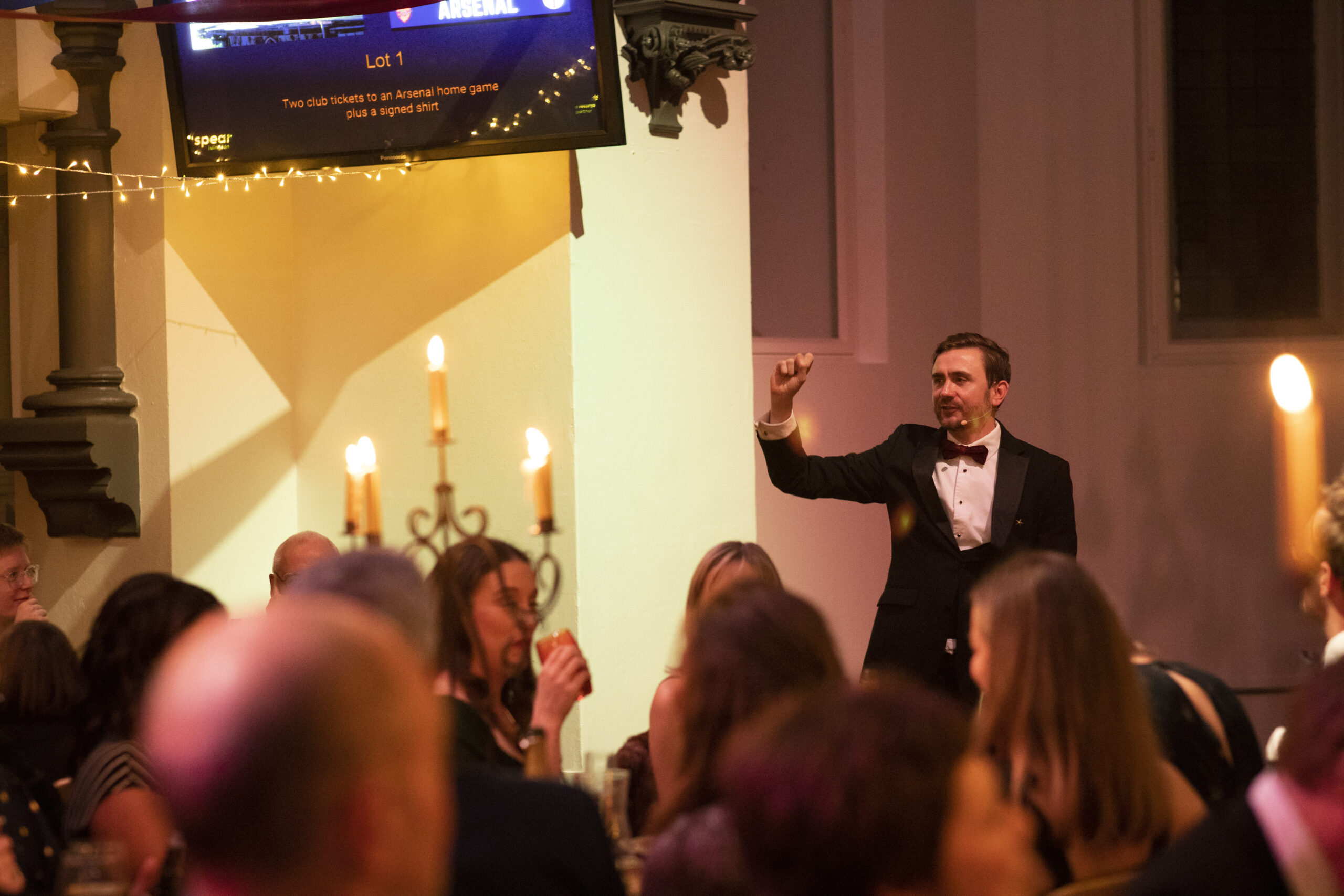
  • School fundraising ideas that go beyond the cake sale

    School fundraising ideas that go beyond the cake sale

    School fundraising ideas that go beyond the cake sale

    Charity auctioneer Kevin Durham runs the live auction at the Jigsaw Trust charity gala, speaking to seated guests with a wireless microphone from the middle of the room.

    In short

    • The best school fundraising ideas are not the cleverest ones. They are the ones your parents will actually turn up for, matched to the time your PTA volunteers really have.
    • A busy calendar of small activities keeps the school ticking over, but one properly run event evening, with an auction of promises and a live “fund a need”, usually raises more than a term of tuck shops.
    • Gift Aid adds 25% to eligible donations at no cost, so build it into every sponsored challenge and giving page.
    • Local businesses will give more than you think, but only if you ask for something specific and thank them visibly.
    • Pick a handful of these ideas and run them properly. Ten half-organised activities raise less than three done well.

    Ask any parent for school fundraising ideas and you will hear the same three answers: cake sale, non-uniform day, summer fair. There is nothing wrong with them, and I would never tell a PTA to drop the classics. The trouble is that those staples raise tens or low hundreds of pounds, and most schools need thousands for the trip, the library or the new playground.

    I have spent twenty years on stage at fundraising events, from village halls to a Monaco gala that raised over €1,000,000 in an evening, and I have run auctions at plenty of school fundraisers along the way. This is my honest sort of the ideas that work, grouped so a busy PTA can find the ones that fit their crowd and their calendar. For each, I have added the thing most lists leave out: how to make it raise more.

    What are the best school fundraising ideas beyond the cake sale?

    The best school fundraising ideas beyond the cake sale are the ones that gather a lot of parents in one place and give them an easy, enjoyable reason to give more than loose change. The cake sale earns goodwill. The bigger nights earn the total.

    Think of your year in three layers. The quick wins keep money trickling in and volunteers engaged. The events pull a crowd and lift the mood. Then one or two higher-value moments, an auction of promises or a “fund a need” for a specific project, do the heavy lifting that the tuck shop never can.

    You do not need all of them. A strong school year is usually two or three regular quick wins, one or two seasonal events, and a single well-run headline evening. Get that spine right and the total looks after itself.

    What are the easy school fundraising ideas that raise money fast?

    The easy school fundraising ideas that raise money fast are the low-effort, no-licence activities a couple of volunteers can run in a week. They will not fund a minibus on their own, but they keep momentum going and cost almost nothing to set up.

    • Non-uniform or own-clothes day. A small donation to swap the uniform for a day. Simple, popular, and it works in any school.
    • Bake sale or cake stall. Modest money, but excellent for recruiting the parent volunteers you will need later.
    • Bags2School or textile collection. Families clear their wardrobes and the school is paid by weight. Zero cost, and it clears the loft.
    • Guess the name, guess the sweets, guess the weight. A jar of sweets or a named teddy on the reception desk, a small charge per guess. Fast and reliably profitable.
    • Second-hand uniform sale. Parents donate outgrown uniform, the PTA sells it on. Sustainable, and genuinely useful to families.
    • Smartie tube collection. Children fill an empty sweet tube with coins over a few weeks. A classic for a reason.
    • Book or toy swap. Bring one, take one, pay a small entry. Cheap to run and easy on the planet.

    To make these raise more, run two or three at once rather than dripping them out singly. A non-uniform day with a guess-the-sweets jar at the gate collects twice over from the same footfall.

    What school fundraising events pull the biggest crowds?

    The school fundraising events that pull the biggest crowds are the sociable, family-friendly ones parents want to attend anyway, where the fundraising is woven in rather than bolted on. Get families through the door and the giving follows.

    • Summer fair or fete. The backbone of the school calendar. Stalls, games, a barbecue and a raffle, with local businesses sponsoring pitches.
    • Discos and film nights. Cheap to run, hugely popular with the children, and a steady earner through ticket sales and a tuck stall.
    • Quiz night for parents. An adults-only evening with teams, a bar and a raffle. Charge per team and sell extra lifelines.
    • Race night. Betting on pre-recorded races, with sponsored races and a small bar. A proven crowd-pleaser for the school hall.
    • Talent show or school concert. Children perform, parents pay for tickets, and you sell refreshments and a programme.
    • Family bingo or games night. Interactive fundraising games cost next to nothing and lift the whole room before any bigger ask.

    To make an event raise more, always give it a second income stream beyond the ticket. A summer fair with a raffle and a “fund a need” bucket outperforms one that relies on stall takings alone.

    Which sponsored challenges work best for schools?

    The sponsored challenges that work best for schools pair a genuine effort by the children with an easy online giving page, so the challenge earns attention and the page does the collecting. The activity is the story. The sponsorship is the fundraiser.

    • Sponsored walk or fun run. Inclusive, all ages, and easy to hold on the school field or a local park.
    • Read-a-thon. Children collect pledges per book read over a month. Popular with teachers because it drives reading too.
    • Sponsored silence. Wonderfully cheap, briefly peaceful, and children love the challenge of it.
    • Skip-a-thon or sports day challenge. A set number of skips, laps or star jumps, sponsored by family and friends.
    • Spell-a-thon or times-table challenge. Learning-linked, so teachers back it and parents happily sponsor progress.

    Put every sponsored challenge on a single online giving page and prompt each donor to add Gift Aid. On a busy school challenge, that one tick can add hundreds of pounds for no extra effort.

    What are good PTA fundraising ideas with local businesses?

    Good PTA fundraising ideas with local businesses turn small community goodwill into real money by asking for something specific and offering visible thanks in return. Shops and firms near a school want to be seen supporting it. Your job is to make saying yes easy.

    • Sponsor a stall or a race. Local firms pay to put their name on a summer-fair pitch or a race-night race.
    • Raffle prize donations. Ask every nearby business for one prize. A hamper, a meal, a haircut, a car valet. A good raffle of donated prizes is almost pure profit.
    • Match funding. Many employers match what staff raise pound for pound. Ask parents to check with their workplace, because it can double a total overnight.
    • Business quiz table. Sell tables at the parents’ quiz to local firms as a low-cost bit of community sponsorship.
    • “Buy a brick” or sponsor board. For a specific project, sell named bricks or a plaque on a donor board. Businesses and families both take one.
    • Advertising in the programme. Sell advert space in the summer-fair programme or newsletter to local traders.

    A raffle is a lottery in law, so before you sell a single ticket, check the rules on the small lotteries you can run without a licence. Most school raffles fall within the incidental or small-society rules, but it is worth a five-minute read.

    What are the best online and digital school fundraising ideas?

    The best online and digital school fundraising ideas remove friction: they let a parent give in seconds from their phone, then share it so their own network gives too. Reach, not novelty, is what makes them work.

    • Online giving page for a project. A single page with a clear target, a deadline and a strong photo of what the money buys. Early gifts pull later ones, exactly as they do in a room.
    • Easyfundraising and shopping portals. Parents raise a small commission for the school every time they shop online, at no cost to them. It adds up quietly over a year.
    • Online auction. Mobile bidding lets parents bid on donated lots from the sofa, and it captures the ones who could not attend in person.
    • Virtual sponsored challenge. A steps or distance challenge families log from home and collect pledges for, ideal when you cannot all gather.
    • Social media prize draw. A simple share-and-enter draw that widens your reach beyond the school gate, within the lottery rules.
    • Recycling and printer-cartridge schemes. Families post used items and the school is paid per unit. Low effort, steady return.

    To make the digital ideas raise more, tie them to a live event rather than running them alone. Open an online auction a few days before the summer fair, then close the top lots live on the day where the interest peaks.

    Which seasonal school fundraising ideas work through the year?

    The seasonal school fundraising ideas that work through the year hang your fundraising on dates parents already have in their diaries, so attendance looks after itself. Every term has a natural hook.

    • Autumn: Halloween disco and pumpkin trail. A costume disco with a small entry and a spooky tuck stall.
    • Winter: Christmas fair and grotto. The biggest seasonal earner for most schools. A grotto, craft stalls, mince pies and a raffle, with a “fund a need” for a specific January project.
    • Winter: Christmas card and gift design. Children design a card or a mug and families buy printed sets. Sentimental and reliably popular.
    • Spring: Easter egg hunt and bonnet parade. A small entry per child, an egg hunt on the field and a decorated-bonnet competition.
    • Spring: Mother’s and Father’s Day gift stalls. Children “shop” for a wrapped gift at a small price. Adored by the little ones.
    • Summer: summer fair and sports day refreshments. The headline community day, plus a barbecue and ice-cream stall at sports day.

    To make a seasonal event raise more, add one higher-value element to the biggest one. A Christmas fair with an auction of promises alongside the grotto raises far more than the grotto could ever do on its own.

    The higher-value ideas: a gala and an auction of promises

    The single biggest lever a school has is the one most PTAs never pull: a proper fundraising evening for the parents, built around an auction of promises and a live pledge. This is where a school stops raising hundreds and starts raising thousands in a night.

    An auction of promises costs the school almost nothing, because the lots are donated. Parents and local businesses pledge things they can give: a week in a holiday cottage, a case of wine, a day’s gardening, a cake a month for a year, two hours of babysitting, a round of golf, a professional headshot session. You gather twenty or thirty of these, put them in front of a room of parents on a good night, and sell them well. I have written more on school auction ideas if you want the detail on sourcing and running one.

    A parents’ gala or ball gives the auction a home. Dinner or drinks is why people come. The auction, a raffle and a live pledge are why they give. The meal should never be the whole event.

    The skill, and I say this as the person usually holding the microphone, is in the selling and the sequence, not the lots. A donated week in a cottage that limps to £200 in nervous hands can reach several times that when the room is warmed up first and the bidding is actively driven. Momentum is a skill, not luck.

    Kevin auctioning children’s artwork at a school fundraiser

    A live “fund a need” beats the tuck shop

    A live “fund a need” raises more than months of tuck-shop takings because it turns an abstract target into one specific, emotional ask that the whole room answers together. It is the most underrated tool a school has.

    Here is how it works. You pick one concrete project the money will pay for: the new reading corner, the sensory garden, the coach for the residential trip. You tell that story briefly and honestly from the front, then invite the room to give at set levels: £250 buys the books, £100 buys a tree, £25 buys a seed tray. Hands go up at each level, and the total climbs in real time in front of everyone.

    Two things make it work. The ask has to be for something the parents can picture and care about, not a vague “school funds”. And someone has to build the moment properly, naming the giving as it happens and keeping the energy up. Done well, a fund-a-need at a Christmas fair or a parents’ gala often out-earns everything else on the night combined.

    What are good primary school fundraising ideas specifically?

    Good primary school fundraising ideas lean on the children themselves and on younger families, so keep them simple, visual and easy for little hands to join in with. What melts a parent’s resolve is their own five-year-old’s artwork.

    • Children’s art auction or print sale. Every child produces a piece, you print them onto cards, mugs or tea towels, and families buy their own. Reliably popular and it doubles as a keepsake.
    • Colour run or welly walk. Messy, joyful and very photogenic, which helps the sponsorship pages fill.
    • Teddy bears’ picnic or toddle waddle. Perfect for reception and nursery families, with a small entry and refreshments.
    • Design a Christmas card. Each child designs a card, families order printed packs. A seasonal staple that sells itself.
    • Sponsored spell or read. Learning-linked and teacher-approved, so parents give happily.
    • Decorate a jar or grow a sunflower. Small, cheap competitions with a modest entry fee and a proud winner.

    To make primary ideas raise more, put the children’s own work at the centre and let parents bid rather than just buy. A framed piece of a four-year-old’s painting, sold live to that child’s family, raises far more than the same painting at a fixed £5 on a stall.

    How do you choose the right school fundraising idea?

    Choose the school fundraising idea that fits three things: the parents you actually have, the time your volunteers can honestly give, and the specific sum you need. Start from the number you need and work backwards, not from the idea that sounds fun.

    Run each option through four quick questions:

    1. Who is coming, and what can they give? A community of young families suits fairs, discos and children’s art. A parent body with more disposable income can carry an auction of promises and a gala.
    2. How much time do we really have? A summer fair needs months. A non-uniform day needs an email. Over-scoping is the fastest way to burn out a PTA.
    3. What is the single number we need this year? If the trip needs £8,000, twenty cake sales will not get you there. Be honest about which ideas can clear the target.
    4. Who will actually drive the giving on the night? This is the question almost nobody asks, and it is the one that decides your total.

    The mistake that quietly caps a school’s total

    The most expensive mistake in school fundraising is assuming the activity does the work. It does not. The people in the hall do, and they need someone to lead the giving.

    I have watched warm, generous rooms of parents give a fraction of what they happily would, simply because the auction of promises was read out like a shopping list, or the fund-a-need was mumbled and rushed. The lots were fine. The cause was worthy. Nobody named the moment and used it.

    That is the gap between covering your costs and funding the whole project. Bidding momentum is a skill, and on the one big night of a school’s year it is worth getting right, whether that means training a confident parent or bringing someone in.

    Where to start

    Pick a handful of ideas across the three layers. Two or three easy quick wins to keep money and volunteers moving, one or two seasonal fundraising events for the community, and one higher-value evening, an auction of promises with a live fund-a-need, to carry the total. Put Gift Aid on every giving page. You can reclaim an extra 25p for every eligible £1, which on a good year is real money for nothing.

    If your school is planning that headline evening, the auction and the pledge are the moments the year is won or lost in. If you want to talk through what would suit your parents and your target, I offer a free initial consultation through my auctioneer services. Bring your number, and we will work out how to beat it.

    Kevin Durham, charity auctioneer

    Kevin Durham

    Charity auctioneer & event host

    20years£10m+raised60–80events/yr
    Check availability07596 851647

    Let’s talk

    Bring this to your event

    Book a free consultation with a charity auctioneer who has raised over £10 million.