Category: testimonials

  • Charity auction themes: ideas to build your whole event around

    Charity auction themes: ideas to build your whole event around

    Two men in tuxedos on stage at a masquerade charity gala, one holding a microphone

    In short

    • A theme should shape your lot selection and pledge framing, not just the table decor.
    • Masquerade and vintage glamour themes suit high-value, story-driven lots and a formal pledge drive.
    • Arts gala and sports dinner formats each pull a different kind of donor energy, and the auction segment should be built around that.
    • If a table-games format is what you actually want, I cover the legal and practical side of that separately: it deserves its own planning, not a decor afterthought.
    • Whichever theme you pick, the room still needs someone actively managing momentum. The theme sets the mood. It does not run the auction for you.

    Most charity auction themes get chosen for how the room will look in photos. That is not wrong, exactly, but it misses the bigger question: does the theme actually help you sell lots and land the pledge drive, or is it just decoration around an auction that would run the same way regardless?

    What makes charity auction themes actually work?

    A good charity auction theme changes how guests behave, not just how the room looks: it should suggest what kind of lots will land well and set the emotional tone for the pledge drive, not just dictate the tablecloths.

    I have worked rooms where the theme was beautifully executed and the auction still fell flat, because nobody thought about how the two connected. A theme is a tool for shaping donor psychology for the evening. Treat it that way and the lot selection, sequencing, and pledge framing all get easier.

    Why do masquerade and black-tie themes work so well?

    A masquerade or formal black-tie theme suits high-value, story-driven lots and a structured pledge drive, because the atmosphere already signals that this is an evening for serious giving rather than casual entertainment.

    The mood does a lot of the work for you here. Guests arrive dressed for occasion, which means they arrive expecting to spend. That makes it the right setting for your best lots: a luxury travel package, a signed piece with a real story behind it, an experience nobody else in the room can buy elsewhere. I would sequence two or three of these as the anchor lots and let the pledge drive follow while the room is still at its most generous.

    Great Gatsby and vintage glamour themes

    A Gatsby-era or vintage glamour theme works particularly well for events built around a strong pledge drive, because the decadence of the setting creates a natural contrast with the emotional ask, and that contrast is what moves a room.

    I have found rooms respond to this specific pairing, opulence followed by a direct, personal appeal, better than almost any other combination. The lot selection can lean playful (vintage champagne experiences, jazz-age entertainment packages) while the pledge drive carries the emotional weight of the evening. Do not let the glamour crowd out the ask. It should set up the ask.

    What about a casino night theme?

    A casino night is a legitimate format with its own legal rules and planning considerations, and I would rather point you to a proper breakdown of it than squeeze it into a general list of decor ideas, because it changes how the whole evening is structured, not just how it looks.

    If chips and tables are genuinely what your donor base wants, read my full guide on running a casino night fundraiser first, since the format needs its own approach to lot sequencing and pledge timing that a masquerade or gala theme does not. The themes below are where I would point most organisers by default, because they tend to give the auctioneer more room to build a single, room-wide fundraising moment rather than splitting attention across scattered tables.

    Arts gala themes

    An arts gala theme suits audiences who respond to culture and craftsmanship, and it works best when the lots themselves reflect that: commissioned pieces, artist experiences, and items with a genuine creative story rather than generic luxury goods.

    This audience tends to bid on meaning as much as value. A lot with a clear artistic provenance, who made it, why, what it represents, will consistently outsell a similarly priced item with no story attached. I go deeper on lot selection for this format in my arts gala fundraising piece.

    Why do sports dinner themes need a different pace?

    A sports dinner theme brings a competitive, high-energy crowd that responds well to fast-paced bidding and social proof, which changes both the pacing of the live auction and the framing of the pledge drive compared with a formal gala.

    Sports audiences tend to bid more openly and enjoy the competition of it, which means I can push pace harder here than at a black-tie masquerade without losing the room. Signed sporting memorabilia and experience-based lots (meet the team, matchday access) tend to be the standout performers. My sports dinner auction guide covers lot sourcing for this format specifically.

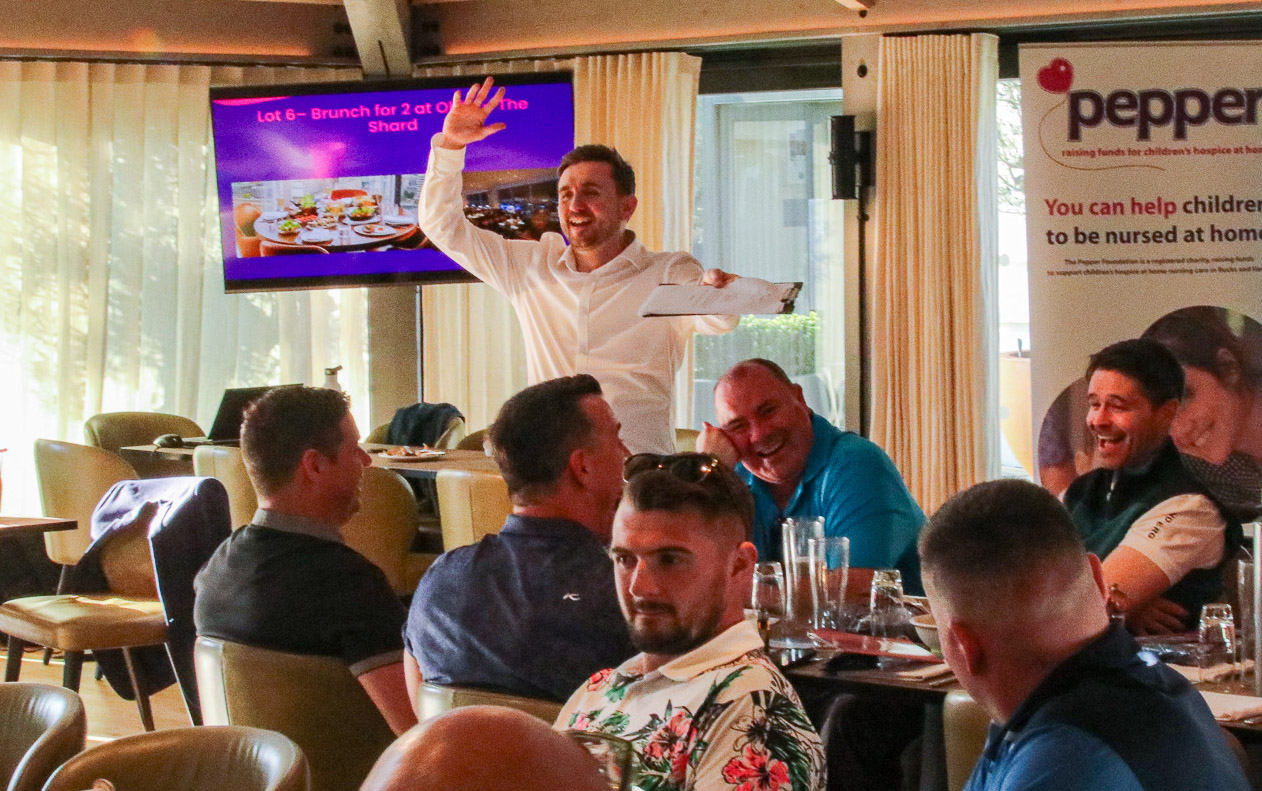
    Charity auctioneer Kevin Durham hosting the prize auction at a charity golf day, guests seated at round tables

    How do you choose lots to match your theme?

    Match your lots to the emotional register of the theme, not just its visual style: formal themes want story-driven high-value items, playful themes want experience-based lots, and competitive themes want items with social proof built in.

    A masquerade theme with generic hamper lots undersells the room’s mood. A sports dinner with only quiet, understated lots wastes the crowd’s natural energy. Once the theme is set, work backwards from it: what would this specific room want to bid on, given how they are already feeling when they walk in.

    Does the theme change how the pledge drive should be framed?

    Yes. A formal or glamorous theme suits a pledge drive framed around legacy and significance, while a high-energy theme like a sports dinner suits a pledge framed around momentum and collective action.

    I adjust my language for the pledge drive depending on the room’s mood coming in. A black-tie crowd responds to being asked to be part of something significant. A sports crowd responds to being challenged, to matching what the table next to them just gave. Same mechanic, different framing, and getting that wrong is one of the most common reasons a pledge drive underperforms even when the theme itself was well executed.

    “Everything was very upbeat during the event, getting very involved with everybody. It wasn't just standing on the stage, it was all very interactive and engaging.”
    — Kerry, The Pallet Network (TPN)
    It was interactive and engaging

    Fitting auction themes around the whole evening

    • Pick the theme before you pick the lots, not the other way round, so the auction feels like part of the evening rather than bolted onto it.
    • Brief your auctioneer on the theme’s emotional tone, not just the dress code, so the pledge drive framing matches the room.
    • Do not let decor budget crowd out lot quality. A stunning room with weak lots still underperforms a modest room with the right ones.
    • Consider your donor base’s actual preferences, not just what looks best in event photography.
    • If you are torn between formats, my charity auction ideas page runs through the full range, or get in touch and we can talk through what would suit your specific audience.

    Whichever theme you land on, the theme sets the room’s mood. What happens after that, whether the mood turns into competitive bidding and generous pledges, still comes down to someone actively reading and driving the room. That part does not change no matter how the tables are dressed.

    Kevin Durham, charity auctioneer

    Kevin Durham

    Charity auctioneer & event host

    20years£10m+raised60–80events/yr
    Check availability07596 851647

    Let’s talk

    Bring this to your event

    Book a free consultation with a charity auctioneer who has raised over £10 million.

  • School fundraising ideas that go beyond the cake sale

    School fundraising ideas that go beyond the cake sale

    School fundraising ideas that go beyond the cake sale

    Charity auctioneer Kevin Durham runs the live auction at the Jigsaw Trust charity gala, speaking to seated guests with a wireless microphone from the middle of the room.

    In short

    • The best school fundraising ideas are not the cleverest ones. They are the ones your parents will actually turn up for, matched to the time your PTA volunteers really have.
    • A busy calendar of small activities keeps the school ticking over, but one properly run event evening, with an auction of promises and a live “fund a need”, usually raises more than a term of tuck shops.
    • Gift Aid adds 25% to eligible donations at no cost, so build it into every sponsored challenge and giving page.
    • Local businesses will give more than you think, but only if you ask for something specific and thank them visibly.
    • Pick a handful of these ideas and run them properly. Ten half-organised activities raise less than three done well.

    Ask any parent for school fundraising ideas and you will hear the same three answers: cake sale, non-uniform day, summer fair. There is nothing wrong with them, and I would never tell a PTA to drop the classics. The trouble is that those staples raise tens or low hundreds of pounds, and most schools need thousands for the trip, the library or the new playground.

    I have spent twenty years on stage at fundraising events, from village halls to a Monaco gala that raised over €1,000,000 in an evening, and I have run auctions at plenty of school fundraisers along the way. This is my honest sort of the ideas that work, grouped so a busy PTA can find the ones that fit their crowd and their calendar. For each, I have added the thing most lists leave out: how to make it raise more.

    What are the best school fundraising ideas beyond the cake sale?

    The best school fundraising ideas beyond the cake sale are the ones that gather a lot of parents in one place and give them an easy, enjoyable reason to give more than loose change. The cake sale earns goodwill. The bigger nights earn the total.

    Think of your year in three layers. The quick wins keep money trickling in and volunteers engaged. The events pull a crowd and lift the mood. Then one or two higher-value moments, an auction of promises or a “fund a need” for a specific project, do the heavy lifting that the tuck shop never can.

    You do not need all of them. A strong school year is usually two or three regular quick wins, one or two seasonal events, and a single well-run headline evening. Get that spine right and the total looks after itself.

    What are the easy school fundraising ideas that raise money fast?

    The easy school fundraising ideas that raise money fast are the low-effort, no-licence activities a couple of volunteers can run in a week. They will not fund a minibus on their own, but they keep momentum going and cost almost nothing to set up.

    • Non-uniform or own-clothes day. A small donation to swap the uniform for a day. Simple, popular, and it works in any school.
    • Bake sale or cake stall. Modest money, but excellent for recruiting the parent volunteers you will need later.
    • Bags2School or textile collection. Families clear their wardrobes and the school is paid by weight. Zero cost, and it clears the loft.
    • Guess the name, guess the sweets, guess the weight. A jar of sweets or a named teddy on the reception desk, a small charge per guess. Fast and reliably profitable.
    • Second-hand uniform sale. Parents donate outgrown uniform, the PTA sells it on. Sustainable, and genuinely useful to families.
    • Smartie tube collection. Children fill an empty sweet tube with coins over a few weeks. A classic for a reason.
    • Book or toy swap. Bring one, take one, pay a small entry. Cheap to run and easy on the planet.

    To make these raise more, run two or three at once rather than dripping them out singly. A non-uniform day with a guess-the-sweets jar at the gate collects twice over from the same footfall.

    What school fundraising events pull the biggest crowds?

    The school fundraising events that pull the biggest crowds are the sociable, family-friendly ones parents want to attend anyway, where the fundraising is woven in rather than bolted on. Get families through the door and the giving follows.

    • Summer fair or fete. The backbone of the school calendar. Stalls, games, a barbecue and a raffle, with local businesses sponsoring pitches.
    • Discos and film nights. Cheap to run, hugely popular with the children, and a steady earner through ticket sales and a tuck stall.
    • Quiz night for parents. An adults-only evening with teams, a bar and a raffle. Charge per team and sell extra lifelines.
    • Race night. Betting on pre-recorded races, with sponsored races and a small bar. A proven crowd-pleaser for the school hall.
    • Talent show or school concert. Children perform, parents pay for tickets, and you sell refreshments and a programme.
    • Family bingo or games night. Interactive fundraising games cost next to nothing and lift the whole room before any bigger ask.

    To make an event raise more, always give it a second income stream beyond the ticket. A summer fair with a raffle and a “fund a need” bucket outperforms one that relies on stall takings alone.

    Which sponsored challenges work best for schools?

    The sponsored challenges that work best for schools pair a genuine effort by the children with an easy online giving page, so the challenge earns attention and the page does the collecting. The activity is the story. The sponsorship is the fundraiser.

    • Sponsored walk or fun run. Inclusive, all ages, and easy to hold on the school field or a local park.
    • Read-a-thon. Children collect pledges per book read over a month. Popular with teachers because it drives reading too.
    • Sponsored silence. Wonderfully cheap, briefly peaceful, and children love the challenge of it.
    • Skip-a-thon or sports day challenge. A set number of skips, laps or star jumps, sponsored by family and friends.
    • Spell-a-thon or times-table challenge. Learning-linked, so teachers back it and parents happily sponsor progress.

    Put every sponsored challenge on a single online giving page and prompt each donor to add Gift Aid. On a busy school challenge, that one tick can add hundreds of pounds for no extra effort.

    What are good PTA fundraising ideas with local businesses?

    Good PTA fundraising ideas with local businesses turn small community goodwill into real money by asking for something specific and offering visible thanks in return. Shops and firms near a school want to be seen supporting it. Your job is to make saying yes easy.

    • Sponsor a stall or a race. Local firms pay to put their name on a summer-fair pitch or a race-night race.
    • Raffle prize donations. Ask every nearby business for one prize. A hamper, a meal, a haircut, a car valet. A good raffle of donated prizes is almost pure profit.
    • Match funding. Many employers match what staff raise pound for pound. Ask parents to check with their workplace, because it can double a total overnight.
    • Business quiz table. Sell tables at the parents’ quiz to local firms as a low-cost bit of community sponsorship.
    • “Buy a brick” or sponsor board. For a specific project, sell named bricks or a plaque on a donor board. Businesses and families both take one.
    • Advertising in the programme. Sell advert space in the summer-fair programme or newsletter to local traders.

    A raffle is a lottery in law, so before you sell a single ticket, check the rules on the small lotteries you can run without a licence. Most school raffles fall within the incidental or small-society rules, but it is worth a five-minute read.

    What are the best online and digital school fundraising ideas?

    The best online and digital school fundraising ideas remove friction: they let a parent give in seconds from their phone, then share it so their own network gives too. Reach, not novelty, is what makes them work.

    • Online giving page for a project. A single page with a clear target, a deadline and a strong photo of what the money buys. Early gifts pull later ones, exactly as they do in a room.
    • Easyfundraising and shopping portals. Parents raise a small commission for the school every time they shop online, at no cost to them. It adds up quietly over a year.
    • Online auction. Mobile bidding lets parents bid on donated lots from the sofa, and it captures the ones who could not attend in person.
    • Virtual sponsored challenge. A steps or distance challenge families log from home and collect pledges for, ideal when you cannot all gather.
    • Social media prize draw. A simple share-and-enter draw that widens your reach beyond the school gate, within the lottery rules.
    • Recycling and printer-cartridge schemes. Families post used items and the school is paid per unit. Low effort, steady return.

    To make the digital ideas raise more, tie them to a live event rather than running them alone. Open an online auction a few days before the summer fair, then close the top lots live on the day where the interest peaks.

    Which seasonal school fundraising ideas work through the year?

    The seasonal school fundraising ideas that work through the year hang your fundraising on dates parents already have in their diaries, so attendance looks after itself. Every term has a natural hook.

    • Autumn: Halloween disco and pumpkin trail. A costume disco with a small entry and a spooky tuck stall.
    • Winter: Christmas fair and grotto. The biggest seasonal earner for most schools. A grotto, craft stalls, mince pies and a raffle, with a “fund a need” for a specific January project.
    • Winter: Christmas card and gift design. Children design a card or a mug and families buy printed sets. Sentimental and reliably popular.
    • Spring: Easter egg hunt and bonnet parade. A small entry per child, an egg hunt on the field and a decorated-bonnet competition.
    • Spring: Mother’s and Father’s Day gift stalls. Children “shop” for a wrapped gift at a small price. Adored by the little ones.
    • Summer: summer fair and sports day refreshments. The headline community day, plus a barbecue and ice-cream stall at sports day.

    To make a seasonal event raise more, add one higher-value element to the biggest one. A Christmas fair with an auction of promises alongside the grotto raises far more than the grotto could ever do on its own.

    The higher-value ideas: a gala and an auction of promises

    The single biggest lever a school has is the one most PTAs never pull: a proper fundraising evening for the parents, built around an auction of promises and a live pledge. This is where a school stops raising hundreds and starts raising thousands in a night.

    An auction of promises costs the school almost nothing, because the lots are donated. Parents and local businesses pledge things they can give: a week in a holiday cottage, a case of wine, a day’s gardening, a cake a month for a year, two hours of babysitting, a round of golf, a professional headshot session. You gather twenty or thirty of these, put them in front of a room of parents on a good night, and sell them well. I have written more on school auction ideas if you want the detail on sourcing and running one.

    A parents’ gala or ball gives the auction a home. Dinner or drinks is why people come. The auction, a raffle and a live pledge are why they give. The meal should never be the whole event.

    The skill, and I say this as the person usually holding the microphone, is in the selling and the sequence, not the lots. A donated week in a cottage that limps to £200 in nervous hands can reach several times that when the room is warmed up first and the bidding is actively driven. Momentum is a skill, not luck.
    Kevin auctioning children’s artwork at a school fundraiser

    A live “fund a need” beats the tuck shop

    A live “fund a need” raises more than months of tuck-shop takings because it turns an abstract target into one specific, emotional ask that the whole room answers together. It is the most underrated tool a school has.

    Here is how it works. You pick one concrete project the money will pay for: the new reading corner, the sensory garden, the coach for the residential trip. You tell that story briefly and honestly from the front, then invite the room to give at set levels: £250 buys the books, £100 buys a tree, £25 buys a seed tray. Hands go up at each level, and the total climbs in real time in front of everyone.

    Two things make it work. The ask has to be for something the parents can picture and care about, not a vague “school funds”. And someone has to build the moment properly, naming the giving as it happens and keeping the energy up. Done well, a fund-a-need at a Christmas fair or a parents’ gala often out-earns everything else on the night combined.

    What are good primary school fundraising ideas specifically?

    Good primary school fundraising ideas lean on the children themselves and on younger families, so keep them simple, visual and easy for little hands to join in with. What melts a parent’s resolve is their own five-year-old’s artwork.

    • Children’s art auction or print sale. Every child produces a piece, you print them onto cards, mugs or tea towels, and families buy their own. Reliably popular and it doubles as a keepsake.
    • Colour run or welly walk. Messy, joyful and very photogenic, which helps the sponsorship pages fill.
    • Teddy bears’ picnic or toddle waddle. Perfect for reception and nursery families, with a small entry and refreshments.
    • Design a Christmas card. Each child designs a card, families order printed packs. A seasonal staple that sells itself.
    • Sponsored spell or read. Learning-linked and teacher-approved, so parents give happily.
    • Decorate a jar or grow a sunflower. Small, cheap competitions with a modest entry fee and a proud winner.

    To make primary ideas raise more, put the children’s own work at the centre and let parents bid rather than just buy. A framed piece of a four-year-old’s painting, sold live to that child’s family, raises far more than the same painting at a fixed £5 on a stall.

    How do you choose the right school fundraising idea?

    Choose the school fundraising idea that fits three things: the parents you actually have, the time your volunteers can honestly give, and the specific sum you need. Start from the number you need and work backwards, not from the idea that sounds fun.

    Run each option through four quick questions:

    1. Who is coming, and what can they give? A community of young families suits fairs, discos and children’s art. A parent body with more disposable income can carry an auction of promises and a gala.
    2. How much time do we really have? A summer fair needs months. A non-uniform day needs an email. Over-scoping is the fastest way to burn out a PTA.
    3. What is the single number we need this year? If the trip needs £8,000, twenty cake sales will not get you there. Be honest about which ideas can clear the target.
    4. Who will actually drive the giving on the night? This is the question almost nobody asks, and it is the one that decides your total.

    The mistake that quietly caps a school’s total

    The most expensive mistake in school fundraising is assuming the activity does the work. It does not. The people in the hall do, and they need someone to lead the giving.

    I have watched warm, generous rooms of parents give a fraction of what they happily would, simply because the auction of promises was read out like a shopping list, or the fund-a-need was mumbled and rushed. The lots were fine. The cause was worthy. Nobody named the moment and used it.

    That is the gap between covering your costs and funding the whole project. Bidding momentum is a skill, and on the one big night of a school’s year it is worth getting right, whether that means training a confident parent or bringing someone in.

    Where to start

    Pick a handful of ideas across the three layers. Two or three easy quick wins to keep money and volunteers moving, one or two seasonal fundraising events for the community, and one higher-value evening, an auction of promises with a live fund-a-need, to carry the total. Put Gift Aid on every giving page. You can reclaim an extra 25p for every eligible £1, which on a good year is real money for nothing.

    If your school is planning that headline evening, the auction and the pledge are the moments the year is won or lost in. If you want to talk through what would suit your parents and your target, I offer a free initial consultation through my auctioneer services. Bring your number, and we will work out how to beat it.

    Kevin Durham, charity auctioneer

    Kevin Durham

    Charity auctioneer & event host

    20years£10m+raised60–80events/yr
    Check availability07596 851647

    Let’s talk

    Bring this to your event

    Book a free consultation with a charity auctioneer who has raised over £10 million.

  • Charity fundraising ideas that actually raise money

    Charity fundraising ideas that actually raise money

    Charity fundraising ideas that actually raise money

    Charity auctioneer Kevin Durham hosting MAG-FEST, the Manchester Airport Group charity gala, working the room during the live fundraising

    In short

    • The best charity fundraising ideas are not the most original ones. They are the ones matched to your audience, your cause and how much time you actually have.
    • A single well-run event evening (a live auction plus a live pledge) will usually out-raise months of small community activities, because it concentrates generous people in one room at one time.
    • Gift Aid adds 25% to every eligible donation at no cost to you, so build it into every idea below.
    • Momentum is the hidden lever. Most events leave money on the table not because the idea was wrong, but because nobody drove the room when it mattered.
    • Pick two or three ideas and do them properly. A scattergun of ten half-run activities raises less than two done well.

    Ask ten fundraisers for charity fundraising ideas and you will get the same recycled list every time: bake sale, quiz night, sponsored walk. There is nothing wrong with any of them. The problem is that the idea is rarely what decides how much you raise. What decides it is the match between the idea, the people in the room, and whether anyone is actively lifting the total on the night.

    I have spent twenty years on stage at fundraising events, from village hall dinners to a Monaco gala that raised over €1,000,000 in a single evening. This is my honest sort of the charity fundraising ideas that reliably raise real money, grouped so you can find the ones that fit your cause, your crowd and your calendar. For each, I have added the thing most lists leave out: how to make it raise more.

    What are the most profitable charity fundraising ideas?

    The most profitable charity fundraising ideas are the ones that gather people who can give, in one room, and give them a clear emotional reason to give while the energy is high. That is why a live auction and a live pledge, run at a single gala evening, reliably out-earn everything else.

    The maths is simple. Community fundraising spreads effort across many people who each give a little. Event fundraising gathers supporters who can give more, adds social proof, and uses momentum to lift the total in real time. Both matter, but if you want the biggest return on your team’s limited hours, the event evening is where it lives.

    It matters more than ever. The CAF UK Giving report put total public donations at around £15.4 billion, but with fewer people giving overall. When the pool of casual givers shrinks, the events that engage committed supporters properly become the ones that carry your year.

    The three that consistently raise the most:

    • A live charity auction. Five to eight strong lots, well chosen and well sold, can out-raise everything else on the night combined. The skill is in the selling, not the lots. See how a live auction is actually run before you hand the microphone to a volunteer.
    • A live pledge or fund-a-need. This is the most powerful tool I use, and most organisers underrate it. You make one emotional case, then invite the room to give at set levels. Done well, the pledge drive often out-earns the auction itself.
    • A gala dinner with a fundraising spine. Dinner is why people come. The auction, pledge and games are why they give. Never let the meal be the whole event.

    One client came to me with a fundraising target they thought was ambitious. By the end of the night they had raised double it. Nothing about the room changed. The structure and the selling did.

    Kevin Durham on smashing fundraising targets

    Which charity fundraising ideas raise the most per guest?

    The charity fundraising ideas that raise the most per guest are the ones built to sell in real time at an event. They ask more of your planning, and they reward it.

    • Live auction of high-value lots. Experiences beat objects. A week in a villa, a money-can’t-buy meeting, a private dining experience. These cannot be priced online, so bidding runs higher.
    • Live pledge / fund-a-need. One clear ask, tiered giving levels, and a story that lands. This is where the biggest single jumps in the total happen.
    • Silent auction alongside the live one. It keeps mid-value lots moving and captures bids from guests who never raise a paddle in the main event.
    • Sponsor a place or a project. Ask guests or businesses to fund one specific, nameable thing: a wheelchair, a week of care, a classroom. Specific beats general every time.
    • A “golden ticket” or wine pull. Guests pay a fixed price for a sealed prize of at least that value. Fast, fun, and a gentle warm-up for bigger asks later.

    To make these raise more, sequence them. Games and lighter moments early to warm the room, the live auction in the middle when energy peaks, and the pledge as the emotional high point. Order changes the total more than most organisers expect.

    What are good community charity fundraising ideas?

    Good community charity fundraising ideas are low-cost, repeatable and social, so ordinary supporters can run them without a big budget or a licence. They will not match a gala, but they build the supporter base that fills one later.

    • Quiz night. Cheap, sociable, and easy to bolt a raffle or a heads-or-tails game onto. Charge per team, sell extra lifelines.
    • Bake sale or coffee morning. Modest money, excellent for awareness and recruiting the volunteers you will need for bigger events.
    • Sponsored challenge. A walk, run, swim, or silence. The sponsorship, not the activity, is the fundraiser, so make the giving page easy and add Gift Aid.
    • Auction of promises. Neighbours pledge services: a day’s gardening, a home-cooked dinner, a lift to the airport. Almost no cost, genuinely fun, and it doubles as auction practice for your team.
    • Race night or bingo. A proven crowd-pleaser for clubs and community halls, with betting on pre-recorded races or numbers called live.
    • Give-it-up month. Supporters drop a habit (chocolate, alcohol, screen time) and collect sponsorship. Personal and shareable.
    • Local supper club or “come dine with me”. Hosts cook for paying guests, with all proceeds to the cause.

    Treat these as your grassroots layer. They rarely headline your year, but they keep supporters warm between the big nights, and every attendee is a future gala guest.

    What are the best online charity fundraising ideas?

    The best online charity fundraising ideas remove friction: they let someone give in seconds from their phone, then share it so their network gives too. Reach, not novelty, is what makes them work.

    • Crowdfunding campaign. A single page with a clear target, a deadline and a strong story. Momentum online works like momentum in a room: early gifts pull later ones.
    • Peer-to-peer fundraising. Supporters set up their own pages for a challenge and raise from their own networks. This multiplies your reach far beyond your own list.
    • Online auction or silent auction. Mobile bidding lets people bid from the sofa, and it captures guests who could not attend in person.
    • Livestream or gaming marathon. Popular with younger supporters, who stream for hours and collect donations live.
    • Social media challenge. A simple, repeatable action (a dare, a costume, a nomination) that spreads on its own.
    • Online raffle. Digital tickets widen your reach, but a raffle is a lottery in law, so check the rules before you sell a single ticket.

    To make online ideas raise more, join them to your live event rather than running them in isolation. Open the online auction days before the gala, then close the top lots live in the room where the bidding runs hottest.

    What sporty and challenge fundraising ideas work best?

    The sporty and challenge fundraising ideas that work best pair a genuine personal effort with easy online sponsorship, so the challenge earns attention and the giving page does the collecting.

    • 5K, 10K or fun run. Local, inclusive, and easy to add family entry fees and a finish-line collection.
    • Sponsored walk or hike. Low barrier, all ages, and strong for community causes.
    • Distance or steps challenge. Walk 10,000 steps a day for a month, or cover a set distance, collecting pledges throughout.
    • Skydive, abseil or firewalk. High drama attracts higher sponsorship, and the photos fuel your social reach.
    • Team tournament. A five-a-side, netball or golf day, with entry fees, sponsorship and a prize auction at the close.

    Add Gift Aid to every sponsorship page, and prompt each donor to tick the box. On a busy challenge that alone can add hundreds of pounds for no extra effort.

    What are good workplace and corporate fundraising ideas?

    Good workplace and corporate charity fundraising ideas tap two things individuals cannot match: company budgets and matched giving. A business can turn a modest staff effort into a much larger total.

    • Payroll Giving. Employees donate straight from their pay. With Payroll Giving, the donation is taken before tax, so it costs the employee less to give more.
    • Matched funding. Many employers match what staff raise, pound for pound. Always ask, because it can double a total overnight.
    • Dress-down or theme day. A small donation to swap the dress code. Simple, and it works in almost any office.
    • Corporate quiz or sports day. Teams pay to enter, with a leaderboard and a trophy.
    • Charity of the year partnership. A year-long relationship with staff events, matched giving and a headline gala to close it.
    • Sponsor a gala table. Businesses buy a table at your event, which covers costs before a single lot is sold.

    To make corporate ideas raise more, give the company something back: visible thanks, photos, and a clear story of impact. Recognition is what turns a one-off donation into a multi-year partnership.

    What are some unique or quirky charity fundraising ideas?

    The unique charity fundraising ideas that work are familiar formats with a twist that fits your cause, not novelty for its own sake. A gimmick with nothing to do with your mission tends to confuse the ask.

    • Skill or experience auction. Auction time with someone your supporters admire: a masterclass, a training session, a behind-the-scenes tour.
    • Reverse raffle. Everyone buys a ticket and the last ticket left wins. Tension builds slowly and keeps people in the room to the end.
    • Table-to-stage games. Interactive fundraising games like heads or tails cost almost nothing and reliably add a few thousand pounds while lifting the whole room before the main ask.
    • Themed gala with a genuine hook. A theme tied to your cause gives photographers, sponsors and press something to hold, stretching your reach well beyond the night.
    • “Dragons’ den” pitch night. Local teams pitch for a share of a pot, with the audience paying to vote.

    The best unique idea is usually a familiar format with your story wrapped around it. People give to the cause, not the concept.

    How do you choose the right charity fundraising idea?

    Choose the fundraising idea that fits three things: who your supporters are, how much time your team really has, and the specific amount you need to raise. Start from the target and work backwards, not from the idea.

    Run every candidate through four quick questions:

    1. Who is coming, and what can they give? A room of corporate guests suits an auction and pledge. A community of local families suits a quiz and raffle.
    2. How much time do we honestly have? A gala needs months. A quiz night needs a fortnight. Over-scoping is the most common way fundraising teams burn out.
    3. What is the single number we need? If you need £30,000, ten cake sales will not get you there. Be honest about which ideas can actually clear the target.
    4. Who will drive the giving on the day? This is the question almost nobody asks, and it is the one that decides your total.

    Does Gift Aid really add much to these ideas?

    Yes, and it is close to free money. Gift Aid lets your charity reclaim an extra 25p for every £1 an eligible UK taxpayer donates, at no cost to the donor or to you.

    Build it into everything. On sponsored challenges, prompt every donor to tick the box. At events, capture Gift Aid declarations on eligible pledges and donations where the rules allow. On a £20,000 pledge total, that is up to £5,000 extra for doing nothing more than collecting the right details. Few fundraising ideas add a quarter to their result by themselves. This one does.

    The mistake that quietly caps every fundraising idea

    The most expensive mistake in fundraising is assuming the idea does the work. It does not. The room does, and the room needs driving.

    I have watched warm, generous audiences give a fraction of what they could, simply because the auction was read out rather than sold, or the pledge was mumbled rather than built. The lots were fine. The cause was worthy. Nobody named the momentum in the room and used it.

    That is the difference between hitting your target and doubling it. Bidding momentum is a skill, not luck, and it is the reason a professional auctioneer usually pays for themselves several times over on the night.

    Where to start

    Pick two or three ideas from the lists above. One community activity to keep supporters engaged, one online element to widen your reach, and one event with a proper fundraising spine (a live auction, a pledge, or both) to carry the total. Put Gift Aid on everything. Then decide, early, who is going to drive the giving when it counts.

    If your event has a live auction or a pledge in it, that is the moment your whole year’s total is won or lost. If you want to talk through which format fits your audience and your target, I offer a free initial consultation through my auctioneer services. Bring your number, and we will work out how to beat it.

    Kevin Durham, charity auctioneer

    Kevin Durham

    Charity auctioneer & event host

    20years£10m+raised60–80events/yr
    Check availability07596 851647

    Let’s talk

    Bring this to your event

    Book a free consultation with a charity auctioneer who has raised over £10 million.

  • Charity auctioneer services: what’s actually included when you hire one

    Charity auctioneer services: what's actually included when you hire one

    Charity auctioneer Kevin Durham running the live auction at Jigsaw Trust's charity gala, audience members raising paddles to bid

    In short

    • A professional charity auctioneer service is not just someone who calls bids. It covers strategy, live auction, pledge drive, hosting, and lot guidance as one connected package.
    • Treating these as separate add-ons is where most organisers overpay or underprepare.
    • The pledge drive segment usually needs more planning attention than the live auction, not less.
    • Silent auction guidance exists to keep more of what you raise, not to sell you software.
    • Ask what is included before you ask what it costs. The fee should buy a whole evening’s strategy, not forty-five minutes on a microphone.

    When people search for auctioneer services, most are picturing one thing: a person on a stage reading out lot numbers and taking bids. That is part of it. It is also the smallest part of what a professional actually does for your event.

    What do charity auctioneer services actually include?

    A full charity auctioneer service covers six things: the live auction itself, the pledge drive, event hosting, silent auction guidance, fundraising games, and pre-event strategy consultation. Booking a professional means all six work together, not that you are choosing one from a menu.

    That distinction matters because of how most charities have been burned before. They book “an auctioneer” expecting someone to arrive, do their bit for the bids, and leave. Then they discover, halfway through planning, that nobody has thought about how the pledge drive is structured, how lots get sequenced, or what happens in the twenty minutes between the main course and the auction starting. That gap is where a lot of fundraising gets lost.

    The live auction: the most visible part of the service

    The live auction is the most visible part of the service, using sharp pacing and strategic calls to keep bidders engaged, but on its own it is rarely where the biggest money is raised.

    I run the live auction as the headline moment of the evening: high energy, competitive, and paced so the room stays with me from the opening lot to the last. That said, in my experience the segment that consistently outperforms it, when it is structured properly, is the one most organisers plan for least.

    What is the pledge drive part of the service, and why does it matter more than people expect?

    A pledge drive (also called a live pledge or fund-a-need) is a structured giving round where I build emotional connection with the room and ask for direct donations in tiers, and it is often the highest-earning segment of the whole night.

    I have watched rooms that were lukewarm through the live auction come alive during the pledge drive, because it removes the barrier of needing a specific lot to want. People do not have to be interested in a signed shirt or a holiday voucher. They just have to believe in the cause, and my job is to make that belief easy to act on, at a level that feels right for each table. Most event planners do not know going in that this segment can outperform the auction itself. It is not a lesser cousin to the live auction. Structured well, it is frequently the main event.

    Does the service include hosting the whole evening, not just the auction segment?

    Hosting a charity gala from start to finish

    Yes. Event hosting and MC work covers the full programme, from arrivals and introductions through dinner transitions to the final thank-yous, so the pacing and energy stay consistent all night rather than dipping whenever the auction is not actively running.

    This is where the entertainment background changes what a room feels like. A gala where the auction is bolted onto someone else’s programme tends to have dead spots: awkward handovers, silence while people work out whose job it is to speak next. When one person owns the whole evening’s pacing, those gaps do not happen, because I am watching the room the entire time, not just for the forty minutes I am selling lots.

    What does silent auction guidance actually mean?

    Silent auction guidance is in-house consultation on sourcing lots and choosing how to run the silent element, structured to keep more of what is raised with the charity rather than paying commission to a third-party platform.

    This is a genuine pain point for a lot of organisers I talk to: over-complicated pricing, or commission buried in a platform contract that nobody read closely until after the event. I am not affiliated with any auction software provider, so my advice here is about what actually works for your specific event and audience, not about which tool pays me a referral fee.

    Fundraising games fit alongside the auction, not instead of it

    Fundraising games are interactive activities woven through the evening to boost donations and create memorable moments, on top of the live auction and pledge drive, not instead of them.

    These work best as connective tissue between the bigger fundraising segments: something that keeps energy up during a lull, or gives a table that did not win a big lot on the night still a way to feel involved. They are a small line item on paper and a noticeable difference in how the whole evening feels.

    Charity auctioneer and event host Kevin Durham on stage at the AI Awards, presenting to the room from the podium

    What happens before the event: is strategy included, or is that extra?

    A fundraising strategy consultation is part of the service, covering lot sourcing, programme structure, bidding strategy, and audience psychology, with a free initial consultation to talk through your specific event before anything is booked.

    This is the piece organisers most often assume they have to do themselves, and it is exactly the pain point I hear about most: charities who have been asked to build the whole strategy in-house, then bring someone in only to read out numbers on the night. That is backwards. The planning conversation is where the biggest gains actually get made, weeks before anyone puts on a dinner jacket.

    How does this compare to booking “just an auctioneer”?

    Booking a professional charity auctioneer service means one person is accountable for the strategy, the pacing, and the execution across the whole evening, rather than you coordinating a host, an auctioneer, and a fundraising consultant separately and hoping they are aligned by the time doors open.

    I have raised over £10 million for charitable causes across my career, and the pattern behind that number is never one brilliant auction segment. It is the strategy, the pledge drive, the hosting, and the lot sourcing all pulling in the same direction, planned together rather than assembled at the last minute.

    “He did an absolutely fantastic job. He was the compere for the whole charity event, controlled the floor and got everybody involved. I would thoroughly recommend anybody to hire his services.”
    — Asal, Asa Foundation
    Health charity compere review

    What to ask before booking auctioneer services

    • What is included in the fee, specifically: live auction, pledge drive, hosting, silent auction guidance, games, and pre-event strategy, or only some of these.
    • How far in advance does planning start. The strategy conversation should happen well before the event, not the week of.
    • Who is running the pledge drive, and do they treat it as a core segment or an afterthought tacked onto the live auction.
    • Is there a free consultation to talk through your event before you commit to anything.
    • Does the commission structure change depending on how much you raise, or is the fee flat regardless of the total.

    If you are weighing up what you actually need for your event, my charity auctioneer services page runs through the full list, or you can get in touch directly and we will talk through your specific evening before you commit to anything.

    Kevin Durham, charity auctioneer

    Kevin Durham

    Charity auctioneer & event host

    20years£10m+raised60–80events/yr
    Check availability07596 851647

    Let’s talk

    Bring this to your event

    Book a free consultation with a charity auctioneer who has raised over £10 million.

  • Charity auctioneer tips that actually increase bids on the night

    Charity auctioneer tips that actually increase bids on the night

    Charity auctioneer Kevin Durham pointing towards a bidder while holding a microphone on stage

    In short

    • Most charity auctioneer tips you read online are generic checklists. The ones that actually move the total raised are about managing the room, not the lot sheet.
    • Command the room before you open the bidding. If people are still talking, you have not started yet.
    • Momentum is a skill, not luck. A professional reads it, names it, and uses it to push bidding higher.
    • Pair your live auction with a live pledge. Structured well, the pledge often raises more than the auction itself.
    • Pacing and lot order matter as much as the lots themselves. The wrong order can flatten a room that would otherwise have kept bidding.

    Search “charity auctioneer tips” and you will find a lot of generic advice: pick good lots, print clear bid sheets, thank your sponsors. All fine, all true, and none of it explains why two charities with near-identical lots can walk away with wildly different totals from the same size room.

    The difference is not the lots. It is what happens on the microphone between the moment the room goes quiet and the moment the final gavel falls. These are the auctioneer tips I actually use, built from twenty years on stage and a career total of £10 million raised for charities across the UK, Europe and the US.

    Why do most charity auctions underperform?

    Most charity auctions underperform not because the lots are wrong, but because nobody is actively managing the room’s energy. Bidding momentum is a skill, not a lucky side effect of having a generous crowd.

    A volunteer host or well-meaning committee member can read out a lot description perfectly well. What they usually cannot do is spot the moment a room’s attention drifts, or the moment two bidders are competing for reasons that have nothing to do with the object on the screen, and use either one to lift the total. That reading of the room, and the confidence to act on it in real time, is the actual job.

    The auctioneer tips I learned from a room I lost

    I do not tell this story often, because it is not a flattering one. At one event, the evening was running late. There had been no speech or video to build up to the auction, nothing to signal that the room should stop and pay attention. I walked into the middle of a room that was still mid-conversation and announced the live auction anyway. I did not stop to get people quiet first.

    Only a fraction of the room actually heard the lots. One man bid on an item he could not have clearly heard described. It worked out fine for him, but it should never have happened, and the total that night suffered because of it.

    The lesson I have never repeated since: command the room first. Stand on a chair if you have to. Get the shush before you get the bid, because the shush is a powerful tool in its own right. Whoever holds the room holds the total, and you cannot hold a room that is still talking over you.

    How do you command a room before the bidding starts?

    You command a room by getting silence before you get bids, not during them. That means a clear, confident signal that the auction is starting, delivered from a position where every table can see and hear you, and held until the room actually stops.

    In practice this looks like: standing, not sitting, to open. Using a genuine pause rather than talking over residual noise. And treating the first thirty seconds as the moment that sets the tone for the entire segment. If the room is not with you by the time you call the first lot, you are already fighting an uphill battle for the rest of the auction.

    What auctioneer tips actually build bidding momentum?

    A charity auction bidding war

    The auctioneer tips that build bidding momentum are about naming what is happening in the room out loud, in real time, so the competition becomes visible to everyone, not just the two people bidding. A professional auctioneer narrates the contest: who is in, who has just been outbid, who looks like they are thinking about coming back in.

    That narration does two things. It gives the crowd permission to enjoy the competition rather than feel awkward about it, and it makes bidding a shared moment rather than a private transaction between two people. Rooms that are laughing and watching bid far more than rooms that are quietly waiting for a number to appear on a screen.

    Charity auctioneer taking a bid from the floor among guests at a candlelit gala

    Should you run a live pledge as well as a live auction?

    Yes. A live pledge drive, run well and placed at the right point in the evening, consistently outperforms a lot-based auction at most charity galas. Most event planners do not know this going in, because the pledge is less visible in event planning conversations than the auction is.

    Where the live auction sells objects, the pledge sells the cause directly, in tiered giving rounds that let a much wider slice of the room take part, including people who never bid on a single lot. It is not a replacement for the auction. It is the segment that usually raises the most on the night, and it deserves the same level of preparation as the auction itself.

    Do lot order and pacing really change the total raised?

    Yes, significantly. The sequence you sell lots in, and the pace you move between them, shapes how much energy is left in the room by the final lot. Front-load too many high-value items and you can exhaust the room’s appetite before the pledge even starts. Space the big lots out, and use quicker, lower-value lots to keep pace up between them, and the room stays engaged for longer.

    This is also where pre-event planning earns its keep. Deciding the running order in advance, based on which lots will generate the most competition and where the natural highs and lows of the evening should fall, is part of the fundraising strategy work that happens before anyone sets foot in the room. As a rule, I open with something accessible enough that several tables want it, use one or two showpiece lots to anchor the middle of the auction, and hold something with genuine emotional pull back for last, right before the room moves into the pledge.

    What should you do in the week before a charity auction?

    In the week before, confirm every lot description matches what will actually be handed over or experienced, brief anyone holding a paddle number or running the room microphone on the running order, and do a sound check in the actual room, not a similar one down the corridor. These sound like small administrative tips, but they are the difference between an auctioneer who can focus entirely on the room and one who is troubleshooting kit or chasing missing lot details mid-event.

    It is also worth deciding in advance who in the room can say yes to a spontaneous decision, such as extending a bidding war with an added extra, because those moments come up more often than people expect and hesitation kills them.

    According to the UK Giving Report, the British public gave over £14 billion to charity in 2025, at a time when the sector has also been losing donors year on year. That combination makes the execution of every single fundraising event more important, not less. A gala with a professionally paced auction is one of the few nights of the year where a charity has a room’s full, willing attention. Wasting that on poor pacing is an expensive mistake.

    Getting the right auctioneer tips in place before the night

    Every one of these auctioneer tips shares one thing in common: they are decisions made before the room goes quiet, not during it. Commanding the room, reading momentum, pairing the auction with a pledge, and sequencing lots properly are all things a professional plans for in advance and then executes on the night, not tricks pulled out mid-auction.

    If your event has plateaued at the same total for a few years running, or your volunteer host is a wonderful person who simply is not built for holding a room of 200 people mid-bid, that is usually the gap. Read more on successful charity auctions from the ground up, browse my full auctioneer tips page, or get in touch about your event through my auctioneer services page. A free fundraising consultation is always available before any commitment.

    Kevin Durham, charity auctioneer

    Kevin Durham

    Charity auctioneer & event host

    20years£10m+raised60–80events/yr
    Check availability07596 851647

    Let’s talk

    Bring this to your event

    Book a free consultation with a charity auctioneer who has raised over £10 million.

  • Celebrity auction charity events: what actually raises the bids

    Celebrity auction charity events: what actually raises the bids

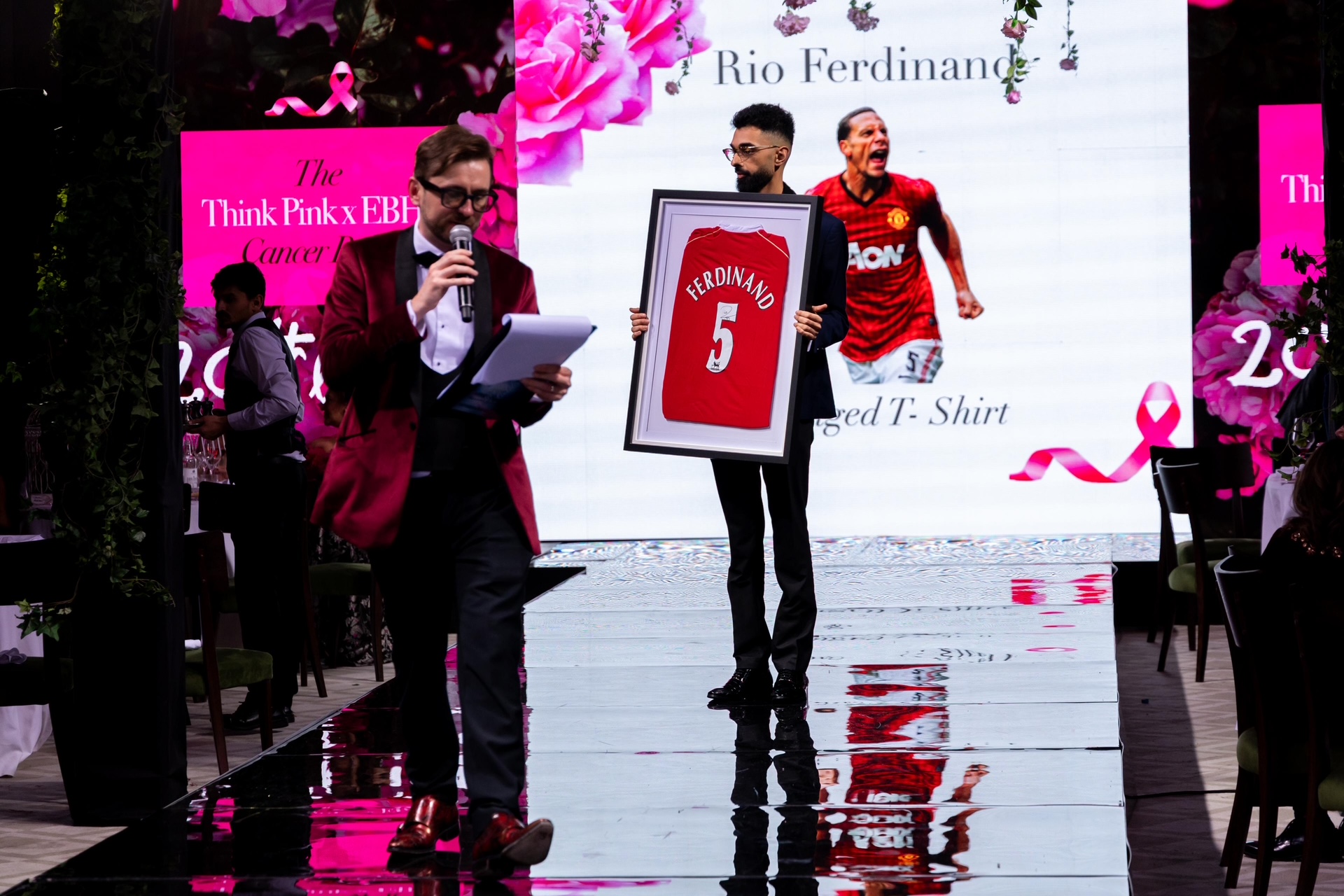
    Auctioneer selling a framed signed Rio Ferdinand Manchester United shirt at a charity fundraising gala

    In short

    • A celebrity name in the room draws attention, but attention on its own does not raise money: someone still has to turn it into competitive bidding.
    • Celebrity-linked lots sell for more because of provenance and story, not just the object itself, but only when the auctioneer sequences and paces that moment properly.
    • Eric Clapton’s 1999 Christie’s guitar auction for his Crossroads Centre raised over $5 million, proof that a genuine story behind a lot outperforms the item alone.
    • My own TV background, sharing a stage with Annie Lennox at my first charity event in 2005 and interviewing names like Will Ferrell and Tom Hardy, changes how I read a room when a well-known guest is in it.
    • The practical lesson: brief the room, protect the cause as the focus, and never let a celebrity moment become the whole strategy.

    If you are planning a celebrity auction charity event, you already know the appeal. A well-known guest fills seats, gets the local paper interested, and gives your programme a story to lead with. What most organisers get wrong is assuming the celebrity does the fundraising for them. They do not. They open the door. Someone still has to walk the room through it.

    What is a celebrity auction charity event?

    A celebrity auction charity event is a fundraising auction where a well-known guest attends, donates a lot, or lends their name to the appeal, on top of the standard live auction or pledge drive format.

    That can mean several different things in practice: a signed item donated by someone famous, a experience-based lot like meeting a well-known name, or simply a recognisable guest attending and being seen to support the cause. Each version changes the room slightly differently, but none of them replace the actual mechanics of running an auction.

    Does a celebrity name actually increase the bids?

    An Arsenal legend on working with Kevin

    Yes, a genuine celebrity connection increases bids, but only when the story behind the item is real and specific, not just a name attached for marketing.

    Eric Clapton’s 1999 guitar auction at Christie’s is the clearest example of this at scale. He sold over 100 guitars and other items to fund his own treatment centre, Crossroads, and the sale raised over $5 million. Buyers were not paying guitar-shop prices. They were paying for the specific instrument, played by that specific person, tied to a cause he had founded himself. That is provenance doing the work, not fame alone.

    The same principle applies at a much smaller scale in a hotel ballroom. A signed shirt from a player the room actually cares about will always outsell a generic signed item from someone with no connection to the guests. Relevance beats fame every time.

    Do celebrities donate their own items for charity auctions?

    Yes, celebrities regularly donate signed items, experiences, or their own time to charity auctions, and these lots can perform well when they are sourced and described properly.

    This is where I bring in my fundraising strategy consultation before an event. A celebrity-donated lot needs the same groundwork as any other: a realistic reserve, a clear description of what the winner actually gets, and a plan for how it gets sequenced in the running order. A brilliant lot introduced badly, or dropped in at the wrong moment, still underperforms.

    Why star power alone will not close a lot

    I have stood in rooms with a genuinely famous name at the top table and watched the bidding go quiet anyway, because nobody was managing the moment. A name in the room is an asset. It is not a strategy.

    Bidding momentum is a skill, not a lucky side effect of who happens to be attending. I have to read who is bidding, who has gone quiet, and when to name the room out loud to get one more hand up, whether or not there is a celebrity two tables over. The recognisable face gets people through the door and gets the local write-up. What happens after that is still down to pacing, timing, and holding the room’s attention on the cause, not the guest list.

    I have also seen the opposite mistake: an event that assumes the celebrity guest is a distraction from the fundraising and tries to keep them out of the auction segment entirely. That is just as costly. The trick is not choosing between the guest and the mechanics of the auction, it is weaving the two together deliberately, so the room’s attention on the guest becomes attention on the cause instead.

    What actually happens in the room during a celebrity auction charity gala?

    In practice, a celebrity guest raises the energy in the room for a short window, and a good auctioneer uses that window rather than letting it pass.

    Charity auctioneer Kevin Durham in a burgundy dinner jacket working the room with a microphone

    There is usually a natural spike in attention right when a well-known guest arrives, is introduced, or presents a lot themselves. If the live auction is timed to run through that window, bidding tends to run hotter than it would an hour later once the novelty has settled and the room has moved on to dessert. Miss that window and you are back to selling on the merits of the lot alone.

    How my TV background changes the dynamic

    Twenty years ago, my first ever charity event put me on stage alongside Annie Lennox. That is not a boast, it set the baseline for how I think a room with a recognisable name in it should feel: professional, warm, and never starstruck to the point that the cause gets forgotten.

    Later, presenting for Fox, Warner and Universal put me in rooms with people like Will Ferrell, Tom Hardy, Reese Witherspoon and Robin Williams. What that taught me has nothing to do with name-dropping and everything to do with pacing: how to keep an audience’s attention on the moment that matters, rather than letting it drift toward whoever is famous in the room. That is the actual skill a celebrity-attended charity gala needs on the mic.

    Should you rely on celebrity guests instead of a professional auctioneer?

    No. A celebrity guest adds attention and a story, but they are not a substitute for someone who knows how to sequence lots, read bidders, and run a pledge drive.

    Plenty of well-meaning events lean entirely on a big name to carry the evening, then wonder why the total fell short despite a full room and local press coverage. The name got people there. Nobody converted that goodwill into pounds raised, because there was no plan for it beyond the guest appearance itself.

    How to make the most of a celebrity-attended charity auction

    • Brief your auctioneer on who is attending and why, so the running order can be built around the room’s natural attention spikes rather than working against them.
    • Keep the cause visibly at the centre, not the celebrity. A gala that feels like a fan event rather than a fundraiser tends to undersell on the night.
    • Source celebrity lots properly, with a clear description, realistic reserve, and a genuine story, the same charity auction ideas discipline you would apply to any other lot.
    • Time the live auction or pledge drive around the celebrity moment, not after it has passed.
    • Do not oversell the guest appearance in your marketing. Set expectations honestly and let the actual evening do the rest.
    • Agree the celebrity’s role in advance, whether that is presenting a lot, saying a few words, or simply attending, so nobody is improvising in front of a live room.
    • Have a backup plan for the auction itself regardless of who is attending. Guests can be delayed, pull out, or run to a tighter schedule than planned, and your fundraising total should never depend entirely on one person turning up.

    A well-known name in the room is a genuine advantage. What decides whether that advantage turns into pounds raised is still the same thing it always is: someone on the mic who knows how to use the moment. Find out more about my background if you are weighing up whether a celebrity-attended event needs that extra layer of experience.

    Kevin Durham, charity auctioneer

    Kevin Durham

    Charity auctioneer & event host

    20years£10m+raised60–80events/yr
    Check availability07596 851647

    Let’s talk

    Bring this to your event

    Book a free consultation with a charity auctioneer who has raised over £10 million.

  • Charity event host or auctioneer: do you need one, or both?

    Charity event host or auctioneer: do you need one, or both?

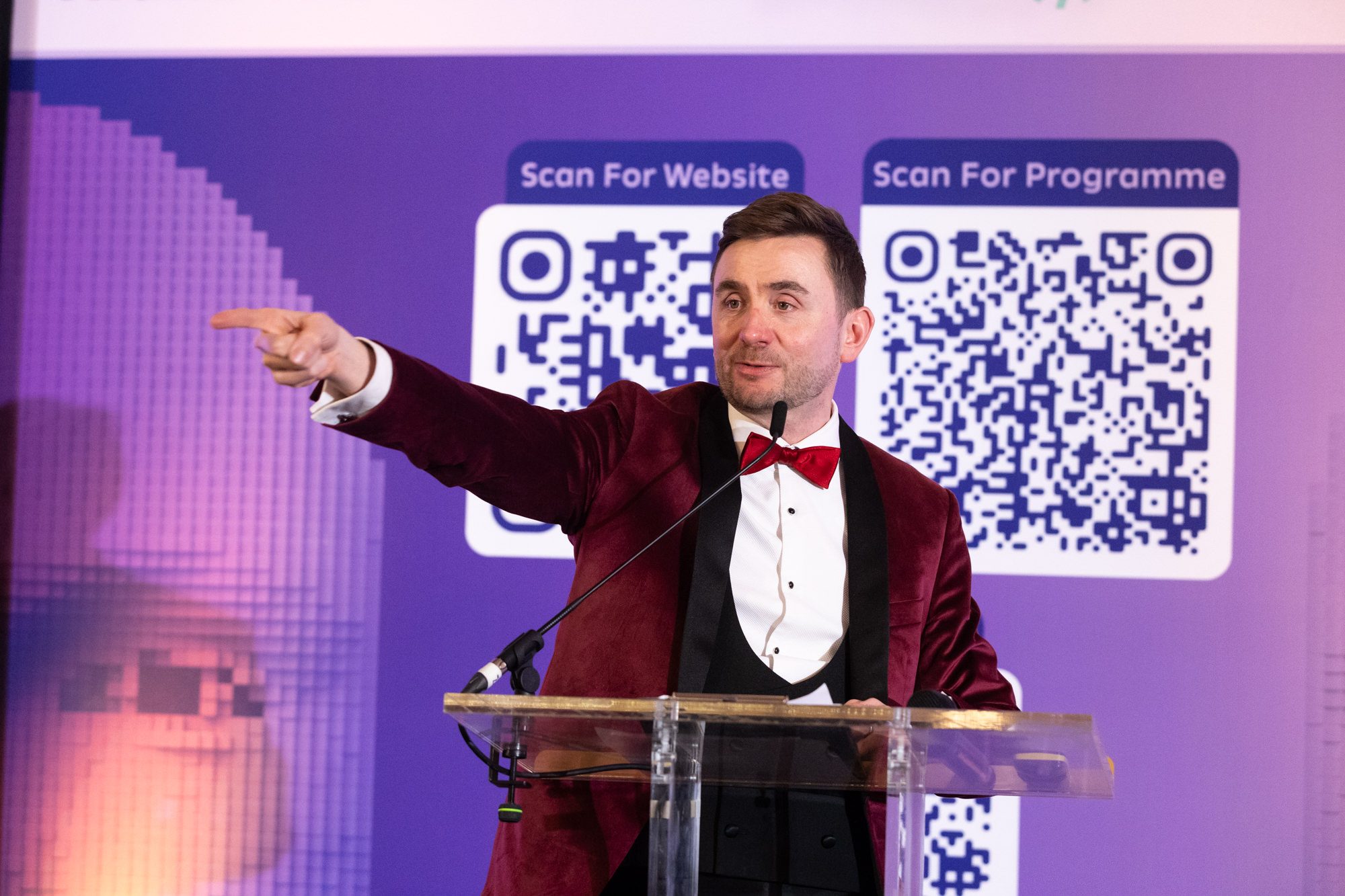
    Kevin Durham standing at a podium on stage, introduced as host on a large screen behind him

    In short

    • A charity event host manages introductions, pacing and transitions through the evening. A charity auctioneer drives bidding during the live auction and leads the pledge. They are different skills, not the same job with two names.
    • Most galas book them separately. That works, but it also means two fees and a handoff moment between host and auctioneer that neither of them controls.
    • I cover both roles myself, using a TV presenting background for the pacing and hosting, and twenty years on the auction floor for the bidding. The evening runs as one show, not two bookings stitched together.
    • If a host candidate has never run a live auction or a pledge before, ask them directly. Warmth on the microphone does not automatically transfer into closing a room of bidders.
    • Book early. One person covering the whole evening only works if that person is actually free on your date.

    Ask a fundraising manager whether they need a charity event host or an auctioneer, and most will pause. Reasonably so: on paper, both people spend the evening holding a microphone in front of the same room. In practice, a charity event host and a charity auctioneer are doing two different jobs, and knowing which one your event needs, or whether it needs both, changes how much you raise.

    What does a charity event host actually do?

    A charity event host runs the programme: welcoming guests, introducing speakers and sponsors, keeping the evening on schedule, and filling the gaps between courses, awards and entertainment segments without losing the room’s attention. It is, in the broadest sense, the job a master of ceremonies has done at formal events for as long as formal events have existed: introducing what comes next, and making sure it lands.

    At a charity gala specifically, that means far more than reading names off a card. A good host reads the room’s energy through a three-course dinner, knows when a speech is running long and needs a graceful close, and can recover smoothly when the microphone cuts out or a speaker is late to the stage. None of that requires selling anything. It requires pacing, timing and the confidence to hold a room of several hundred people without a script for every second of it.

    Kevin Durham auctioneering on stage in a red velvet jacket under dramatic red and blue lighting

    What does a charity auctioneer do differently?

    A charity auctioneer’s job is to drive competitive bidding on the live lots and lead the pledge, converting the room’s goodwill into money on the night. It is a commercial skill layered on top of a performance one: reading which bidder still has room to go one more, naming momentum out loud so the room feels it, and knowing exactly when to close a lot rather than let energy drain out of it.

    The pledge, often called fund-a-need, asks something different again. It is not comic timing, it is the opposite: building genuine emotional weight around the cause, then giving donors a structured way to give at a level that suits them. Getting both segments right in one evening is the actual work of a professional charity auctioneer, distinct from simply being confident on a microphone.

    Charity event host vs auctioneer: where the lines blur

    The overlap is real, which is exactly why the confusion exists. A host typically introduces the auction segment, sometimes runs a raffle draw, and hands over to whoever is calling the lots. That handover is where events lose momentum, because a host who has never called a bid cannot read a bidding room the way an auctioneer can, and an auctioneer who has not been in the room all evening has to rebuild rapport from a standing start.

    I learned how much that handover matters the hard way. Early in my career I walked into the middle of a room to start the live auction while people were still talking, and I did not stop to get them quiet first. Only a fraction of the guests actually heard the lots. One man bid on an item he could barely make out. I have never repeated that mistake since: whoever holds the room before the first lot is called holds the total by the end of the night. That is true whether the person holding the room is a host, an auctioneer, or, as I would argue, one person doing both.

    Do you need both an event host and an auctioneer?

    Plenty of charities book a separate host and auctioneer, and it works fine, provided the two have actually spoken beforehand about pacing, cues and who is handling what. Where it goes wrong is when they meet for the first time in the green room an hour before doors open, because the room they are both about to manage does not care whose job the gap between them was.

    My own event hosting service covers the full programme deliberately: arrivals, speeches, dinner transitions, the live auction, the pledge and the close. Booking one person for the whole evening removes the handover altogether. There is no moment where energy has to be rebuilt from zero, because it never dropped in the first place.

    There is a cost angle worth weighing too. Two separate bookings mean two separate fees, and neither person has full visibility of what the other is planning to say or do until the rehearsal, if there is one. One booking for the full evening means one point of contact for your event committee, one rehearsal conversation, and one person accountable for how the whole programme flows, not just their own segment of it.

    Why does running both roles raise more money?

    Money follows momentum, and momentum is easiest to protect when nobody has to hand it to someone else mid-evening. A host who has spent three hours reading a room’s mood walks into the auction already knowing which tables are warm and which need a nudge. An auctioneer who has been present since the welcome speech does not need to introduce themselves to the room before asking it to bid.

    I ran a single-evening fundraising gala in Monaco on exactly this basis: pre-event planning on lot sequencing, one person carrying pacing and energy from the welcome through to a structured pledge, across a high-net-worth, multilingual audience. Continuity was the point, not a side benefit. It is far harder to build that same energy in a room where the person on the microphone changes at the exact moment the stakes go up.

    “He's really professional, engaged the room and took control where we needed it. Highly recommend him if you need him to host any event.”
    — Nicola Briscoe, IBA / Electrical Industries Charity (EIC)
    Event MC review, sportsman dinner

    How I run both roles in one evening

    I did not start as an auctioneer. I started in television, presenting and interviewing for Fox, Warner and Universal, then moved through comedy film work before my first ever charity event in 2005, sharing a stage with Annie Lennox. That is the background most auctioneers on the circuit do not have, and it is why I work the floor with a wireless microphone rather than stand behind a podium reading a script.

    Practically, that means one person handles your welcome, your speeches, your dinner pacing, your live auction and your pledge, without a gap where the room has to reset. I am not the one who raised the total, though. A powerful result is always a powerful team behind a powerful charity: my job is to give that team’s evening the pacing and the platform it deserves, from the first welcome to the final ask.

    If your event has a live auction or a pledge drive on the programme, it is worth checking with your host candidate whether they have run one before, not just hosted one. Ask what happens at the handover between the welcome speeches and the auction, and who is actually responsible for keeping that transition tight. It is a fair question to put to any agency or freelance host, and a professional one should have a straight answer.

    Call 07596 851647 or email hello@thecharityauctioneer.uk to check availability for your date.

    Kevin Durham, charity auctioneer

    Kevin Durham

    Charity auctioneer & event host

    20years£10m+raised60–80events/yr
    Check availability07596 851647

    Let’s talk

    Bring this to your event

    Book a free consultation with a charity auctioneer who has raised over £10 million.

  • What does a professional auctioneer do, and why does it matter for your event?

    What does a professional auctioneer do, and why does it matter for your event?

    Kevin Durham speaking into a microphone and gesturing at a gala, wearing a red velvet jacket

    In short

    • A professional auctioneer runs the whole fundraising moment at a gala or charity dinner: the live auction, the pledge drive, and usually the pacing of the whole evening, not just the calling of lots.
    • There’s no formal qualification required to become an auctioneer in the UK, except for specialists in fine art, chattels, plant, and property. Charity and event auctioneering is judged on experience and results, not certificates.
    • The gap between a professional and a volunteer host tends to show up directly in the total raised. Real events have gone from a modest target to double, or ten times, that figure.
    • Before you book anyone, check for event-specific experience, verifiable results with real numbers, and a pre-event consultation.
    • Ask what happens if the night doesn’t go well. Not every auctioneer offers a guarantee.

    Search for a professional auctioneer and you’ll find two very different types of results mixed together: people who sell antiques, property, or livestock under the gavel, and people who run live fundraising auctions at galas and charity dinners. This post is about the second kind. If you’re planning a charity auction, gala dinner, or fundraising event, here’s what a professional auctioneer actually does, how that differs from a volunteer host, and what, if anything, qualifies someone for the job.

    The distinction matters because the two jobs are judged on completely different things. A commercial auctioneer is judged on the hammer price of the goods in front of them. A charity or event auctioneer is judged on how much a room of donors gives across an entire evening, which depends far more on pacing, energy, and rapport than on knowing the value of the lot.

    What does a professional auctioneer do at a charity event?

    A professional charity auctioneer at work

    A professional auctioneer runs the entire fundraising segment of a gala, dinner, or charity event: introducing lots, driving competitive bidding, reading the energy in the room, and usually leading the pledge drive too.

    That’s worth separating from the other kind of professional auctioneer you’ll find if you search the term. A property valuer works from a completely different skill set, and usually a different qualification path, than someone running a live fundraising auction for a room of donors. If you’re planning a charity event, you want the second kind: someone who has run gala dinners, pledge drives, and fundraising events specifically, not just anyone comfortable holding a gavel.

    At a typical event, that means:

    • Setting the pace across the whole evening, not just during the auction segment
    • Building bidding momentum lot by lot, and recovering it when it stalls
    • Running the pledge drive, sometimes called fund-a-need, which is often the highest-earning part of the night
    • Reading an unfamiliar room in real time and adjusting tone, pace, and energy accordingly

    That’s a different job from an MC who reads out lot descriptions and takes bids as they come. For more on how the whole evening typically runs, see this guide to the charity fundraising auction format.

    This work also travels. A professional auctioneer working in the charity sector may run events across the UK, Europe, and the US in a single season, adjusting for a corporate crowd one week and a multilingual, high-net-worth audience the next. That range is itself part of the job, not a separate skill.

    What’s the difference between a professional auctioneer and a volunteer host?

    The difference shows up directly in the total raised, not just in how smooth the evening feels. A professional reads the room’s energy, names it out loud, and uses it to keep bidding moving. A volunteer host, however well-intentioned, generally cannot replicate that under pressure with a live room of donors.

    The numbers back this up. At a recent Jigsaw Trust gala, the initial target was £14,000. The event raised £57,600, combining live auction and pledge income. At a Teenage Cancer Trust gala run for OCU Group, the target was £40,000 and the final total came in at £84,108.04. At a Manchester Airport Group annual gala with over 400 guests, the event tripled the previous year’s total. One client, Kerry Johnson of The Pallet Network, put it plainly: “We were able to 10x our original fundraising target, and our guests enjoyed the entertainment that came with the auction itself.”

    In each case, the lots and the guest list only account for part of the result. What changed the outcome was someone actively managing the room’s energy across the whole evening rather than simply calling bids as they came in.

    None of that happens by accident. It comes from reading a room, building momentum lot by lot, and structuring the evening so the pledge drive lands at the right moment, not a script anyone could follow after a single weekend course. Read more about Kevin’s background in TV presenting and live entertainment, which is where a lot of that room-reading skill comes from.

    The benefits of hiring a professional auctioneer

    A professional auctioneer offers more than a steady voice on the microphone. Here’s what typically changes when you book one for a gala or fundraising dinner:

    • Full-evening hosting. Rather than showing up just for the auction segment, a professional auctioneer can run introductions, transitions, and the close, keeping pacing consistent across the night.
    • Pledge drive expertise. The live pledge is often the highest-earning segment of a gala when it’s run well, and it depends on building a genuine connection with the room at the right moment, not just asking for money.
    • Pre-event consultation. A professional auctioneer should want to understand your donor audience, your lots, your programme, and your target before the night itself, not walk in cold.
    • Accountability. Ask what happens if you’re not satisfied. The Charity Auctioneer, for example, offers a 40% refund if a client isn’t happy with the event.
    • A strategy conversation up front. A free initial consultation, where lot sourcing, programme structure, and audience psychology get discussed before a contract is signed, tells you a lot about how seriously an auctioneer takes the planning stage.

    Do you need a qualification to be a professional auctioneer?

    No. In the UK, there is no formal qualification required to become an auctioneer generally, and requirements vary from employer to employer. Legal commentary on the profession confirms it’s not compulsory to hold any special qualification to act as an auctioneer, although it’s usual and desirable in practice.

    There’s one exception worth knowing, because it explains why “professional auctioneer” search results are so mixed. Auctioneers working with fine art specialists tend to hold professional qualifications, and land and property valuers typically need a degree or RICS-approved qualification. None of that applies to charity and event auctioneering. What matters for a gala or fundraising dinner is technique developed over hundreds of live events: reading energy, building momentum, and recovering when it stalls, not a certificate.

    That’s why the questions worth asking a prospective charity auctioneer are about experience and results, not credentials. How many galas have they run? What did those events raise against target? Can they show you real numbers rather than vague praise?

    This also means “professional auctioneer training” is a slightly misleading phrase for this side of the industry. There’s no single course that produces a good charity auctioneer. The skill is built event by event: hundreds of rooms, hundreds of different audiences, and the pattern recognition that comes from seeing what makes bidding stall and what gets it moving again.

    “Kevin was great, he kept things moving along and raised a bundle of cash for all our lovely farmers. It always makes a real difference when you've got a great auctioneer.”
    — Paul Pirie, Royal Agricultural Benevolent Institution (RABI)
    RABI on raising a bundle for farmers

    What to check before you book one

    A few checks before you commit:

    • Event-specific experience. Ask whether they’ve run gala dinners, pledge drives, and fundraising events specifically, not just general auctions or corporate MC work.
    • Verifiable results. Look for specific numbers from past events, not vague testimonials. “Raised £84,108 against a £40,000 target” tells you more than “fantastic energy.”
    • Pre-event consultation. A professional auctioneer should want to talk through your audience, lots, and programme before the night, not turn up cold.
    • Reach matters more than location. Many professional auctioneers, Kevin included, travel UK-wide and internationally rather than working only in one city, so a “professional auctioneer near me” search is often better answered by checking who’s available for your date than who’s geographically closest.
    • Whether they cover the pledge drive too. A live pledge or fund-a-need moment often outperforms the auction itself, so ask whether that’s part of what they run, not just the lots.
    • What happens if it doesn’t go well. Ask about guarantees. Not every auctioneer offers one.

    If you want to see what this looks like in practice, the charity auctioneer hiring page walks through the process end to end, from first consultation to the night itself.

    Kevin Durham, charity auctioneer

    Kevin Durham

    Charity auctioneer & event host

    20years£10m+raised60–80events/yr
    Check availability07596 851647

    Let’s talk

    Bring this to your event

    Book a free consultation with a charity auctioneer who has raised over £10 million.

  • Hospice fundraising ideas: auction and gala formats that raise more

    Hospice fundraising ideas: auction and gala formats that raise more

    Charity auctioneer Kevin Durham hosting the Rosie May Foundation's charity gala, working the floor with a wireless microphone.

    In short

    • A live auction paired with a fund-a-need moment tends to raise more at a hospice gala or ball than a raffle or tombola alone.
    • Fund-a-need suits hospice fundraising especially well because donors give directly to the care itself, not just to win a lot.
    • At Noah’s Ark Children’s Hospice, the same auction and pledge approach worked across two separate events, not just one.
    • The best hospice auction lots are experiences and locally sourced items with a genuine connection to the cause, not generic prize items.
    • If you’re running a raffle alongside your auction, UK rules cap what you can take from proceeds for expenses and prizes.

    Search for hospice fundraising ideas and most results are A-Z lists: bake sales, abseils, quiz nights, sponsored walks. Useful for year-round giving, but if you’re planning a gala or ball with a formal dinner and a room full of donors, the question is different. It’s not what else you could add to the evening, it’s how you structure the auction and the ask so the room gives as much as it possibly can.

    Hospices sit in an unusual position among charities. The cause is universally understood, but the subject matter is sensitive, so the format and pacing of the evening need to feel right as well as raise money. Getting the auction and pledge structure right matters more here than it does for a lot of other causes.

    What hospice fundraising ideas raise the most at a gala or ball?

    For a formal hospice gala or ball, a live auction paired with a fund-a-need pledge moment tends to raise more than a raffle or tombola alone. A raffle asks for a fixed ticket price. A live auction and pledge combination lets the room’s energy and generosity set the ceiling instead.

    The choice between formats usually comes down to the size and style of the event:

    • Live auction: best for a formal dinner or ball with a captive room, where a small number of strong lots (experiences, signed items, exclusive access) can be sold competitively from the floor.
    • Silent auction: works well alongside a live auction for a larger number of lower-value lots, letting guests bid throughout the evening without taking up stage time.
    • Online or hybrid: extends reach to supporters who can’t attend in person, though it lacks the momentum and social pressure that drives higher bids in the room.

    Most hospice galas and balls do best combining a live auction for the strongest lots with a fund-a-need moment at the natural high point of the evening. A silent auction can run in the background for lower-value lots, but it shouldn’t be the centrepiece. The room’s attention is the most valuable resource on the night, and it’s best spent on the live auction and the pledge, not spread thin across a long list of silent lots.

    You can read more about how a live auction segment is typically structured across a full event.

    Why does fund-a-need work so well among hospice fundraising ideas?

    Fund-a-need works especially well for hospice fundraising because it lets a donor give directly to the care itself, without needing to want or bid on a physical item first.

    That directness matters more for a hospice cause than almost any other. In the UK, one in four families are unable to access the end of life care they need, and hospice care supports 300,000 people and their families every year. A well-run fund-a-need moment translates that scale into something a room can act on in the space of a few minutes, framed around a specific, tangible outcome (a night of nursing care, a place on a support programme) rather than a vague appeal.

    Structured well, this moment usually lands after the live auction, once the room’s energy is already up, and before guests start to drift toward the end of the evening. A tiered giving structure, where guests are invited to give at a few different levels rather than one fixed amount, tends to outperform a single ask because it gives everyone in the room a level they can say yes to. Our page on pledge drive fundraising covers how to sequence and pitch it.

    How this works for a children’s hospice event

    Children's hospice fundraising in action

    I’ve now worked with Noah’s Ark Children’s Hospice twice, and the same structure carried both events. Cerys Dawson from the charity summed it up afterwards:

    “I have now worked with Kevin twice, at both events he completely elevated the fundraising. Kevin did such a great job ensuring all guests were enjoying themselves and engaged. Kevin’s energy and approach to the auction and pledges definitely paid a part in the success of the events.”

    A children’s hospice audience often responds especially strongly to a fund-a-need moment, since the connection between the ask and the care being funded is immediate and specific. The auction segment still matters for setting the tone and energy of the evening, but it’s the pledge that tends to carry the emotional weight in the room.

    That said, the tone has to be handled with care. A children’s hospice event needs warmth and energy to keep the room engaged, but the pledge moment itself works best when it stays grounded in specifics rather than reaching for the biggest possible emotional reaction. Guests already understand why they’re there. The job is to give them a clear, comfortable way to act on that, not to push harder than the room wants. You can read more client reviews from events across different causes, including hospice galas.

    What auction lots suit a hospice fundraiser?

    The strongest lots for a hospice auction are experiences and locally sourced items with a genuine connection to the cause, rather than generic prize items bought in bulk.

    A few categories that tend to perform well:

    • Local experiences: a chef’s table, a private tour, or a well-known local venue offering an evening most guests couldn’t book themselves.
    • Signed or donated items: sourced directly rather than through a commission-based lot supplier, so more of the value reaches the charity.
    • A signature lot: one standout item or experience that anchors the live auction and gives the room something to build momentum around.

    Sourcing lots this way, in-house and guided by someone who has run these events before, keeps more of what’s raised with the hospice rather than paying a third party for the lots themselves. It also tends to produce better lots, since local businesses and supporters are often more willing to donate directly to a hospice they recognise than to hand a commission to a lot-sourcing agency they’ve never heard of.

    Keep the total number of live lots manageable, usually somewhere between five and ten for a typical gala. A shorter, stronger list holds the room’s attention better than a long one, and leaves more energy for the pledge that follows. For more on choosing and sourcing lots, see this guide to auction ideas for charity events.

    Running a raffle alongside your auction

    Many hospice galas run a small raffle or tombola alongside the auction and pledge drive, and this is generally allowed without a gambling licence as long as it stays within the rules for an incidental lottery.

    The core requirements: the raffle can’t be the main reason for holding the event, tickets must be physical and sold only at the event itself (not online or in advance), and you can take up to £100 of proceeds for expenses and up to £500 for purchased prizes, with no limit on donated prizes. This is worth checking with whoever is organising the raffle side of your event, since it sits under separate rules from the auction itself.

    Donated prizes are usually the better route for a hospice raffle in any case. They cost nothing to source, there’s no cap on their value, and a locally donated prize (a meal for two, a spa day, a family day out) tends to sell more tickets than a generic bought item.

    None of this needs to complicate the evening. Treat the raffle as a smaller, simpler add-on that runs in the background, and let the live auction and fund-a-need moment do the heavy lifting on the total raised.

    Kevin Durham, charity auctioneer

    Kevin Durham

    Charity auctioneer & event host

    20years£10m+raised60–80events/yr
    Check availability07596 851647

    Let’s talk

    Bring this to your event

    Book a free consultation with a charity auctioneer who has raised over £10 million.

  • Hire an auctioneer: what to check before you book one for your event

    Hire an auctioneer: what to check before you book one for your event

    Man in a white shirt raising his hand while auctioneering a lot to laughing guests at a charity fundraising dinner

    In short

    • Before you hire an auctioneer, ask for event-specific experience, not just general auction or MC experience.
    • Look for verifiable results with real numbers, not vague praise.
    • Get a written agreement in place before the event, not just a verbal yes.
    • Direct hire usually costs less than going through a booking agency, since there’s no agency fee to cover.
    • Availability for your date usually matters more than how close the auctioneer is based to your venue.

    If you’re planning to hire an auctioneer for a gala, dinner, or fundraising event, the quality of the person you book affects the total raised as much as the lots themselves do. This is a practical checklist: what to ask, what to check, and whether to go direct or through an agency, before you commit to anyone.

    Most of these questions apply whether you’re booking someone for a small dinner or a 400-guest gala. What changes is how much is riding on getting the answers right.

    What should you check before you hire auctioneer services?

    Before you hire auctioneer services for your event, check for experience with your specific event type, verifiable results from past events, and a written agreement, not just a friendly conversation and a good feeling.

    Gabriel Dos Santos, a trustee of the OCU Foundation, put it plainly after booking Kevin for an event with just over 300 guests that ended up raising more than double what the charity had achieved the previous year: “We hired Kevin after researching online and seeing the outstanding feedback he had received from others, and he absolutely lived up to every word of it.” He added: “As complete novices in organising an event of this scale, my colleague and I relied heavily on his guidance, and we felt completely confident every step of the way.”

    That’s the standard worth holding any auctioneer to. Not just energy on the night, but guidance that gets the format and the lots right before the guests even arrive. If someone can’t point you to real events with real numbers attached, that’s worth noticing before you sign anything, not after.

    Read more client reviews from events across different causes and sizes before you decide. Look for detail, not just enthusiasm. A review that mentions a specific target, a specific total, or a specific moment in the evening tells you far more than one that only says the night went well.

    Should you hire auctioneer talent direct, or go through a booking agency?

    Hiring auctioneer talent direct usually costs less than going through a booking agency, since there’s no agency fee built into the price, and it gives you direct access to the person who will actually run your event rather than a point of contact relaying messages.

    A booking agency can still be useful if you have no idea where to start and want a shortlist of options put together for you. That’s a real advantage if you’re planning your first event and don’t yet know what to look for.

    But once you know roughly what you’re looking for, going direct tends to be more transparent too. You can see what an auctioneer services package actually includes and get a straight answer on pricing and availability before you ever pick up the phone, rather than working through an intermediary who may not be in the room on the night themselves.

    Questions to ask before you book

    A short list worth working through before you commit:

    • Have they run this type of event before? A gala dinner, a pledge drive, and a corporate MC booking all call for slightly different skills. Ask specifically about your format.
    • Can they show verifiable results? Ask for real numbers from past events, not just warm testimonials. Naomi Chaning Pearce of the Jigsaw Trust said the value went beyond the night itself: “It was not just during the event where Kevin showed his skills, but also in guiding our planning for the event and highlighting to us what could be achieved.”
    • Do they offer a consultation before the event? A short conversation about your audience, your lots, and your programme tells you a lot about how seriously someone takes the planning stage.
    • Is there a written agreement? Under the Fundraising Regulator’s code for working with others, charities should have an appropriate written agreement in place with any third-party fundraiser they work with, and remain responsible for checking that the agreement is kept to. Ask for one before the event, not after.
    • What’s actually included? Full-evening hosting is a different booking from someone who only appears for the auction segment.
    • What happens if it doesn’t go well? Not every auctioneer offers a guarantee, so ask.
    • Do they handle the pledge drive as well as the auction? A live pledge or fund-a-need moment is often the highest-earning part of the evening, so it’s worth knowing upfront whether that’s included or treated as a separate add-on.

    None of these questions are awkward to ask. A professional auctioneer who has genuinely run events like yours before will usually welcome them, since the answers are exactly what lets them plan a better evening for you. You can read more about Kevin’s background and how these questions apply in practice.

    Does it matter where you hire an auctioneer from?

    Not as much as it seems. Most professional event auctioneers travel to the event rather than working only in one city, so who’s available for your date usually matters more than who’s based closest to your venue.

    Kevin travels across the UK, Europe, and the US for events, and several clients have booked him more than once regardless of location. Nolan Hough, a Chief Growth Officer who booked Kevin as compere and auctioneer for an annual charity ball, said simply: “we’ve already booked him for the next one.” Cerys Dawson at Noah’s Ark Children’s Hospice has worked with Kevin twice. Neither client chose based on postcode. They chose based on the result the first time.

    If proximity mattered as much as search terms like “auctioneer near me” suggest, repeat bookings like these wouldn’t cross cities, countries, or continents the way they do. A gala in Manchester, a yacht club event in Monaco, and a corporate dinner in London can all be run by the same auctioneer in the same season, provided the dates line up. You can see where I work in more detail, from London and Manchester to Leeds, Birmingham, Liverpool and Surrey, as well as international galas in Monaco and Spain.

    If you searched for a benefit auctioneer instead

    “Benefit auctioneer” is the term used more often in the US for the same role called a charity auctioneer or fundraising auctioneer in the UK. If that’s the phrase you searched, the checklist above still applies in full: event-specific experience, verifiable results, and a written agreement, regardless of which side of the Atlantic the terminology comes from.

    Jordan A, who hired Kevin as master of ceremonies, summed up the broader point well: “If you’re looking for someone to help, whether that’s for a charity auction or to host an event, you won’t be disappointed if you choose Kevin.” The label matters less than the checklist.

    “I had Kevin as my auctioneer and MC. He was amazing and I will definitely be having him next year. We've raised quite a lot of money.”
    — Barbarians Group
    Mental health charity MC review

    Whichever term brought you here, the underlying job is the same: read the room, keep the bidding moving, and get the pledge or fund-a-need moment right when it matters most. See more on what a charity auctioneer actually does across a full event.

    Kevin Durham, charity auctioneer

    Kevin Durham

    Charity auctioneer & event host

    20years£10m+raised60–80events/yr
    Check availability07596 851647

    Let’s talk

    Bring this to your event

    Book a free consultation with a charity auctioneer who has raised over £10 million.