Home About Kevin Auctions Virtual auctioneer Pledges Hosting Entertainment Free software Software examples Case studies Reviews Other services Fees Fundraising games Fundraising consultant Get in touch Blog Podcast

Toastmaster or charity auctioneer: who should run your charity ball?

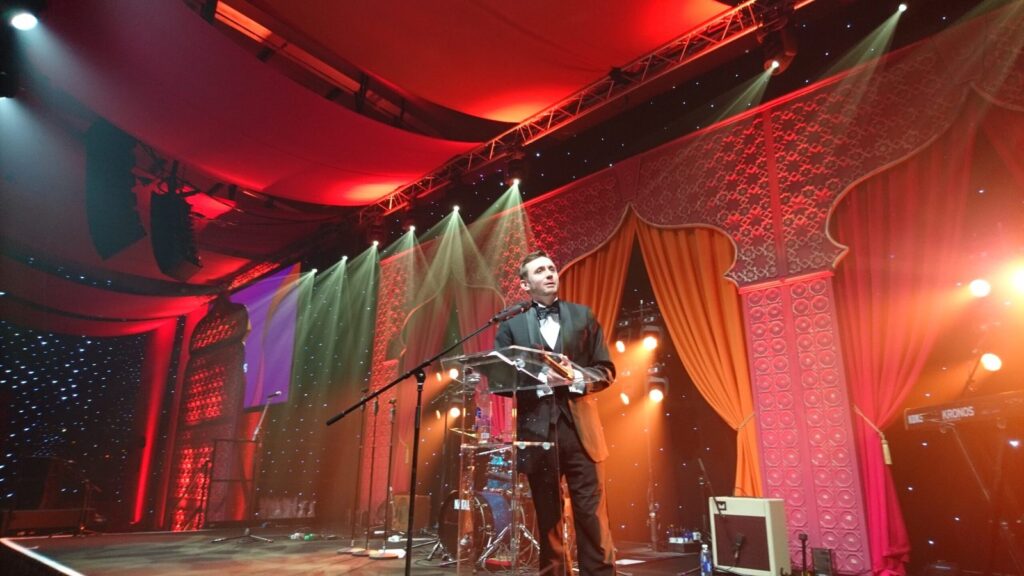
Kevin Durham in black tie hosting a charity gala from a clear lectern on a stage lit in red and orange

In short

  • A toastmaster runs the formalities of a charity ball: announcing guests, grace, speeches and timing.
  • A charity auctioneer plans and runs the live auction and the pledge, the two segments that turn goodwill into money.
  • One person can do both, but only if they have run fundraising rooms, not just announced them.
  • If a toastmaster’s quote includes the auction, ask who orders the lots, who runs the pledge and how the fee is worked out.
  • A toastmaster alone is the right call when there is no live fundraising. Hire an auctioneer when your target depends on it.

A toastmaster is the formal master of ceremonies at a dinner: the person who announces guests, calls for silence, introduces the speeches and keeps the evening to time. A charity auctioneer plans and runs the live auction and the pledge. Both stand in front of your guests with a microphone, which is why a quote that “includes the auction” can sound like one booking when it is really two jobs.

I am Kevin Durham, a professional charity auctioneer and event host. If your committee is organising a charity ball and weighing a toastmaster against an auctioneer, this is what each job covers, when one person can do both, and what to ask before you sign.

What does a toastmaster do at a charity ball?

A toastmaster acts as stage manager and timekeeper for a formal dinner. They announce arriving guests, call the room to be seated, announce grace, introduce the speeches and toasts, and liaise with banqueting staff and the photographer. That is the list The London Toastmaster publishes on his duties page, read November 2026.

It is old, respectable work. Wikipedia says the first professional toastmaster in London was possibly James Toole in the 1840s, and that the red coat now associated with London toastmasters was first worn by a man who wanted to look different from the waiting staff. The same London toastmaster’s explainer page describes a toastmaster as trained and examined by his peers, able to advise on protocol and etiquette.

If your ball has a receiving line, a top table and formal toasts, that specialism is worth paying for.

What does a charity auctioneer do that a toastmaster does not?

A charity auctioneer plans and runs the two segments that turn goodwill into money: the live auction, where lots go to the highest bidder, and the pledge, where guests give at levels set in advance. The work starts before the night, with the lot order, the pledge levels and a plan for a lot that stalls.

Some toastmasters do this too, so the right-hand column below is a checklist for any candidate, not a rule about any one person.

Job on the nightToastmasterCharity auctioneer
Announces guests, grace, speeches, toastsCore jobOnly if also hosting
Gets a noisy room quietCore jobNeeded before every lot
Chooses the lot orderVaries, askCore job
Sets the pledge levelsVaries, askCore job
Rescues a lot that stallsVaries, askCore job
Explains the Gift Aid rule on bidsVaries, askShould know it

Even that last row shows the gap. HMRC’s charity guidance, chapter 3.40, read November 2026, says a payment for an item at a charity auction is a purchase, not a gift. Part of a winning bid can still qualify for Gift Aid, and in some cases that depends on the bidder knowing the item’s retail value when they bid. That is general information, not tax advice, and it is a fair question for whoever will call your lots.

Can one person be both toastmaster and charity auctioneer?

Yes, provided they have run fundraising rooms and not only announced them. Some toastmasters say they do. The London Toastmaster’s duties list includes acting as an auctioneer, fundraiser or prize-caller, and a 2014 post on The Complete Toastmaster’s site lists professional charity auctioneer among the roles he offers (both read November 2026).

Splitting the job is common as well. The London Toastmaster’s 2019 write-up of a children’s charity dinner credits a separate charity auctioneer on the programme. Both set-ups work when the two people have spoken before the night. The weak point is the handover, which I cover in host or auctioneer.

Attention is the first job of both, and I learned that the hard way. At one big event that was running late, I announced a live auction while people were still talking, and I did not stop to get them quiet. Only a fraction of the room heard the lots, and one man bid on an item he could barely make out. I have never repeated it. Command the room first: stand on a chair if you have to, because the shush is a powerful tool. A toastmaster is paid to do exactly that, and it was the skill I was missing that night.

If the formal protocol is the heart of your evening, book the toastmaster. If the money segments matter as much, book someone who has run them, and brief the two together. My own event hosting covers the whole programme, from arrivals and speeches to the auction, the pledge and the close.

Five questions to ask when the quote includes the auction

  1. Who chooses the lots and puts them in order, and how many will there be?
  2. Who runs the pledge, and how are the giving levels set?
  3. What do you do when a lot stalls?
  4. How is your fee worked out: one fee agreed up front, or a share of what is raised?
  5. Which charity can I call about the last auction you ran?

Someone who has run these rooms will answer all five without a pause. Question four matters most. If the fee is tied to the money raised, ask whether that makes the person a professional fundraiser in law. The Charity Commission’s CC20 guidance, last updated 3 February 2026, says that when a charity works with a professional fundraiser or commercial participator, trustees must have a written agreement before the fundraising begins, and the fee must be in the charity’s best interests. Whether a given arrangement counts is a legal point, so ask for the terms in writing and take advice if unsure. My post on commission explained sets out the usual models.

When is it worth hiring a charity auctioneer instead of a toastmaster alone?

It is worth hiring a charity auctioneer whenever your target depends on a live auction or a pledge, because those segments need planning and judgement that formalities do not. A toastmaster alone is the right call for a formal dinner with no live fundraising, or one where a raffle and a silent auction run themselves. If the live auction and pledge sit on your running order as two lines with no plan behind them, that is the moment to bring someone in.

The pledge is often the line nobody planned. Charles Balchin wrote after his first charity auction: “Kevin was absolutely fantastic at running our event. He added a pledge element we hadn’t considered and it became hugely successful.” The success was his team’s; my part was the structure. In my experience a pledge built properly out-earns the lots.

Kevin Durham in a red velvet dinner jacket on stage, microphone in one hand and a clipboard held out in the other

A host who takes control matters too. Nicola Briscoe’s words, from my client reviews:

“He's really professional, engaged the room and took control where we needed it. Highly recommend him if you need him to host any event.”
Nicola Briscoe, IBA / Electrical Industries Charity (EIC)

I am grateful for that, though the evening belonged to the charity’s team.

What to have ready before you ask for a quote

Have the date, the size of the room, your draft running order, your target and what happened to the auction last time. With those, a short call is enough to say whether you need an auctioneer, a host or both.

Call 07596 851647. I would rather talk your running order through than trade emails, because a conversation is where it starts to make sense. If you book me as your auctioneer and host, I build the auction platform around your event, in your branding and loaded with your lots and tickets. It is included for the event and stays live for a month afterwards.

Kevin Durham, charity auctioneer

Kevin Durham

Charity auctioneer & event host
20years£10m+raised60–80events/yr
Check availability07596 851647

Let’s talk

Bring this to your event

Book a free consultation with a charity auctioneer who has raised over £10 million.

Charity auction at an awards dinner: where it fits and who runs it

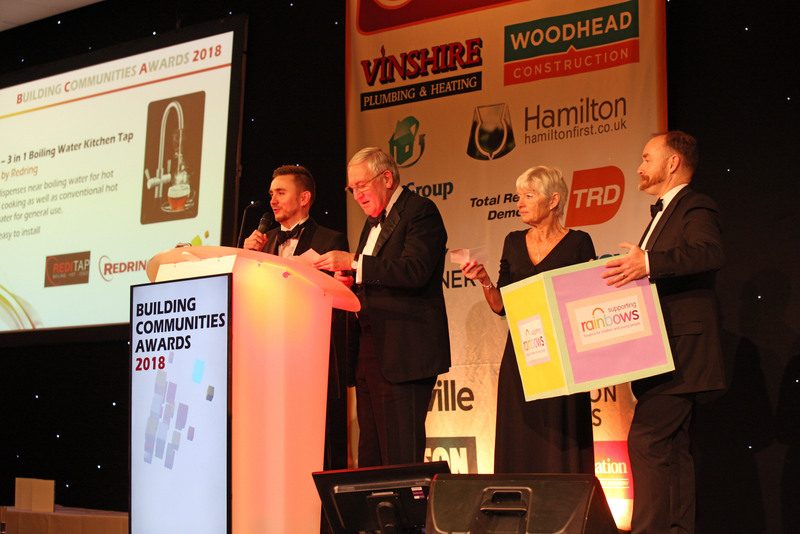
A business awards ceremony on stage, with a host at the lectern and presenters holding a charity collection box

In short

  • A charity auction at an awards dinner is a short fundraising segment inside a recognition evening, with the money going to a charity partner.
  • Put it after the main course and before the final awards, so guests waiting for the headline award are still in their seats.
  • Do the sums on minutes before you choose lots. In the worked example below, a 20 minute slot fits three lots and a short pledge.
  • Agree in writing who receives the money before invitations go out.
  • One host who can genuinely auction removes a handover. A host who has never called a bid is a risk.

A charity auction at an awards dinner is a short fundraising segment, usually a few live lots and a pledge, placed inside a company’s recognition evening for a chosen charity partner. I host award ceremonies as well as running charity auctions, and this is written for the person who owns the awards night and has been asked to add the charity. The awards are the point of the evening, and the auction has to earn its place around them. Done well, nobody feels the charity was bolted on.

Where does a charity auction at an awards dinner go in the running order?

A charity auction at an awards dinner goes after the main course is cleared and before the final awards. The room is fed and warm, and guests are still waiting for the headline award, so they stay seated for the ask. This is my advice, not a rule.

Plenty of dinners pair the two. One US community dinner announced in 2023 an honours evening with a six-item live auction and a fund-a-need paddle raise, though the article does not give the order.

The trade-off is plain. Run the auction after the awards and you ask a room that has peaked, where guests drift once their category is decided. Run it before the final award and the headline category does the work of keeping people in, at the cost of delaying it a little.

Agree the cut list before the night, not during it. If the evening is running fifteen minutes late, which goes first? A sensible order is to trim speeches first, then lots, and to protect the pledge. Keep the sponsor thanks, however short: sponsors should always be acknowledged. The CII’s sample running order for an annual dinner notes a trend to reduce the number and length of speeches. For the same question at a charity’s own evening, my gala running order post explains why the ask belongs at the room’s peak.

How many lots can a charity auction at an awards dinner carry?

An awards dinner can carry few lots, because the programme already has a job to do. BizBash reported in 2006 Sotheby’s view that guests tolerate 15 to 20 items at most before they lose interest. An awards night starts from a lower ceiling.

My view at any dinner is that about ten good lots beat fifty ordinary ones. At an awards dinner, minutes set the number, not the lots on offer. Here is the sum.

SegmentMinutes
Open, with 60 seconds on the charity2
Three lots at about 3 minutes each9
Live pledge7
Total announced, handback to the awards2
Slot needed20

These are planning numbers to show the arithmetic, not a record of a night. If your programme can spare 20 minutes, three lots fit. If it can spare ten, drop to one lot and a shorter pledge.

Keep the lots separate from the awards. A lot named after a category, or a prize that looks like a ranking, muddies a night built on recognition. Choose lots the room cannot buy elsewhere and that suit colleagues and clients alike. My run sheet post sets out timings per lot, and my corporate auction ideas cover what to put in them.

A pledge for a company room

A pledge in a company room should name what the money does, be tied to the charity staff chose, and let people give at several levels. A live pledge is the segment I protect above any lot, because it lets every guest give, not just the few who bid. My line to the room is close to this: that money would have sat there doing nothing, and tonight you can use it to do something really good.

Staff choice matters. CAF’s Corporate Giving Report, read in November 2026, says 68% of private sector employees want to be asked which charities their employer supports. A partner the staff picked makes the ask feel like theirs, not the board’s.

If the company wants to put its own money in, match what the room pledges. Karlan and List’s field experiment found a match offer raised both revenue per solicitation and the chance of giving, and that 2:1 and 3:1 matches added nothing beyond 1:1. It tested fundraising mailings, not an awards dinner, so treat it as a design guide, not a forecast. The decision rule: offer one for one, and announce it before the pledge opens. My live pledge post shows how the tiers work.

Who gets the money, and does the company need an agreement?

Winning bids and pledges should be paid to the charity, with the arrangement agreed in writing before invitations go out. If the company promotes the dinner on the basis that part of each ticket goes to charity, the rules for commercial participators apply and a written agreement is required.

The Charity Commission’s CC20 guidance says trustees must enter into a written agreement before fundraising begins. The Fundraising Regulator describes a commercial participator as a business that promotes its goods or services on the basis that it will contribute to charities. Its Code also says event materials should be clear about how the money raised will be used.

Tax needs a word. HMRC’s Gift Aid guidance, read in November 2026, says payments to a charity for goods are not gifts. So the price of a winning lot is not normally Gift Aid. A split is possible only for items sold commercially, where the bidder knew the price when bidding. Ask the charity and your finance team. This is general information, not tax advice.

Then say it aloud. I tell the room at the start where every pound goes: which lots give the charity 100% and which pay out only above a reserve. At MS UK the money followed the transparency.

Kevin Durham in a burgundy velvet jacket presenting from a lectern at a corporate awards dinner

Should the awards host run the auction too?

The awards host should run the auction too, but only if they can genuinely auction. One voice removes the handover where momentum drops. A host who has presented all evening already knows which tables are warm.

Presenting awards and closing a lot are different skills, so ask to see a host do the second. I cover both roles myself, which is why there is no handover, and I set out the split in host or auctioneer.

When is it worth hiring a professional?

It is worth hiring a professional when the person you would put on the microphone is also presenting awards or sitting at the top table, when the room mixes colleagues, clients and guests who will not want to bid in front of their boss, or when you want a pledge as well as lots.

What a professional changes in the room is momentum, and bidding momentum is a skill, not luck. I read it, name it out loud and use it, and I take the pacing off your list on the night, which matters when you are also worrying about the awards.

Do it yourself when the dinner is small, a respected senior person can speak from the heart about the charity, and you ask for pledges on cards. Plenty of good nights run that way.

“We were able to 10x our original fundraising target, and our guests enjoyed the entertainment that came with the auction itself.”
Kerry Johnson, The Pallet Network

Kind words from Kerry Johnson, and the figure is hers. My part is small next to the people the money is for. More are on my client reviews page.

Before you get in touch

Have ready your date and venue, headcount, the draft running order with award categories and who presents, your charity partner and how it was chosen, whether the company will match, and what went wrong last time.

Call me on 07596 851647. The auction software is included when you hire me: I build it around your event, in your branding with your lots and tickets, and it stays live for a month afterwards. My event hosting page shows how one person can run the whole evening.

Kevin Durham, charity auctioneer

Kevin Durham

Charity auctioneer & event host

20years£10m+raised60–80events/yr
Check availability07596 851647

Let’s talk

Bring this to your event

Book a free consultation with a charity auctioneer who has raised over £10 million.

Auction house auctioneer for a charity gala: what to check first

Kevin Durham in a burgundy velvet dinner jacket working a gala room on the microphone

In short

  • A saleroom auctioneer can run a gala auction well. Calling bids, describing items and handling paperwork are their daily work.
  • “Free” needs checking. Ask whether a buyer’s premium, commission or expenses apply, and who keeps them.
  • Ask who plans the lots and the live pledge with you before the night. That planning is the part a charity auctioneer is hired for.
  • A saleroom and a charity auctioneer can share an evening, as long as someone decides who does what.

An auction house auctioneer for a charity gala is a saleroom professional, usually a valuer by trade, who agrees to call your lots on the night, often for little or nothing. If a local firm has offered, that is a generous offer and worth taking seriously.

I am Kevin Durham, a professional charity auctioneer and event host. This is how I would weigh the offer if I sat on your committee: what a saleroom does well, the checks that decide whether “free” is free, and the part of the job that is easy to miss.

What does an auction house auctioneer do well at a charity gala?

An auction house auctioneer is good at the mechanics of selling: calling bids clearly, describing and valuing items accurately, keeping a bidder’s trust and handling the paperwork afterwards. Those skills carry straight into a gala, and some salerooms run charity evenings regularly.

Hansons Auctioneers in Derbyshire is one example (pages read November 2026). Its owner, Charles Hanson, hosted a charity ball at the Derby Roundhouse for the British Heart Foundation as MC and ran the auction, with signed football boots, hotel stays and diamond jewellery among the lots. He was also guest speaker and auctioneer at a charity golf day dinner for the Tiny Tim Trust on 3 September 2021.

That is real experience of a fundraising room, and it is exactly the record to ask any candidate for. A valuer also brings reassurance on lots such as jewellery, art or antiques, where bidders want to trust the description.

I have no quarrel with salerooms. The question is where the work sits, and my guide to the auctioneer’s job covers the wider split.

Is a free auction house slot really free for a charity gala?

An auction house slot is only free if the charity pays no fee, no commission and no expenses, and keeps the whole winning bid. Three questions settle it. Ask them in writing: is a buyer’s premium charged, is any commission taken, and who pays for travel and printing?

It can be done. The Royal West of England Academy’s 2024 fundraising auction said Bonhams was waiving all fees for the sale, including buyers’ commission (read November 2026). Never assume another house does the same.

A buyer’s premium is a fee added to the winning bid and paid by the buyer. I explain it in buyers premium. As an illustration, not any firm’s rate: at 25%, a £1,500 winning bid costs the bidder £1,875, and the extra £375 goes to the house, not your cause.

If the house keeps a premium or commission while telling guests the sale supports your charity, the law may treat it as a commercial participator. Section 58 of the Charities Act 1992 defines one as a business that runs a promotion saying charitable contributions will go to a charity. The Charity Commission’s CC20 guidance, read November 2026, says trustees must have a written agreement before the fundraising begins and should check how much the charity receives compared with the amount generated. That is general information, not legal advice.

It also affects what you say from the stage. The fundraising code says fundraising must not mislead donors (rule 1.2.1), so “every penny goes to the charity” must be true.

Will an auction house auctioneer plan the lots and pledge for your charity gala?

An auction house auctioneer will plan your lots and pledge only if you ask, and ask early. A saleroom sale starts with consignments. A gala starts with a room of guests, a story and a target, which is a different brief, and nobody should find that out on the night.

In my experience the live pledge, where guests give at set levels with no prize, usually out-earns the auction of lots when it is built well, and most committees are never told. So the questions below matter more than the hammer.

An online catalogue of original artworks for a charity auction, each with a lot number, artist and starting bid

AskA good answerLook again if
Who chooses the number and order of lots?A named person agrees a short list with you, well ahead“We will see what turns up”
Is there a live pledge, and who builds it?Yes, the levels and the story are agreed with youIt is not mentioned
Who will you meet before the night?The auctioneer who will be on stageA coordinator only
What happens if a lot stalls?There is a plan for it“We withdraw it”
Who explains Gift Aid to the room?Someone who knows the rulesNobody

The last row is not a trick. HMRC’s Gift Aid guidance, paragraph 3.40.1, read November 2026, says a payment for an item at a charity auction is a purchase, not a gift. A pledge can be treated differently, which is one more reason to plan it. Your running order should show where each segment sits, and my page on running a pledge shows how I build one.

Timing, and who is on stage

Confirm who will be on stage and what happens if they are not available. Ask when the saleroom’s own sales fall around your date, who covers if the named auctioneer is booked elsewhere, and when you will have a first call about lots. Get the answers in writing, with the premium terms.

If your first conversation about lots happens in the week of the gala, the plan was made without you.

When is it worth hiring a charity auctioneer instead?

It is worth hiring a charity auctioneer when your target depends on the live auction and pledge and nobody on the committee has run them before. The value is the planning as much as the calling: a short set of lots, a pledge built around your cause, and someone who commands the room.

The saleroom route is the right call too, in the right set-up. If you have a handful of valuable lots, a small room, the premium waived in writing and a committee member who will build the pledge, a local auctioneer may be all you need. Some evenings split the work: a valuer calls the big items and someone else plans the programme and the pledge. Just decide who does what before the night.

Here is how Naomi Chaning Pearce of Jigsaw Trust described the planning side, in my client reviews:

“Kevin owned the room as he conducted the live auction, more than doubling our target. It was not just during the event where Kevin showed his skills, but also in guiding our planning.”
Naomi Chaning Pearce, Jigsaw Trust

What to have ready before you call

Have the date, the size of the room, your target, your draft running order and the saleroom’s offer in writing, premium terms included. Add what happened to the auction last time. With those, a short call is enough to say whether you need me, your local auctioneer or both.

Call 07596 851647. I would rather talk it through on the phone. If you book me as your auctioneer and host, I build the auction platform around your event, in your branding and loaded with your lots and tickets. It is included for the event and stays live for a month afterwards.

Kevin Durham, charity auctioneer

Kevin Durham

Charity auctioneer & event host

20years£10m+raised60–80events/yr
Check availability07596 851647

Let’s talk

Bring this to your event

Book a free consultation with a charity auctioneer who has raised over £10 million.

Can a charity refuse a donation? What trustees decide before the gala

Kevin Durham on stage at the MAG-FEST charity gala with the charity team, the four charity partner logos on the LED screen behind

In short

  • The Charity Commission says trustees’ starting point should be to accept and keep a donation.
  • A charity must refuse or return a gift from an illegal source, from a donor who lacks capacity, or that cannot legally be given.
  • Beyond that, refusing is a trustee decision made in the charity’s best interests, and the fundraising Code allows it only in exceptional circumstances.
  • A host or volunteer cannot make that call on the night.
  • Settle who decides, and what is said at the table, before the doors open.

Can a charity refuse a donation? Yes. Trustees must turn some gifts away, may decline others when that serves the charity, and are told that accepting is the starting point. Refusing a donation means declining money or goods offered to the charity, or handing back a gift it has already received.

I run live pledges for a living, and a gala is where this question turns up in public: a large pledge lands at a table and somebody on the committee frowns. What follows is my plain reading of the guidance as at November 2026. I’m an auctioneer, not a solicitor, so treat it as general information and take advice on a real case.

Can a charity refuse a donation?

Yes, a charity can refuse a donation, but trustees should begin from accepting it. The Charity Commission’s guidance on accepting, first published on 4 March 2024, says donations are important to delivering a charity’s purposes, that some must be refused or returned, and that others may be when that is in the charity’s best interests.

The guidance defines a donation broadly: money, land, goods or other property freely given, including in response to fundraising. A gala pledge qualifies.

A winning bid is different. HMRC’s guidance, updated October 2026, says a payment for an item at a charity auction is a purchase, not a gift. The donation rules were written for gifts, so take advice before turning away a bidder.

When must a charity refuse donations?

A charity must refuse or return a donation that comes from an illegal source or with an illegal condition, that comes from a donor who lacks the mental capacity to give, or that cannot legally be given to it, for example because the donor does not own what they are offering. Further categories need judgement.

TierExamples in the Commission’s guidanceWhat trustees do
Must refuseCriminal source, illegal condition, donor lacks capacity, donor does not own the propertyNo discretion
Likely to refuseOutside the charity’s purposes, risk of a legal claim, conditions that undermine independence, unaffordable burdens, unacceptable private benefitTry changing the terms first
May refuseRefusing is in the charity’s best interestsBalance the factors and record the reasons

The Commission’s own example for the last row: a cancer research charity may decide not to accept donations from donors that mainly produce or sell tobacco.

Who can refuse donations on the night?

Only the trustees, or someone applying a policy they have set. Rule 2.2.1 of the Code of Fundraising Practice, in its section on trustees says a charity must refuse or return donations only in exceptional circumstances, must document the decision, and must make sure people fundraising for it know the decision is the trustees’ or follows their policy.

So a volunteer on the door and a host with a microphone do not rule on a donor, and I would not want to. My advice to a committee is to name one trustee, and a deputy, who can answer within days, and to tell everyone else to say thank you and nothing more.

Kevin Durham in a red velvet jacket speaking from a lectern with a clipboard while the charity team listens on stage

A worked example: a £30,000 pledge at table nine

This is an illustration I have built, not a real case. A gift this size tends to arrive during the live pledge. A hospice has a £120,000 target. Table nine pledges £30,000, a quarter of it. Later, a trustee remembers press criticism of the pledging company. Here is a sensible order of play.

  1. Do not decide in the room. The pledge is received warmly. Until the money is collected, nothing has to be banked or returned.
  2. Check, in proportion. The Code, section 2.2.2, requires due diligence proportionate to the size and nature of the donation. The Commission’s know your donor tool asks what the public concerns were, how long ago, and what the outcome was.
  3. Weigh both columns. Refusing costs £30,000 and a quarter of the target. Accepting carries reputational risk with supporters and beneficiaries. The Commission also asks whether risks can be managed, for example with a public explanation of how the money will be used.
  4. Record the reasons.

Another charity could reasonably decide differently. The Commission says so itself.

What if a gift comes with strings attached?

A charity can accept conditions that fit its purposes and must then follow them, but it can refuse conditions that undermine its independence or cost more than the gift is worth. The Commission’s examples are a requirement that trustees agree key decisions with the donor and naming rights out of proportion to the gift.

Talk first. The guidance suggests working with the donor to change the terms. The know your donor tool also flags a gift to be handed back later with the charity keeping the interest, and a gift conditional on using particular suppliers.

If a company wants tickets or a logo in return, the HMRC limits in my post on corporate donations apply too.

What if the money looks wrong?

Trustees who suspect a donation comes from an illegal source should not return it or contact the donor. The Commission says to follow the law, take advice and report: as a guide, the serious incident guidance, updated 16 January 2026, expects unverified or suspicious donations of £25,000 or more to be reported.

There is a criminal-law edge too. Section 329 of the Proceeds of Crime Act 2002 makes it an offence to acquire, use or possess criminal property, subject to defences such as an authorised disclosure. A lawyer can tell you how that applies.

Can a charity return a gala donation?

A charity can return a donation if it has the power and returning is in its best interests, but returning is harder than refusing. The Commission says the money may already be spent or budgeted, so trustees weigh the time passed, the effect on plans and whether the charity can afford it.

The Code, section 2.2.3, allows refunds only in line with policy or in exceptional circumstances, and requires one where a donor correctly exercises a right to it. Check the governing document first. Bates Wells, a charity law firm, noted in March 2024 that the guidance says trustees usually have a general power, a shift from the Commission’s public line after the 2018 Presidents Club donations. Get accounting and Gift Aid advice before any money moves.

What a donations policy should settle before the gala

The Commission says trustees may want to consider a written policy. For a gala, it should settle who decides, what triggers a review and what is said at the table. The Chartered Institute of Fundraising’s policy guide says a policy keeps decisions consistent and makes clear who holds authority.

  1. Check the governing document allows you to refuse and to return.
  2. Name the decision-maker, a trustee or sub-committee, with a deputy.
  3. Pick a figure above which a gift is checked before banking. It is your number, not mine.
  4. List the red flags. CC20, updated 3 February 2026, names large, unexpected or anonymous donations and unusual conditions.
  5. Agree a line for the room: “Thank you, the trustees will be in touch after the evening.”
  6. Keep a record of the reasons, the evidence and the date.

If the answer is no, the CIoF suggests explaining why, expressing gratitude and pointing to other ways to help. Build the policy into your fundraising strategy, before the live pledge is planned.

When is it worth hiring a charity auctioneer for this?

It is worth hiring a charity auctioneer when the room is large, pledges are big and nobody on the committee wants to handle a delicate gift live. For a small supper where every guest is known, a good volunteer and a clear policy are enough.

In a bigger room, my job is to hold the room so the trustee can step aside quietly while the evening carries on. I would agree the line for the room with you beforehand and keep pledge announcements to an amount and a table. One organiser wrote on the reviews page:

“Kevin had incredible enthusiasm and was a great source of advice in our planning.” Kristen Kemmet, Group Charity Coordinator.

That is kind of her, and the planning was her team’s. Have ready your date, room size, running order, whether a policy exists and any gift already giving you pause.

Call 07596 851647. If you hire me as your charity auctioneer, I build the auction software around your event, included for the event and live for a month afterwards.

Kevin Durham, charity auctioneer

Kevin Durham

Charity auctioneer & event host

20years£10m+raised60–80events/yr
Check availability07596 851647

Let’s talk

Bring this to your event

Book a free consultation with a charity auctioneer who has raised over £10 million.

What can a charity offer as naming rights? How to design the lot

Kevin Durham on the microphone pointing out a pledge from the stage during a live pledge drive

In short

  • Naming rights put a donor’s name on something the charity controls, for an agreed term, in return for a gift.
  • Price from the full cost of the item plus upkeep, never below it, and fix a term with a renewal point.
  • Adopt a gift acceptance policy first and keep a right to withdraw the name in the agreement.
  • A simple acknowledgement is not a Gift Aid benefit. A company’s advertising is sponsorship.
  • Sell one name, once, as the top level of a live pledge, with the reserve said out loud.

Naming rights are the right to attach a donor’s name to part of a charity’s work for an agreed period, in return for a gift. I sell these from the stage as pledge levels, so here is what a charity can offer as naming rights, how I would price the lot and how I would sell it. The sell is permanence, and permanence cuts both ways. This is general information, not tax or legal advice.

What can a charity offer as naming rights?

A charity can offer naming rights over anything it owns or controls and a donor can point to: a room, a bed, a bench, a piece of equipment, a programme, a fund, a lecture or an annual award. The test is whether the charity can honour the name for the whole term.

ItemWhat the donor is buyingWatch for
RoomA plaque on the doorWho owns the building
Bed or bayA named place in a ward or hospiceFittings wear out
BenchThe cheapest, often a memorialSite permission
EquipmentA named scanner or minibusIts working life
ProgrammeA named year of a serviceA term matching the funding
FundA named bursary or grant potRestricted-fund rules
LectureA yearly named eventRunning costs every year
Annual awardA prize with a nameDonor reputation over time

My big-money ideas post lists naming rights as a single row. This is the design work behind that row.

How do you value and price a naming gift?

Price a naming gift from the cost of the item upwards, not from what a donor might pay. Take the full cost, add what keeping the name costs you, and call that the floor. Then ask what else the donor could do with the money.

An illustration, not a market rate. RNOH Charity lists a patient room at £25,000 (read October 2026), so use that as the item cost.

  • Item cost: £25,000
  • Plaque, upkeep and admin over ten years: £2,000 (assumed)
  • Floor: £27,000
  • Ask for a ten-year name: £30,000, or £3,000 a year

The donor could fund an unnamed room for £25,000, so the name is what the extra buys. A name for the life of the room hands away your renewal ask, and a donor who wants that should pay more, not less.

How long should a naming term last, and what happens at renewal?

A naming term should be a fixed number of years in the agreement, with a renewal point. Perpetual naming is the hardest to exit, says law firm Maurice Turnor Gardner (September 2022), which suggests a blanket maximum term, such as the Smithsonian’s 20 years, so a limit is policy rather than a verdict on one donor.

At the end you have three options: renew with a fresh gift, rename, or retire the name to a donor wall. Match the term to the life of the thing. A scanner’s name should not outlast the scanner.

Before a charity offers naming rights: gift acceptance and the right to withdraw

Write a gift acceptance policy before you advertise a naming lot. The Charity Commission’s guidance on donations (published 4 March 2024, read November 2026) says to start from accepting a gift, to weigh harm to reputation, and that you may want a policy, reviewed regularly. It lists naming rights out of proportion to the gift as a cost to weigh.

The Fundraising Regulator’s Code (effective 1 November 2025) says in 2.2.2 that you must do due diligence proportionate to the size of the gift. Refusing or returning a gift is for exceptional circumstances, documented, and decided by the governing body (2.2.1). CC20 (updated 3 February 2026) asks staff and volunteers to report large, unexpected or anonymous gifts, or unusual conditions, to trustees or senior staff.

Then keep the right to withdraw. Westminster’s donor policy (May 2024) reserves the right to return a gift and remove recognition if later evidence conflicts with its values. The law firm advises defined triggers and saying what happens to the money. Returning money can need Commission permission, so take advice first.

Is a naming gift a Gift Aid benefit or sponsorship?

A simple naming acknowledgement is not a Gift Aid benefit, so it does not by itself defeat Gift Aid. HMRC’s Gift Aid chapter 3 (updated 20 October 2026, read November 2026) says at 3.19.8 that naming a building or part of one after an individual donor is not a benefit, provided it does not advertise or sponsor a business.

At 3.19.1 it says a plaque recording the donor’s name is fine but a sign promoting a business is an advert, and so a benefit. A right to a benefit counts even if unused (3.18.2), so a dinner thrown in is measured against the usual limits.

That is the sponsorship line. HMRC’s sponsorship notice (701/41, last updated 8 May 2019) treats naming a building, wing or area after a donor as an insignificant acknowledgement. But naming an event after a sponsor, where that promotes its brand, is a significant benefit. GOV.UK says a company that gets something back related to its business is sponsoring. A family name on a room is a gift. A logo and a campaign drift towards sponsorship.

The VAT and benefit-limit detail is in my sponsorship packages and corporate donations posts. Check your own case with an accountant.

What goes in a written naming agreement

Put every point in writing, signed by both sides:

  1. The exact name, and exactly what it is attached to.
  2. The start date, the term and the renewal route.
  3. The gift, when each payment falls due and what happens if one is missed.
  4. The right to withdraw the name, the triggers and what happens to the money.
  5. The charity’s right to move, rebuild or close the item.
  6. Who approves the wording, and a line saying the donor gets nothing beyond what is listed.
  7. Whether Gift Aid is claimed.

Kevin Durham talking through the running order with an event organiser on stage, notes in hand

How do you sell a naming rights lot live?

Sell a naming rights lot as one name, with a visible reserve, asked as the top level of a live pledge. One lot, one name, one winner. Bidding it against others leaves every underbidder with nothing to give to.

The reserve is the item’s full cost, said aloud, so the room sees where the money goes. Pledge mechanics apply: tell the story first, call the top level, then work down the levels with the early givers setting the tone, as in my live pledge approach.

Here is how I would run it: the top level is the naming gift, the levels below fund parts of it, and one hand at the top takes the name. The story carries it. At one gala a pledge stalled while it was just me at the front asking, so I brought up people the charity had helped to speak, and after that the pledge really ran.

What a naming lot must never promise

Never promise a name the charity does not control. A name is the one thing you can only sell once, so check you own it. If a hospital trust owns the wing, the charity cannot give it away, so get the owner’s written consent before you advertise. Do not sell the same name twice. Do not price below cost, offer it for ever or accept a donor you have not checked.

When is it worth hiring a charity auctioneer for this?

It is worth hiring a charity auctioneer when the naming lot is a large gift asked for in a full room. A bench for a village hall needs a letter and a webpage, not me. A £25,000 room asked in front of 200 guests needs timing, a briefing and someone to hold the room.

Naomi Chaning Pearce of Jigsaw Trust says on my reviews page: “Kevin owned the room as he conducted the live auction, more than doubling our target. It was not just during the event where Kevin showed his skills, but also in guiding our planning.” I’m grateful for that, but the result belongs to the team behind the charity.

Have ready the date, the room size, the item and its full cost, your acceptance policy, a draft agreement and the running order. When you hire me I build the auction software around your event, included for the event and live for a month afterwards. See my charity auctioneer services. Call 07596 851647 and we can design the lot together.

Kevin Durham, charity auctioneer

Kevin Durham

Charity auctioneer & event host

20years£10m+raised60–80events/yr
Check availability07596 851647

Let’s talk

Bring this to your event

Book a free consultation with a charity auctioneer who has raised over £10 million.

Charity event budget: what to spend, and what comes back

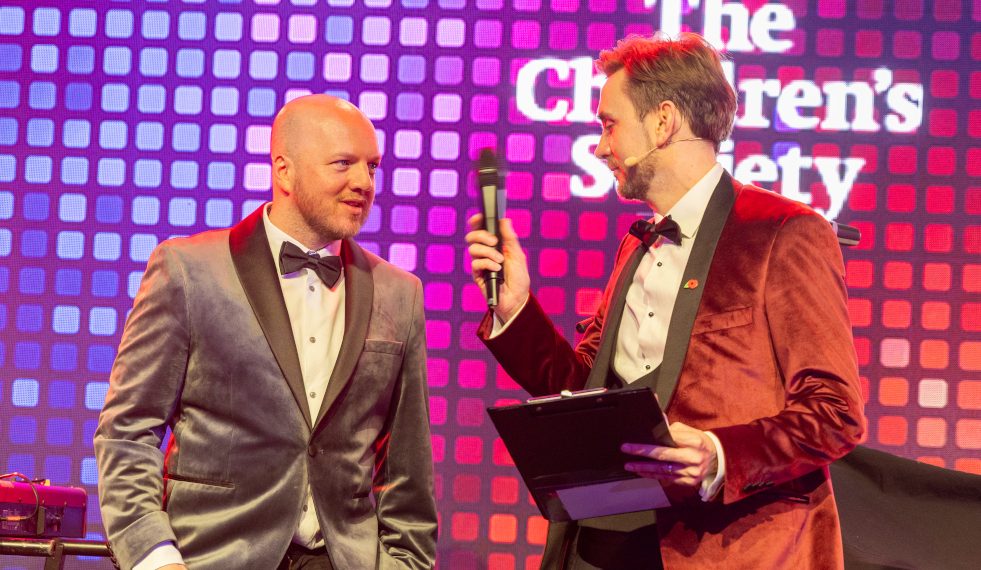
Kevin Durham on stage at a Children's Society gala, clipboard of notes in one hand and the microphone in the other

In short

  • A charity event budget is half a budget until the income lines sit next to the cost lines.
  • The forgotten costs are AV, licences, card processing, print, insurance and a real contingency.
  • The Charity Commission sets no spending limit, but trustees must be able to justify the decision.
  • Ticket income rarely carries a fundraising evening. The auction and the live pledge usually do.
  • Cost-to-raise is a judgement, not a rule: published ranges run from 10p to 60p per £1.

I stand at the front of 60 to 80 rooms a year. What decides a night is rarely the total spend. It is what the spend was aimed at. A charity event budget that treats the evening as a cost to be controlled almost always underperforms one that treats it as an investment with a specific return.

What belongs in a charity event budget?

A charity event budget needs two columns of equal detail: everything you will spend, and everything you expect to raise, line by line, with a name against each. Too many budgets have a beautifully itemised cost side and an income side that says “auction: £15,000” with nothing underneath it.

The Charity Commission’s guidance on trustee duties says a fundraising plan can include “how much you will spend on fundraising (your fundraising budget)” alongside how much you intend to raise and how you will monitor it. Both halves belong in the same document. If yours sit in separate spreadsheets owned by different people, fix that first. My guide on how to plan a gala covers the sequence around it.

Which cost lines do organisers forget?

Venue and catering are never forgotten. Nearly everything that makes the venue work gets missed.

AV and production. Sound, lighting, a screen and someone competent on the desk. The line I defend hardest, for a reason I come back to below.

Licences. Play recorded or live music in a public space and you generally need TheMusicLicence, run by PPL PRS. Sell raffle tickets in a way that counts as a small society lottery and you register with your local council: the Gambling Commission’s guidance on small lotteries gives a £40 registration fee and a £20 renewal after the first year, with at least 20% of proceeds going to the cause.

Card processing. Every pound pledged on a card arrives slightly smaller. Stripe’s published UK rate in October 2026 is 1.5% plus 20p on standard domestic cards and 3.15% plus 20p on non-EEA cards. In-person readers sit in a similar band: SumUp’s comparison page lists 1.69% against 1.75% for Zettle and Square in October 2026. On a £60,000 night that is around £1,000 nobody budgeted for.

Print. Lot sheets, pledge cards, menus, signage, a programme. Small amounts that total up.

Insurance. Public liability is not legally required for a UK charity event, but venues frequently ask for it. One broker quotes cover from £69 for a one-off event, moving with guest numbers and cover level.

The auctioneer and host. A real figure, not an afterthought. Fees are bespoke, so get a quote early: I have written separately on what shapes an auctioneer’s fee.

Contingency. Five to ten per cent of the cost side, untouched until something breaks. Something usually breaks.

Can your trustees justify the spend?

They need to be able to, and the test is the quality of the decision rather than the size of the number. The Commission is explicit that “there is no set amount that a charity should spend on its fundraising”.

What there is, in the essential trustee guidance, is a duty to act “responsibly, reasonably and honestly” and to make decisions that are “balanced and adequately informed”. It also advises trustees to record how they made more significant decisions, so they can explain them afterwards.

In practice that means a short paper: what you are spending, what you expect back, what you are comparing it against, what happens if you come in 30% short. Guidance on financial controls, last updated in November 2024, adds the event-level discipline: keep records for each event, identify what was collected and what it cost, reconcile ticket receipts against tickets sold.

One more line belongs in it. Pay anyone more than £15 a day or £1,500 a year (the section 58 thresholds since 30 September 2026) to fundraise for you and the Fundraising Regulator’s guidance on the solicitation statement requires them to tell the room who they are raising for, what they are paid and how that is calculated.

How do you set a target you can defend?

Build the target from the income lines upwards, never from last year’s total plus a percentage. Tables sold at a price you have actually achieved, sponsorship already in conversation, an auction figure built from the lots you have in hand, a pledge figure built from the size and profile of the room. Then subtract the cost side and state the net. The net is what the charity receives, and it is the only number worth putting in a board paper. My guide to setting a fundraising target goes deeper on that.

Two tax lines move the net. HMRC’s guidance on Gift Aid treats ticket money as payment for goods or services, so it does not qualify, though a voluntary donation alongside it, or the amount paid above an auction item’s value as an “excess donation”, can. And the fundraising events exemption is “restricted to 15 events of the same kind in a financial year at any one location”. Run a 16th and none of them qualify.

Where the money actually comes from on the night

Overwhelmingly from the auction and the live pledge, not from tickets. Ticket and table income usually covers the cost of feeding the room, and sometimes not even that. The fundraising happens in a twenty-five minute window after dinner.

Kevin Durham pointing out a pledge from the stage, clipboard in hand, under red stage lighting at a corporate charity gala

Charles Balchin wrote after his first charity auction: “Kevin was absolutely fantastic at running our event. He added a pledge element we hadn’t considered and it became hugely successful.” A pledge belongs in the budget as its own income line, even when nobody has planned one yet.

That is the pattern I see most often, and it is why I argue with budgets that spend heavily on the room and nothing on the fundraising mechanics. A live pledge costs almost nothing to run. It needs a cause explained properly, a working microphone, people who can see and hear, and someone driving it. All four are budget decisions.

Gross is not net on the income side either. If a silent auction company brings lots with high reserves, budget what the charity keeps after the reserves and the company’s share, not the gross on the night. In my experience that is the single biggest drain on a charity’s total, and in-house lots with a strong pledge behind them keep far more.

What should your cost-to-raise ratio be?

There is no official answer, and anybody offering you a single number is guessing. Published commentary on fundraising ratios, updated in July 2026, puts established charities with large regular giving bases at roughly 10p to 20p per £1 raised, and newer charities or those investing in growth at 40p to 60p or more, while noting that UK charity law sets no maximum.

Those are whole-organisation figures. One night with fixed costs is a different animal. The direction of travel matters more than the number. If the event costs more and raises less than it did two years ago, that is the finding. If it costs slightly more and raises a lot more, a rising ratio is not a problem.

The budget decisions that pay for themselves

The spend that pays for itself buys attention. The spend that does not buys decoration.

What earns its money back, in my experience:

  • Sound that works everywhere in the room. I once walked into a late-running event, announced the auction while people were still talking, and did not stop to get them quiet. Only a fraction of the room heard the lots. One man bid on something he could not clearly hear. Every guest has to hear every lot, and that starts with the sound.
  • A short, well-made case for support, placed immediately before the pledge. A two-minute film, or a speech from someone the cause has touched. On most budgets this is the highest-return line there is.
  • Ten lots a room will fight over, instead of fifty nobody wants. Sourcing in-house keeps more of the money too: see my guide to sourcing lots.
  • A professional on the microphone. I would say that, so judge it on the final total and not on my opinion of myself. The platform comes with my hire, in your branding and loaded with your lots, which takes a software line out of the budget.

What rarely pays for itself: elaborate table dressing, a glossy brochure nobody opens, an act booked into the slot where the pledge should be, and a long consignment catalogue of lots that mostly serves the company supplying it.

Start your charity event budget from the income side

Write the income lines first. Put a name and a method against each. Then ask of every cost line whether it makes one of those income lines bigger, and be ruthless about the ones that do not. If you want a second pair of eyes before the numbers reach your board, I offer a free fundraising consultation: call 07596 851647 or email hello@thecharityauctioneer.uk.

Kevin Durham, charity auctioneer

Kevin Durham

Charity auctioneer & event host

20years£10m+raised60–80events/yr
Check availability07596 851647

Let’s talk

Bring this to your event

Book a free consultation with a charity auctioneer who has raised over £10 million.

Charity auction run sheet: lot order, timings and cues

Charity auctioneer Kevin Durham calling a lot from a lectern, working from his printed notes under warm gala lighting

In short

  • A charity auction run sheet is not the gala timeline. It scripts the auction segment only.
  • Build it as a table: clock time, duration, lot, who speaks, what AV and the committee do.
  • Plan on about ten lots, 14 at a push. The live auction runs from about 30 minutes to an hour, depending on the client.
  • Agree standby and go wording with the AV desk before doors, and put a name against every cue.
  • The live pledge belongs on the same sheet, straight after the last lot, with its own cues.

I have run auctions off a scribbled list and off a proper run sheet, and the sheet wins every time. A charity auction run sheet is narrow: it covers the half hour to hour in which most of the night’s money arrives. After twenty years and over £10 million raised, this is how I build mine.

What is a charity auction run sheet?

A charity auction run sheet is a timed, cue-by-cue script for the live auction segment, written so someone who has never seen your event could stand up and run it. It lists every lot in order, how long each gets, who speaks, and what the desk and the floor do while they speak.

The idea comes from theatre. A cue sheet shows the sequence of technical cues for a show, usually as a table. An auction is a show with a till attached.

How does a run sheet differ from the gala running order?

The running order covers the whole evening; the run sheet covers one segment in far more detail. If the gala running order says the auction starts at 21:10 and runs for half an hour, the run sheet says what happens in each of them.

They serve different people. The running order goes to the venue, the caterers and the speakers. The run sheet goes to five or six: auctioneer, AV operator, spotters, clerk, and whoever on the committee can decide mid-segment.

What goes in each column of the run sheet?

Six columns do the job. Production teams build these grids with key events down the first column and each department’s cues beside them, as this production cue sheet guide shows.

ColumnWhat it holds
Clock timeReal time, not elapsed. 21:12, not “minute two”.
DurationMinutes allowed for this row.
Lot or segmentLot number, short name, donor credit.
AuctioneerOpening bid, increment ladder, reserve, closing line.
AV deskSlide, film, sound, lighting state, totaliser.
Floor and committeeSpotter positions, who holds the paperwork.

Two things sit in the header rather than a column: a version number and a time stamp. Production cue sheets are always given a version number, because they change and the crew must know which one they hold. Something as short as “v3, 18:40” does it.

Why does lot order decide the total?

Because bidding momentum is a skill, not luck, and the sequence either builds it or flattens it. Open with something broad and affordable so the first hands go up. Hold your strongest lot for the middle, once the room has warmed. Finish on something with real pull.

My strong opinion, and it costs some auction companies money to hear it: around ten good lots beats fifty ordinary ones. Ten is my optimum, and 14 is the most I would recommend at a push. There is no minimum, because the live pledge can carry the night. A long catalogue splits the bidding. Put a one-line reason beside each lot, so nobody rearranges the order late on.

Order also protects the awkward lots. Note each lot’s status on the sheet, donated or consignment, and say it out loud. I did exactly that at one event, and the money followed the transparency.

How long should each lot get?

It depends on the client. With the flexibility to do the best I can with every lot, the live auction runs from about 30 minutes right up to an hour if there are a lot of lots. If a client wants the lots short and snappy, I can do that, though engagement may dip slightly because I cannot do my usual banter with people in their seats. Either way, when two bidders start grinding each other down, that is the moment to close.

Put the duration in as a number and keep a running total in the margin. When a lot overruns, take the time back from the weakest lot, never from the pledge.

A worked example charity auction run sheet

A short sample, five lots in twenty-one minutes plus a ten minute pledge, to show the shape as I would hand it to an AV desk I had never met. A longer auction simply has more lot rows.

TimeMinsLot or segmentAuctioneerAV deskFloor and committee
21:082Beneficiary film endsStage left, mic liveHold frame, standby AV 1Spotters in position, clerk at laptop
21:101Auction opensHold for quiet, then “it is time for the live auction”AV 1 go: title slide, music outChair seated and visible
21:112Lot 1, signed shirt, donatedOpen £150, steps of £50AV 2 go: lot 1Spotter A left, B right
21:133Lot 2, restaurant experienceOpen £200, steps of £100AV 3 go: lot 2Clerk confirms winning table
21:163Lot 3, hotel break, consignmentOpen £300, state the reserveAV 4 go: lot 3Committee checks reserve wording
21:194Lot 4, headline experienceOpen £1,000, duel the top twoAV 5 go: 30 second filmSpotters watch the back tables
21:233Lot 5, closing lot, donatedOpen £400, close on a liftAV 6 go: lot 5Clerk totals, slip to chair
21:262Raffle drawDraw three ticketsAV 7 go: raffle slideSales closed 21:00, drum ready
21:282Pledge set-upHand to chair, 60 secondsLights to 50%, standby tiersChair speaks from the floor
21:3010Live pledgeTiers £5,000 to £100, hold at £500AV 8 go: tier slides, totaliser liveFour counters on paddles
21:402Total and handoverAnnounce the total, hand backAV 9 go: total slideClerk prints for the chair

Change the lots, keep the shape, and a stranger could run it.

Who cues what between the auctioneer, the AV desk and the committee

Kevin Durham on stage at the MAG-FEST charity ball, arms wide, with the AV screen behind him and his open notes on a stand

Borrow the stage manager’s convention. A standby is called ten-ish seconds before the cue, then the cue name and “go” at the moment it happens. “Standby AV 4”, then “AV 4, go”. Write both in, so nobody invents their own language.

Then name people, not departments. Councils say the same about events: identifying specific responsibilities for everyone involved is essential to avoid overload. On an auction sheet that is a named AV operator, a named clerk, a named decision-maker, and spotters with a side each.

Volunteers need more than a name on a page. The fundraising code expects volunteer fundraisers to get training and support suited to their role, so brief the spotters: how to signal a bid, and what to do when two people claim it.

The lines your run sheet must spell out

Some rows exist for legal reasons, not theatrical ones. I check these twice.

  • Reserves and consignment status. Guests should know where their money lands, and trustees must keep a charity open and accountable about fundraising.
  • Any lot sold as a split payment. HMRC allows the excess over an item’s value to count as a donation only where the item is commercially available and the donor knew, at the winning bid, what it could be bought for. Put that split payment wording in the auctioneer column.
  • The raffle cut-off. Tickets for an incidental lottery can only be sold at the event while it is taking place, and prizes cannot roll over. Give the cut-off and the draw their own rows.
  • The Gift Aid prompt. Worth 25p on every eligible £1, but only with a declaration.
  • A contingency row. The code requires a risk assessment before an event, plus a plan for anything you could reasonably expect. For an auction that is a drop-two-lots plan, and who makes that call.

What stops a run sheet working on the night?

Mostly the sheet existing and nobody reading it. A document emailed at 17:00 is decoration. Walk it through out loud, in the room, before doors open.

The other failures are familiar. Nobody commands the room before lot one, so the first lots are sold into noise: I lost a room that way once, and a man bid on an item he could not hear properly. Speeches overrun and the auction absorbs the loss. Three people end up working from v2. Or the sheet swells into a second auction catalogue.

Win the room first. The sheet just helps you keep it.

Common questions about a charity auction run sheet

Who should write the auction run sheet?

The auctioneer, with the event manager. The auctioneer drafts the auction and pledge rows, the organiser merges them into the evening timeline, and both sign off one final version. More on that in my guide to briefing your auctioneer.

Where does the live pledge sit on the run sheet?

Immediately after the last lot, on the same sheet, with its own tier rows and cues. The live pledge is usually the biggest earner, so it gets the warmest minutes and the most detail. At one event the pledge was not going well with just me at the front asking. I brought up people the charity had helped to speak, and from then on it really ran. Give that moment a row of its own.

How many copies do you print?

One each for the auctioneer, AV desk, clerk and chair, plus one per spotter. Paper, not phones, all the same version. You can hire an auctioneer for a free consultation if you want yours built with you.

Kevin Durham, charity auctioneer

Kevin Durham

Charity auctioneer & event host
20years£10m+raised60–80events/yr
Check availability07596 851647

Let’s talk

Bring this to your event

Book a free consultation with a charity auctioneer who has raised over £10 million.

Corporate donations: how companies give, and what to ask for

Hosts presenting a charity donation board on stage beside a sponsors' logo wall

In short

  • A donation gets the company nothing related to its business. A sponsorship payment does, and HMRC treats the two differently.
  • Companies cannot use Gift Aid. They deduct qualifying donations from their own profits instead, so never send a company a declaration.
  • Benefits have hard limits: on a gift of £1,001 or more, anything worth over 5% (capped at £2,500) breaks it.
  • Gifts in kind, matched giving and payroll giving each have their own rules.
  • Decide which route you are asking for, then write it down.

Corporate donations are the money a company gives your charity without buying anything in return. That last part decides the rest: the relief the company claims, whether VAT lands on the payment, and what you can promise in the room.

From the auctioneer’s side of the room, corporate money arrives at a gala in four shapes, and the fundraisers who raise the most know which one they are asking for before they call.

This is general guidance, not tax advice. Your finance team or accountant should sign off anything that lands on a return.

What are corporate donations, and how are they different from sponsorship?

Corporate donations are gifts from a company that secure nothing related to its business in return. Sponsorship payments buy something: a logo on your screens, the right to sell at your event.

HMRC puts both in the same guide, because both reduce a company’s Corporation Tax bill. A limited company can give money, equipment or trading stock, land, property or shares, staff on secondment, or sponsorship payments, and deduct the value from its profits before tax.

The route changes the paperwork. Donated money goes in the “Qualifying donations” box of the tax return. Sponsorship and secondment costs are business expenses. Equipment goes through capital allowances.

One limit catches people out: the deduction can only take profits to zero. No trading loss, nothing to carry forward. That is part of why a business having a thin year may offer stock or staff time instead of cash.

Why does the difference matter for tax and VAT?

Because a donation sits outside VAT and sponsorship usually does not. VAT Notice 701/1, updated on 19 October 2026, says a donation is outside the scope of VAT provided it is freely given with nothing supplied in return.

Where your charity is obliged to give a sponsor a significant benefit, that sponsorship becomes a business activity taxable at the standard rate. HMRC’s list of significant benefits runs from naming the event after the sponsor and displaying their logo to free tickets, access to a gala evening and hospitality. A flag, a sticker or a name in a list of supporters is not significant.

For a small charity that is not VAT registered, one large sponsorship deal can be enough taxable income to push you over the registration limit. HMRC flags the risk itself.

If a company wants to do both, keep the parts apart. The donation is only safe where it sits outside the sponsorship agreement, or the agreement says which part is payment for services, and the benefits are not conditional on the gift.

How much can a company accept in return before it stops being a donation?

A company can accept a benefit worth up to 5% of a donation of £1,001 or more, capped at £2,500. Below that the limits tighten. HMRC’s table for donating money sets them out:

DonationMaximum value of benefit
Up to £10025% of the donation
£101 to £1,000£25
£1,001 and over5% of the donation, up to £2,500

The limits also cover benefits given to anyone connected with the company, including close relatives. Two tickets for the managing director’s family count.

Cross the line and the payment is not disallowed, it is reclassified: where the benefit is related to the company, HMRC says it qualifies as a sponsorship payment instead. It is your VAT position that moves.

Three payments never qualify: a loan the charity will repay, a payment conditional on the charity buying property from the company, and a distribution of profits such as a dividend.

Can a company claim Gift Aid on corporate donations?

No. A company cannot claim Gift Aid, and nor can your charity. HMRC’s list of what you cannot claim names donations of money from a company.

“Corporate Gift Aid” is a loose nickname for the relief that replaces it. The company deducts the donation from its own profits before Corporation Tax, so the saving stays with the business rather than reaching you as a 25% top-up. The money you bank is the money they sent.

So never put a declaration in front of a company cheque, and never build a corporate ask on a figure that includes Gift Aid.

What counts as a gift in kind?

A gift in kind is anything a company gives that is not money: used equipment, items it makes or sells, land, shares, staff time. CAF’s Corporate Giving Report 2026 found recorded FTSE 100 charitable donations fell to £1.69 billion in 2025, the lowest since its survey began. Cash is tighter, so ask for goods and time.

  • Used equipment. Furniture, computers, vans, tools. The company claims full capital allowances on the cost, provided it used the equipment itself.
  • Trading stock. Items the company makes or sells. It leaves the gift out of its sales income, so it gets relief on the cost. For VAT it must account for items it gives away, but it can zero rate them where the gift is made specifically so your charity can sell, hire out or export them.
  • Staff. A secondment, or an employee volunteering in work time, is deductible as a normal business expense while the company keeps paying them and running PAYE. Not available to community amateur sports clubs.

Put that VAT point in your ask. “We will sell this at auction” is the phrase that lets a VAT-registered donor zero rate the gift.

Sourcing lots in-house, guided by your auctioneer, keeps far more with the charity than a commission-based supplier does. A gift in kind from a local business is the purest version of that.

Where do matched giving and payroll giving fit?

Both are company money that arrives through employees rather than the finance director. Neither needs a new event.

With match funding, the employer matches what its staff raise or give, often pound for pound up to a cap. Ask your corporate table hosts before the night whether their employer runs a scheme. That answer changes what a pledge is worth.

Payroll Giving runs through PAYE. The donation comes out of pay before tax but after National Insurance, so it costs a higher-rate taxpayer less to give the same amount. The employer sets it up with an agency and can choose to pay the admin fee so the charity receives more.

One rule to remember: you cannot claim Gift Aid on Payroll Giving. The relief has already been given.

When a “donation” is really a commercial promotion

Some offers are neither. A business that promotes its own goods or services on the basis that it will contribute to your charity is a commercial participator, a term defined in section 58 of the Charities Act 1992.

That triggers real obligations. Section 6 of the Code of Fundraising Practice requires appropriate checks before you agree anything, and a written agreement before the promotion starts, stating how much you will get and how it is calculated.

“We’ll give you 50p from every jar sold and put your logo on the label” is a lovely offer and a regulated arrangement. Treat it as a contract, not a cheque.

Kevin Durham with a guest on stage at a Children's Society fundraising night

What should you ask a company for?

Ask for one specific thing, in the shape that suits the company. Four asks cover almost every business you will approach:

  1. A cash donation, with nothing promised beyond a thank you and a name in the supporter list.
  2. A gift in kind for the auction or raffle, with “to sell at our event” in writing.
  3. A match, where they back the live pledge up to an agreed cap.
  4. Sponsorship, where they want the exposure and will accept an invoice.

A profitable company with a marketing budget often prefers the fourth. My post on corporate fundraising ideas covers the activity side once the route is agreed.

How to make the ask land

Go to a named person, not an inbox, and lead with the cause. The detail on letters, timing and follow-up sits in my guide to a donation request.

Then put three lines in writing: what they are giving, what they get back (even if that is only a mention), and who to invoice if it is sponsorship. That paragraph keeps both finance teams out of a row in February.

I would rather hear “donation, no benefits, no invoice” than a promised headline slot nobody has priced. The clean yes beats the big maybe.

Corporate donations on the night

Corporate donations do their best work when the room can see them. A matched pot announced before the live pledge changes how people give: every hand counts twice.

Dave Hands of LTS Global Solutions summed up one such night: “It’s gone really well with the pledge, we couldn’t have done it without him. If you need someone to run an event like this, get Kevin to join you. Full credit to him.”

So name the business that donated a lot, say what the charity keeps, and let the room reward them. A structured live pledge outperforms a lot-based auction at most galas, and a corporate match is the cheapest way to make it bigger.

Building the corporate side of a gala starts with a fundraising strategy, not with asks. A corporate charity auctioneer will tell you which of the four routes your room responds to. Call 07596 851647 and we can go through it.

Kevin Durham, charity auctioneer

Kevin Durham

Charity auctioneer & event host

20years£10m+raised60–80events/yr
Check availability07596 851647

Let’s talk

Bring this to your event

Book a free consultation with a charity auctioneer who has raised over £10 million.

How to start a fundraiser: the decisions you make before you pick an idea

Kevin Durham on stage with a microphone, holding up a card to a seated black-tie audience

In short

  • Decide who gets the money before you ask for any. Raise first, choose later, and the charity may not be able to accept it.
  • Fundraising for a charity and for a person differ in law. Only one can claim Gift Aid.
  • You do not need permission to raise money in aid of a charity, but you must say that is what you are doing.
  • Donations belong in a platform or a dedicated account, never your current account.
  • What you raise is capped by who is in the room and whether anyone makes a real ask.

Almost everything written about how to start a fundraiser begins with a list of ideas. Bake sale, quiz night, sponsored walk, pick one and go. That is the wrong end of the job.

I auction at 60 to 80 charity events a year, and by the time I arrive the total is half decided, settled weeks earlier by choices nobody thought of as decisions.

How do you start a fundraiser?

You start a fundraiser by settling five things, in this order: who the money is for, whether that beneficiary is a charity or a person, how much you want to raise, where donations will be held, and what you are promising donors. Only then do you choose a format.

Do it the other way round and you end up where most first-timers do: a lovely event, a hundred people, a cash tin, and a total that feels small for the effort.

The number matters most, because it picks the format for you. £500 is a cake sale and a raffle. £50,000 is a room of the right people and a structured ask, and no amount of cupcakes gets you there. Say it out loud and give it a deadline, which the regulator expects stated at the start rather than retrofitted. I cover the maths of a fundraising target separately.

Set it knowing the public gave about £14 billion in 2025 against £15.4 billion in 2024, with 55% giving at all against 69% in 2016.

What are you raising for, and who gets the money?

Name the beneficiary first, in writing, before you promote anything. The Fundraising Regulator is blunt: raise money before you have chosen a charity and the charity may be unable to accept it, leaving the regulator to decide where it goes.

Be careful with specifics too. “For the new minibus” raises more than “for the charity”. It also binds you. Money given for a named project becomes a restricted fund and can only be spent on what the appeal said, which is why Charity Commission guidance updated in February 2026 tells charities to name a secondary purpose from the start.

Are you fundraising for a registered charity or for an individual?

A fundraiser for a registered charity sits inside the UK fundraising rules. A fundraiser for a named person does not. That fork changes the paperwork, the tax, and what you have to say out loud.

Raising money for a neighbour, a family’s medical costs or a pet’s operation is a personal cause, and the Fundraising Regulator says it falls outside its remit. The catch is honesty: donors must be told the appeal is personal before they give, and implying it is charitable could amount to fraud.

Three consequences.

  • Gift Aid is off the table. It applies to gifts to charities, so nothing collected for an individual gets topped up by 25%.
  • A misdescribed appeal can be reclassified. Dress a personal appeal up as charitable and the Charity Commission may direct the money to a charity, or tell you to register one.
  • Large appeals may have to become a charity. You must register a charity in England and Wales once annual income passes £5,000: trustees, usually three, and a governing document.

Most people here are better off supporting an existing charity, so somebody else carries the governance.

Do you need the charity’s permission to fundraise for them?

No, not if you are raising money in aid of a charity on your own initiative. You do need to be accurate about your role, to check it is on the charity register, and to tell them anyway.

The regulator’s FAQs draw the line. Raising money in aid of a charity means you organised it and you carry the responsibility, so you must make clear you are not acting on behalf of the charity. On behalf of means they asked you, and the charity holds the control.

Tell them for selfish reasons. Charities hand volunteers branded materials, a named contact, a Gift Aid route and sometimes a speaker who explains the cause better than you can. Trustees also stay accountable for fundraising in their name, so a charity that knows nothing about your event cannot help when it goes wrong.

Where the money sits until it reaches the charity

In a reputable giving platform, or an account that exists only for this fundraiser. Not in your current account.

The Fundraising Regulator advises against personal bank accounts: they can look like personal gain and can create tax problems for you. If you cannot avoid one, move the money on quickly and keep records showing it arrived where you promised.

Read the platform’s terms first: its fees and any optional tip at checkout must be disclosed to donors.

What do you have to tell donors before they give?

Who benefits, what the money is for, what happens if the plan changes, and what comes off the top. The regulator expects fundraising to be open and honest, with no undue pressure to give.

A checklist for the page, the poster and the night:

  • The charity’s name and registered number, or a clear statement that this is a personal appeal.
  • Whether it is for the charity generally or one named project, and your deadline.
  • A secondary purpose: what the donations do if the thing you described cannot happen. Without one you need every donor’s permission to spend it differently.
  • Platform fees, tips, and any expenses you will deduct.
  • For a sponsored challenge, whether donations stand if you do not finish. Say nothing, and you refund every sponsor.

Say what you deduct, too: quiet deductions found out later turn a well-meant appeal into an accusation of fraud.

Transparency is also where the money is. Say out loud which lots give the charity every penny and which only pay above a reserve. People give more freely when they can see where it lands.

The three early decisions that set the ceiling

None is the idea. The first is who is in the room: fifty people who care and can write a cheque out-raise three hundred passers-by. Build the guest list like it is the fundraiser, because it is.

Guests at round tables filling the room at the MAG-FEST charity gala, stage lit at the far end

The second is whether anyone makes a real ask. Most first fundraisers sell things: tickets, cakes, raffle strips, a tombola. Selling raises the float. Asking raises the money. A structured ask, where one person stands up, explains what a specific amount buys and invites the room to give at that level, is the biggest lever anyone has. In my experience a well-run live pledge beats a lot-based auction, and it costs nothing to run.

Jigsaw Trust expected £14,000 from their live auction. The auction did £27,000. The live pledge they had not planned for added £30,600. Same room, same night, same guests.

The third is the shape of the evening: a speech or film that explains the cause, a quiet room, and a host with control of it. Get those into the running order early, as my charity gala guide sets out.

The rules people miss when they start fundraisers at home

Two legal traps catch nearly every first-timer, both involving tickets.

Raffles are lotteries. Run one at an event and it is normally an incidental lottery, needing no licence, but the conditions are tight: tickets sold only at the event while it is happening, never in advance or online, only £100 of the proceeds taken for expenses and up to £500 for bought prizes, and no rollovers. Donated prizes have no cost limit, which is why good fundraisers ask for them. Sell tickets in the weeks beforehand and that exemption is gone: you need a small society lottery registered with your local licensing authority, and my guide to a charity raffle covers that paperwork.

The other trap is Gift Aid on the wrong things. Payments for admission and raffle tickets are purchases, not gifts, so keep the ticket modest and invite guests to give more on top. The Code of Fundraising Practice also expects a risk assessment and any permissions the event needs.

What mistakes do people make when they start fundraisers?

These are the common ones, and every one is avoidable.

  • Choosing the format first, then working backwards to a reason.
  • Spending on a venue and a band before a ticket is sold, so the charity gets whatever survives.
  • Inviting everyone, because a big crowd feels like success, and filling a room that cannot give.
  • Running the ask after dessert, or never asking at all.

One from my own worst night. A big event, running late, no speech or film to tee up the auction. I announced the live auction while people were still talking and did not stop to get them quiet. Only part of the room heard the lots. One man bid on an item he could not hear properly. Since then, nothing gets sold until the room is quiet.

So: write down the beneficiary and the number, call the charity, and open the account the money will sit in. Then, and only then, go browsing fundraising ideas and event formats for the room you can fill.

If your fundraiser is big enough to need a proper ask, call 07596 851647 for a free fundraising consultation.

Kevin Durham, charity auctioneer

Kevin Durham

Charity auctioneer & event host

20years£10m+raised60–80events/yr
Check availability07596 851647

Let’s talk

Bring this to your event

Book a free consultation with a charity auctioneer who has raised over £10 million.

Charity fashion show: how to run one that raises more than ticket sales

Kevin Durham in a burgundy velvet jacket speaking from the podium at the MAG-FEST charity gala, his name on the screen behind him

In short

  • A charity fashion show is a ticketed catwalk where guests can buy the clothes afterwards. Marie Curie’s guide puts a typical one at roughly £750 to £1,000.
  • Pick one of three formats: a commercial provider show, a local boutique show, or a preloved show built from charity shop stock.
  • With the commercial providers I checked in October 2026, you keep the ticket and raffle money and they keep the clothing sales.
  • Build the interval around a short live auction and finish the catwalk with a live pledge. That is where the extra money comes from.
  • Ticket money cannot have Gift Aid added. Straight donations from UK taxpayers can.

A charity fashion show is one of the easiest fundraisers to stage and one of the easiest to undersell. Most make their money on the door, then let the rest of the night drift. Yet the catwalk gives you a room of people in a good mood with their purses already out.

I come at this as a professional charity auctioneer and event host, so here is how to set up a fashion show fundraiser that earns well past the door.

What is a charity fashion show?

A charity fashion show is a ticketed event where volunteer models walk a catwalk in clothes from local shops or a fashion company, and the audience can buy what they have seen at the end. Marie Curie describes it as a chance for local businesses to showcase their items to the community.

The same guide expects a show to raise approximately £750 to £1,000, with 2016 examples from Kirkcaldy (£1,000), Oadby and Wigston (£965) and Buxton (£834). Most of that came from tickets.

That is a fair result for an evening in a church hall. It is also the ceiling you are trying to break.

Which charity fashion show format suits you?

The right format depends on who supplies the clothes, because that decides who keeps the sales money. There are three main options.

FormatWho brings the clothesWhat you keep
Commercial provider showA company with rails of discounted high street stockTickets, raffle and refreshments
Boutique partner showOne or two local boutiquesTickets, plus any share of sales you agree
Preloved showA charity shop, or donated clothesTickets, plus every sale if the stock is yours

A boutique partner show suits a committee with good local links. Marie Curie notes that businesses taking part may contribute a donation from sales or a prize for the raffle. Ask for a percentage of the night’s takings in writing before the posters go out.

A preloved or sustainable show has a story built in. Oxfam says UK households throw almost half of their textiles into household bins. In one Oxfam shop, a stylist once recreated London Fashion Week looks using only the second-hand clothes on its rails. If your charity runs shops, this format keeps the most money at home.

How do commercial fashion show providers split the money?

On the providers’ own websites, which I checked in October 2026, you keep the ticket money and they keep the clothing sales. None of them charges you to come.

  • SOS Charity Fashion Shows says you raise funds from ticket, raffle and refreshment sales, with no deposit and no minimum audience.
  • Colours says its show is free and you keep all proceeds from ticket, raffle and refreshment sales.
  • Complete Clothing makes no charge and calls ticket sales your main source of funds.

None of the three pages says any share of the clothing sales comes back to the charity, and Marie Curie’s guide describes these companies as taking the profit from sales. Fair enough for a free night, but every extra pound has to come from something you add.

How to organise a charity fashion show: models, boutiques and venue

Marie Curie recommends starting three to four months out. If you want a commercial provider, go earlier: Colours says many organisations book six months ahead.

Models. SOS asks for 8 to 10 volunteer models and Complete Clothing asks for around 6 to 10. Mix ages and sizes, and ask people with a link to your cause. Breast Cancer Now’s The Show puts 24 models living with or beyond breast cancer on its catwalk.

Kevin Durham in black tie with two guests at a 1920s-themed charity gala, one in a beaded evening gown and pearls

Venue. You need a catwalk, rows of seats either side, a changing area and ideally a ground floor for the rails. Complete Clothing looks for an audience of 50 or more adults.

Music and safety. Music played outside a home counts as a public performance, so check the venue’s licence covers it or ask PPL PRS about a temporary permit. The HSE says your safety planning should be proportionate to the size and risk of the event, and everyone on the committee should know who is responsible for safety.

What does a good run of show look like?

A good run of show splits the catwalk in two and puts the fundraising in the gap and at the finish, before anyone heads to the rails.

TimeWhat happens
7.00pmDoors open, raffle tickets on sale as guests find their seats
7.30pmWelcome, then the first half of the catwalk
8.05pmInterval: a short live auction of three or four lots, raffle draw
8.30pmSecond half of the catwalk
9.00pmA short word about the cause, then the live pledge
9.15pmShopping and close

SOS keeps its models walking for about 45 minutes, so splitting that in two costs nothing.

My rule: the money moments happen while everyone is still seated.

Which add-ons raise more than ticket sales?

The add-ons that lift a fashion show fundraiser are the ones that sell something money cannot buy in the shop. Three work well.

A styled-outfit or personal-shopper lot

Ask a boutique owner or stylist to donate a personal shopping session, or a full outfit styled for the winning bidder. It suits the room and costs the donor time rather than stock. My experience lots list has more like it.

A short live auction at the interval

Three or four strong lots and a room competing for them will beat twenty average ones. Get the room quiet first. The one night I started an auction over the chatter, much of the room never heard the lots. Since then I will stand on a chair for silence before the first lot. Under the HMRC rules, the amount a winning bidder pays above an item’s value can be treated as a donation, but only if you tell bidders the item’s value before it is sold.

Kevin Durham on stage with a microphone in one hand and his notes held high in the other, calling to the room

A live pledge

A live pledge asks the room to give a set amount, starting high and working down. At most charity events I work on, a well-run pledge raises more than the auction. Gabriel Dos Santos of OCU Foundation put it this way after their night: “We hosted just over 300 guests and raised more than double what we achieved last year. Kevin’s key suggestion, the live pledge alone, brought in nearly £20,000.” The pledge also has a tax advantage. HMRC says ticket payments do not qualify for Gift Aid, and neither does money from selling donated goods like clothes. A straight donation from a UK taxpayer who makes a declaration can.

A well-run raffle still earns its place, and all three providers above offer up to £50 in vouchers as a prize.

Charity fashion show ideas that make the night memorable

A theme gives people a reason to buy a ticket. Fashion show ideas that work:

  • Party season. Marie Curie suggests a show before Christmas, built around party outfits and gifts.
  • Students on the catwalk. Local colleges with fashion courses may want to show their work.
  • Charity shop challenge. Give three volunteers a budget and an hour in your shop, then let the room vote.

More formats are in my fundraising event ideas.

Where I come in

A fashion show doesn’t need an auctioneer for the catwalk. It needs one for the twenty minutes that decide whether you raise £900 or several times that. I host the evening, run the interval auction and lead the pledge, so your committee can watch their models, not the clock.

I can also help you promote the night so the seats are full. Planning a charity fashion show? Call 07596 851647 and we’ll talk it through.

Kevin Durham, charity auctioneer

Kevin Durham

Charity auctioneer & event host

20years£10m+raised60–80events/yr
Check availability07596 851647

Let’s talk

Bring this to your event

Book a free consultation with a charity auctioneer who has raised over £10 million.