

In short
- Under the Sale of Goods Act 1979, the seller may not bid, or employ anyone to bid, unless a right to bid was notified.
- A buyer may treat a sale that breaks that rule as fraudulent.
- Section 57 does not deal directly with an auctioneer buying for themselves, but the room sees the conflict.
- Committee members and staff can bid with real money for lots they want, openly, and never to push a price.
- If the auctioneer wants a lot, hand that lot to someone else or leave it alone.
Can an auctioneer bid at their own charity auction? Only in narrow cases, and I think the auctioneer should almost never do it. Insider bidding is any bid from the selling side of the room: the auctioneer, the charity, or someone bidding on their behalf. UK law restricts it, and even a genuine insider bid can look like a fake one.
I’m Kevin Durham, a professional charity auctioneer and event host. I have been on the wrong end of this question myself. Here is the law as its sources state it, why the look of a bid matters, and what to do about committee members and staff who want a lot.
This is general information as at November 2026, not legal advice.
Can an auctioneer bid at their own charity auction?
An auctioneer can bid at their own charity auction only in narrow circumstances. A bid made for the seller needs a right to bid reserved in advance. A bid made for themselves is not addressed by section 57, but it creates a plain conflict: the person calling the price would also like to pay less.
A legal briefing from the US National Auctioneers Association spells it out: the seller wants the highest price, buyers want a good deal, and an auctioneer generally should not make the offer to sell and also accept the offer to buy.
What does UK law say about the seller bidding?
UK law lets the seller bid only if the auction was notified as allowing it. Section 57(4) of the Sale of Goods Act 1979 makes it unlawful for the seller to bid or employ anyone to bid, or for the auctioneer knowingly to take such a bid, unless the sale was notified as subject to a right to bid by or for the seller.
Two more subsections finish the picture:
- Section 57(5): a sale that breaks that rule may be treated as fraudulent by the buyer.
- Section 57(6): where a right to bid is expressly reserved, the seller or any one person on their behalf may bid.
Big salerooms set out the reserved right in their published terms. Christie’s London live conditions (October 2024) let the auctioneer bid on behalf of the seller up to but not including the reserve, and never at or above it.
At most charity auctions the charity is selling lots donated to it, so the charity is the seller. For a gala, a reserve price usually protects a donor’s lot more cleanly than a reserved right to bid, and it asks nobody to bid with money that is not real.
Is fake bidding at a charity auction illegal?
Fake bidding at a charity auction, meaning bids placed by or for the seller only to push the price up, breaks section 57(4) unless a right to bid was reserved. Consumer law may come into it too. The trade name for it is shill bidding.
The best-known UK case was online. In April 2010 CMS reported that an eBay seller had pleaded guilty to ten offences under the Consumer Protection from Unfair Trading Regulations after bidding on his own listings from a second account. The CMA’s guidance of 18 November 2025 says the Digital Markets, Competition and Consumers Act 2024 replaced those Regulations for practices from 6 April 2025, keeping much of their scope.
Does that reach a charity? The same guidance says a trader can include organisations with charitable goals dealing commercially with consumers, such as a charity shop. Section 226 of the 2024 Act treats false or misleading information as a misleading action. Whether a given gala lot falls inside that is a question for a lawyer.
The fundraising rules are plainer. The Fundraising Regulator’s Code, effective 1 November 2025, says fundraising must be legal, open, honest and respectful, and must not mislead donors.
Can committee members, staff or trustees bid?
Committee members, staff and trustees can bid at a charity auction with their own money for a lot they genuinely want. The line they must not cross is bidding to lift the price for the charity. That is bidding on the seller’s behalf, which section 57(4) only allows when a right to bid has been reserved.
The commercial world draws the line in different places. eBay’s shill bidding policy bars people who know the seller, such as family, flatmates or employees, from bidding on that seller’s items. Christie’s London online conditions (February 2026) take the open route: employees may bid, with no advantage over other bidders.
Trustees have one extra habit to keep. The Charity Commission’s conflicts guidance, updated 22 April 2026, counts buying assets from the charity as a financial conflict and expects conflicts to be identified, managed and recorded. A trustee winning a lot in open bidding is a long way from a boardroom deal, but a line in the minutes costs nothing.
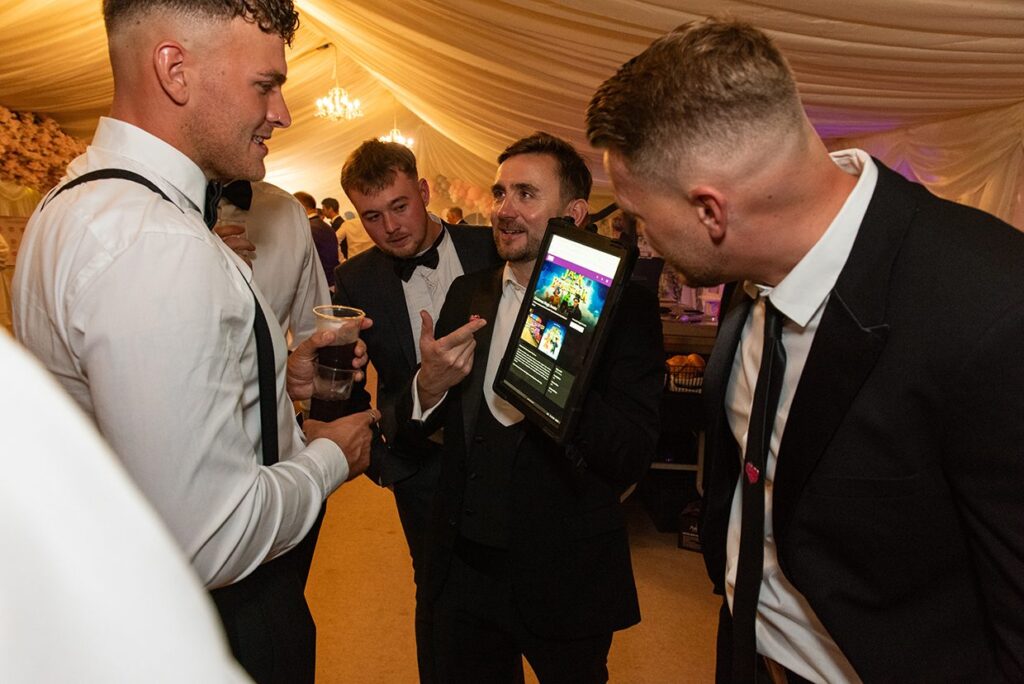
The night I bid at my own charity auction, and stopped
It was the end of a very long day, and most guests had already gone home. A Nintendo Switch 2 came up, and the bidding sat at about £200, below what it would cost to buy one. I thought it would make a lovely Christmas present for my son, so I started bidding myself.
The other bidder didn’t see a dad doing his Christmas shopping. They saw the auctioneer bidding, and thought my bids weren’t genuine, just there to push the price up. Fair enough. From their seat, that is exactly what it could have looked like.
So I stopped. A games console wasn’t worth rubbing a guest up the wrong way.
The odd thing is that a buyer wants a lower price, not a higher one, and the bidding was still under the shop price. None of that counted. The guest could only judge what they saw.
My principle is simple. I’m there to raise money for the charity, but I balance that with making sure guests have a good time and never feel fleeced.
How should a charity auction handle insider bids?
A charity auction should handle insider bids by setting the rules before the night, saying them out loud, and keeping whoever calls a lot out of the bidding on it. This is general good practice, not law.
| Who wants to bid | Where it stands | Sensible approach |
|---|---|---|
| The charity, to protect a lot | Needs a right to bid reserved (s57) | Set a reserve price instead |
| Anyone bidding just to push the price | Unlawful without a reserved right (s57(4)) | Never |
| The auctioneer, for themselves | Not addressed by s57; a clear conflict | Hand the lot over, or don’t bid |
| Committee or staff, for themselves | A genuine buyer | Allow it, openly |
| A trustee, for themselves | A genuine buyer with a conflict to record | Allow it, and declare it |
On the night:
- Brief the committee: bid with real money for things you want, never to “help” a lot along.
- Keep anyone who wants a lot off spotting duty for it. My spotters guide leaves out anyone who will be bidding.
- Name an insider bid when it lands, so nobody has to wonder.
- If the auctioneer wants a lot, the host or a colleague takes the microphone for that lot, or the auctioneer lets it go.
- Treat absentee bids the same way: real money from a real person, said out loud. My guide to commission bids covers how.
For pace, see bid increments. For the guest’s view from paddle to hammer, see how bidding works.
When is it worth bringing in a professional auctioneer?
It is worth bringing in a professional auctioneer when the lots are big enough that one doubtful bid would cost real money or goodwill. A committee volunteer can run a friendly auction of small lots perfectly well, and for plenty of events that’s the right call.
The trouble starts when the volunteer is also a supporter who wants a lot, or a friend of half the bidders. An outside auctioneer works for the charity alone, and the guests’ evening is part of that job. Kerry Johnson of The Pallet Network wrote on my reviews page that “our guests enjoyed the entertainment that came with the auction itself.” Kind words; the money was their team’s work.
When you hire me, the auction software is included: I build it around your event, and it stays live for one month afterwards. My auctioneer services page covers the rest of the night.
Setting the bidding rules for your auction
Before you get in touch, have your date, guest numbers, a draft lot list, and a note of anyone on the committee who would like to bid. Call me on 07596 851647. I’d rather talk it through than trade emails, and we can settle the rules before anyone raises a hand.

Kevin Durham
Charity auctioneer & event host