Home About Kevin Auctions Virtual auctioneer Pledges Hosting Entertainment Free software Software examples Case studies Reviews Other services Fees Fundraising games Fundraising consultant Get in touch Blog Podcast

Charity gala seating plan: why round tables raise more

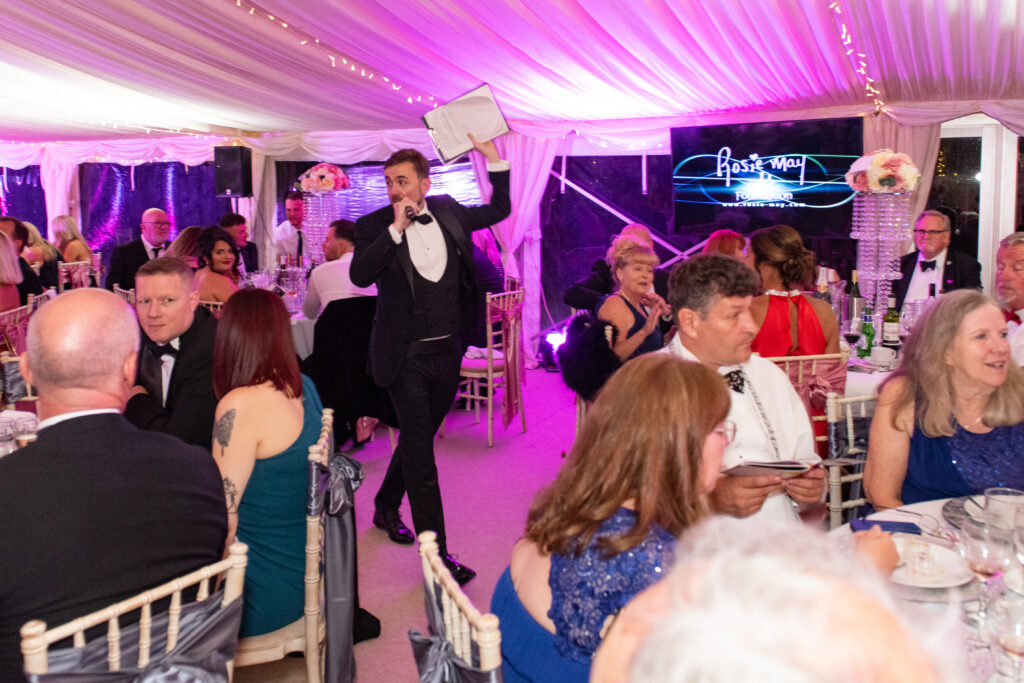
Charity auctioneer Kevin Durham walking between round tables of guests in black tie at a marquee charity gala, holding the lot sheet above his head

In short

  • A charity gala seating plan raises most when guests sit at big round tables, ideally 10 or 12 to a table.
  • Round tables work because everyone at the table can see who is bidding and who is giving.
  • Long banqueting tables let people hide. Each guest only really sees the two people beside them.
  • Exactly who sits where matters far less than most committees think, so settle the table shape before you spend an evening moving names around.
  • Visibility is not pressure. The host keeps it playful, and nobody is singled out for not giving.

A charity gala seating plan is the map of which tables go where and who sits at each one. For fundraising, the decision that moves the total is the shape and size of the tables, not the order of the names on them.

I look out over a seating plan from the stage at 60 to 80 events a year, and my rule is short: big round tables, the bigger the better.

What is the best table layout for a charity gala seating plan?

The best layout for a charity gala seating plan is large round tables of 10 or 12 guests, set around one clear stage. Round tables let every guest see every other guest at the table, so bidding and giving happen in full view. That visibility, more than any clever placement, is what lifts a fundraising room.

If the venue offers tables of ten, take them. I would go to twelve if the tables and the room allow it. The more people who can see each other at one table, the more each table behaves like a small crowd with its own momentum.

The room still has to work: one focal point, a voice that carries, sightlines from the back. My venue guide covers that side. This post is about the tables themselves.

Why do round tables raise more than long tables?

Round tables raise more because they create a gentle, perceived peer pressure. Everyone at the table can see how much each person bids and how generous they are, or are seen to be. On a long table you see your neighbours and not much else, so it is easy to sit quietly through the auction and the pledge.

I have seen what long tables do to a total. I worked a big event abroad that used long, banquet-style tables. The year before, the same event had been on round tables, and that year it raised more. My view is simple: people can hide on long tables. A round table gives nobody anywhere to hide.

The research leans the same way. In a field experiment across 30 Dutch churches, published in the Journal of Public Economics in 2005, Adriaan Soetevent swapped closed collection bags for open baskets, where people could see their neighbours’ gifts. Giving to external causes rose by about 10% at first, though the effect faded over the 29 weeks.

A 2012 Yale field experiment by Dean Karlan and Margaret McConnell found gifts rose with the promise of public recognition, mainly because donors wanted to improve their social image. Ariely, Bracha and Meier make the underlying point plainly in their work on image motivation: image depends on behaviour being visible to other people. Put ten or twelve people round one table and you have built exactly that.

How many guests should sit at each table?

Seat 10 to 12 guests at each round table for a fundraising dinner. A 6ft round, about 183cm across, is the table that does it: Trent Furniture says its 183cm banqueting round seats 10 to 12, and Event Hire UK lists its 6ft round as seating up to 12 (both read November 2026).

Here is the arithmetic for a 240-guest gala:

Table sizeTables neededOther guests each person can see across the table
8307
10249
122011

Same room, same guests. At twelve, every bid and every pledge card can be seen by eleven people instead of seven, and there are ten fewer tables for the host to work.

Not everyone agrees with big tables, and the other side deserves a fair hearing. Howard Givner, writing for PCMA in 2013, called the 60-inch round “possibly the worst invention in the history of the hospitality industry” and argued for smaller tables so guests can actually talk. For a networking dinner he has a point. A fundraising gala has a different job: the conversation that matters is the one the whole table has when a paddle goes up.

Kevin Durham leaning in at a round table during a table-side game, a guest holding up a phone while the rest of the table watches

Does it matter where each guest sits on the seating plan?

Less than most committees think. I do not believe it matters much exactly where people sit; what matters is round tables. Hours spent moving names between tables 4 and 9 would be better spent making sure there are no long tables in the room at all.

There is plenty of placement advice out there, and it is other people’s practice rather than mine. Common tips include putting sponsors and corporate tables near the front (my piece on selling tables covers what buyers expect), giving each table a host, and selling the tables nearest the kitchen doors last. A well-briefed table captain does more for a table than its position does.

The one placement job I would never skip is closing gaps. A half-empty table drains the tables around it, which is why reseating no-shows before the doors open is worth the effort.

The find-your-table screen for a demo charity gala, showing the stage, a long top table and twelve round tables of ten with how many seats are filled at each

“Banquet seating” can mean two opposite things

Be careful with the word on a venue call. In American event language, banquet-style seating usually means round tables with chairs facing inward. British usage is looser: Trent Furniture sells its 183cm round as a banqueting table, yet plenty of organisers say “banquet tables” and mean long rows. Never assume. Ask by shape and size.

Venues have a reason to steer you towards rows. One UK hire firm’s table guide, dated August 2026, says rectangular tables are more space-efficient, while conversation on them is limited to immediate neighbours. That trade is exactly the problem. More guests in the room on long tables can still mean less money.

So ask for what you want in numbers: 6ft rounds, how many, and a floor plan drawn at your headcount. If the room will only hold your guest list on long tables, think hard about whether it is the right room.

Visibility, not pressure

The peer pressure a round table creates is the gentle kind: being seen. It is never about embarrassing someone who cannot or will not give. The Fundraising Regulator’s Code, effective from 1 November 2025, sets out in standard 1.1.2 that fundraisers must avoid putting undue pressure on a person to donate.

That line matters to me on the mic. I am playful with the room, and a bidder who has just been outbid will hear about it: “Sir, you could be the hero. They’d sing songs about you around the campfire. Is that not worth another hundred pounds?” What I never do is single out a guest for keeping their hand down. Visibility works because generosity is on show, and the people who give feel good about it. Nobody needs leaning on.

When is it worth hiring a charity auctioneer for the room?

It is worth hiring a charity auctioneer once the room is big enough that nobody can see every table at once, or when last year’s total stalled. For a small supper of around 40 guests who all know each other, a confident volunteer and round tables may be all you need.

In a bigger room the tables need working. Because I usually host the whole evening as well as the auction, I read the tables early. A fundraising game such as heads or tails at the top of the night is one of my first tests: a low take-up tells me the room will need a lot more work by the time the auction starts. Hosting from the start also builds trust, so guests feel more comfortable giving later.

As Tom Donovan of Parkinson’s UK put it on my reviews page: “You engaged the crowd and got everyone involved.” On a round table, everyone involved is the whole point.

If you get in touch, have these ready:

  1. Your date and venue, with the floor plan at your headcount.
  2. Guest numbers and the table size the venue has offered.
  3. Last year’s total, and what you think held it back.

Get the tables right first

Round tables of 10 or 12 will not run your auction for you, but long tables can quietly cap it. Settle the furniture before you settle the names.

If you would like a second opinion on your room and your seating, call me on 07596 851647. When you hire me, the auction platform comes with it, built around your event with your lots, tickets and a table plan your guests can search on their phones. It is included for your event and stays live for one month afterwards.

Kevin Durham, charity auctioneer

Kevin Durham

Charity auctioneer & event host
20years£10m+raised60–80events/yr
Check availability07596 851647

Let’s talk

Bring this to your event

Book a free consultation with a charity auctioneer who has raised over £10 million.

What happens if a charity auction lot doesn't sell, and what to do in the first ten seconds

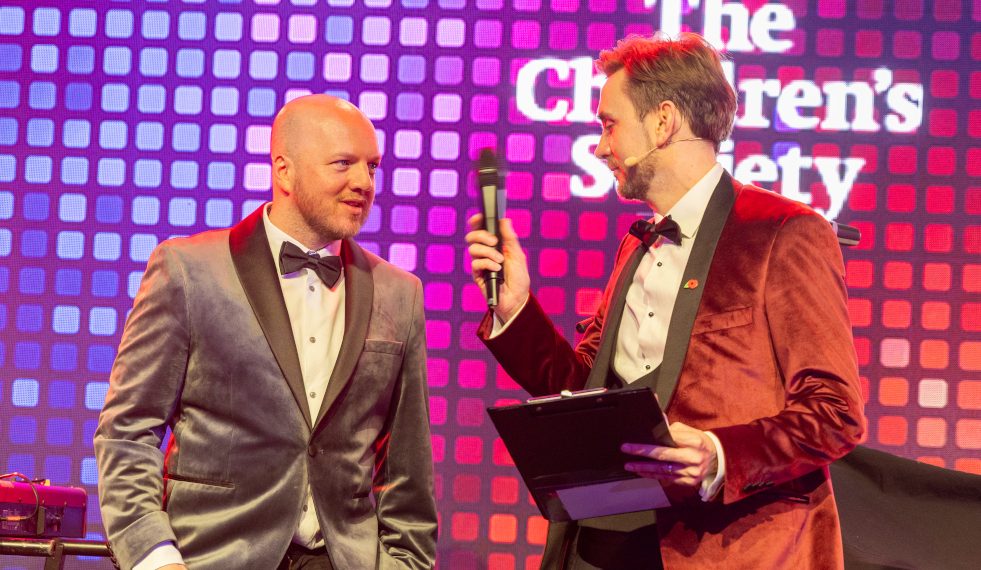
Kevin Durham in a velvet jacket with a clipboard, talking with a fellow host on stage

In short

  • An unsold lot earns nothing, and the donor’s gift stays with the charity unless the form said otherwise.
  • The real cost is the room’s mood, which carries into the next lot.
  • You have four moves: drop the opening, pair it, pull it, or park it for after the break.
  • Dropping the opening is usually first. Pulling is the move to be careful with.
  • Decide your rule for unsold lots before the night, not at the microphone.

A charity auction lot that doesn’t sell is one that draws no bid at its opening price, or none that reaches its reserve. In the trade it is “bought in”, and the room hears it as a silence. That silence is the problem, far more than the lot.

This is what to do in those first ten seconds, from the auctioneer’s side of the microphone, written for the committee chair or gala coordinator who is dreading the moment. It is general guidance, not legal advice, as at November 2026.

What happens when a charity auction lot doesn’t sell?

When nobody bids, the auctioneer passes the lot and nothing is sold. The auction trade calls this being bought in: the seller keeps the item, and may offer it again later. At a charity gala, the seller is usually the charity, so a donated lot simply stays with it.

A consigned lot goes back to its supplier, which is one reason the paperwork matters more than the stage. Each lot is also a separate contract under the Sale of Goods Act 1979, so one dead lot does not undo the others.

The money lost is rarely the issue, because a donated lot cost the charity nothing. The loss is the silence. A flat second makes every guest recalibrate downward, and the next lot opens into a colder room. I make the same point in my post on reserve prices, so I will not repeat the theory here.

What can an auctioneer do in the first ten seconds?

An auctioneer has four moves when a lot gets no bid: drop the opening price, pair the lot with another, pull it from the sale, or park it for after the break. Which one fits depends on the lot, the room and what comes next.

MoveUse it whenWhat it costs
Drop the openingThe lot is wanted but the start looked steepNothing, if done once or twice
Pair it with another lotA weaker lot can ride on a strong oneA muddled price, and the strong lot may be diluted
Pull itIt is dated, awkward or hurting the roomA lot you cannot sell, and a donor to tell
Park it for after the breakThe room is tired or the lot needs a conversationIt may never come back

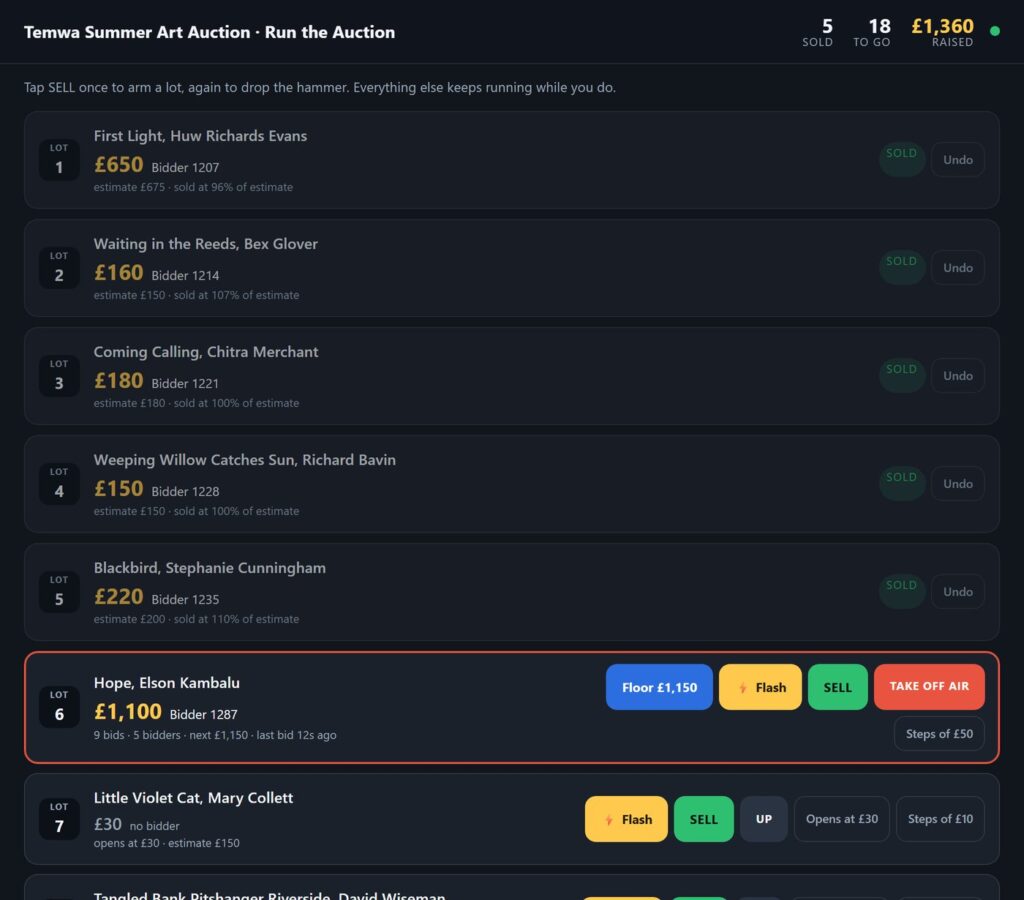
The auctioneer's console showing five lots sold, lot six live and lot seven with no bidder and an opening bid of £30

Whatever you choose, choose out loud and quickly. Silence is the enemy, and my momentum post explains why a lull should never be left to sit. A decisive pass is better than a long hopeful pause.

Should you drop the opening bid on an unsold lot?

Usually yes, once, and sometimes twice. A lower starting price lowers the cost of the first bid, and the first bid is the one that is missing.

There is evidence behind the instinct. In 2006 Ku, Galinsky and Murnighan analysed eBay listings, and low starting prices drew more bidders and higher final prices than high ones. Those were online sales of rugs, cameras and shirts, not charity galas, so treat it as support for the logic and not as a charity statistic.

A worked example, with invented numbers. A lot is worth about £400 and opens at £200 to silence. Drop to £100 and one hand goes up. Two more join, and it sells at £250. That beats the £0 of a pulled lot, and £250 is all profit if the lot was donated.

Set a limit. Drop twice at most. A third drop tells the room the lot is worthless, and people stop valuing it.

Should you pair a lot that doesn’t sell with another?

Yes, but only when the pairing makes sense to the room. Pairing means selling a weak lot together with a strong one, usually as a bonus, so the second lot rides on the first.

It works when the two share a story: a dinner for eight with a case of local produce, say, or a day out with a signed photograph. It fails when it looks like a clearance bin. A strong lot with an unrelated extra attached can lose bidders who wanted the strong lot alone.

Decide the pairings for suspect lots before the night begins. Spotting a weak lot in advance is easier than inventing a match at the microphone. The run sheet post shows where a flexible slot fits in the order.

Pulling a lot that doesn’t sell

Pull a lot when selling it would cost you more than the pound figure: a dated offer with no takers, a lot the donor would hate to see go cheap, or a second flat result in a row. A good pull is calm and brief, with a sentence of thanks to the donor.

The law adds a careful note. In Barry v Davies, the Court of Appeal held in 2000 that an auctioneer who had put lots up without reserve broke a collateral contract with the bidder by withdrawing two machines that had each drawn a £200 bid. A lot with no bid at all has no such bidder, but the case is why your terms should say that lots may be withdrawn.

Never pull a lot after a bid on a no-reserve lot because the price looks low. If the price is the worry, set a reserve in advance and announce it.

What should happen to the lot after the break?

After the break, the lot can go to anyone who showed interest, be offered quietly at the payment desk, or be kept for next year. All three are normal. The key is that someone owns the job, because lots parked in the heat of the night are lost by midnight.

Auction houses work the same way. At one property auction house, you can tell the staff you are interested leaving the room and the offer goes to the vendor, with contact open for days afterwards. A charity can copy that: one named person, a list of interested names, and a date to settle it.

Keep it separate from non-payers. A lot a winner will not pay for is a different problem, covered in winning bidder payment. Then tell the donor honestly what happened. Most prefer a straight answer to a surprise.

How do you stop a charity auction lot going unsold?

Fewer, better lots sell more reliably than a long list. I would rather run ten great lots than fifty to a hundred, because a short list lets the room compete for each one.

Check the weak ones before the night, put them after a strong lot and not before it, and agree who decides in the room. The Fundraising Regulator’s code says you have a plan for all situations you could reasonably expect at an event. A lot with no bidders is reasonably expected. So write the rule on the run sheet: first drop, second drop, then pass.

When is it worth hiring a charity auctioneer for this?

Handle it yourselves if the lot list is short, the room is friendly and a volunteer has done this before. The tools above are enough.

Bring someone in when a quiet lot would shake a committee, when the lot list is long, or when the last auction stalled and nobody knows why. An experienced auctioneer reads the moment, names it and moves on, so the room never feels the dead second. Twenty years and over £10 million raised have taught me that totals are decided by how quickly the room recovers. One organiser put it this way on the reviews page: “We weren’t feeling too positive at the beginning, but things flipped around and went so much better than we could have hoped for.” (Kerry, The Pallet Network (TPN)). The credit for that night belongs to the team and the guests.

When you get in touch, have to hand the date, the room size, the lot list with values and the running order, plus anything that went flat last time. I can then tell you which lots look weak before the night.

Call 07596 851647 and we can talk it through, or see the auctioneer services page. Free auction software comes with hiring me: I build it around your event, it is included for the event and it stays live for a month afterwards.

Kevin Durham, charity auctioneer

Kevin Durham

Charity auctioneer & event host
20years£10m+raised60–80events/yr
Check availability07596 851647

Let’s talk

Bring this to your event

Book a free consultation with a charity auctioneer who has raised over £10 million.

Auctioneer gavel: what it does and whether a gala needs one

The auctioneer's console in the Temwa art auction: five lots sold with hammer prices, lot six on air with a SELL button, and a running total

In short

  • An auctioneer gavel is the small hardwood mallet struck on a sound block to mark a sale. The trade also calls it the hammer, which is why the winning bid is the hammer price.
  • Under section 57(2) of the Sale of Goods Act 1979, a sale by auction is complete when the auctioneer announces it by the fall of the hammer or in another customary manner. Until then, any bidder may retract.
  • A charity gala does not need a gavel. A microphone, a clear voice and one person recording each winning paddle do the work. The gavel is punctuation.

An auctioneer gavel is the small wooden mallet an auctioneer brings down to say bidding has ended and the lot is sold. I am Kevin Durham, a professional charity auctioneer and event host, and I work the floor with a wireless microphone rather than from behind a podium. I do not use a gavel at all, and never have: I take and close every bid on my feet. It is the most photographed prop in my trade and one of the least important.

What is an auctioneer gavel, and why is the price a hammer price?

An auctioneer gavel is a small mallet, struck on a block, that marks the end of bidding on a lot. Sotheby’s glossary lists gavel as another name for the auctioneer’s hammer, which is why the trade talks about the hammer price: the winning bid on which the hammer falls, before any buyer’s premium.

TermWhat it means
GavelEveryday word for the auctioneer’s mallet
HammerThe saleroom word for the same thing
Sound blockThe hardwood surface the gavel strikes, which sharpens the sound
Hammer priceThe winning bid, before premium
Knocked downSaleroom phrase for the hammer ending the bidding
Fair warningA last chance to bid, given before the hammer falls

Sources: Sotheby’s glossary, read November 2026, and Wikipedia’s gavel entry.

English judges and the television gavel

Judges in England and Wales do not use gavels, whatever television suggests. The judiciary’s own page on court traditions says you will not see one in an English or Welsh courtroom.

Full Fact checked the point in December 2014 and found one wrinkle: at Inner London Crown Court, according to HM Courts and Tribunals Service, a gavel alerts the court that the judge is coming in. That is a cue, not a ruling. The Law Gazette notes a cottage industry in pointing out the mistake. Here, the gavel’s home is the saleroom.

What does the fall of an auctioneer gavel do in law?

The fall of the hammer is the moment a sale by auction becomes complete. Section 57(2) of the Sale of Goods Act 1979, as shown on legislation.gov.uk in November 2026, says a sale by auction is complete when the auctioneer announces its completion by the fall of the hammer, or in other customary manner, and that until the announcement any bidder may retract.

Two things follow. A bid is only an offer until the hammer falls, so a nervous bidder can take it back, and after the fall they cannot. And the statute does not make the mallet compulsory: “other customary manner” means the law turns on the announcement, not on the wood. This is general information, not legal advice. For how paddles and the rule against a seller bidding fit in, see auction paddles.

Even the console in the auction platform that comes with my hire keeps the idea. Its instruction line reads: tap SELL once to arm a lot, again to drop the hammer.

Where did the auctioneer gavel come from?

I could find no verified date or inventor for the auctioneer gavel, and I would distrust anyone who offers one. What the sources support is modest.

Christie’s says auctioneers sometimes lit a candle and took bids while the flame burned, and that gavels appeared more often as auctions grew more structured in the 1700s. Wikipedia dates auction use to the 17th century, but its footnotes name no first user.

The candle is better documented. Wikipedia’s candle auction entry notes a mention in the House of Lords records in 1641 and Pepys recording ships sold by an inch of candle in 1660 and 1662. Nobody could time a last-second bid.

The earliest picture Christie’s points to is Robert Dighton’s 1794 cartoon The Specious Orator, with James Christie at the rostrum, gavel in hand. Even the word is unsettled: Wikipedia says it may come from the Old English gafol, meaning tribute, or may have been a mason’s tool. Treat any tidy story with an inventor as unproven.

When should an auctioneer bring the hammer down?

An auctioneer should bring the hammer down only when nobody in the room, on the phones or online has shown another bid after a clear final warning. Until then, Christie’s describes the gavel being held aloft, and it falls to mark the lot sold or passed.

Sotheby’s glossary calls the final warning one last chance to raise the bid. Is “going once, going twice” still used? Sotheby’s training piece (January 2023) walks a trainee through exactly that: going once, going twice, sold. It also shows why you hold. The trainee is about to accept when a new bidder waves from the back, and the lot sells to the late bidder instead.

A sound rule of thumb: hold while a second bidder is drawing breath, a paddle is half raised or the phones are still talking. Fall when the bids have dried up and the last bidder is the person you would have backed. For the top of the trade, see famous auctioneers.

The silence before the hammer

A gavel is only loud because the moment before it is quiet. As bidders drop away the calling slows, and a last pause, one breath long, tells every guest the lot is about to go. That pause is where the under-bidder decides. Land the hammer on top of it and the room feels the lot was snatched. Hang too long and the energy drains.

None of it works in a room that is not listening. I once started a live auction into a room still talking, never got it quiet, and only a fraction heard the lots. One man bid on an item he could not hear properly. The lesson has stayed: command the room first, stand on a chair if you have to, and use the shush. A gavel cannot create that quiet. For the voice and rhythm side, read auctioneer chant.

Does a charity gala need an auctioneer gavel?

A charity gala does not need an auctioneer gavel. A clear voice, a working microphone and one person recording the winning paddle number and price for every lot complete a sale.

Charity auctioneer in black tie speaking from a wooden lectern at a fundraising dinner, hands working the room and no gavel in sight

A gavel helps in a big room, where one sharp knock beside the microphone is a full stop the back tables can hear. It hurts as a dull thud on a tablecloth, or in the hands of a committee member who bangs it while a bidder is still thinking. Wikipedia’s summary of parliamentary guidance calls banging a gavel to drown out a disorderly member improper.

What makes a usable gavel, and what is the sound block for?

A usable gavel is a solid hardwood mallet with a fixed head, struck on a separate sound block. Christie’s says gavels are typically maple, oak or walnut, chosen for durability and a crisp, resonant sound, and Wikipedia describes the block as a hardwood surface that improves the sound.

Since I never use one myself, treat this as a practical checklist, not a standard:

  1. It should feel solid but come down with a flick of the wrist.
  2. Check the join between head and handle.
  3. Always use the block: a table dents and sounds dead.
  4. Test it through the microphone before the doors open.

Borrowing a gavel

Borrowing is fine. Wikipedia notes that organisations with formal meetings use gavels in their ceremonies, so someone in your circle probably owns one. Ask for the block as well. Better still, ask your auctioneer first.

What does a professional auctioneer add beyond the hammer?

A professional charity auctioneer adds the parts of the night no gavel touches: choosing and sequencing the lots, reading the room’s energy and naming it out loud, and running the live pledge. At a gala in Monaco the evening raised over €1,000,000, on the back of lots chosen and sequenced in advance, a structured pledge and a multilingual room kept moving. The giving was theirs; my part was the structure and the pace. Naomi Chaning Pearce of Jigsaw Trust put it this way on the reviews page: “Kevin owned the room as he conducted the live auction, more than doubling our target.”

DIY is the right call sometimes. A well-liked committee member with a microphone, a short lot list and a printed run sheet can run a small raffle-and-auction evening perfectly well. The case for a professional charity auctioneer grows with the size of the room, the value of the lots and the wish for a live pledge, usually the biggest single segment of the night.

What to have ready when you call

If you are weighing it up, have these to hand: the date and venue, the number of guests, the lots you hold, your running order and what happened at the last auction. Tell me which you do not have yet. That is a normal place to start.

Hire me and the auction software comes with it: I build the platform around your event, with your branding and lots, included for the event and live for a month afterwards. Call 07596 851647.

Kevin Durham, charity auctioneer

Kevin Durham

Charity auctioneer & event host
20years£10m+raised60–80events/yr
Check availability07596 851647

The gavel, and the person holding it

Why the mic matters more than the hammer.

Why One Person Should Run Both the Mic and the Gavel
Why one person should run both the mic and the gavel
Why a Charity Auctioneer's Reaction to a Bid Matters
Why an auctioneer's reaction to a bid matters

Let’s talk

Bring this to your event

Book a free consultation with a charity auctioneer who has raised over £10 million.

Money can't buy auction lots: sourcing, valuing and selling them

Charity auctioneer Kevin Durham reading from a lot sheet into the microphone at Jigsaw Trust's charity gala

In short

  • A genuine money can’t buy lot fails one test on purpose: the winner could not have bought it tomorrow from anyone, at any price.
  • The best ones come from people already close to the cause, and the richest seam is the charity’s own world of work.
  • Do not print a retail value on a lot that has no retail price: HMRC values it at exactly what it fetches.
  • Write the delivery terms before the catalogue goes out: claim-by date, date windows, a named contact at the charity, and who pays for what.
  • Retail lots are anchored to a price the room can look up. These are not, which is why they keep climbing.

Money can’t buy auction lots are the ones a winner could never have bought for themselves, and they are usually the lots that decide whether a night hits its target or sails past it. Twenty years of auctioning them has shown me that good ones can still fall apart weeks later when nobody wrote down who was delivering what, to whom, and by when.

What makes money can’t buy auction lots genuinely unbuyable?

One question settles it: could the winner have bought this tomorrow, from anyone, at any price? If the answer is yes, you have a retail lot with a good story attached, and the room will price it accordingly.

HMRC draws the same line for tax purposes. For a lot that is commercially available, the value is the shop sale price. For a lot that is not commercially available, its value is simply the auction price the winner paid.

Three things get mistaken for money can’t buy lots:

  • A voucher for something the room can book online, which is really a discount in a nice envelope.
  • An expensive object. A handbag is not unbuyable, it is only costly.
  • A packaged experience day sold by a gift company, which is unusual rather than unique.

The real ones have someone behind them who has chosen to open a door that is normally shut.

Where do money can’t buy auction lots come from?

They come from people who are already close to the cause: trustees, long-standing supporters, corporate sponsors, and the charity’s own work. Almost never from a catalogue.

Trustees. Trustees often hold the access a fundraising team cannot reach: a box at a ground, a shoot, a boardroom, a house in a place people dream about. Take the offer, then handle the governance properly. Declare it, note it in the register of interests, and keep the trustee out of any decision where their own interest sits, as the Commission’s guidance on conflicts of interest sets out. Trustees must also not receive any benefit from the charity unless it is properly authorised, so if the donation comes with promotion attached, get that agreed in a meeting the trustee is not voting in.

Supporters. Ask the ones who host rather than the ones who write cheques. The retired head chef, the pilot, the artist, the conductor, the person whose job sounds like a story.

Sponsors. Companies sitting on hospitality, rehearsal space or a seat in the design studio can give something that costs them little and can’t be bought anywhere.

The asking is a job in itself: the scripts are in my guide to how to source lots.

Lots from the beneficiary’s own world

This is the strongest seam and the most delicate one. A conservation charity can auction a morning with the ranger team. A theatre has two seats at the technical rehearsal. And a research charity can put the winner in the lab with the scientist whose work the room has just watched on film.

Nothing a shop sells competes with that, because the room has just spent an hour learning why it matters.

Handle it with care. The Code of Fundraising Practice requires clear safeguarding procedures covering everyone involved in an activity, and trustees must take reasonable steps to protect people who come into contact with the charity through its work. In practice that means three rules. Everyone appearing in the lot agrees in writing, in advance. The lot gives access to the work, never to a person the charity supports. And no child or service user is ever part of what is being sold.

How do you value a money can’t buy lot honestly?

You do not give it a retail price, because it does not have one. Publish what is included and let the bidding decide the number.

That is not only a presentation choice. Because the lot is not commercially available, HMRC treats the benefit to the winner as the full auction price, so there is no portion of the hammer price to claim Gift Aid on. Splitting a payment into purchase plus donation only works where the lot is commercially available and the bidder knew, at the time of the winning bid, that it could be bought separately and for how much.

Your finance team will still need a figure for the accounts, where donated goods are recognised at fair value on receipt. That is an accounting judgement, not a marketing claim.

An inflated value in a catalogue is also a compliance problem, because fundraising must not mislead by giving inaccurate information or exaggerating details.

Honesty sells better anyway. When I tell a room at the start what each lot really is and where the money goes, nobody has to wonder afterwards whether they paid for a story.

How do you describe a money can’t buy lot so it sells?

Describe the day first, the constraints second, and never mix the two. The room bids on the day. The winner is the one who needs the constraints.

Four facts belong in every description:

  • Who is hosting it, and where.
  • The dates it can happen, and the dates it cannot.
  • How many people.
  • What is not included: travel, accommodation, food, insurance, extra guests.

Keep the emotional work for the stage. There is more on that in my piece on experience lots, and if flights or a stay are involved, the detail sits in my guide to travel lots.

The delivery and expiry terms that protect everyone

Get one page from the donor, signed, before the catalogue is printed. It takes ten minutes and prevents most of the arguments that surface six months later.

  • A claim-by date. Twelve to eighteen months is reasonable, and it belongs in the catalogue, not in the small print. Which? found gift cards typically expire a year or two after purchase, yet a quarter of recipients said the expiry date was not clear to them. Do not repeat that with a £6,000 lot.
  • Date windows and blackout dates. A stadium lot in the close season is a different lot.
  • A named contact at the charity who owns fulfilment. Winners should never be chasing the donor.
  • Transfer rules. Say whether the lot can be gifted on, and make resale a flat no.
  • Risk and insurance. The Code requires a risk assessment and clarity about who is insuring against each risk. Flying, sailing and driving lots need that in writing.
  • A fallback. If the donor cannot deliver, agree now whether the winner gets a substitute or a refund. Deciding that afterwards is where goodwill dies.

One for the finance lead: HMRC’s manual treats a fundraising auction as an event that can fall inside the fundraising exemption when the conditions are met, so check the VAT position before printing terms about it.

Kevin Durham on stage at MAG-FEST, lot sheet in hand, taking a bid from the room

Why do money can’t buy auction lots outperform retail items?

Because there is no price for the room to check. A retail lot is anchored to a number everyone can find in thirty seconds, and the charity gets a modest premium on top of it.

Research on eBay’s charity auctions put that premium at around 5 percent over identical items with no charity attached, and it shrank as items got more expensive, as though bidders hold a maximum donation in their heads. That is the ceiling you are fighting with a television or a hamper.

Remove the comparison and the ceiling goes with it. Two people who both want the same impossible afternoon will take each other somewhere neither planned to go.

A rare lot can sometimes sell twice. Take a pair of exclusive VIP tickets to a football match bid up to £2,500: I might drop it to £2,300 and sell it to the top two bidders, so one gets a discount and the other is back in the game. Check with the donor first that a second one exists. Fewer, better lots and a properly structured live pledge beat a long catalogue every time.

Common questions about money can’t buy auction lots

How many should a live auction have?

Two or three, inside a short list of about ten lots. More than that and they stop feeling rare.

Should a money can’t buy lot carry a reserve?

Usually not in a live auction, where the job of holding the room belongs to the auctioneer. If a donor needs protection, agree a written minimum before the night rather than improvising on stage.

What if the bidding stalls?

Withdraw it and re-offer it next year rather than letting it go for a number that insults the donor. A lot sold cheaply is harder to ask for again.

Can we auction the same lot every year?

Yes, if the host is happy and the room still wants it. Once it becomes expected, refresh it or rest it for a year.

Putting a lot list together and want a second opinion on what will fly in the room? I offer a free fundraising consultation. Call 07596 851647 or hire an auctioneer to check availability.

Kevin Durham, charity auctioneer

Kevin Durham

Charity auctioneer & event host

20years£10m+raised60–80events/yr
Check availability07596 851647

Let’s talk

Bring this to your event

Book a free consultation with a charity auctioneer who has raised over £10 million.

Bid increments at a charity auction: how to set them and when to move them

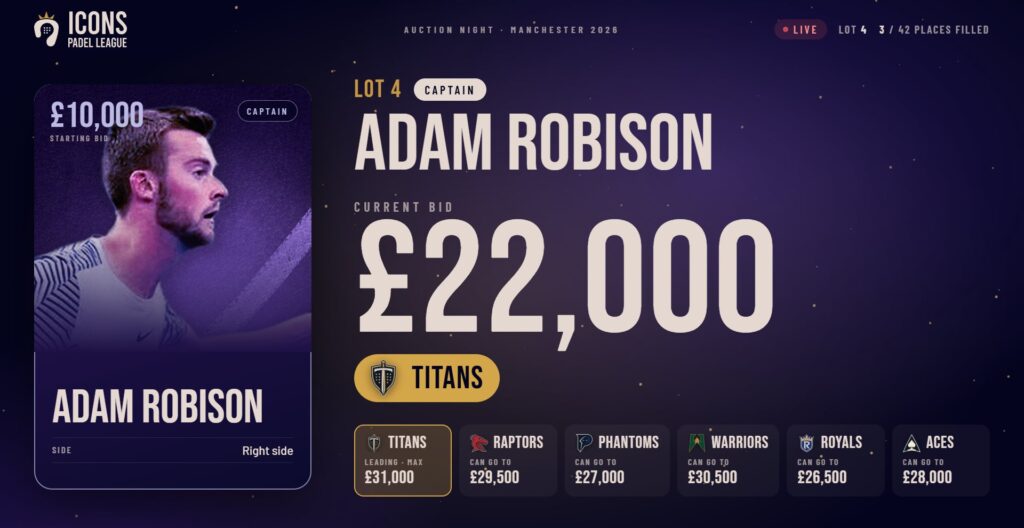
Live auction screen showing lot four at a current bid of £22,000, with each bidding team's maximum budget listed underneath

In short

  • A bid increment is the step between one bid and the next. Most salerooms run at roughly 10% of the current bid, and the auctioneer can change it at will.
  • Open with a bigger step than feels comfortable and close with a smaller one: the money is made in the middle and protected at the top.
  • A lot lands one increment above the second-keenest bidder’s ceiling, so the under-bidder is the person you are really calling to.
  • Jumping too fast knocks out the mid-table bidders you need to carry the lot.
  • Halving the step late (“splitting the bids”) is the cheapest few hundred pounds you will ever add. Halving it early tells the room the lot is struggling.

Nobody books an auctioneer for a lecture on arithmetic. But the numbers you call out at a charity auction, and the gaps between them, decide more of the final total than the lots on the sheet do. Here is how increments are usually set, when to move them, and what it costs when they are wrong.

What are bid increments at a charity auction?

A bid increment is the fixed step by which bidding rises, and at a charity auction the auctioneer sets it live rather than reading it off a table. Commercial salerooms publish theirs in advance: Christie’s glossary describes bidding that opens below the low estimate and advances in increments of 10%, subject to the auctioneer’s discretion. Auction houses treat these as predefined steps that determine the next acceptable bid.

That 10% convention is a useful starting point and a poor finishing point. In an art sale the room is full of trade buyers who know the ladder before they sit down. In a charity gala it is full of people who came for dinner, have never raised a paddle, and are taking their cue from the voice on the microphone. The ladder is whatever the auctioneer says it is, and the room will believe it.

A sensible rule is never to let the step go unsaid. Name the number you want next on every call, because a guest who has to work out their own bid hesitates, and hesitation at the wrong second ends a lot early.

Where should the opening bid and the first increment sit?

Open below what you expect the lot to make, and make the first two or three steps large. The opening bid is bait, not a valuation, and the first increment is where you set the room’s sense of scale.

Take a lot expected to make £2,000: open near £500 and move in £250s. Five or six paddles go up at £500 because it feels like nothing. By £1,250 most of them will have dropped out, which is fine: the opening round is a casting call, not the auction. What matters is arriving at £1,250 in four calls rather than fifteen, with the energy still intact.

Two things govern the opening. One is the reserve price, if the donor set one, because opening far below it means a long climb in public. The other is pace. A commercial saleroom whips through 60 to 80 lots an hour. A gala is different: around ten lots is about the optimum, and there is limited time between the main course and the pledge. Climbing from £500 to £4,000 in £50 steps takes seventy calls. The room will not survive it and neither will the programme.

The arithmetic of where a lot actually lands

This is the bit nobody expects. In an ascending auction the winner does not pay what the item is worth to them. They pay one step above the point where the second highest bidder stopped. The under-bidder sets the price.

Work it through. Say the two keenest bidders would privately go to £2,400 and £2,300, and the bidding stands at £2,000. Call £500 and the next number is £2,500, above both ceilings, so the lot sells at £2,000. Call £100 and the bidding walks up through £2,100, £2,200, £2,300 and £2,400 before it dies. Same lot, same two people, £400 more.

That £400 is not a rounding error. Across ten lots it is the difference between a respectable auction and one the charity still talks about next year. It is also why the step should narrow as the number climbs, the opposite of what published ladders do. Online platforms widen the increment as the price rises, as eBay’s increment table shows, because software optimises for speed. A live auctioneer is optimising for the last £400.

When should an auctioneer halve the increment?

Halve the step when you are down to two bidders and one has just hesitated. The trade calls this splitting the bids, and auction houses do it for a simple reason: a smaller step encourages a bid the larger one had priced out.

A bidder who has gone quiet is not saying no. They are saying not at that number. Dropping from £250 to £100 hands them a cheaper way to stay in without losing face in front of their table, and a common approach is to offer it directly, in a line such as “I will take a hundred. One hundred pounds and you are back in.”

Two rules of thumb. Split once, not repeatedly, because a ladder that keeps shrinking tells the room the lot has run out of road. And do not split while three paddles are still moving: if there is still competition the room will pay the full step, and splitting early gives away money that was already on the table.

What jumping too fast does to a room

Jumping too fast does two kinds of damage, and only one is visible on the night.

The visible damage is depth. Open at £500, then call £1,500, and you have skipped every guest whose ceiling sat between those numbers. They do not come back. Since the lot lands one step above the under-bidder, thinning the middle of the room removes the people who carry the price. Research on internet auctions found that early jump bidding deters entry later on, and a gala room behaves the same way: a lot that looks settled attracts nobody new.

The invisible damage is shading. The bigger the step, the further below their true limit people bid: a field experiment that varied the minimum increment on a live auction site found bid shading rose as the increment rose. People do not refuse the number. They quietly stop short of it, and nobody in the room can tell.

When a guest jumps of their own accord, take it gratefully. Research on charity silent auctions found that jumping and sniping pull in opposite directions: jump bids tend to lift revenue, late sniping tends to lower it. If a bidder puts £5,000 on a £1,500 lot, a sensible response is to repeat the bid, acknowledge the bidder, and rebuild the ladder above them. What not to do is carry on in £250s as if nothing happened.

How do increments work on phone, absentee and silent bids?

An absentee or telephone bid runs on the same ladder as the room, executed at the lowest hammer price the reserve and the other bidders allow. A limit is a ceiling, not an offer: if the room stops at £1,200 and the limit is £2,000, they win at the next step up.

A charity auction lot on a phone showing the current highest bid, a countdown, and bid buttons rising in steps of 500 euros

That changes how you call the lot. The step has to be clean enough for the person relaying it to keep up, so many auctioneers give the phone a full beat and announce it as a bid from outside the room. The floor competes harder against a stranger than against the table next door.

A silent auction is a different animal. Nobody is pacing it, so the increment does all the work alone: too large and sheets stay blank, too small and a popular lot collects thirty tiny bids and still closes below value. A sensible rule is to set silent increments as a modest fraction of the lot’s realistic value and print them on the sheet. A live step is the engine of bidding momentum. A silent sheet has none.

Where the increment meets Gift Aid

Increments are also where a charity auction quietly becomes a donation. Under HMRC’s Gift Aid rules at section 3.40, where an auction item is commercially available and the bidder knows its value when they bid, the amount paid above that value can qualify as a Gift Aid donation. The guidance’s own example is a £30 bid on a £10 item: £20 can be gift aided, because the room was told at the start what the item cost.

So every increment above market value on that kind of lot is worth more than the number called, provided the announcement was made properly and the paperwork follows. Put the detail past your own finance team, but take it as a reason to tell the room the real price rather than keeping it quiet.

What does this look like on the mic at a real charity auction?

It looks like an auctioneer haggling over £100 while a room full of guests eats dessert.

The lesson I learned the hard way came from an event where I announced the live auction into a room that was still talking, never got it quiet, and called numbers only part of the room could hear. Increments only work if people can hear them. Command the room first, state every step, then worry about the ladder.

The full mechanics of what happens when a paddle goes up are a separate read. If you have a gala coming up and want to talk through where your steps should sit, call 07596 851647, or see what a professional charity auctioneer does on the night.

Kevin Durham, charity auctioneer

Kevin Durham

Charity auctioneer & event host

20years£10m+raised60–80events/yr
Check availability07596 851647

Let’s talk

Bring this to your event

Book a free consultation with a charity auctioneer who has raised over £10 million.

Famous auctioneers: what the best ones do on the rostrum

Kevin Durham in a burgundy dinner jacket on the microphone, pointing out a bidder across the room at a charity gala

In short

  • Famous auctioneers come from four separate worlds: the art rostrum, the cattle ring, television and charity fundraising. The skills do not transfer evenly between them.
  • Jussi Pylkkänen let the bidding on Salvator Mundi run for 19 minutes. Patience, not speed, is what you are watching.
  • Christie’s auctioneer training starts with the bid increments, learned by heart, because increments are pacing rather than arithmetic.
  • Benefit auctioneering is its own discipline. You build the wanting before you sell anything.
  • Hiring a famous name is not the same as hiring the right auctioneer for a room of 300 people who came for dinner.

Ask who the famous auctioneers are and you get a strange mix of answers. A Finn who sold the most expensive painting in history. An antiques dealer who became the youngest expert on Bargain Hunt at 25. A cattle auctioneer from Montana whose rhythm has been scored by judges in a competition ring. They share a job title and almost nothing else.

I’m Kevin Durham, the charity auctioneer who works the floor rather than the podium, 20 years in and over £10 million raised. Below are the practitioners worth studying, what each is genuinely known for, and the craft points a fundraiser can lift from them. Every fact here comes from a source you can open yourself.

The famous auctioneers worth studying

Start with the man whose name is still above the door. James Christie was born in Perth in 1730 and held his first sale on 5 December 1766, in Pall Mall rooms that had belonged to a print seller. The Royal Academy held its exhibitions on those same premises until 1779, which tells you something about the company auctions kept from the beginning.

The other historical name worth knowing is Peter Cecil Wilson, who chaired Sotheby’s until 1980, was made a CBE in 1970 and became the firm’s honorary life president when he stepped down.

Everyone after that is living, so I am sticking to what their own sources say. These are the ones whose footage I would actually sit and watch.

Jussi Pylkkänen and the 19-minute lot

Pylkkänen is the one most people have seen without knowing his name. Helsinki-born, at Christie’s since the 1980s, head of the Impressionist and modern art department from 1995, then global president from 2014.

On 15 November 2017 he sold Leonardo’s Salvator Mundi in New York for $450.3 million with fees, the highest price ever paid for a painting at public auction. The detail worth noticing is not the number. It is that the bidding ran for 19 minutes. He also took the rostrum in 2022 when Warhol’s Shot Sage Blue Marilyn made $195 million.

Nineteen minutes on one lot means refusing to fill silence. Most inexperienced hosts talk over a pause because the pause frightens them. The pause is where the next bid comes from.

Oliver Barker and the hammer he was terrified to drop

On 5 October 2018 Sotheby’s London sold Banksy’s Girl with Balloon for £1,042,000, and within seconds of the gavel the canvas began shredding itself through the bottom of its frame. The half-destroyed work was renamed Love Is in the Bin.

Three years later Oliver Barker brought it back to the same room. After a ten-minute contest involving nine bidders in the saleroom, online and on the phone, it sold for £18,582,000 with premium, three times the high estimate. Barker joked from the rostrum that he was terrified to bring the hammer down, with staff half-expecting another stunt.

Saying the nerve out loud, lightly, is a technique. It puts the room on your side. Pretending nothing odd is happening never does, because everyone can see it anyway.

Who teaches an auctioneer the increments?

At Christie’s, that job belonged to Hugh Edmeades, described as the auction house’s head of auctioneering. One of his trainees, Marlous Jens, was one of 44 internal applicants cut down over about 18 months to two.

The first thing candidates are handed is the sheet of bid increments, and they learn it by heart. Monocle called it the bedrock of the trade. Edmeades put it better: “I can’t teach them the numbers. I can only teach them what to do with the numbers.”

That is the single most transferable idea on this page. Increments are not arithmetic, they are pacing. Jump too far and you lose the second bidder. Crawl in fifties and a room that was ready to compete starts checking its phone. Coaching also covered looking up at the camera and across to the phone banks, because an auctioneer who only plays to the front three tables is leaving money in the room.

What does a benefit auctioneer do differently?

A benefit auctioneer sells feeling before anything else, and Lydia Fenet is the clearest example. She spent two decades at Christie’s, launched its strategic partnerships division in 2011 and became Global Managing Director of it. The auctioneering ran alongside that job, not instead of it.

Her fundraising total is reported two ways, so treat it carefully: the career section of her Wikipedia entry says over half a billion dollars for nonprofits, while the headline figure of a billion carries a citation-needed tag. She wrote The Most Powerful Woman in the Room Is You in 2019 and Claim Your Confidence in 2022, and she founded what one host describes as the first auctioneering talent agency, which reported over $210 million raised for charitable organisations in its first two years.

The point for a fundraiser is the career shape. A commercial rostrum sells objects to people who already want them. A benefit auctioneer has to build the wanting first, which is why the live pledge sits where it does in my running order.

What can a fundraiser learn from a livestock champion?

Rhythm, and the discipline of being judged on it. Jace Thompson of Billings, Montana was named the 2026 world champion of livestock auctioneering at the Livestock Marketing Association’s convention in Deadwood, South Dakota, after the contest ran at St. Onge Livestock. His father Ty is a past champion, which makes the Thompsons a rare father-and-son pair on that list.

The chant is real craft and I respect it. I also almost never use it. A cattle ring is full of buyers who read bid calling fluently; a gala is full of guests who have never bid on anything. Clarity beats speed when half the room needs to be told what the next number is.

What does carry over is the metronome underneath it. Momentum is a tempo you set, not a mood that happens to you.

Which famous auctioneers came through television?

In the UK, mostly the antiques trade. Charles Hanson joined Bargain Hunt in 2002 as its youngest expert at 25, then Antiques Road Trip and Flog It. He had started at Christie’s in London, and founded his own saleroom, Hansons, in 2005.

His charity work is on the record too: over £133,000 for Nottinghamshire Hospice auctioning robin sculptures, and more than £1 million for Manchester’s Bee in the City.

He calls an auction a place of theatre and entertainment. I would not argue.

Harry Dalmeny took a different route. He joined Sotheby’s in 1990 in the country house sale department, became a director in 2000, deputy chairman of the UK business in 2007 and chairman in 2017, conducting country house sales across Europe along the way.

Kevin Durham at a lectern with a microphone, gesturing towards someone in the audience while hosting an awards evening

What do famous auctioneers have in common?

Four things, and none of them is volume.

  • They know the increments cold, so their attention is free for the room rather than the maths.
  • They tolerate silence. The 19-minute lot is the proof.
  • They narrate the contest instead of the object. Nine bidders needed naming, not the frame.
  • They stop. A lot sold at the right moment protects the next one, and an auctioneer who grinds for one more bid teaches the room that bidding is painful.

Knowing when to stop is the least glamorous skill on that list and the one I would hire for first. It also applies to the whole programme, not just a lot. At the Jigsaw Trust the auction was expected to bring in £14,000. It made £27,000, and the live pledge they had not planned for raised a further £30,600. That only works if the auction finishes while the room still has appetite.

Do you need a famous auctioneer at your gala?

No, you need the right one, and the two are not the same thing. Fame in this trade is usually built on the art market or on television, and neither is a test of whether someone can lift a room of 300 people who came for dinner.

What to ask instead: what did the last three events raise against target, how do they structure a pledge, and will they work the floor. If you want the longer version, I have written about what auctioneers do and what separates a professional auctioneer from a willing volunteer, and my auctioneer services page sets out how an event comes together from first call to final total. There is also a plain guide to working together if you have never booked one before.

Twenty years in, over £10 million raised, and a Monaco gala that passed €1,000,000 in a single evening. None of that was my doing alone: each charity’s own team did the heavy work, and my job was to hold the room while they did theirs.

Call 07596 851647 and tell me about your event.

Kevin Durham, charity auctioneer

Kevin Durham

Charity auctioneer & event host

20years£10m+raised60–80events/yr
Check availability07596 851647

Let’s talk

Bring this to your event

Book a free consultation with a charity auctioneer who has raised over £10 million.

Auction paddles: do you need bidding paddles at a charity auction?

Kevin Durham at the lectern on stage at MAG-FEST, the Manchester Airport Group's charity gala, with the event sponsors on the screen behind him

In short

  • A paddle is just a visible bidder number. The number matters more than the paddle.
  • Small room, seating plan, a handful of lots: hands and table numbers are enough.
  • Big room, guests who don’t know each other, a long lot list: use numbered paddles tied to registration.
  • Whatever you use, one volunteer writes down the winning number and price for every lot.
  • A bid can be withdrawn until the hammer falls. After that, it is a sale.

Auction paddles are the numbered cards guests raise to bid. At a charity auction they are useful, but they are not the thing you actually need. What you need is a number for every bidder, so the auctioneer can see who bid and the charity can bill the right person at the end of the night.

I’m Kevin Durham, and I’ve been a charity auctioneer and event host for 20 years. Here is how paddles work, when a hand or a table number does the job just as well, and what I watch for on the floor.

What are auction paddles?

Auction paddles are cards showing a number given to each bidder when they register. Sotheby’s defines a paddle in exactly those terms, and Christie’s calls it a numbered card assigned to each registered bidder.

For centuries nobody used them. According to Christie’s own paddle history, bidders raised a hand and the auctioneer knew most of them by name. Paddles most likely came in after the firm returned to King Street in 1954, when more buyers were private individuals the auctioneer didn’t know.

That is the whole point of a paddle. It tells the person on the mic who you are.

How do bidding paddles work?

Bidding paddles work by linking a number to a name before the auction starts. A guest registers, gets a number, raises it to bid, and the winning number is written against each lot.

At Christie’s you bring photo ID and proof of address to collect a paddle. A charity dinner needs far less: name, table, phone or email, and how they will pay. The data rules say to collect what is necessary and nothing “just in case”.

On the night, the auctioneer calls the number of the winning paddle and a recorder writes it down with the hammer price. The Code of Fundraising Practice expects clear procedures for recording donations, including who does what. For the guest’s side, see how charity bidding works.

Do you need auction paddles at a charity auction?

You need auction paddles when the auctioneer can’t tell who is bidding without them. If they can, save the money.

Paddles earn their place when:

  • the room is big, or guests sit at long tables you can’t see across
  • half the guests are strangers to the committee
  • the lot list is long enough that record-keeping gets messy

You can manage without them when the room is small, you have a seating plan, and the auction is short and strong. I’d rather run 10 great lots than 50, so in most of my rooms the admin stays light either way.

There is one more thing a paddle does: it gets seen. The Behavioural Insights Team found people give more when giving looks normal, and suggests making it more visible to peers. A paddle in the air is hard to miss.

Alternatives to bidding paddles

Raised hands

Hands are fine in a room I can see from end to end. The recorder needs the seating plan, so “the gentleman at table 6” becomes a name on the bill.

Numbered table cards

Give each seat a number on the place card or menu: table 12, seat C becomes 12C. Billing then works from the seating plan you already have.

Phone bidding

For a supporter who can’t attend. A volunteer phones them from the room and bids for them, the way auction houses use telephone bids. Agree a maximum beforehand and, like Christie’s, take a backup absentee bid in case the call drops. Test the venue’s signal first.

Should you make or print auction paddles?

Make them if the event is a one-off. Print them if you run the same auction every year. Either way, the number is what matters: black on white, as big as the card allows, on both sides so the recorder sees it too.

Printed paddles can carry a sponsor’s logo on the back. Christie’s moved to a design with the logo on one side and the number on the other in 2014.

What is good auction etiquette for bidders?

Good auction etiquette is simple: bid clearly, hold your paddle up until the auctioneer acknowledges you, and pay on the night.

  • Don’t worry about scratching your nose. One auctioneer jokes that the worst case is being teased a little.
  • You can change your mind, briefly. Under the Sale of Goods Act, a sale is complete when the hammer falls. Until then, a bid can be retracted.
  • Nobody bids to push a price up. The same section makes it unlawful for a seller, or someone acting for them, to bid unless that right was announced. That includes a keen committee member.

Auction terminology at a glance

TermWhat it means
PaddleYour bidder number, held up to bid
Hammer priceThe winning bid when the gavel falls
IncrementThe amount each new bid goes up by
ReserveThe seller’s confidential minimum
Bought inUnsold: no bids, or short of the reserve
Absentee bidA maximum left in advance
Buyer’s premiumA fee added on top of the hammer price

I explain why most charity auctions are better off without a buyers premium. One tax point: HMRC says a winning bid is a purchase, not a gift, so keep auction money and donations on separate sheets.

How I read paddles from the floor

I work the floor, not the podium, with a wireless mic in my hand. Paddles help, but only in a room that is listening.

I learned that one the hard way. At one big event that was running late, I started the auction while people were still talking. Only part of the room heard the lots, and one man bid on an item he couldn’t hear clearly. Now I command the room first, even if that means standing on a chair.

Kevin Durham on stage at the MAG-FEST charity gala, pointing out into the room in front of a screen listing the donated prizes

Once it’s quiet, paddles become signals. I read momentum, name it out loud, and use it: “He’s in your eyeline. Can you see him?” Pacing and social proof do the rest, and the guide to bidding momentum goes deeper. The banter never tips into pressure, though: the fundraising code rules out undue pressure, and a no is a no.

What is a paddle raise?

A paddle raise is a direct appeal where guests lift paddles to give at named amounts, with nothing to win. It is where paddles earn their keep. My guide to the fund-a-need paddle raise covers how to structure one. For collecting those gifts, see my guide to pledge cards.

If you are planning the lots themselves, start with how I run a live auction. To talk through your evening, call me on 07596 851647.

Kevin Durham, charity auctioneer

Kevin Durham

Charity auctioneer & event host

20years£10m+raised60–80events/yr
Check availability07596 851647

Let’s talk

Bring this to your event

Book a free consultation with a charity auctioneer who has raised over £10 million.

Auctioneer chant: why a charity auctioneer talks to the room instead

Kevin Durham in black tie standing among the dinner tables, microphone in hand, pointing out a bidder with the lot sheet

In short

  • The auctioneer chant (also called bid calling or the cattle rattle) repeats the current bid and the next one, joined by filler words.
  • It is built for speed and for buyers who know the trade: a tobacco sale could move 500 to 600 lots an hour.
  • A charity auction is different. Every guest needs to hear every amount, or the bidding never builds.
  • So a charity auctioneer talks to the room: clear numbers, names and banter.

The auctioneer chant is the rolling, rhythmic call you hear at a livestock sale: two numbers stitched together with filler words, fast enough to sound like music. It is a real craft, judged at championship level. It is also something I almost never use at a charity gala, and the reason has nothing to do with skill.

I’m Kevin Durham, the charity auctioneer who works the floor, not the podium, wireless mic in hand. Here is where the chant comes from, and why a fundraising room needs something different.

What is the auctioneer chant?

The auctioneer chant is a rhythmic repetition of numbers and filler words used to take bids. It also goes by bid calling, the auction cry or the cattle rattle.

Every chant carries two numbers: the bid already on, and the bid needed next. Grafe Auction calls it a statement and question: “I have 10 dollars. Would you bid 15?” Everything else is filler, words such as “dollar bid”, “now” and “will ya give me” that keep the rhythm moving.

A National Auctioneers Association guide says filler words carry the numbers, repeat the last bid so buyers remember it, and give bidders a moment to decide.

Where does the auctioneer chant come from?

Nobody knows for certain where the auctioneer chant comes from. The same NAA guide says only that it probably grew out of the need to sell faster.

Babbel calls it distinctly North American, with one popular theory tracing it to tobacco auctioneers in mid-19th-century Virginia. Art salerooms tend to keep a quieter, slower European style.

Tobacco is where the chant became famous. The loose-leaf tobacco auction premiered in Danville, Virginia, in 1858 and became the main way bright leaf was sold in North Carolina.

Its best-known voice was Lee Aubrey “Speed” Riggs, who reportedly became the world’s youngest tobacco auctioneer at 18 and, from 1937, was the radio voice of Lucky Strike, ending every chant with “Sold American”. He is said to have reached 469 words a minute. My favourite detail on that Hall of Fame page: he raised nearly $220 million for charities.

Why do auctioneers talk fast?

Auctioneers talk fast because the chant was built to sell a great many lots, quickly, to buyers who already know what they are looking at. The NAA guide puts it at roughly 60 items an hour at an estate sale, 125 to 175 cars an hour at a wholesale car auction, and 500 to 600 lots an hour at a tobacco sale.

Fast does not mean careless, though. One auction school’s guide to the chant says clarity is essential, and the speed depends largely on what is being sold.

Who has the best auctioneer chant?

The best auctioneer chants are decided in competition, and the best known is the World Livestock Auctioneer Championship. The Livestock Marketing Association held the first one in June 1963 in Denver, where 23 auctioneers from the US and Canada sold the same 20 head of cattle over and over. It still runs every June.

Werner Herzog filmed the 1976 contest for a documentary and called auctioneering “the last poetry possible”.

Judges are not scoring speed alone. When the National Auctioneers Association named its junior champion in July 2026, contestants were assessed on bid calling, professionalism, communication and industry knowledge. That is a proper craft, and I respect it.

Why does a charity auctioneer talk to the room instead?

A charity auctioneer talks to the room because at a gala every guest needs to hear every amount, and many have never bid at a live auction before. A sale ring is full of professionals who know the price of what is in front of them. A charity dinner is full of guests who came for the cause, mid-conversation.

My job there is to get people competing and enjoying it, not to sell quickly. Bidding momentum only builds when the whole room can hear the numbers climb.

Under UK law a sale by auction is complete on the fall of the hammer, and until then any bidder can retract. Everyone should know what they are agreeing to before that moment.

The night I lost the room

I learned how much hearing matters the hard way, and I was not even talking fast. It was a big event, running late, with no inspiring speech or video to tee up the auction. I walked into the middle of the room and announced the live auction while people were still talking, and I did not stop to get them quiet.

Only a fraction of the room heard the lots. One man bid on an item he could not even hear clearly.

The lesson I have never repeated since: command the room first. Stand on a chair if you have to. The shush is a powerful tool.

What does a charity auctioneer say instead?

A charity auctioneer says the amount clearly, says who bid it, and gives the room a reason to beat it. The auctioneer phrases that work at a gala are conversational, not rhythmic. I open with “Ladies and gentlemen, it’s time for the live auction”, and it always gets a round of applause.

Kevin Durham on stage at the MAG-FEST charity gala, arms spread wide as he opens the evening in front of the big screen

After that, banter does the job filler words do in a chant: it holds the number in the air while someone decides.

  • “Sir, you could be the hero. They’d sing songs about you around the campfire. Is that not worth another hundred pounds?”
  • “Look at him. He’s in your eyeline. Can you see him?”

If your guests are new to auctions, send them my note on how bidding works before the night.

When should you hire a charity auctioneer?

Hire a charity auctioneer when your event includes a live auction and you want bidders engaged rather than hurried. A charity auctioneer talks to the room, uses humour and builds competition between bidders instead of chanting at speed, which suits a gala audience.

If your event has only a silent auction and no live bidding, you do not need one. Have ready your date, room size, lot list, the kind of audience you expect and whether the room has heard an auctioneer before.

How to talk like an auctioneer at a charity gala

You don’t need a chant to sound like an auctioneer. You need the room’s attention. These are the habits I rely on:

  • Get quiet before the first lot. Never sell to a room that is still talking.
  • Borrow the chant’s best idea. Give the current bid and the next one together, so nobody has to guess.
  • Say the number twice. Once for the bidder, once for the back of the room.
  • Name the bidder. A table number or a first name turns a figure into a contest.
  • Pause after a big bid. Let the room react.

That is most of what an auctioneer does at a gala. The full running order is in my guide to the live auction, and if you are picking up the mic yourself, start with becoming a great charity auctioneer.

The chant is the right voice for a sale ring. A charity room needs every guest to hear every bid. If you want an auction like that, call 07596 851647.

Kevin Durham, charity auctioneer

Kevin Durham

Charity auctioneer & event host
20years£10m+raised60–80events/yr
Check availability07596 851647

Talking to the room

What a charity auctioneer does instead of a traditional chant.

Using Movie Quotes to Keep Bids Coming
Using movie quotes to keep bids coming
Singing 'That's Amore' to Push Up the Bids
Singing That's Amore to push up the bids
Why Charity Auctioneers Should Never Take Themselves Too Seriously
Why auctioneers should never take themselves too seriously

Let’s talk

Bring this to your event

Book a free consultation with a charity auctioneer who has raised over £10 million.

Masquerade ball ideas for a charity fundraiser that raises real money

Two men in tuxedos on stage at the Children's Respite Trust masquerade charity gala

In short

  • A masquerade ball is a formal ball where guests wear masks. The tradition runs through the Venetian Carnival and 18th-century London.
  • The masks themselves can earn money: sold with tickets or at the door, sponsored by a local business, or auctioned as a one-off lot.
  • Put the masks in the dress code from the very first invitation, and keep spares at the door.
  • Make the unmasking the pivot of the night: the playful part ends, faces come out, and the live pledge begins.
  • Masks change how bids are spotted, so plan bidder numbers, lighting and half masks before the night.

The best masquerade ball ideas for a charity night do two jobs at once. They give guests a reason to dress up and buy a ticket, and they hand you a ready-made moment in the running order: the unmasking. Used well, that moment is the cue for your live pledge, usually the biggest earner of the night.

I am Kevin Durham, and I have spent 20 years as a charity auctioneer and host. Here is how I would turn the masks into income, word the dress code, and build the evening so the money arrives when you want it.

What is a masquerade ball?

A masquerade ball is a formal ball where guests wear masks, and often costume, so that nobody is quite sure who they are dancing next to. The mystery is the point.

Costumed balls were a luxury of European courts, and the ill-fated Bal des Ardents in Paris took place on 28 January 1393. In the 16th century, masked festivities spread to the public in Renaissance Italy and became bound up with the Venetian Carnival. By the 18th century, semi-public masquerades had arrived in London.

Venice gave us the masks most people picture today. The official carnival site describes the bauta as a plain mask that let the wearer attend a party without being recognised. Masks are first documented in Venice in the 13th century, the festival was outlawed in 1797, and it was revived in 1979, according to the history of Venetian masks.

Why does a masquerade suit a charity fundraiser?

A masquerade suits a charity fundraiser because the theme comes with its own products and its own big moment: something to sell, and a reveal to build towards.

The BHF guide to charity balls tells organisers to think of a theme early, and in my view a masquerade is one of the easiest to sell to a guest list. I cover the wider plan in my guide to the charity ball, and how a theme shapes your lots in auction themes.

Masquerade ball ideas that bring in money

These masquerade party ideas turn the theme into income without making guests feel they are paying for every little thing.

  • Sell masks with the ticket. Offer a ticket with a mask included at a slightly higher price, so you know your numbers before the night.
  • Sell masks at the door. A small table at arrivals, staffed by someone cheerful. The Simply Masquerade guide notes that guests often forget their masks, so keep spares anyway.
  • Get the masks sponsored. The BHF suggests pricing up parts of the event and selling them as sponsorship. A local business paying for the masks, with its name on the ribbon card, means every mask sold is pure profit.
  • Run a decorate-your-own table. Plain masks are a common party idea for guests to customise. Charge a small fee for the mask and materials, and it doubles as an icebreaker.
  • Award the best mask. Ask a sponsor to present a donated prize, and announce the winner just before the unmasking.
  • Auction one mask. A hand-made mask from a local artist, or one signed by someone your guests admire, makes a strong opening lot with a story behind it.

One point on paperwork: a guest who buys a mask is paying for goods, so under HMRC’s Gift Aid guidance that payment is not a gift and cannot have Gift Aid added.

How should you word the masquerade ball dress code?

Word the masquerade ball dress code as two parts: the formality, then the mask. “Black tie and masks” is clear, short and fits on a ticket.

Black tie means a dinner suit and black bow tie, or an evening gown, and it is a step below white tie. Then say what you mean by a mask. Some wording that works:

  • “Black tie and masks. Masks available at the door, or bring your own.”
  • “Evening dress and masks. Half masks recommended, so you can dine in comfort.”
  • “Masks stay on until the unmasking. You will know when.”

The Simply Masquerade guide advises explaining the dress code from the first invitation. If the mask only appears in the final reminder email, half the room arrives without one.

Which masquerade ball themes work for a charity night?

The masquerade ball themes that work best are the ones with a colour palette guests can actually shop for.

  • Venetian carnival. Gold, deep reds, ornate masks. The classic.
  • Black and gold. Every high street has something that fits, which matters more than you would think.
  • Your charity’s colours. A masquerade in the charity’s own colours ties the décor back to the cause without a word being said.
  • Winter masquerade. Silver, white and ice blue, ideal for a December date.

Masquerade ball ideas for the running order

A masquerade gives the evening a natural shape: mystery first, reveal second, generosity third.

  1. Arrivals. Mask table, photo backdrop, decorate-your-own station.
  2. Dinner. Let the room breathe. Sell raffle tickets between courses, never while someone is mid-mouthful.
  3. The live auction, masked. Keep it cheeky and playful. This is where the banter lives, and the anonymity is part of the fun.
  4. The best mask award. A quick, light moment to bring the room together.
  5. The unmasking. Everyone removes their mask at once.
  6. A short speech or film about the cause.
  7. The live pledge.

For a full timeline, see my gala running order.

Why make the unmasking the cue for the live pledge?

Make the unmasking the cue for the live pledge because it does the hardest job on the night for you: it gets the whole room looking at the same moment, at the same time.

I learned the cost of skipping that step the hard way. At one big event that was running late, with no speech or film to set up the auction, I started announcing lots while people were still talking. Only a fraction of the room heard them. Since then I command the room first, every time. Stand on a chair if you have to. An unmasking does that for you, because nobody wants to miss it.

It also changes the mood. When the masks come off, guests are themselves again, and that is when I drop the banter and turn to the cause. Serious, but never sombre, and the excitement should build as the money comes in. At the end of a pledge I normally invite everyone who has given to the front for a quick photo, and with the masks off, it is a photo worth sharing. I explain how the pledge works in my guide to the live pledge.

How do masks change bidding for the auctioneer?

Masks make bids harder to spot and harder to hear, so the auction needs a little more planning than usual.

Kevin Durham in a burgundy velvet dinner jacket on the microphone, pointing out to the room at a black-tie charity gala

  • Use bidder numbers or paddles. When faces are hidden, a large printed number is how the team records who won.
  • Bring the lights up for the auction. A candlelit room looks beautiful and hides raised hands.
  • Favour half masks. A full-face volto or bauta covers the mouth. The RNID notes that many people rely on lipreading to some degree, so anyone speaking from the stage should be unmasked.
  • Work the floor. I run auctions with a wireless mic in the middle of the room, which makes it far easier to catch a nod from behind a mask than it is from a lectern.

Masquerade ideas to leave out

Some ideas look good on a mood board and cost you money on the night.

  • Full-face masks for the whole evening. People cannot eat, talk or bid comfortably.
  • Expensive compulsory masks. I would rather guests saved their money for the room than spent it before they arrive.
  • Too many candles. The Fundraising Regulator says to complete a risk assessment before any fundraising event. Feathers, masks and open flames belong on it.
  • Vague promises about the money. The same guidance says your event marketing should be clear about how the money raised will be used. Tell guests where the mask money goes.

Hire me and the auction platform is included: I build it around your event, in your branding, with your tickets, lots and masks loaded and ready to go. To talk through your masquerade, have a look at my auctioneer services or call 07596 851647.

Kevin Durham, charity auctioneer

Kevin Durham

Charity auctioneer & event host
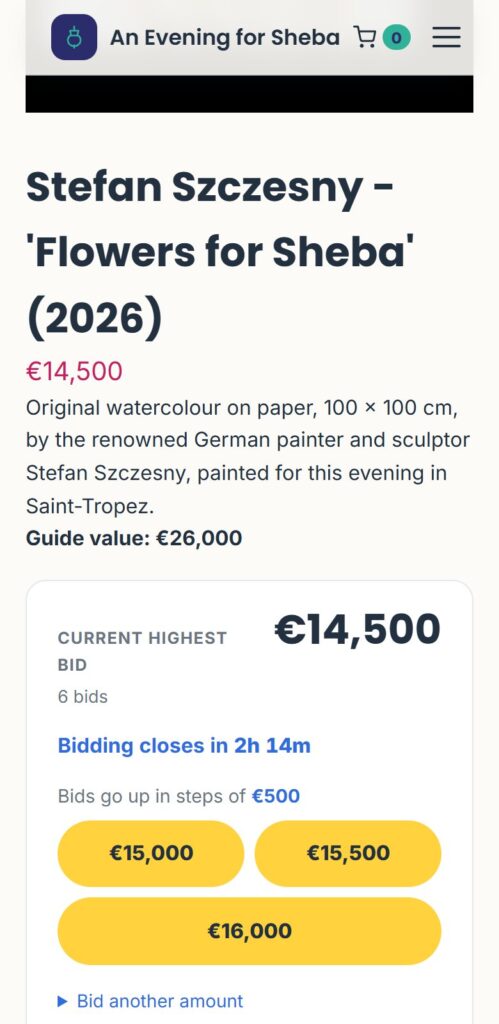
20years£10m+raised60–80events/yr
Check availability07596 851647

Let’s talk

Bring this to your event

Book a free consultation with a charity auctioneer who has raised over £10 million.

How to organise a charity concert that raises more than ticket sales

Kevin Durham on the microphone on a concert stage, with a drum kit and keyboard behind him and sponsor logos on the screens, at the MAG-FEST charity gala

In short

  • Treat ticket sales as the way to cover costs. The real fundraising happens during the interval.
  • An interval auction of a few strong lots, followed by a live pledge, can outraise the box office.
  • Sell sponsorship before the night so the costs are covered before a single ticket goes.
  • In the UK, sort the music licence, any Temporary Event Notice and the raffle rules early.
  • Gift Aid can’t be claimed on tickets or winning bids, only on voluntary donations. One more reason to run a pledge.

A charity concert is one of the easiest fundraising events to sell and one of the hardest to make pay. The tickets go, the band plays, everyone has a lovely night, and then the costs come off and the cause gets a modest cheque.

I work 60 to 80 fundraising events a year as a charity auctioneer and have helped raise over £10 million for charity. This guide shows how to organise a charity concert where the room, not the box office, does the heavy lifting.

What is a charity concert?

A charity concert is a live music event where the proceeds go to a cause. You’ll also hear it called a benefit concert, a fundraising concert or, at the smaller end, a charity gig in a pub or a church hall.

It scales from a school choir to a full band in a theatre. Like any charity fundraiser event, what you raise is what’s left after the venue, the sound, the licences and the performers’ costs. To compare it with other formats first, my list of fundraising events has fifteen more.

Why do ticket sales alone rarely raise enough?

Ticket sales rarely raise enough because most of that money is spent before the doors open. Venue hire, production, staff and the music licence all come out of the box office.

Some costs even grow with the ticket price. Under the PRS tariff for ticketed popular music concerts, effective from 11 June 2025, the charge is 4% of receipts from admissions, with a £20 minimum per event unless you meet the reporting rules. Ticket money also can’t carry Gift Aid, which we’ll come to.

So the ticket price should do one job: cover the night. The fundraising has to come from somewhere else, and at a concert that somewhere is the interval.

How do you organise a charity concert?

You organise a charity concert by setting a fundraising target, then building the venue, line-up, tickets and running order backwards from it:

  1. Set the target and the break-even. Know what the night costs and what it must raise on top.
  2. Choose music the audience wants. Save The Music’s advice is to pick performers your audience will enjoy. An engaged room gives more.
  3. Ask the venue to donate. The same guide suggests asking whether the venue will give its space, or offering it a sponsorship credit for a lower rate.
  4. Book performers early, and pick a date that doesn’t clash with holidays or big local events. You can’t sell tickets properly until the line-up is confirmed.
  5. Plan the interval as a fundraising slot. Decide now what happens in it, who runs it and how long it gets.
  6. Promote the cause, not just the line-up. People come for the band, but they bid and pledge for the cause. My guide on how to promote an auction covers previewing lots before the night.

The interval is where a charity concert makes its money

A concert gives you one natural break with a seated, warmed-up audience. Don’t let it drift away in small talk. Here is a running order that works:

  • Before the doors. Sell raffle tickets as people arrive and find their seats.
  • End of the first half. A short, sincere word about the cause from the stage, ideally from someone the charity helps.
  • Interval auction. Around ten strong lots, sold quickly. Signed setlists, a meet-the-band pass or a private performance suit a music crowd, and my arts gala guide has more lots for a creative audience.
  • Live pledge. Straight after the auction, while the room is still listening. Guests raise a hand to give at set levels, from a big number down to something everyone can manage. Keep it heartfelt without letting it turn heavy, and let the excitement build as the hands go up.
  • Second half, then the total. Announce what the night raised before the encore, not after the house lights come up.

The pledge is the part most organisers leave out, and the one that makes them nervous. Jo from Temwa said on the night: “Tonight has been record-breaking in terms of how much money we made in the auction. I was so nervous about doing this live pledge. What an incredible auctioneer.” My guide to the live pledge shows how it runs.

One catch. At the interval, a concert audience is mid-conversation and halfway out of their seats. I once started a live auction at a big event without getting the room quiet first, and only a fraction of the guests heard the lots. One man bid on an item he couldn’t even hear properly. “Ladies and gentlemen, it’s time for the live auction” only works if the room is listening, so command the room first, even if you have to stand on a chair.

Sponsorship, raffles and the other income streams

Sponsorship lifts what a charity concert raises because every pound a sponsor covers is a pound the box office keeps for the cause. Sell packages for parts of the night: the headline act, the sound and lighting, the programme, the printed tickets. Agree in writing what the sponsor gets.

Kevin Durham interviewing guests on stage in front of screens listing the headline sponsors, category sponsors and charity partners at MAG-FEST

A raffle adds small sums from almost everyone. Run as part of the concert, it can spend a maximum of £500 of raffle money on prizes and £100 on expenses, and tickets can only be sold at the event while it is happening. Donated prizes have no limit.

Then the small things: a bucket at the exit, a text-to-give number on the screen, and an optional donation on the ticket page, kept separate from the ticket price.

What licences does a charity concert need in the UK?

A charity concert in the UK usually needs a music licence, may need a Temporary Event Notice, and needs a risk assessment and insurance. Check them when you book the venue.

  • Music licence. You usually need TheMusicLicence from PPL PRS to play live or recorded music in public. Ask the venue first what it already holds.
  • The charity discount. PPL PRS offers a charity discount if the form arrives at least 14 days before. It doesn’t apply to popular music events with an admission charge or classical events under their own tariff, so a ticketed pop concert won’t qualify.
  • Ticketed pop and rock. The PRS popular music tariff asks for an application at least 30 days before the event and a set list within 30 days after it.
  • Entertainment licence. Under the Live Music Act changes, live or recorded music needs no entertainment licence between 8am and 11pm at an alcohol-licensed venue with an audience of up to 500. Unamplified live music needs none anywhere in those hours.
  • Temporary Event Notice. At an unlicensed venue in England or Wales, a Temporary Event Notice covers live music and the bar. It costs £21, covers fewer than 500 people (staff included) and must go in at least 10 clear working days before.
  • Safety and insurance. The Fundraising Regulator says you must do a risk assessment, have adequate insurance and stay within the venue’s maximum numbers.
  • VAT. Concert tickets can fall under the fundraising events VAT exemption if the event is promoted as fundraising and you keep the evidence. Speak to your accountant.

These are the rules as of October 2026. Check each page again when you plan.

Can you claim Gift Aid on charity concert tickets?

No, you can’t claim Gift Aid on charity concert tickets. HMRC lists payment for admission to events, including concerts, as not a gift, and the same guidance says an auction payment is a purchase rather than a gift.

What you can claim on is voluntary donations. Macmillan notes Gift Aid only applies to personal, voluntary donations, so pledges and online donations can qualify. Each one must come from an individual who makes a declaration, and company donations don’t count.

So have Gift Aid declarations ready for pledgers, and keep donations separate from ticket sales.

Where an auctioneer fits in

A good committee can organise almost all of a charity concert, and the performers and the cause do most of the work. The part that is hardest to do from the inside is the interval: getting a music crowd quiet, selling the lots at pace and turning the room to the pledge before the second half.

That is my small part of it. I can host the fundraising slot or the whole evening, and help choose the lots and the running order beforehand. If you are planning a charity concert, call 07596 851647 and we can talk it through.

Kevin Durham, charity auctioneer

Kevin Durham

Charity auctioneer & event host

20years£10m+raised60–80events/yr
Check availability07596 851647

Let’s talk

Bring this to your event

Book a free consultation with a charity auctioneer who has raised over £10 million.